Counting the cost of AI: what's next, and where does it all end?
Lost clients, stolen work, eroded skills and a generation that may never learn to think for itself. The costs are real and mounting. So where does this all end?
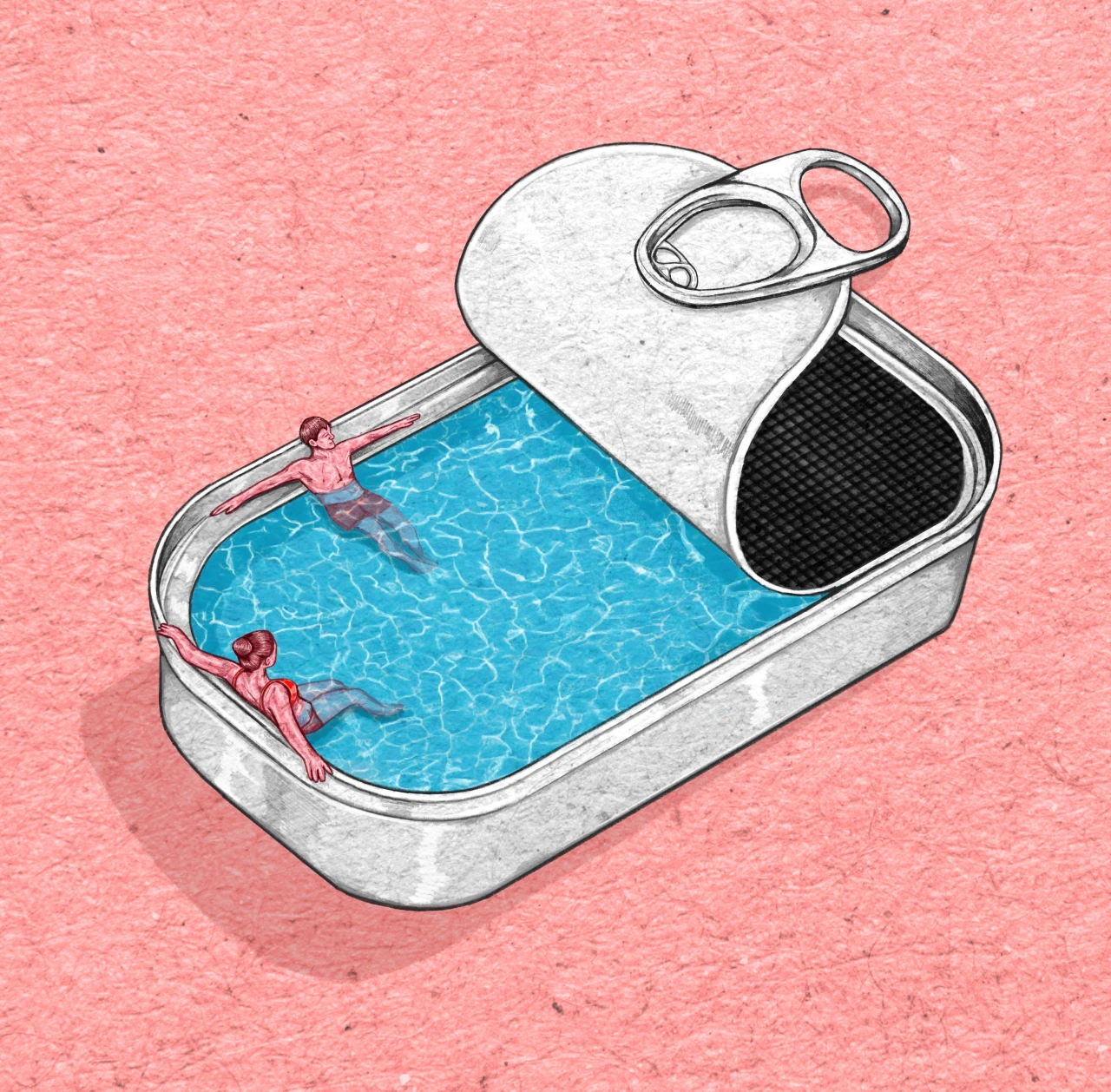
Image licensed via Alamy
The conversation about AI and creativity tends to get stuck in the abstract. Will it replace us? Will it liberate us? Will the quality of creative work go up or down? These are reasonable questions, but they can obscure something more immediate and more personal: the costs that are already being paid, right now, by real people doing real creative work.
These costs are not hypothetical. They are showing up in lost commissions, in creative skills left to atrophy, and in audiences who feel cheated. But once you've counted the cost, the harder question remains: where does this go from here?
We spoke to four professionals to find out what they're seeing, what they're worried about, and what they think comes next.
Disappearing clients
For Jason Roberts, designer and illustrator at Victory Over All, the impact of generative AI isn't a future risk; it's already arrived. "I've recently had two clients switch to generative AI for their illustrations and marketing material," he states. "In both cases, it was simply to cut out the cost of paying a creative."
What makes this hard to dismiss is the candour of some at the top of the tree. "When an OpenAI CTO says 'Some creative jobs will go away, but maybe they shouldn't have been there in the first place', we should question whether AI is actually here to help creatives, or replace them," argues Jason. "And when Anthropic's CEO Dario Amodei predicts AI will wipe out white-collar jobs, their visions of replacing human workers become pretty clear."
Jason is sceptical of the idea that AI itself is neutral, and that any harm comes only from how it's used. "That's similar to the burden of carbon footprint being pushed onto individuals, rather than onto the oil companies and governments," he counters. "In my view, the negative impacts of AI should be the responsibility of AI companies."
A debt that never gets paid
Designer and illustrator Carole Chevalier has been working in the industry for almost 15 years, and she's concerned about one thing above all else: the models were built on work that wasn't offered freely.
In her view, generative AI simply "gives an answer to a prompt, vomiting a mix of stolen art to create something that has no soul. It's ethically completely wrong to me, and terrible for the environment on top of that. People seem to forget where all the parts for the server farms are coming from, not to mention the energy it needs to function."
Carole also points out that AI-generated work can erode trust and demean the effort of those who pursue genuine craft. She points to recent videos that present as stop-motion animation, but on closer inspection seem to have been made with AI.
"People in the stop-motion industry pour their heart and soul into creating stop-motion video," she says. "So seeing fake ones that took hardly any time to create, and more importantly, required no animation skills, is heartbreaking. How is a studio going to compete with AI if they need to work a whole year on something that AI can fake in a day?"
She also raises a contradiction at the heart of the generative AI model. "What worries me is that everything will start looking the same, and there will be no genuine creativity any more," she says. "The irony is that AI needs to feed constantly on new creations to carry on doing what it does. But if all creatives are out of work, where is it going to find the content to feed on?"
The cognitive cost
Of course, AI isn't just changing the creative industries; it's changing the whole of our society and economy, and its uses spread far and wide. To take one example, Nicolas Petit, senior innovation project manager at TotalEnergies, uses AI regularly as an audience simulator. "If I have to pitch something but aren't 100% sure how my audience will react," he explains, "AI is capable of acting as my audience and giving me some pertinent comments on my pitch deck. It can also suggest the kind of questions that audience members may ask."
He has concerns, though, about how this is affecting our brains, particularly among those just entering their profession. "The fact that young generations won't think by themselves any more, but just rely on AI, is troubling," he says. "No more personal thinking, no more free will."
So how should youngsters respond? Jason believes that junior creatives should keep their distance from gen AI, but also keep a close eye on it. "Knowing what it can and can't do will help you understand where your skills and human-ness can really shine," he advises. "Also, embrace learning a broader range of tools and skills. If all you know is AI prompting, you might find yourself more at risk when clients or employers no longer need someone else to do the prompting."
Carole offers a similar take. "I'd personally advise a young creative to avoid the use of AI," she says. "Instead, concentrate on showing off your unique style and voice, the skills you have to offer, and your sincere interest in helping their clients solve a problem without using shortcuts."
The human cost of AI in the creative industry is real and mounting. But the answer isn't despair; it's clarity. Clarity about what you stand for, what you offer, and why it matters. Because if AI has shown us anything, it's that the thing it can't replicate is the one thing worth fighting for. A genuine human perspective: hard-won and entirely your own.
Editor's Picks

Trending

Latest Jobs
Lead 3D Designer at The British Museum
Full-time·London·£51,623 per annum
Head of Production at Art&Graft
Full-time·London·£80k-£95k
Senior 2D Motion Designer at Art&Graft
Full-time·London·£50k-£65k
Graphic & Motion Designer at The SHARP Agency
Full-time·Leeds·£26k–£33k
Creative Content Executive at Cognition
Full-time·Birmingham·£28k–£35k
Senior Designer at Jubba
Full-time·London·£50k-£60k