Melanie Gandyra believes you can't protect what you don't understand – so she's making nature impossible to ignore
The Innsbruck-based illustrator and artist moves between sketchbooks, wall paintings and room-scale installations to build a practice rooted in ecology and the need to look more carefully at the world.
Science Notes © Melanie Gandyra
"I believe it is difficult to protect what you don't understand. But if we don't hurry up and understand, there will be nothing left that is worth protecting," says Melanie Gandrya, an illustrator and artist who's been living and working in Innsbruck, Austria, for the past five years. This statement carries the full weight of her practice, which is rooted in ecology, botany and the natural world. It is delivered not so much with despair, but with the urgency of someone who has found, in making, a useful response to an enormous problem.
Melanie grew up in northern Germany in a family where crafts and manual skills were simply part of life. She learned to work with wood from a young age, a background she once wished away in favour of a more formally artistic upbringing. But she came around eventually. "Getting further in life, I started to really appreciate my roots," she says. "Educating myself since I could hold a pencil was not always easy, but therefore I grew up with full support, no pressure and total freedom to explore."
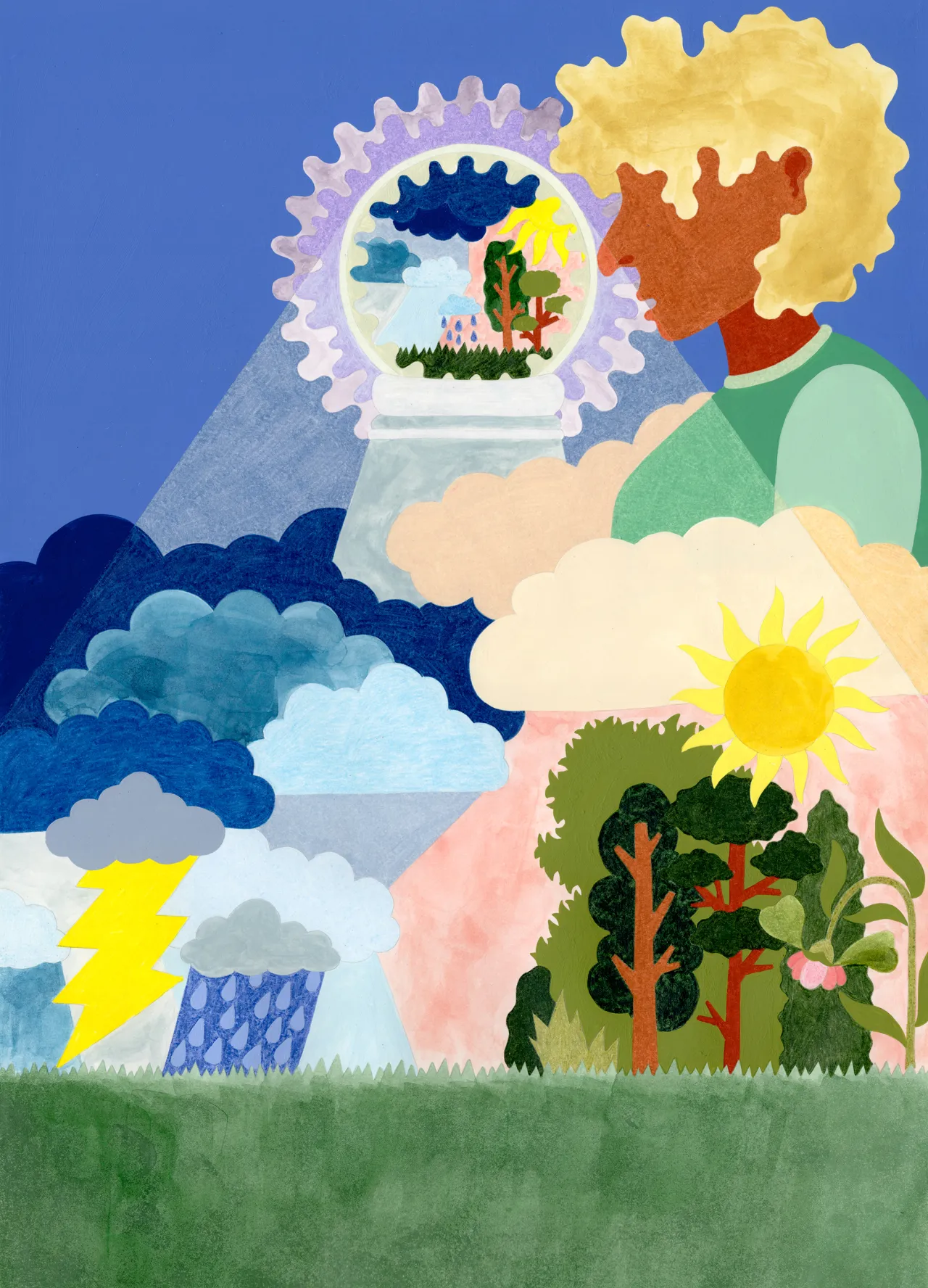
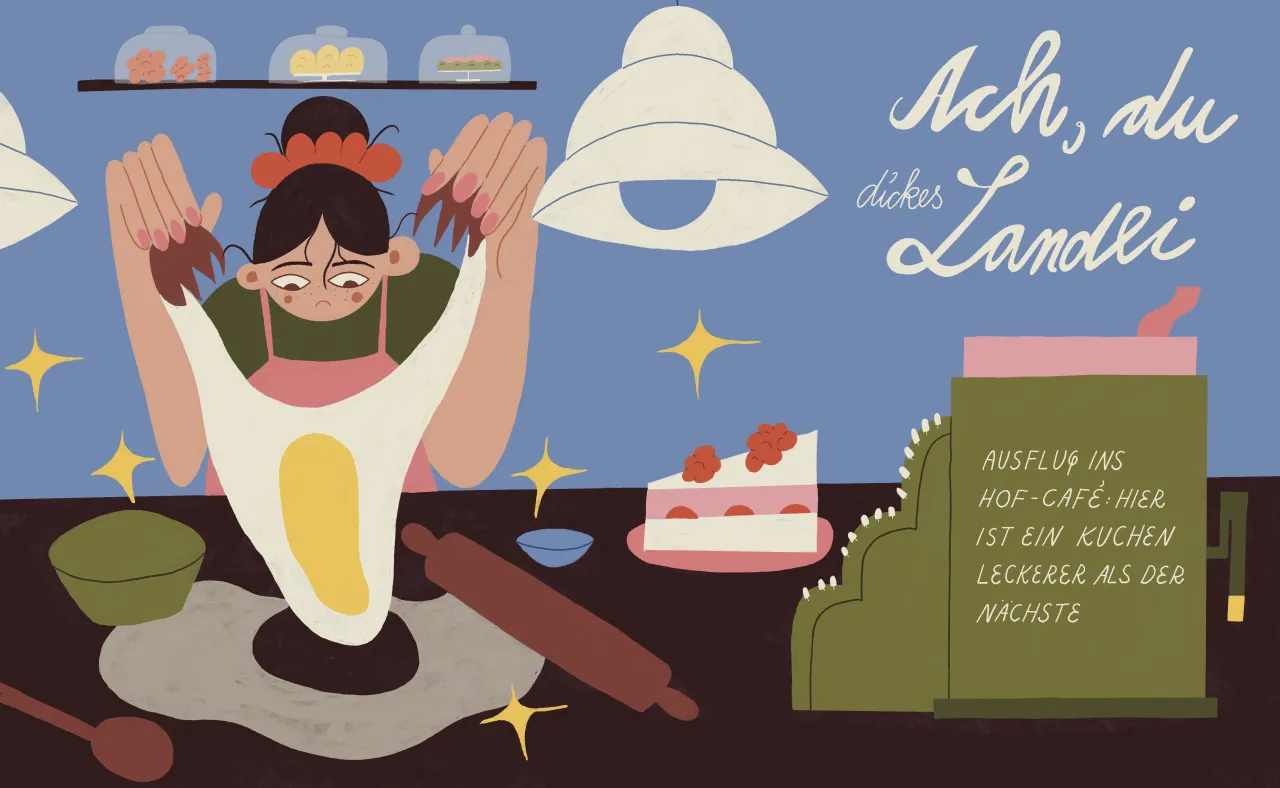
SEINLASSEN MÜSSEN © Melanie Gandyra
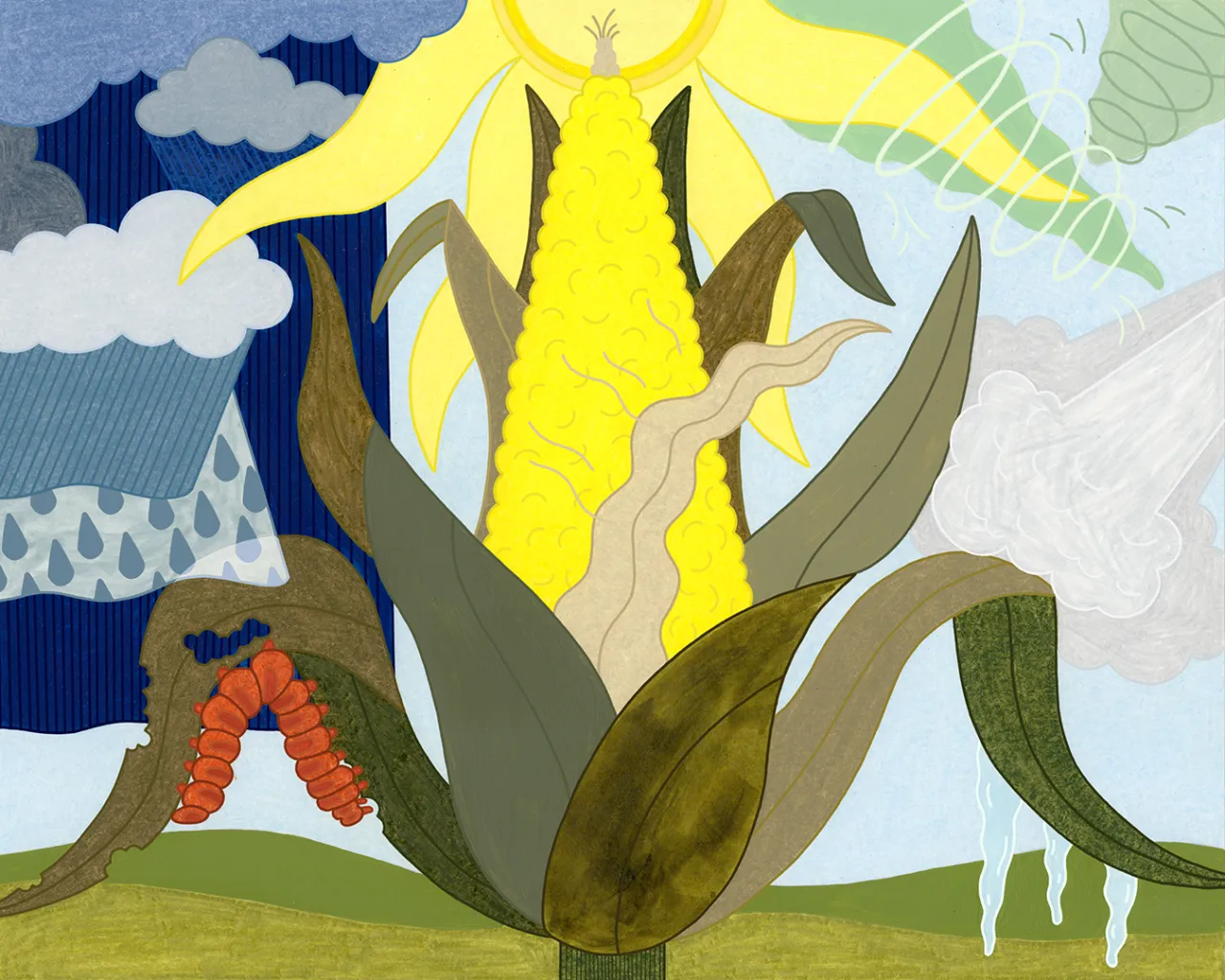
Science Notes © Melanie Gandyra
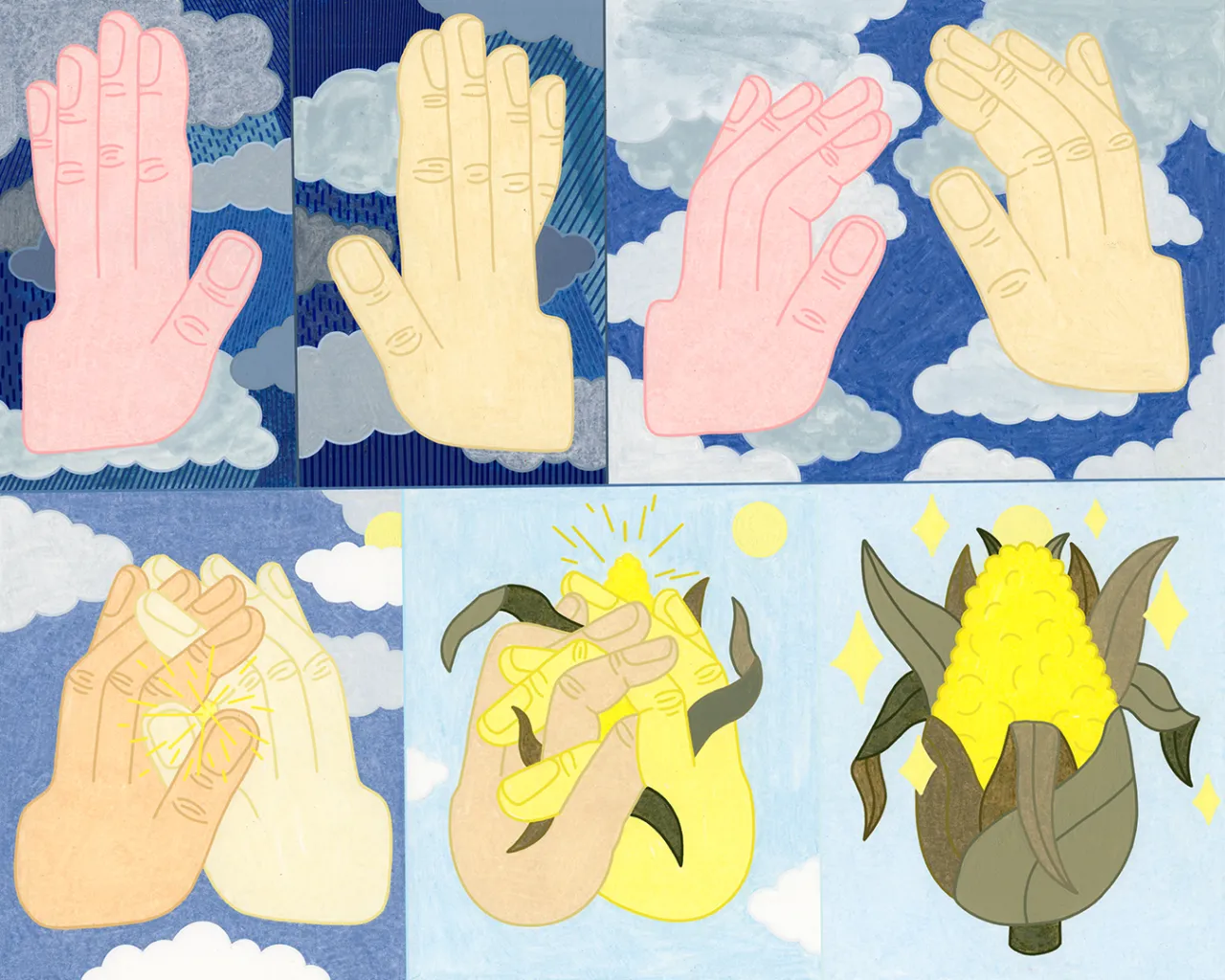
Science Notes © Melanie Gandyra
Then, she studied Informative Illustration at the University of Applied Sciences in Hamburg, she taught there afterwards and has since built a practice that spans editorial illustration for Die Zeit, Google, Greenpeace and Patagonia, books published by Chronicle Books and Frances Lincoln, three shortlistings for the World Illustration Awards, two gold medals at the Global Illustration Awards, and exhibitions at Somerset House in London, a gallery in Beijing and a theatre in Portugal. Since her move to the Austrian Alps, the work has expanded from the page towards the wall, and eventually into the room itself.
When it comes to finding inspiration, she looks to figures who have built vital interfaces between art and science – names like Fritz Kahn, Ernst Haeckel and Alexander von Humboldt – who understood that nature must be grasped with all the senses. "Humboldt wanted his work to awaken a 'love of nature'," Melanie says. "For me, his 'web of life' resonates only too faintly today. I see great potential in reviving this interface and allowing new ideas to grow from it." Her subjects are very much influenced by these topics and feature things like endangered plant species, weather systems, climate tipping points and the tangled relationship between humans and the natural world. It's a vast territory, but one she approaches through extraordinary precision and care.
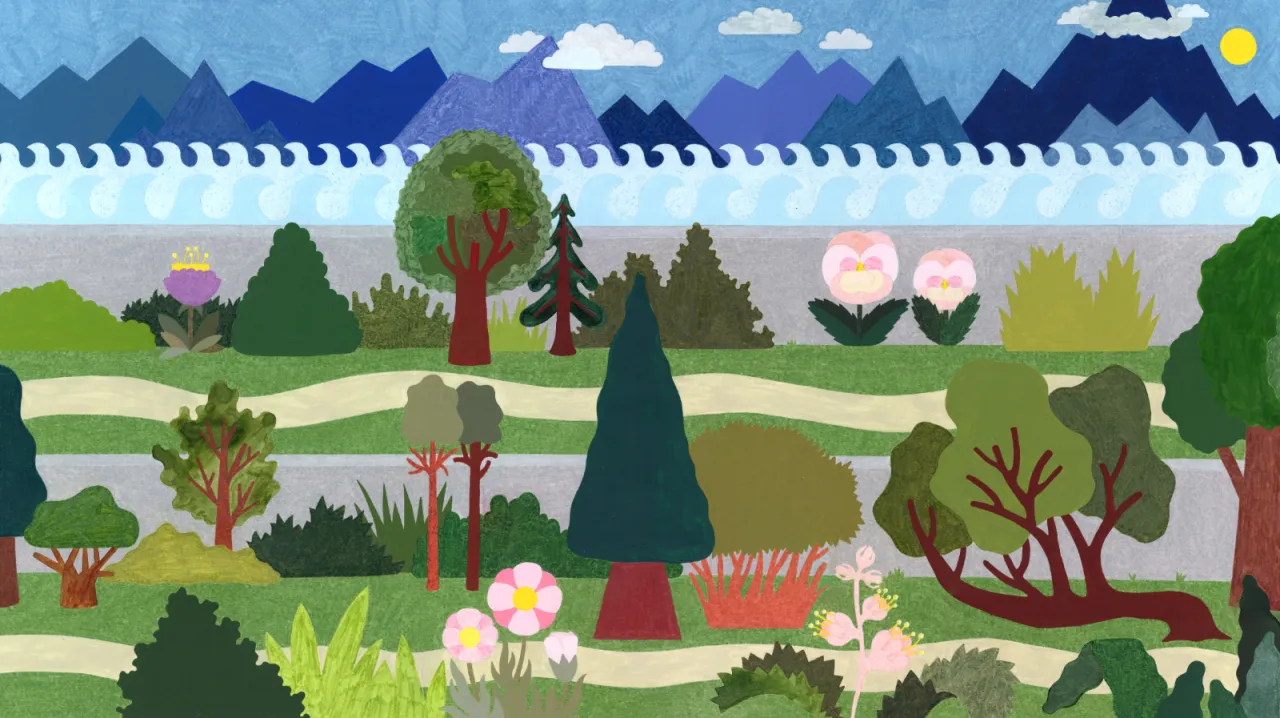
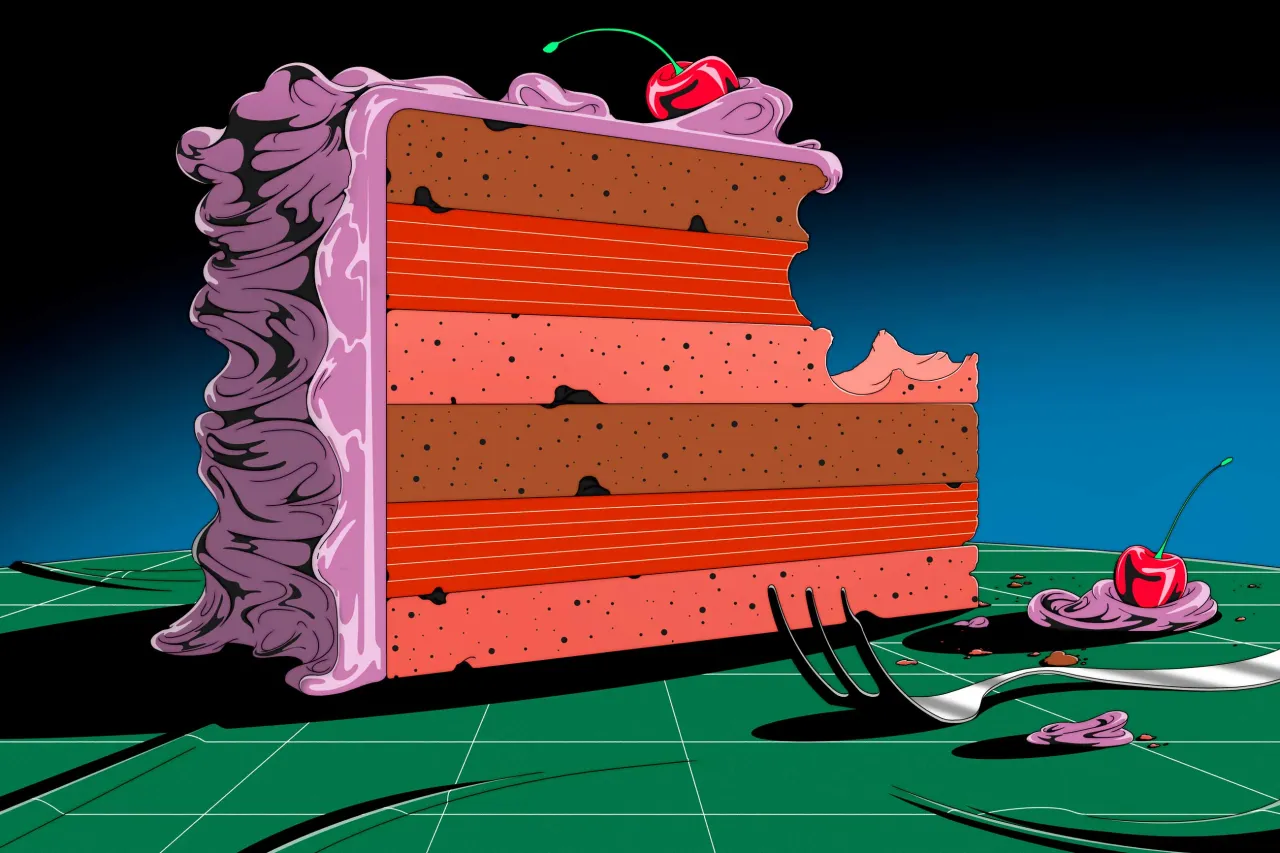
Formschön © Melanie Gandyra
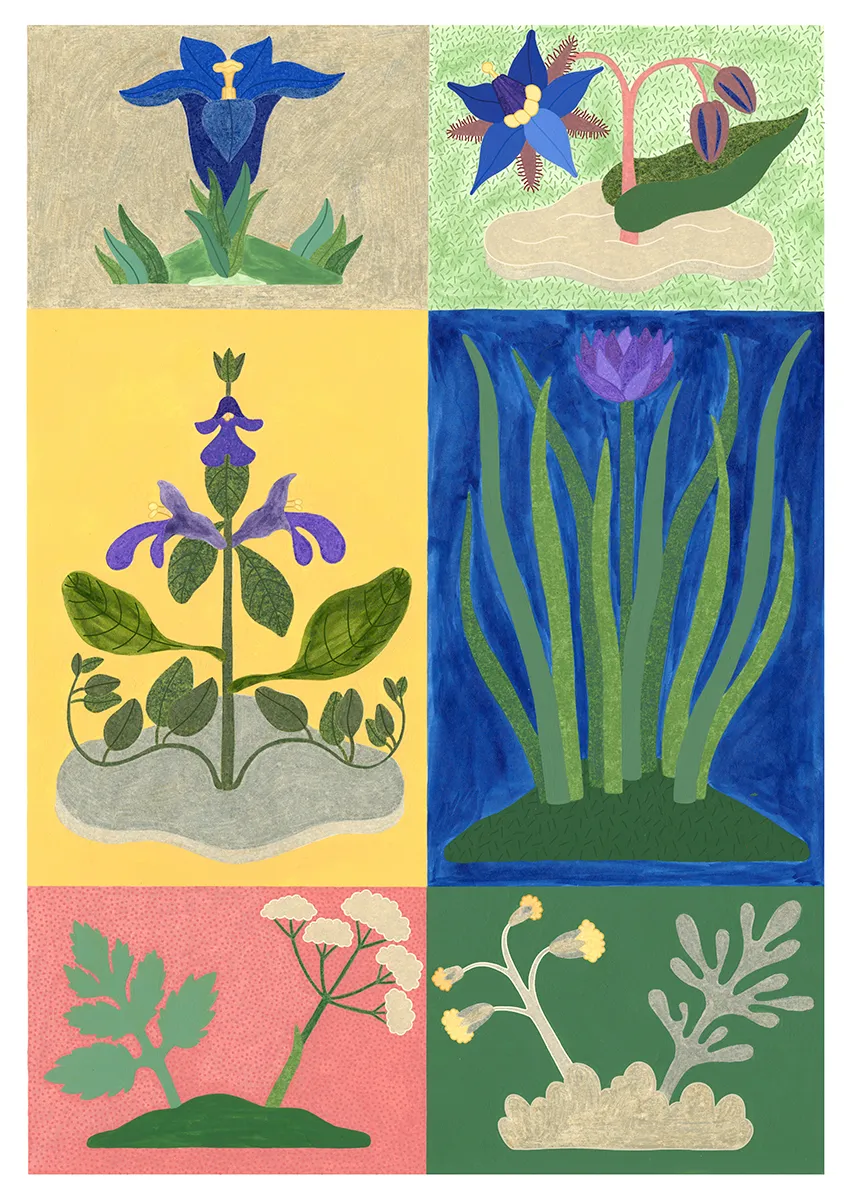
Herbal Pharmacy © Melanie Gandyra
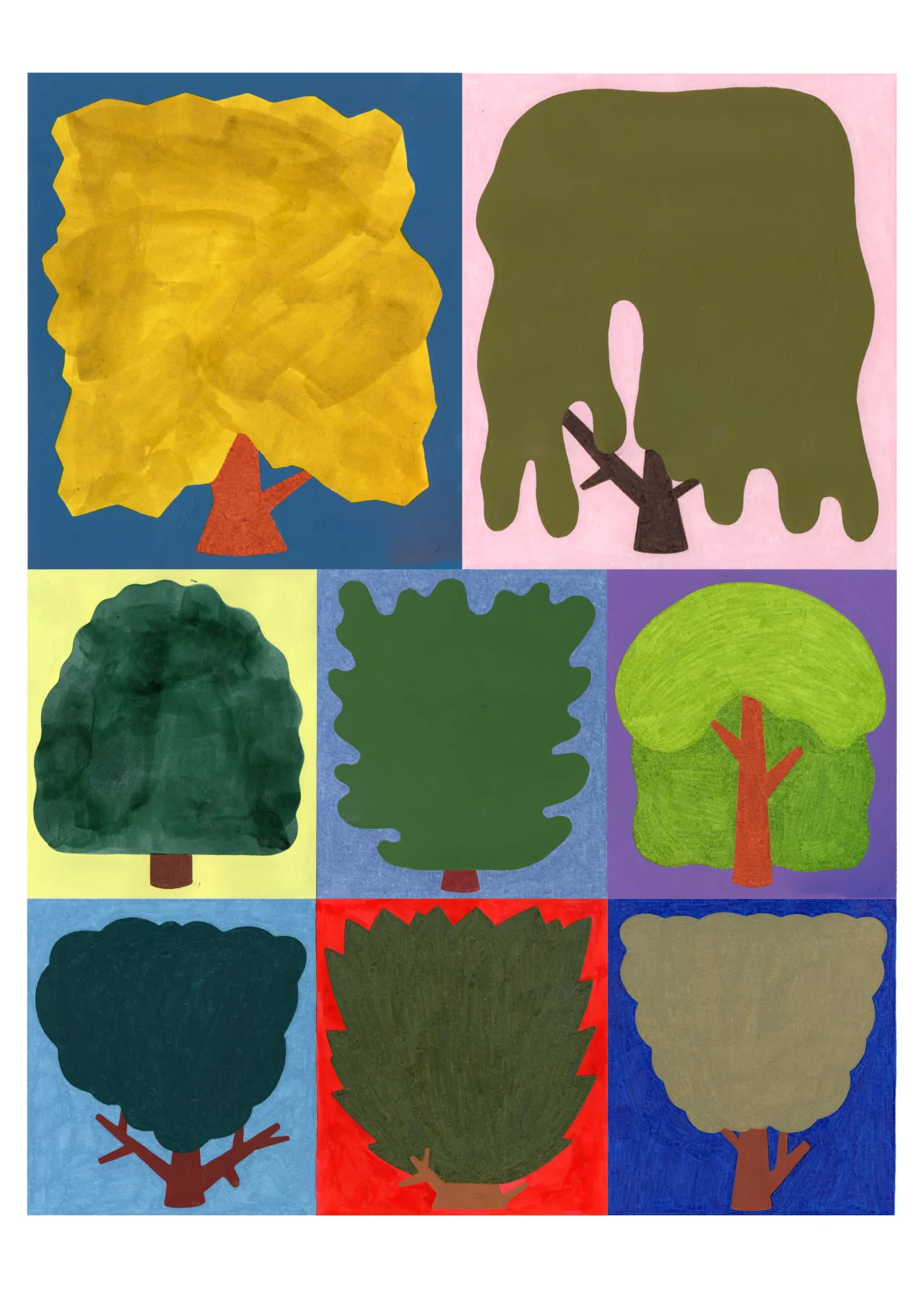
Trunks & Tears © Melanie Gandyra
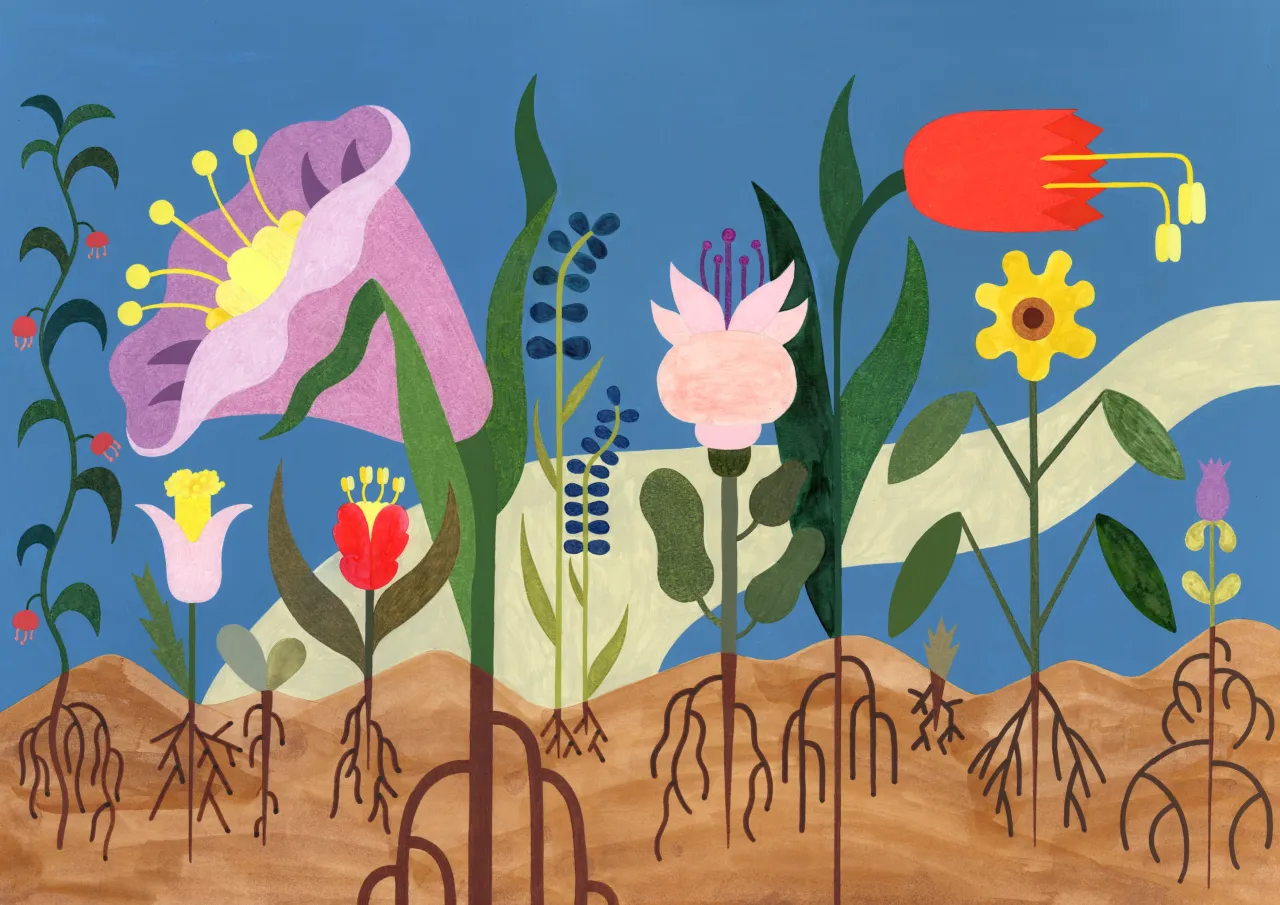
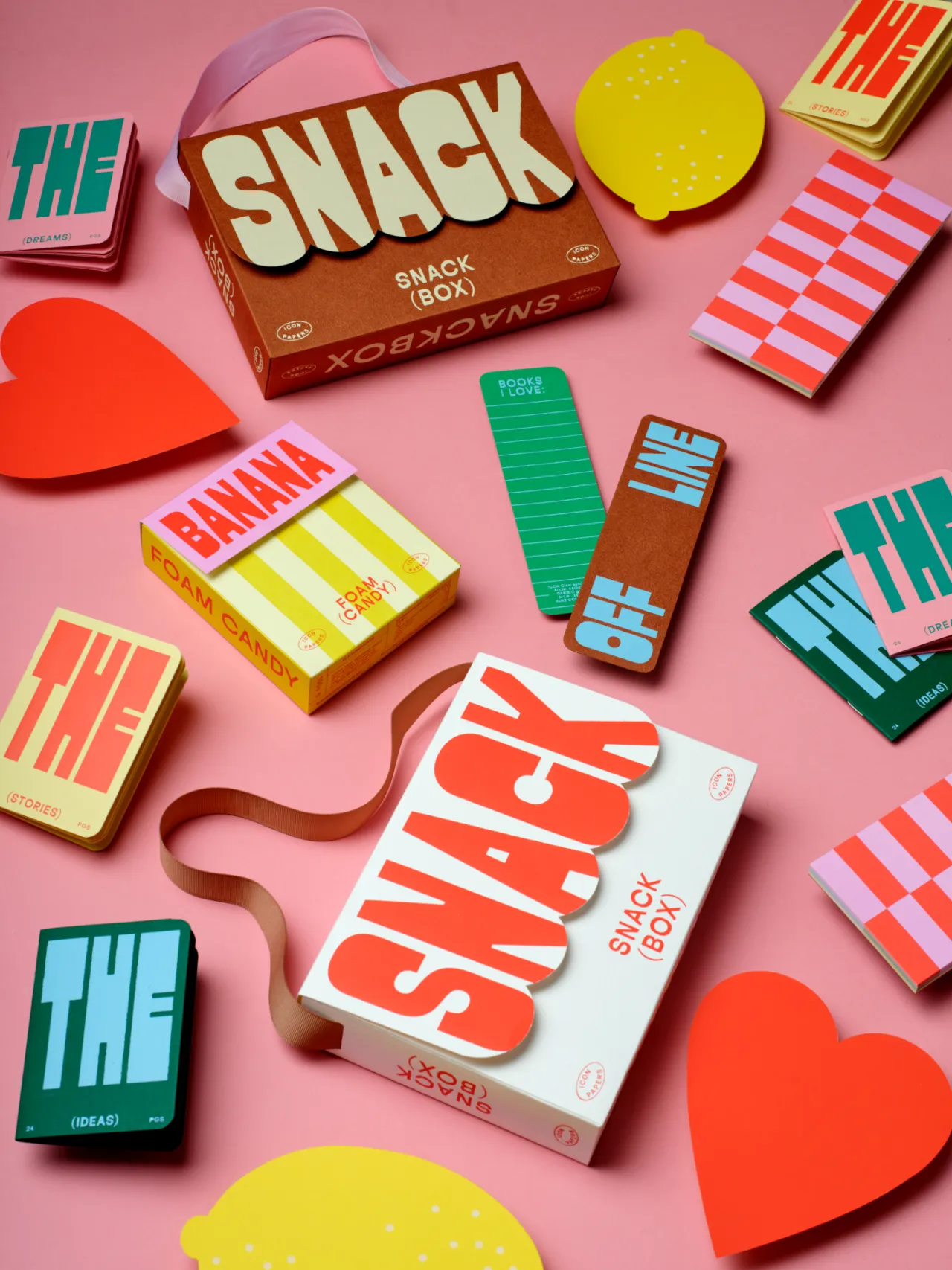
Bottom Line © Melanie Gandyra
Every work begins in the sketchbook, which she describes as her "safe space and archive". From there, she moves to what she calls her "tiny failure frame". She adds, "In this tiny format, I feel free to sketch and collect ideas very fast. I also noticed that I'm way more brave with finding compositions and thinking with my hand most of the time, which brings up arrangements my mind alone would have never been able to create." The sketch is then scanned, scaled up, transferred via lightpad and finalised in layered combinations of coloured pencils, ink, acrylic and marker. Colour, she is clear, is serious business. "I can spend a lot of time mixing the exact right tone."
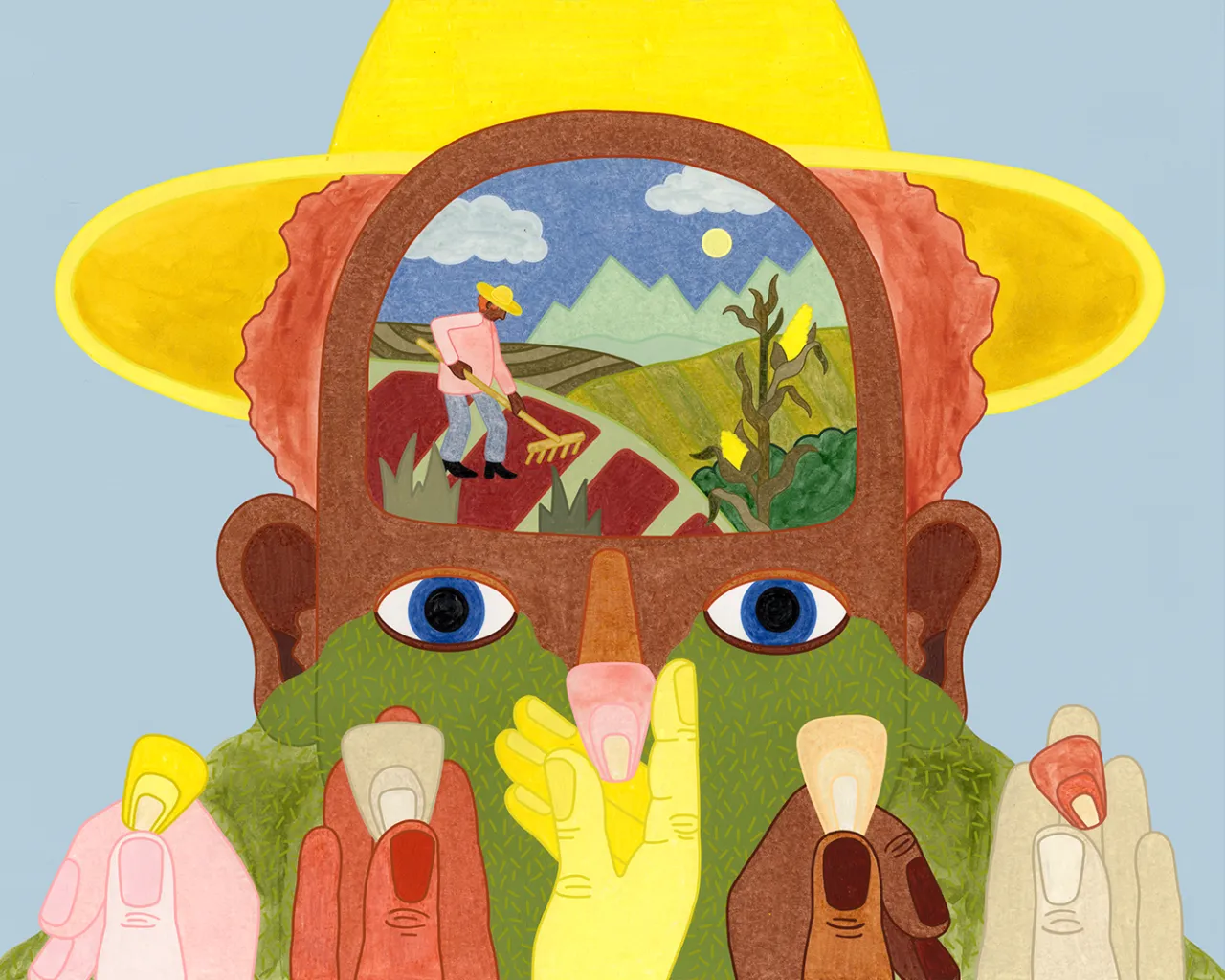
In a recent piece titled Kopchaos, where you see a figure whose head opens into an entire landscape, with plants and clouds erupting from the hair, you can understand both the method and the mission. And Hold Me Tight, which features an endangered Tyrolean plant series rendered with the tenderness usually saved for portraiture, referencing Victorian indoor gardens where collecting plants first became a symbol of status.
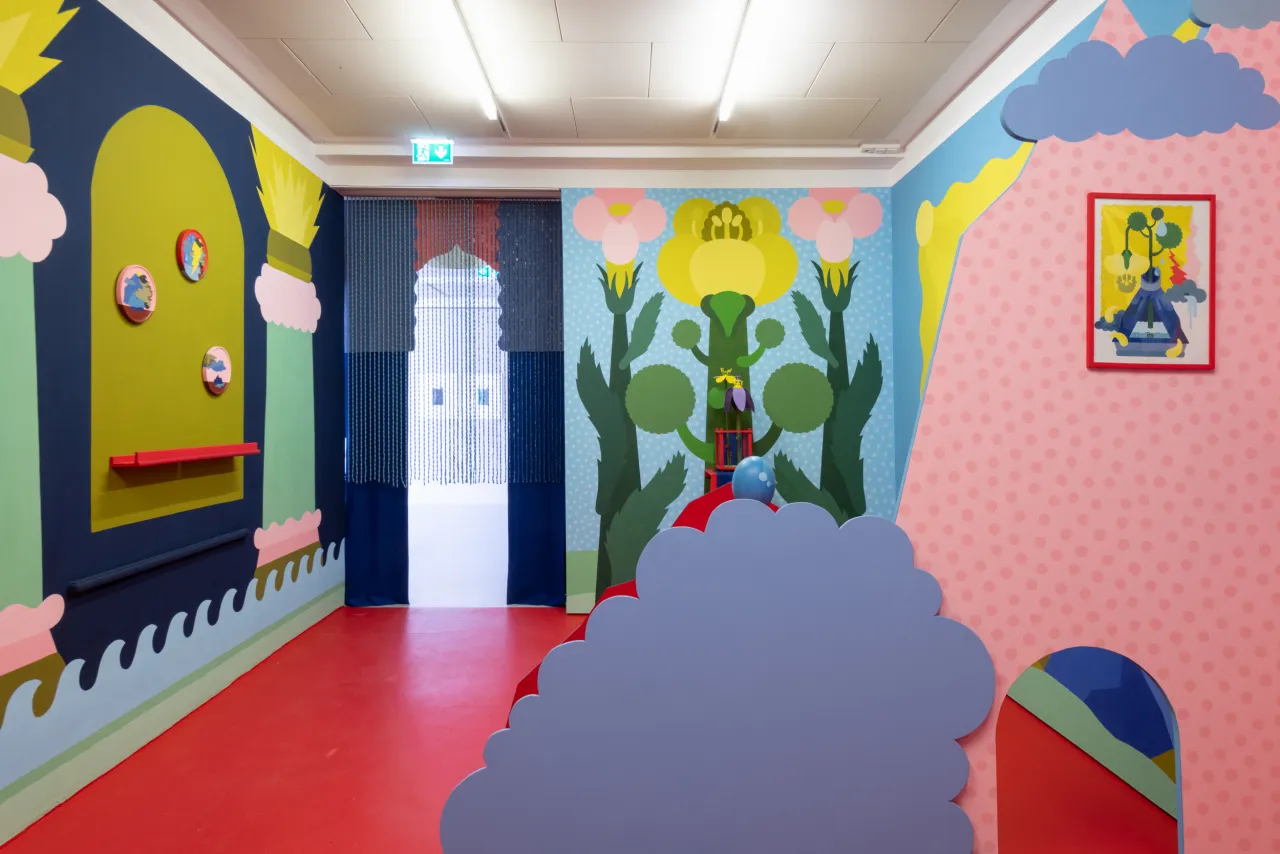
TRIMMT EUCH, Credit Daniel Jarosch
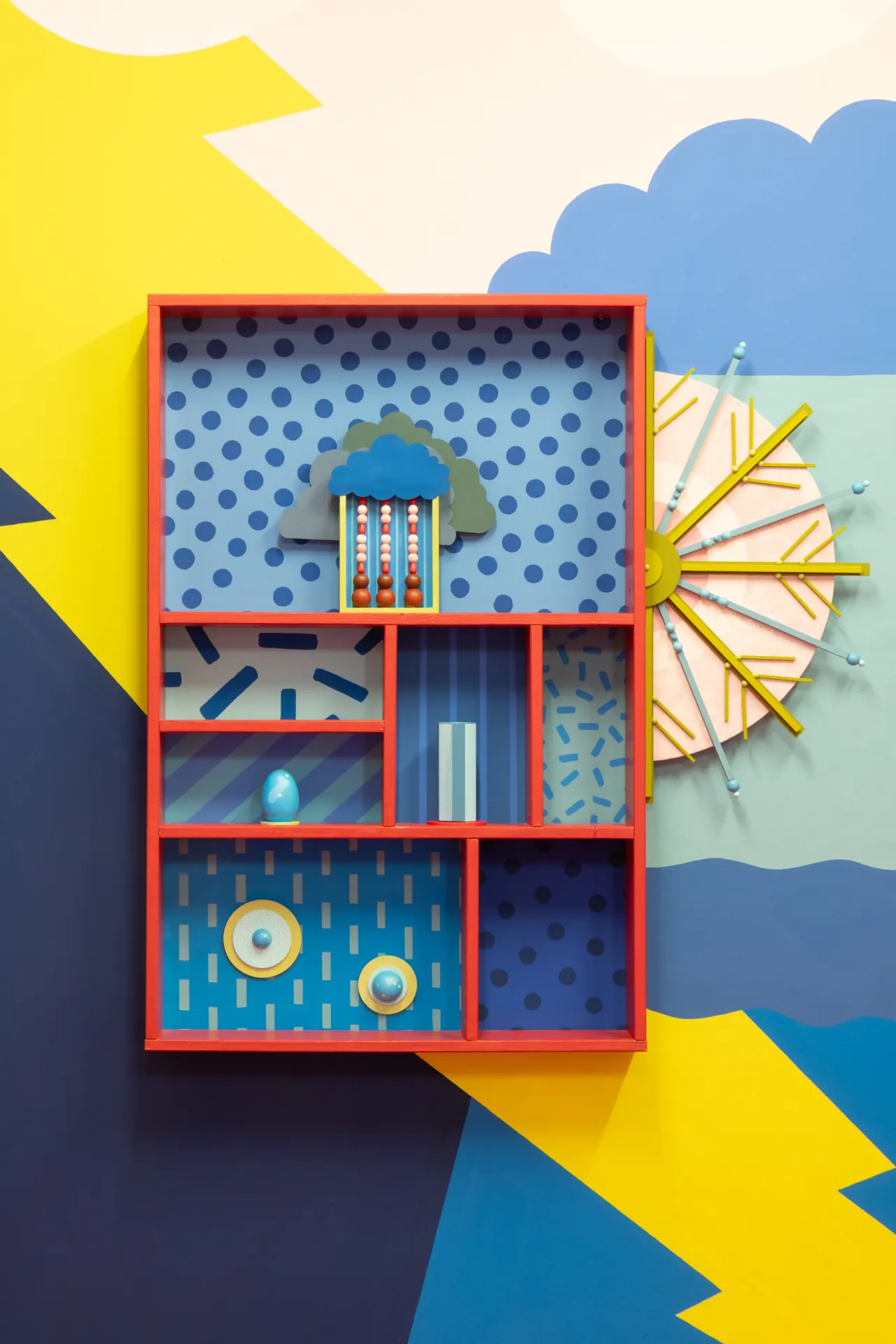
TRIMMT EUCH, Credit Daniel Jarosch
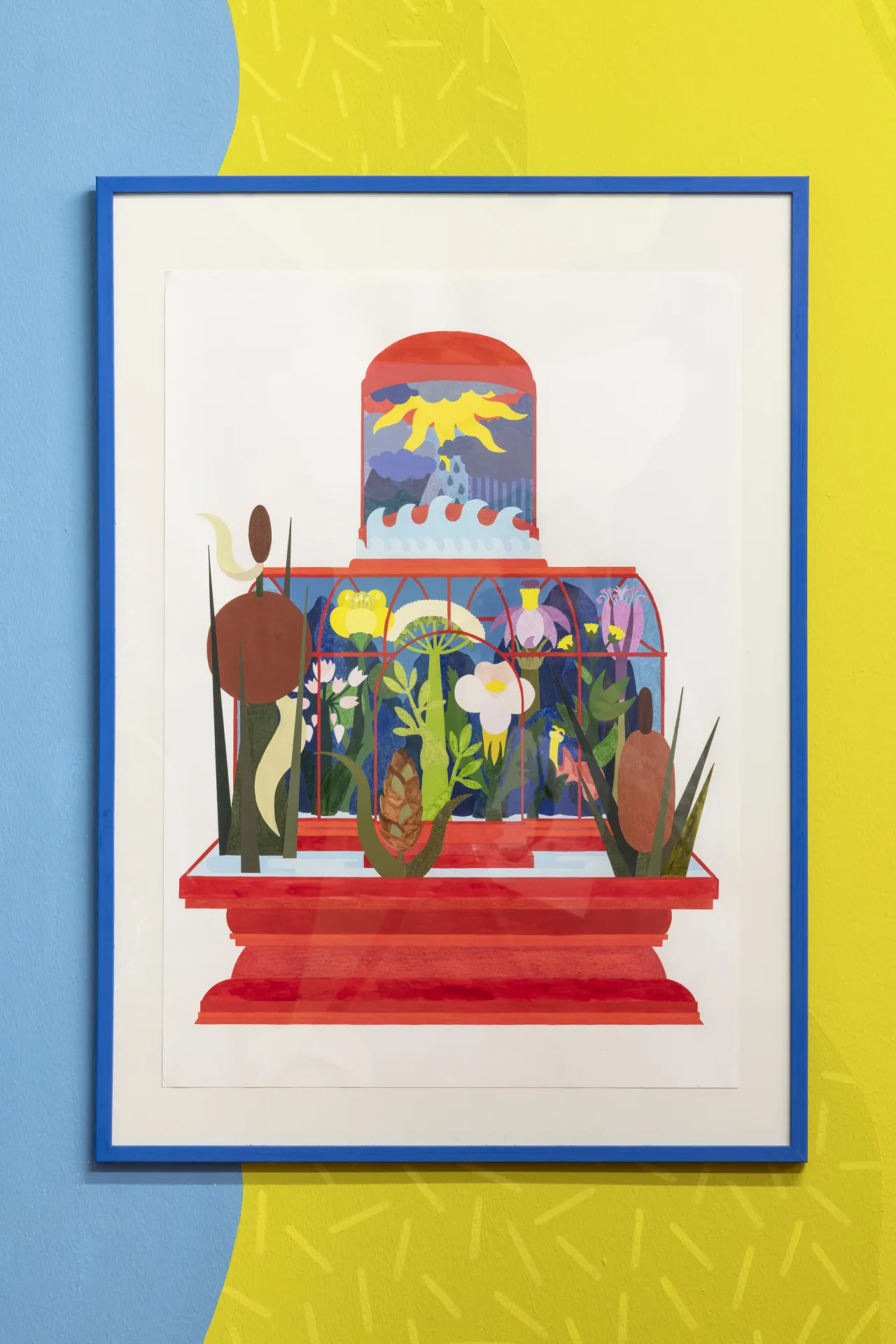
TRIMMT EUCH, Credit Daniel Jarosch
In TRIMMT EUCH, her recent room-scale installation for the Tyrolean State Museums and Kunstraum Innsbruck, Melanie compiled wall paintings, sculptural interventions and drawings that transformed an entire project space into what one curator described as "a kind of breathing landscape". For Melanie, it was one of those special moments of lasting creative satisfaction. "As an artist, reaching satisfaction with your own work is something very rare, and it can evaporate quickly," she says. "TRIMMT EUCH was one of those very rare situations in which I felt a deep connection – that might even be supposed to stay."
This summer, she is heading to a residency in the German countryside to begin research for a book about Philippine Welser, a 16th-century Innsbruck figure famous for her work with herbs and her own tinctures. In July, there's another residency in Italy, working with local farmers on the challenges of gardening in a changing climate. She is doing, in other words, what she has always done – going somewhere new, paying very close attention and making the natural world impossible to look away from.
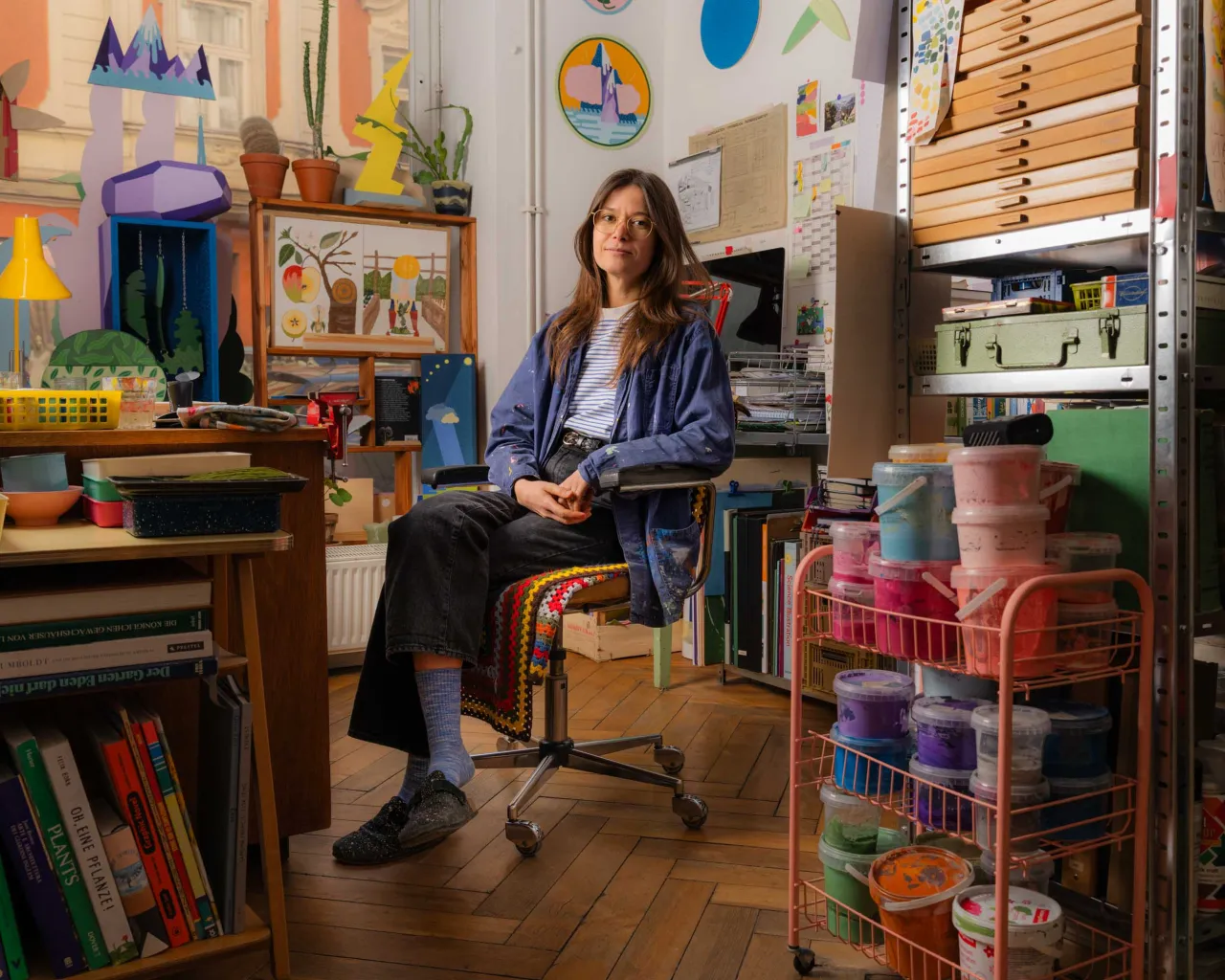
Melanie Gandyra. Photography by Max Schorch
Editor's Picks
Trending


Latest Jobs
Design Director at Koto
Full-time·London·£72k-£90k
Senior Account Manager at Consider
Full-time·London·£42,500
Lead Digital Designer at Together
Full-time·£55k–£75k
Senior Designer at Jubba
Full-time·London·£50k-£60k
Design Lead at Madeo
Full-time·New York City·$85k–$120k
Designer at New Genre
Full-time·London·£36k–£48k