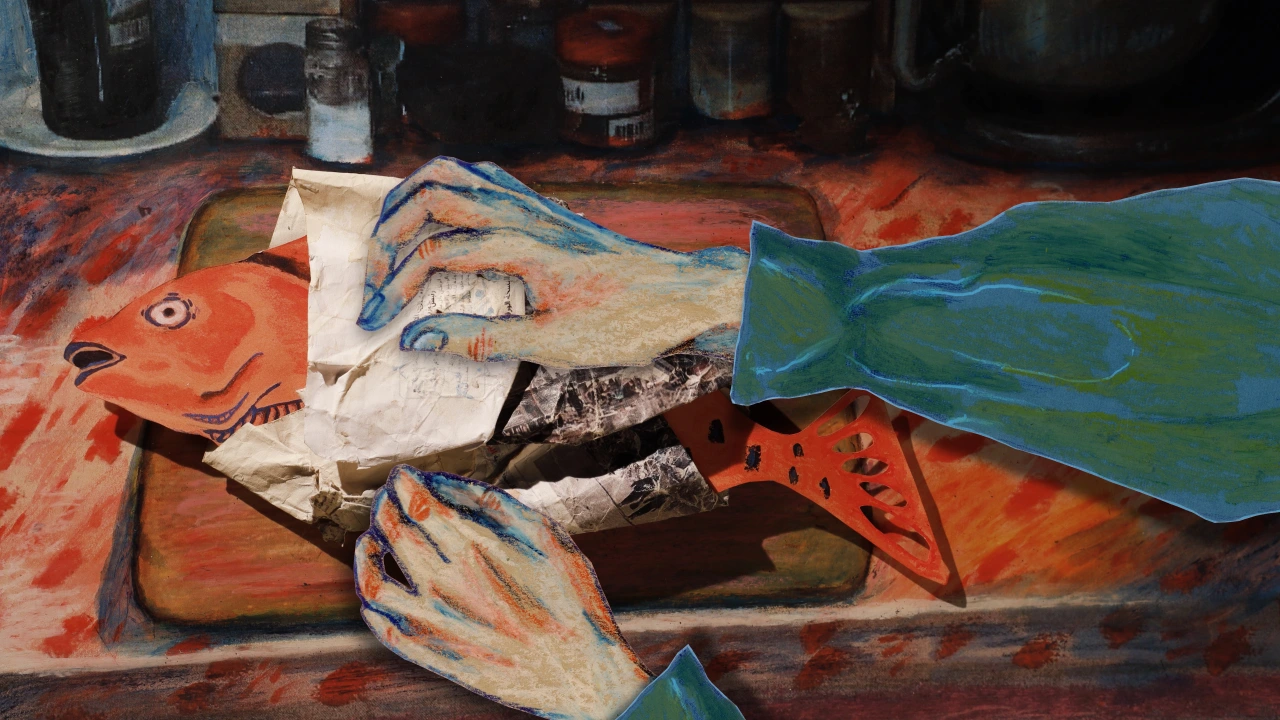
There's a paradox at the heart of Christa Jarrold's practice. Based in Margate on the north coast of Kent, she works in 3D using Cinema 4D and Redshift. It's a medium most people associate with the frictionless, hyper-polished surfaces of commercial CGI. Yet her entire approach is directed at making that work look like it came from somewhere messier: a workshop bench scattered with clay, fabric and felt, presided over by slightly grubby human hands.
The results, evident in her collaborations with Oatly, Coldplay and Netflix, are immediate and distinctive. Rubbery characters with puppet-like proportions. Environments that simultaneously feel cosy and unsettling. And a texture to everything that makes you want to reach out and prod it.
It's a deliberate strategy, and it goes further than you might think. Because Christa doesn't just mimic the look of handmade objects in software... she physically creates clay textures, scans them in and wraps them onto her digital models.
She sculpts in VR to introduce what she calls an extra "lumpy or handmade feel". And she even deliberately scales textures slightly wrong, so they appear oversized on the characters, giving them that "stitched together" feel we're used to from claymations.
"I like the tension of using digital tools to create something that feels tactile and imperfect," she explains. "I want the viewer to feel like they could reach out and touch the characters."
From stuck to sculptural
Interestingly, Christa came from a 2D background; her move into 3D was driven less by ambition than creative restlessness. She'd hit a wall with her previous work and needed, as she puts it, to surprise herself again. What she found on the other side was a medium that, in the right hands, could feel as physical and immediate as any analogue process.
"I'd started to feel a bit stuck with my 2D digital work," she recalls. "There were so many brilliant people making work on iPads, and I felt like my own work wasn't cutting through in the way I wanted it to. I was a bit uninspired, and I needed to surprise myself again."
Learning 3D gave her that jolt. "Suddenly there was this whole new dimension to explore, aesthetically, technically and narratively," she enthuses. "It made animation feel playful again. I could take characters that began in 2D and move them into a stranger, more physical world. It was also like playing the Sims, and I love the Sims!"
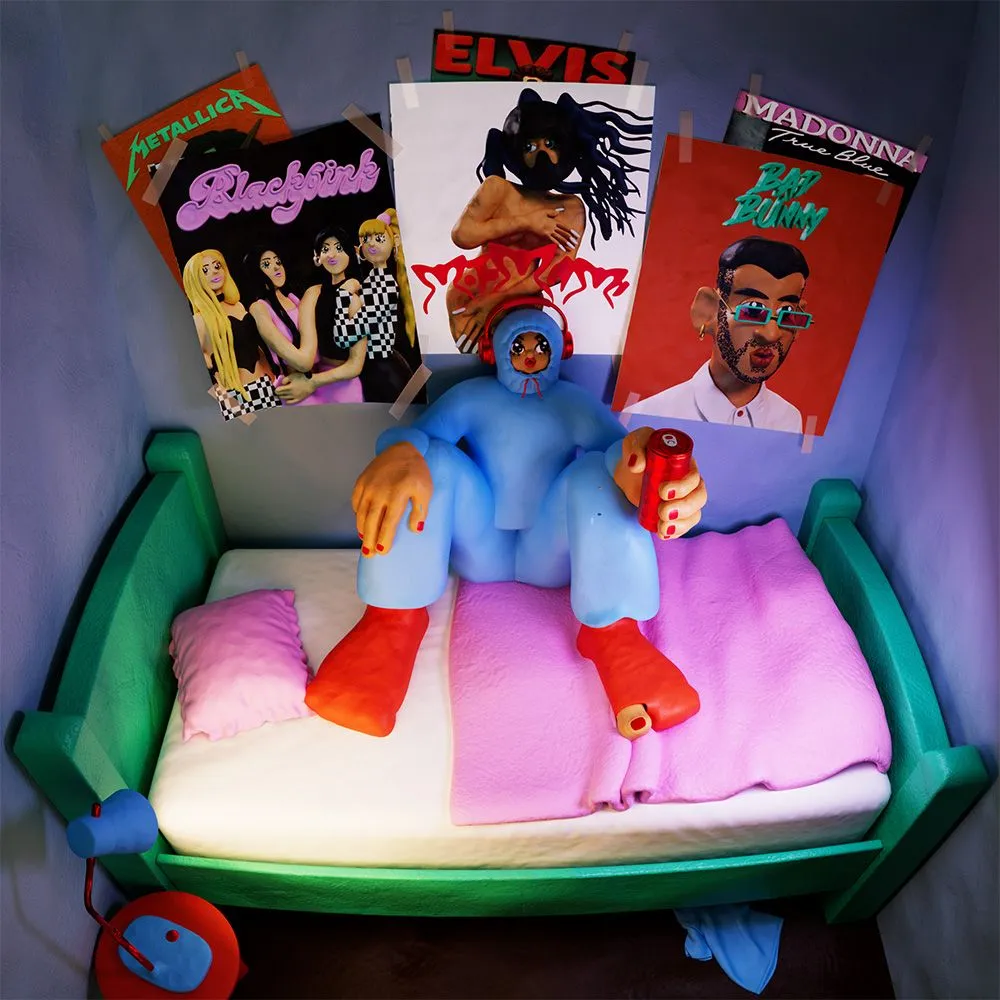
Aside from a renewed sense of fun—which is oft underrated as a way to reboot one's creativity—the new medium also gave her flexibility: the ability to build a character, rig and animate them, relight them, reframe them. It was almost like working with puppets or miniature sets. "It gave me more room to experiment," she says, "and helped me arrive at something that felt much more distinctive to me."
Cosy on the outside
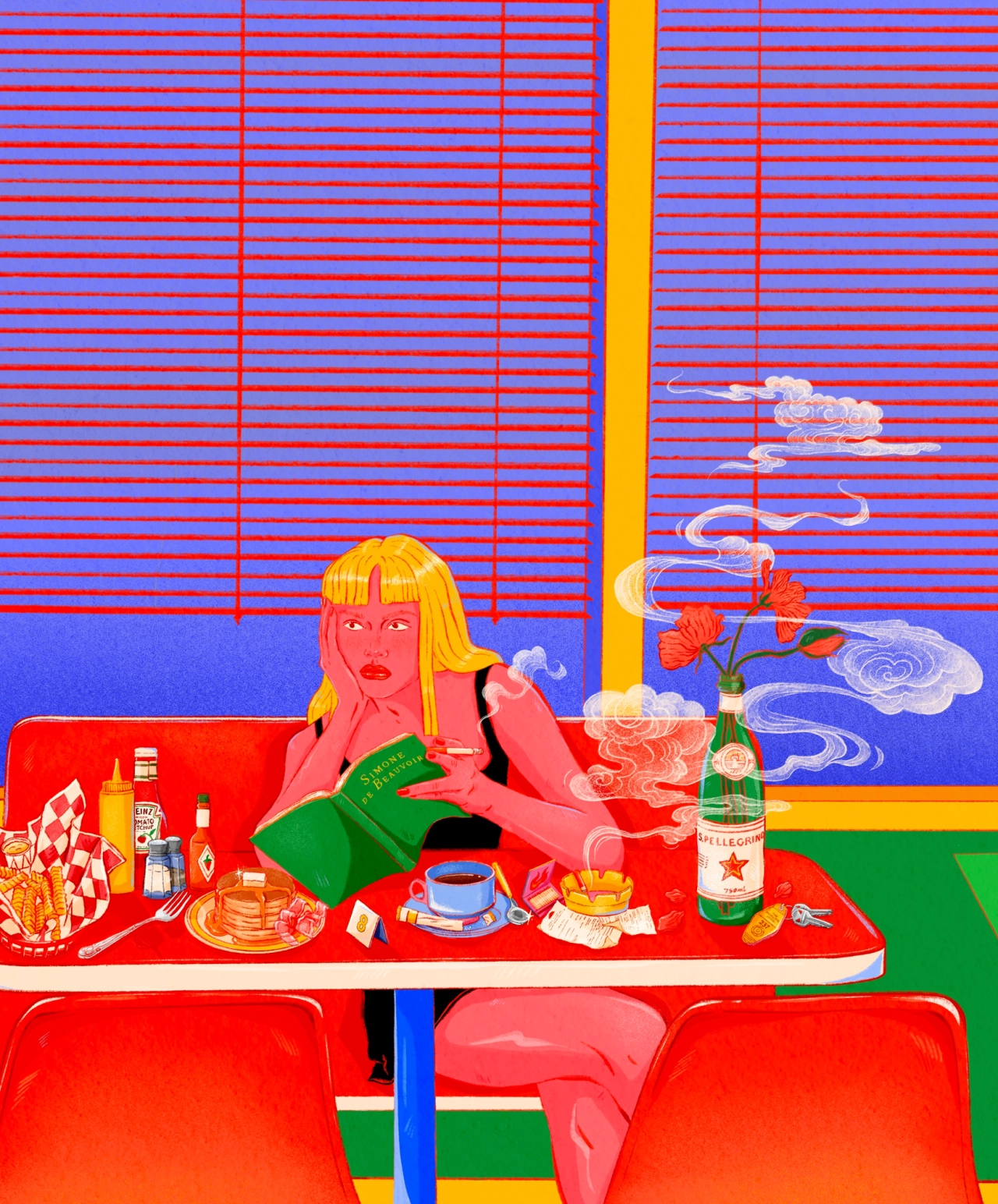
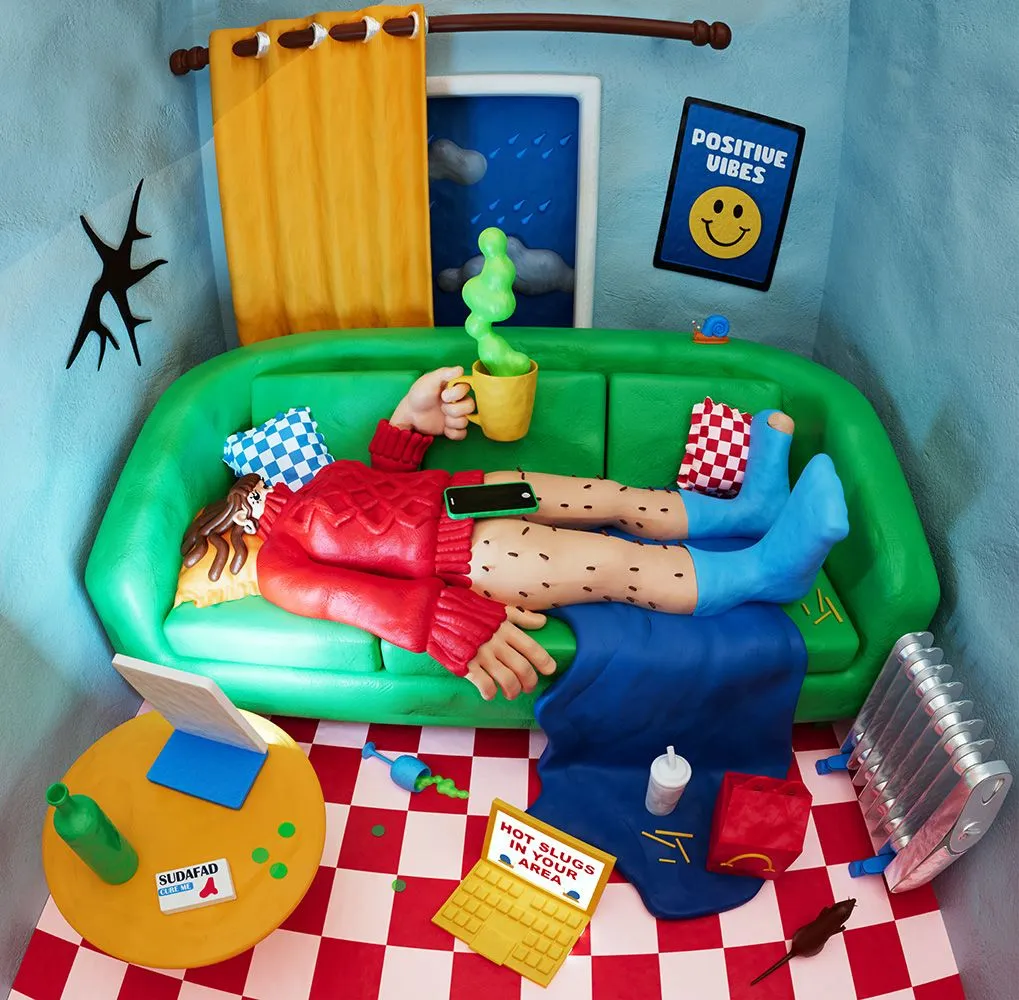
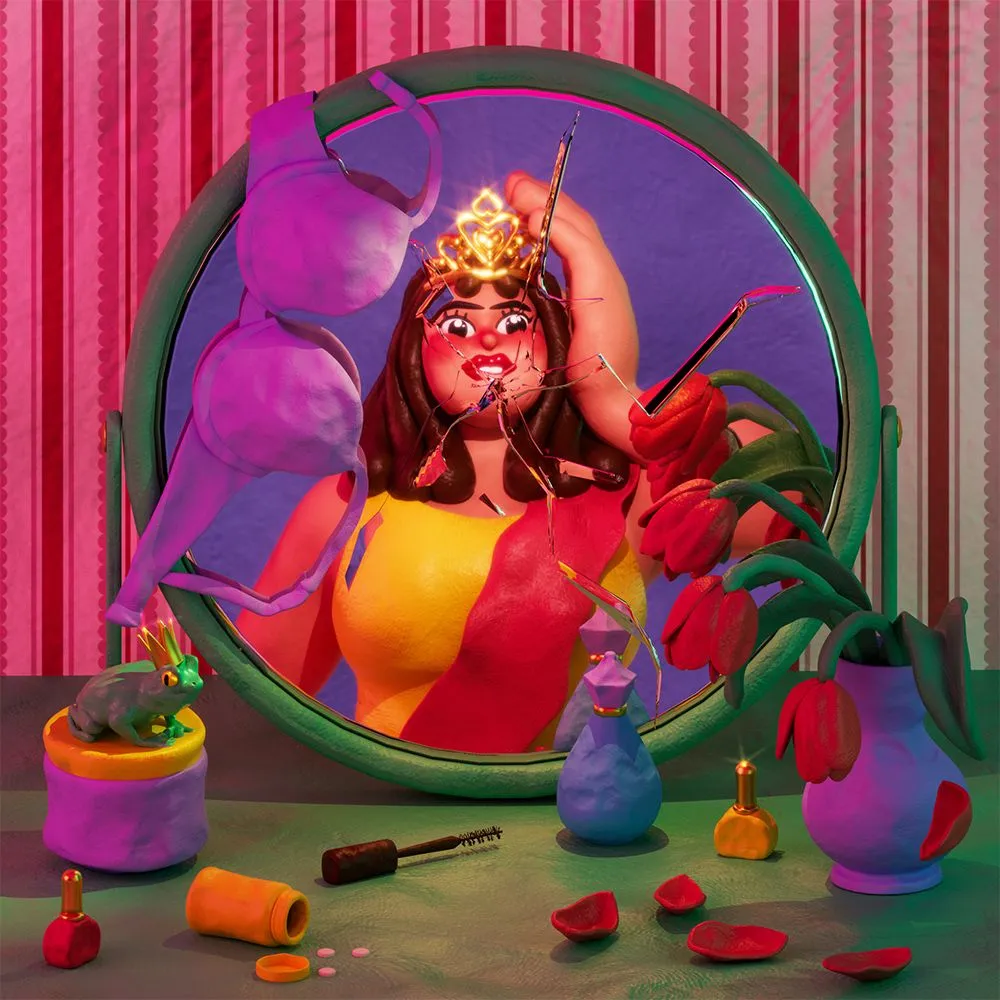
Christa's images are warm, tactile and colourful: characters sprawled on sofas, sitting on beds surrounded by band posters, gazing into dressing-table mirrors. They look, at first glance, like they belong in a cheerful children's animation.
Look closer, though, and something else creeps in. A laptop screen reads "hot slugs in your area". A spilt drink lies unnoticed on the floor, next to discarded fries. An Oatly carton is poured sloppily, almost as an act of defiance. A mirror is visibly cracked.
This tension is fully intentional, Christa reveals. "I'm not really interested in images or stories that feel too cute, safe or comforting," she says. "I'm more drawn to characters' interior worlds: the anxious, funny, embarrassing, dark parts of being alive. But if the aesthetic is also very dark or abrasive, it can sometimes push people away before they've had a chance to enter the world. I like the idea of creating something that feels warm, tactile or even cosy at first glance, and then letting something stranger or more uncomfortable creep in."
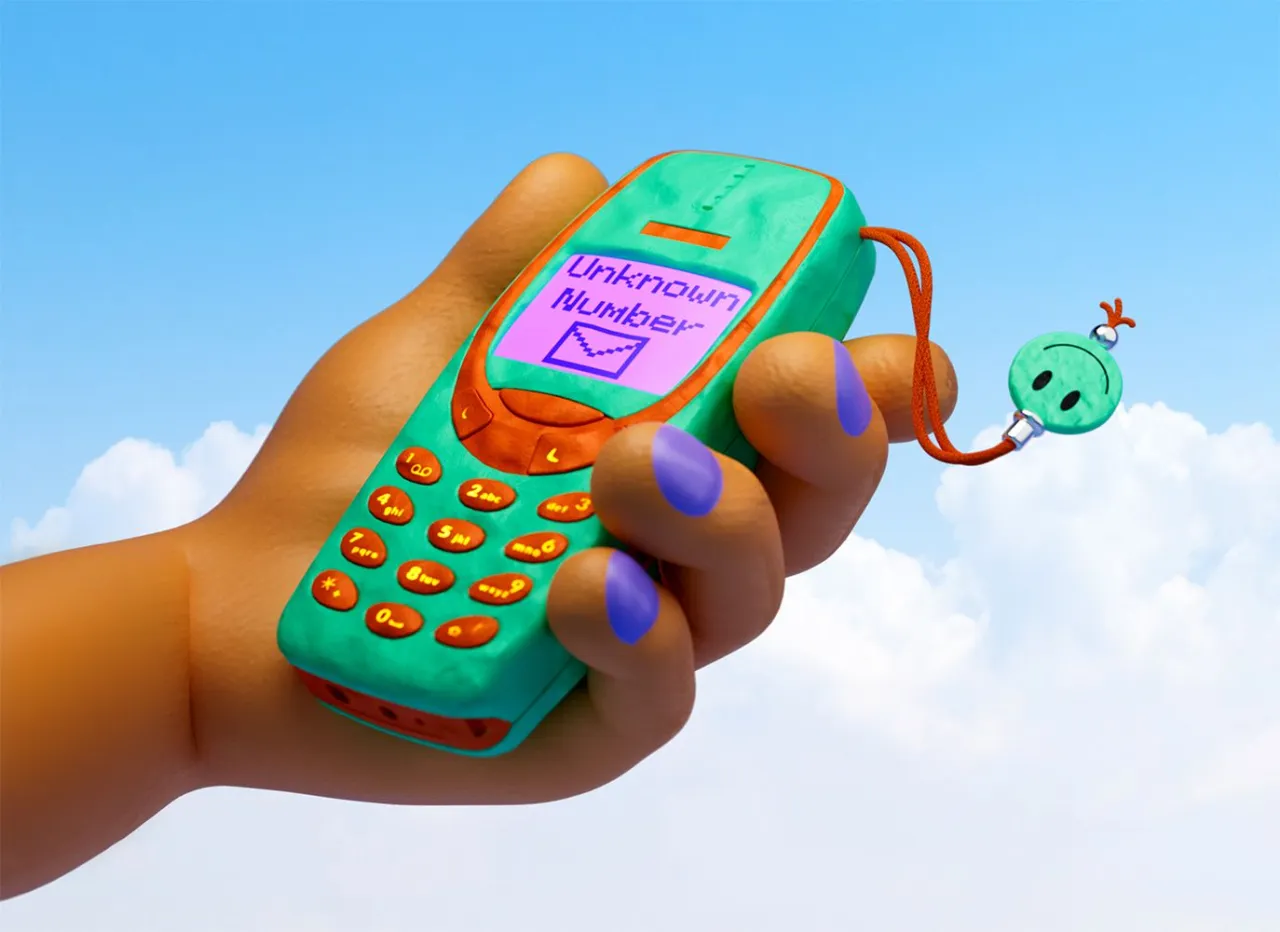
It's a technique with a long tradition in animation and illustration: using something outwardly fun and friendly as a Trojan horse. And Christa's version of it feels particularly well-calibrated for the current moment, when a lot of online visual culture veers between relentless positivity and performative despair, and something more nuanced is easy to overlook.
Processing the background hum
Ask Christa what her work is actually about and she's refreshingly direct. "Is anyone not having low or even high-level existential thoughts right now?" she says. "There's this constant background noise of technology, AI, political instability, climate anxiety, rising fascism and geopolitical unrest. It creates a kind of ambient uneasiness. And then, at the same time, you're expected to carry on as normal: make work, answer emails, post online, be productive, be charming."
That disconnect, she says, is what drives her. "Sometimes it feels genuinely dystopian, the way we adapt so quickly to things that should probably horrify us," she reflects. "So I think my work comes from that place. It's not that I want everything to be bleak, but making something too positive right now would feel dishonest. Humour helps, though. It's a way of looking directly at that unease without becoming completely paralysed by it."
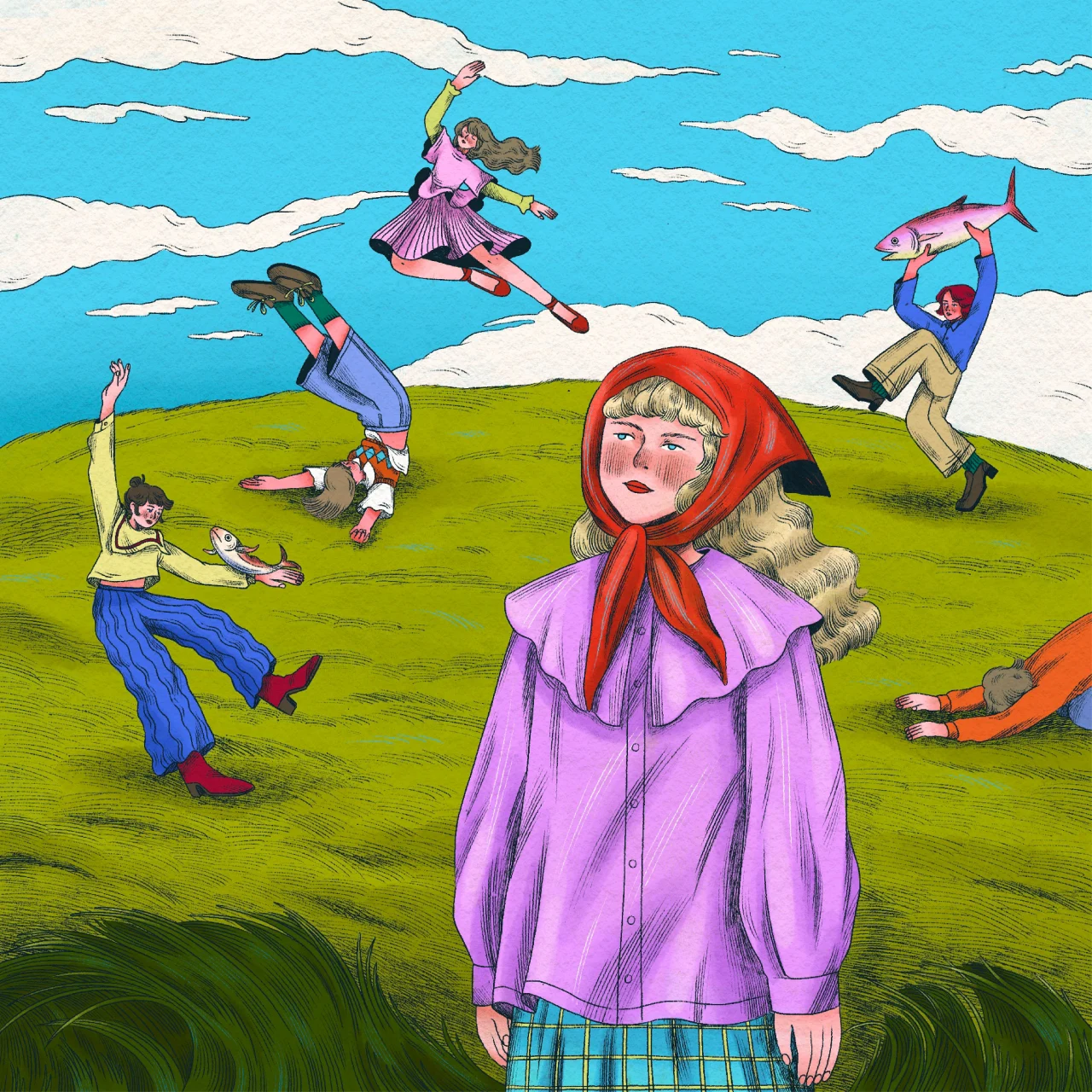
Her short film Mucky, which premiered at Pictoplasma, applies this thinking in style. Set in a world where pigs live like humans, it follows two old friends chatting over pints when one reveals they've given up clothes and returned to wallowing in mud. Through its absurd premise, the film targets something very recognisable: our collective obsession with "going back to basics," from paleo diets and caveman workouts to trad-wife fantasies, and the endless search for a more authentic way to live.
What comes next
For all the talk of XR and where animation is heading, Christa's view on the subject is grounding. The technology is interesting, she says, but "it has to serve something emotionally or narratively, otherwise it feels boring and empty". For now, her attention is fixed on the space she's already found and made her own.
"I want to keep making short films, illustrations and GIFs that sit somewhere between handmade and digital, funny and uncomfortable, cute and bleak," she maintains. "That tension still feels like the most exciting place for me to work from."
And it's hard to argue with that. In a digital landscape that often rewards either slick technical polish or raw immediacy, Christa has found a way to have it both ways, and to fill that middle ground with something funny, strange and uniquely her own.
Editor's Picks

Trending

Latest Jobs
Designer at New Genre
Full-time·London·£36k–£48k
Senior Account Manager at Consider
Full-time·London·£42,500
Creative Director at Koto
Full-time·London·£95k-£130k
Senior Digital Designer at Red Antler
Full-time·New York·$95k-$130k
Diploma in Professional Studies Coordinator at London College of Communication
Contract·London·£52,977 to £63,815
Creative Director at Art&Graft
Full-time·London·£70k-£90k