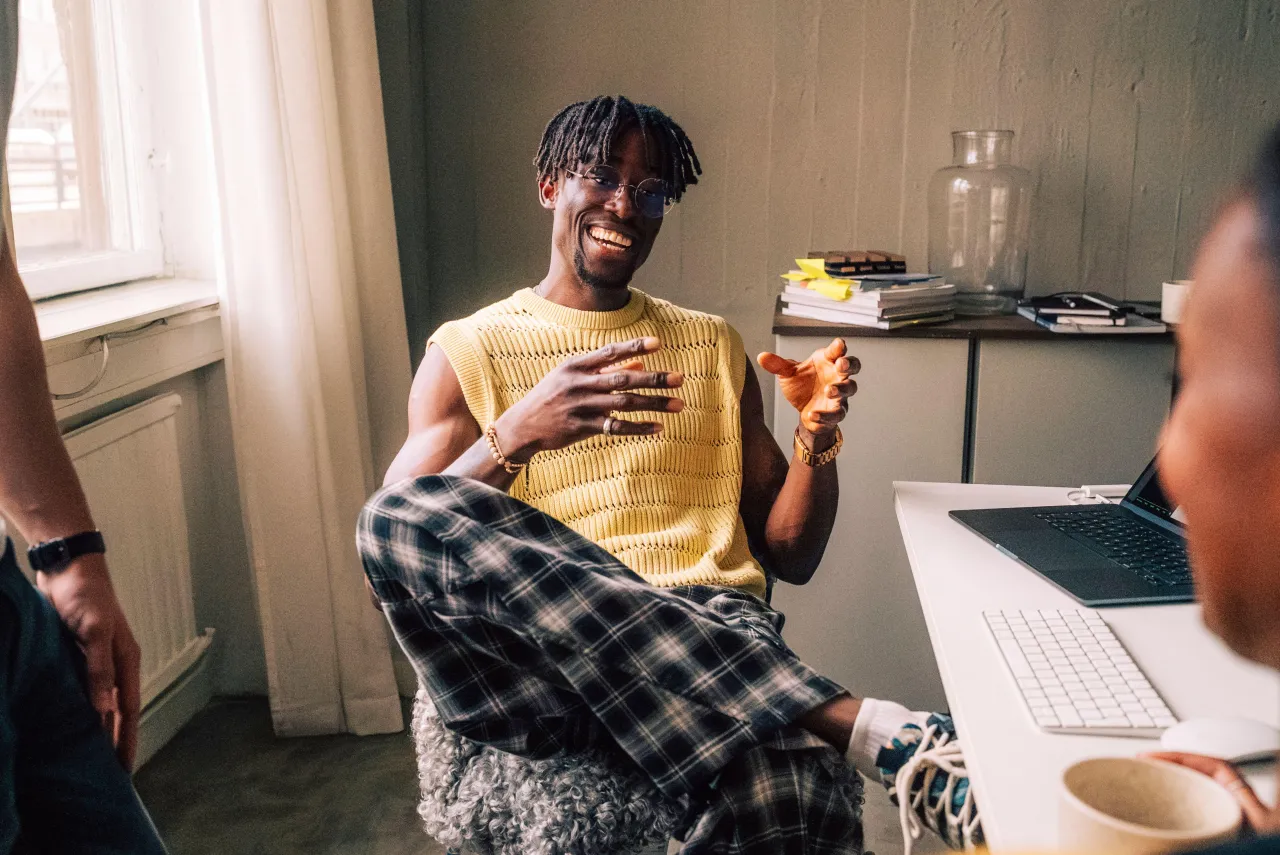
Image licensed via Alamy
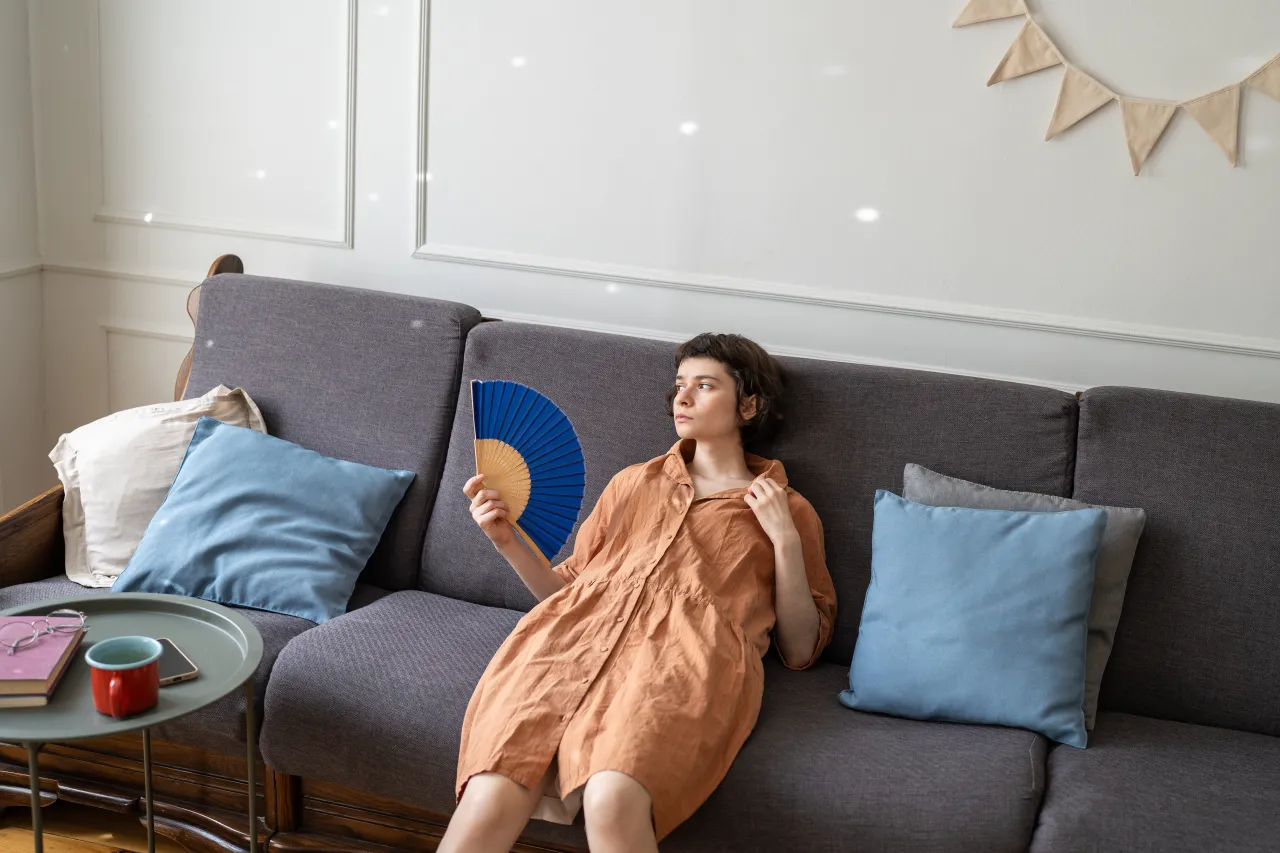
Welcome to another edition of Dear Boom, our advice series that tackles the questions keeping creatives awake at night. This week's dilemma speaks to something many of us are quietly experiencing but rarely admitting out loud.
"I've been doing this for years. Built a solid freelance career. Good clients. Good reputation," writes an anonymous creative. "But lately… everything feels shaky. AI is everywhere. Budgets are tighter. Clients are slower. And I keep wondering… am I still needed? I'm trying to stay positive. Adapt. Learn new tools. But I feel anxious. And a bit lost. How do you stay confident in your work when the whole industry feels like it's shifting under your feet?"
If you're nodding along, you're far from alone. What emerged from this discussion wasn't just reassurance, but a roadmap for navigating uncertainty without losing yourself in the process.
First, separate the hype from reality
The most consistent message from experienced creatives? AI anxiety is largely manufactured noise. Artist and designer Citra M. Putri, aka Everlost Jackie, doesn't mince her words. "The AI bubble is obviously bursting, with backlash everywhere," she says. "Analogue and real human connection is back on trend. People are fed up with being spoon-fed AI slop. As a matter of fact, the more slop there is on the market, the more valuable real human arts and designs become. Only true artists and designers will still have the real skills at the end of the day, and they'll be the ones really in demand."
Illustrator Neal McCullough offers evidence from the trenches. "I was here last year," he reveals. "But 2026 is much busier, and I'm still not using AI. Clients who 'swear by AI' are dithering more than ever, and wondering why the design process is still taking so long."
That last bit is crucial. The clients experimenting with AI aren't sailing ahead: they're struggling with tools that promise shortcuts but deliver mediocrity. As designer Nick Barclay puts it: "AI is just a good filter: it's only the lowballing, pain-in-the-arse clients that use it."
What actually matters hasn't changed
When everything feels unstable, it's worth asking: what endures? Product, UX, and UI designer Shari Robertshaw cuts through the noise. "AI is hyped more than it should be: it's still people behind the work," she reasons. "Have fun with the tools, but don't try to keep up with them all. We're all still the same people, and no one is that much ahead of anyone else. Taste and craft will still be valued, so show your work and who you are; the right clients will come."
Taste and craft. Those two words kept appearing throughout the chat. AI can generate images, but it can't develop taste. It can't understand why one solution resonates and another falls flat. It can't bring lived experience, cultural context, or emotional intelligence to a brief.
Illustrator Benjamin Jones makes this point well. "I would be less optimistic if I saw a huge increase in quality and great taste in decisions being made by non-human hands," he notes. "But I don't. It feels a lot like the electricians are telling us the plumbing is fine. Keep your passion, keep learning, and adapt. Most importantly, don't lose your voice."
The real challenge: staying grounded in uncertainty
Several contributors argue that while AI gets the headlines, the pressure is coming more from economic uncertainty and shifting business models. Artist, director and co-founder of Laundry PJ Richardson identifies the threat. "It's a double whammy right now. The belief that AI is a cheaper shortcut, and economic uncertainty. Both will pass: it just doesn't feel like it. AI will change how we work—sometimes significantly, depending on the role—but won't replace it. It's not as close as it looks."
When you're feeling shaky, the temptation is to try keeping up with everything: every new tool, every trend, every supposed game-changer. But that's a recipe for exhaustion.
Brand designer Harry Fowler, aka Aitch! Creates is currently navigating similar uncertainty. His advice: "Learn the tools and adapt, but honestly, the bigger thing is holding onto what makes your work yours: your taste, your instinct, your perspective. That's the part that doesn't get replaced. When it all starts to feel noisy, I try to zoom out and ask what I actually do well and why clients came to me in the first place, because that clarity goes a lot further than trying to keep up with everything."
Opportunity in the chaos
Not everyone is experiencing the slowdown. Indeed, creative partner Greta Madline reports the opposite. "Personally, I've had an increase in clients," she says. "Most people are coming hungry for ideas, authenticity, human interactions, connection and wow elements. I never focused my creative practice on skill or specific media; instead, I looked to authenticity, values, human connection, intuition, synchronicities of life and passion projects. And I almost feel that AI is highlighting that for me and helping me out."
To be clear, Greta uses AI for housekeeping tasks (contracts, grammar checks, idea mockups), but her core creative practice remains deeply human. The distinction matters.
Meanwhile, artist Sara Bianca Bentley has shifted her focus entirely. "Honestly, the rise of AI has turned me back towards creating analogue art, and documenting it," she says. "AI isn't going anywhere, but we can choose when and if to use it. Especially as creatives. It's about adapting to the new reality, all the while embracing that which gave it the creative foundation it was built upon."
It's not all in your head—but it's not all AI either
Creative wingwoman Skye Antoniou offers a perspective shift worth considering here. "I've always noticed this same pattern in smaller studios, agencies and freelancers," she begins. "From what I've worked with, it's less about you as the creative, the time of year, or even AI. It's just straight up about not having a sales outreach system in place and how you position yourself. Which is completely within your control to build and strengthen."
In short, sometimes what feels like an industry-wide crisis is actually a business development problem. Slow periods happen. Budgets tighten. But blaming AI or market forces can obscure the fact that you might need to actively pursue new clients or reposition your offering.
The long view: cycles, not endings
Illustrator Matt Gibbons offers a historical perspective on all of this. "I think the pendulum will swing back eventually," he says, "but for now it's about weathering the storm. Often, I think when people say 'it's over', what they mean is 'it's in decline'. Once people realise that AI is not able to match people creatively or in terms of quality, those creatives left will be in higher demand."
Interior designer Anna Moore adds this. "Things are definitely tough right now, and I'm not sure I have any solutions for the short term. But what keeps me optimistic about the long term is that most people are against AI and want real things made by people. I believe it will all shift in our favour. I just saw CNBC reporting about developers being rehired after AI integration failed to replace their quality."
Illustrator and picture book maker Steve McCarthy offers the most poetic framing to this dynamic. "It reminds me of gentrification: as soon as the creatives make the area nice, we get kicked out. It's a rough part of the cycle we're in, but we'll emerge again somewhere else, and they'll chase us there too!"
What to actually do
When anxiety creeps in, return to fundamentals. Graphic designer Pierre Picouleau cuts through with clarity. "Don't get distracted by AI propaganda, made by CEOs for CEOs. Let's focus on the work!"
Creative partner Haldun Ozkurt goes further, reframing the moment as an opportunity. "Now it's time for us to lead the way. Now it means anything is possible. A creative's value has never been just the content they created. It's like an earthquake: it can be devastating, but it actually helps the earth in the long run, creating more fertile soil and sometimes new continents. So let's not let the big corporations frighten us. It's time to be free and brave, so they can be afraid of what we can create."
Key takeaways
The industry is shifting. That's undeniable. But shift doesn't mean extinction. It means recalibration.
Focus on what makes your work distinctly yours. Double down on craft and taste. Build the sales systems you've been avoiding. Have honest conversations with clients about value versus cost. And remember: the noise is loudest right before it settles.
You're still needed. The question is whether you'll let the uncertainty paralyse you, or use it as fuel to clarify what you actually stand for.
Editor's Picks
Trending
Latest Jobs
Graphic Designer at Crux Product Design
Full-time·Bristol·Up to £36k
Content Editor at ITV
Full-time·Birmingham·£41,284 - £57,412
Senior Graphic Designer at MoMA Retail
Full-time·New York·$72k-$80k
Creative Project Manager at Analogue
Full-time·Leeds·£28k–£35k
Head of Production at Art&Graft
Full-time·London·£80k-£95k
Brand Designer, Product Launches at Figma
Full-time·New York·$127k–$269k