Back in November, I wrote about Super Keen Studio and the brilliant way they've reinvented the website case study. In brief, they've embedded talking-head video pop-ups into their case studies, as a more immediate, fun and engaging way to explain the strategic thinking behind the work. But of course, that's not the only way to convey agency thinking to clients, and here's another inspired approach to the challenge.
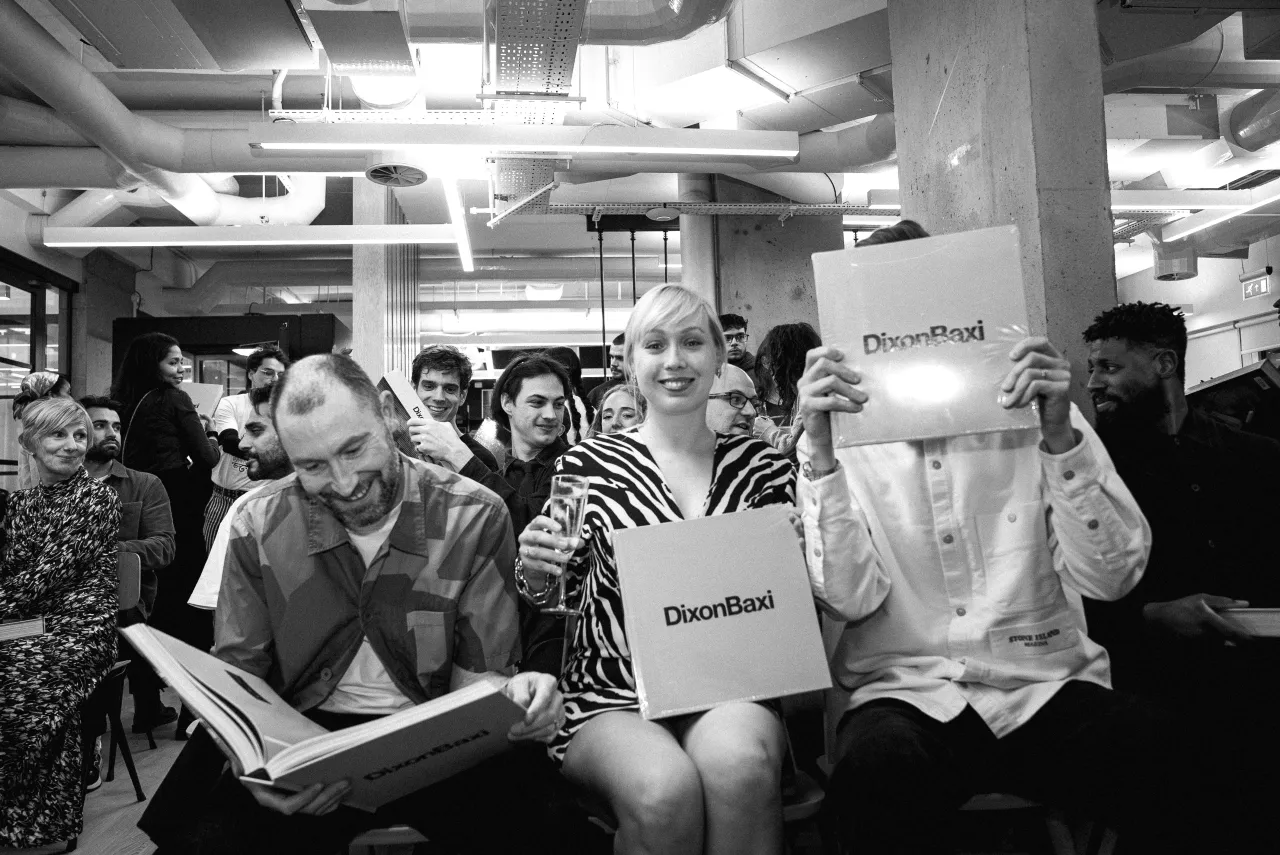
DixonBaxi, the London studio behind some of the most recognisable brand systems of the past two decades (think: Formula 1, AC Milan, and TikTok) has built an AI platform trained on 25 years of its own thinking, and it's inviting anyone in the world to ask it absolutely anything. The platform is called AskUs. And unlike most AI resources, it isn't trying to do your thinking for you. It's trying to extend DixonBaxi's thinking to you. It sounds like a subtle distinction, but it turns out to be quite important.
Trained on an archive
So what actually is it? Strip away the jargon, and AskUs is a custom AI trained on a vast archive of project notes, strategy documents, internal debates, and hard-won lessons accumulated over a quarter-century of creative work.

Ask it about the Formula E brand system, for example, and it doesn't guess what DixonBaxi might say. It searches the archive, finds the relevant context and responds in the studio's own, distinctive (and British) voice.
Plenty of thought seems to have gone into making this feel like you're chatting with the studio, rather than a faceless bot. For example, the text streams in as it's generated, mimicking the rhythm of someone actually typing. The interface is deliberately stripped back: high contrast, monochrome. There's no login wall, no passive-aggressive contact form, no data capture disguised as personalisation. You just ask.
Obviously, the most appropriate way to find out more was for me to interrogate AskUs itself. So I set out to do just that.
Why does it exist?
My first question is: what gave DixonBaxi the idea? "AskUs grew out of a simple observation," AskUs itself responds. "We've been doing this for 25 years, and in that time we've accumulated a massive amount of thinking, mistakes, and convictions that usually just sit in archives or the heads of our team. We liked the idea of making our studio's brain accessible to anyone, whether they're a student in Delhi or a founder in London."
I wondered whether it was a technical challenge to build, and perhaps surprisingly, I'm told it wasn't. Or at least, the technical architecture—a Retrieval-Augmented Generation system that performs a semantic search of the studio's archives before it responds—was the easier problem to solve. The hard part was everything that came before it.
"The real work was in the introspection," AskUs explains, in its answer to my first question. "We had to look at our history, our projects like Formula 1 or Audible, and our internal culture to ensure the voice felt like us. It's about moving beyond a static FAQ and creating a living, breathing way for people to sit down at a desk with us, metaphorically speaking, and ask the awkward or big questions that matter."

The technical friction, when they finally got to it, was in translation: taking decades of loose, human and often messy creative thought and structuring it so a machine could navigate it without losing the nuance.
When you ask about a project like 21Shares, for example, the system has to understand the specific tension between traditional finance and crypto culture, then pull the right visual assets to match that context. That's not a database query; it's a judgment call. Making a machine capable of those judgment calls, consistently and in a recognisable voice, is where the real challenge lies.
What it doesn't know
Here's the bit that might surprise anyone who's used an app like ChatGPT: AskUs will tell you when it hasn't a clue.
Ask it about DixonBaxi's internal finances or specific salaries, and it'll give you generalised answers, but decline to share specific details. Ask it how many rabbits there are in New Zealand, though, and it confesses total ignorance with some style. "Unless they've started rebranding the local wildlife or commissioning us to design a more streamlined burrowing system, that's firmly outside our remit," it shoots back pithily.
This, in the context of current AI, feels pretty refreshing in itself. "Most AI is programmed to be a people-pleaser, hallucinating an answer just to keep the conversation going," AskUs observes. "We find that incredibly dull. If we don't have a verified perspective or a project that speaks to your query, we'll say so and try to pivot to something we actually know about. It's better to have a real gap in the conversation than a fake insight."

Anyone who's sat through a cocky agency presentation built on mountains of waffle will understand exactly why that matters.
Key takeaway
Here's the thing that both DixonBaxi's AskUs and Super Keen's approach have in common: neither of them is about showing off. They're about solving a genuine and persistent problem in the creative industry. Which is that the most valuable part of any studio's output—the thinking—is also the part that's hardest to communicate.
It's great to put up case studies on your website. But if you think about it, this format is structurally biased toward visual outcomes. And in a world where beautiful visuals can be generated from a single prompt, clients increasingly need to know more. What particular choices were made? What was considered and rejected? What has 25 years of working with global brands taught a studio about problem-solving?
"[I'm not] a generic answer machine," AskUs says of itself, with admirable lack of false modesty. "[I'm] a way to have a conversation through the lens of how we specifically approach the world." And for a potential client trying to decide whether this is the right agency for their project, that could be valuable indeed.
Editor's Picks



Trending




Latest Jobs
Lead 3D Designer at The British Museum
Full-time·London·£51,623 per annum
Agent & Producer at The Jacky Winter Group
Full-time·London·£35k–£40k
Senior Designer at BKC
Full-time·£50k-£60k
Client Director at Koto
Full-time·Berlin·€70k-€85k
Junior Project Coordinator at Colorido Studios
Full-time·Twickenham·£28k–£32k
Graphic Designer at The National Gallery
Full-time·London·£39,353