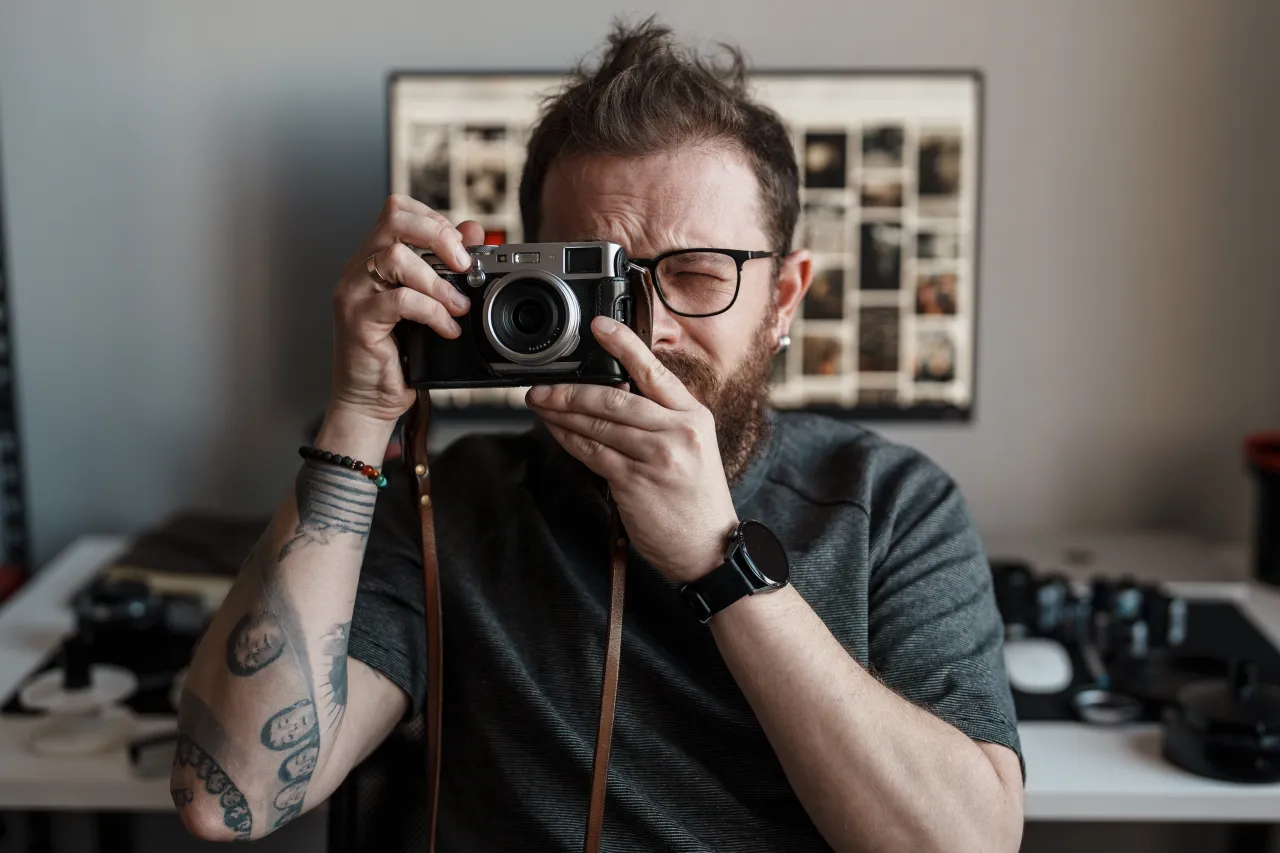
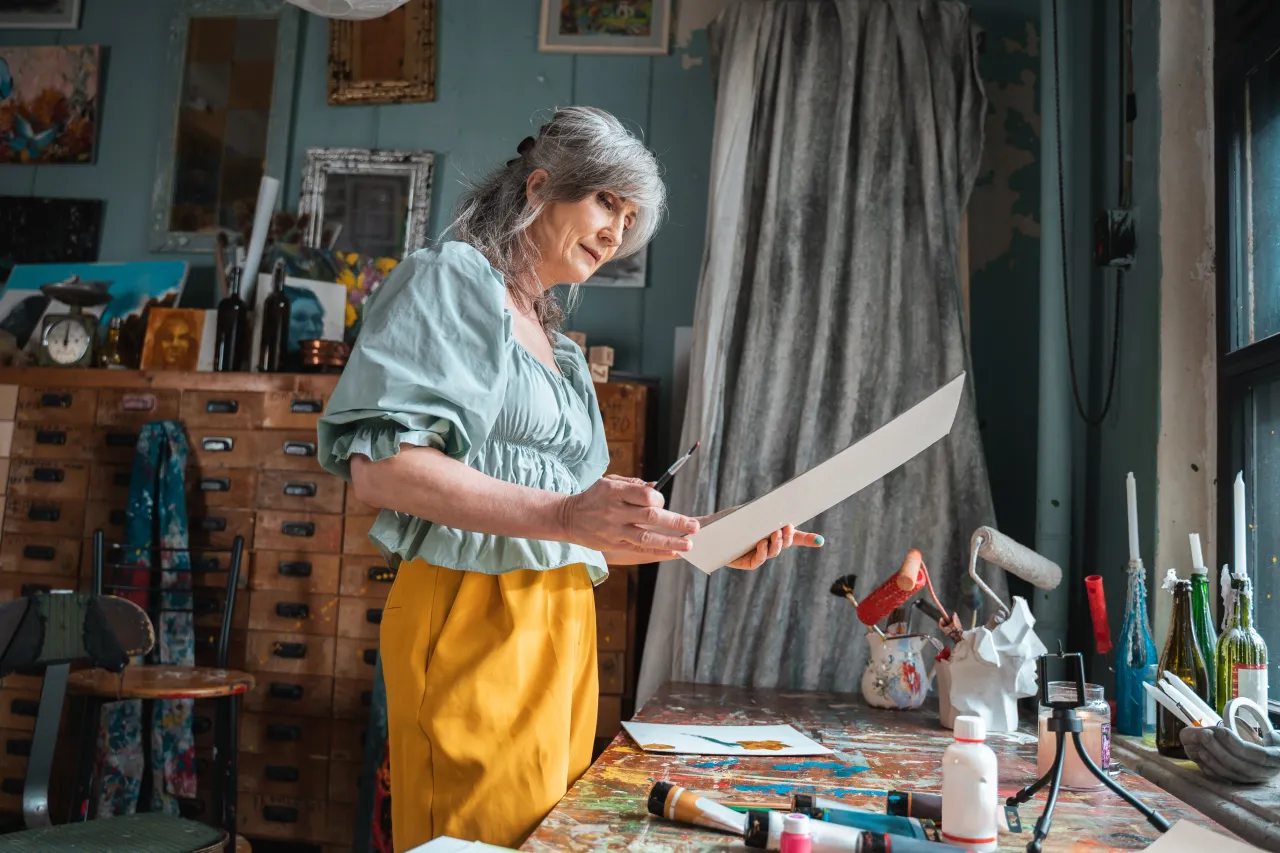
Image licensed via Adobe Stock
There's a particular kind of wisdom that doesn't come from doing things right. It comes from the projects that implode, the partnerships that curdle, the proposals sent with the client's name spelt wrong throughout.
Nobody puts these moments in their portfolio, and they'll rarely mention them in public talks. But chat to them in the bar afterwards, and they'll probably tell you those failures taught them more than the wins ever did.
To find out more, we asked members of our community platform, The Studio: what was the biggest lesson you learned when something went wrong? The answers were candid, and there's a lot that the rest of us can learn from them.
1. Get out of your own way
Sometimes the best thing failure does is strip away the excess. Brand builder and creative director Asa Rodger, who runs a one-person studio Page, experienced this when a significant health diagnosis arrived—just as he got an opportunity to work for one of the world's biggest brands. He took the work anyway… and then something strange happened.
"The love for creative was still there, but the pressure wasn't in the same way," Asa recalls. "Oddly, it made the work easier. There was less floundering, I didn't suffer imposter syndrome, and I didn't overwork. And all this happened naturally, because I simply didn't have the emotional or mental capacity to do otherwise."
What emerged from this experience was an important reframe: that much of what makes creativity feel difficult is the weight we pile on top of it. "I think the work that came out the other side was not only easier but better too," Asa reflects. "It's only design, and it reminded me to step aside a little. To let the creative work feel inspired, fun and exciting; not too worrisome and stressful."
2. Trust slowly, and watch for the shine
Few lessons arrive as painfully as discovering that someone you've invested in wasn't who you thought they were. Illustrator and author Juliana Salcedo, based in Madrid, gave four years of her career to a self-publishing project with four friends. What she found when it unravelled was more troubling than a failed collaboration.
"I discovered that not all of us were there for the work, and what the rest of us found out was pretty dark," she explains. "It left me exhausted. I'd worked so hard, and found myself four years later somehow tarnished by association."
What Juliana took from this experience is a principle worth following. "I'm now very careful about people who sell themselves as idealists and leaders," she says. "I believe there are some truly positive ones, but they're not necessarily the shiniest ones. And I've learned to value my own time and own my talent."
3. Do the thing you're afraid of
Photo retoucher and creative artworker Sandrine Bascouert had a very specific fear: colour grading. She understood the theory. She'd worked in a lab. But interpreting someone else's visual vision using curves felt beyond her.
Then a project came along that required her to do exactly that. "I finished it on schedule, but actually worked on it way too much," she recalls. "It was long, frustrating and tedious. There was a lot of back and forth, apologies, and ultimately having to admit that I didn't understand the directions."
Yet something unexpected came out of her difficulty. A long-standing client of Sandrine's had a standing brief: "Every day, but elevate it." For years, that instruction made no sense. But now, she says, she can convert an obscure brief into actual numbers. "The skill I gained by accepting something I was always fearful of doing was not the technical skill, but the communication skill."
4. Plan for what probably won't happen
Designer, artist and creative leader Matthew Gallagher has had a long career, which means, by definition, a long catalogue of things gone wrong. His most formative lesson came early, watching a project manager prepare a website launch checklist that included, alongside the usual handoffs and server tasks, contingencies for terrorist attacks, earthquakes, and blackouts.
"Odds were against several of the items on the spreadsheet," Matthew acknowledges, "but the PM wanted to take into account anything that could make the project go sideways and hurt the company's reputation and their team's effectiveness. That was a good lesson."
Matthew also makes a case for something harder to learn: the ability to apologise genuinely, without hedging. "Understanding negative impact and having self-awareness enough to realise that we have harmed someone is the sign of mature emotional intelligence," he reflects. "Being able to look someone in the eye and apologise, without equivocation, is an important but hopefully infrequently needed skill for any working professional."
5. The typo that changed everything
Sometimes the lesson arrives in a single, mortifying moment. Daniel Poll, founder of Noramble, sent a proposal about ten years ago with the client's name and brand spelt completely wrong throughout. "The client scathed me via email and was so disappointed in the lack of attention to detail," he recalls. "That one experience turned me into a stickler for the nitty-gritty detail. And not just in business."
There's something almost comforting in this lesson's simplicity. Turns out you don't always need a years-long saga to fundamentally change how you work. Sometimes one misspelt name is enough.
6. When plans fall apart, something else begins
For branding designer Kosho Sugiura, the moment things stop going to plan is not a detour. It's an invitation to redesign.
"When plans fall apart, the pace slows down," he says. "When the pace slows down, what you see changes. You become aware of the assumptions you were operating on, you start to pay attention to voices you'd previously ignored, and you question whether the direction you were heading in was correct in the first place."
This reframe, from failure as an obstacle to failure as information, is one many creatives eventually arrive at. But it takes time to hold it with any confidence. "I believe that failure isn't the moment when you can't move forward," Kosho adds, "but the moment when the direction you're heading changes."
Key takeaway
These stories are all different, but here's what unites them. The creatives who came out the other side of their setbacks didn't do so because they were tougher or luckier. They did it because they stayed curious about what the difficulty was trying to tell them.
Whether your current setback is a professional betrayal, a health crisis, a failed collaboration or a catastrophic typo, it is almost certainly teaching you something. The task is staying present long enough to find out what.
Editor's Picks


Trending



Latest Jobs
Senior Brand Designer at Analogue
Full-time·Leeds·£38k-£45k
Brand Strategist at DNCO
Full-time·London·£45k-£60k
Senior Digital Designer at 3800
Full-time·Sheffield·£40k-60k
Multidisciplinary Designer at Formation Games
Full-time·London·£40k–£50k
Creative Project Manager at Analogue
Full-time·Leeds·£28k–£35k
Senior Designer at BKC
Full-time·£50k-£60k






](https://media.creativeboom.com/bef5d73f-95e0-4947-ab88-f398b2fbf320/conversions/1dc5d095ffe85194abed4522d399c7d4a16972fc-medium.webp)