Ibiza Art Weekend: Remi from Gorillaz on why the future belongs to the creatives who imagine it first
Amidst the wildness of the Spanish island's superclubs, the drummer and producer for virtual band Gorillaz argues for creativity without fear.
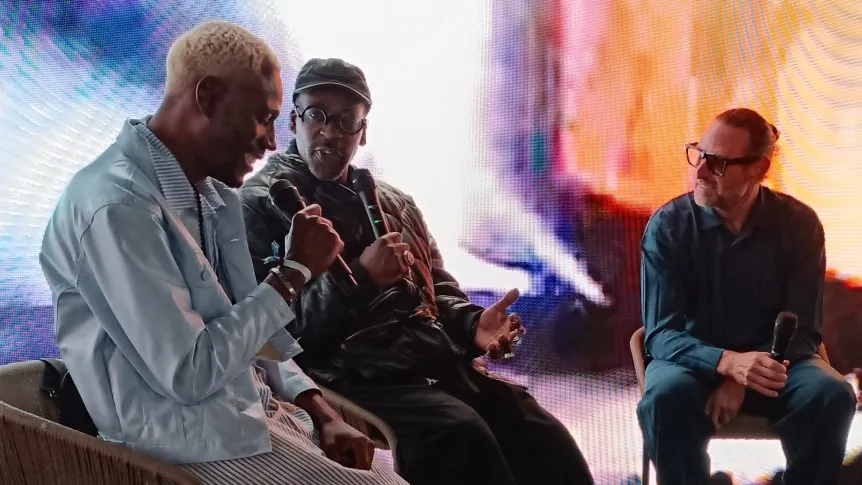
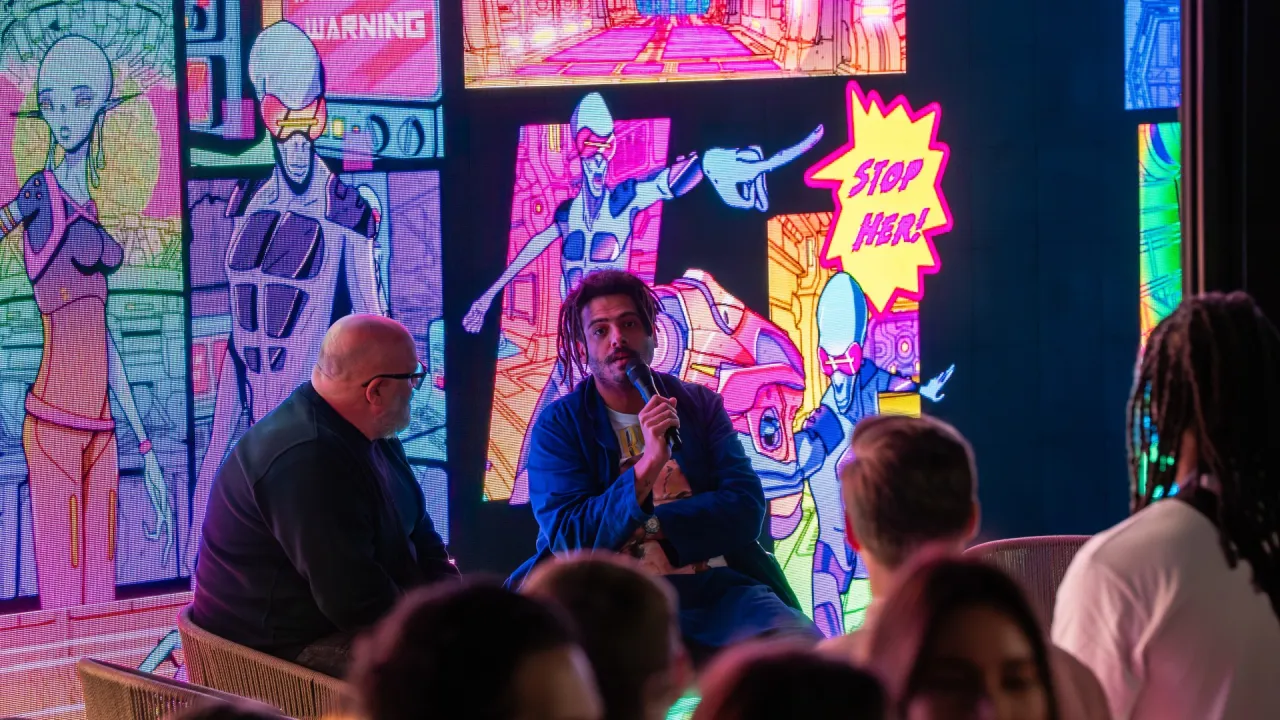
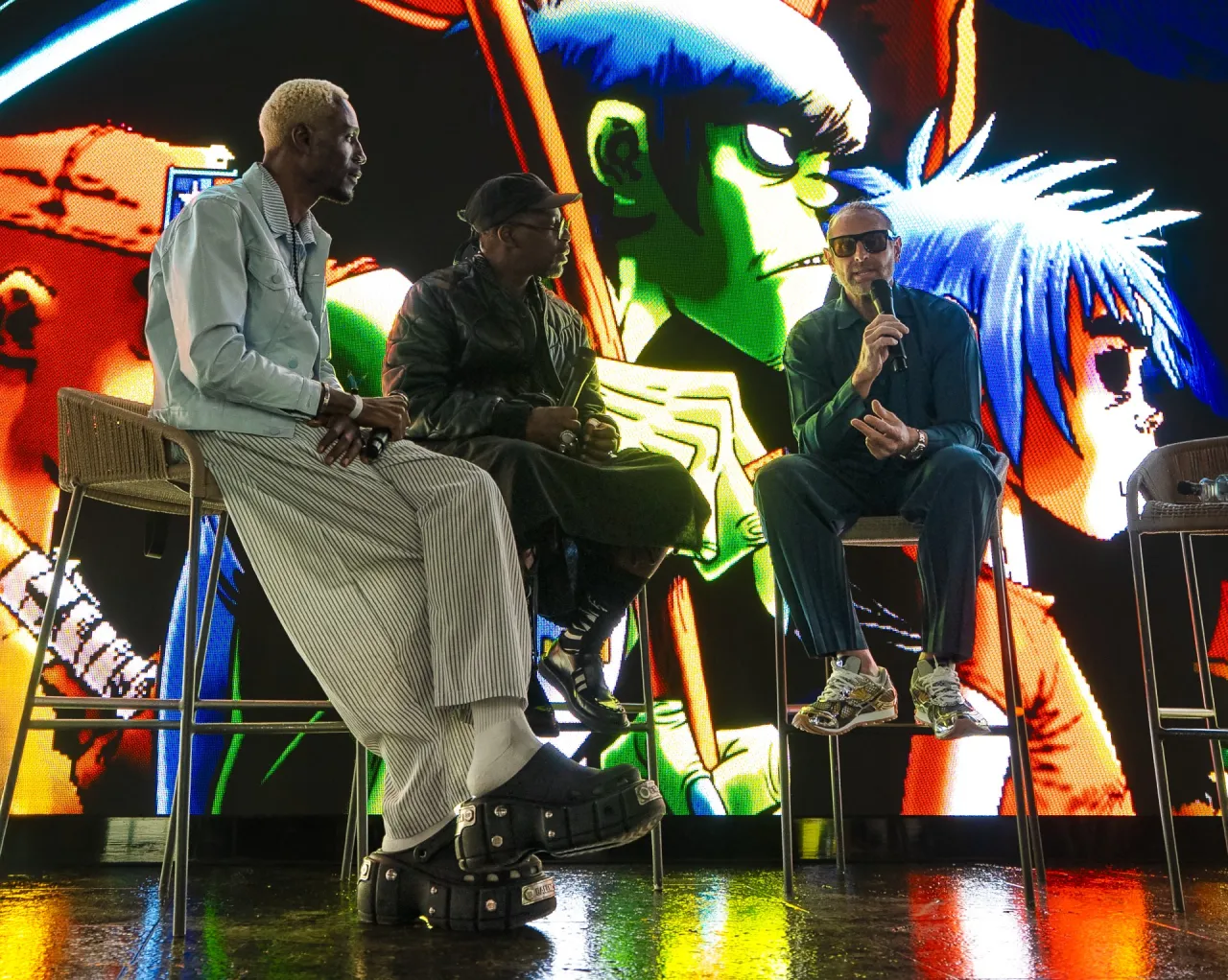
Left to right: Tafari Hinds from Red Eye Media, Remi Kabaka Jnr from Gorillaz and Mark Dale, founder of W1 Curates
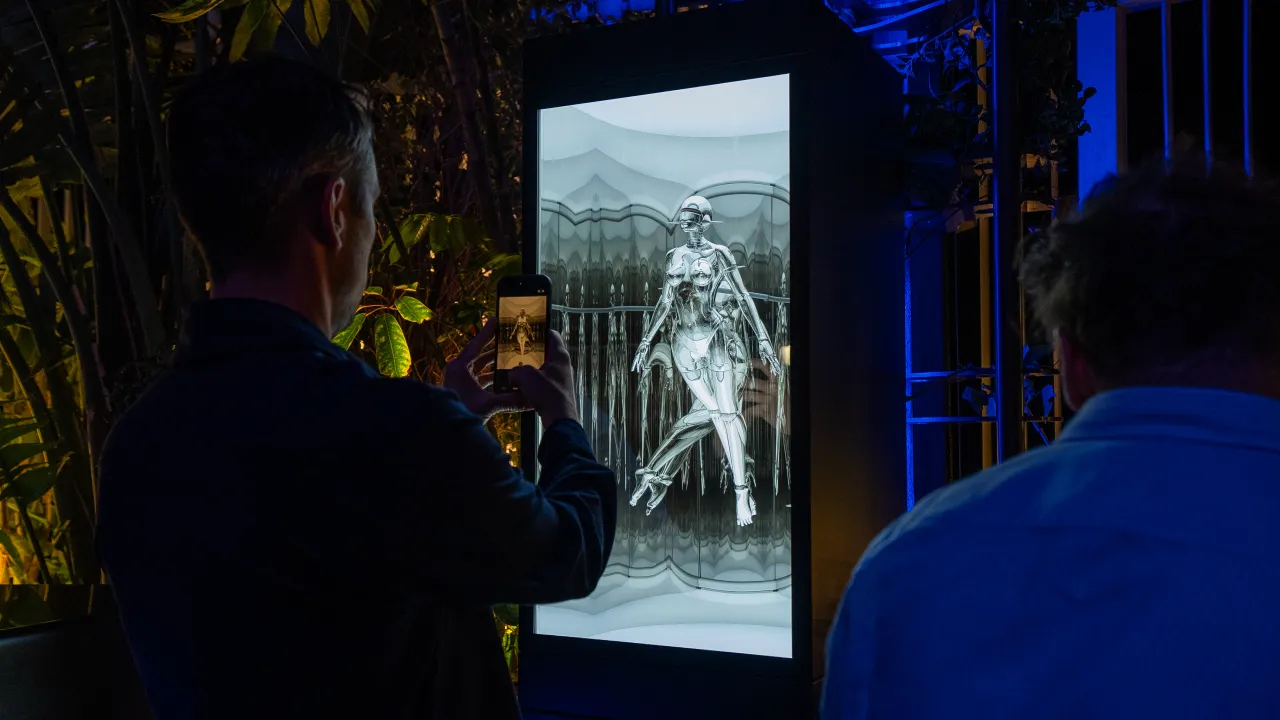
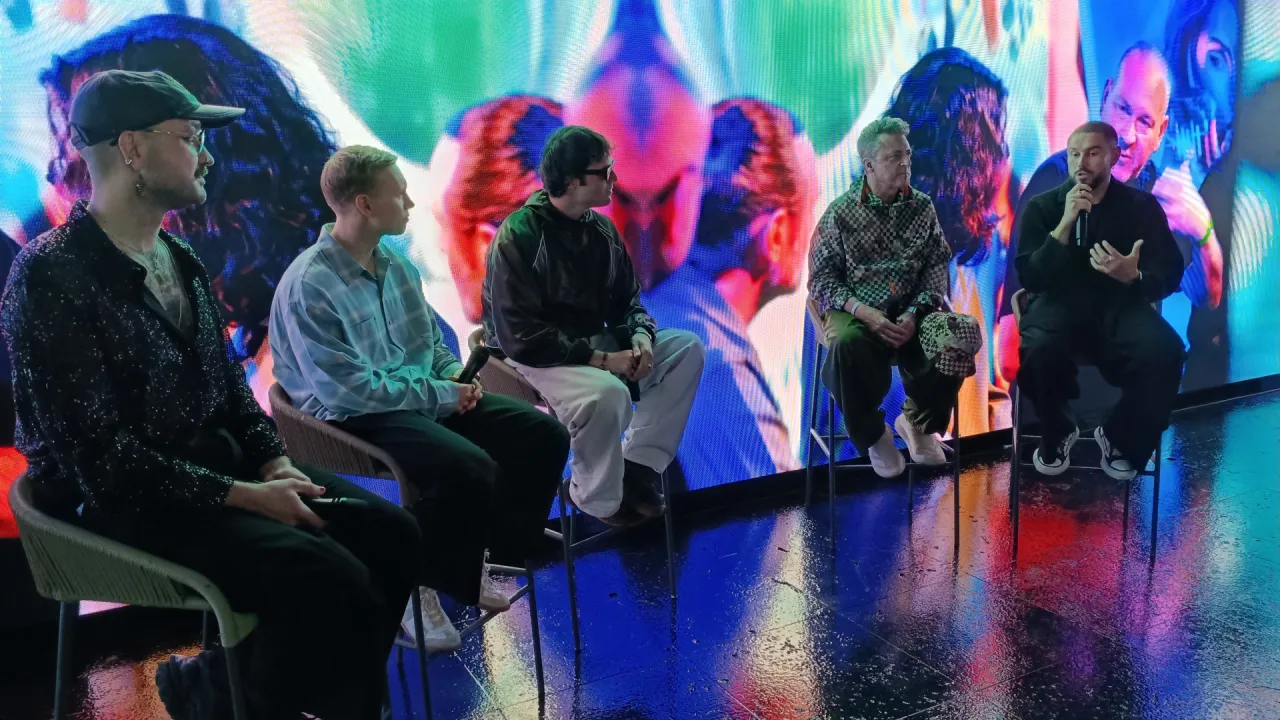
The setting alone makes you feel like you've arrived in the future. I’m standing in Hï Ibiza— DJ Mag's four-time #1 Club in the World—watching Gorillaz animations ripple across immersive LED galleries. It's a masterclass in digital maximalism; then you hit the garden, to be confronted by a life-size sculpture of a Fiat 500. Carved from a 15-tonne slab of Carrara marble, this imposing artwork sits with a strange, silent gravity against the club’s high-octane backdrop.
It's 10pm on a Friday in Ibiza. But I'm not on a wild night out; I'm here to watch a panel discussion about art. Welcome to Culture Collective, a symposium organised by London-based art platform W1 Curates in partnership with The Night League, the company behind superclubs Hï Ibiza, Ushuaïa Ibiza and [UNVRS].
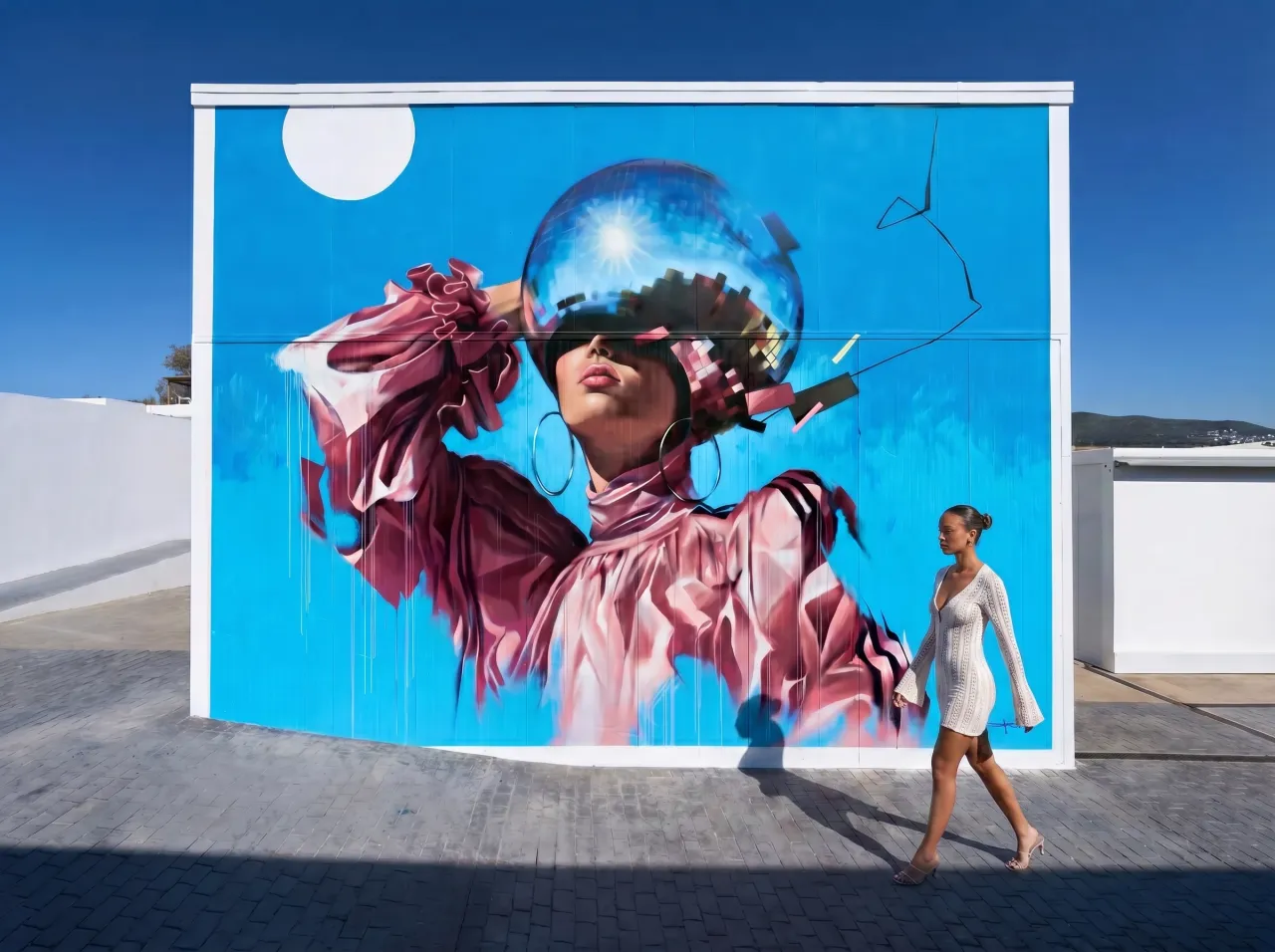
This marks the start of Ibiza Art Weekend: a season-long exhibition that's transforming three of the world's most famous clubs into art galleries, featuring work by over 70 international artists. An ambitious, slightly audacious idea, and one that's very Ibiza.
Of the symposium's many sessions, the drawcard is 'From Street to Screen: Banksy to Gorillaz.' Its guest, Remi Kabaka Jr., is a man who's spent decades at the intersection of music and visual culture—making him the perfect avatar for an event doing exactly that.
Moderated by Tafari, editor of Red Eye Magazine, and joined by Mark Dale, founder of W1 Curates, this turns out to be the most energising conversation of the night. Remi is hugely quotable, endlessly thoughtful and, as I confirm when I catch up with him later, remarkably warm and approachable for someone of his cultural stature.
Art for all
Given his background in street art, it's not surprising Remi is on board with the democratic ethos of Ibiza Art Weekend. "Galleries should be outside," he states with passion. "The space that you live in should be your gallery. No one should dare keep you from the art, which essentially belongs to you anyway."
It's been the philosophical foundation of a career built around making creativity accessible to ordinary people. Back in the day—before Gorillaz, before the global arena tours and hit albums—Remi was part of a London scene called Unity; a loose collective of artists, graffiti writers, musicians and designers who couldn't get into galleries and so created their own.
"We'd go to a sunken playground in the middle of the night and just turn it into a gallery," he explains. "It was the perfect space, because someone can set a bar up in the corner, someone can set a sound system up in the corner, and we'd do it for like 12 hours." Before Unity, he recalls, there were Circle Line parties: a group of friends boarding the London Underground's circular route on a Sunday, picking up more at each station until, by the time they'd completed the loop, it had become a party.
Their attitude was straightforward: if no one will give you a space, take one. "If no one would let us run a club, we did it on the cheap. If no one would let us have a gallery, we'd steal a playground. A gallery is just a space that you want to express yourself in."
The MP3 of the image
Remi emerged from these makeshift urban spaces to find himself in one of the most visually ambitious bands in the world. Gorillaz operates at what he describes as "60% visual, 40% audio", and that ratio is entirely deliberate. Perhaps surprisingly, though, this wasn't a big masterplan: the idea actually came from a run-in with a record company A&R man.
"I went to my first and second A&R meeting, and the record company said, 'I like the music, what are you going to do with the stage?' And I said, 'The music's fucking amazing, it's mad!' And he said, 'Sonny, nobody goes to hear a show; people go to see a show.' And it hit me like a thunderbolt: he was absolutely right."
That lesson shaped Remi’s career, but it also highlights a burgeoning crisis. Just as compressed digital formats thinned out our audio experience, mobile tech is shrinking our visual one. "When Gorillaz started performing live," he remembers, "the opportunity to interact with our artwork at the scale we'd imagined it in our minds was amazing. But nowadays, at gigs, everybody turns up and watches it on their tiny phone screens. So we're in danger of MP3-ing the image."
Ibiza Art Weekend, though, is the antithesis of all that. "The work is larger than you are," says Remi. "So it puts you in scale with the work, as opposed to us having to 'MP3 the image'."
Leap before you look
So how should we navigate this uncertain future? Remi has two pieces of advice for young creatives; both hard-won from his own experience.
The first comes in the form of a line he heard from another record company executive: "The future's a lonely place." That might hit like a cynical, doom-laden statement, but it's actually about perseverance. "What he meant was: you have to go and do it, and then there'll be a time when the world catches up. Within that time period, you'll need an incredible amount of self-belief, because the future is a lonely place. You're going to be there by yourself."
Remi's second lesson is about how to think ahead. Gorillaz essentially imagined what it would be like to exist in a world where broadband was a reality, long before broadband was widely available. "I think that's the only way you can really be ahead of the curve," he reflects. "Because if there isn't anything in the future, you just have to imagine it. Make art ready for it. And then the future will catch up with you, and you'll be vilified and qualified.
He pays tribute to Talking Heads frontman David Byrne as "our god", because "he was the first multimedia artist who made it work. The art, what he looked like, how he dressed, how he negotiated a suit—all of this was as important as the music, as important as the lighting, as important as the stage architecture."
Finally, he shares his passion for finding a scene that can inspire and support your creative efforts. "Everything comes from a scene," he stresses. "Anything that other people want to be part of. Usually, if you look at a band or something, they're the tip of an iceberg."
That iceberg, in Remi's case, was London in the early 1990s: a city of stolen playgrounds, Circle Line parties and graffiti writers who couldn't get into galleries and decided to stop asking. Three decades on, he's still making game-changing work, and sharing clear ideas about where creativity comes from, where it's going and how you get there.
He concludes with this call to action. "Leap before you look. Make art. Just do it. And the future will catch up with you."
Editor's Picks


Trending




Latest Jobs
Midweight Graphic Designer at We Are Your Friends
Full-time·London·£36k–£44k
Art Director at The New York Times
Full-time·New York·$120k–$130k
Digital Marketing Executive at Arise
Full-time·Sheffield·From £23,750
Brand Designer, Product Launches at Figma
Full-time·New York·$127k–$269k
eCommerce Web Designer at on/Sight
Full-time·$75k–$95k
Junior Project Coordinator at Colorido Studios
Full-time·Twickenham·£28k–£32k