The largest 'photograph' ever made is about to be turned into bread
Almudena Romero has spent three years growing a human eye into a French field using nothing but wheat and winter grasses. Now she's about to eat the evidence. Read on to discover why.
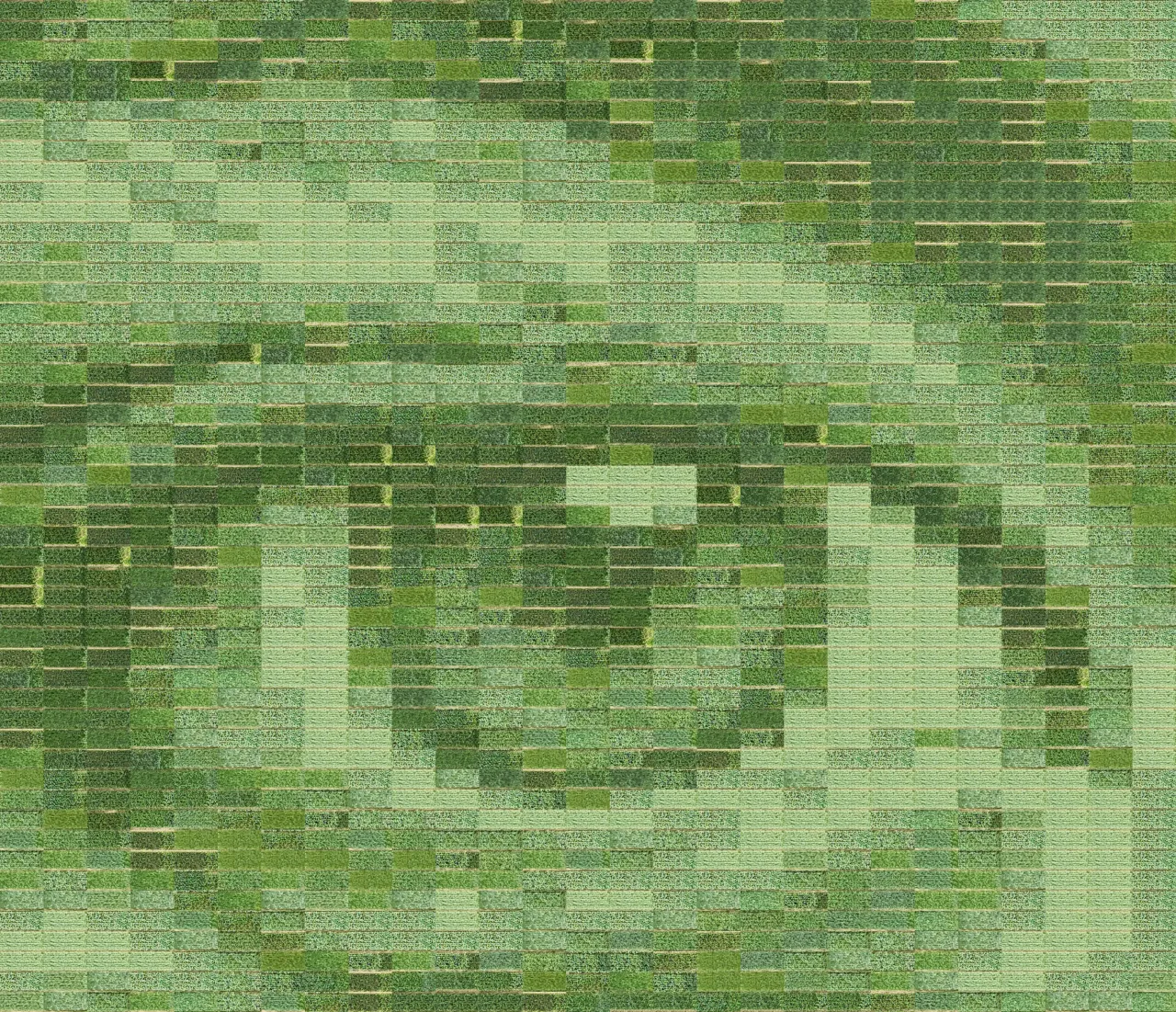
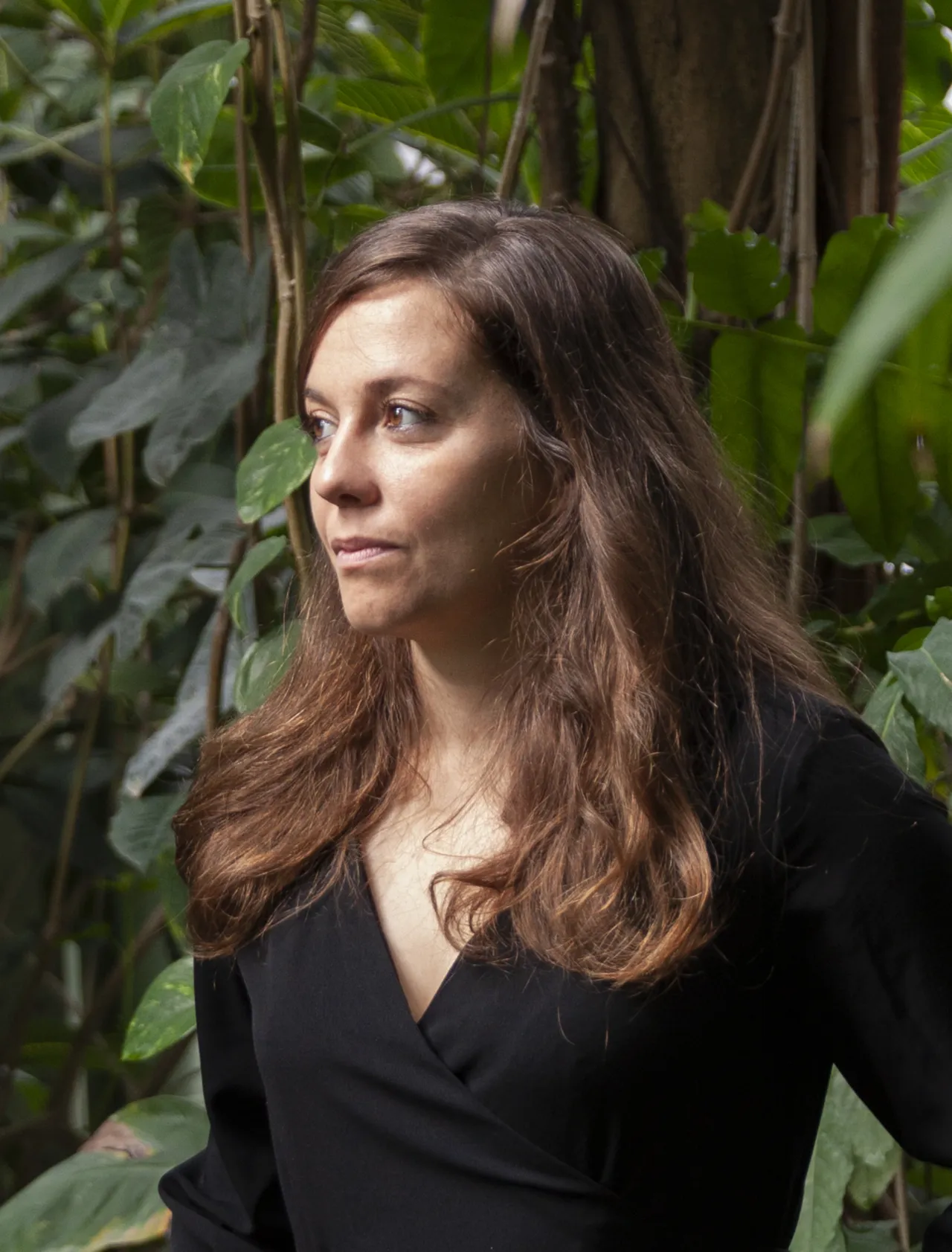
Ever had that weird feeling when you look at your creative work and feel like it's looking back at you? For most of us, that's a metaphor. For British-Spanish artist Almudena Romero, it's literal. Because what she's done is grow an 11,000-square-metre human eye into farmland near Toulouse, France. And this August, she's going to harvest it, mill it into flour and hand it round the neighbourhood.
This is what "thinking outside the box" actually looks like. Except that Almudena's box is a field, her camera is photosynthesis, and her final deliverable is lunch for the village.
Developed in partnership with INRAE, France's national agricultural research institute, her series Farming Photographs is being described as the largest photographic artwork ever made. More broadly, it's a working demonstration of how creatives are responding to AI, not by embracing new technology, but by stepping back from it and rediscovering the old ways.
A plot of land becomes a pixel
Almudena is a specialist in 19th-century photographic processes, and her project is inspired by the idea of anthotype: an early colour photography technique developed by John Herschel, in which sunlight altered plant pigments to fix an image. In this case, though, she's not reviving the technique: she's growing the image within crops themselves.
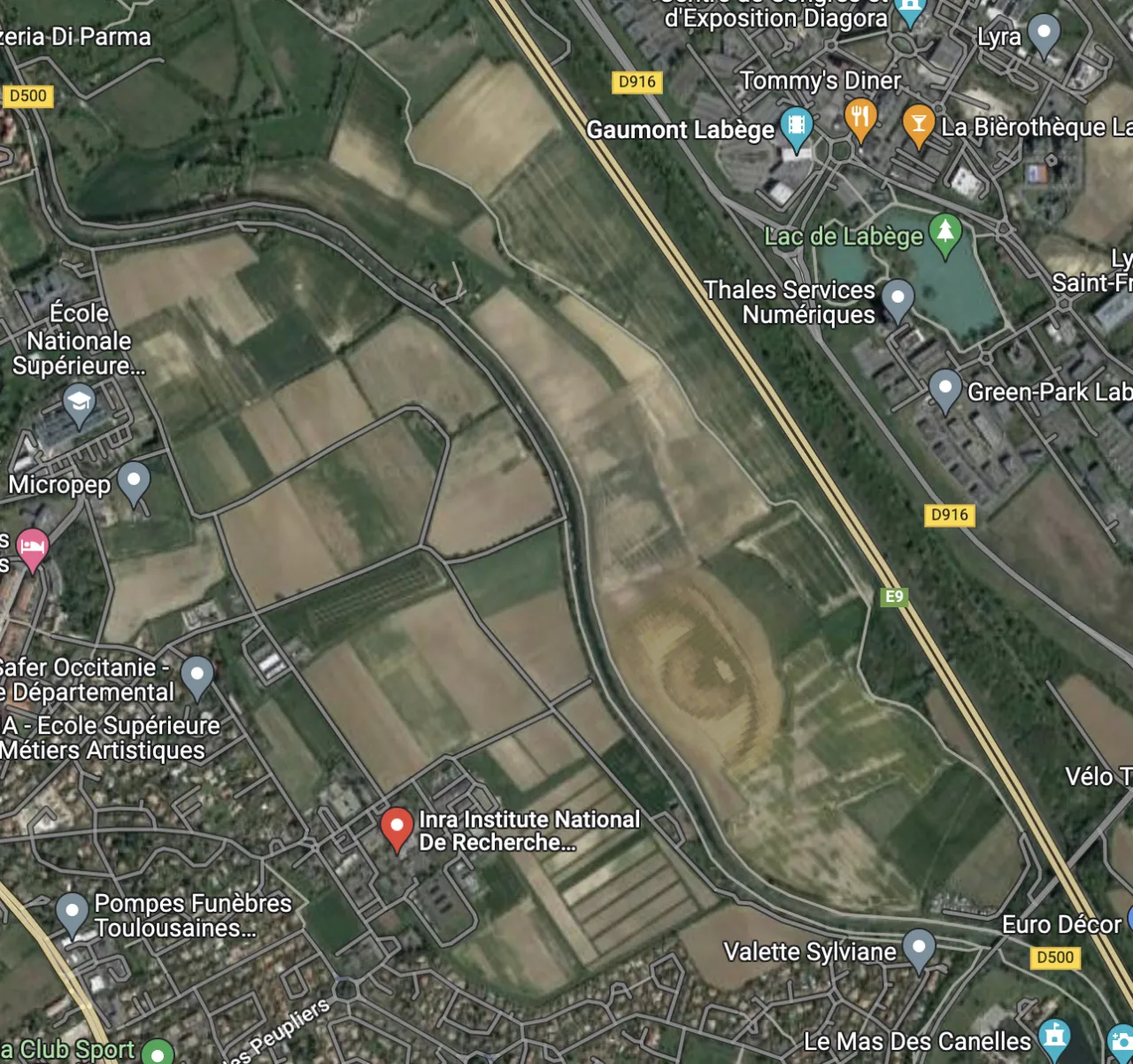
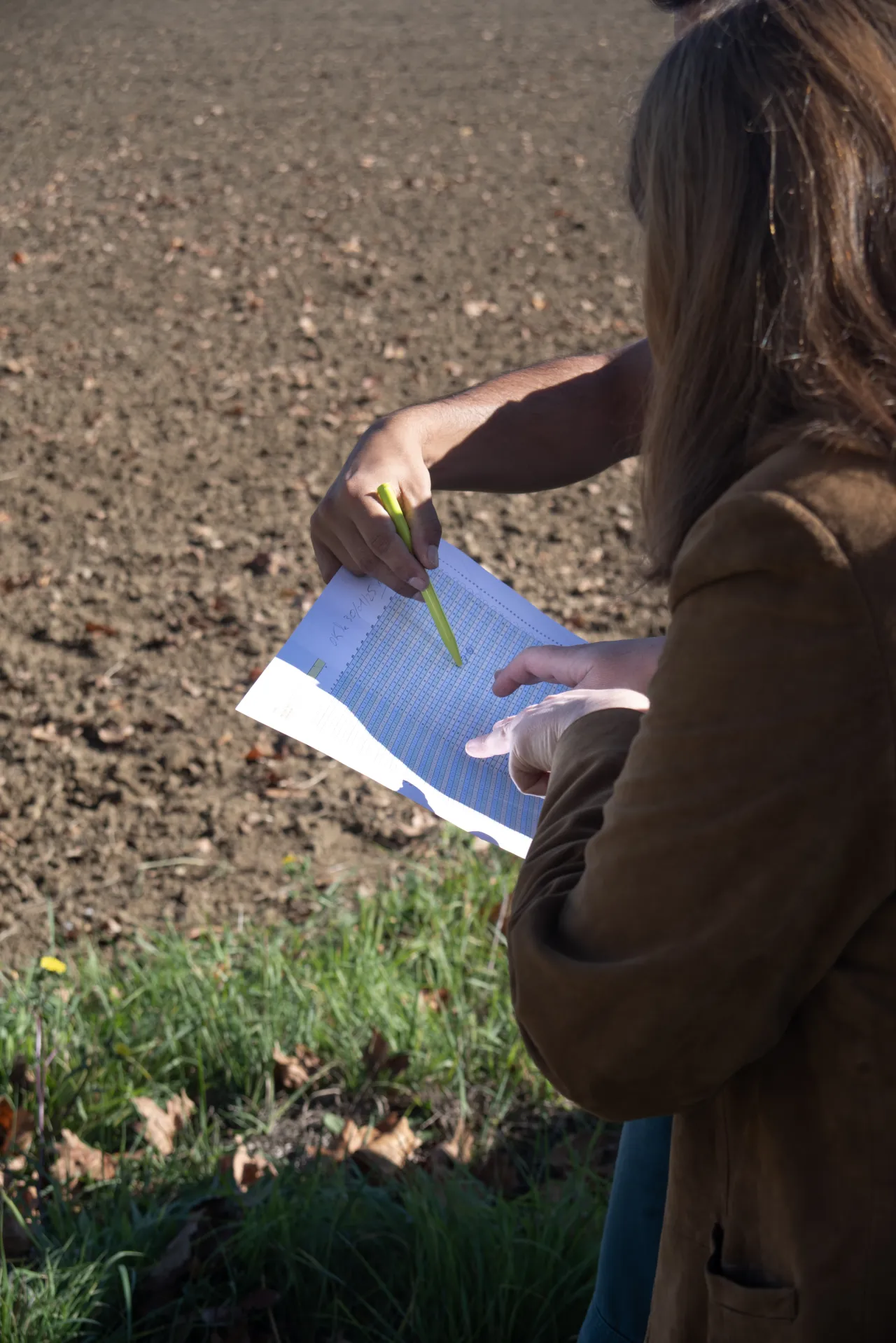
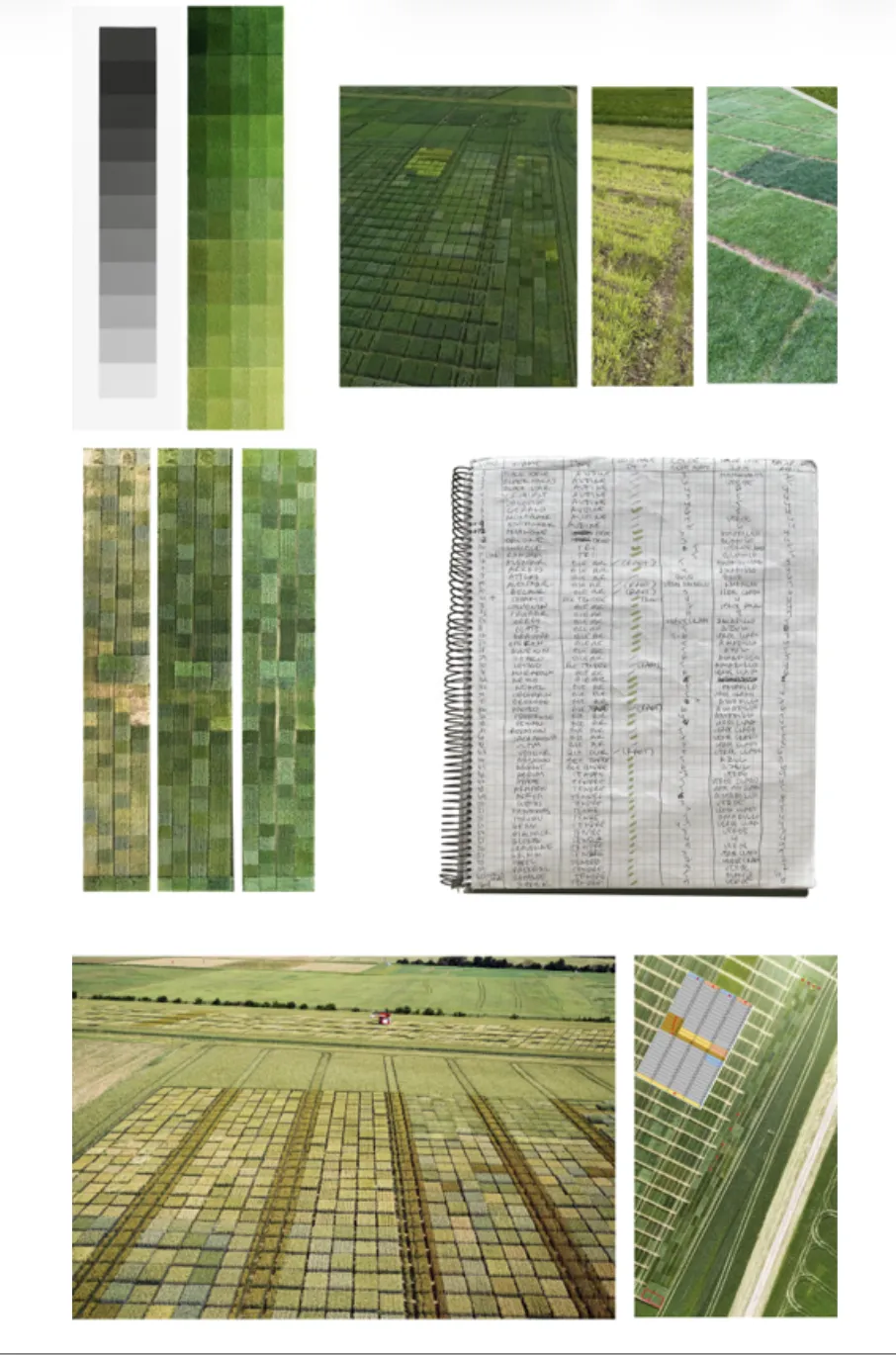
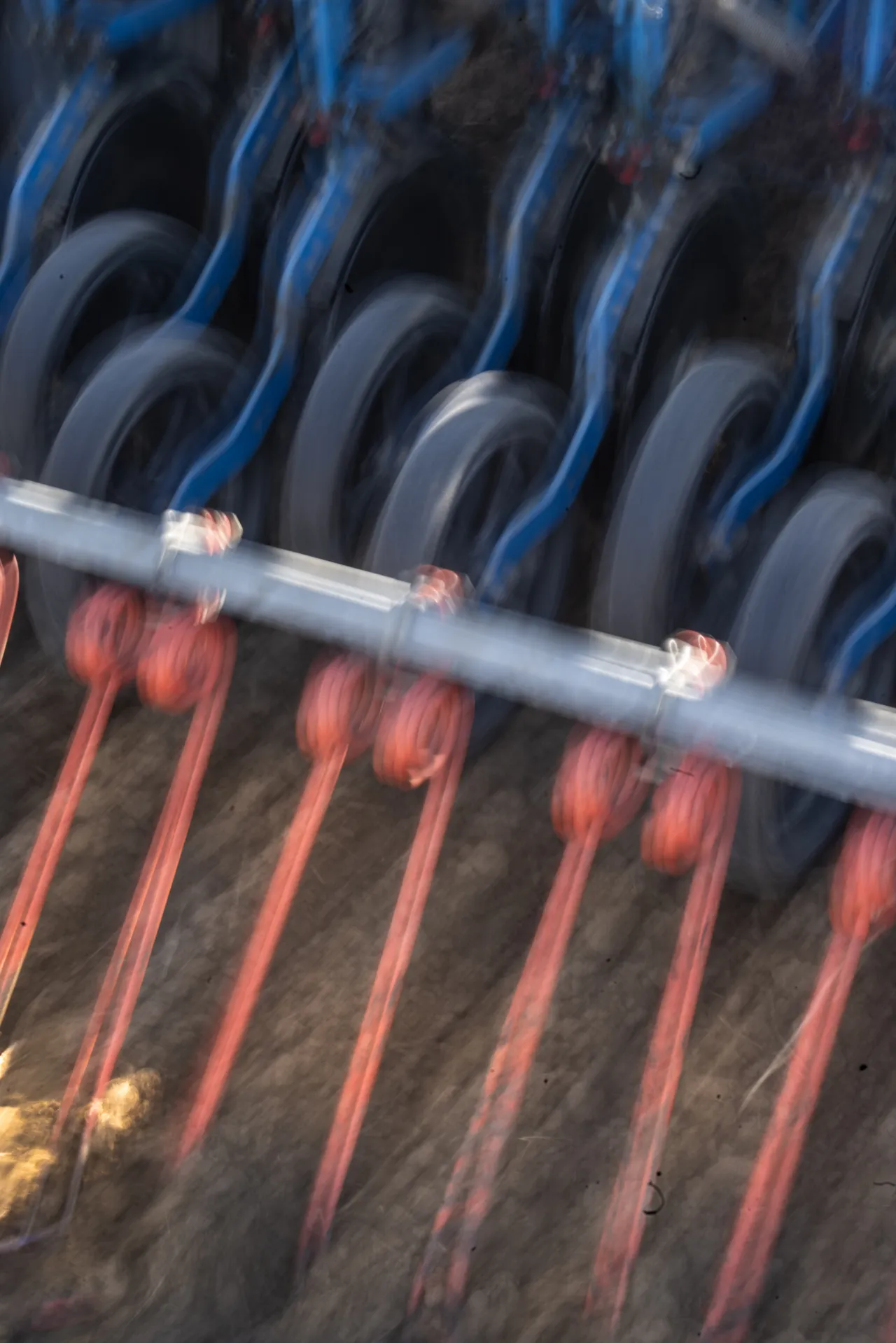
Her production process reads like a brief few creative directors would dare write. The eye design, composed of features from a range of races and genders, was divided into 1,350 "pixels", each one an actual plot of land measuring 1.83 by 4.5 metres. These dimensions were dictated not by aesthetics but by the turning radius of a sowing tractor.
INRAE's genetic databases, in turn, provided data on the chromatic behaviour of dozens of wheat and grass varieties. An algorithm matched each plot's required tone to the closest available seed, much like a colour-matching tool would hunt down the nearest swatch. Seed density effectively became the DPI. And the whole thing was effectively colour-graded before a single seed went into the ground.
For art directors and photographers used to working in pixels you can undo with Ctrl+Z, there's something bracing about a production pipeline where the file format is soil, and the render time is a full growing season.
The brief that almost got rained off
Despite the absence of a camera, I think it's entirely reasonable for Almudena to call this a photograph. The word comes from the Greek for "writing with light", and that's exactly what's happening here. Light hits the crop, the crop responds by producing pigment, and an image gradually appears. By that original definition, a field reacting to sunlight has as much claim to the word as a DSLR sensor does.
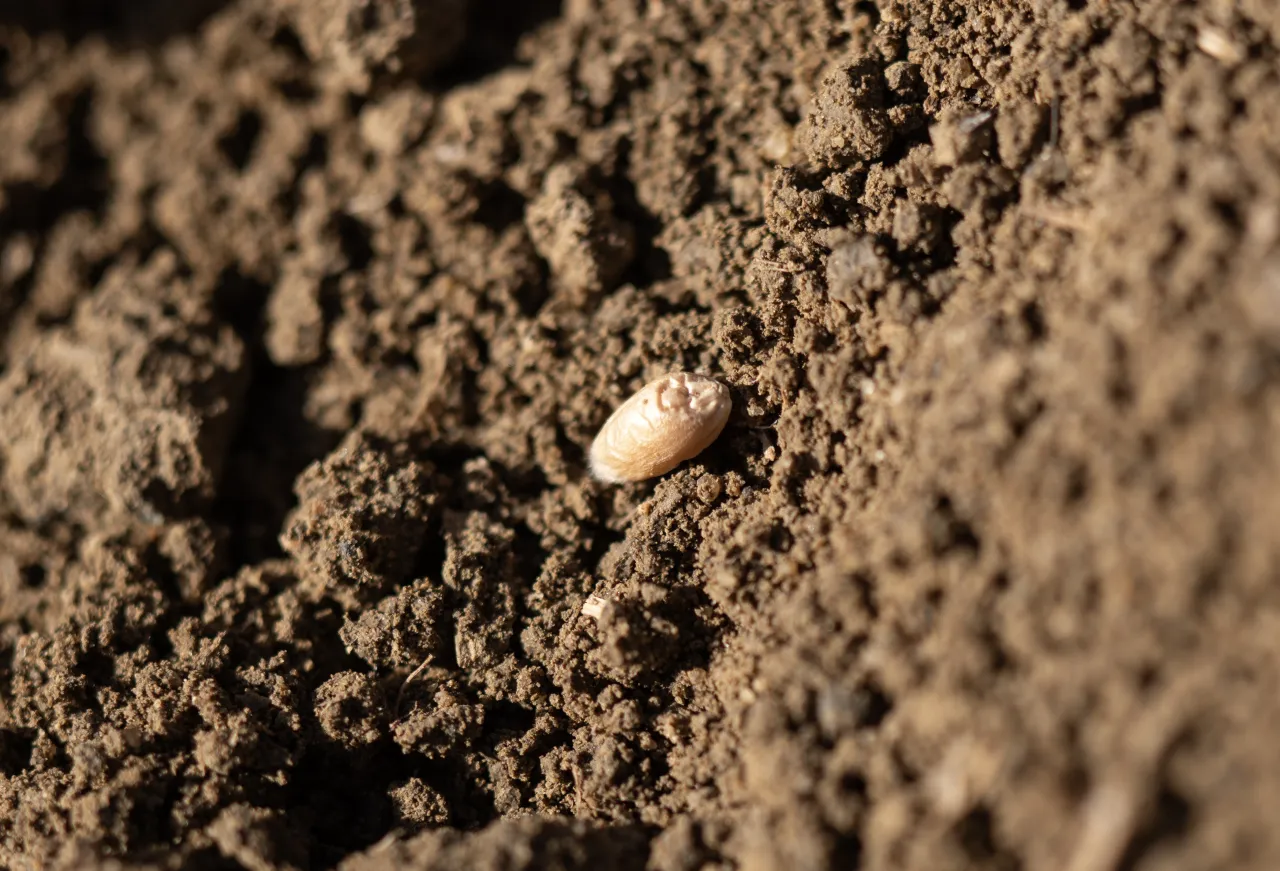
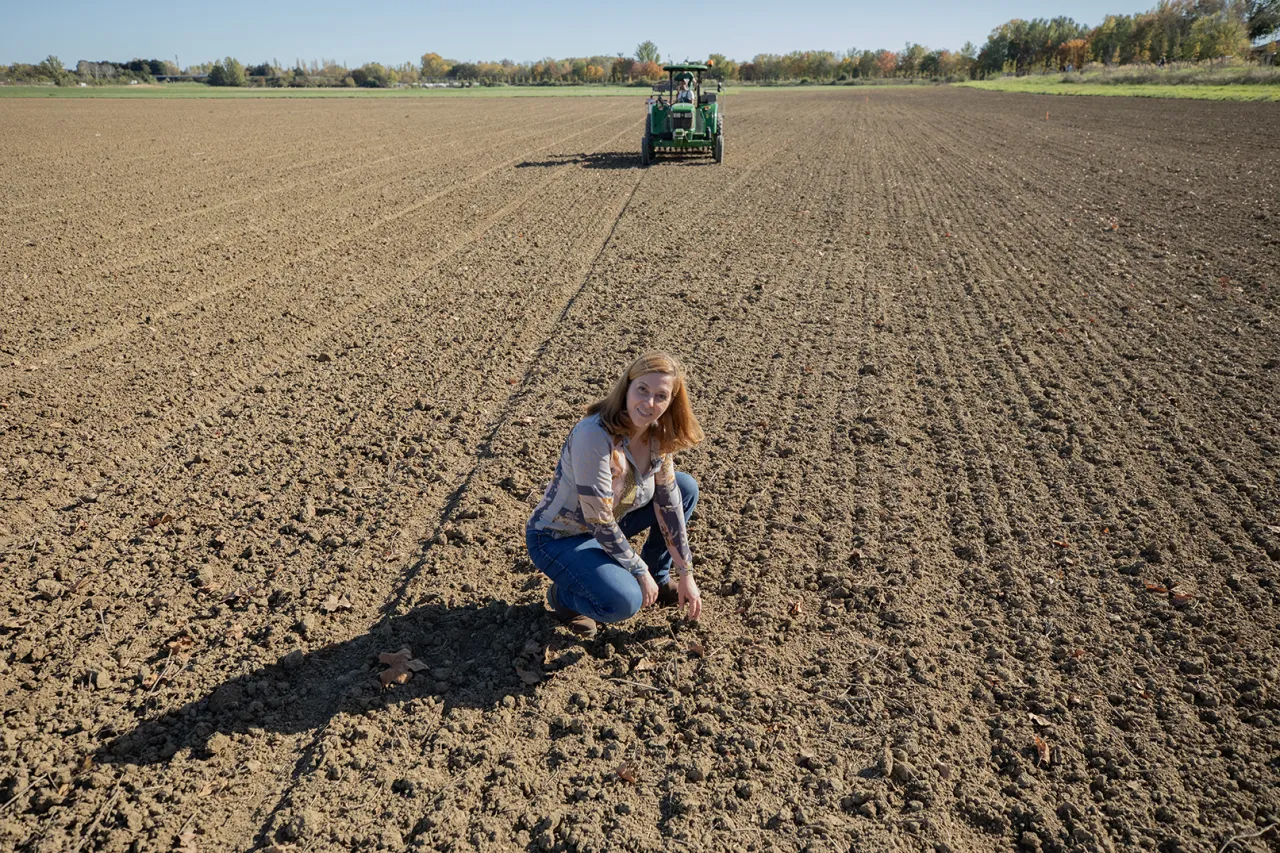
That doesn't mean, of course, that it was easy to pull off in practice. The project's first attempt failed before it even reached the ground, when persistent rain from 2024 to 2025 closed the sowing window entirely. The second attempt, sown successfully at the end of October 2025, then nearly drowned. January 2026 was around 73% wetter than the 1991 to 2020 average, and February was the wettest on record in the area since 1947, at roughly 206% above average rainfall. The field flooded. For weeks, nobody knew whether the eye would appear at all.
Rather than feeling depressed, however, Almudena draws on these setbacks to make a broader point. "This is agriculture today," she points out. "Crops fail year after year because of climate change. In Farming Photographs, the vulnerability of the image is also the vulnerability of the field."
It's a rare case of a creative concept being strengthened, not undermined, by the thing that nearly killed it. The work was meant to be about ecological precarity; it then became materially precarious itself, which is either a stroke of unplanned genius or proof that the universe has excellent editorial instincts.
The collaboration bit creatives will recognise
Almudena's account of working with INRAE's scientists is worth mentioning too, because it punctures a stereotype that creatives are just as prone to as anyone else: the idea that researchers and artists occupy fundamentally different headspaces.
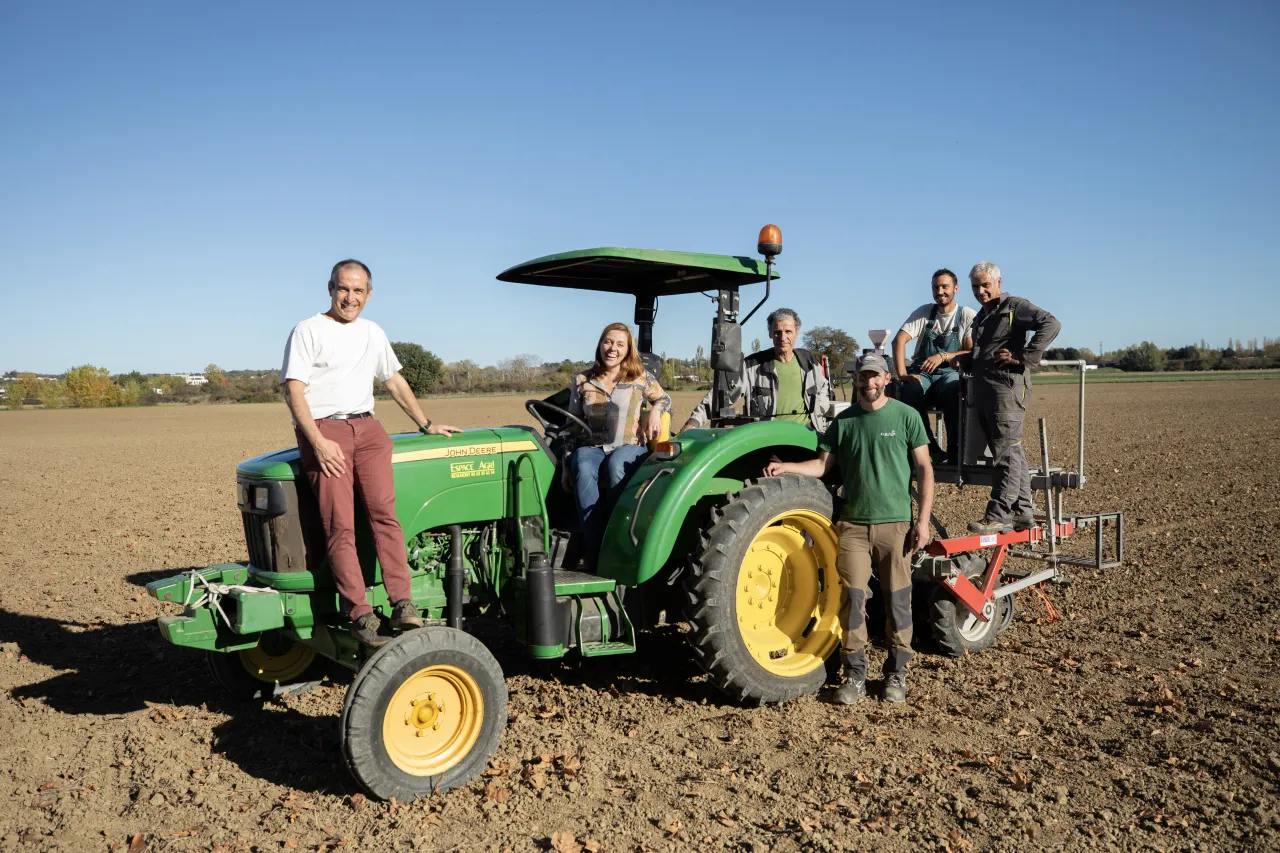
"I came to realise that at the heart of many scientists' lives is an artist," she says. She'd expected a research environment to be rigid, but found it instead to be curious, generous and entirely willing to deal with uncertainty.
The agricultural scientists weren't just executing Almudena's vision with tractors; they were co-thinking the image itself, bringing the genetic and chromatic knowledge that made the entire colour-matching system possible.
Key takeaways
It would be easy to file Farming Photographs under the category of novelty art and move on. But there's a deeper point to explore in all of this. Almudena argues that photography was never really about the camera. It's about light, full stop, and the apparatus was always incidental.
This argument goes back to the birth of photography. For example, Sir John Herschel, who invented the cyanotype and advised Fox Talbot on stabilising his own images, was just as happy working with flower pigments as with silver salts. In this light, Almudena's provocation isn't nostalgia; it's a rebuke to a photographic profession obsessed with the latest rendering engine.
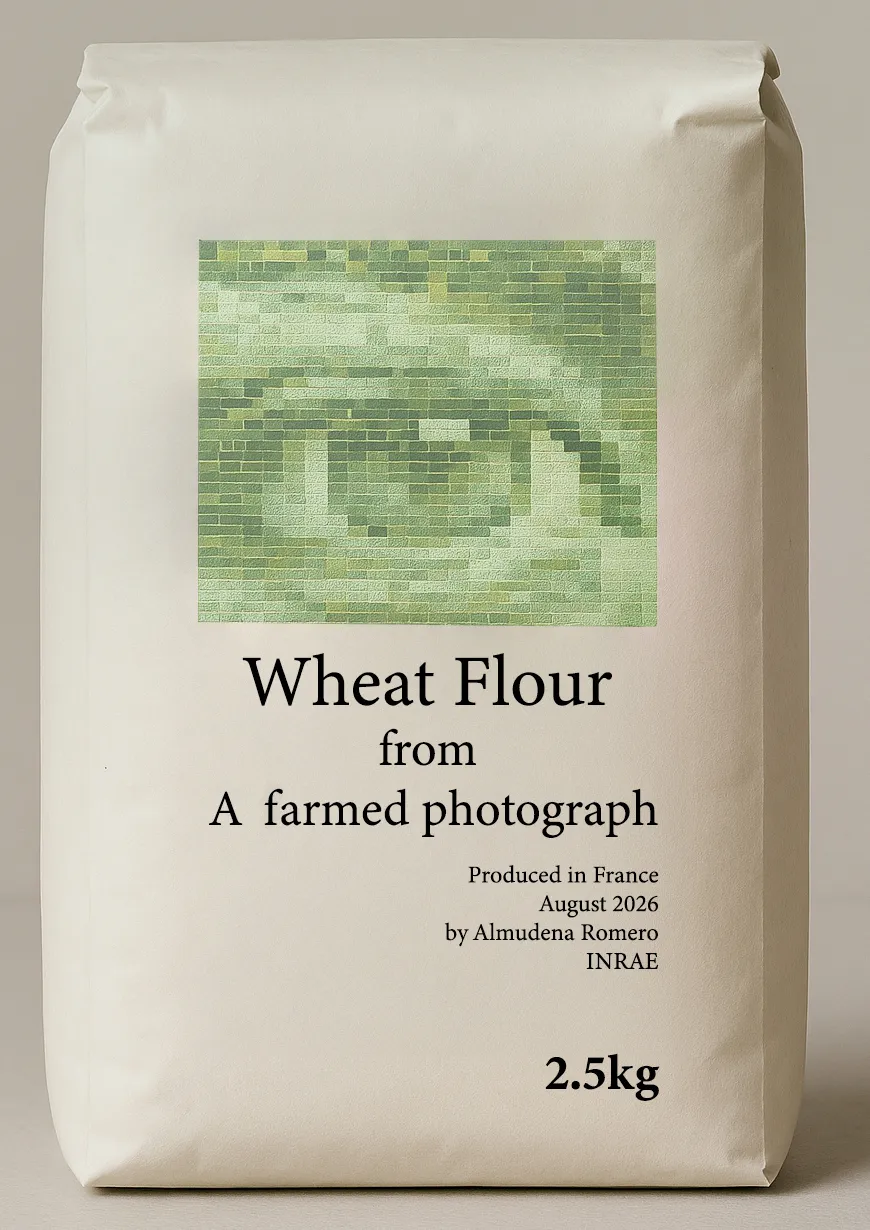
The project, by the way, is still ongoing: next comes the harvest. In August, the crop comes down. In September, it becomes flour, distributed locally to the people who live around the field where it was grown. The image disappears not into an archive, but into bread.
For a creative profession dominated by digital—where we often wonder how long anything we make will actually last— an artwork that plans its own ending as carefully as its beginning, and then eats the evidence, is certainly one worth thinking about.
Editor's Picks
Trending
Latest Jobs
Lead Digital Designer at Together
Full-time·£55k–£75k
Senior Graphic Designer at MoMA Retail
Full-time·New York·$72k-$80k
Senior Designer at Creative Spark
Full-time·Manchester·£35k-£50k
Senior Designer at Definition
Contract·London·£45k–£50k
Art Director at The New York Times
Full-time·New York·$120k–$130k
Principal Software Engineer at BBC Media Tech
Full-time·Glasgow·Up to £83,790