Documenting the last generation of teenagers to grow up in an analogue world
Tracking Line is a new series by Paris duo Souffle that pays tribute to the early 2000s, not as an aesthetic but as a vanishing set of gestures and motions. We find out more about the film-and-photo project and why, in 2026, they refused to let AI anywhere near it.
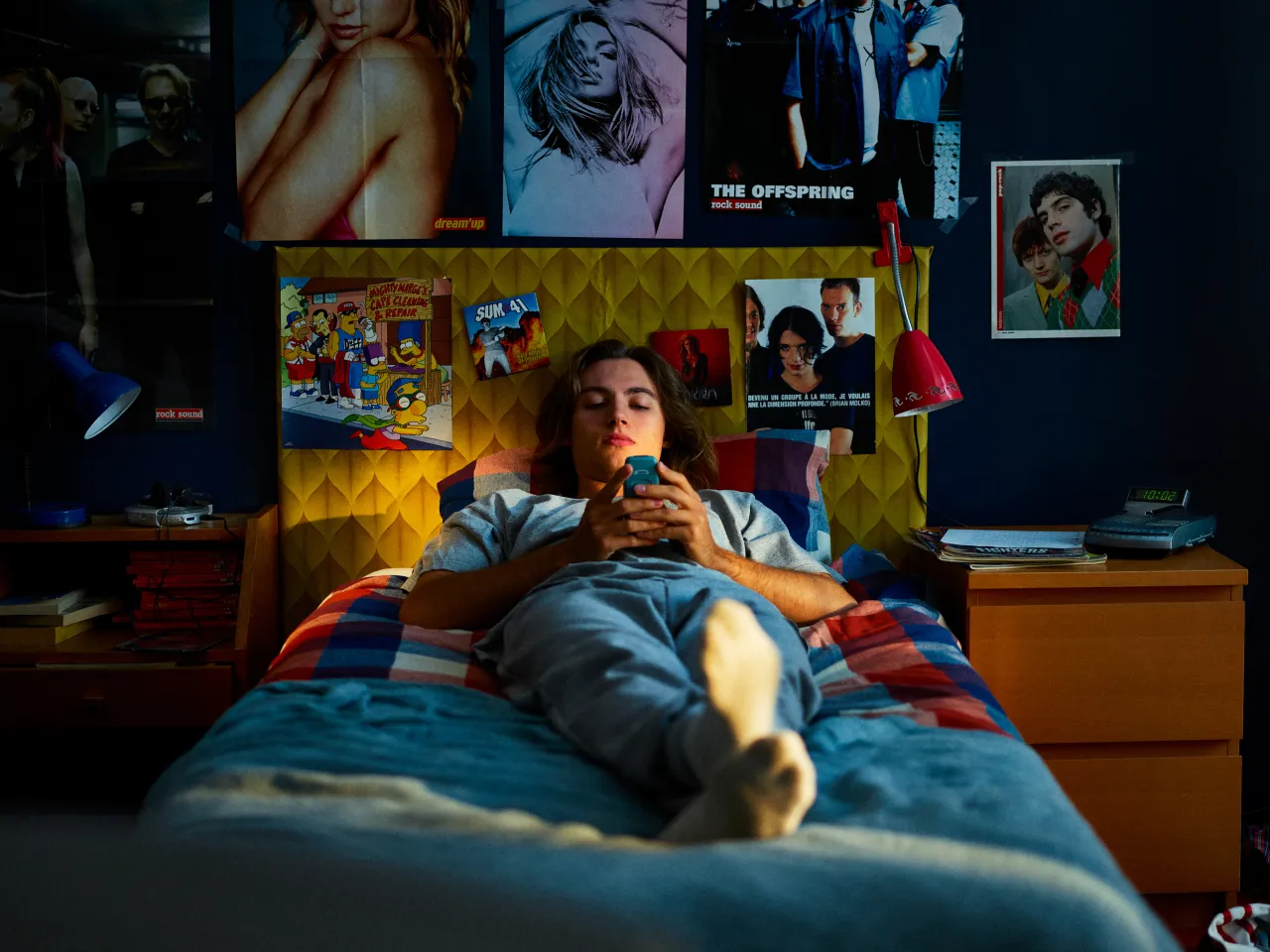
There's a sound only a CD player makes that certain generations can instantly recognise – the soft mechanical click of the tray closing, and the satisfying hum of the disc beginning to spin. For Richard Dell'aiera, one half of the Paris creative duo Souffle, it was that exact sound, heard again through his own young children, that set a new project into motion.
Souffle, made up of Dell'aiera and Sophie Cuffia, work as photographers, directors and art directors, moving between fine still life and narrative, cinematic imagery. The pair met at ENS Louis-Lumière, the storied French film and photography school. Their latest self-initiated project, Tracking Line, is something quieter and more personal than their commercial output: a poetic, sensory study of the last generation of teenagers to grow up in a mostly analogue world, right on the cusp of the digital revolution.
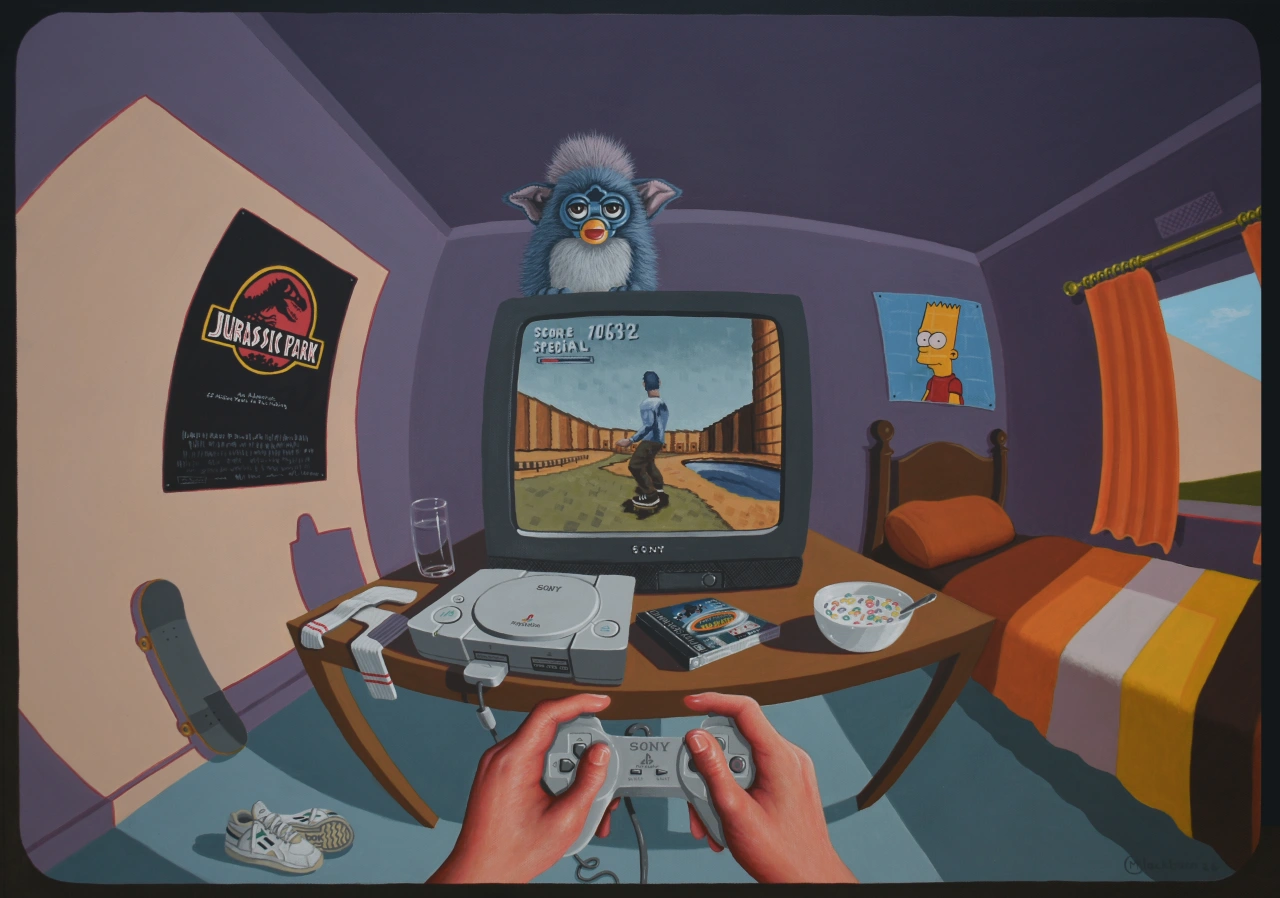
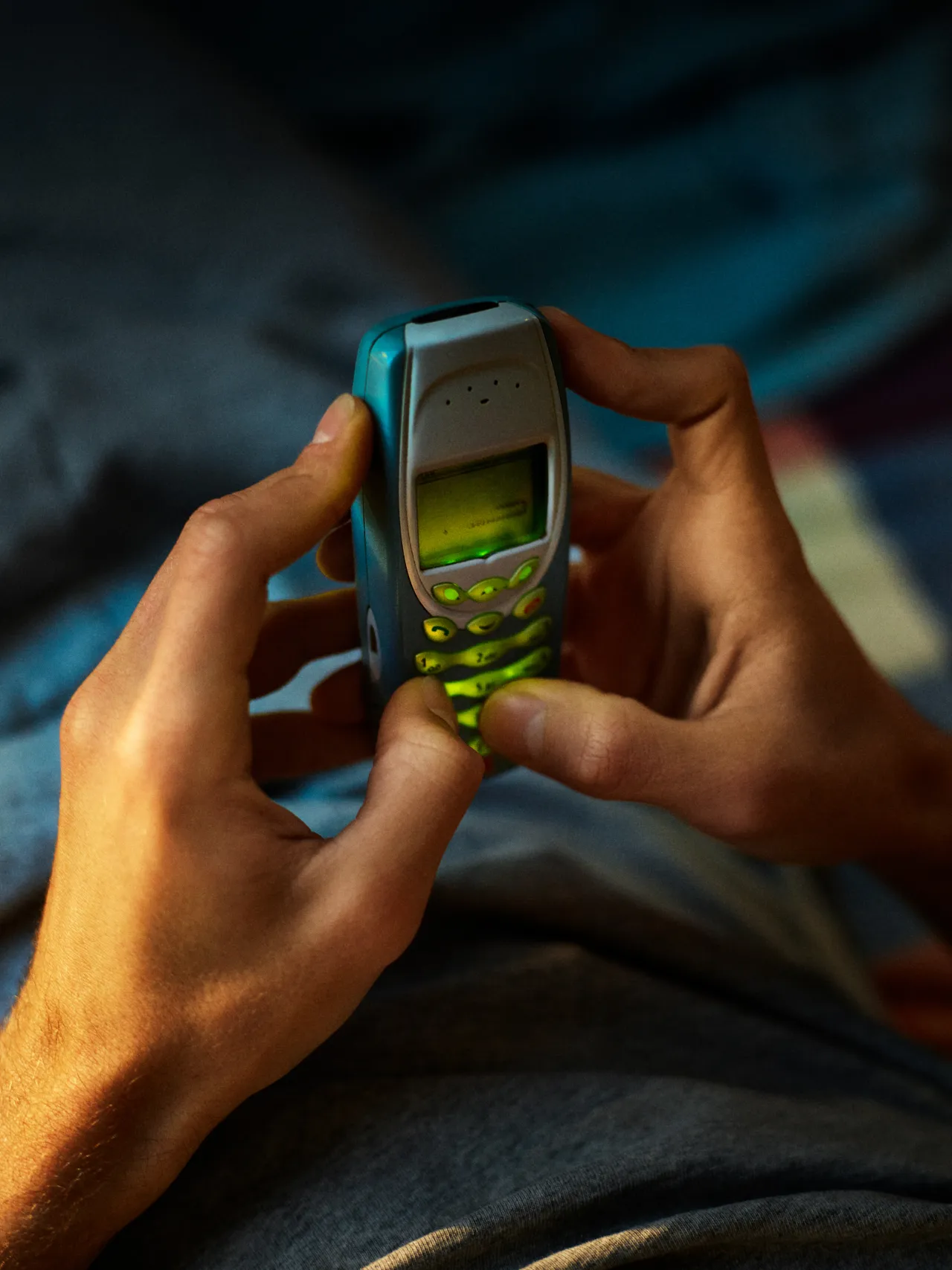
Instead of reaching for the easy iconography of 2000s pop culture, Souffle approached the era as an archaeology of lost gestures – sliding a phone cover open with your thumb, the frustration of a skipping CD, the patience of rewinding a cassette with a biro. To keep it honest, they built a full set in their studio by hand, largely furnished with their own teenage memories. And in 2026, with AI now part of their everyday toolkit, they made a deliberate choice to keep it out of this one entirely.
We spoke to Dell'aiera about the gestures worth remembering, the beauty of small failures, and why some things simply have to be built for real to feel real.
Where did Tracking Line begin?
My partner Sophie and I have two children, aged three and six. Last year, we bought them a CD player so they could listen to audio stories. While showing them how to use it, we suddenly realised that this whole process, taking the CD out of its case, placing it in the tray, hearing the mechanical click and the distinct sound of the disc starting to spin, was something that barely exists anymore. It triggered a deep conversation between us about all the physical gestures we used to do daily as kids or teenagers that have completely vanished in the digital age. That exact moment was the spark for the entire project. We realised we needed to document those disappearing gestures and sounds before they vanished completely.
Why did you resist the obvious route of leaning on 2000s pop culture?
We resisted the pop-culture route because it would have been the easy, expected version and wouldn't have been true to what we actually remember. We didn't grow up inside an aesthetic; we grew up inside sensations. The pop-culture take flattens the era into a set of references: what interested us was the infra-ordinary, the gestures and textures nobody photographs because they seemed too banal at the time. To us, that's where the real memory lives.
Why focus on such a narrow window of time?
Those five years are the actual hinge. Before, everything was analogue; after, everything was connected. But in that window, the two worlds coexisted; you'd burn a CD and chat on MSN the same evening. It's the last moment when physical rituals and digital life overlapped, before digital life simply swallowed everything. That coexistence is what we wanted to capture.
You built the entire set by hand. Why was that so important?
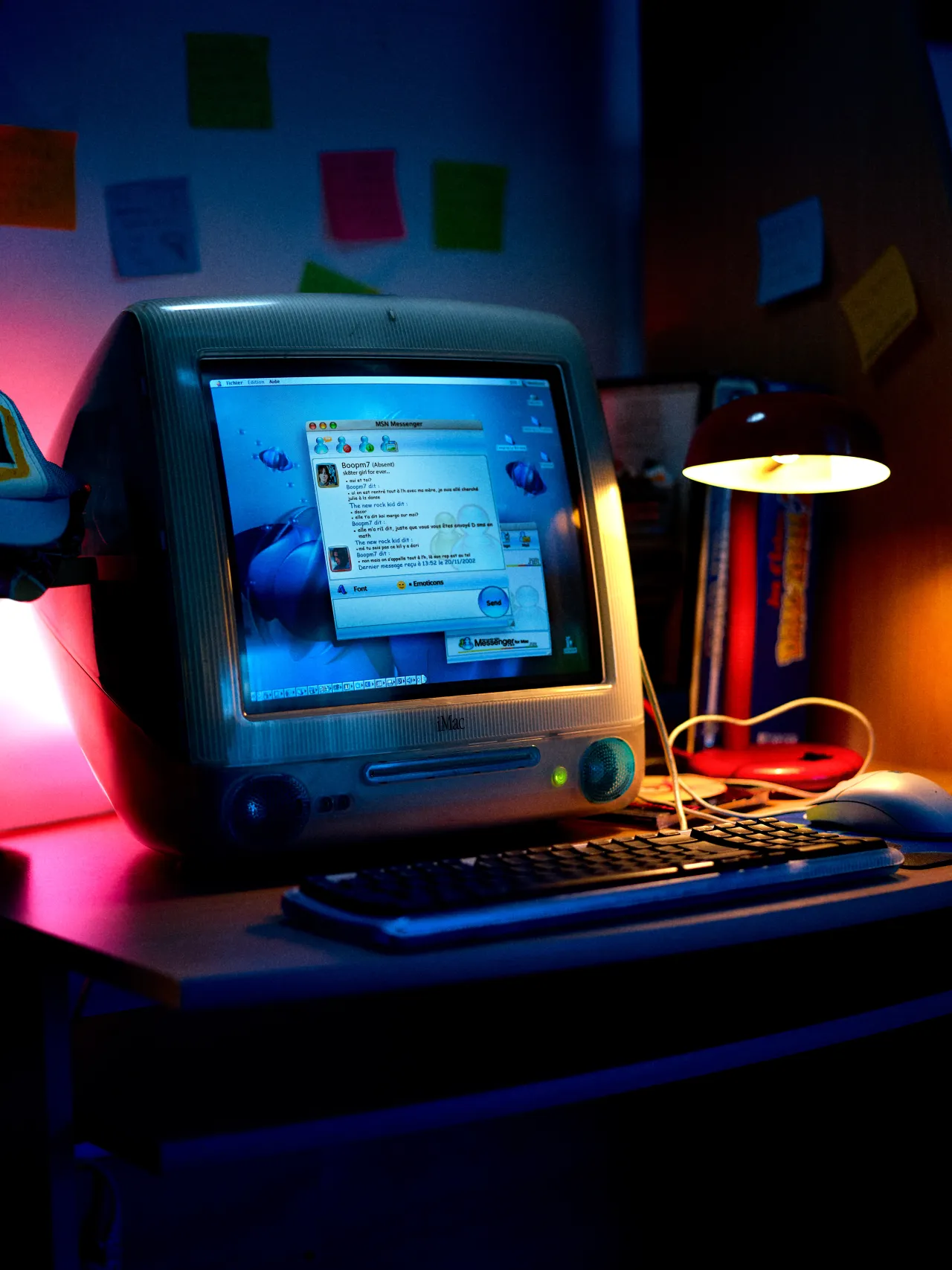
Building the set ourselves was a core part of the process. Many of the props and furniture were found in our parents' basements or borrowed from family and friends. We wanted to maintain a high level of authenticity, even though the scene is carefully staged. It had to look like us and feel true to our actual memories. That physical act of building and collecting gave the project a personal, emotional soul. In a world now dominated by AI, everything feels a bit detached when you generate an image. By physically handling the exact CRT monitors, hunting down the right posters, and building those walls by hand, we injected a piece of ourselves into the space. You can't fake that kind of warmth, and you definitely can't generate it.
How do you translate something as intangible as a sensation into an image?
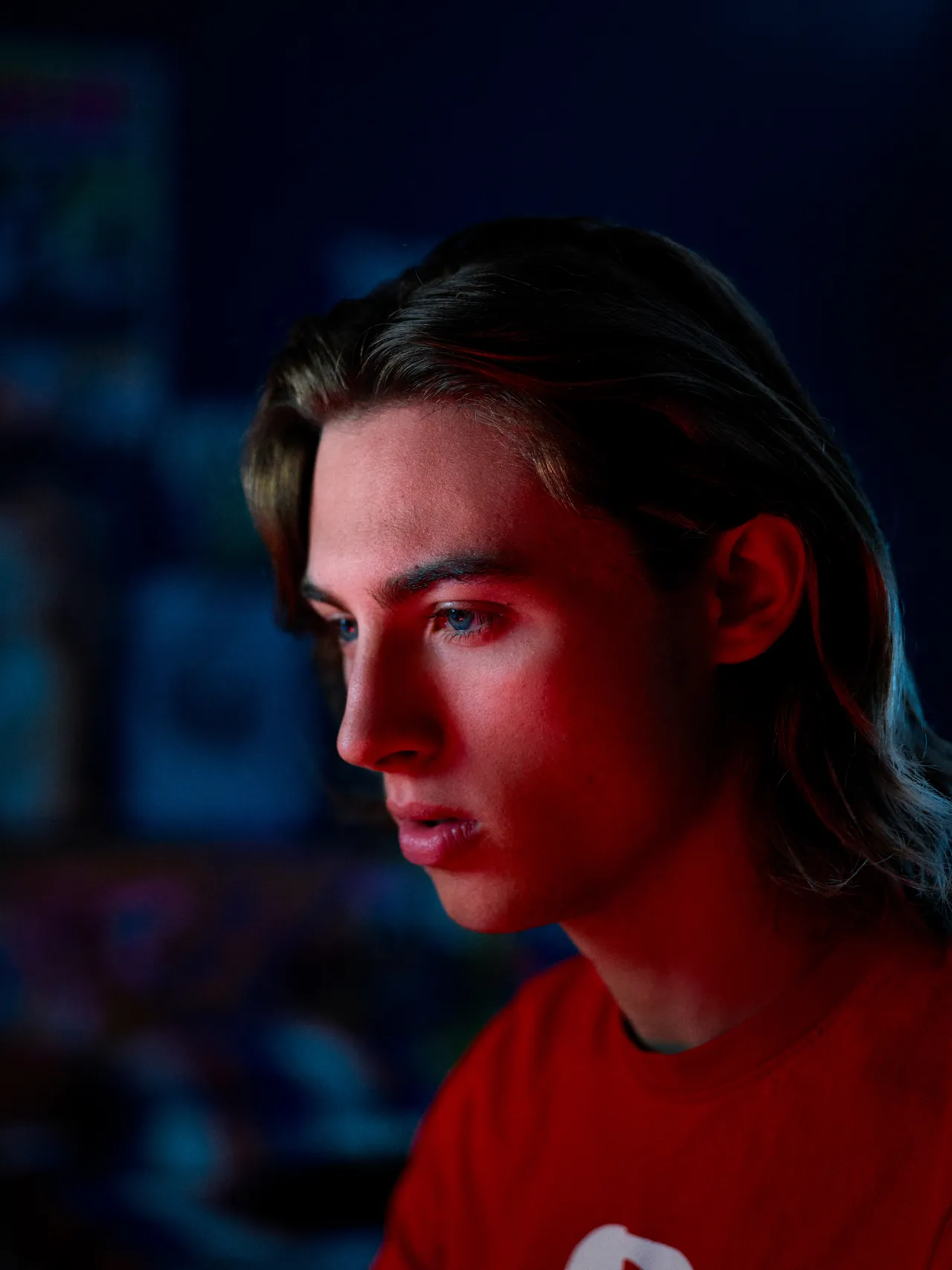
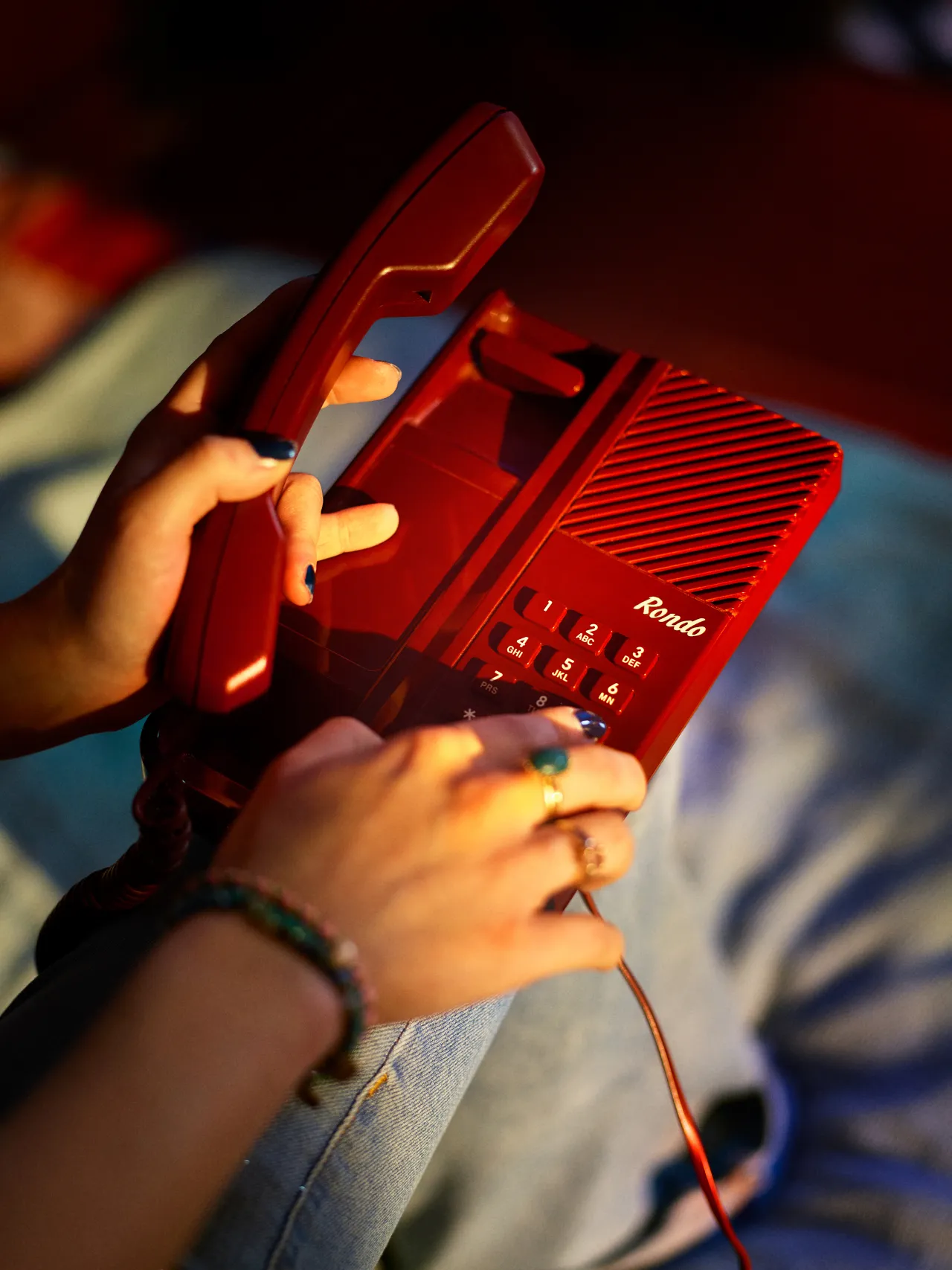
It's all about creating an intimate closeness with the subject. What allows us to translate these sensations is extreme proximity, the richness of textures, and the actual sound of the objects. We wanted the images and films to feel tactile, so the viewer would almost feel the plastic, the friction of paper, or the mechanical resistance of the objects through the screen. By focusing on the infra-ordinary, we anchor the memory into a concrete, physical reality that triggers a real recollection.
The colour palette is striking. What drove those choices?
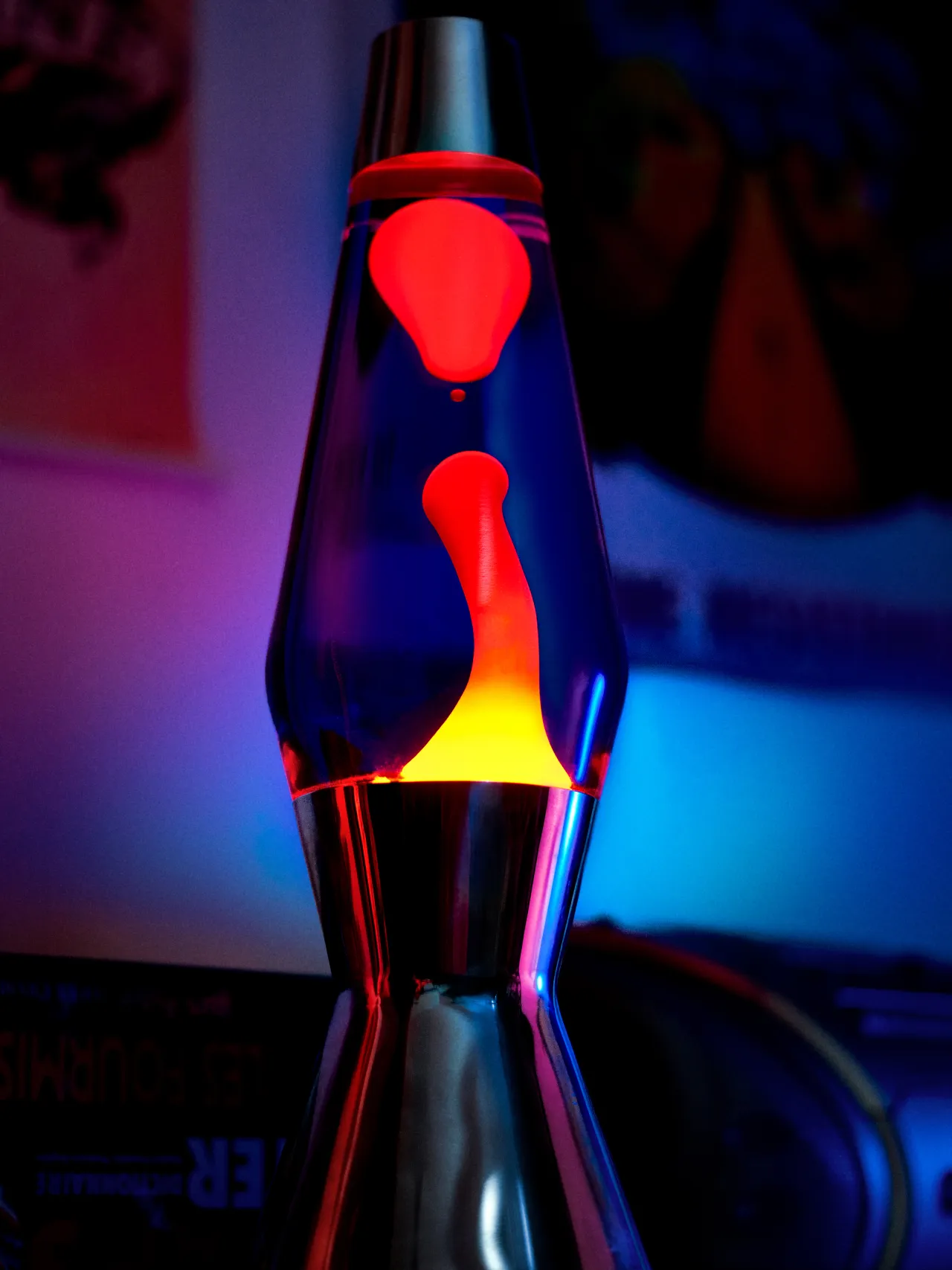
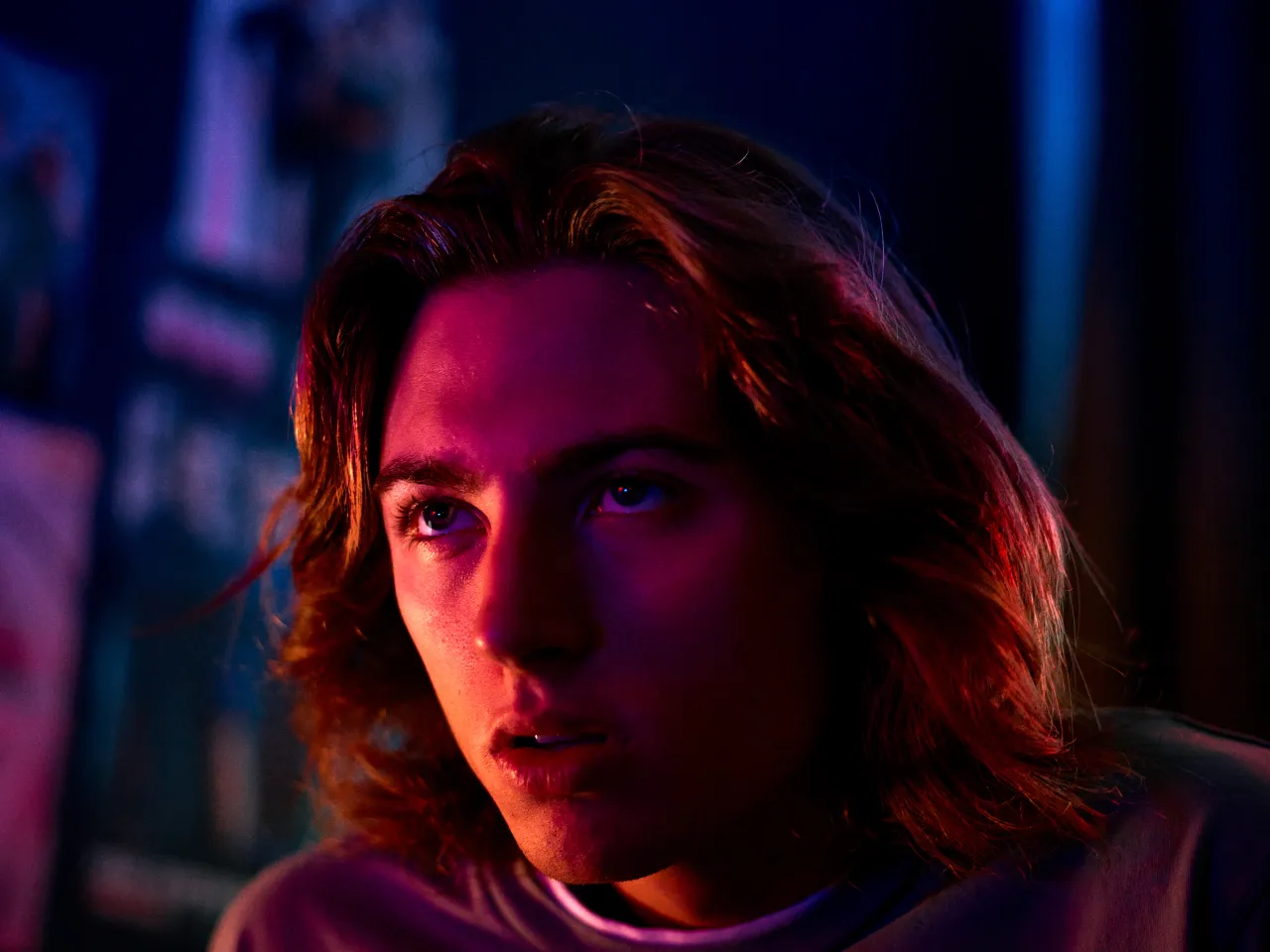
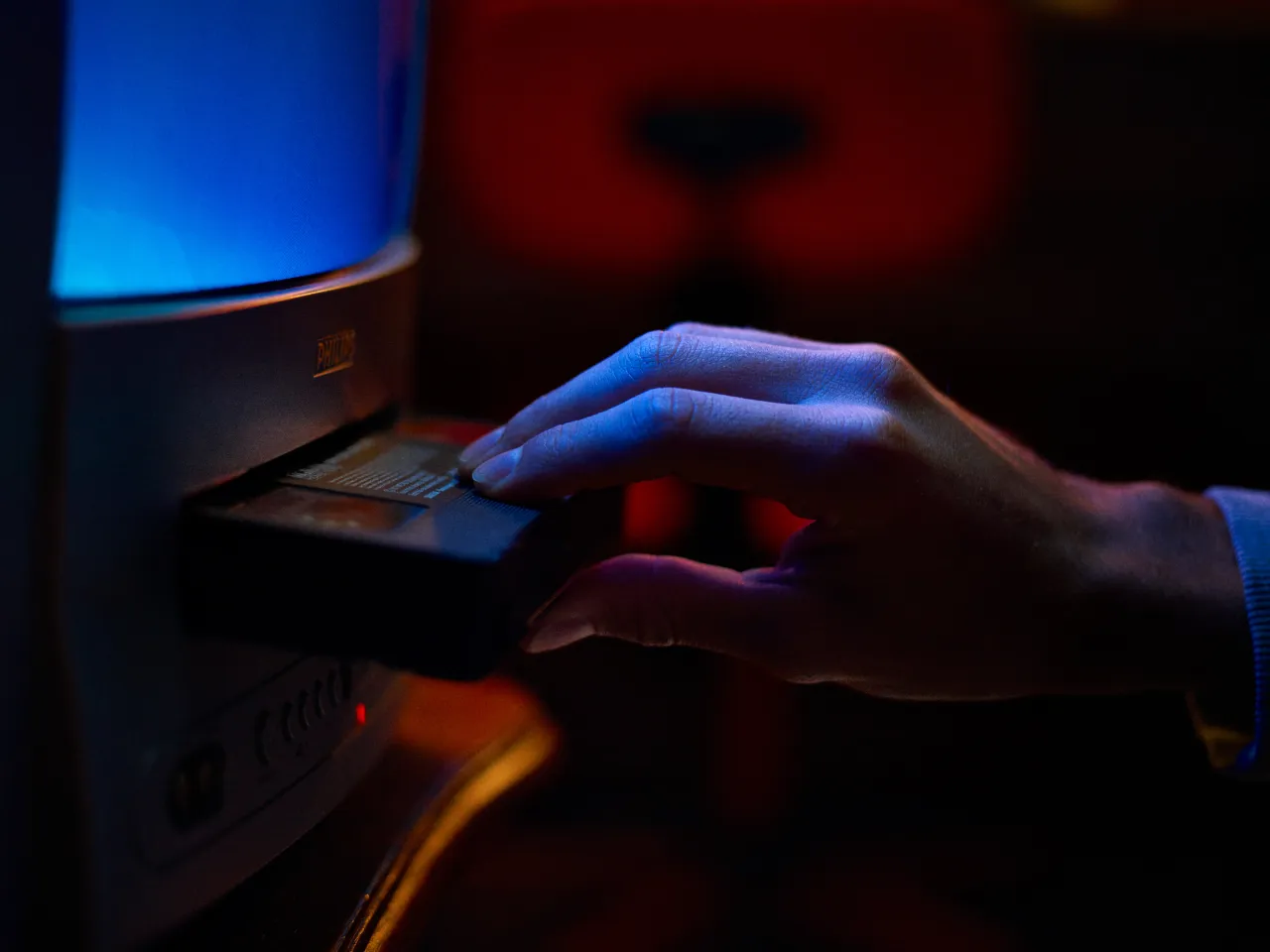
The palette wasn't chosen for symbolic reasons, but for practical ones rooted in our approach to "staged realism." Every colour in the series is justified by an element physically present in the scene. The blue, for instance, is the cold light emanating directly from the desktop computer screen, or the glowing blue of a CRT television when a VHS tape is inserted. Our goal was simply to enhance the immersion, making viewers feel as though they were standing right inside that bedroom. By replicating the exact light sources of that era, the colours build a believable space where the memory feels true and immediate.
How did you keep it from tipping into rose-tinted nostalgia?
We kept it from tipping into rose-tinted nostalgia by staying with what was lost, not just what was loved. The emotion is bittersweet because it's about things that are gone forever, the boredom, the waiting, the friction. Idealised nostalgia removes the discomfort; we wanted to keep it, because the discomfort is part of the truth.
AI is part of your commercial practice. Why keep it out of this project entirely?
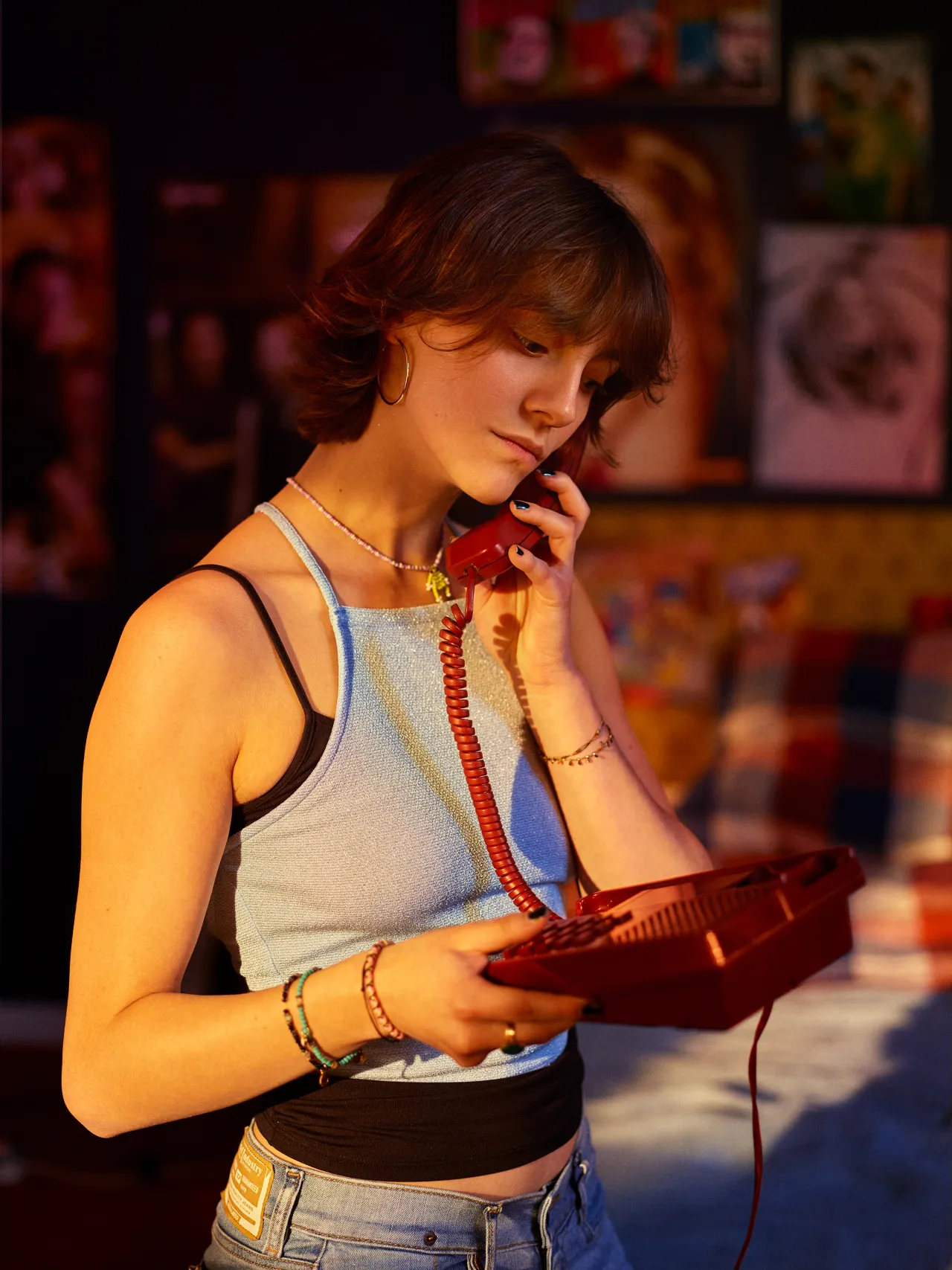
AI is a powerful tool for our commercial work, but for Tracking Line, using it would have been a contradiction. The entire project is about physical friction and memory, about textures you can feel. It wouldn't make sense to explore the loss of tactile sensations using an algorithm that eliminates physical constraint. The temptation never crept in because the struggle, the physical labour of building the set and crafting the lighting manually, was the whole point. We needed to build it for real to make it feel real.
Reading the work, it almost feels like an argument. Is that fair?
You read it perfectly. It is, in fact, an argument, or at least a gentle critique. Today, everything is instant and frictionless. We've lost something in that: the CD that skips when you walk too fast, the tape that tangles. There was a kind of beauty in those small failures. Tracking Line is a reminder that beauty and emotion often live within those constraints. Waiting for something made it valuable.
How do you work together as a duo?
We work as a duo, each with our own specific role. We share the initial concepts, but our strengths complement each other: Sophie has a sharp eye for art direction and styling, and for how a series holds together, while I tend to focus on lighting and the technical side of the shots. We rarely disagree on the central emotion, but we can have intense, passionate debates over the smallest details, as anyone who's worked with us can tell you.
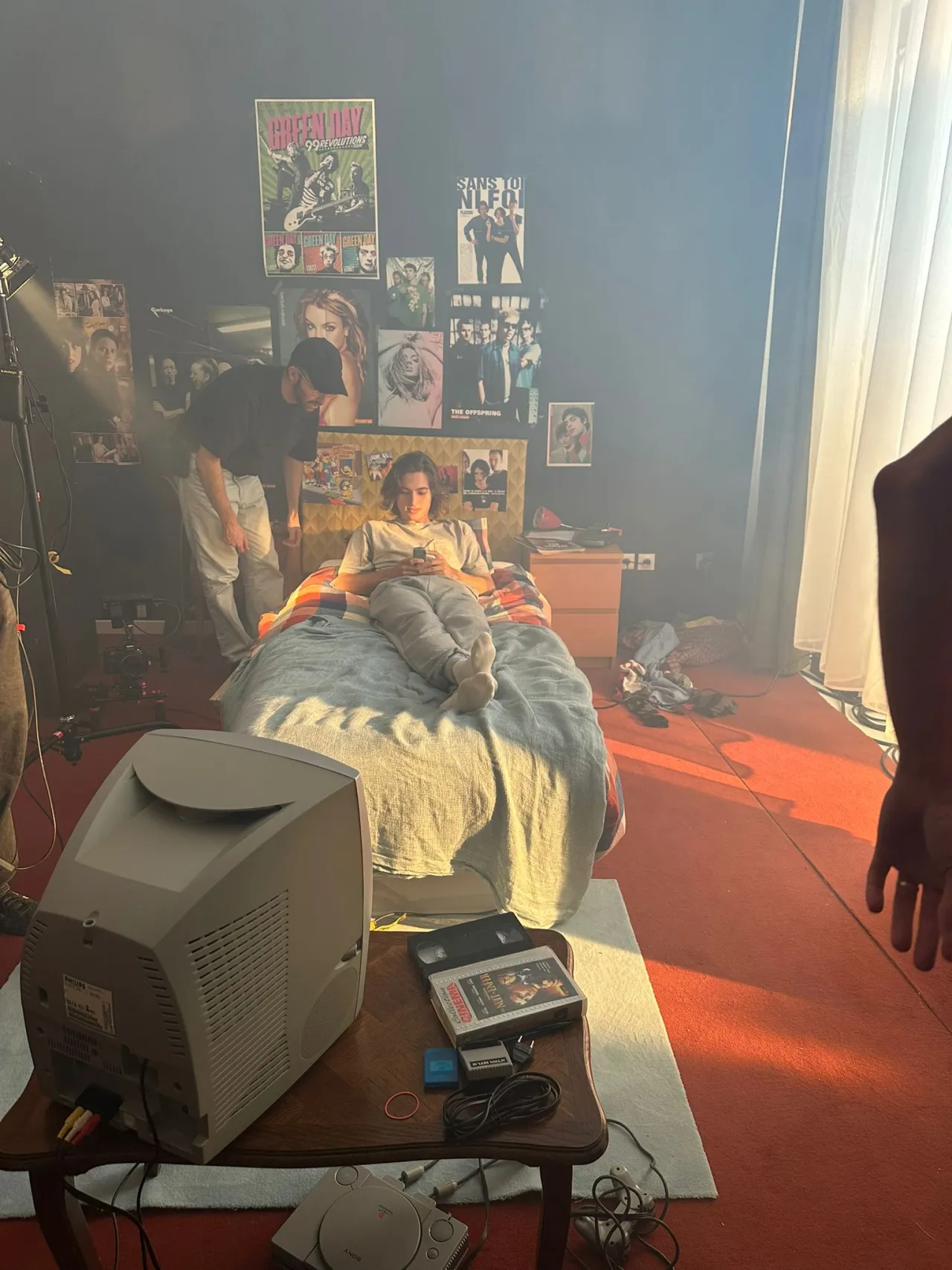
Behind the scenes
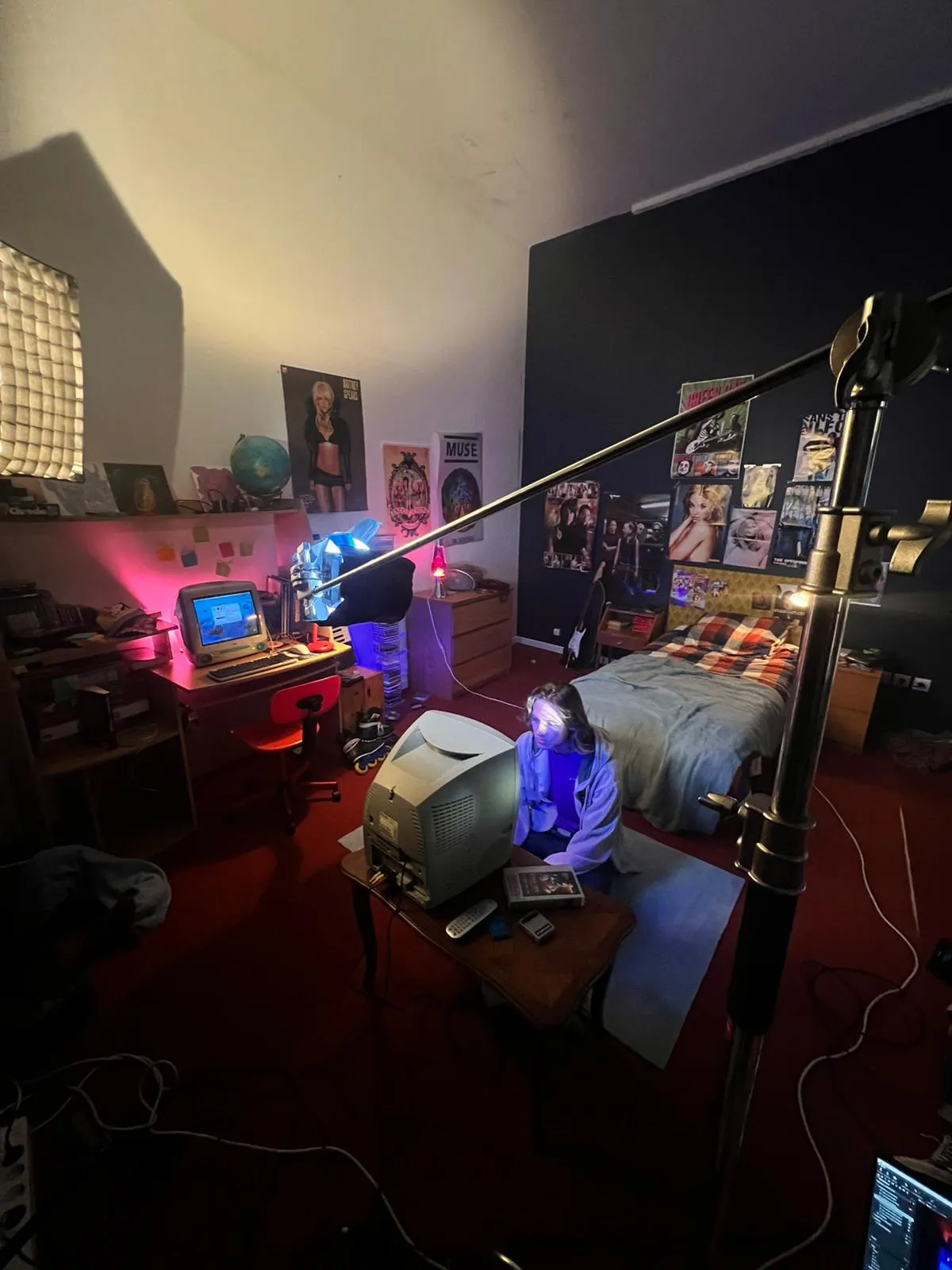
Behind the scenes
The series includes four short films. What does each one capture?
Each capsule focuses on a distinct gesture and a specific physical sensation: waiting for a dial-up internet connection on MSN, the rhythmic thumb-clicking while playing Snake II on a Nokia phone, inserting a VHS tape, and finally dancing alone in the bedroom in front of an analogue camera. The main throughline is simply about how we used to occupy our time back then. Boredom took up a lot more space in our lives because we weren't constantly flooded with instant content. These films show those ordinary, quiet ways we found to fill the silence and pass the time inside our bedrooms.
What was it like working with young actors who never lived through this era?
It was a very beautiful experience. The young actors we worked with are pure digital natives, so they didn't experience that era themselves. What was truly interesting was watching them bring these very specific memories back to life. Seeing them naturally adopt those physical postures, touch those objects, and inhabit that specific bedroom atmosphere was like watching our own ghosts come back to life in a very fresh, contemporary way. It felt more like a gentle bridge between two generations than a simple historical reconstruction.
How does a self-initiated project like this differ from your client work?
Client work is a dialogue; you serve a brand's vision with your craft. A self-initiated project is when we get to say something that's ours alone. There's no brief, no approval, no compromise, just a point of view. Paradoxically, those personal projects are also what feed the commercial work: they're where we take risks, and those risks are usually what end up shaping the way we work.
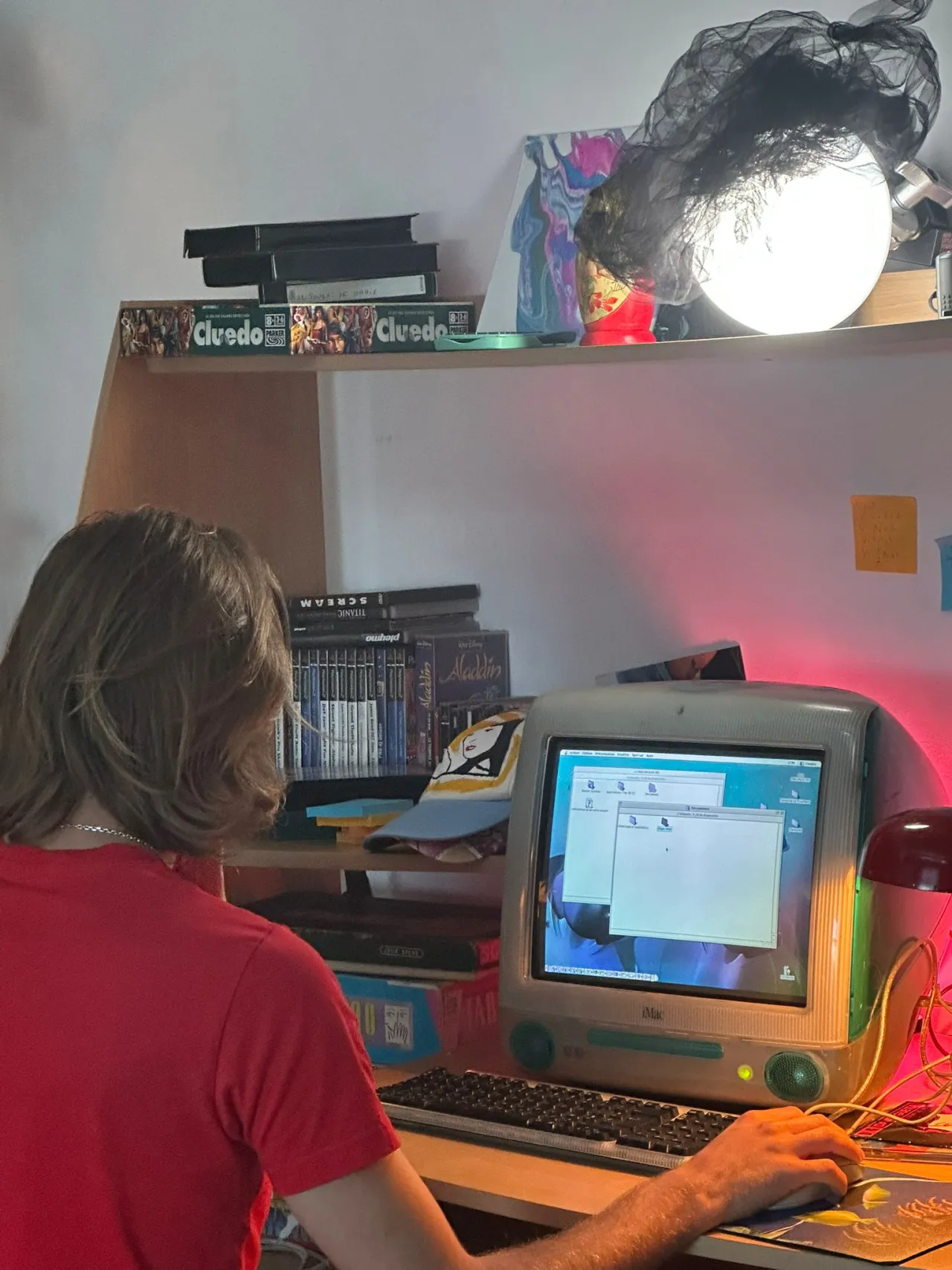
Behind the scenes
Where does the title, Tracking Line, come from?
"Tracking lines" were those horizontal static distortions that appeared on VHS tapes when the VCR was trying to adjust the head to read the magnetic tape. It's a purely analogue defect. To us, it symbolises the imperfection of human memory, the distortion that happens when you try to look back at your own past through the fog of time.
What do you hope people take away from it?
We hope they feel a sudden, physical echo in their bodies. Not just "oh, I remember that object," but a deep, emotional recollection of how it felt to live at that pace. We hope it makes them appreciate the value of the friction and the silence we lost along the way.
Editor's Picks
Trending
Latest Jobs
Head of Design at Engage
Full-time·Leeds·£55,000 – £65,000
Project Manager at British Heart Foundation
Full-time·London·£46,000 – £48,500
Junior Account Manager at Gardiner Richardson
Full-time·Newcastle·£30,000 – £32,000
Graphic Designer & Illustrator at Discord
Full-time·San Francisco·$116,000 – $130,500
Associate Creative Director, Art at Huge
Full-time·United States·$102,000 – $135,000
GTA VI Social Lead at Future
Full-time·Bath·£29,000 – £40,000