Nostalgic and eerie, Sasha Shayazov paints the traces people leave behind in video games
The Tbilisi-based artist takes screenshots from The Sims, Second Life, and GTA, filters them through Blender and airbrushing, and arrives at something between a memory and a glitch.
It's not uncommon for a creative to begin their artistic pursuits in childhood. Sasha Shayazov was in pre-school when she drew her first scenes from computer games – not copying them exactly, but translating them, running them through her own imagination and out the other side. Nobody told her that this was an interesting thing to do. She just did it, the way some children draw horses and others draw houses.
Two decades later, that instinct has become a fully formed artistic practice, one that, by her own description, is "anti-institutional". She has no formal art education; she attended Sunday school art clubs as a child and kept making things regardless. She lives and works in Tbilisi, Georgia, outside the dominant circuits of the Western art world, and she seems entirely unbothered by this. "Career? Nuh, it's too boring," she says when asked about her path to date, proving that the work, clearly, is the point.
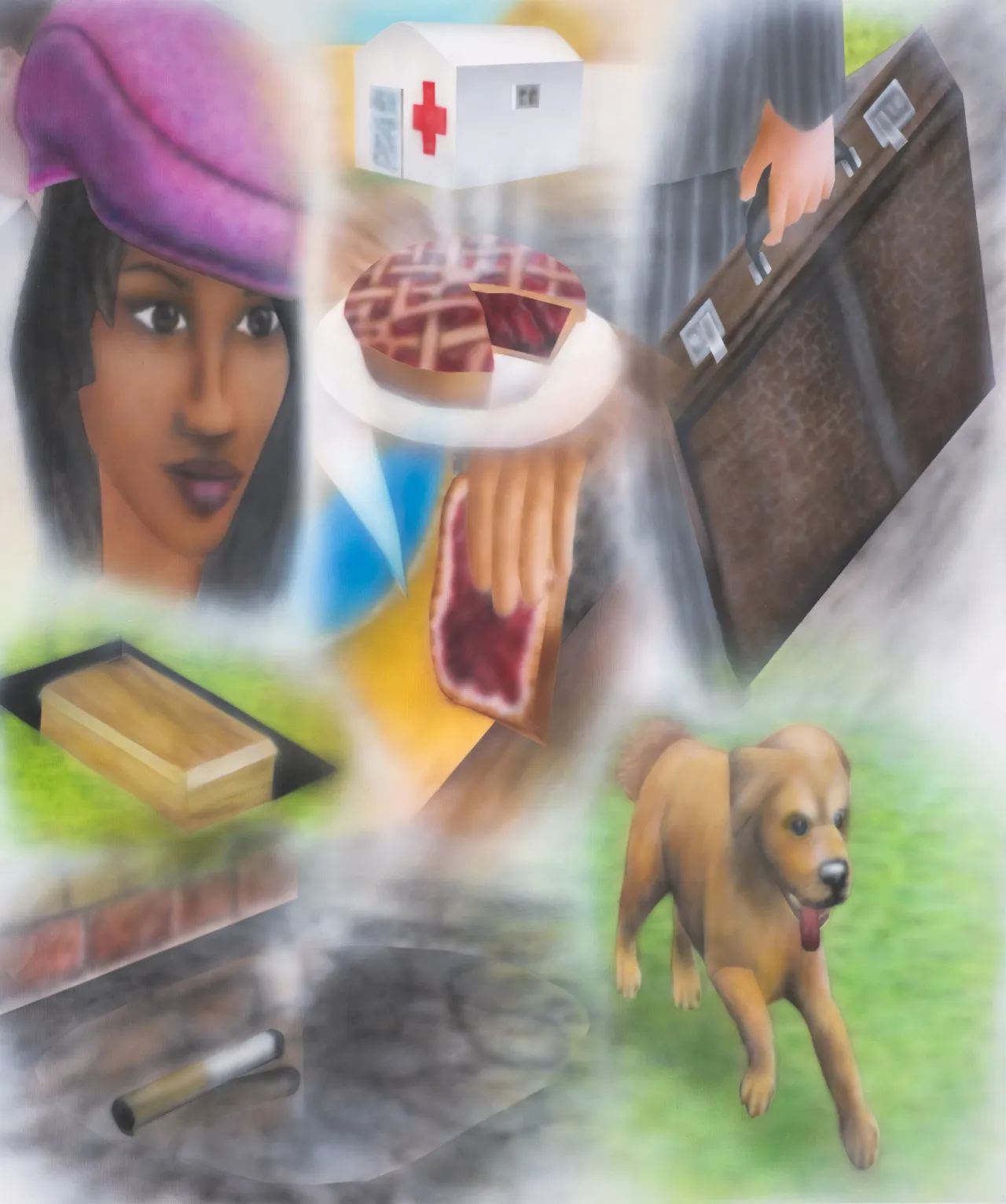
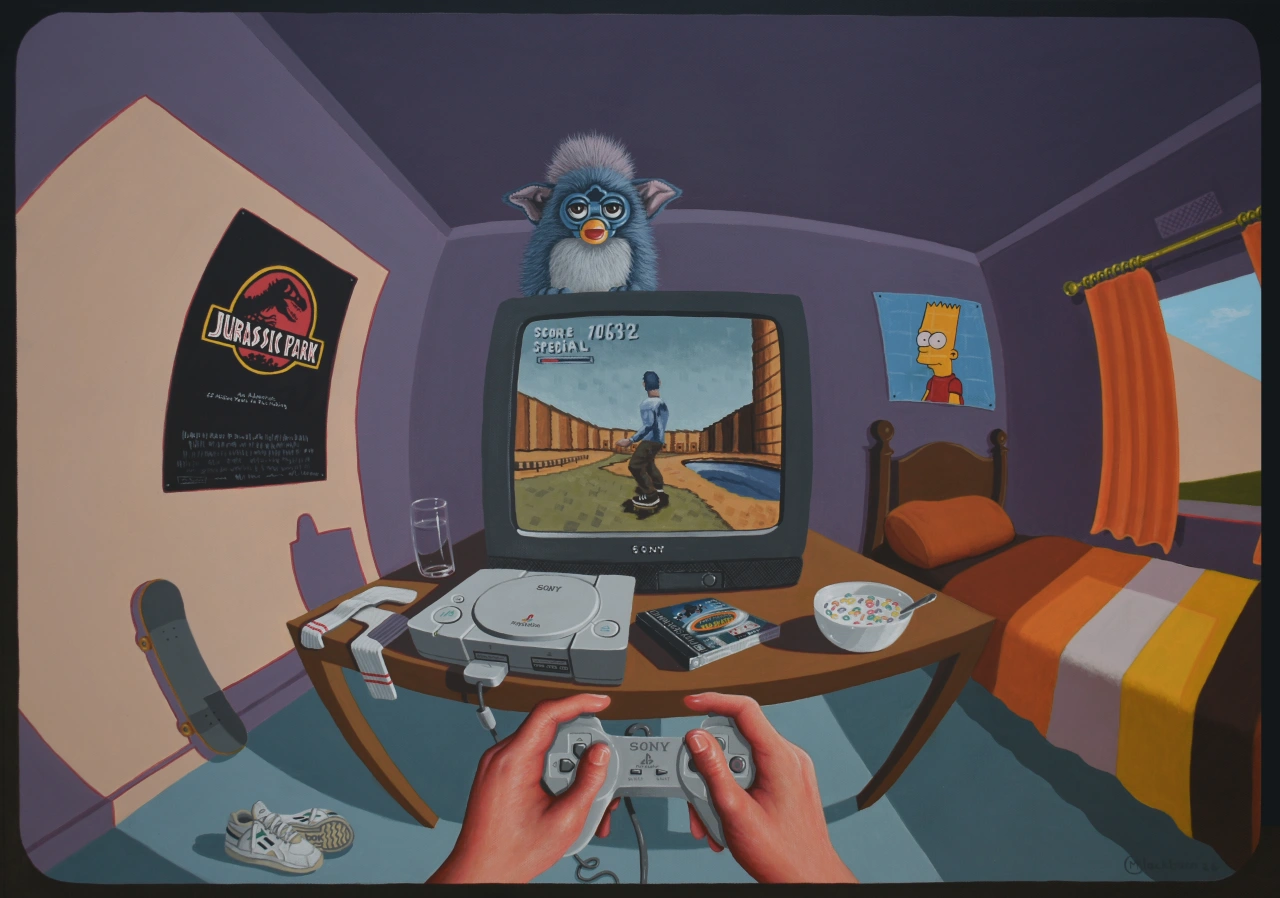
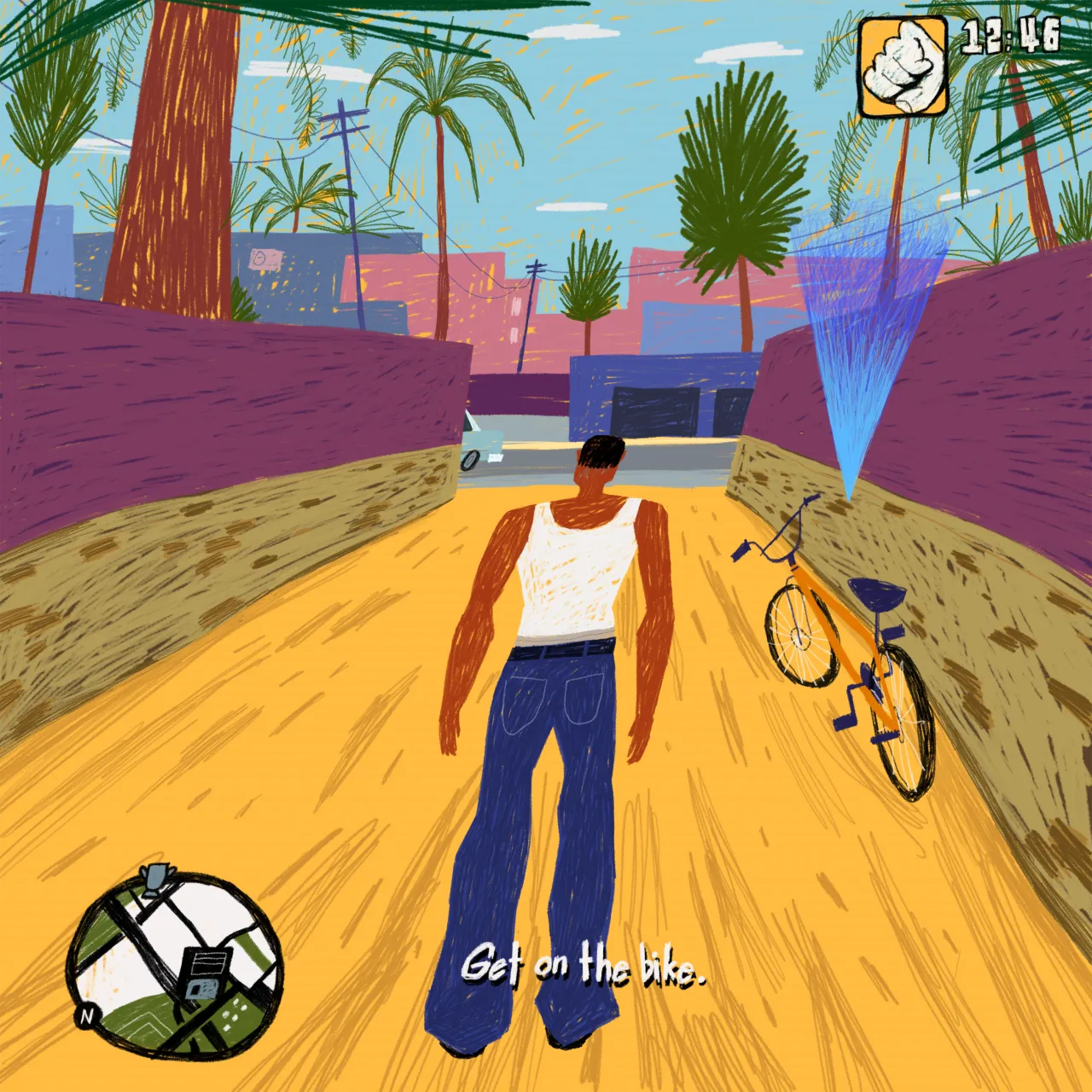
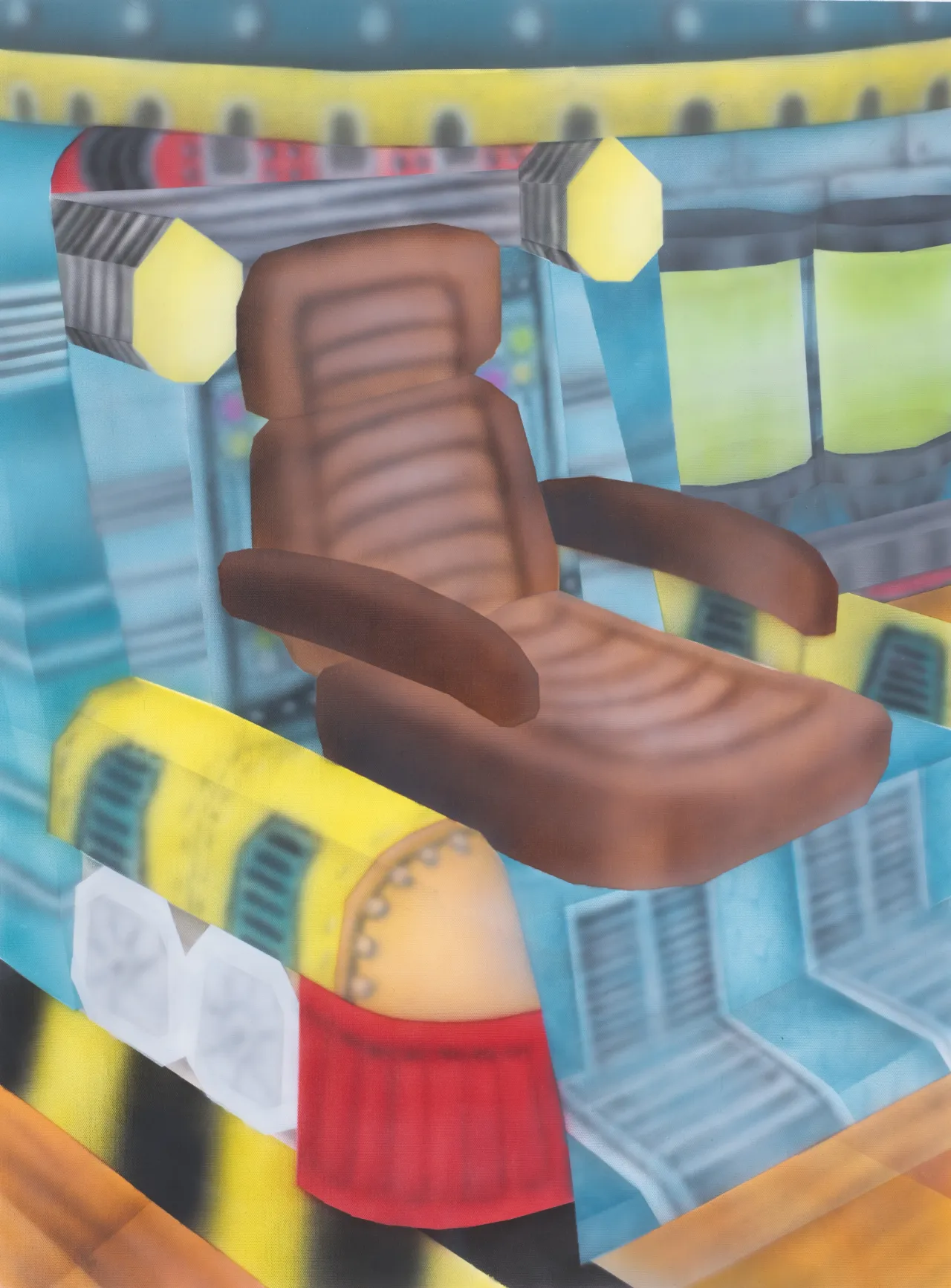
At first glance, Sasha's paintings look almost naive – soft, airbrushed surfaces, pastel-tinted colours and rounded forms that feel slightly out of focus. Then you look again, and what you're actually seeing are environments lifted from video games, reconstructed and re-rended through multiple stages. For example, this could be a screenshot from The Sims, Second Life, or GTA, which becomes source material before it's rebuilt in 3D modelling software, then painted over with airbrush techniques. The result is an odd middle ground where it's neither fully digital nor fully painterly, and neither completely real nor made up.
But here's what makes Sasha's work more interesting than an exercise in nostalgia or gamer aesthetics: she's not really interested in the games themselves. "If you look closely at my work," she says, "you'll notice that there are no default scenes that simply refer to the game or nostalgia. There is always something about the people who played these games and left behind their traces." This is why she gravitates towards games with personalised options, like The Sims with its customisable interiors (and everything else), or Second Life's avatar wardrobes or GTA's modifiable cars that you can spray paint (when on the run from the police). These are spaces where players make the decisions, and she paints the remnants.
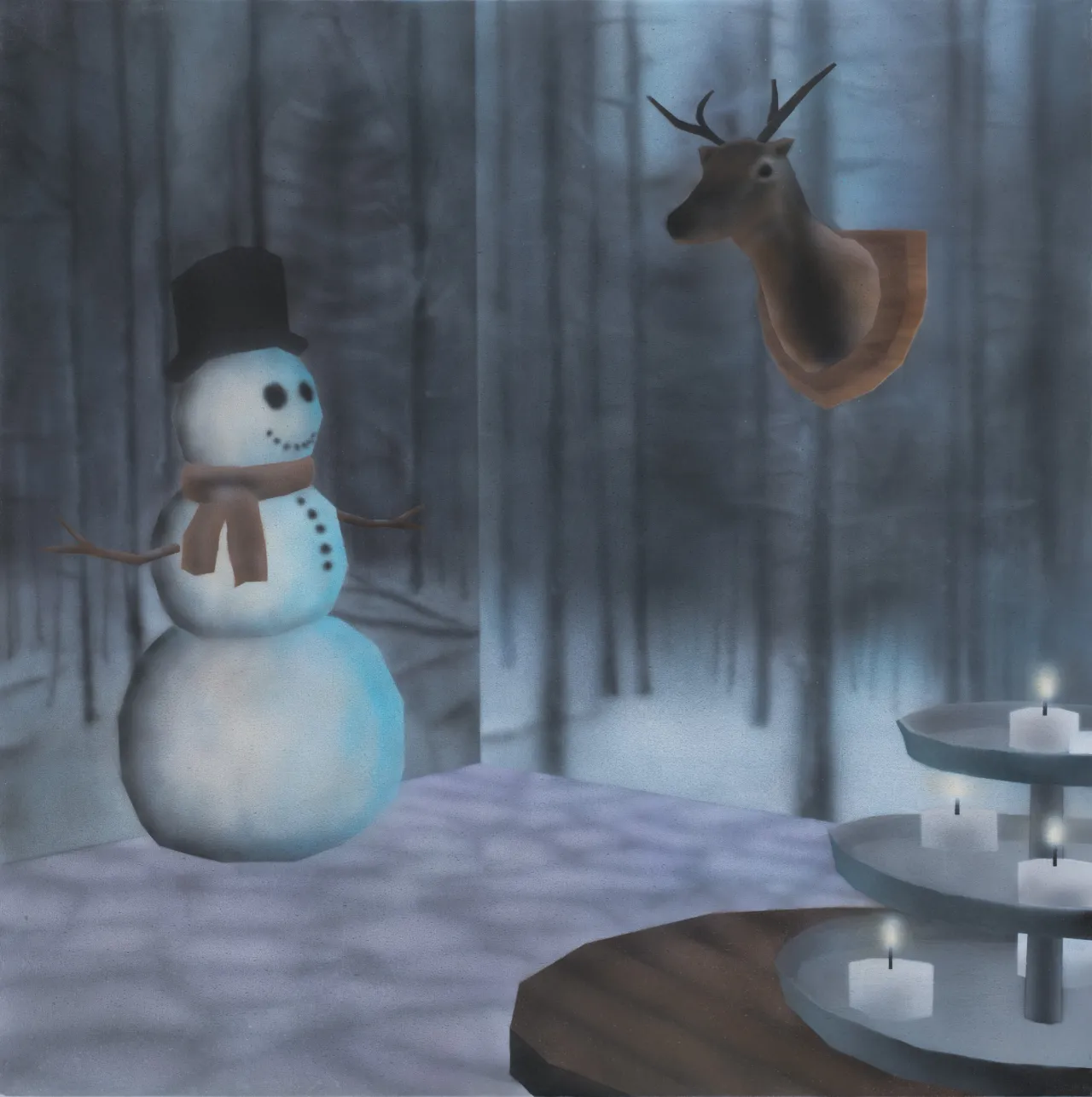
In Winter, one of her personal favourites, a snowman stands in a foggy, blue-grey forest. A mounted deer head floats beside it, slightly wrong in scale, while candles burn on a low table nearby. The whole scene has a texture of a level designed by someone with very specific tastes and then abandoned – you sense the person who arranged it, without ever seeing them.
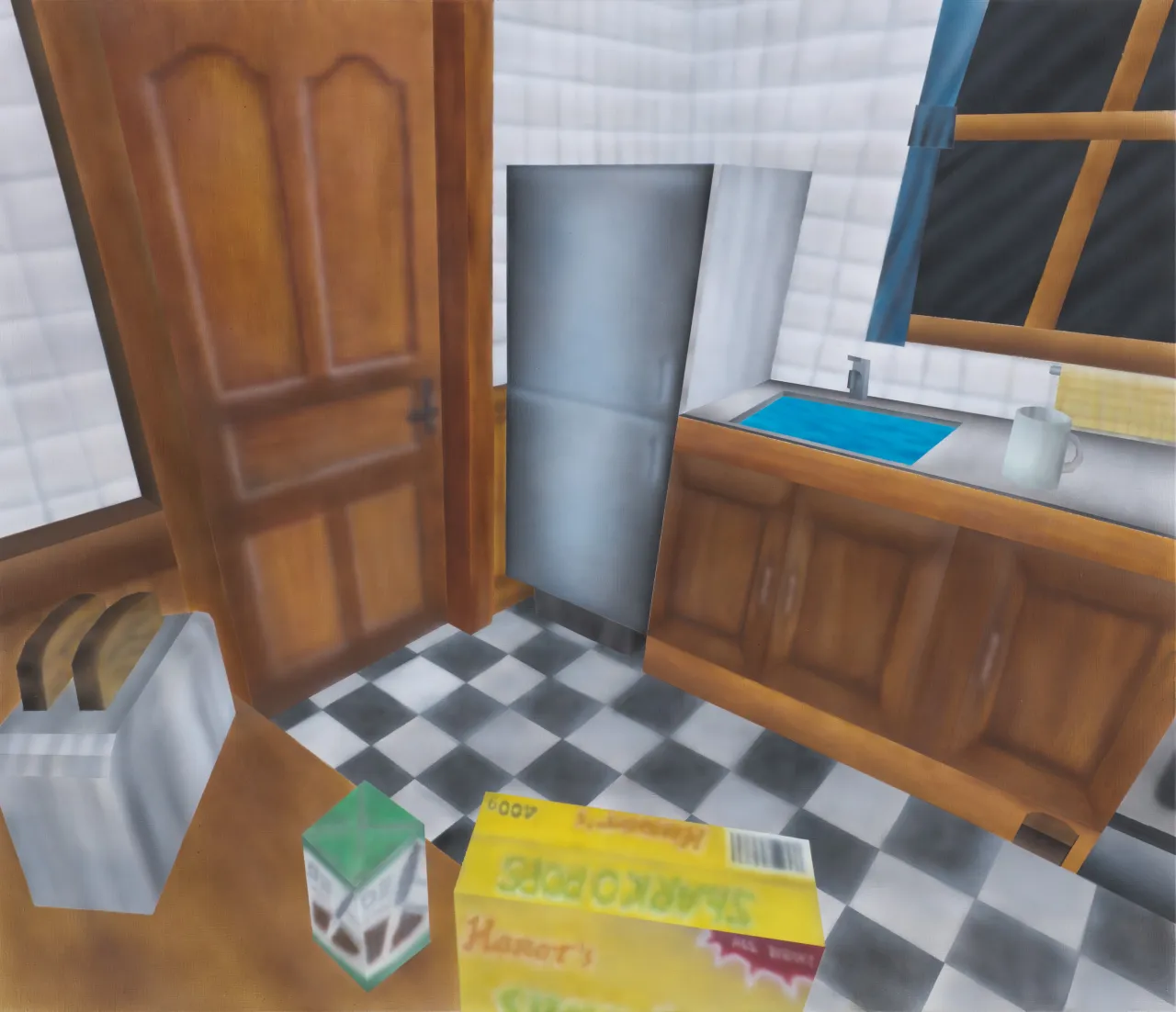
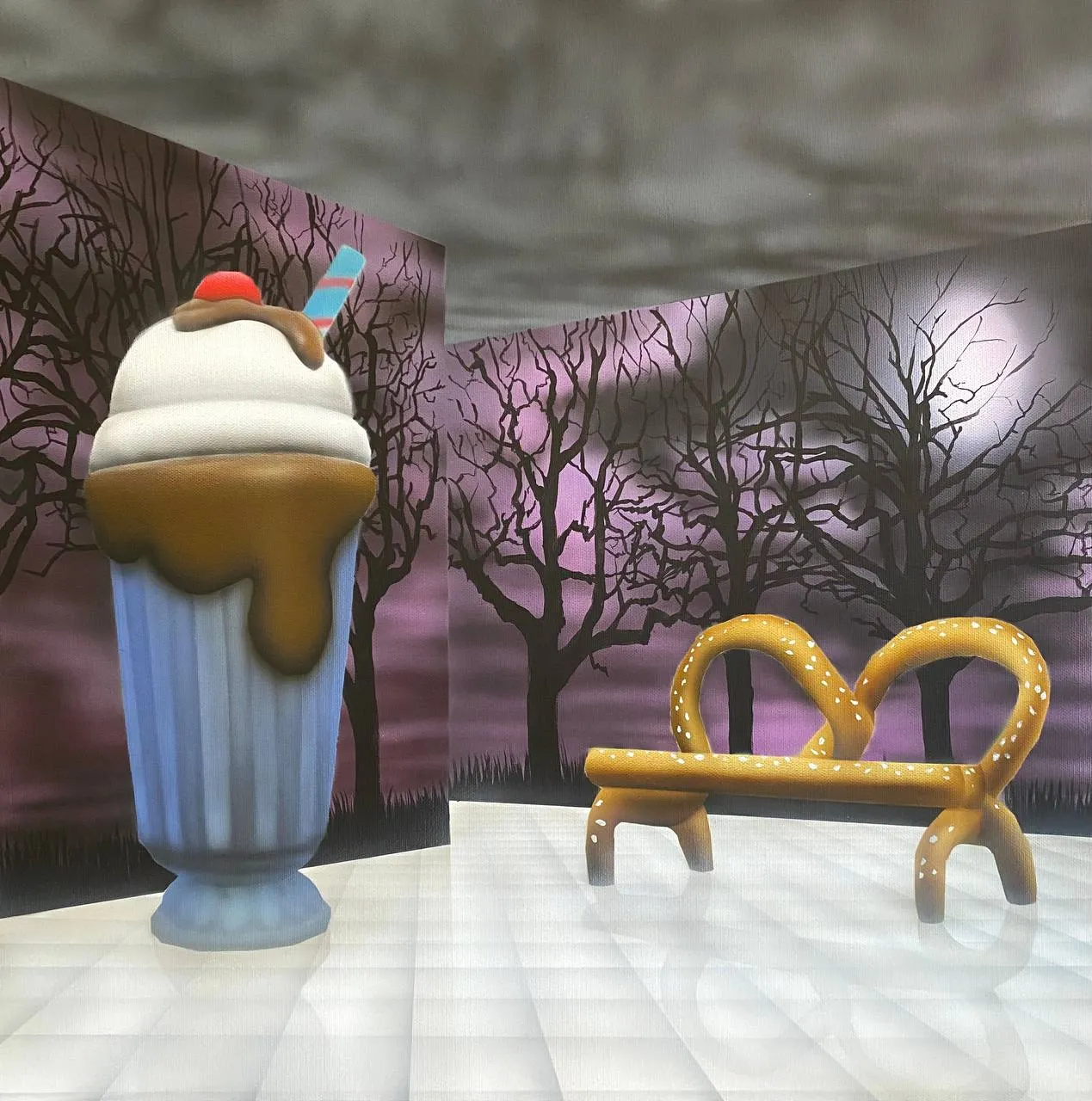
Candy Valley does something similar but with the dial turned up. A monumental melting sundae dominates a tiled foreground, a pretzel-shaped bench loops nearby, and behind them a dead forest rises against a purple-bruised sky. The sweetness is so extreme it tips into something darker, appearing like a corrupted memory of a theme park or a birthday party that went wrong. "I like the way I approached liminality in them, in my own way. I always enjoy coming back to look at them again."
The airbrushed blur technique, which has become a signature of Sasha's, is doing a lot of important work, making everything feel dreamy and slightly out of reach. It feels slippery, uncanny and compelling – a bit awkward, a bit lo-fi, and a far cry away from polished CGI realism or traditional painting… which we utterly adore.
Editor's Picks



Trending



Latest Jobs
Technical Designer & Illustrator at Reuben Read
Full-time·Harlow·£30,000 – £35,000
Creative Director at Koto
Full-time·London·£95,000 – £130,000
Campaign Manager at University of Leeds
Full-time·Leeds·£41,064 – £48,822
Senior Designer at Code and Theory
Full-time·New York·$90,000 – $115,000
Copywriter & Content Strategist at Chapel
Full-time·London·£30,000 – £40,000
Content Writer at Loom Digital
Full-time·Bristol·£27,000 – £30,000