It's official: creatives are using AI daily, but most aren't making extra money from it
Envato's second annual survey of more than 1,000 creatives finds that AI use has become routine, even if they don't always tell the client. But whether they're using it well remains an open question.
This time last year, many creatives were rushing to adopt AI tools, but nervously. Twelve months later, things have changed a lot. That's according to Beyond the Hype: The State of AI in Creative Work, the second annual report from Envato, the creative asset and AI toolkit owned by Shutterstock.
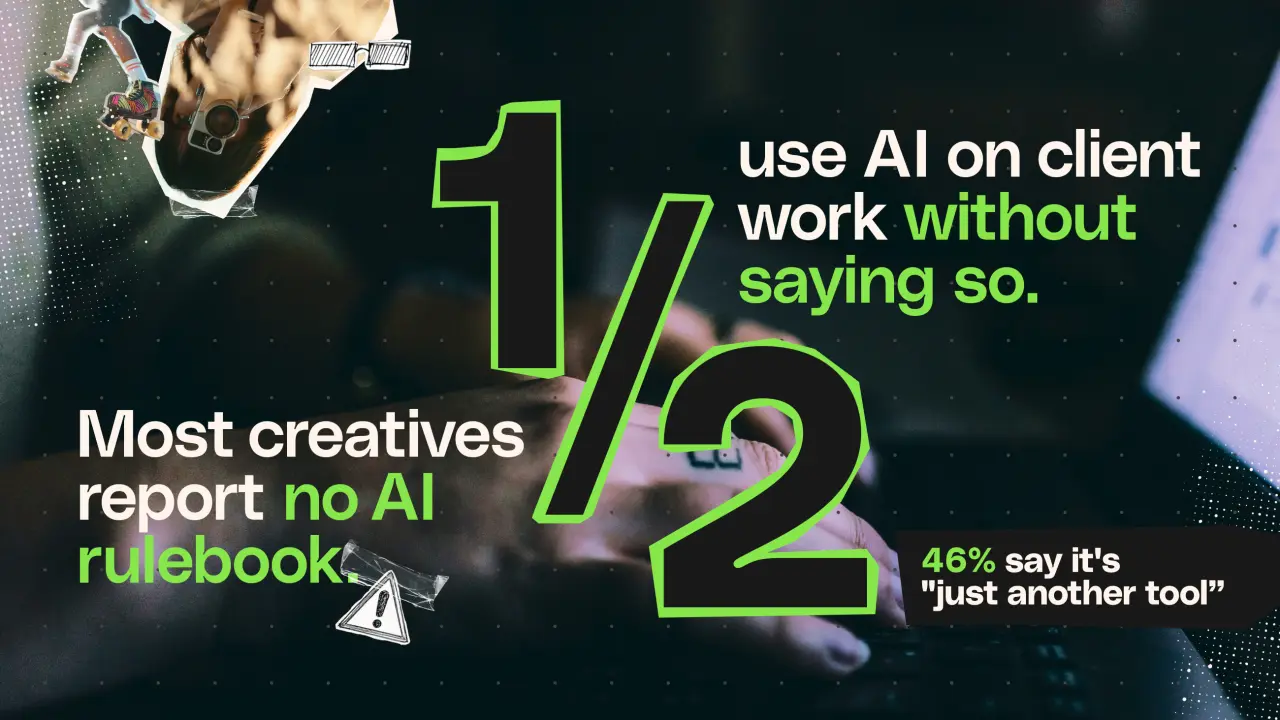
Based on a survey of 1,033 creatives across 103 countries and territories, the report reveals what creatives are actually doing with AI. And two big things immediately grabbed my attention. Firstly, more than half of AI users have used it on key client work without telling their client. And secondly, while AI may save you time, most creatives aren't seeing that turn into actual money.
To unpack these findings and more, I spoke to Hichame Assi, president of Shutterstock, which includes Envato.
Why ask?
Envato first ran the survey in 2025, and Hichame says the reason was simple. The public conversation about AI didn't match what he was seeing from the working creatives who use Envato. "At face value, the narrative was all hype or doom," he recalls. "Yet in our community, creatives were quietly working AI into client jobs." So last year, Envato asked creatives how they were using it.
One finding from that first survey stayed with Hichame in particular. "Almost half were using AI every day, but only about a third felt really prepared for it. That gap felt worth keeping an eye on, so we came back to see what had changed."
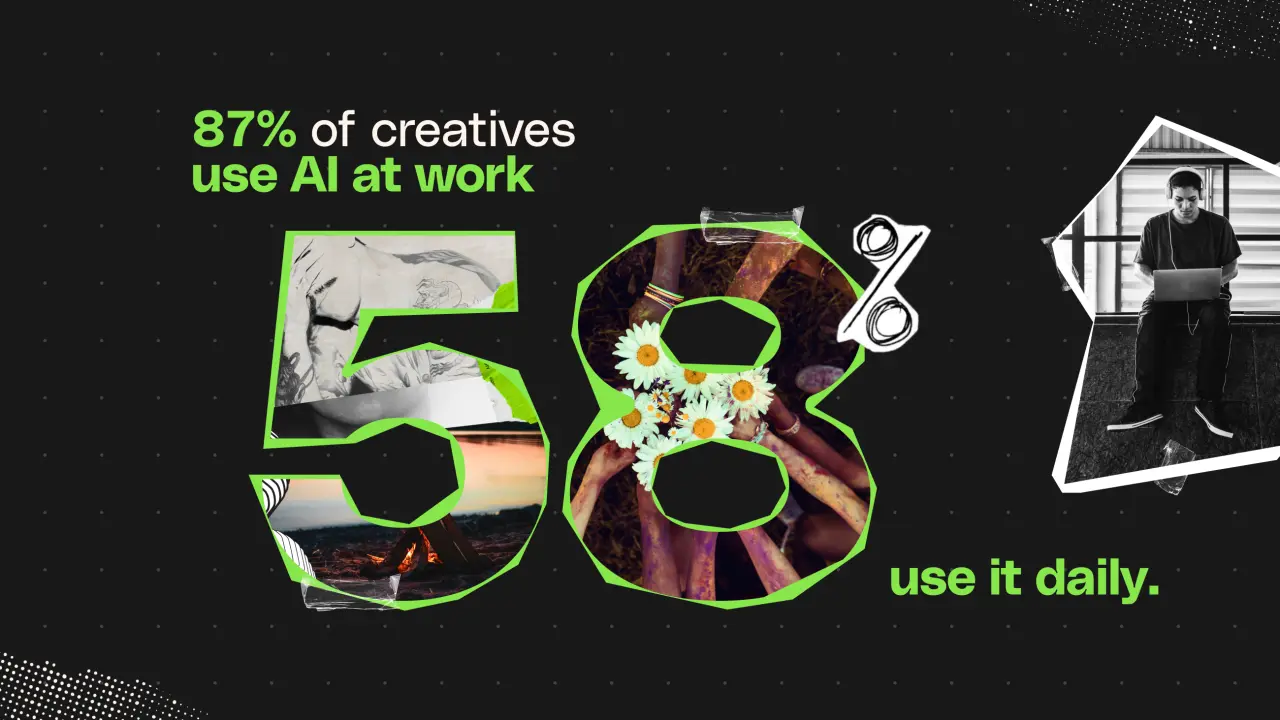
So what has changed in the last 12 months? Well, quite a lot actually. For a start, today 87% of creatives use AI at work at least occasionally, and 58% use it every day.
"AI is now part of the daily routine for most creatives," says Hichame. "Daily use rose from 49% to 58%, and agentic tools, which we didn't even ask about last year, are now used regularly by more than a third of AI users. At the same time, active avoidance has grown from 3% to 8%, so not everyone is on board yet."
But while most creatives are using AI to help them in their work, that doesn't mean that AI is doing their work, at least not all of it.
The survey split people's creative work into six stages, from research and admin to editing. At five of the six stages, "directing [AI] closely" was the most common approach. The percentage of creatives who let AI work "with little input" never went above 11%, and at some stages, it dropped to 4%. As for generating assets, only 7% took a hands-off approach.
The fall of the prompt
For Hichame, the biggest surprise in this year's data concerned the skill that, only a year ago, everyone seemed to agree was essential: prompting.
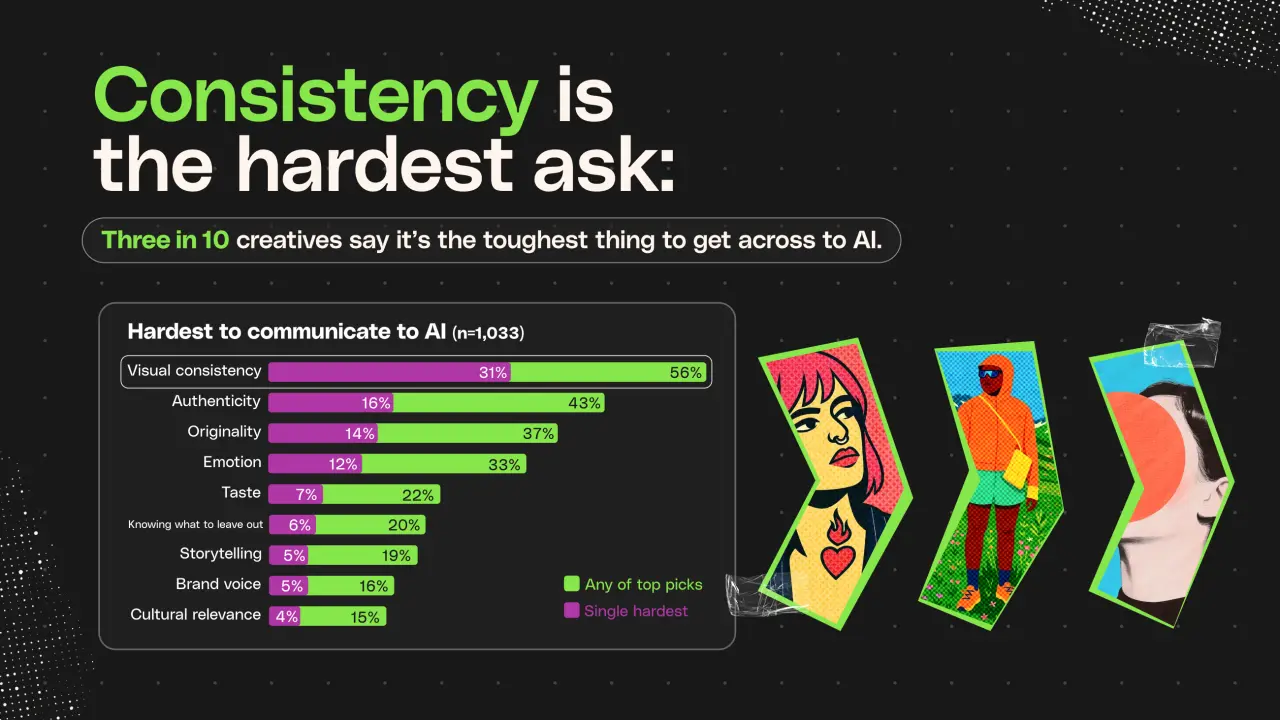
"Last year, our respondents named prompting as a skills gap and predicted 'prompt engineer' as a new job," he recalls. "This year, though, creatives ranked it last of eight factors, at 19%." Taste and judgement came first, at 53%. Craft came second, at 49%, followed by the strength of the idea, at 39%.
So what's going on? Perhaps this is just a sign that models have got much better at understanding natural language and visual references. Consequently, the time when precise prompts were all-important is long gone.
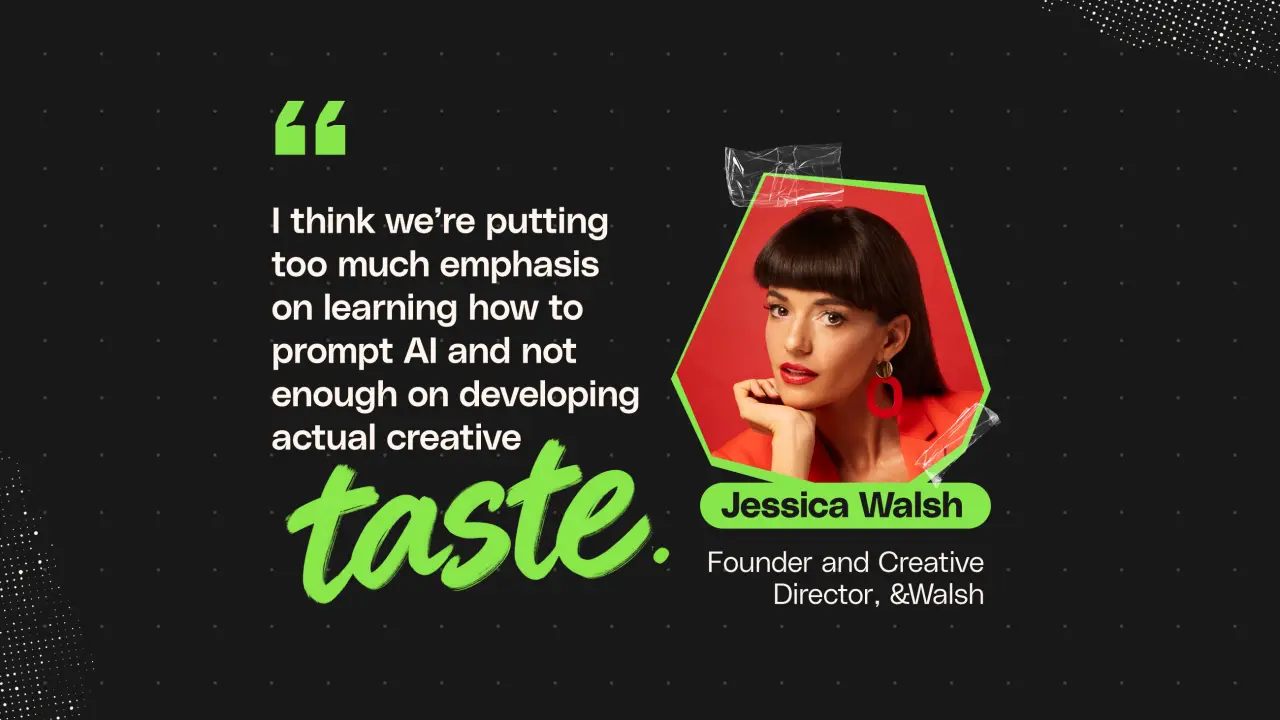
"The tools are going to keep getting easier and more accessible, so knowing how to use them won't be what sets creatives apart," says Jessica Walsh, founder of New York studio &Walsh and one of the experts interviewed for the report. What will, in her view, is "being able to recognise great work when you see it [which is] not something you can prompt, or learn overnight."
A lack of rules
One thing that surprised me personally is that nearly six in 10 creatives who work in teams say they have no written AI policy. Even in organisations of 250 or more people, four in 10 say they've been given nothing in writing. As Hichame puts it: "The tools moved fast, and the rules didn't. Most are working it out as they go." Which brings us to a thorny question: should creatives disclose whether they've used AI in their work?
In practice, it seems, this has become a matter of personal judgement. More than half of AI users (53%) have used it on key client work without telling the client, and most don't see that as a problem. Only 7% felt uncomfortable staying quiet.
Hichame notes, though, that when there are rules in place, "creatives are more open with clients, with 47% always disclosing AI use, compared with 38% where there's no policy." Age can play a part, too: while only 40% of creatives always tell clients when they've used AI, that rises to 53% among those aged 50 and over.
What humans are for
One of the most commonly cited concerns about AI is that its output is bland and lacks soul. Yet when creatives discard AI-generated concepts, that's rarely the real reason. According to the report, one third (34%) do so because the concepts missed the brief or vision, and a similar number (32%) do so because of errors or low quality, such as garbled logos or glitchy video. Only 5% drop them because they lack feeling or soul.
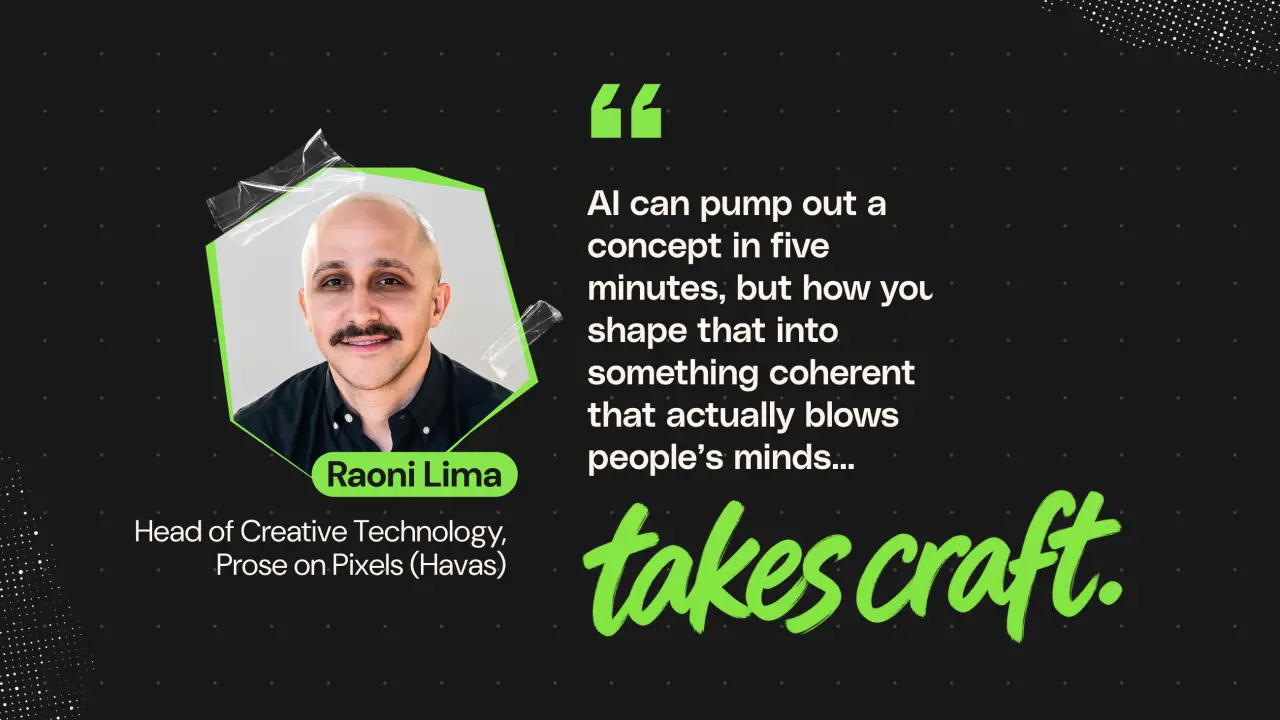
What's just as interesting is what creatives keep. "The typical creative generates three to five AI concepts and keeps about two," notes Hichame. "Three in four keep half or fewer of their concepts." That, as he sees it, shows how important human creativity remains in the creative process. "Quality control is where humans make the difference," he says. "Knowing what the brief needs, seeing where an output falls short and choosing what makes the cut are judgement calls.
"Generating 10 options is easy," he adds. "Knowing which one is right is the skill, and it's one that creatives build over years."
Where's the money?
Here's another interesting question the report poses: is AI making creatives richer? The answer is: mostly not, or at least not yet.
"Half of creatives who use AI say it makes them faster," says Hichame. "But of those, only one in four report any financial upside. Another one in five earn about the same for less effort. For the rest, they gain time, not money."
This isn't, though, because people are cutting their rates: quite the reverse. "Of the freelancers and agency owners we asked, 40% raised their rates this year and only 6% cut them," he says. More to the point, more than a quarter of AI users (28%) now offer services they couldn't before, and 26% of those whose rates moved credited new services.
The conclusion in Hichame's mind is clear. "Getting better results from AI is the skill creatives most want to learn, at 45%, while creative direction sits near the bottom at 18%," he notes. Yet in the survey, the creatives who have raised their rates credited speed, reputation and creative direction ahead of AI skills. "This suggests people are chasing the skill the market isn't paying for, and ignoring the ones it is."
His advice? "Take the hours AI gives back and put them where clients pay," he says. "That means turning work around faster, investing in your own name and point of view, so your work is recognisable as yours, and sharpening your direction. Because three in four creatives already discard at least half of what AI produces, and that judgement is what sets you apart."

Editor's Picks
Trending

Latest Jobs
Global Creative Lead, Reverb at Spotify
Full-time·New York·$123.2k – $176k
Senior 2D Motion Designer at Koto
Full-time·London·£52k – £69k
Product Designer at Granola
Full-time·London·£110k – £150k
Brand & Motion Designer at Gusto
Full-time·New York·$177k – $222k
Director, Product Design at Datadog
Full-time·New York·$232k – $290k
Design Lead at Fanatics Collectibles
Full-time·New York·$120k – $150k