Koto: We need to talk about how all electric car brands look the same
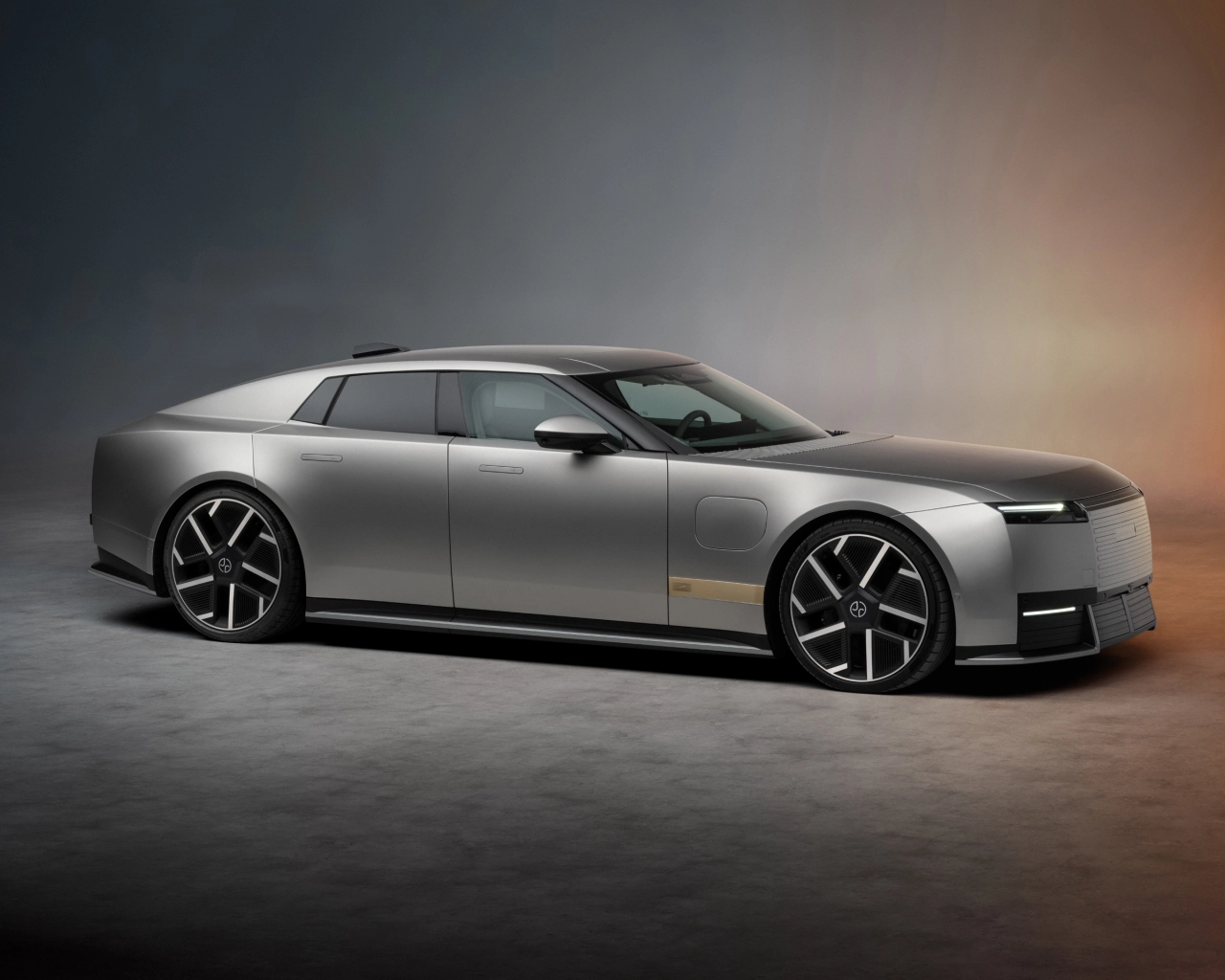
The studio's new report asks a fundamental question: how EVs can stand out when they all look alike?
Here's something about the electric car boom that hasn't been widely reported, but for me is fundamental not just to the sector, but the future of branding in general. People who make the switch to electric overwhelmingly stay switched: 96% of EV drivers say they’d choose electric again. Yet only around half stay loyal to the brand they actually bought.
The industry, then, has done a brilliant job of selling the benefits of electric driving, but a terrible job of selling anyone on a specific model.
That’s the argument at the centre of a new report from global creative company Koto. As tech, interfaces and specifications converge, it says, car makers are going to get harder and harder to tell apart. And with the statistical evidence matching what we all know instinctively, every time we see an EV silently whizz by, it’s hard to disagree.
Overwhelming the market
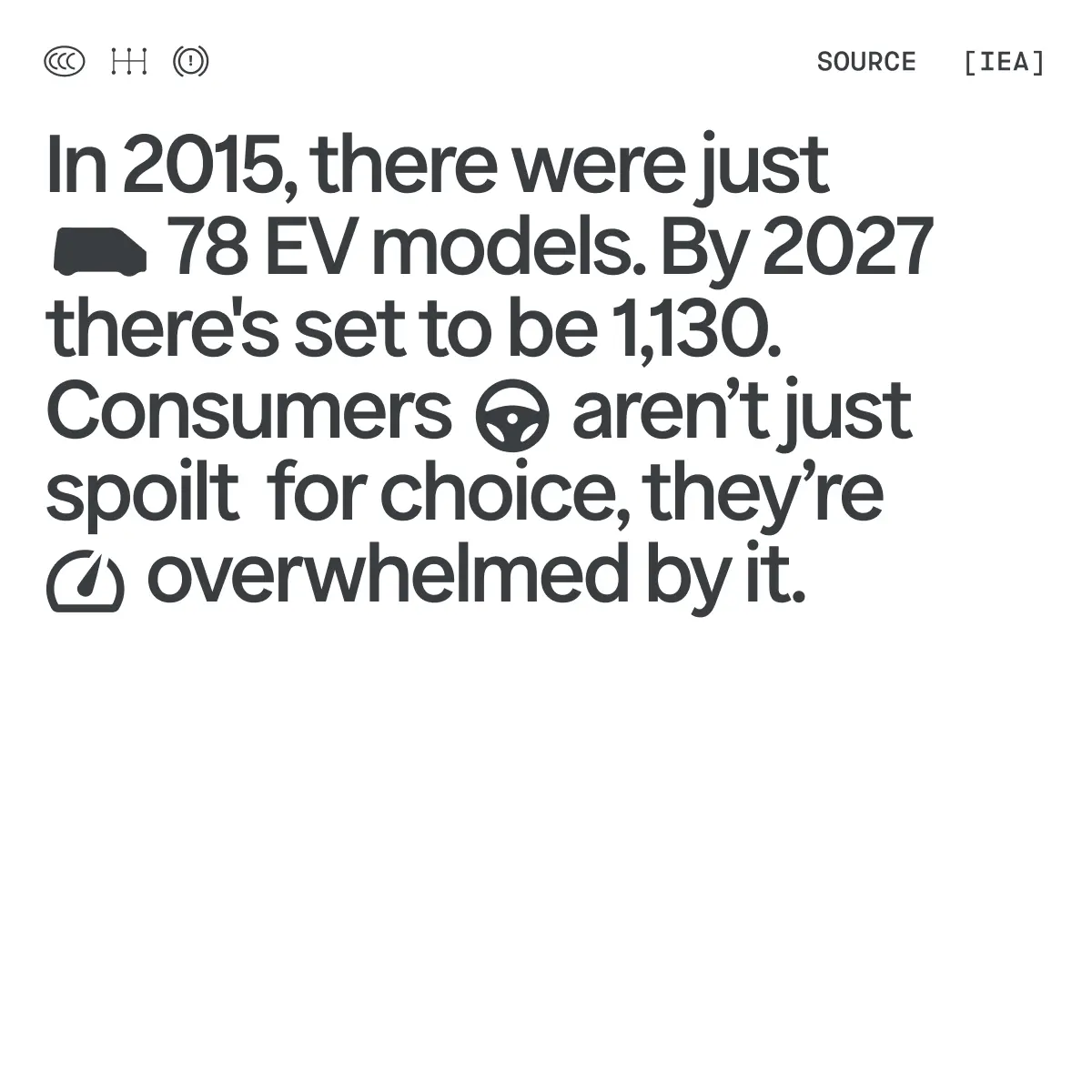
What I hadn't quite realised myself, though, was just how many brands we're talking about. According to the International Energy Agency, the number of electric models available globally rose from 370 in 2020 to nearly 1,000 in 2025.
As a result, buyers aren’t so much spoilt for choice as overwhelmed by it. No wonder brand loyalty is virtually non-existent. Online car shopping resource Edmunds found 85% of EV shoppers would buy from a manufacturer they’d never owned before. (Indeed, it makes you wonder why the 15% are bothered. Maybe they work for a specific manufacturer and get a discount. Maybe they misunderstood the question. Who can guess?)
The point is that when brands look, sound and behave alike, people choose based at price, specs and convenience. And with this level of competition, that’s not a race any company really wants to run in.
To find out what's really going on, Koto put 10 leading EV brands through its 18-point Brand Assessment Tool, which considers whether each brand comes across as "true, compelling and distinctive". The results showed a striking gap between sales and brand strength.
Rivian ranked ninth for sales but first for brand, with a score of 7.8. Volkswagen was the reverse: third for sales but tenth for brand, scoring 4.8. Market leader BYD scored 6.9, while Tesla and Polestar tied on 7.2.
Three questions to ask
So what's to be done? The report suggests there are three main questions for the industry to answer. Question one is whether an EV is primarily a car or a continually updated computer. Tesla and Polestar lean firmly towards the latter, but Koto notes signs of the pendulum swinging to the former—in the West, at least—with Renault adding physical switches and VW bringing buttons back to its ID cabins.
In China, however, the car is increasingly seen as a connected service platform. Most brands, the report suggests, will end up blending the two. But if you're trying to be all things to all people, there's a danger you'll please nobody.
Question two is whether established brands should carry their heritage forward or reinvent themselves. Koto praises the Renault 5 E-Tech and BMW’s Neue Klasse for reinterpreting their pasts rather than simply recycling the names, and points to the backlash against Ferrari’s Luce as evidence of how much emotion is still bound up in legacy marques.
Question three is how brands can stay coherent across a fragmented purchase journey that now runs through YouTube reviewers, review sites, word of mouth and AI agents. Here, Koto singles out Jaecoo, whose record sales haven’t yet been matched by brand affinity, and wonders whether its nickname of “Temu Range Rover” is a good or bad thing. (Personally, Jaecoo is the EV I'm most interested in buying, but maybe that says more about my own lack of class than anything else.)
Meat on the bones
What makes the report a great read is not just it's content, but how it’s been designed. Koto’s team borrowed heavily from car culture: rotating 3D car forms nod to the theatrical reveals of the motor show, while dashboard-inspired layouts and animated micrographics echo in-car interfaces.
It’s worth noting that this is a perspective paper rather than original consumer research, with its market statistics drawn from third-party sources. But like I said, the main thing for me is that it reflects what we're all thinking, and actually puts meat on those bones.
As the report puts it, the technology might be driving the transition, but brand needs to get back behind the wheel.

Editor's Picks




Trending


Latest Jobs
Director, Head of Creative at Twitch
Full-time·San Francisco·$203,000 – $274,600
Brand Manager DACH Markets at Factorial
Full-time·Barcelona·€50,000 – €60,000
Designer (Digital, Brand & Localisation) at Journey
Contract·London·£45,000 – £62,500
GTA VI Social Lead at Future
Full-time·Bath·£29,000 – £40,000
Creative Traffic Manager at Tony's Chocolonely
Full-time·Amsterdam·€58,000 – €73,000
Brand Designer at The Farmer's Dog
Full-time·New York·$80,000 – $90,000