'The experience of seeing the work is pretty particular': Lily Bunney on her detailed paintings filled with grids and pixels
The artist talks us through her signature, granulated paintings, the subjects within them and the inspiration behind her mathematical aesthetic.
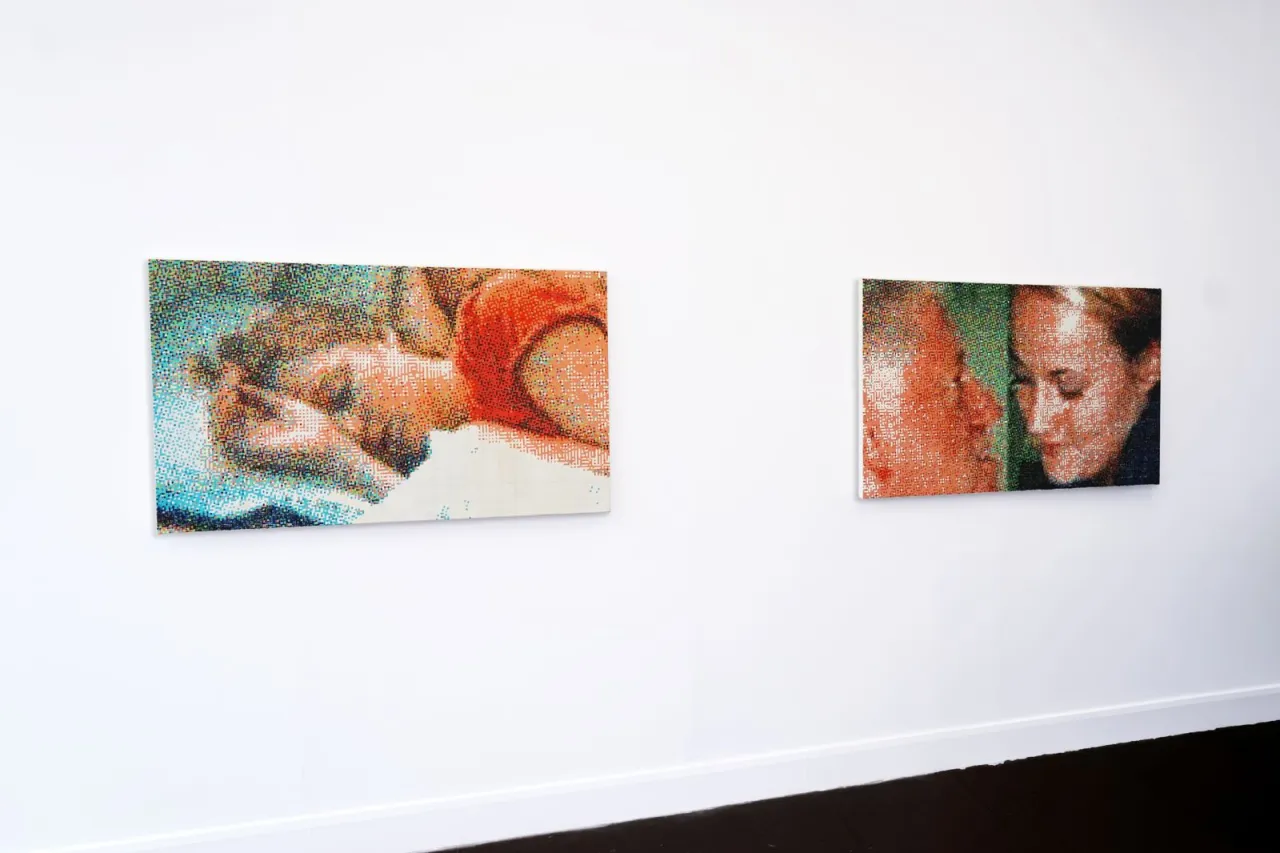
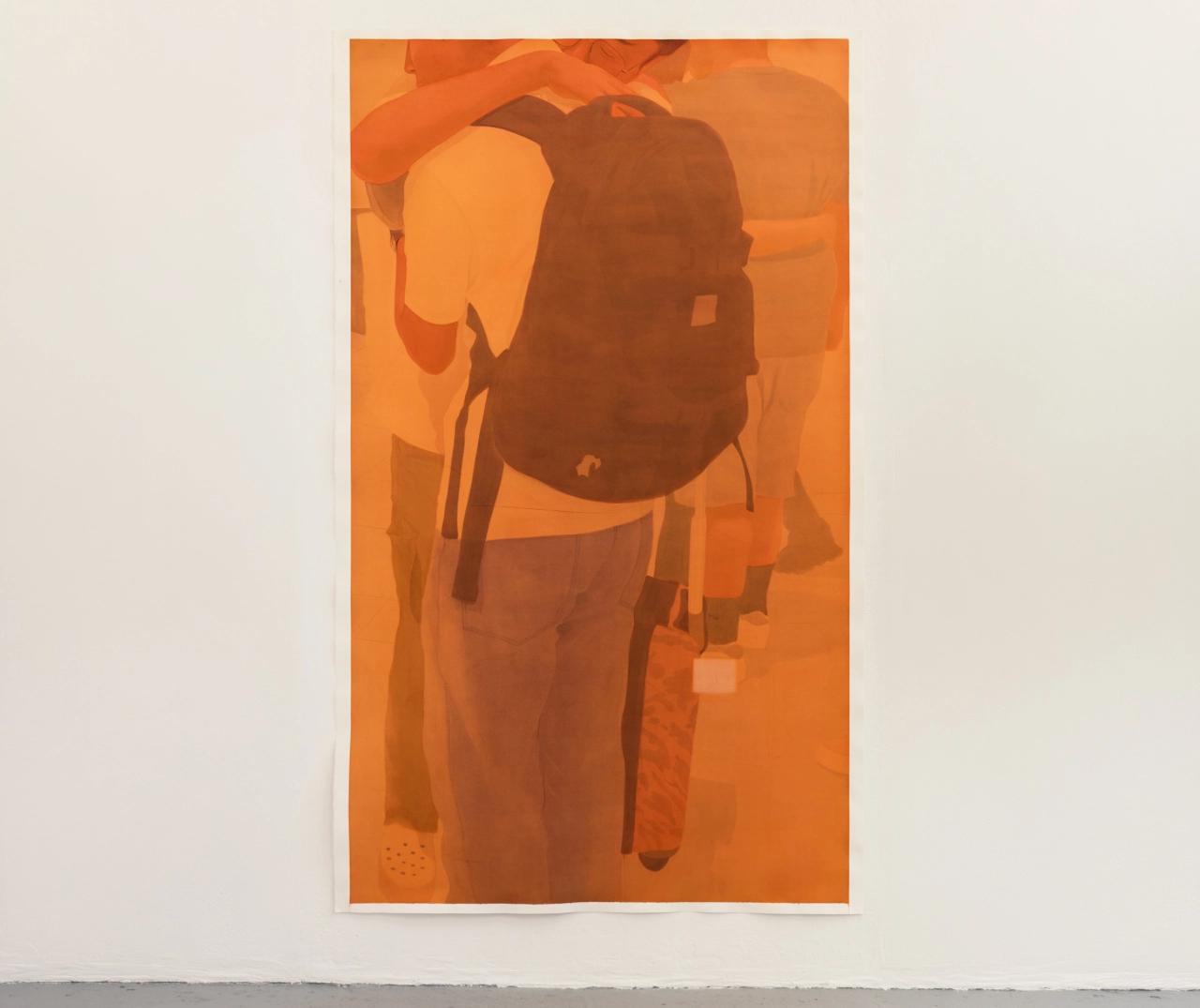
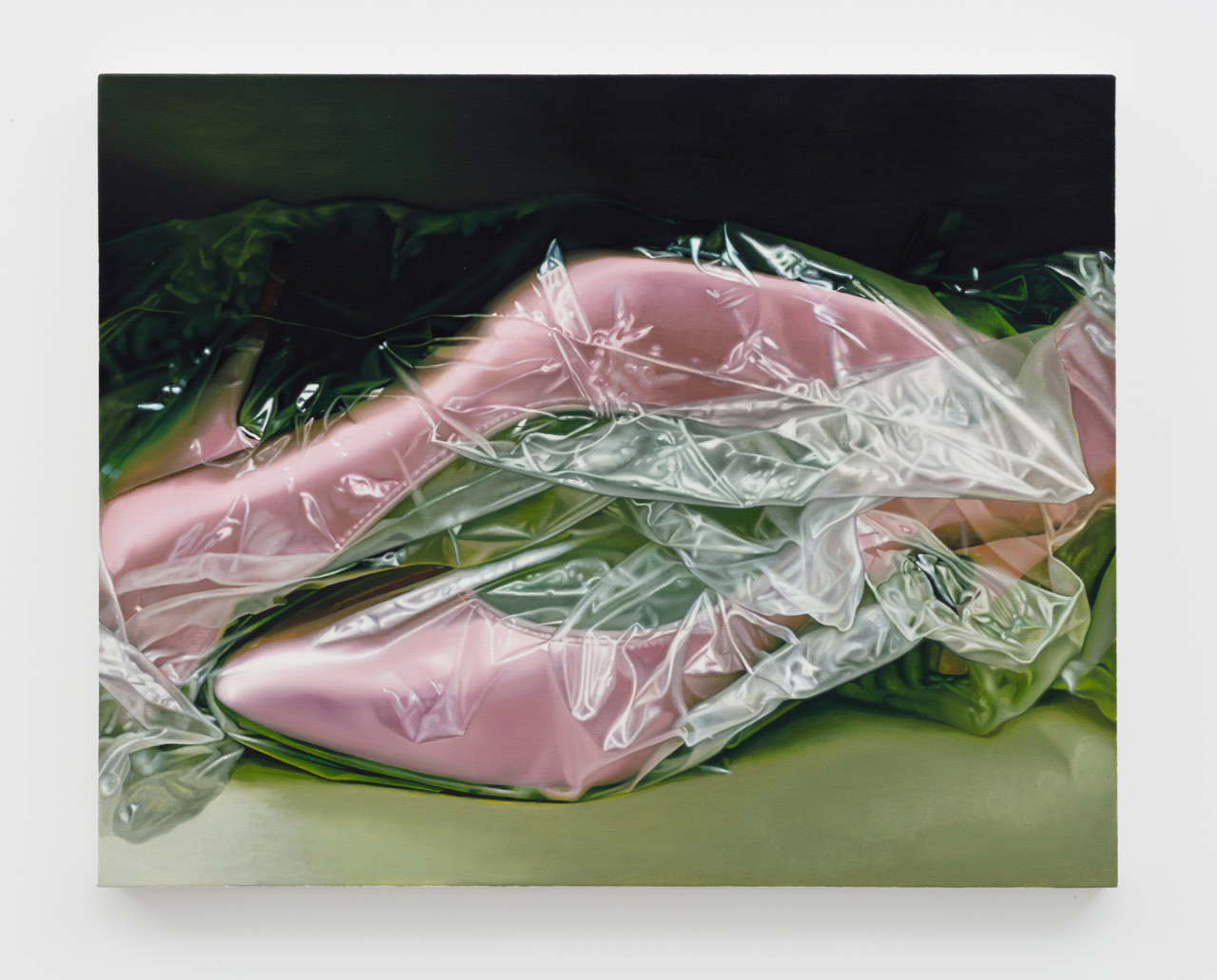
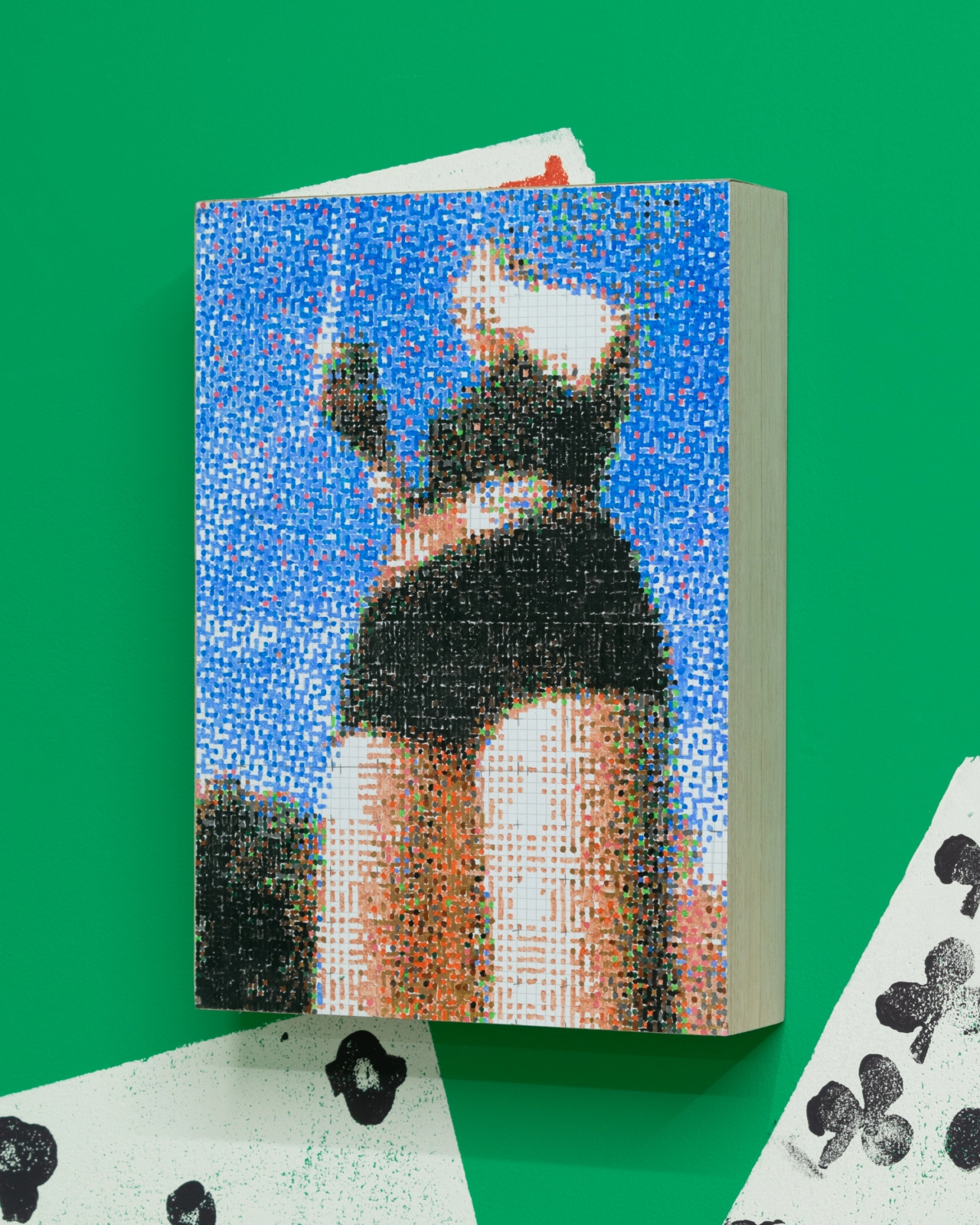
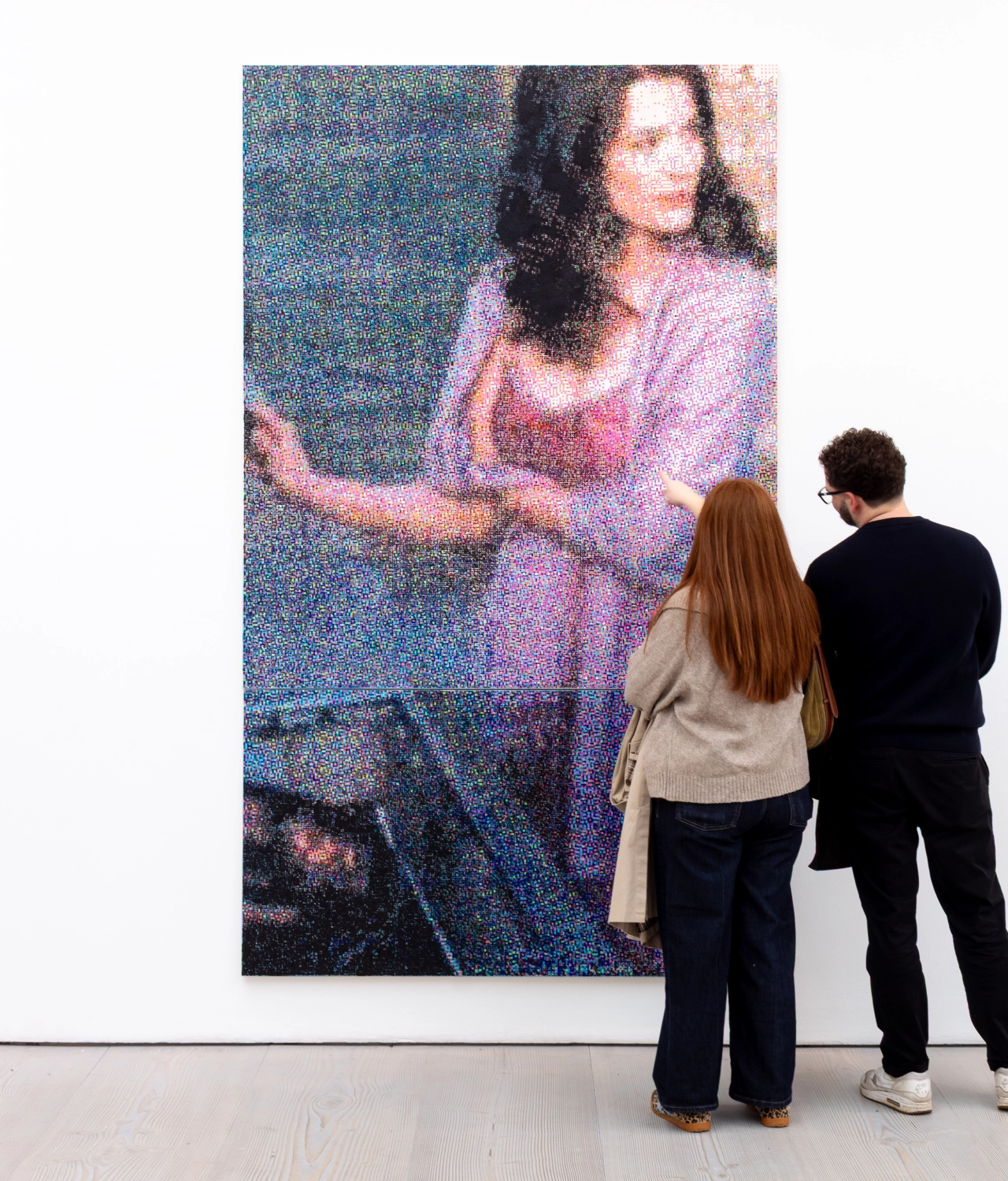
From a distance, Lily Bunney's paintings look like photos. And then you take a step closer, and closer, and you'll notice all the pixelated squares and the detailed grids which look like a low-res image downloaded from Google – and the image becomes a little less obvious. "The experience of seeing the work is pretty particular," she says, "the work is harder to read in person, but when the painting is compressed through photography it becomes clearer. So often people have this experience of not quite being able to make out the image and then seeing it from far away or on a photo they've taken on their phone, and the image becomes clear."
Lily is from the West Midlands, near Rugby, and she studied for a BA in Fine Art at Central Saint Martins. However, she wasn't painting and instead tried her hand at "this weird kind of bad performance and making puppets". When 2020 came around, she graduated without a degree show due to the pandemic disruption, and from there she nestled away in her studio before finding painting as her medium. "The transition came from making work when no one outside of my friends was particularly interested, and it freed me up mentally to just do the work I wanted to do and not worry about how it would be received."
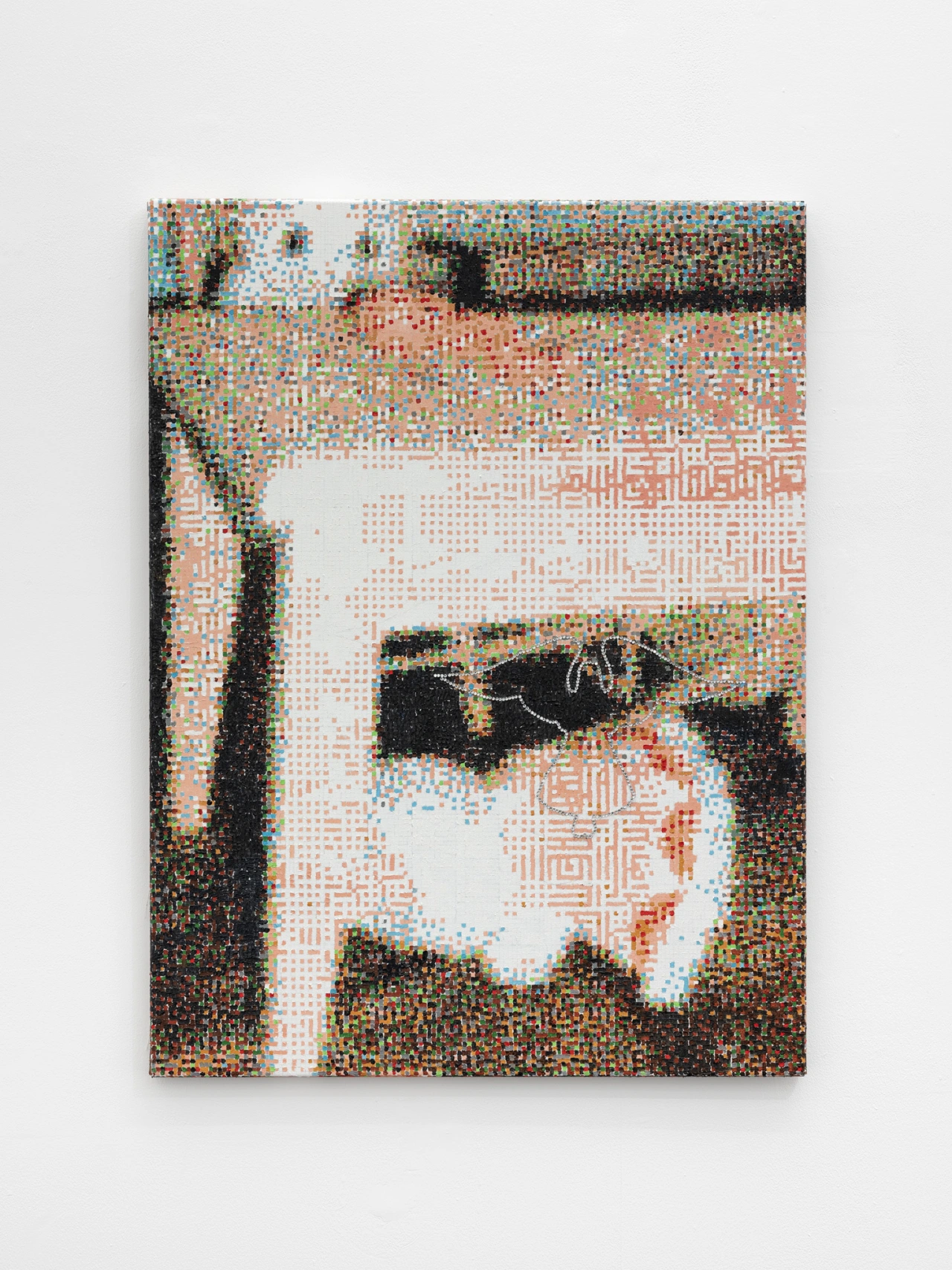
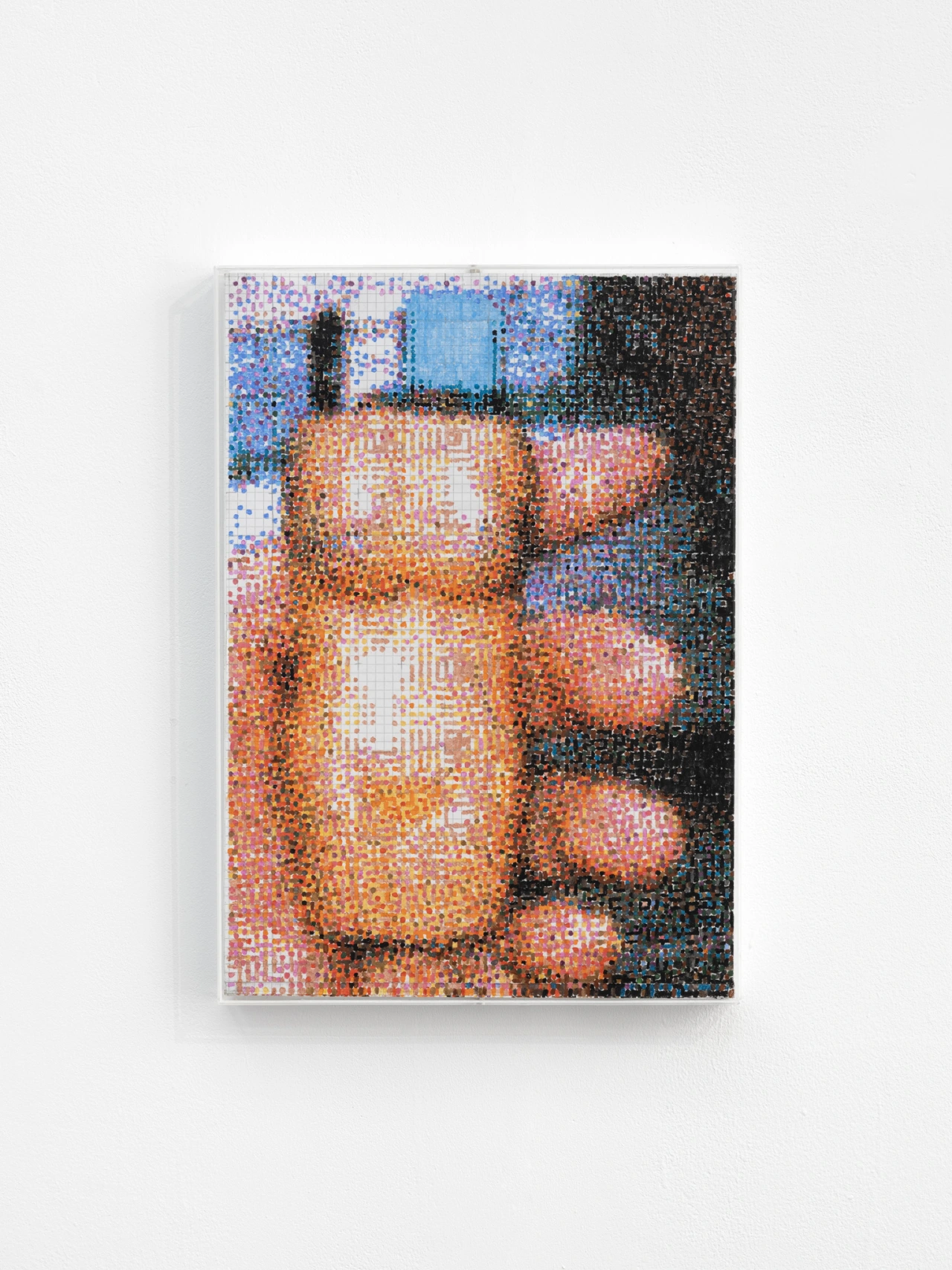
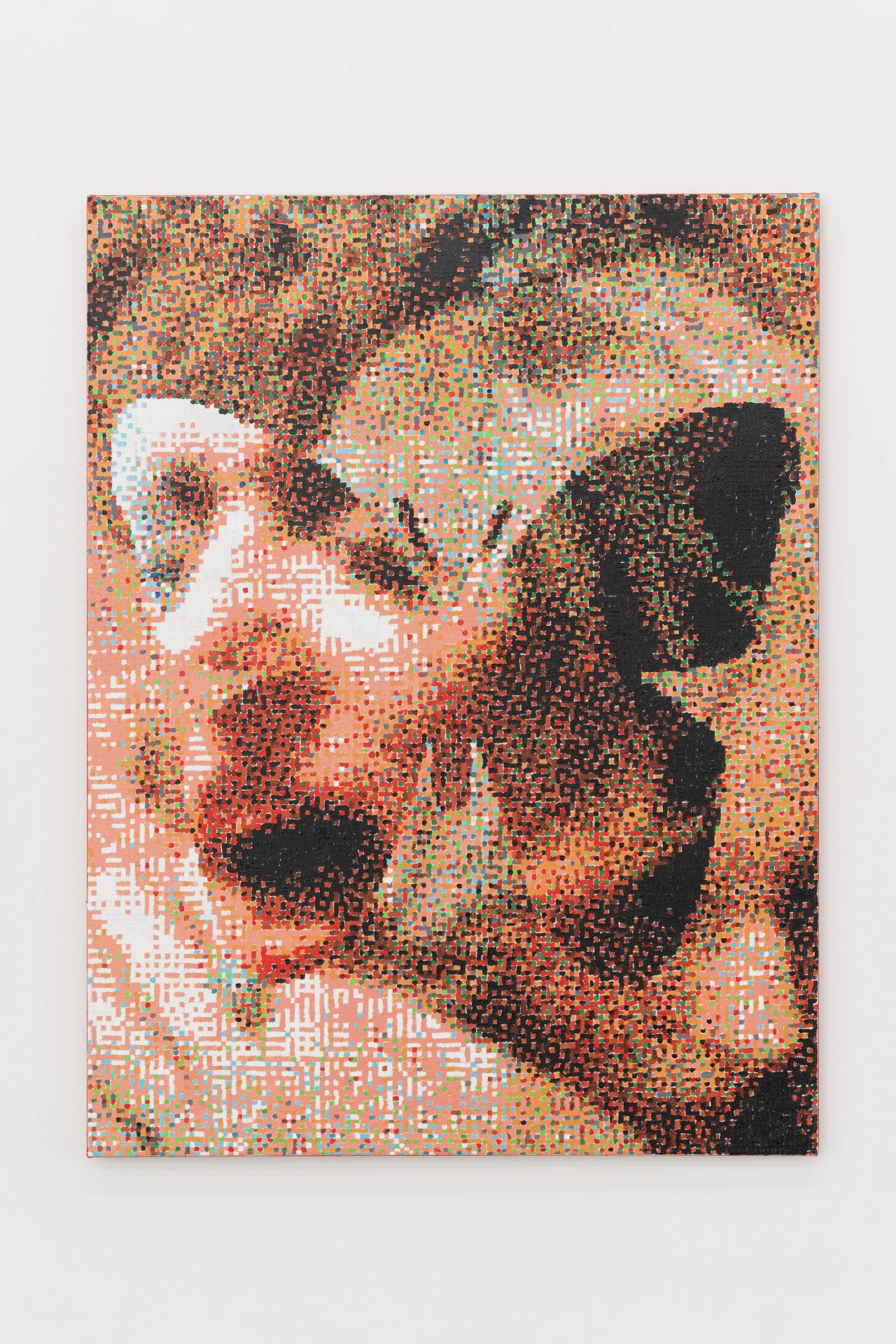
At the time, she was working an "emotionally intense job" teaching expelled kids subjects such as art and maths, which is, interestingly, where she found her artistic language. "The grids came from working in the maths exercise books during lunch," she explains. From there, the gallery Milosc took an interest in her work, and she also held an exhibition at Guts Gallery called Girls Peeing on Cars, "which was surprisingly successful". She adds, "Since then I've been developing my work materiality while trying to expand back out from just doing painting."
We adore the type of granulated, jagged aesthetic that she applies to her paintings, appearing like lo-fi pics from the early internet days. And we're also not surprised to hear that she gets most of her inspiration from her phone. She begins her process by sourcing a collection of images she likes – "I try to continuously look for images on social media, taking photos on my phone, in books or in movies," she says. Then, she digitally processes the images that she's most drawn to, and uses Photoshop filters that were originally intended to make a knit pattern from family photographs. She continues with digital sketches (or "plans of paintings"), and will ask for a second opinion from her friends by sending them "out of context sketches with texts like, 'What does this make you feel', or 'which has the best colour'." After this, she moves the work onto the canvas – "sometimes other mediums".
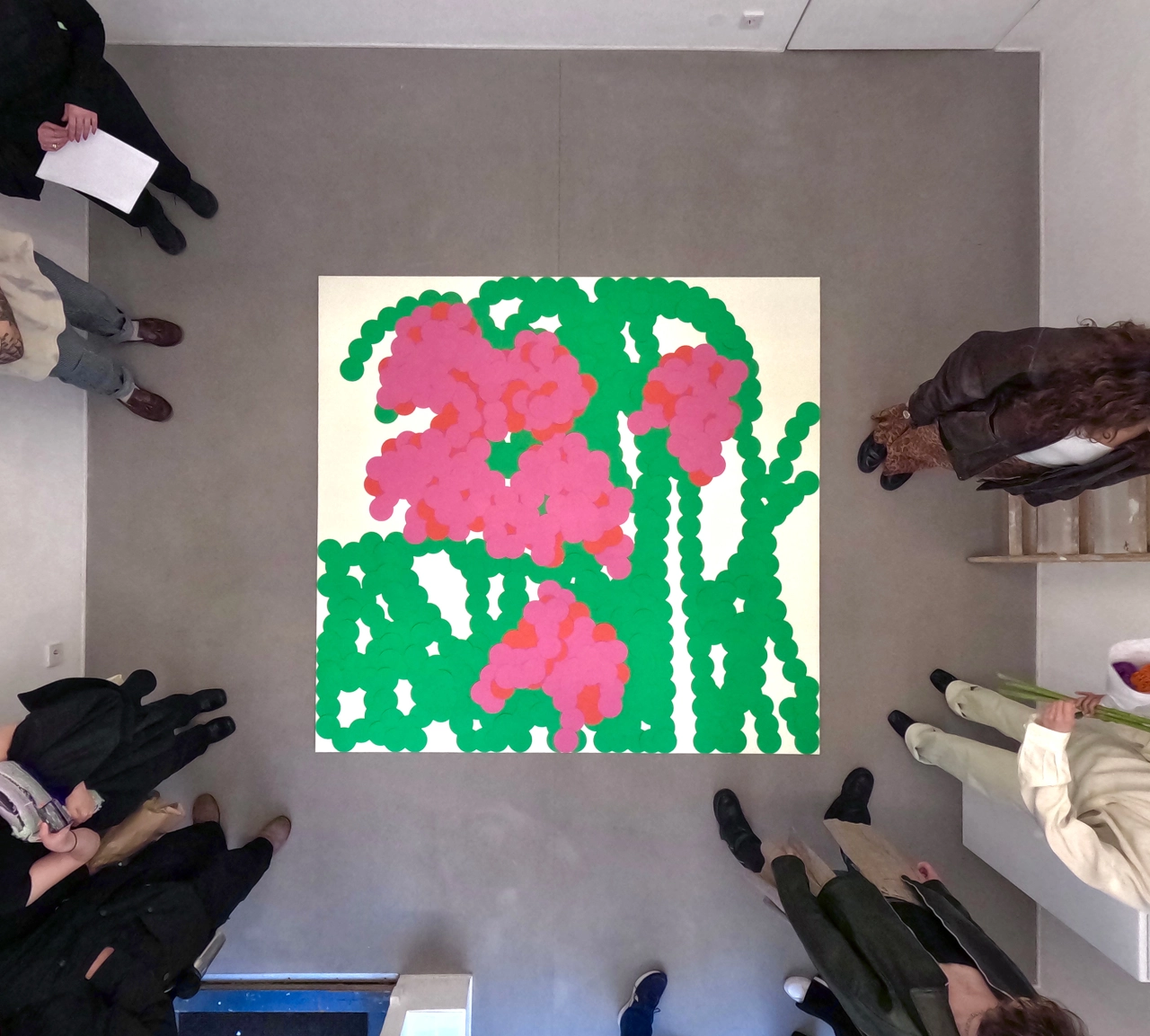
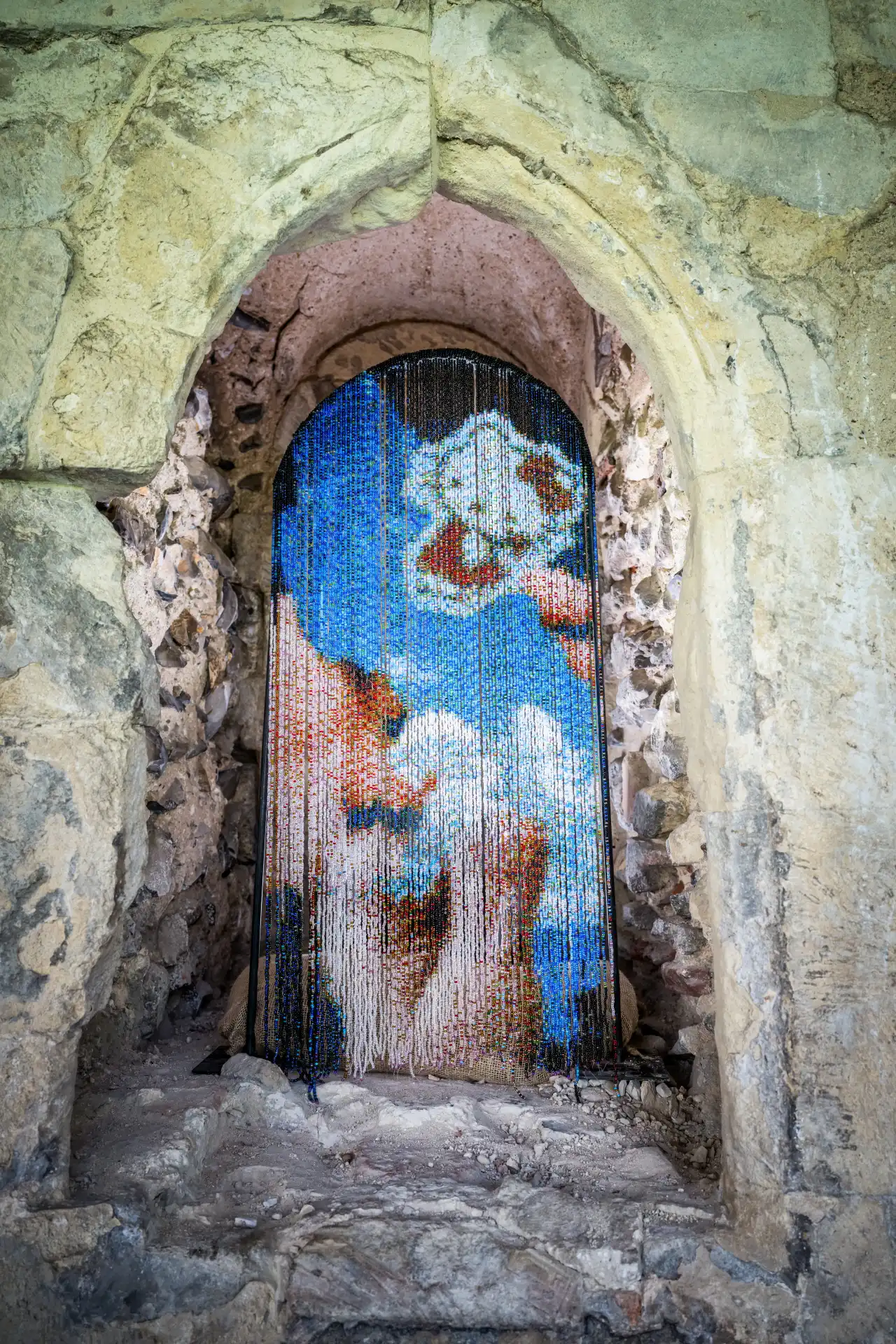
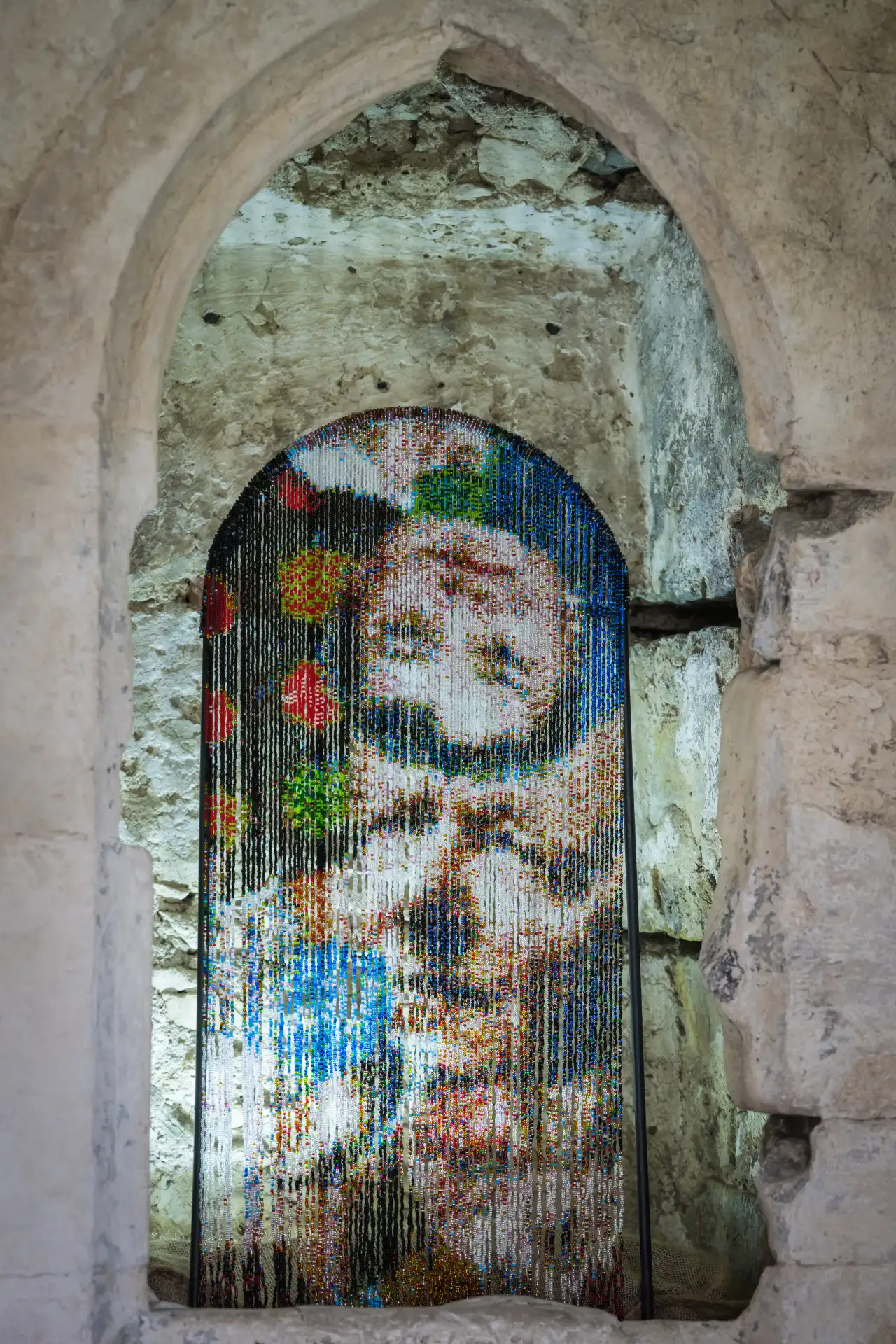
Lily points us in the direction of a couple of pieces, the first being Light Comes in from All Sides, a work which was part of a commission for Norwich Cathedral and Sainsbury Centre in Norwich. Created with local young people in the Norfolk area, who all put their heads together using glass beads – a newer medium for Lily – to make art, which hangs in a window arch of the building, "which is already beautiful and full of context, which shifted the way I looked at my own work," she says. "My work can be quite silly, which is something I stand by, but this was a work I tried to make earnestly while still being fun and open." The beads also capture light in a way that paint can't, giving the artwork a melodramatic, luminous quality that fits perfectly with the space.
In Jenny (Sleeping on Camera), we quite literally see a subject named Jenny taking a comfortable snooze in the frame. Made for a show at Twilight Contemporary, the piece used images from JenniCam, where a woman in the late 90s and 2000s set a camera up in her room and took photos of herself every 10 minutes, uploading them to the website. "I did some research into the archive; the images that have stayed around of Jenny tend to be sexual or images of her emoting. I enjoyed making a work that played with this and larger themes of voyeurism."
And lastly, Nigella (Pensive) is a painting Lily created for a show at Saatchi Gallery, which she says is semi site-specific for the fact it's massive in size and one of the largest she's made. Featuring famed chef Nigella Lawson, the work sees the foodie icon caught in a candid moment, one arm crossed, shawl slung around her shoulders. Despite its size, the image feels calm and quiet, the opposite of the hoo-ha that can come with celebrity fame. "I wanted this beautiful woman towering over people's heads lost in thought," says Lily. "For me, the colours were also successful, and it's a work people love to pose in front of. I have the work unstretched and stapled to my studio wall, so she's become a bit of a guardian angel for me."
With more exhibitions in the works this month and in the new year, Lily is keen to find some time to work on her own timeline without the pressure of "gallery rhythms". She's also drawn towards gestures of late, and also horses, so we can expect to see these motifs pop up in a few months' time. Whatever she paints, though, rest assured that it will be in her signature pixelated style.
Editor's Picks

Trending



Latest Jobs
Director, Brand at KQED
Full-time·San Francisco·$125,547 – $165,000
Digital Project Manager at Proctor + Stevenson
Full-time·Bristol·£32,000 – £36,000
Broadcast Producer at David&Goliath
Full-time·Los Angeles·$80,000 – $95,000
Senior Social Media Manager at Whitney Museum of American Art
Full-time·New York·$95,000 – $100,000
Design Director at Interbrand
Full-time·New York·$120,000 – $150,000
Design Director, Opinion at The New York Times
Full-time·New York·$160,000 – $180,000