Multidisciplinary artist Murugiah on why your most personal work is always the most creative
The London-based artist behind the Quentin Blake Centre's debut solo show talks to us about parent pressure, pandemic breakthroughs and learning to stop making other people's art.
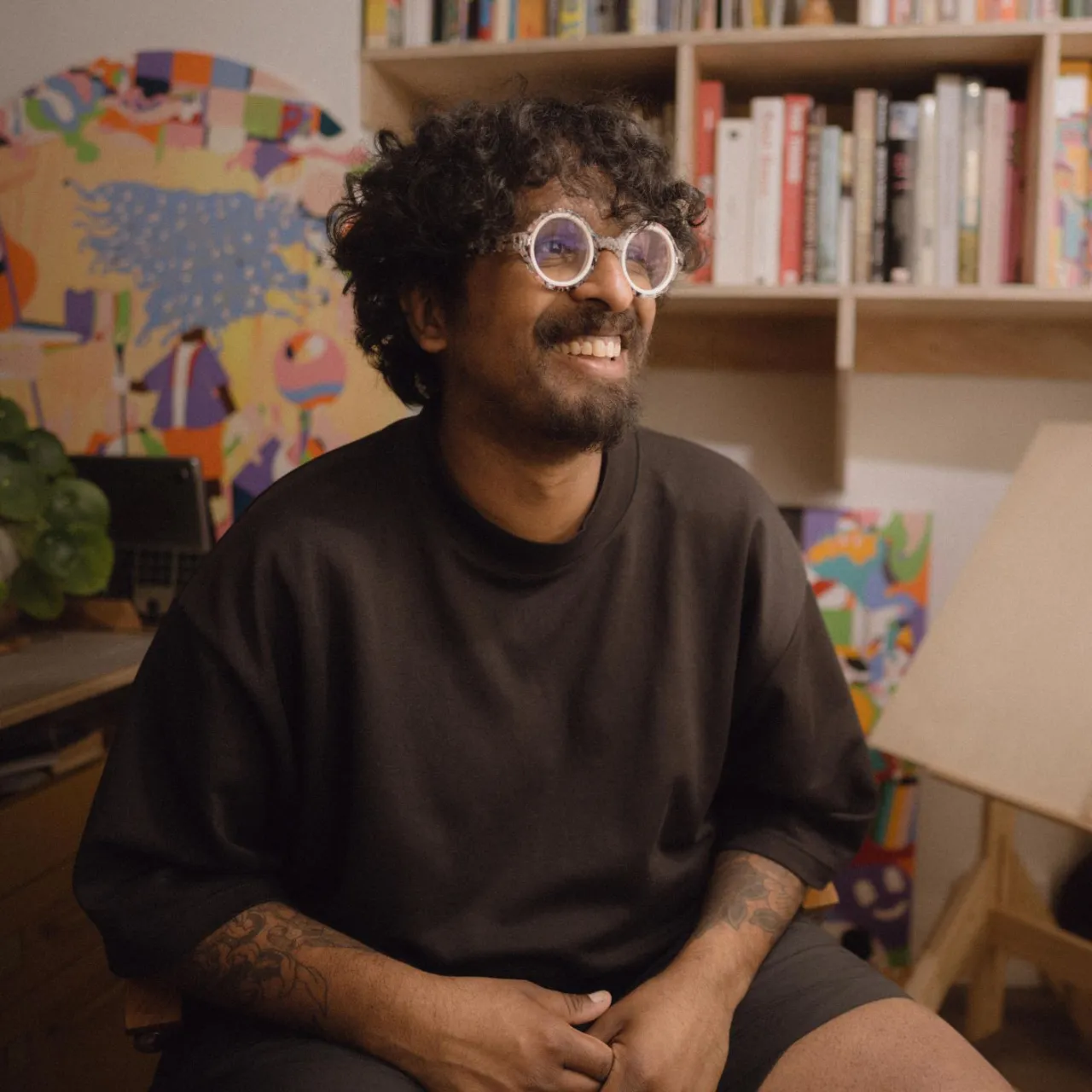
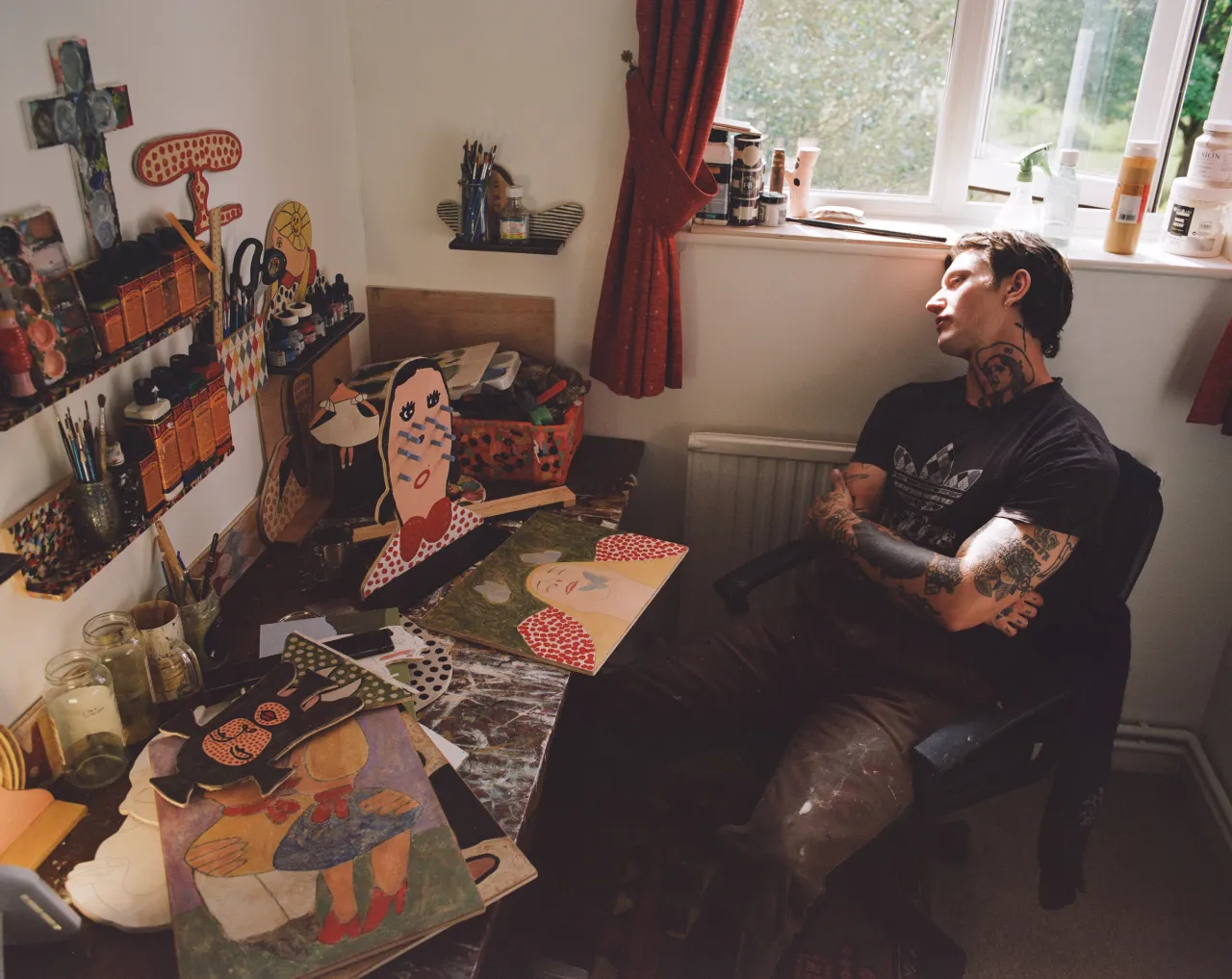
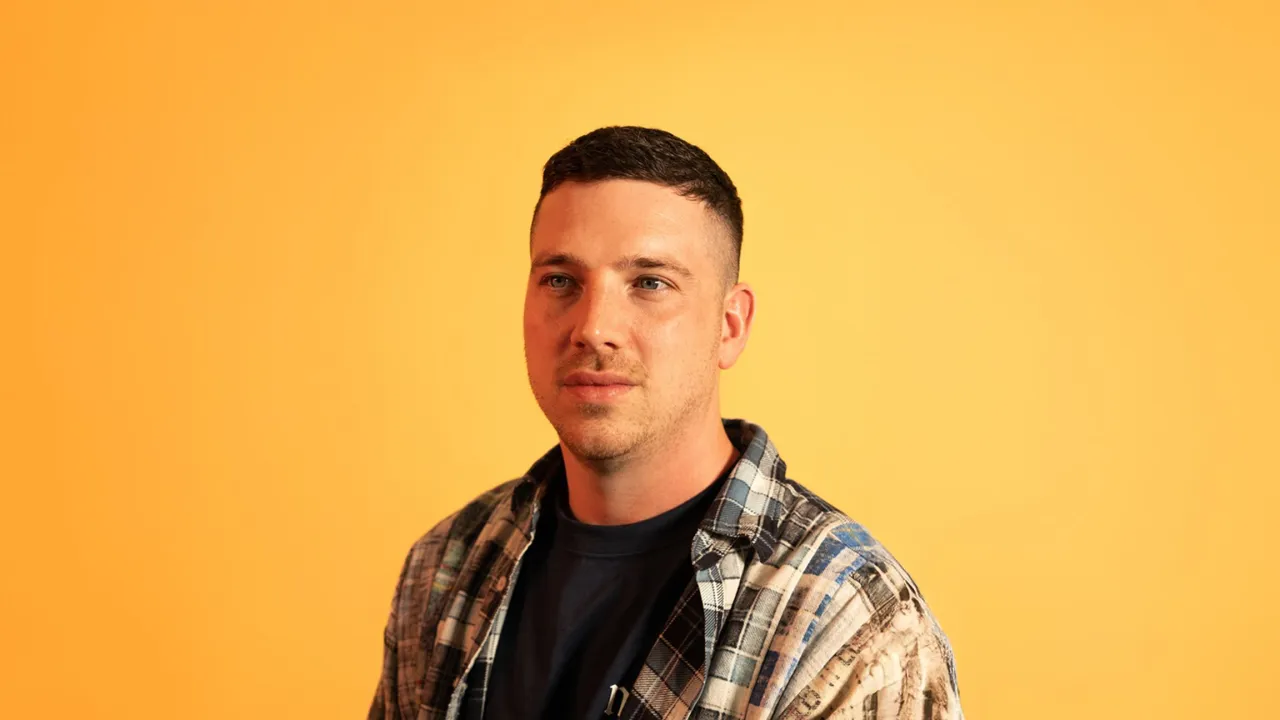
Murugiah. Image credit: Jack Woodhams
On day one of his first solo exhibition, hosted at London's Quentin Blake Centre for Illustration, the multidisciplinary artist Murugiah did something unconventional: he showed up. In practice, most artists tend to stay away, spooked by the fear of watching strangers encounter their work for the first time. Murugiah, however, stationed himself in the gallery.
The first visitor to walk in looked around, slightly bewildered, and asked which way to go. He pointed her upstairs. She asked, with polite uncertainty, whether she was supposed to know who he was. "No," he told her. "This is my debut show, so enjoy it." Then he went and sat in the café. Half an hour later, the visitor came and found him. She sat down and spoke with him for 20 minutes about his work. "I didn't know who you were before," she told him, "but I definitely know now."
It's the kind of moment that's impossible to engineer, but for Murugiah, it meant something profound. That work rooted in genuine personal truth can reach people who've never heard of you, on its own terms, without any of the machinery of reputation.
And this idea, that the most personal work is always the most creative, sits at the heart of everything he's been building towards.
Murugiah was speaking as part of The Studio, Creative Boom's membership community for working creatives, and what came across most strongly, beyond the charm and the self-deprecating humour, was the rigour underneath.
This is a creative who's spent years deliberately, and sometimes painfully, figuring out what he actually wants to say, and who's arrived at a genuinely unusual place. A creative practice rooted in personal truth that also happens to be commercially thriving.
The crucial pivot
Murugiah trained as an architect. Not for a year or two, but for a full seven. He emerged qualified and, as he puts it, looking one way while feeling quite another. "Losing all of your hair from stress of a seven-year course suggested that maybe that subject wasn't the right thing to continue with," he says, with characteristic dryness.
He'd loved art and design since school and had asked his parents if he could pursue it at 18, but had been firmly steered towards something more dependable. When he eventually left architecture in 2012 and told his parents he was going back to illustration, their response was more resignation than enthusiasm. "Just do what makes you happy," they sighed. He took it.
What followed was a decade of learning, iteration and accumulated frustration. He worked in-house at a greeting card company. He created packaging for a restaurant chain, designed crisp packets, and learned about kerning. He developed a freelance illustration style that was technically accomplished, which led to editorial work and a book project illustrating scenes from films. And then he stopped, looked at what he'd made, and felt… nothing.
"I just felt so inauthentic making this work," he says. "I was like: 'This is not the way I think. This is not the way my work should be.'"
That reckoning came just before the pandemic. When it hit, and the government support payments arrived, he gave himself permission to start again. "Your rent is covered," he reasoned with himself. "You've got all this time on your hands. You've been complaining about not doing the most authentic thing. Just sit down and try something new."
Digging into his influences
The breakthrough came via a conversation with a friend and fellow illustrator Doaly, who made a simple observation. Murugiah was good at detail, colour, and dense compositions. So were lots of people. What was different about him? "You're a brown guy," he said, matter-of-factly. ("He's brown too," adds Murugiah, "so he's allowed to say that.") Doaly's suggestion was to make work about that specific experience; to bring his heritage into the visual language he was developing, rather than treating it as incidental.
What followed for Murugiah was a period of digging back through his influences: his Sri Lankan heritage, his suburban Welsh upbringing, his love of pop punk, anime, 1960s illustration and cult cinema. He started to see how they could coexist.
His first test piece merged Sri Lankan raksha masks with characters from his favourite Marvel comics and the protagonist of Jodorowsky's The Holy Mountain. "I was like, 'Oh my God, I've come up with something unique, weird and fun,'" he recalls.
From there, he gave himself a simple weekly discipline: one new piece, built on the same visual rules as the last, iterated slightly each time, posted publicly regardless of the response. "I just knew I wanted to build a world, build a visual world for me to play within," he says. "I didn't stop. I just did it over and over again, once every week consistently."
By the end of that year, he had a style. More precisely, he had something that felt inalienable to him. The commissions followed, and they haven't stopped since.
Really saying something
His exhibition at the Quentin Blake Centre represents Murugiah's attempt to take stock of everything those years produced. He approached the centre in 2024 with a proposal to show a small group of personal paintings in their windmill space; they came back and offered him the main gallery.
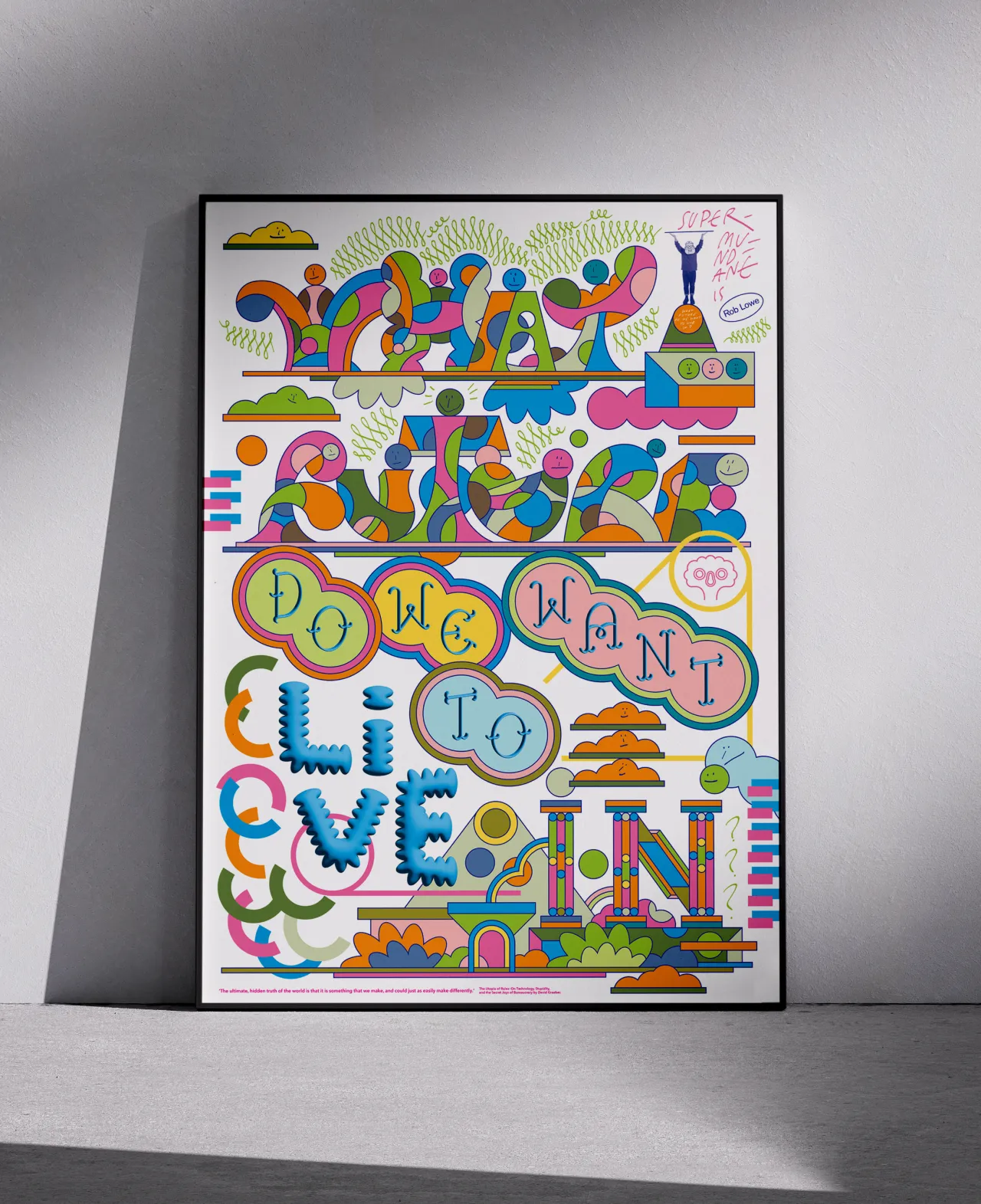
The U-shaped former pumping hall now houses a chronological journey through Murugiah's commercial collaborations on one side and his personal paintings on the other, with a centrepiece sculpture based on his painting Iceberg, which he describes as being about "not really knowing what's beneath the surface". That phrase could double as a description of his practice more broadly. The candy colours and surreal characters are what you notice first; the emotional weight comes later.
One painting is about external pressure and the point at which it becomes unbearable. Another depicts the creative process as two flower characters, one with broken petals, one fully formed, "almost like they're evolving like a Pokémon," he explains. In short, he's arrived at a place where his personal themes, identity, heritage, and the gap between who you are and who others expect you to be have become inseparable from his visual language.
Murugiah quotes Martin Scorsese's advice to Bong Joon-ho: the most personal work is the most creative, and you can see why it resonates. "I feel good about having a similar ethos," he says. "That making really personal work means you'll get really creative output."
Finding his voice
Asked when he knew he'd found his voice, Murugiah is characteristically precise. It wasn't after the first good piece, but after a year of them, each one building on the last, iterating in small ways, accumulating until the overall direction felt clear. "By the end of that, I was like, all right, I got it."
When asked what assumptions about himself he'd had to let go of first, the answer is disarmingly honest: "That I was good at drawing. Or that I could draw as other people could." The compare-and-despair mentality, he explains, long predates social media.
What matters, in his view, is finding the specific things you're actually good at and doubling down on them. For Murugiah, that meant flat colour, dense composition, strong shapes, immersive worlds. "The skill set you have is good enough," he says. "It feels good enough for you. And once you get out of your own way, everything seems to make sense."
Editor's Picks
Trending
Latest Jobs
Client Director at Koto
Full-time·Berlin·€70k-€85k
Design Lead at Madeo
Full-time·New York City·$85k–$120k
Senior Designer at Creative Spark
Full-time·Manchester·£35k-£50k
Brand Designer at Adfin
Full-time·London·£30k–£50k
Agent & Producer at The Jacky Winter Group
Full-time·London·£35k–£40k
Creative Project Manager at Analogue
Full-time·Leeds·£28k–£35k