Shunpei Kamiya finds the surreal, and the funny, in everyday Tokyo
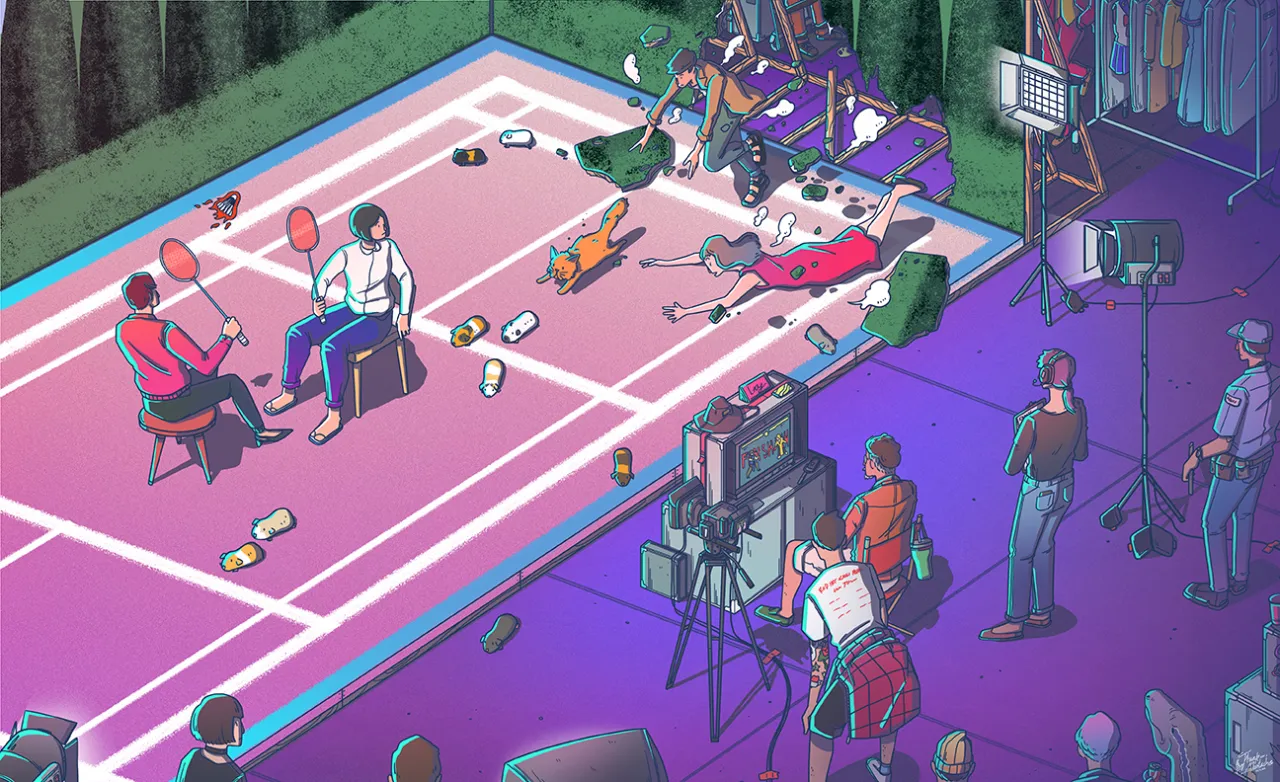
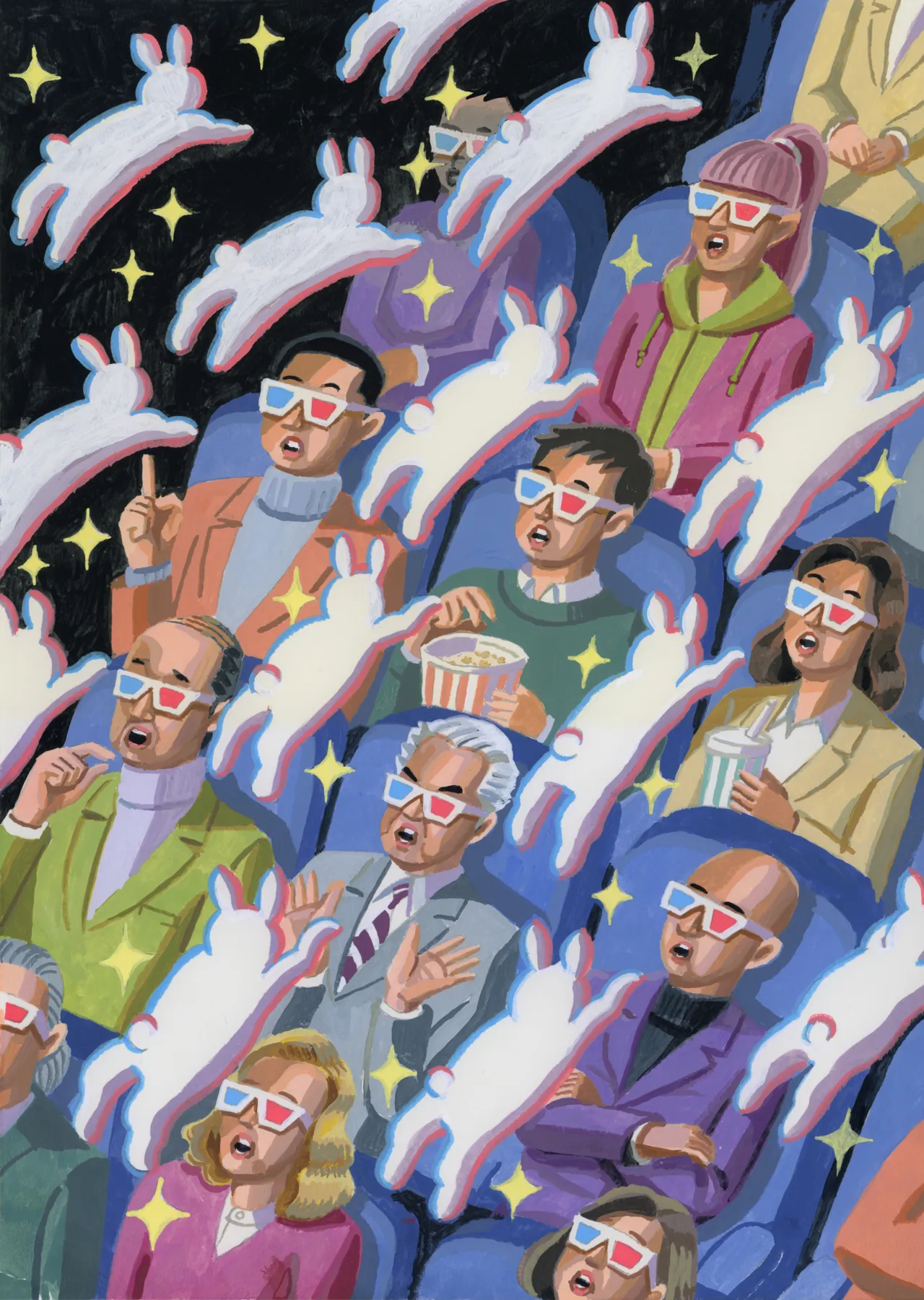
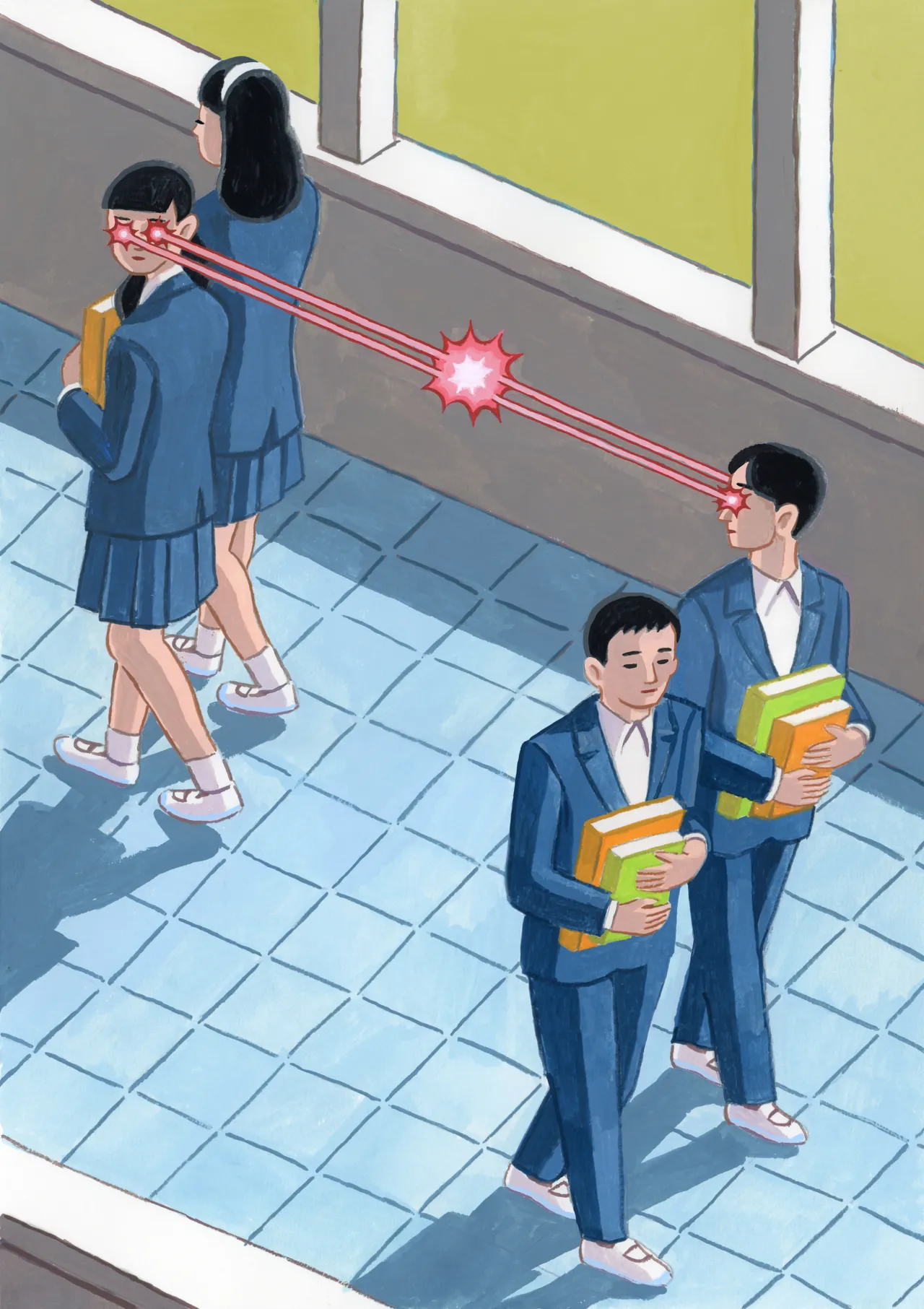
From white rabbits bounding out of a 3D cinema screen to schoolkids firing laser beams across the corridor, the Tokyo illustrator takes the most ordinary moments of daily life and tips them somewhere surreal.
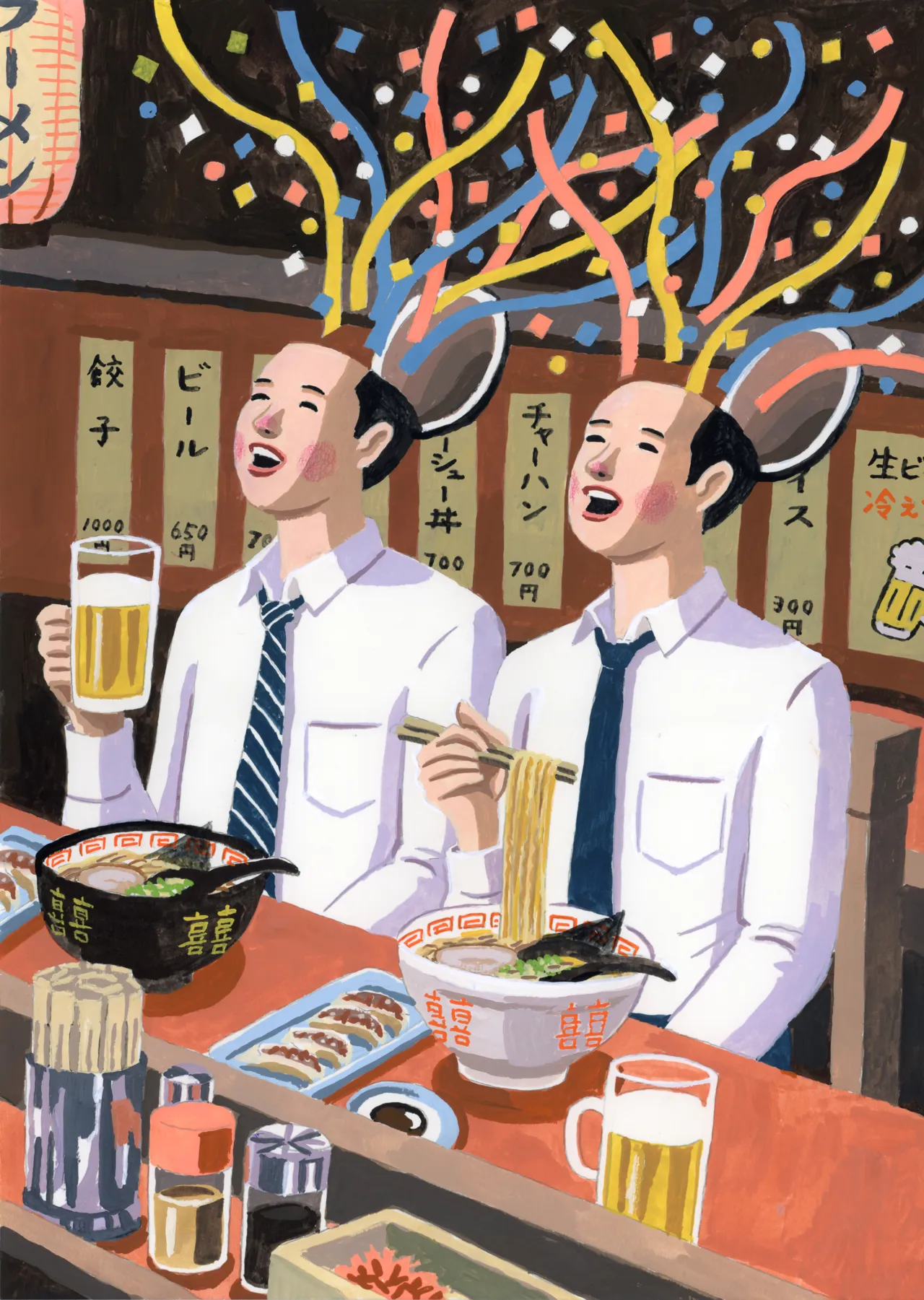
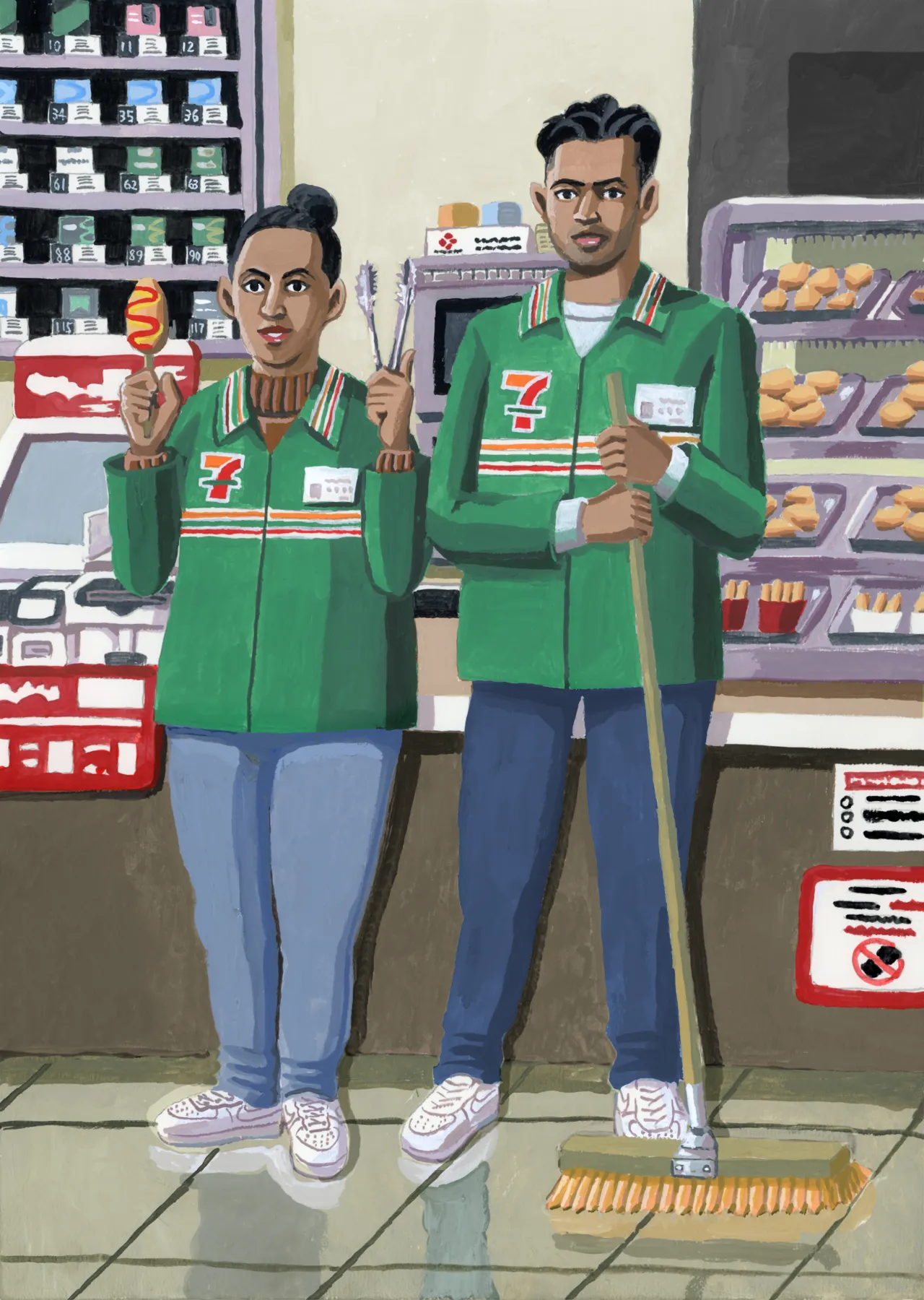
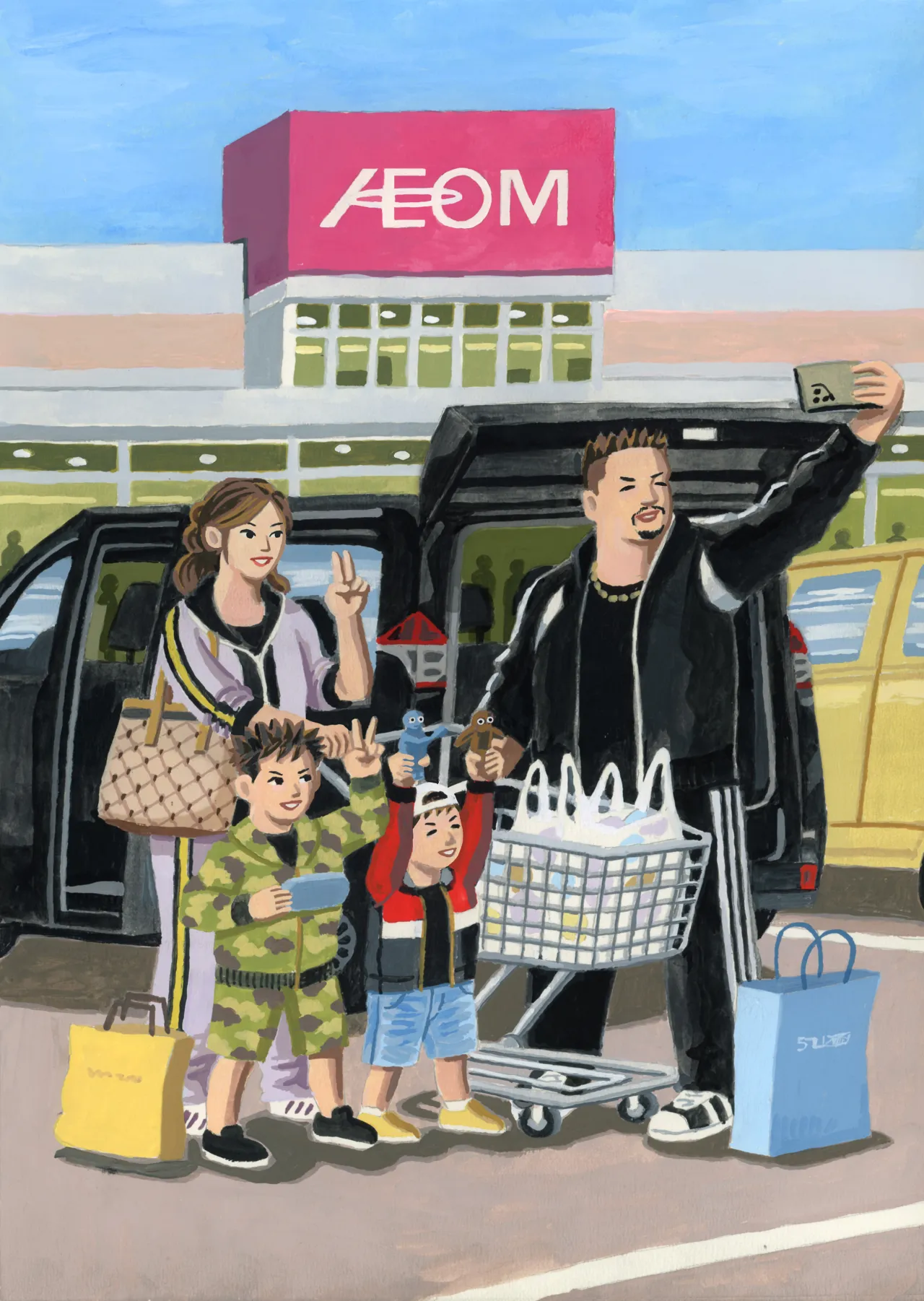
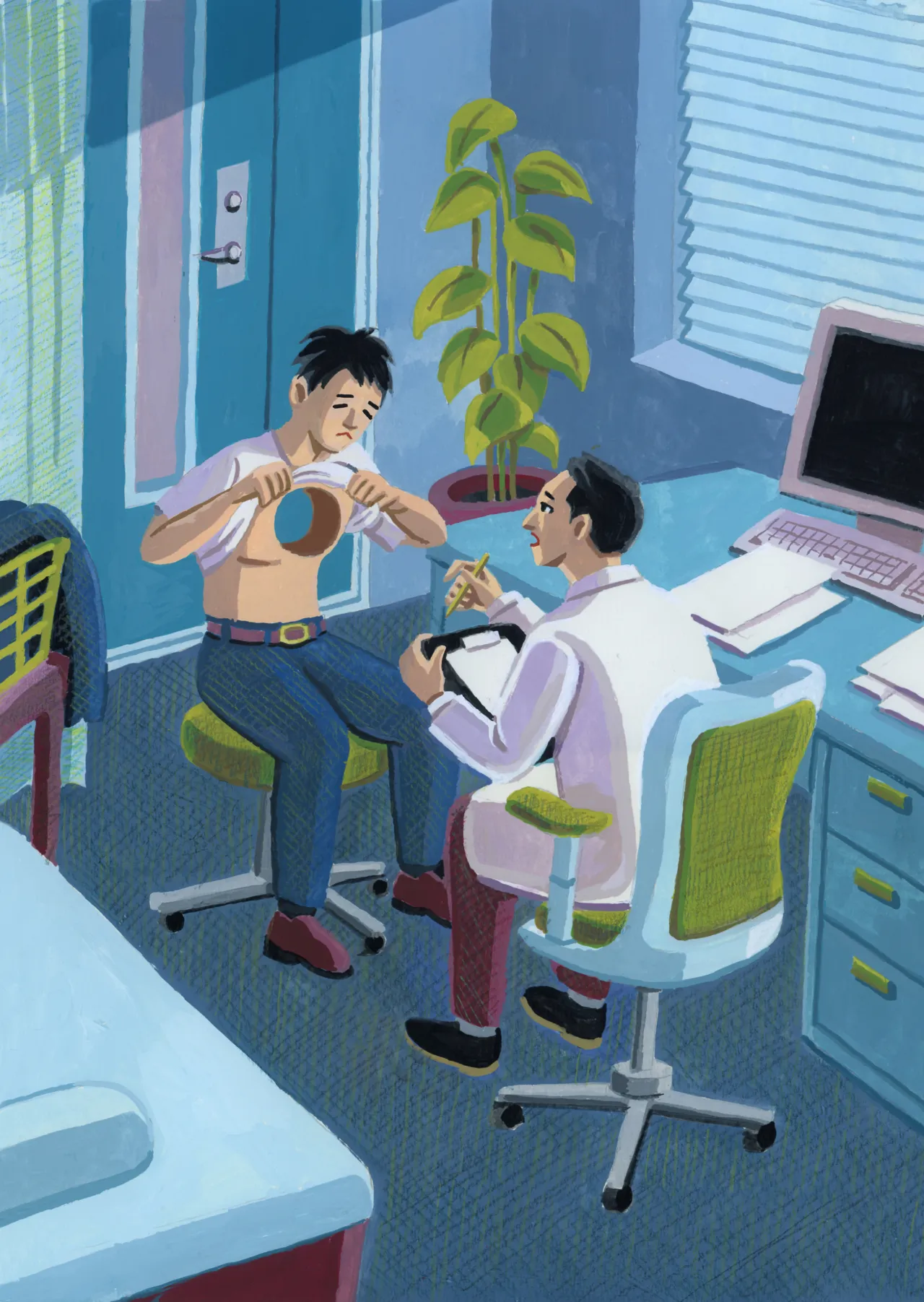
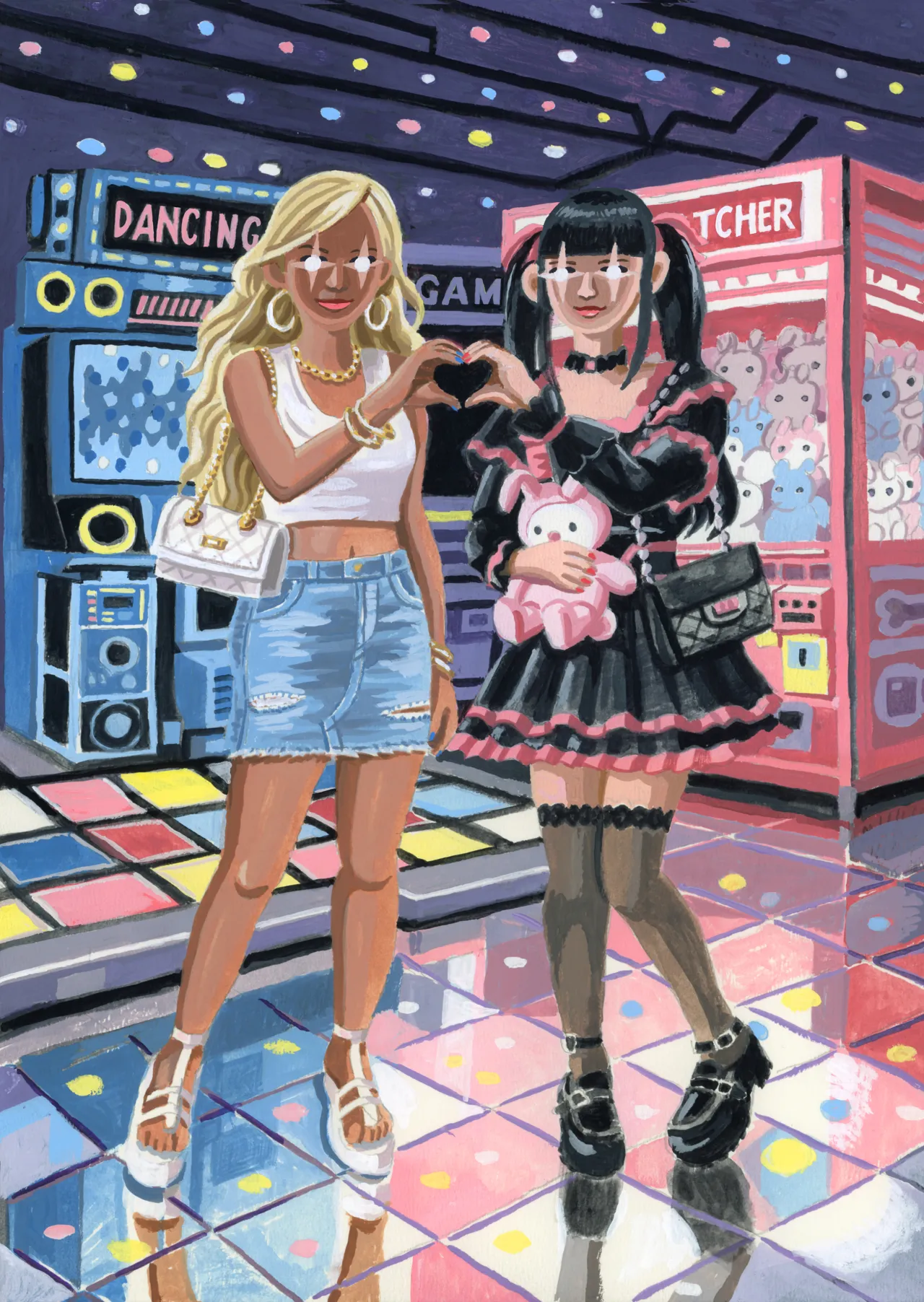
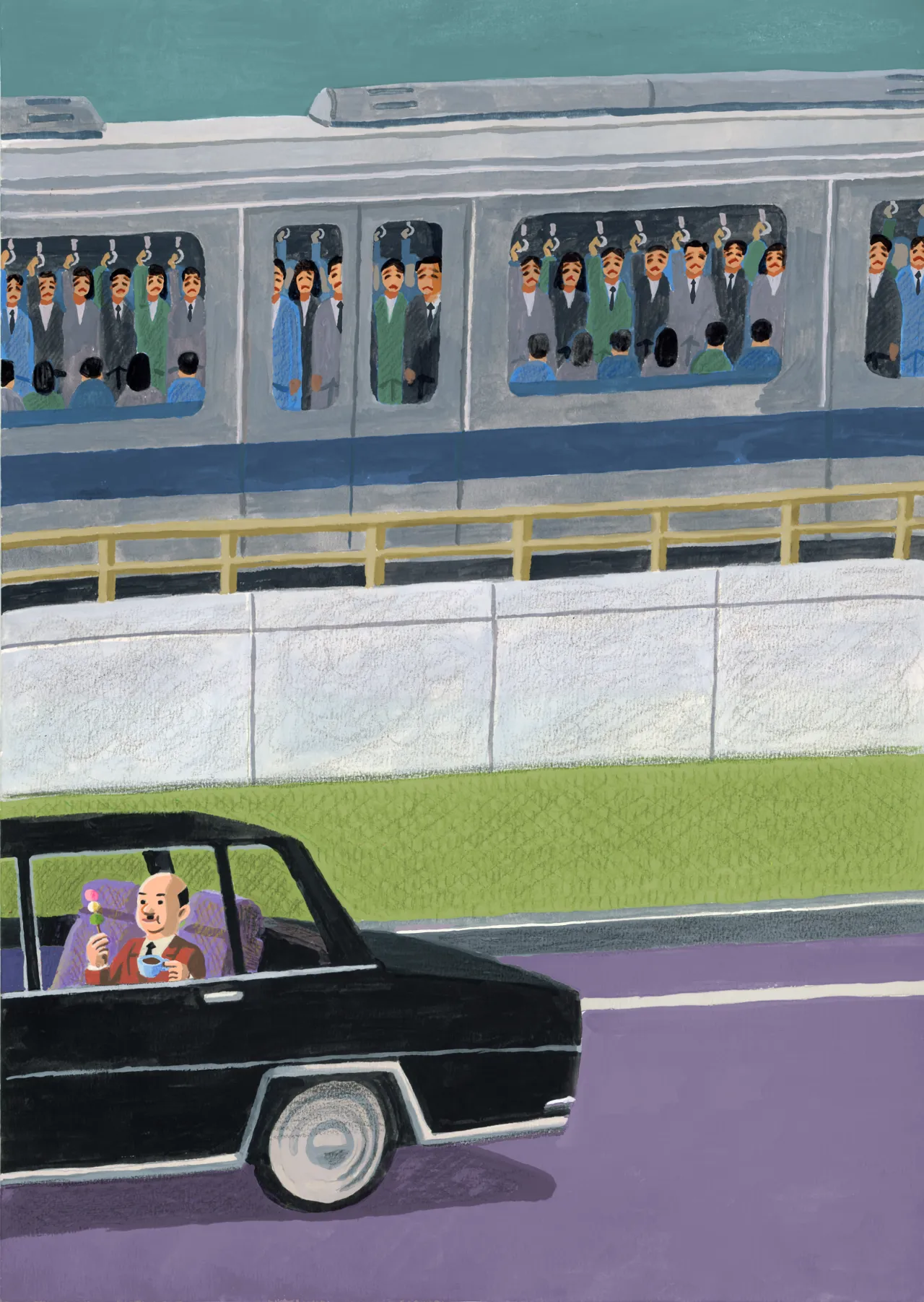
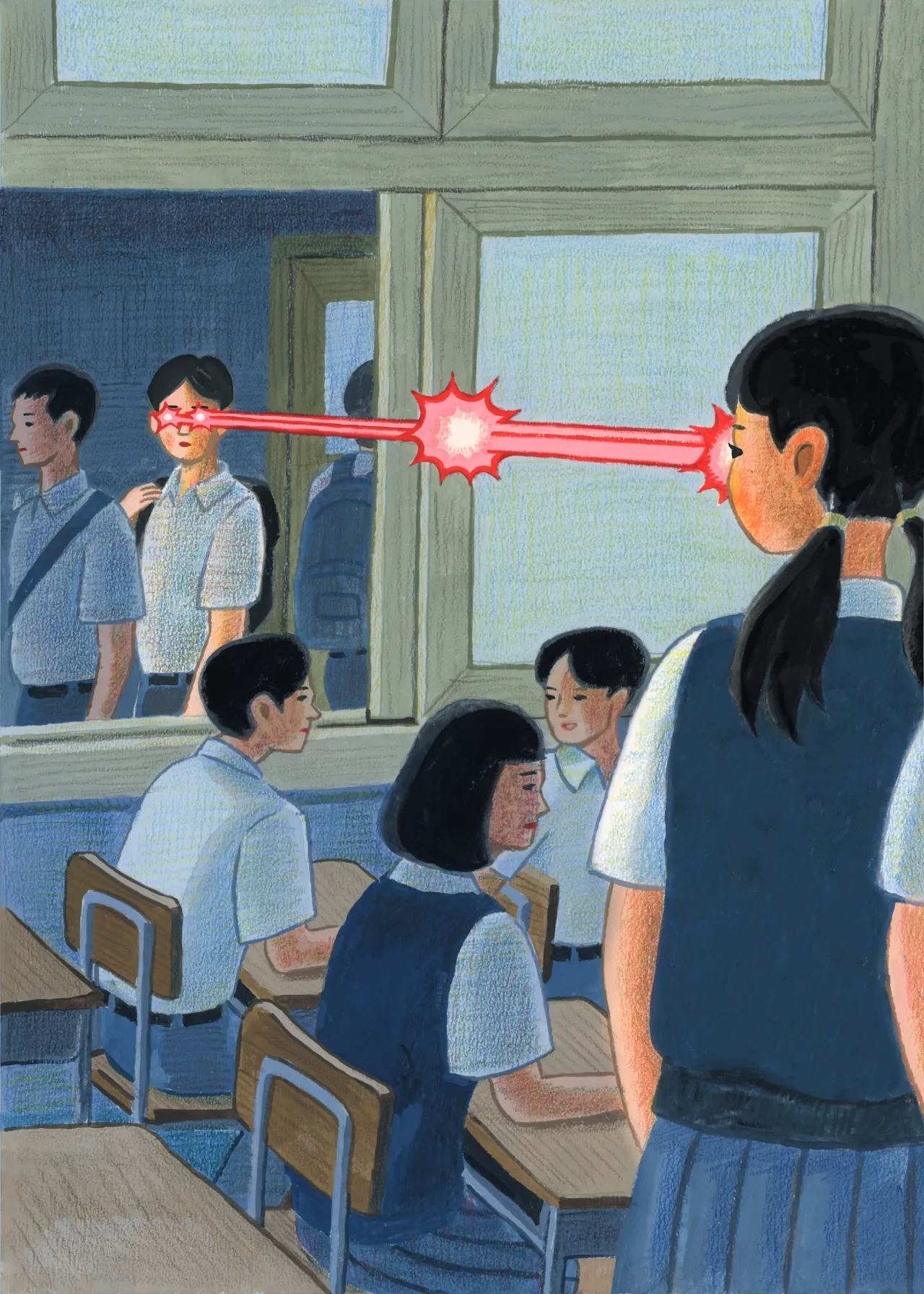
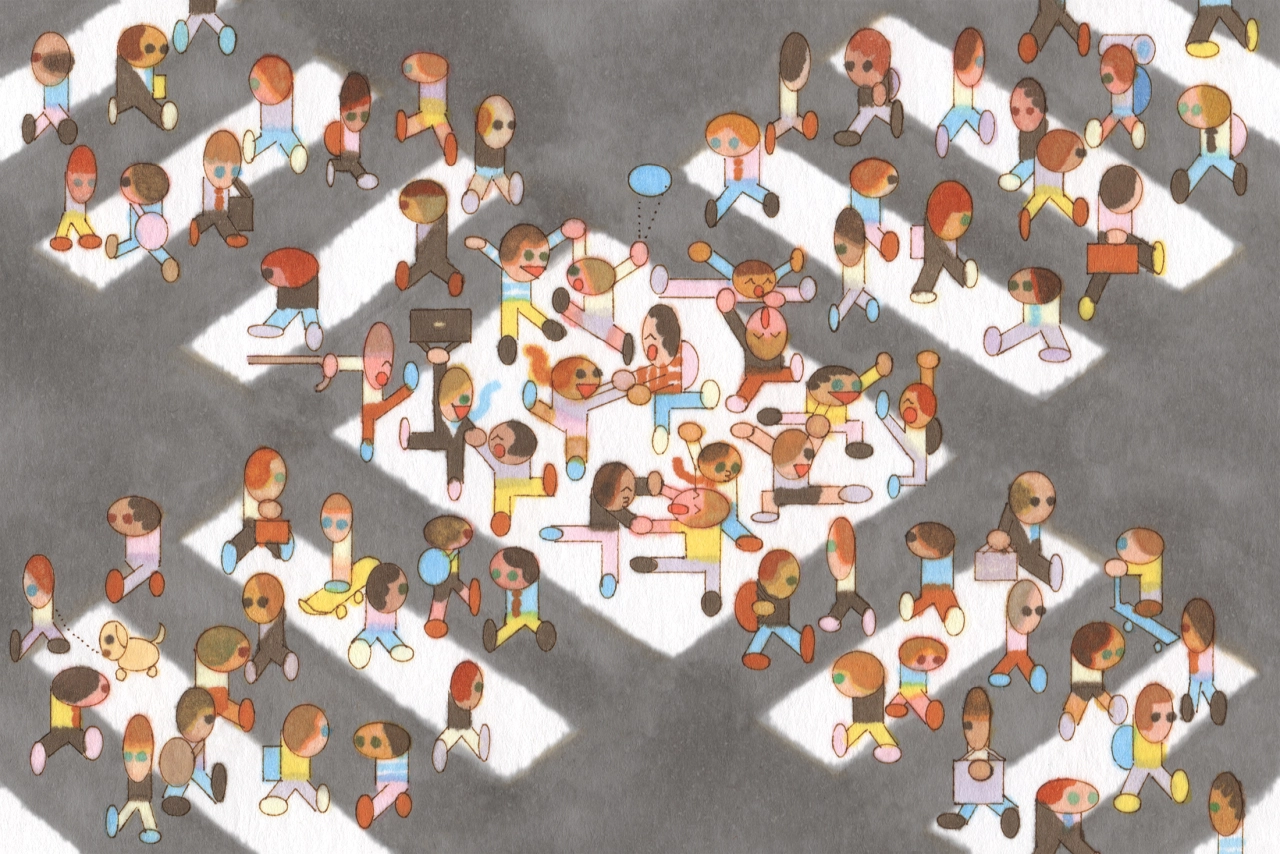
You think you know what you're looking at. A Shunpei Kamiya illustration starts somewhere completely ordinary – a packed commuter train, for instance, or two salarymen slurping ramen after a long shift. Familiar, everyday, right out of Japan. And then it isn't. White rabbits come bounding out of a 3D cinema screen while the audience gawps in their paper glasses. A couple of schoolkids lock eyes and fire red laser beams clean across the corridor. One man, mid-appointment, lifts his shirt to show the doctor a round hole punched straight through his middle. No explanation offered. None needed.
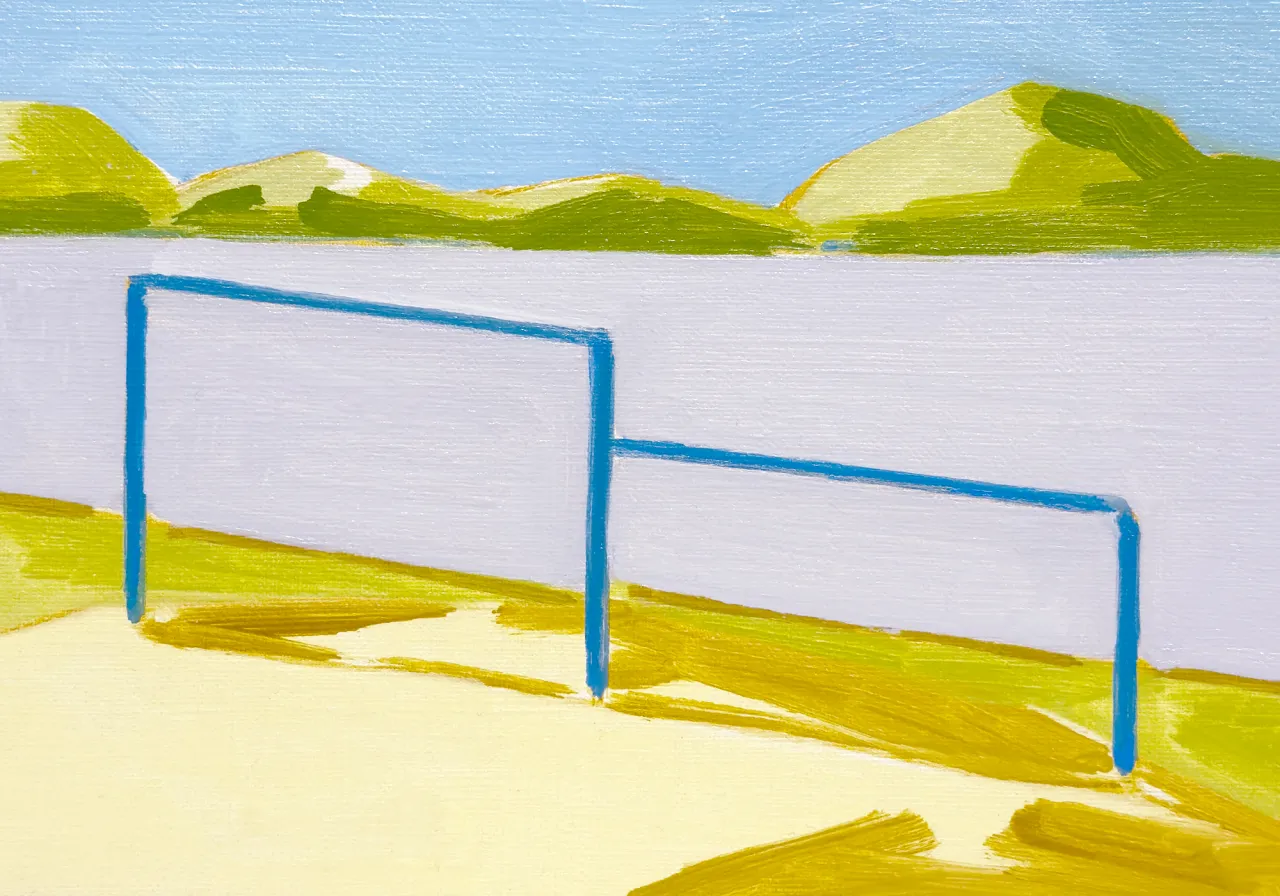
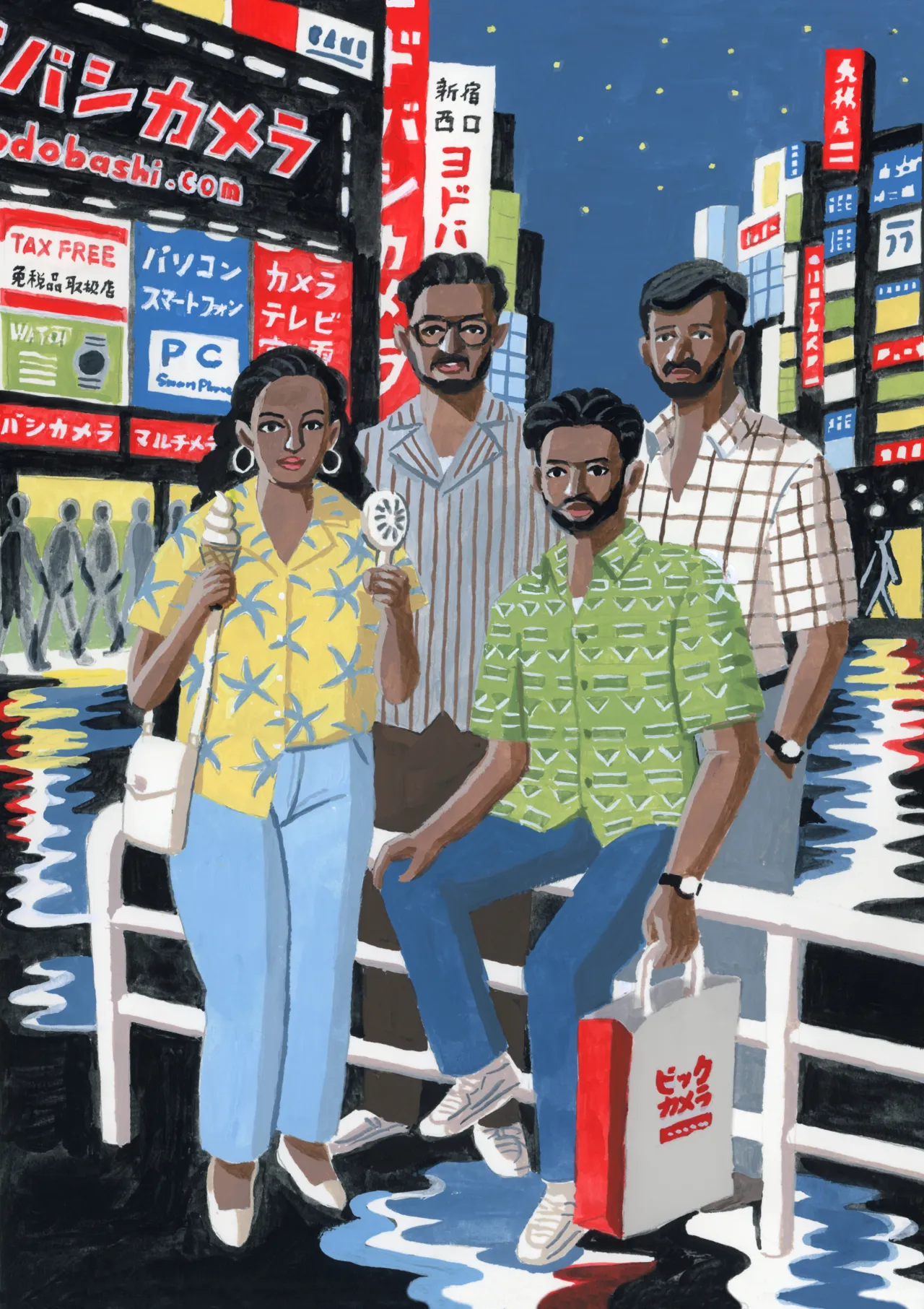
The Tokyo-based illustrator, a member of the Tokyo Illustrators Society, builds everything on that double-take, turning the most ordinary corners of modern Japanese life into surreal, sharply observed scenes painted in flat gouache colour, a glorious mashup of manga and fine art.
So where does all this strangeness come from? He says it comes down to attitude. "There are already countless pictures in the world, so I feel compelled to create something that people do not usually draw," he tells Creative Boom. "Otherwise, I sometimes wonder what the point of my making pictures would be. I am not interested in being strange for its own sake. I always look for hints within ordinary daily life."
A deliberate stillness
Even his most eventful scenes – the leaping rabbits, the duelling laser beams – have a curious stillness. Where plenty of illustrators chase movement and drama, Kamiya keeps everything almost frozen, and that's no accident. "When people try to depict movement or dramatic moments, they often rely on photographs or paused video frames. I do not want my images to become too photographic," he says. "Photography is naturally better at capturing motion and fleeting moments. Painting and illustration are different forms of expression, and I want my work to remain within the territory of drawing rather than imitate photography. That may be one reason why my work often feels still and static."
Much of the tension in his work comes from what he chooses not to explain. "Someone once told me that my work is very 'linguistic' and leaves little room for ambiguity. I thought that was a fair observation because my ideas often begin with words," he says. Since then, he's tried to hold back. "I have tried to remind myself not to explain too much when making an image. At the same time, there are occasions when being deliberately explanatory can create its own kind of humour or interest. Finding the right balance remains difficult."
That restraint isn't the same as indifference, though. Before he starts, he spends a long time imagining how all sorts of people might read the same scene from their own angle. "I believe an artwork is completed when it is viewed, so I leave interpretation to each viewer," he says. "Just because I made an image does not mean I know the 'correct' meaning of it."
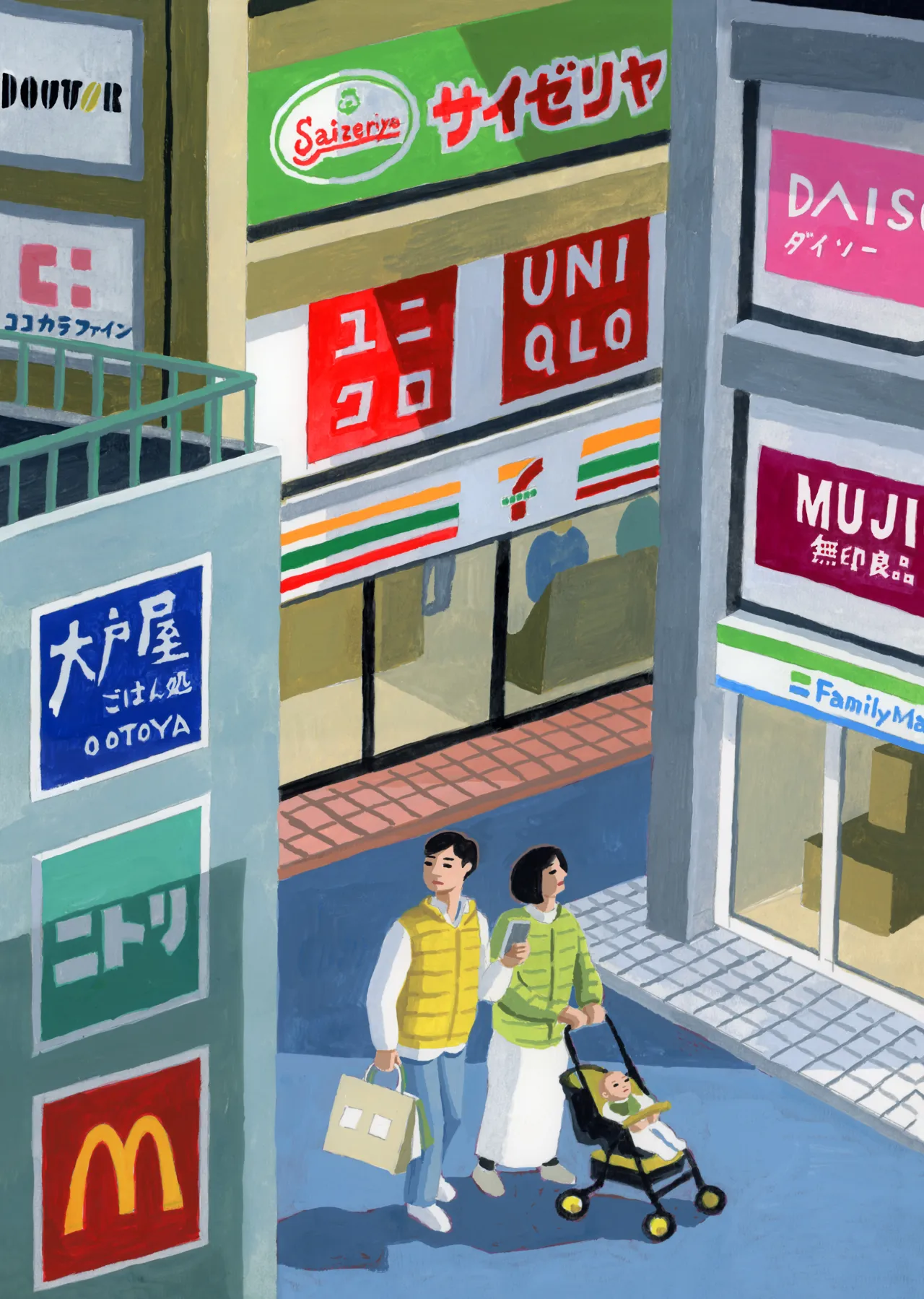
So where do the scenes themselves come from? Everywhere at once, it turns out. "Things I have seen, things I remember, things I imagine, and images made by other artists," he says. "All of these memories and impressions blend until a clear image forms in my mind. My task is then to translate that image onto paper as faithfully as possible."
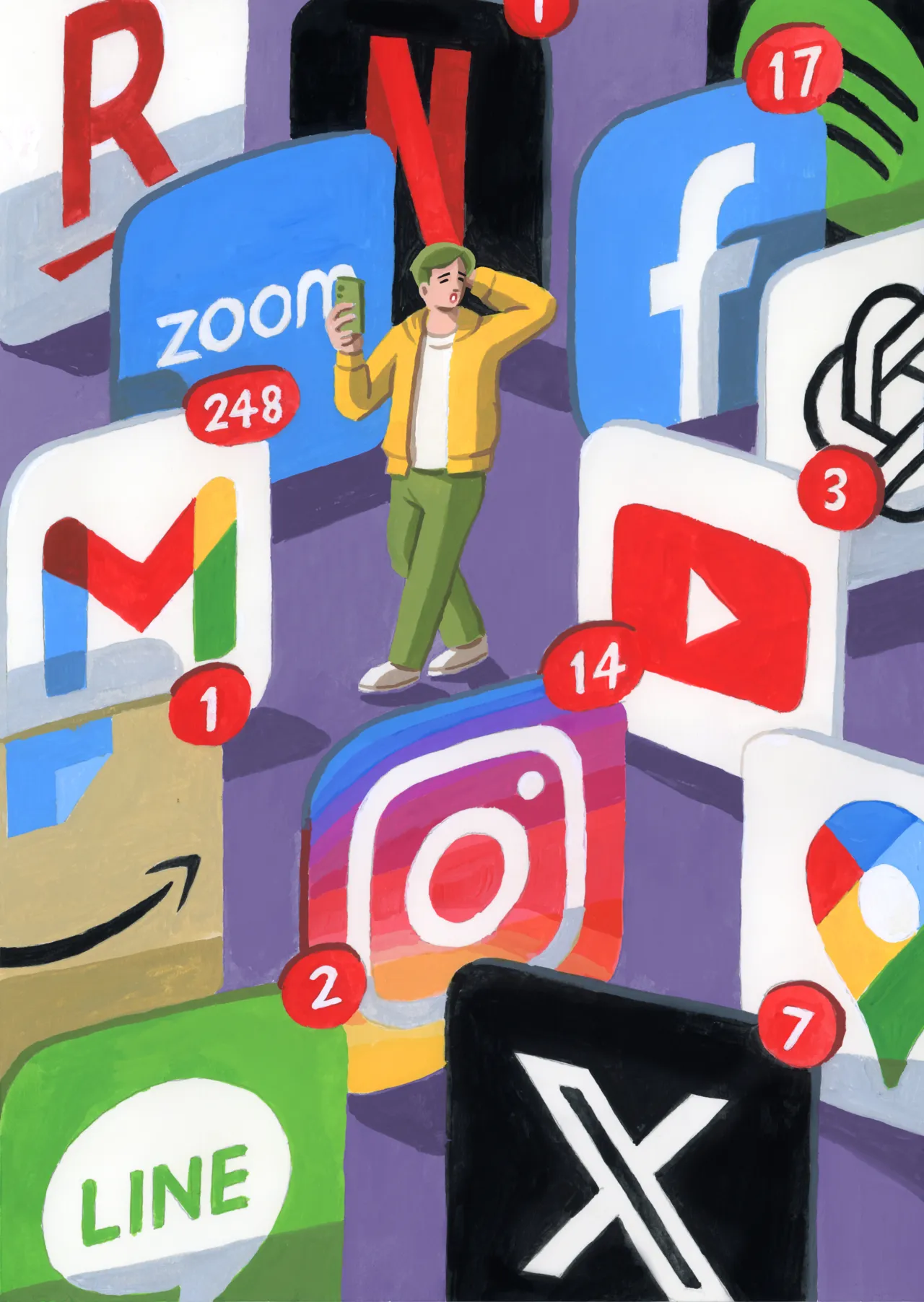
There's a distinctly Tokyo quality to that, too. In a high-tech city that can feel like one long sensory explosion, one painting strands a lone figure in a canyon of giant app icons, each blinking with unread counts in the hundreds – a portrait of exactly that overload. "Modern Tokyo, and perhaps Japan more generally, is flooded with information. Every day we are overwhelmed by an endless stream of things to absorb and process," he says. "I think my work reflects that environment very directly. In some ways, my pictures are rather 'head-driven'. I sometimes think of them as an act of editing symbols and signs."
From Doraemon to Hopper
His influences run from Japanese illustrators such as Makoto Wada to classic painters like Edward Hopper. But the biggest pull, he admits, came from somewhere far less rarefied. "If I am honest, the strongest influence on me as a child came from Japanese manga such as Doraemon, Kinnikuman, and Dragon Ball," he says. "Later, when I became an illustrator, I realised that those influences alone were not enough, so I began looking more seriously at both Western and Japanese art history."
His own surfaces are flat and unfussy, plain colour over visible texture, yet he's alert to what "handmade" can do that a screen can't. "When I look at the work of other artists, I am often captivated by the beauty of the painted surface itself. Even a subtle analogue texture can add value and presence to an image," he says. "I also think many artists simply enjoy the physical process of making things by hand more than working digitally."
If there's one stage he'd never shortcut, it's the very beginning. "The most enjoyable stage is coming up with the idea. I love imagining possibilities and developing concepts." The other reward comes right at the end: "when an image that has existed only in my imagination finally emerges as a finished work after many twists and turns."
The honest part
Like many creatives right now, Kamiya is uneasy about where the industry is heading. "I worry that fewer people will be able to make a living as illustrators, and that Japanese illustration culture itself may become weaker as a result," he says. "So far, no new field has truly emerged to replace publishing and book-cover work as a major area of opportunity for illustrators." And he's quick to add that his own position is no luxury: "In general, I try to accept as many commissions as possible. Unless I am exceptionally busy, I rarely turn work down. I do not feel that I am in a position to be highly selective about projects."
Pressed on what would actually help illustrators starting out today, he points to a visibility problem. "Anime, manga, games, and contemporary art continue to thrive," he says. "In that context, illustration may have become relatively less visible. I would like to see more attention given to the exciting and innovative work being created in illustration today." The responsibility, he reckons, runs both ways – publishers and the wider industry looking more closely at what illustration is doing, and illustrators making the case for themselves: "Illustrators must continue to communicate what makes illustration unique, valuable, and exciting."
On AI – the worry humming under so many of these conversations lately – he's measured rather than alarmed. "At the moment, I still feel that AI-generated images have not surpassed the individuality of human-made work," he says. "However, AI will undoubtedly continue to improve, so the real question is how far it will develop." It's where it all leads, more than the tools themselves, that gives him pause. "Will future artists compete over who can write the best prompts? That does not sound especially enjoyable to me, so I try not to think about it too much."
Ask whether he's ever fully satisfied with a finished piece, and he just laughs it off. "To be honest, it is rare for me to feel that a piece turned out exactly as I hoped. More often, I look back and think, 'I should have done this differently'," he says. "No matter how much preparation I do, things often do not go according to plan." He adds: "Making art has taught me that improvement comes only very slowly. Perhaps that is exactly what makes it so rewarding."
Editor's Picks

Trending
Latest Jobs
Growth and Client Development Director at 3800
Part-time·Sheffield·£60k-80k
Senior Designer at BKC
Full-time·£50k-£60k
Paid Media Executive at Munro Agency
Full-time·Glasgow·From £27,000
Midweight Full Stack Developer at Bureau for Visual Affairs
Full-time·London (Open to remote)·£35k–£50k
Client Partner at Halo
Full-time·Bristol·£30k–£36k
Design Director at Koto
Full-time·London·£72k-£90k