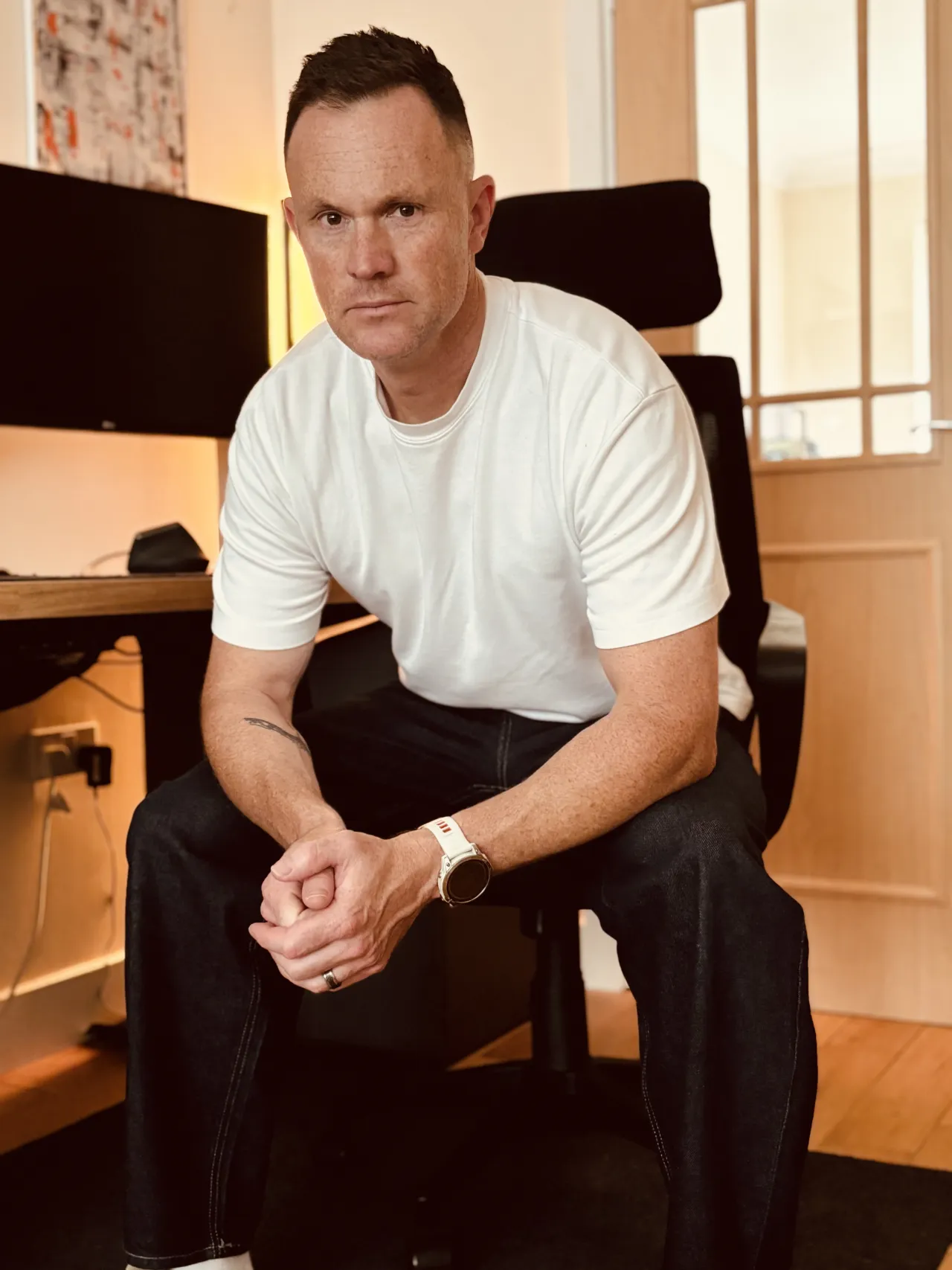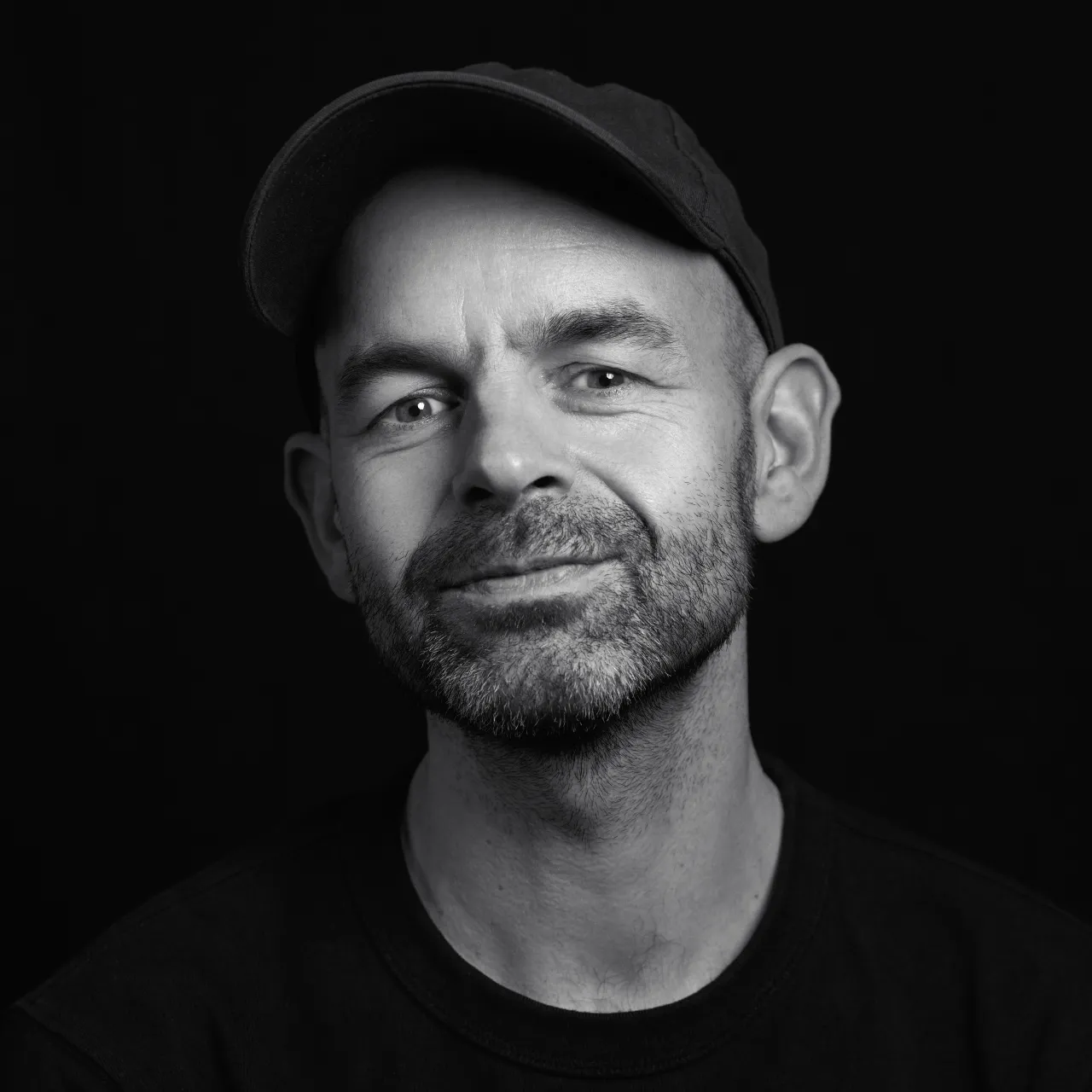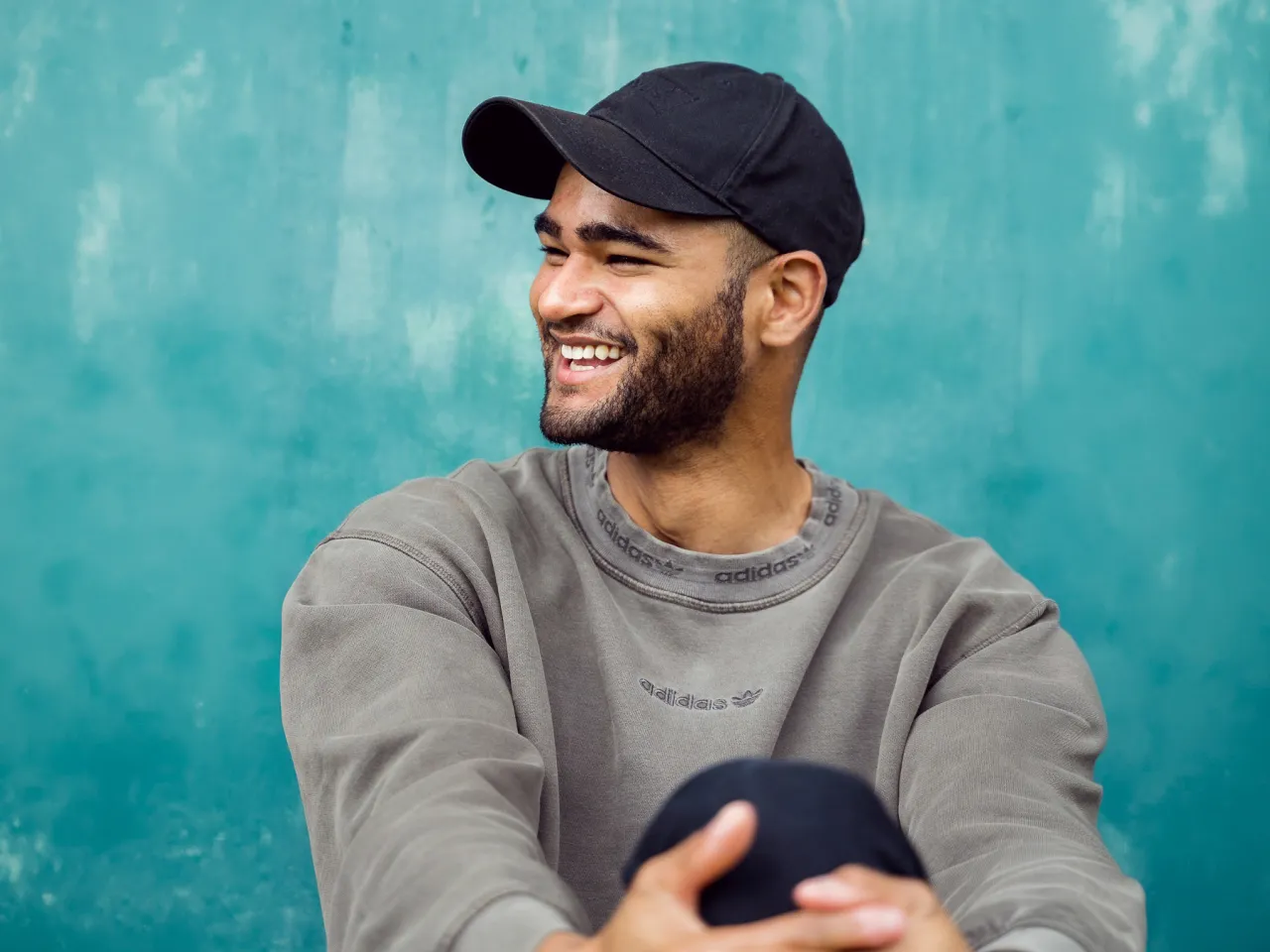
Paul O'Brien
Every creative knows the feeling. You're putting in the work, but something isn't clicking. The ideas don't feel like yours. The feedback stings more than usual. A little voice starts to wonder whether you're actually any good. What's hard to see, in those moments, is whether the problem is you or simply where you are.
That's what happened to design director Paul O'Brien, and his story has a lot to teach anyone facing imposter syndrome today.
In late 2020, Paul left a senior designer role at Ziggurat, a London brand packaging agency, to join supplements brand Bulk as creative lead. On paper, it made complete sense. He'd always been into health and fitness. The campaigns had serious reach, with names like Anthony Joshua and Katarina Johnson-Thompson attached to them. It felt like progress.
But the reality was a mismatch between expectation and environment. "The role became heavily focused on e-commerce, digital ads and social templates," he explains. "Important work, but not the kind of brand-building or system-led design that really drives me."
Yet rather than identifying the problem as one of context, Paul turned it inward. "I internalised it. I genuinely started questioning whether I was any good at design. Imposter syndrome really took over that year: a low-level doubt that I realised had been chipping away at me for much longer than I'd realised."
Leaving without a safety net
Eventually, Paul left without another job lined up, which meant freelancing was less a choice and more a necessity. "I needed to find out whether the problem was my ability or just the environment I was in," he explains. But the practical conditions couldn't have been worse.
He barely had a network. His portfolio wasn't where he wanted it to be. LinkedIn had been an afterthought. But he posted anyway, announcing his availability... and the response knocked him sideways.
"What shocked me most wasn't just the volume of messages," he explains. "It was who they were from. Agencies I'd only ever admired from a distance. The kind of studios that felt out of reach when I was younger." Suddenly, Bulletproof, Design Bridge and Partners, Jones Knowles Ritchie and Taxi Studio were all in his inbox.
The pace was relentless: new teams, new ways of working, the feeling of a first day every Monday. Underneath it all, the imposter syndrome didn't disappear; it just changed shape. "As a freelancer, every booking feels like an audition," Paul reflects. "If you have a bad day, you worry that's what people will remember. So I put a huge amount of pressure on myself to be 'on' all the time. Every meeting, every presentation, every idea had to land."
Despite the pressure, though, he stood his ground. "I didn't run from it. I let the doubt sit there, but I still showed up. Project by project, the work started to quieten that voice."
When the work speaks for itself
The project that shifted things was a brief for Byron Burgers at Taxi Studio, focused on driving Deliveroo sales post-COVID. Early on, O'Brien brought an idea to the table that didn't immediately land. By removing the letters B and R from the word "burger", you're left with "URGE", a natural hook for a platform built around late-night cravings and giving in to temptation. It could easily have been shelved. Instead, the team pushed it. "We refined it, reframed it, and slowly it started to unlock something bigger. That thinking ended up influencing the wider creative direction."
The work won a D&AD Wood Pencil in the Creative Writing and Design category. The news came via a personal message from Spencer Buck, founder and chief creative officer of Taxi Studio, sent while O'Brien was sitting on a train. "I just sat there staring at my phone in disbelief. As a freelancer, you're never guaranteed credit, so the fact that Taxi named me on the project meant a lot. Getting the message personally from Spencer made it even more special."
But it was what the award represented internally that mattered most. "It didn't just validate my design ability. It permitted me to take up space. To trust my voice more. And to stop shrinking myself in rooms I'd once felt lucky just to be in."
Wanting to share this lesson with others, he launched a community initiative called Let's Talk: a monthly open online call where creatives could share challenges, ask questions and realise they weren't as alone as they felt. At its peak, close to 100 people were joining each session, with guests including Mat Voyce and Simon Dixon of DixonBaxi. "It was never about positioning myself as an expert," he says. "It was about creating space for honest conversation."
Choosing freedom
After three years of high-profile freelancing, O'Brien stepped into a design director job at Elmwood, where he learned to think beyond individual ideas to build long-term brand systems. "Working across global portfolios, you can't rely on one strong idea," he reasons. "You need frameworks, hierarchy and flexibility without dilution."
He also learned what leadership actually requires. "It isn't about having the best idea in the room," he stresses. "It's about creating the conditions for others to thrive." The work earned recognition, too: projects he led for Skittles and Dolmio won multiple Transform Europe Awards and a World Brand Design Society award during his time there.
But then, even that began to feel too settled. "I love change," he explains. "I love being pushed. When I started to feel that I was turning up and delivering what was needed rather than pushing myself further, I knew it was time to reassess."
And so he's gone freelance again... and this time things are different. "The first time I went freelance, I was trying to prove something, mainly to myself. I needed to know whether I could stand on my own two feet. It felt reactive." This time, the move is intentional. "I'm not running from doubt. I'm choosing autonomy and alignment. I know who I am as a creative now, and the question has shifted from 'Am I good enough?' to 'How far can I take this?'"
For any creative currently pondering that first question, Paul's message is clear. "One environment does not define your ability," he says. "Sometimes you're just in a context that doesn't bring out your strengths clearly. Don't let someone else's temporary perception become your permanent truth. Creative careers are long. One chapter, even a tough one, doesn't get to write the whole book."
Editor's Picks

Trending

Latest Jobs
Frontend Developer at Northern Artillery
Full-time·Leeds·£35k–£45k
Senior Designer at Creative Spark
Full-time·Manchester·£35k-£50k
Account Manager at BUILDHOLLYWOOD
Full-time·London·£34k–£38k
Multidisciplinary Designer at Formation Games
Full-time·London·£40k–£50k
Design Director, Opinion at The New York Times
Full-time·New York·$160k–$180k
Graphic Designer at Crux Product Design
Full-time·Bristol·Up to £36k