Meet Fatih Öztürk, the artist who turns Vice City sunsets and dead Nokias into nostalgic paintings
The Turkish illustrator, now painting from a quiet corner of Copenhagen, on why his sunbaked scenes of old video games and obsolete gadgets aren't really about those toys at all.
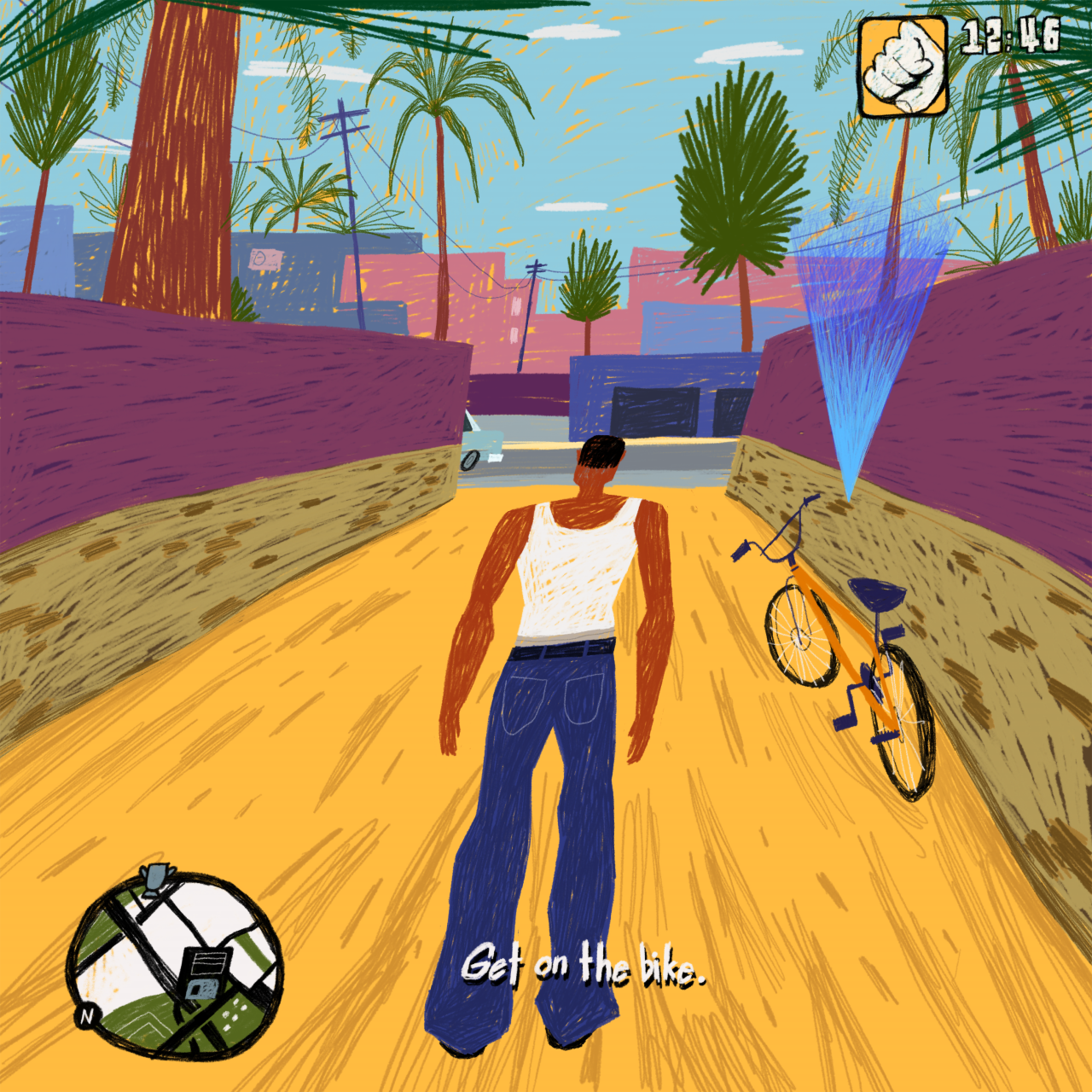
Bike © Fatih Öztürk
Think back to the last video game you truly loved as a kid. Chances are you're not just picturing the screen; you're imagining the room in which you played it. In my case, our tiny spare boxroom, which used to be my little brother's nursery. Light blue painted walls with a B&Q decorative border in cute colourful baby elephants. Light streaming in between the blinds, showing the dust in the air. Gareth and Nick sat by my side, fighting over who had to use the keyboard this time rather than one of the two joysticks. Mum shouting up the stairs to remind us dinner was nearly ready – the smell of cooked chicken kievs and potato croquettes confirming it to be true. Although a little before his time (my gaming began in 1985), that's the territory Fatih Öztürk paints.
The Turkish illustrator has spent 15 years building a world out of the late 1990s and early 2000s. Everything from the neon haze of Grand Theft Auto's Vice City to the chunky charm of the Nokia 3310, alongside those translucent Apple machines in colours nobody would dare sell today. Warm, golden, painterly stills that spark a dozen memories for those of us old enough to remember Snake and text tones. That's the idea behind his artworks... It's about tapping into those happy, not lost memories of our youth.
"I've found myself consuming almost nothing but nostalgic things for a long time now – old films, TV shows, and video games," he tells Creative Boom. "Some of them I revisit again and again. I think what I'm really chasing is the connection I can build through my work with people who feel the same way I do."
Funnily enough, this was never the plan. "Even before I started painting video games, my work already had the same atmosphere," he explains. "I never had a plan to become 'the guy who paints games'. One day, I had the idea of painting Grove Street, and from that point on, everything started to change. My artistic style and my personal history with those games turned out to be a perfect match."
And yes, if you thought you spotted Counter-Strike in there too, as I did, you weren't wrong. For him, though, it conjures somewhere very specific. "Counter-Strike simply means internet cafés to me," he says. Anyone who spent their teenage years in one will remember the exact smell of the place, and probably the plastic chairs too.
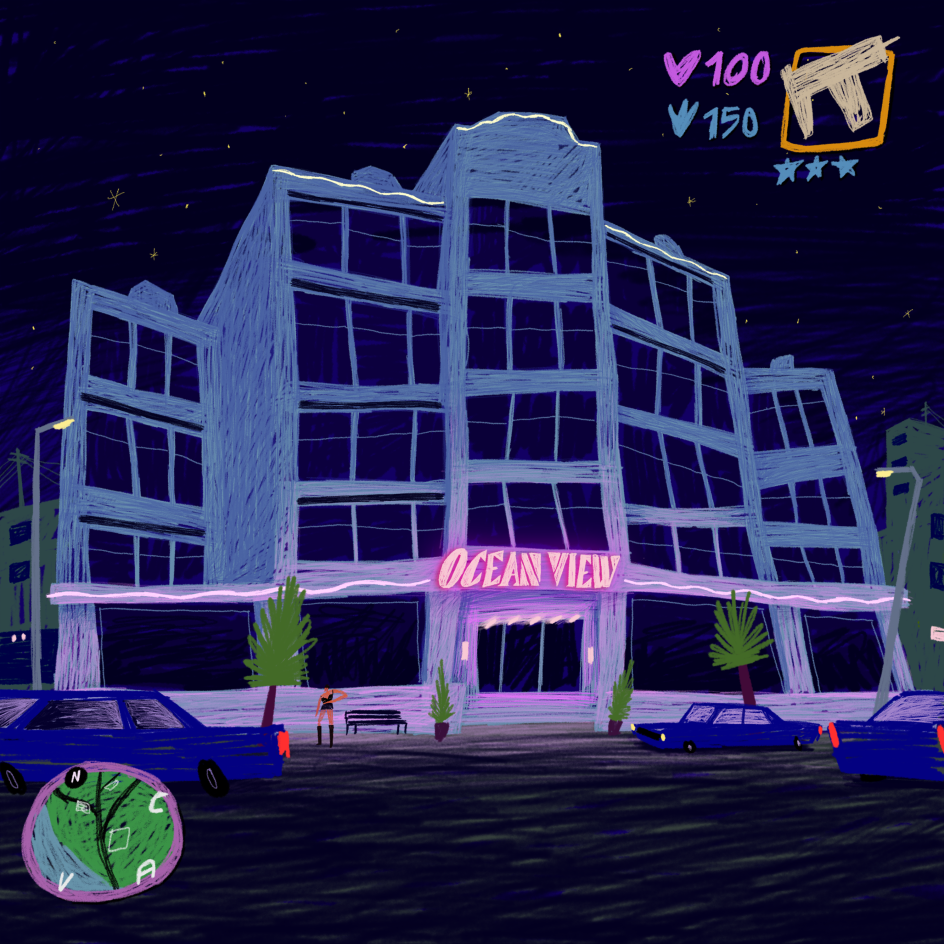
Ocean © Fatih Öztürk
It's not just games, though. His Nokia and Apple series lovingly render gadgets most of us put in the 'treasure box' two decades ago (currently gathering dust in the loft), and his affection for them is partly a protest about where design has gone since. "First of all, I genuinely love the design of those products," he says. "The late '90s and early 2000s were full of colourful, bold designs. Compared to today's minimal, colourless aesthetic, I like celebrating how fearless design was back then. Modern cars, especially, really bother me." We can't say we disagree. Somewhere between the iMac G3 and the stuff we have today, everything went a bit... meh.
So how does he get that hazy, almost-remembered glow? It comes down to a classical painting education, which he says is incredibly valuable from a technical standpoint. "From the hidden layers of colour that viewers may never consciously notice to the colours that take centre stage, every decision about light and atmosphere helps create the emotional effect I'm after. I never consider a painting finished until I'm certain I've achieved that."
The source material, though, is only ever a starting point. "The games are really just an excuse," he admits. "My work isn't only about memories of what's on the screen. It reminds people of the light, the sounds, their family members, and the friends they used to play those games with."
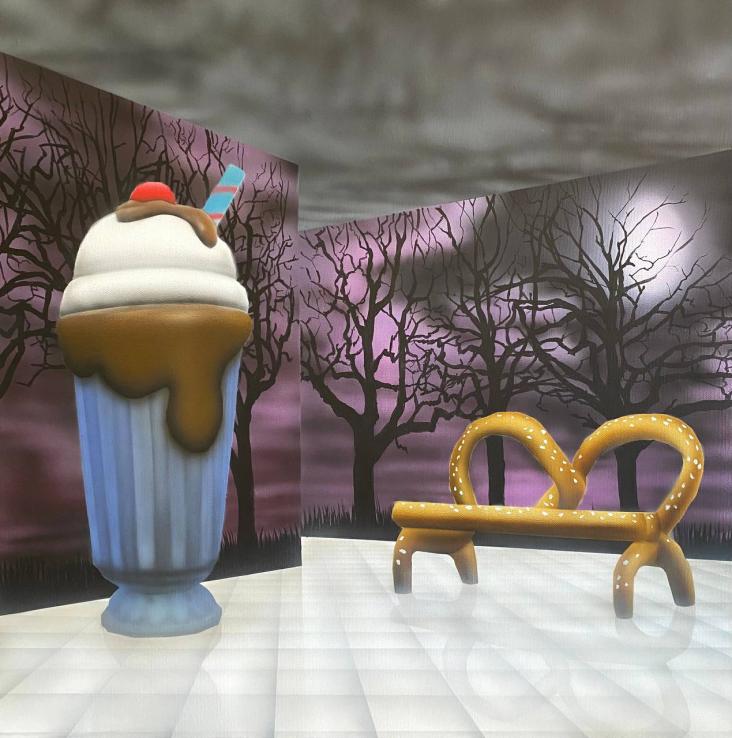
"I'm not trying to recreate these games exactly as they are," he continues. "I reinterpret them through my own visual language and aesthetic. I think that's what separates my work from traditional fan art... it's the personal interpretation I bring to it. Yes, people see GTA when they look at my paintings, but I hope they also see it through my eyes, and through the way memories reshape the past. Our memories never preserve things exactly as they were. We remember everything as a little warmer, a little brighter, and a little more beautiful."
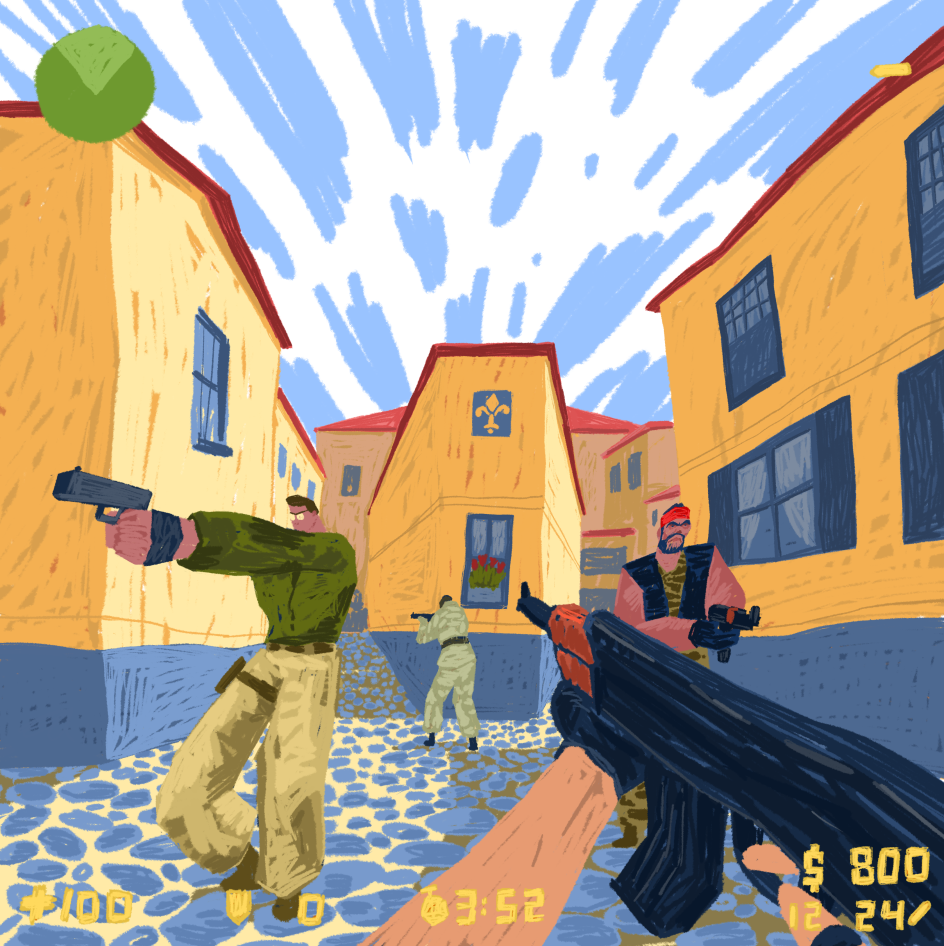
Counter Italy © Fatih Öztürk
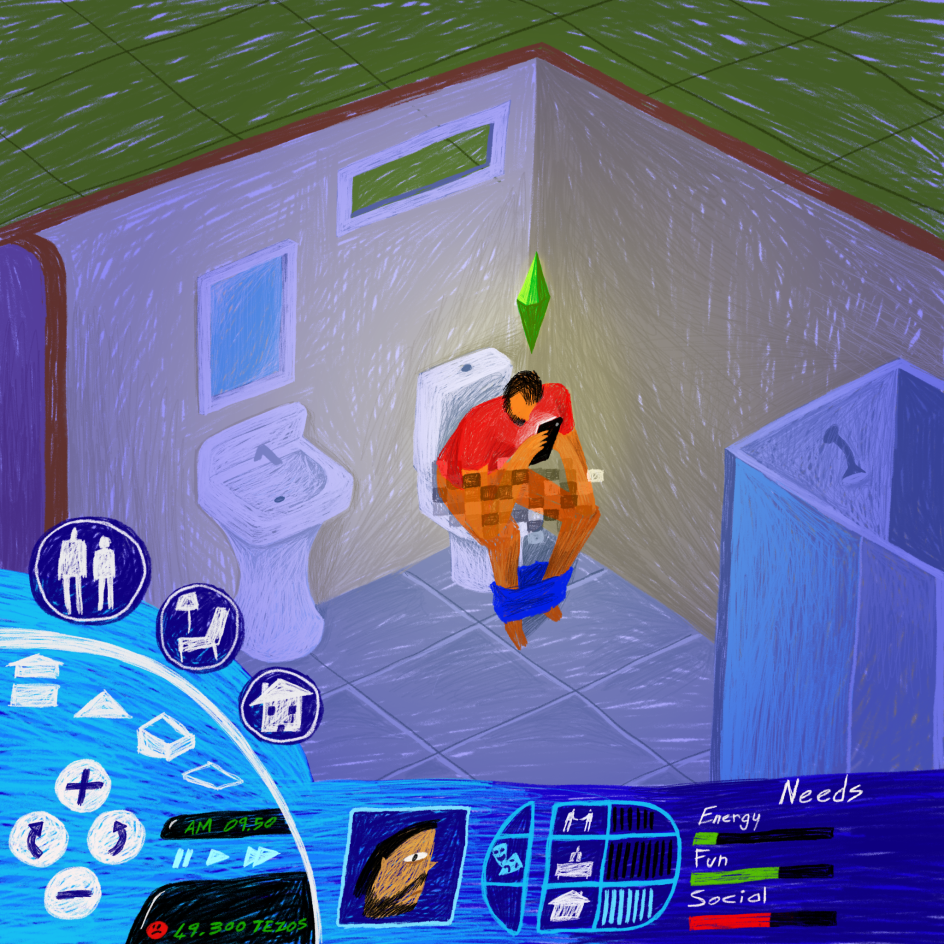
Sims Toilet © Fatih Öztürk
A couple of years ago, after 15 years of illustrating, Fatih began selling prints – not as a grand commercial strategy, but because his audience essentially demanded it.
"It all started because people kept asking for it. So many people wanted to own these paintings and have them in their homes," he says. "We've tried to keep the prints as affordable as possible without compromising on quality. Luckily, I have an amazing print partner. The idea that one of my paintings is hanging on the wall of someone I've never met, on the other side of the world, feels both surreal and incredibly motivating."
That audience is apparently big and vocal, and it has many opinions – mostly that he should paint more San Andreas. He's resisted, deliberately, for years.
"I always try to come up with new ideas instead of simply following what's popular, although I get a huge number of requests for San Andreas," he says. "I've deliberately avoided giving in to those requests for a long time, because I know that if I painted something only because people asked for it, the result wouldn't be very good."
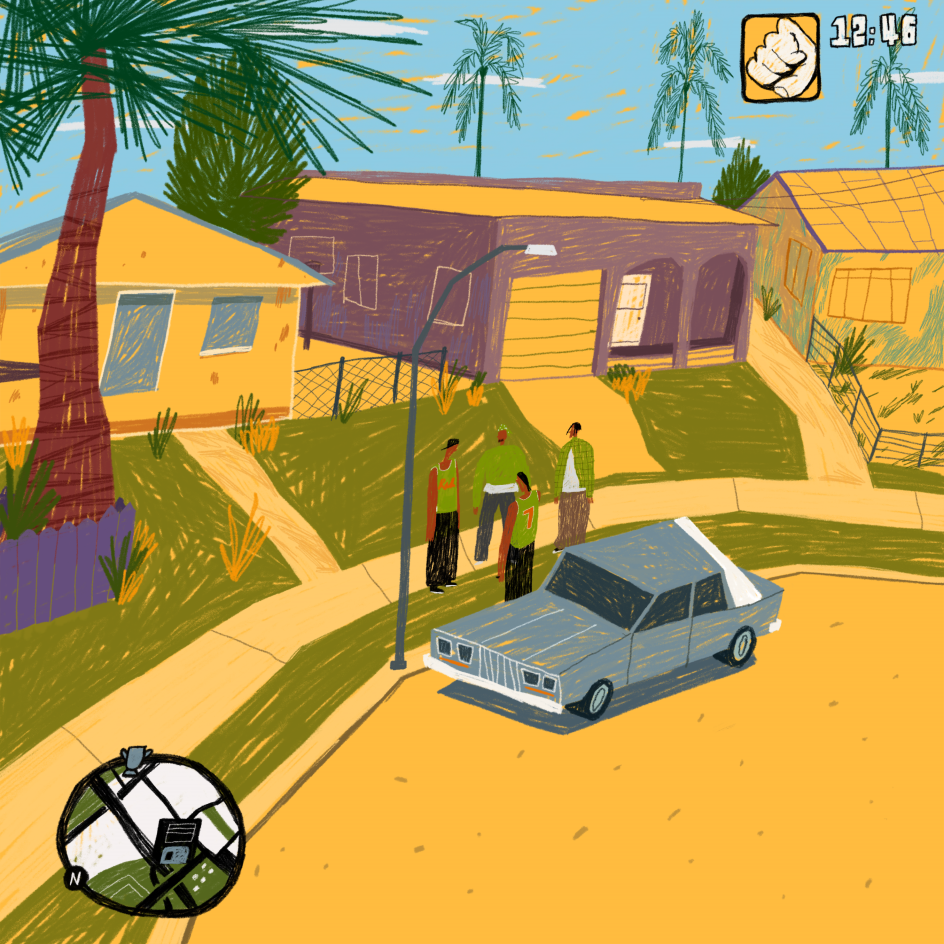
Grove © Fatih Öztürk
These days, the work happens a long way from Istanbul. "My wife's job is what brought us to Copenhagen," he says. "Compared to Istanbul, my life here is completely different. It's much quieter and much more solitary. I think that slower pace has slowed me down a little too."
And he's honest about the fact that a 15-year career hasn't all been sunshine and rainbows. "I've never been completely confident in myself. There have been times when I questioned everything I was doing and even considered deleting my social media altogether," he admits. "We all go through difficult periods. The only way I know how to feel better is by painting. Being an artist feels like living on both an emotional and financial rollercoaster. I know I'll go through those ups and downs again, and honestly, there are still many things I haven't figured out."
As for AI, which is, let's face it, rather good at churning out pastiche of exactly these eras – he's unbothered. "I don't know if I need to take a strong position either for or against AI. It feels similar to the period when the internet gradually became part of every aspect of our lives. I think it's something we'll have to learn to live with," he says. "I'm not worried about a piece of software that produces soulless images trying to imitate me."
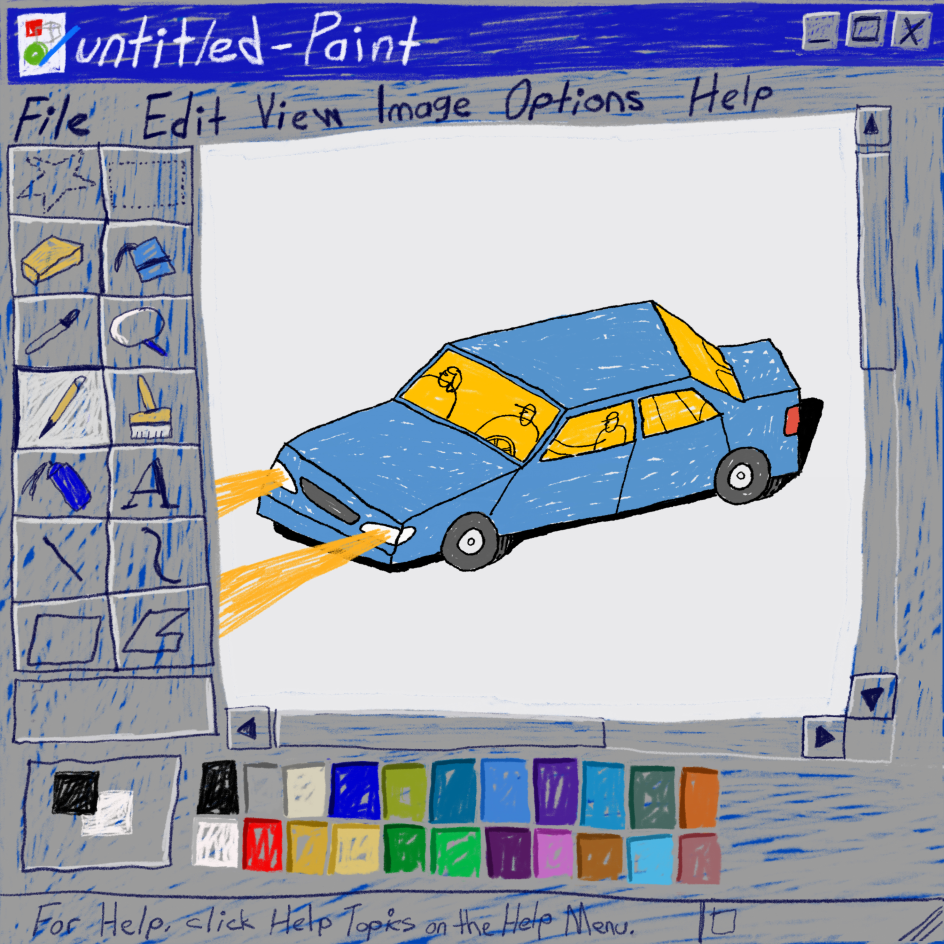
Paint © Fatih Öztürk
So what would he tell an illustrator earlier in their career, someone sitting on a niche obsession of their own and wondering whether anyone else could possibly care about it?
"Not to waste time chasing perfection, and not to be afraid of sharing their work," he says. "It's impossible to predict what people will connect with. The only way to find out is to put your work out into the world."
Given that his own career changed direction the day he decided to paint a street from a 2004 video game, it's hard to argue with that. See more of Fatih's work on Behance or via his Instagram.
Further Information
Editor's Picks


Trending



Podcasts




Editor's Picks
Further Reading