Robot crafts incredible art installation inspired by beetles at London's V&A
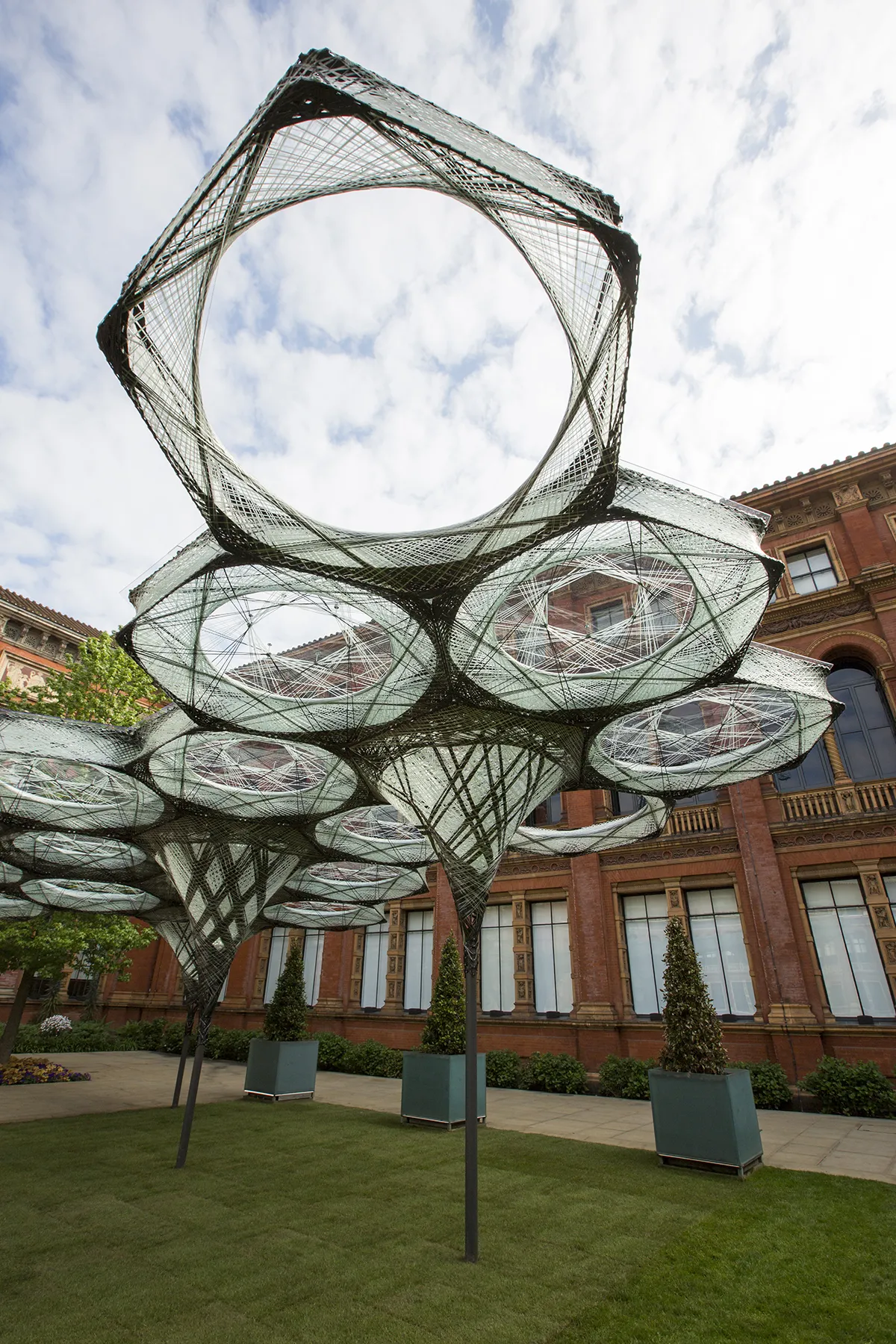
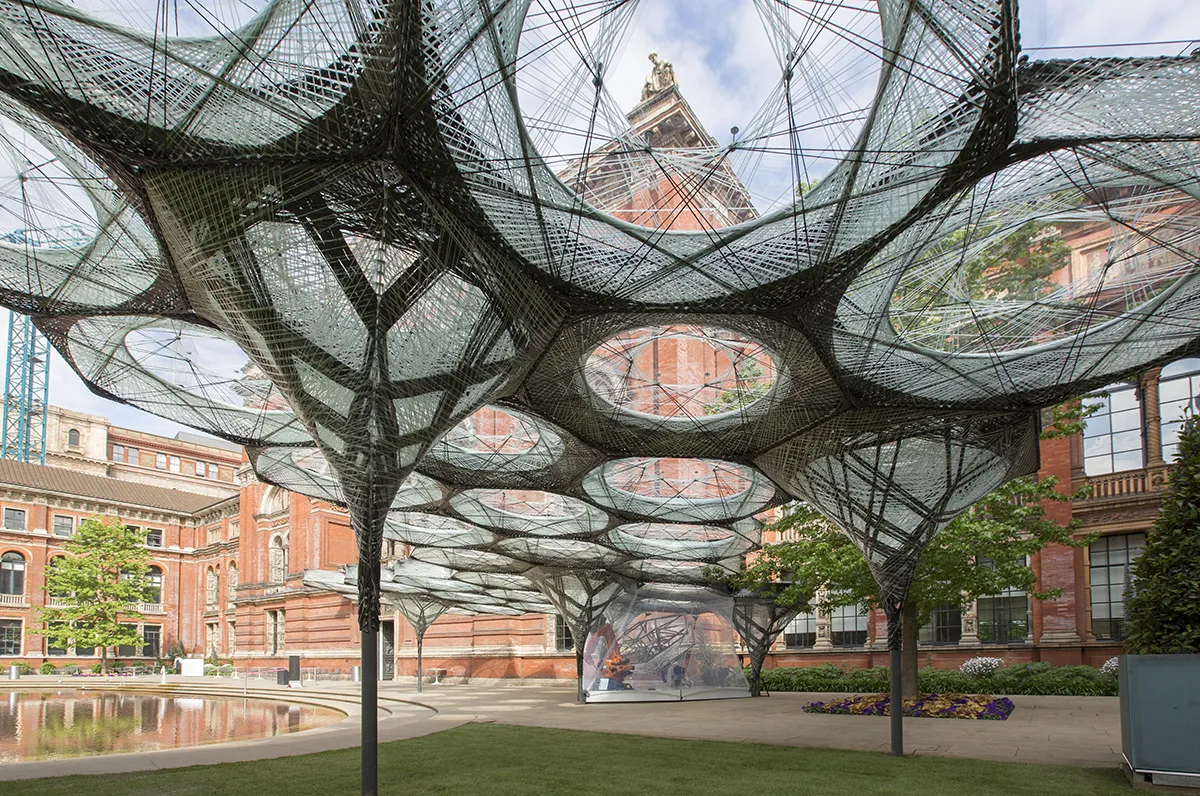
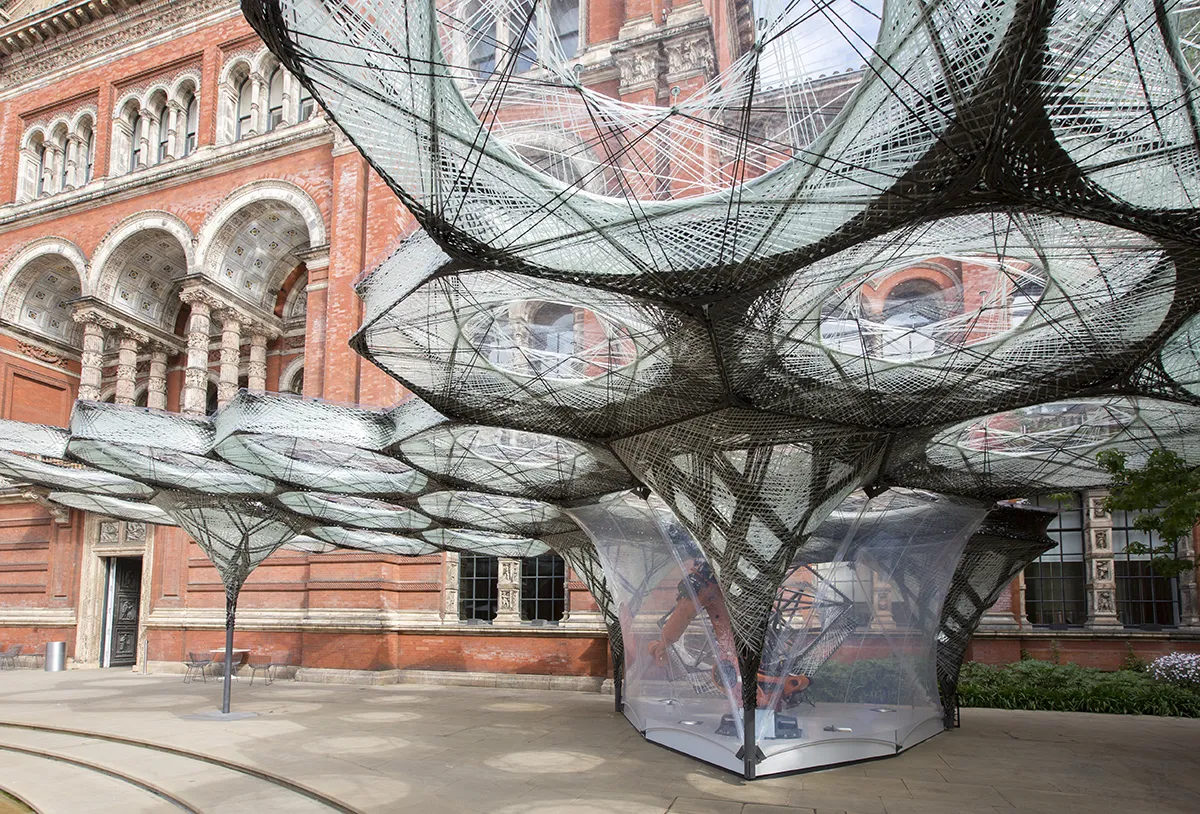
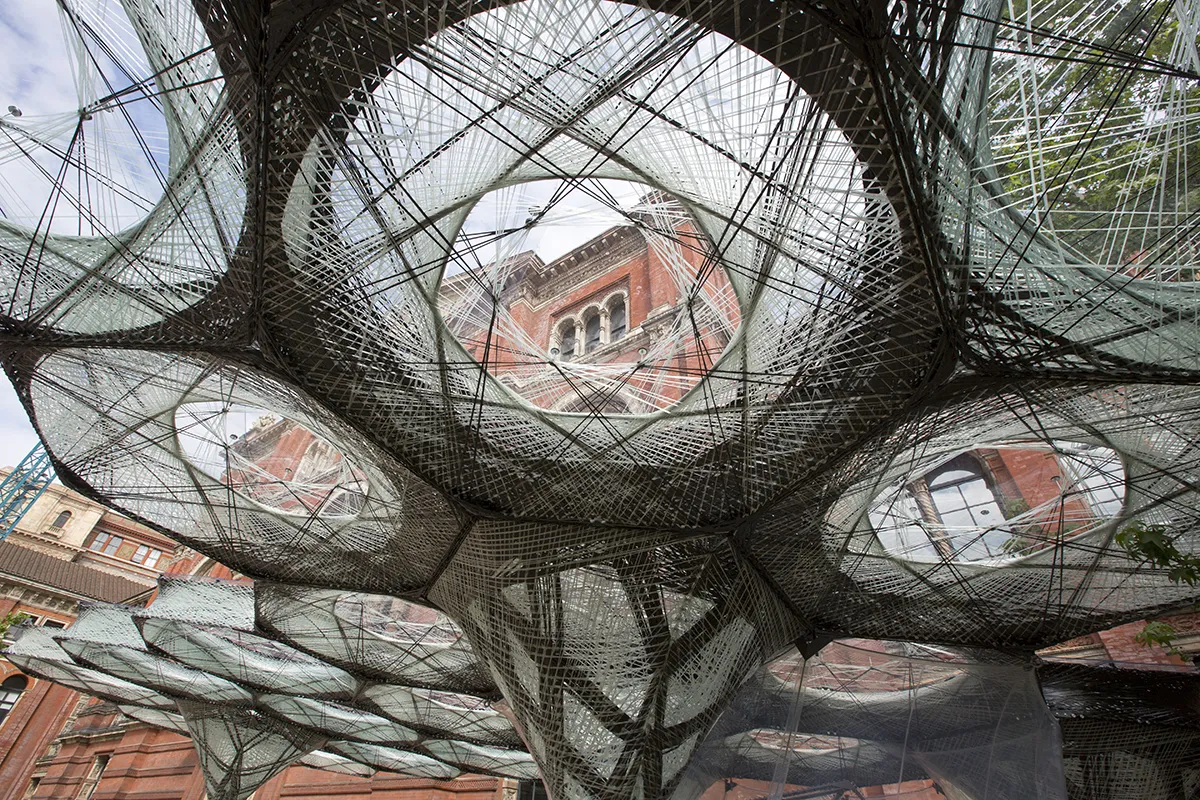
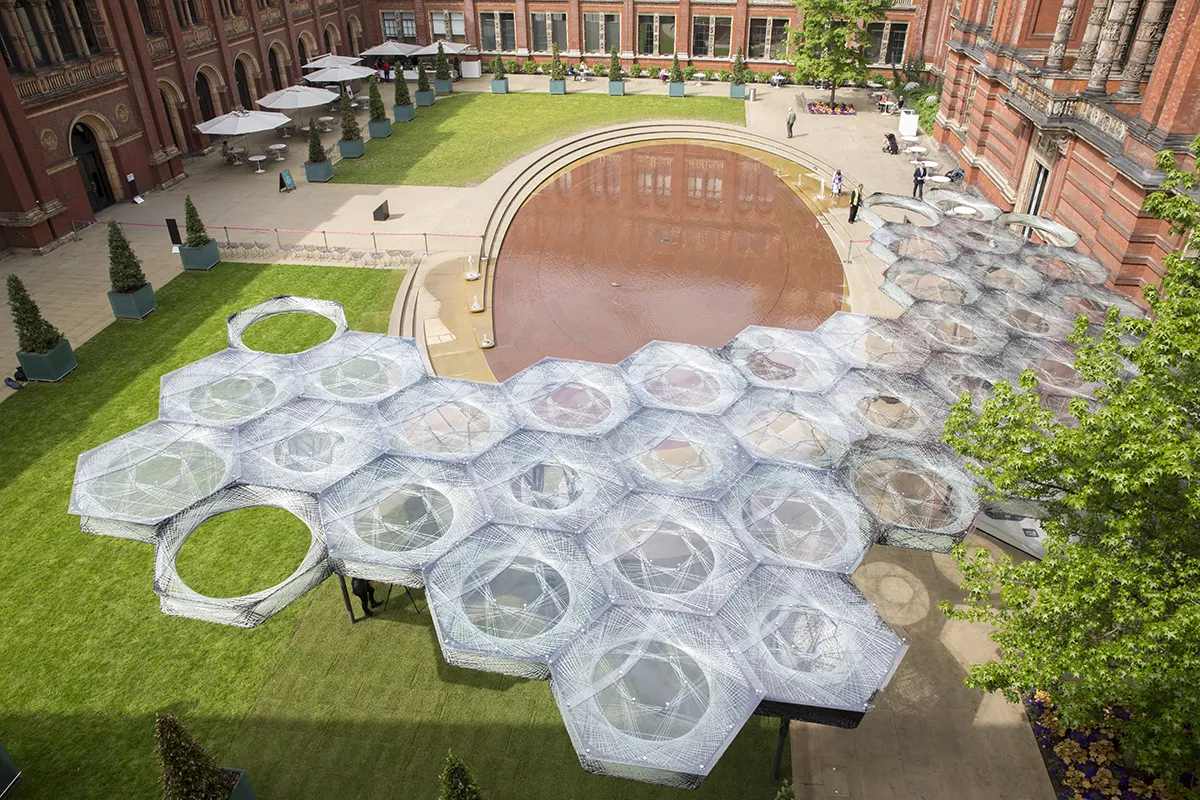
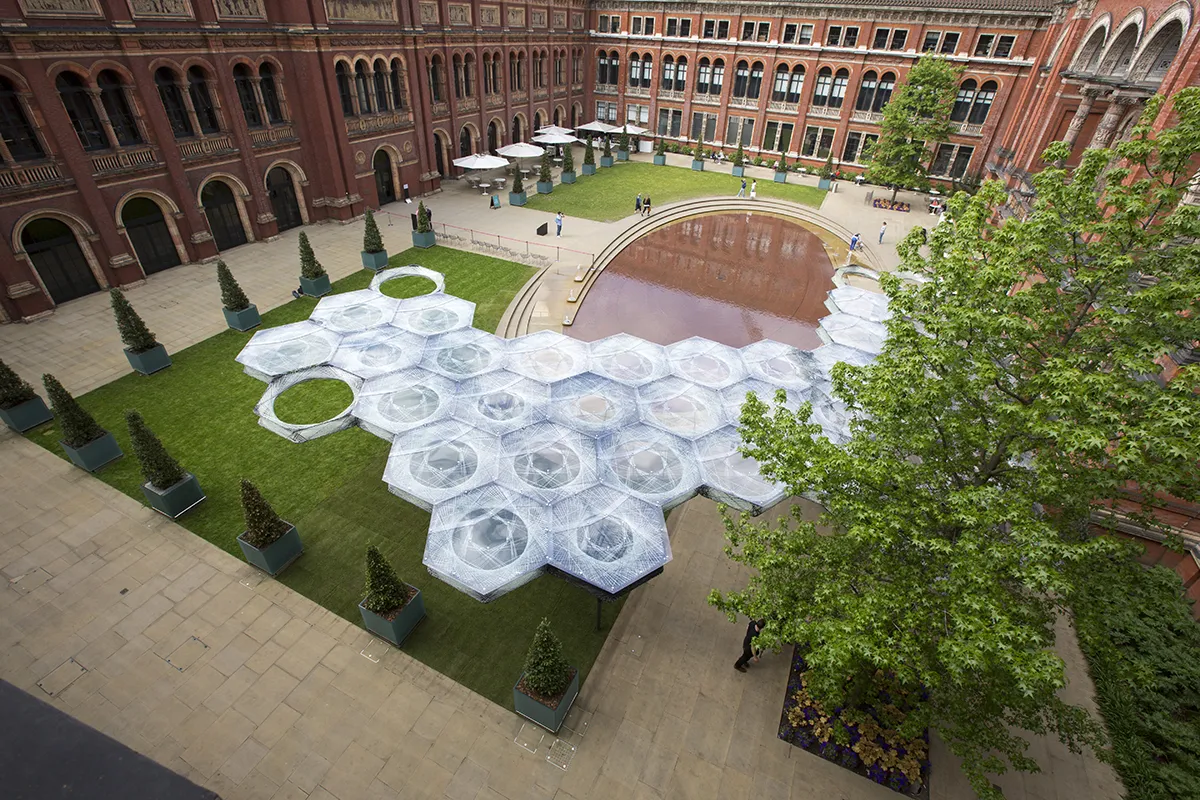
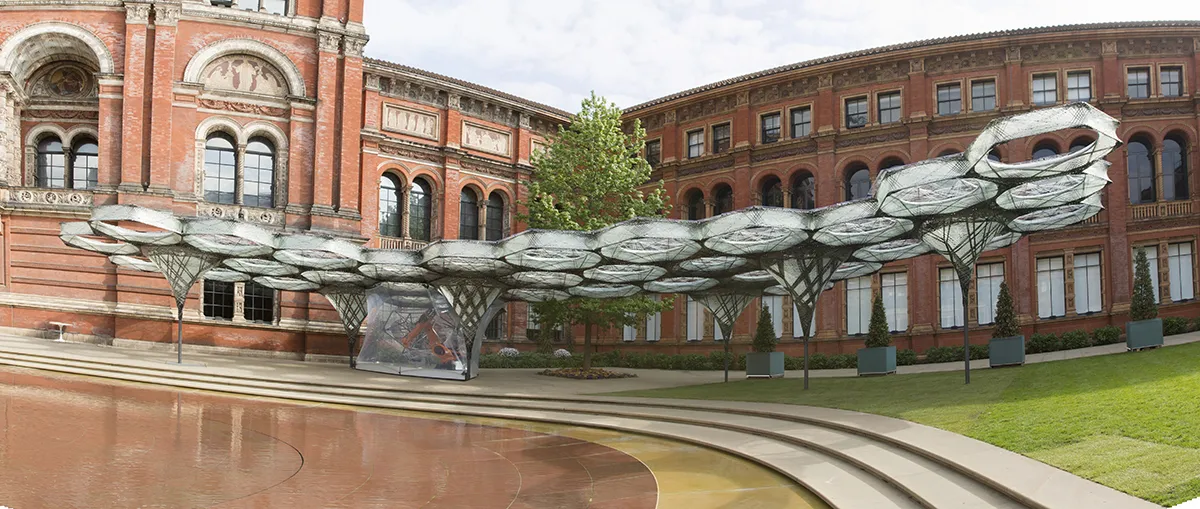
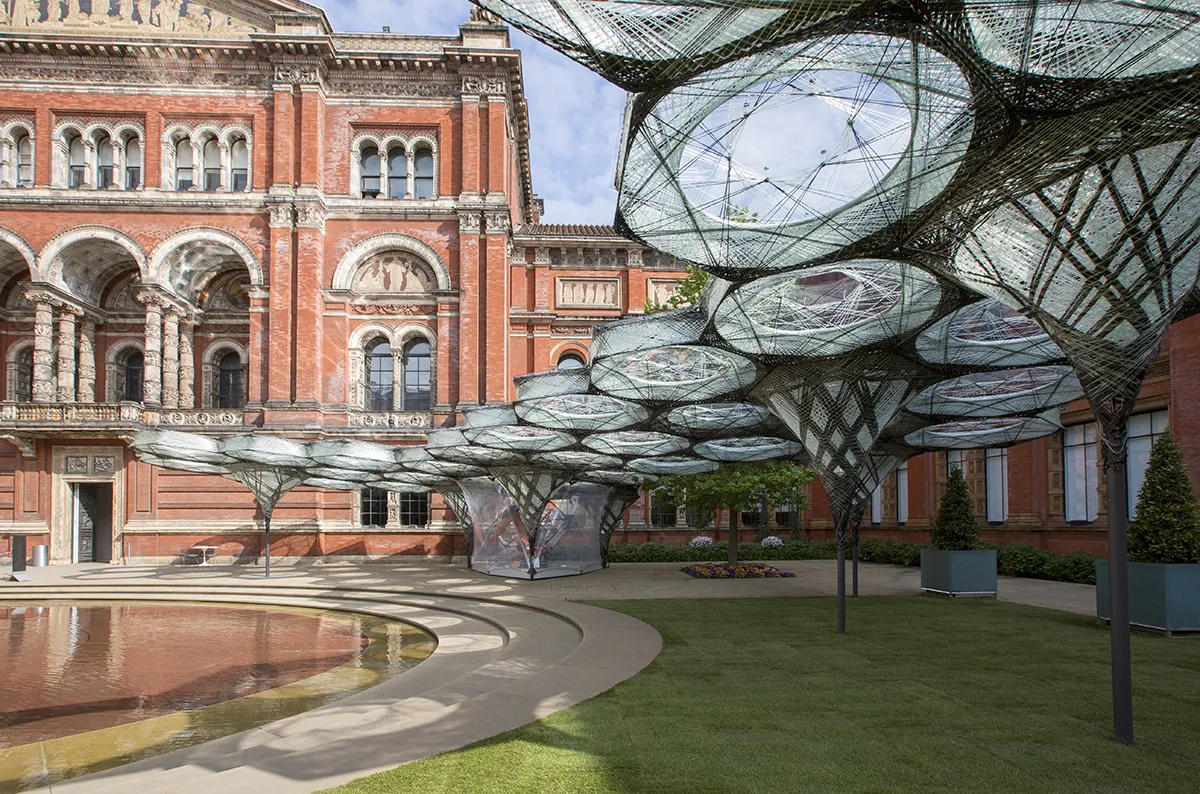
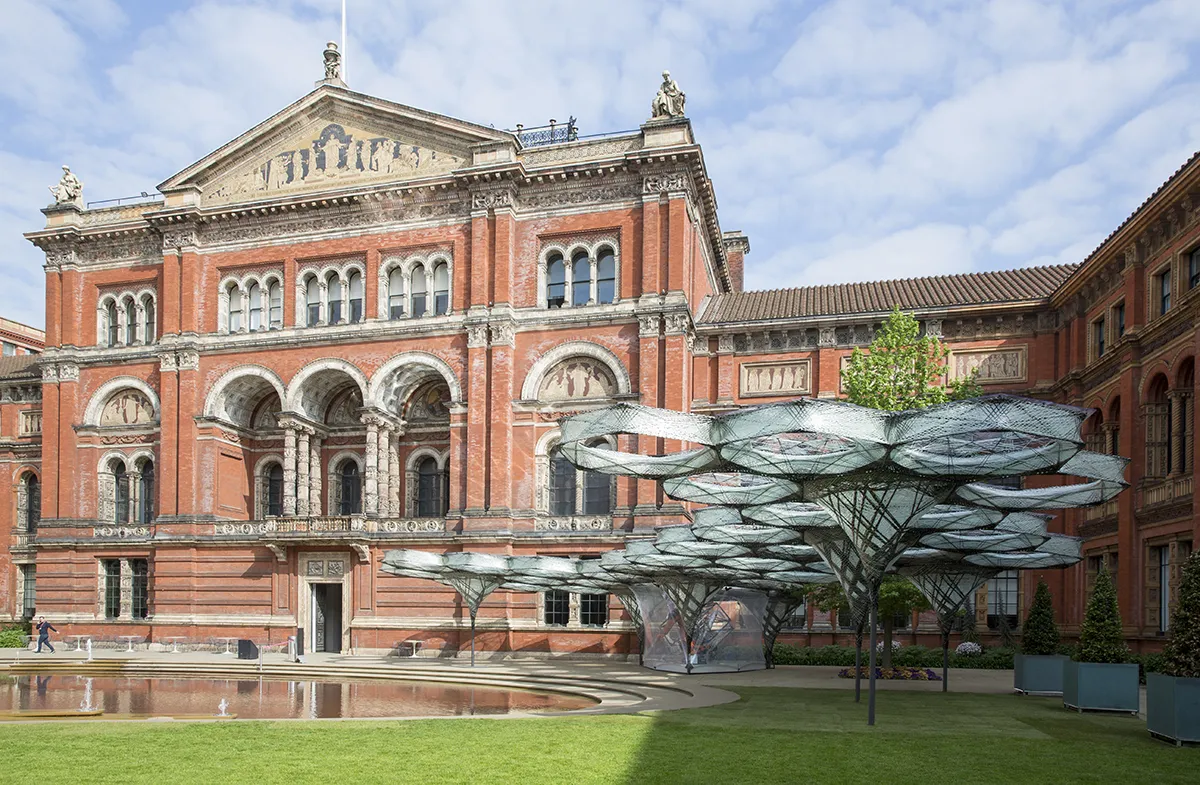
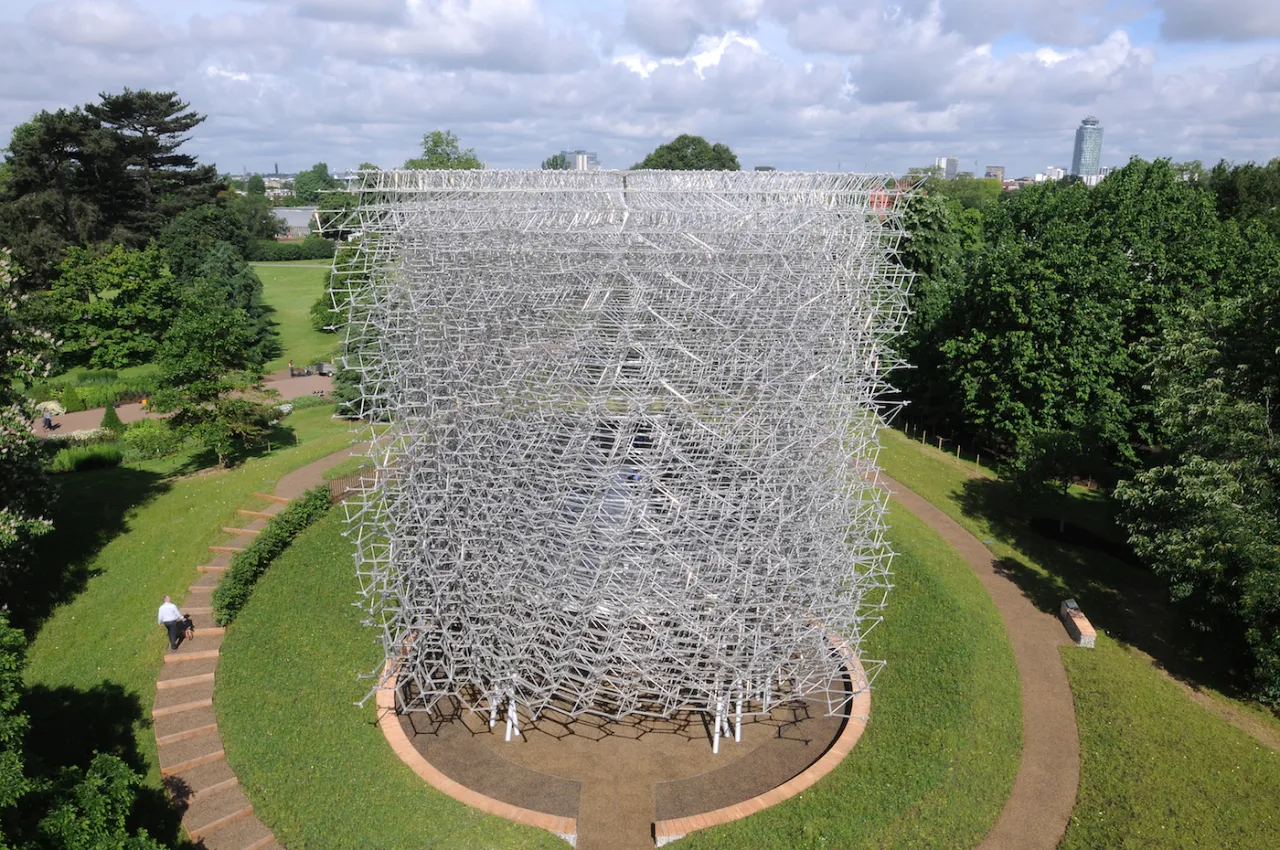
Today, London's V&A marks the start of its Engineering Season with the unveiling of an incredible new installation, Elytra Filament Pavilion. Crafted with the help of a robot and inspired by the fibrous structures of flying beetles, it follows four years of groundbreaking research on the integration of architecture, engineering and biomimicry principles.
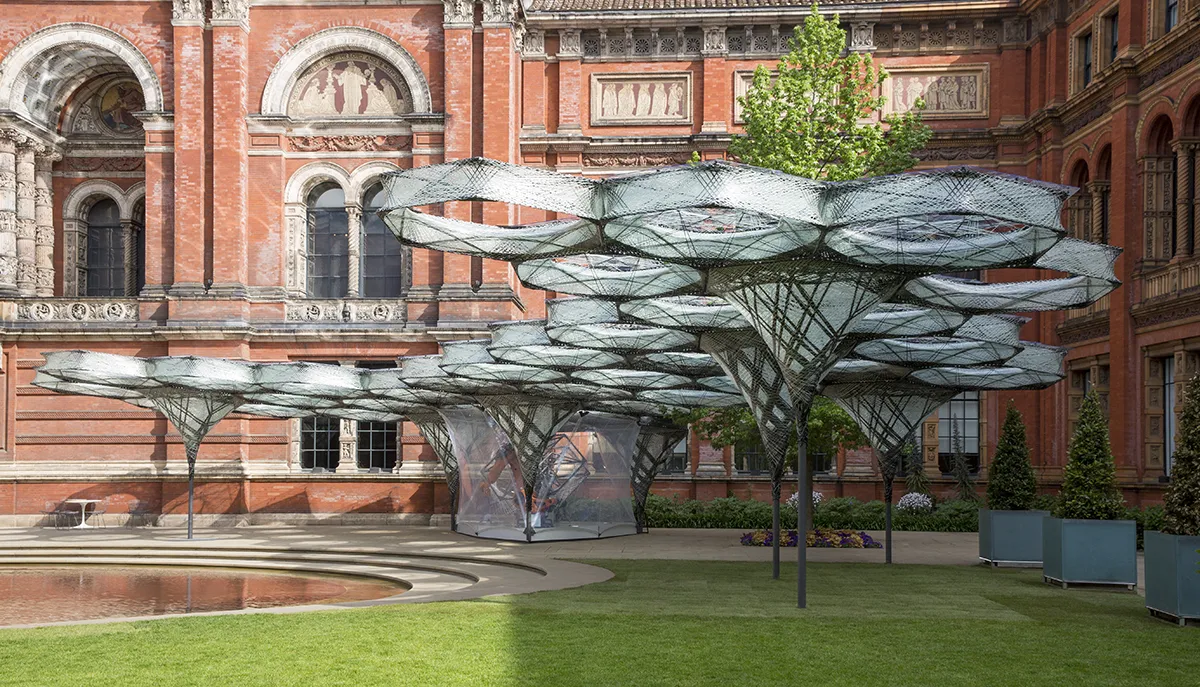
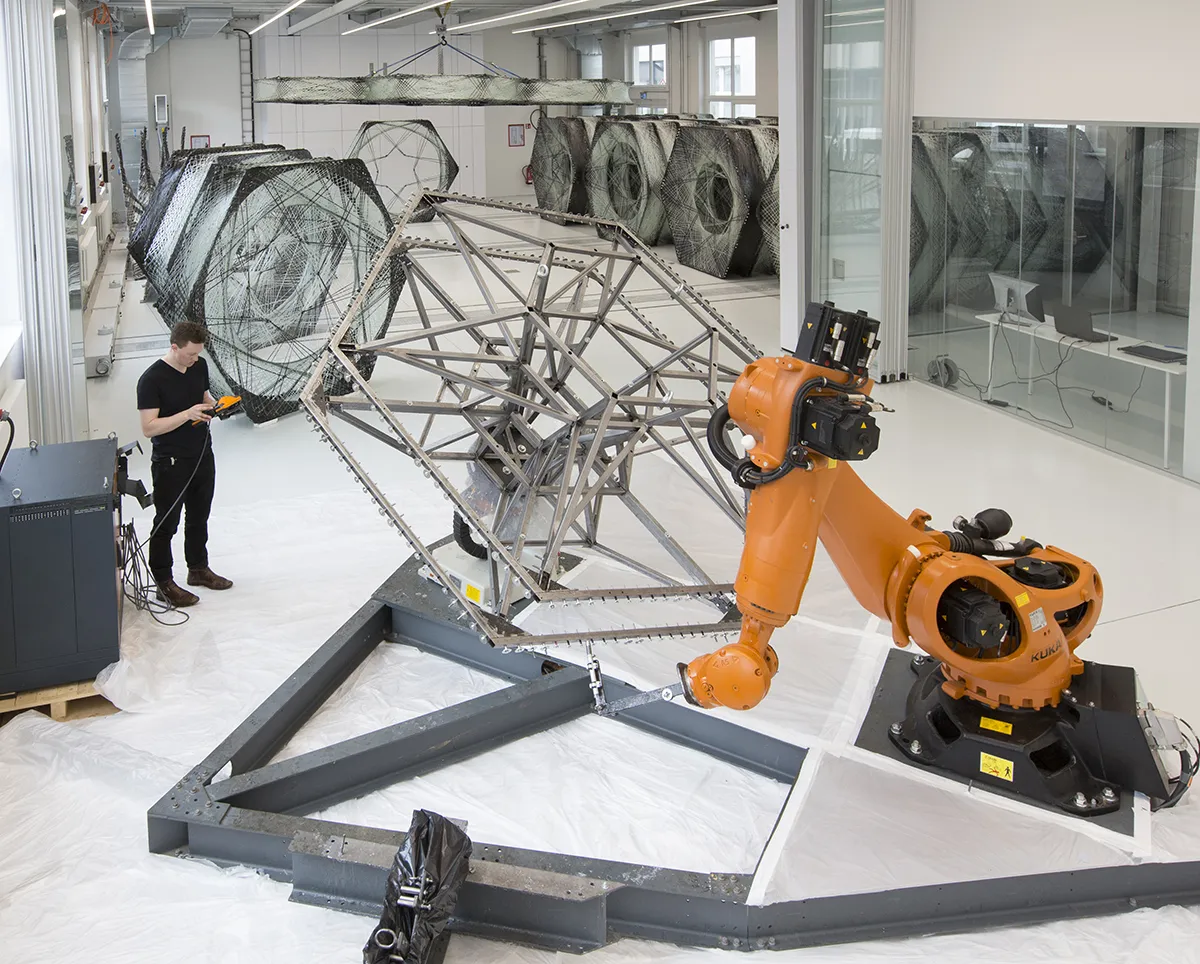
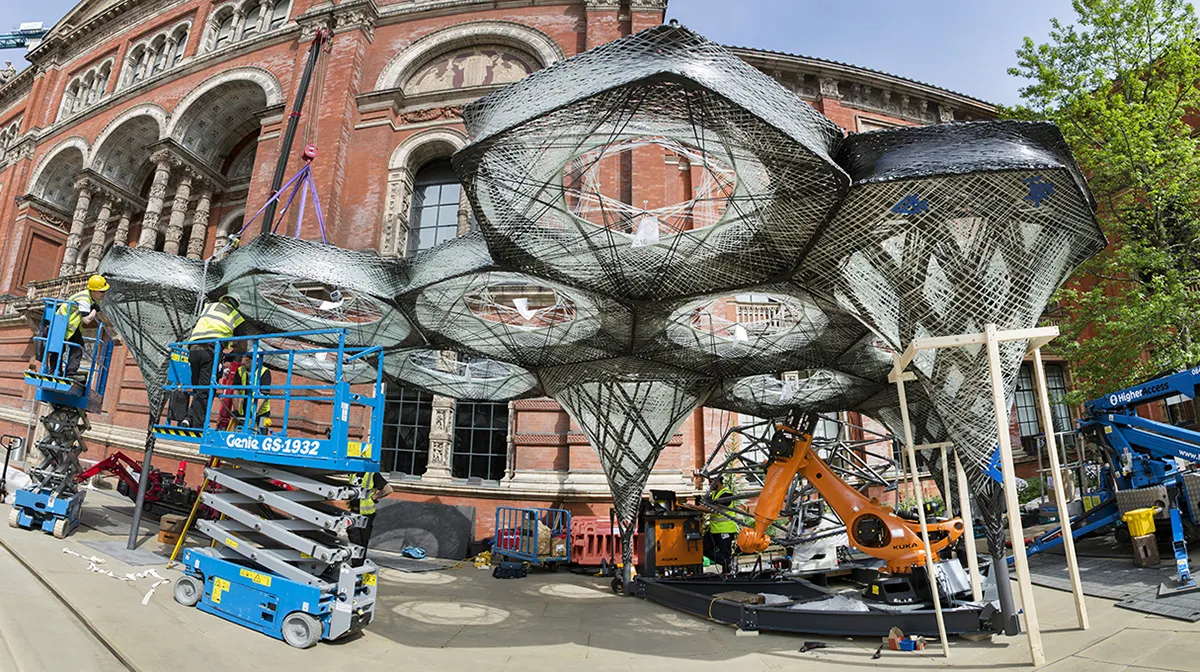
The project's components have been fabricated by a robot at the University of Stuttgart and assembled on-site in the V&A’s John Madejski Garden. It will grow and change its configuration over the course of the event, in response to anonymous data on how visitors use and move under the canopy. This, as well as structural data, will be captured by real-time sensors installed in its canopy fibres. Throughout the season the data will be mapped and made available online. On 17 and 18 June and 22 September, visitors will be able to see the pavilion evolve as new components are fabricated live in the garden by a Kuka robot.
In what is their first public commission in the UK, experimental architect Achim Menges with Moritz Dörstelmann, structural engineer Jan Knippers and climate engineer Thomas Auer have pioneered the unique robotic fabrication technique developed by the University of Stuttgart’s Institute of Computational Design (ICD) and Institute of Building Structures and Structural Design (ITKE).
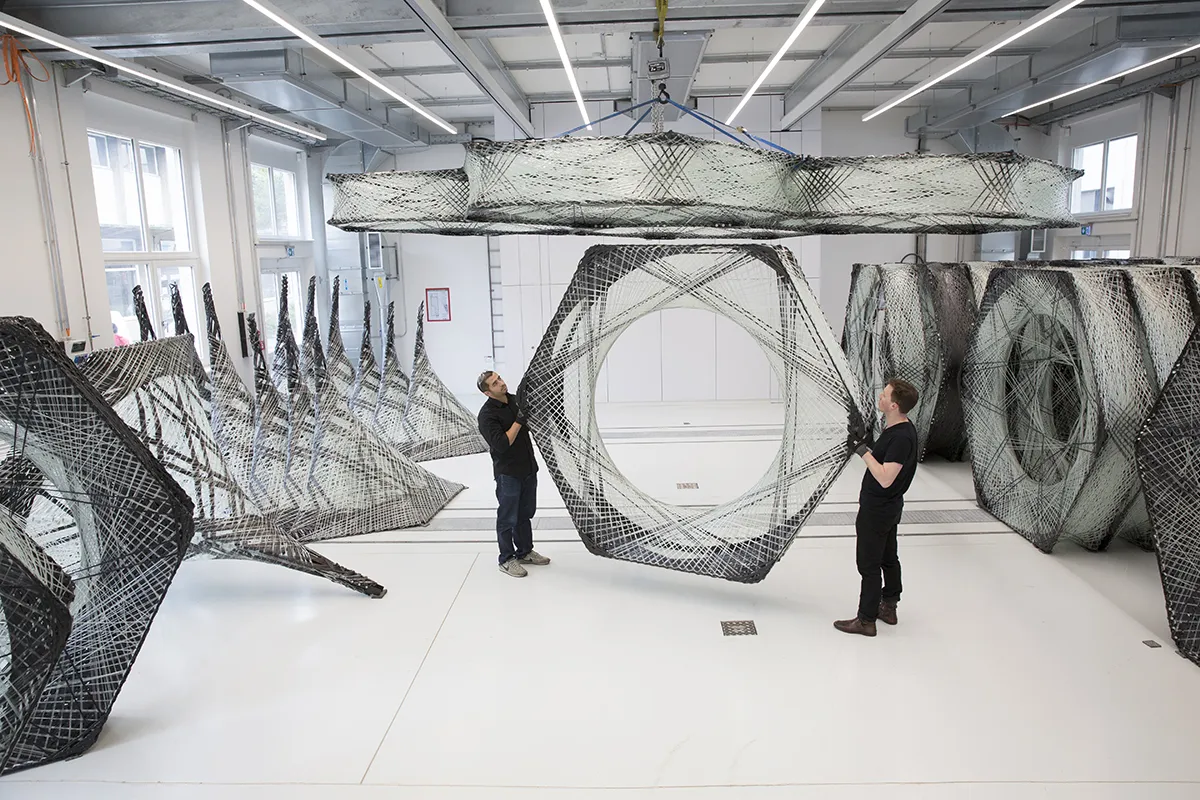
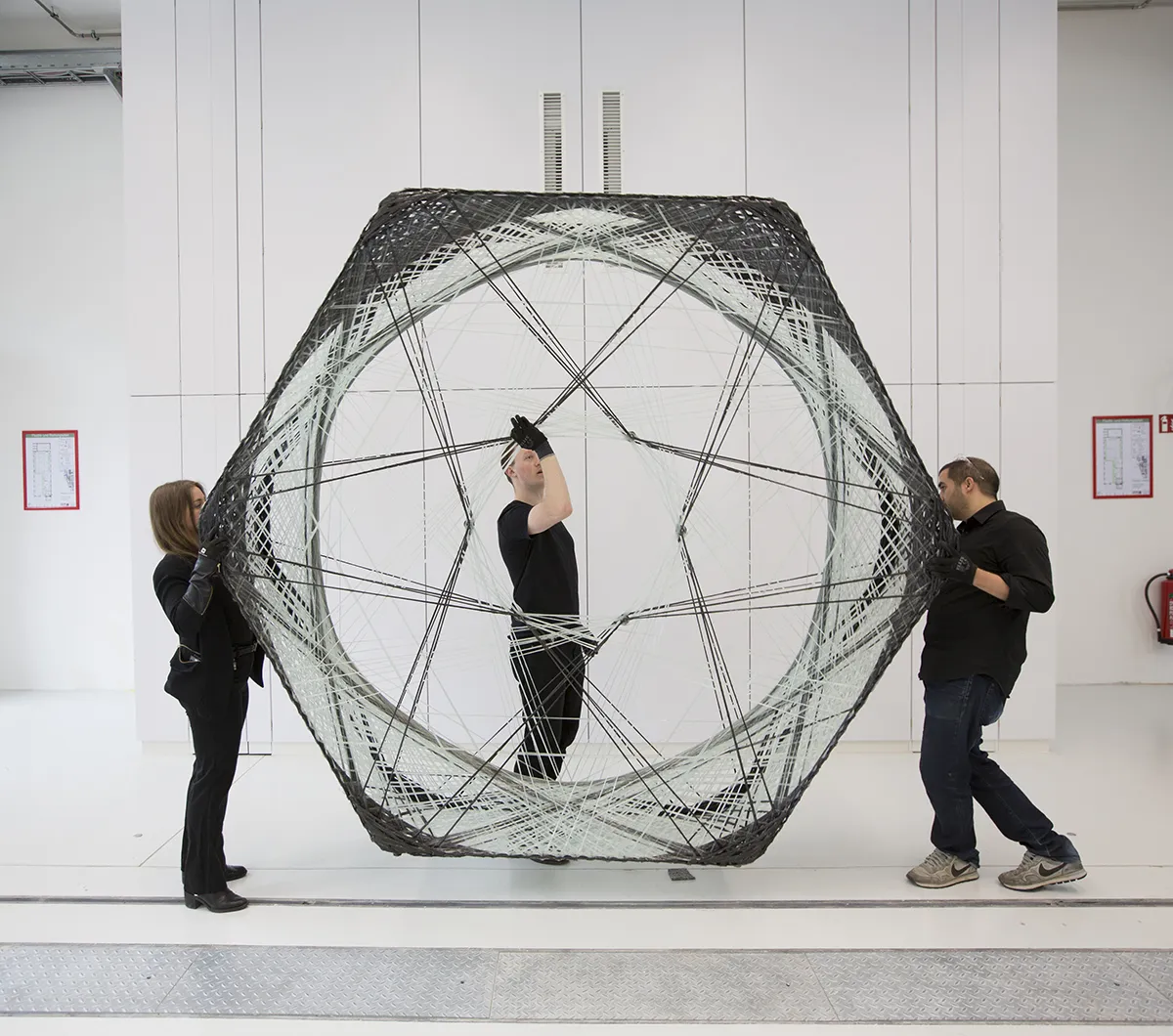
This technique involves a novel way of winding composite materials by a robot arm – designed to harness the material properties of carbon fibres to give them strength as woven structural components. A series of these individual cell-like modules have been used to create the pavilion’s distinctive shape. On average the 40 cells of the pavilion weigh 45kg each and take an average of three hours to make.
To make each component, a robot wound resin-soaked glass and carbon fibres onto a hexagonal scaffold, before hardening. Each cell and column is individual. Its final form of densely knit fibres is a direct result of the changing stress conditions determined through structural simulation and testing carried out in advance by the ITKE.
Achim Menges said: “Based on the biological structure of beetles’ hardened forewings, we have created a novel architectural system that covers parts of the John Madejski Garden with an intricate, extremely lightweight structure made entirely from glass and carbon fibres. The canopy grows from an onsite robotic fabrication unit in response to real-time sensing data, showcasing the profound impact of emerging technologies and related new alliances between the fields of design, engineering and natural science.
"Through this, we seek to provide visitors with a unique experience of the garden that offers a glimpse of novel architectural and engineering possibilities, which may transform our built environment in the future.”

Editor's Picks





Trending





Latest Jobs
Principal Software Engineer at BBC Media Tech
Full-time·Glasgow·Up to £83,790
Senior Designer at Creative Spark
Full-time·Manchester·£35k-£50k
Creative Content Executive at Cognition
Full-time·Birmingham·£28k–£35k
Brand Copywriter at Origin
Full-time·Porthleven, Cornwall·£35k–£40k
Junior Project Coordinator at Colorido Studios
Full-time·Twickenham·£28k–£32k
Senior Digital Designer at Red Antler
Full-time·New York·$95k-$130k







 | All images copyright of SOFTlab](https://media.creativeboom.com/1a5fc6f6-7d87-41fe-9e0c-23799c686f3b/conversions/146592ba272cb7985e71fbfacbada0c00144fbcf-medium.webp)