Step Into the Impossible: M.C. Escher arrives at Somerset House
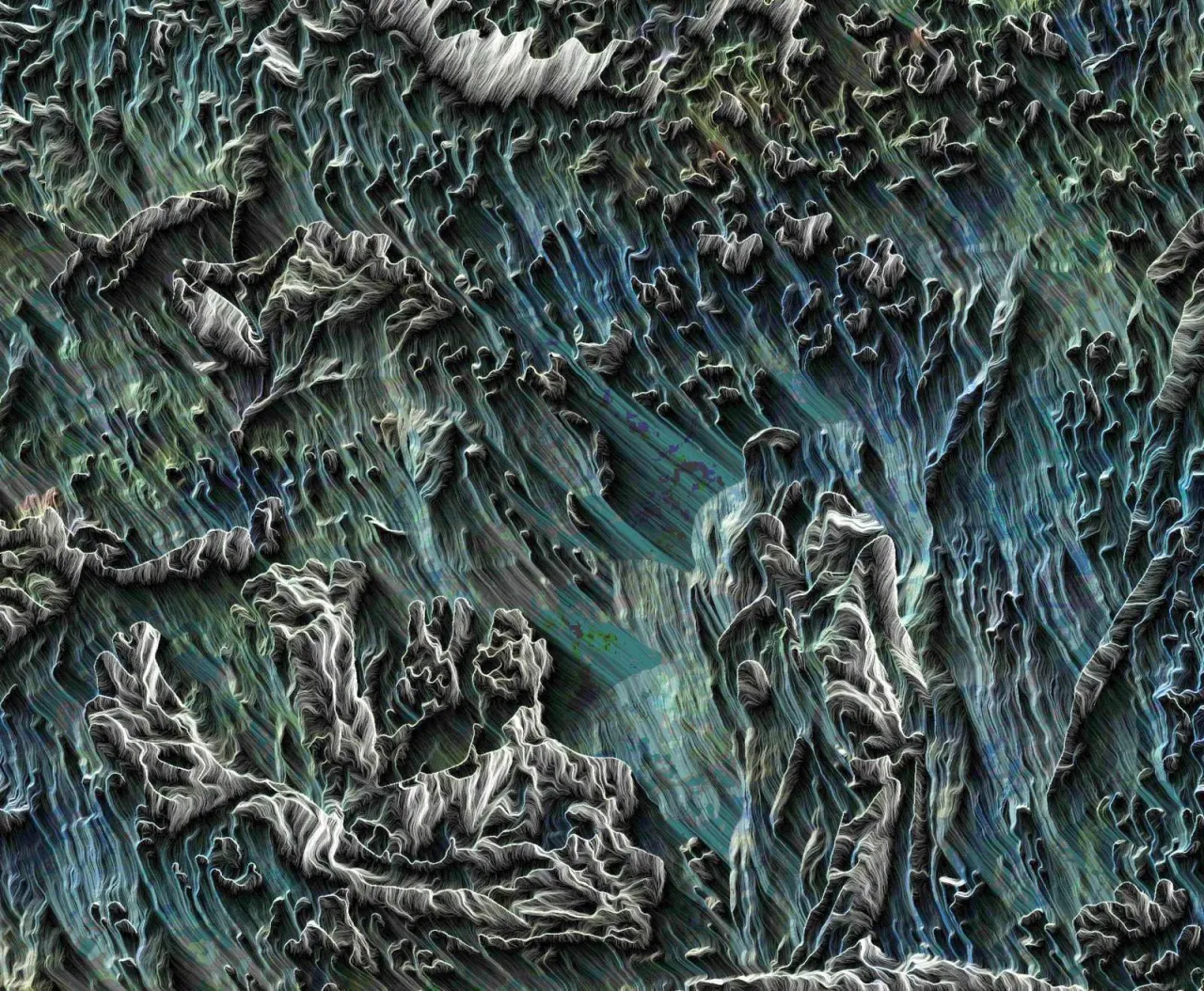
Before the famous optical illusions and infinite worlds, there were humble tools and a very patient hand. This summer, Somerset House gathers over 150 of Escher's prints for his first major London exhibition, and there's a chance to immerse yourself in a few of those worlds.
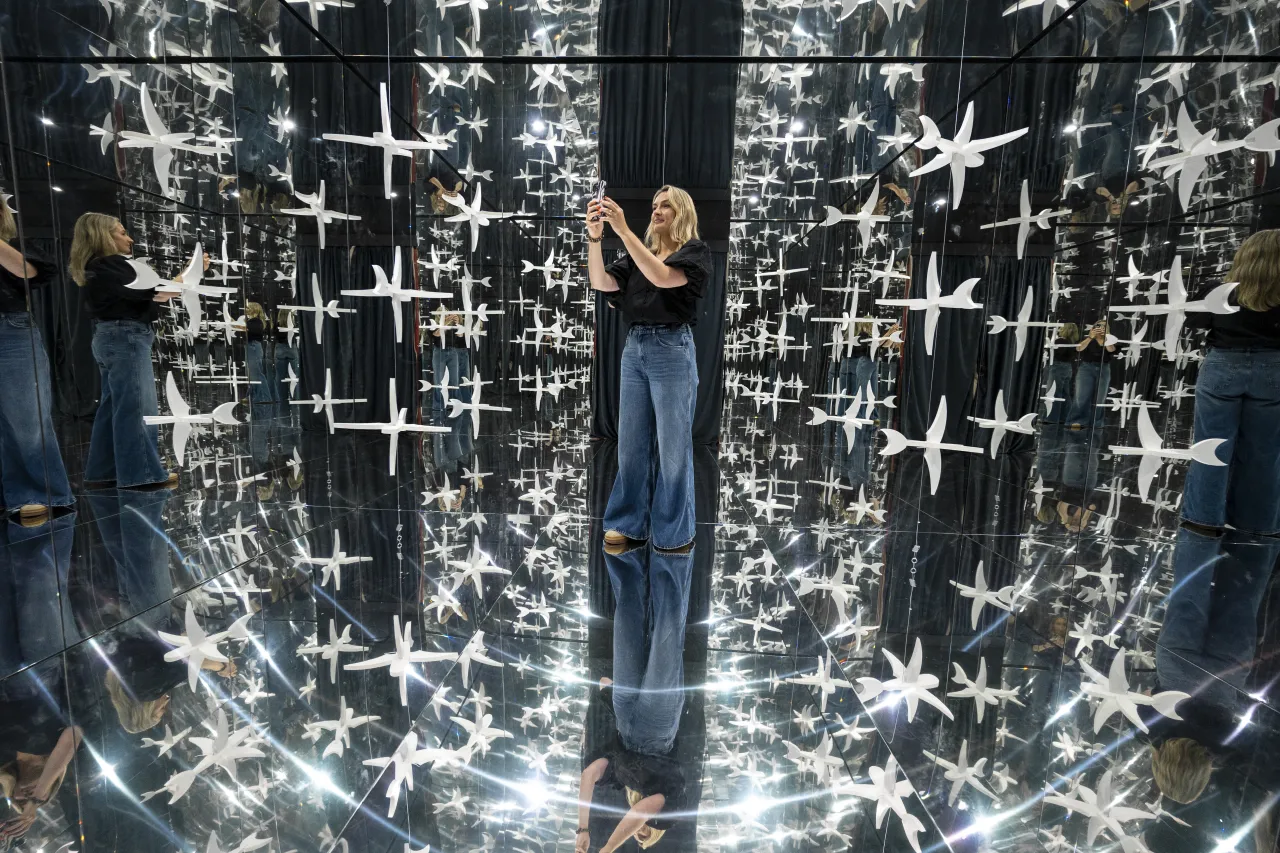
Installation View – M.C.Escher The Exhibition, Somerset House 2026. Photo: Stephen Chung
We all know an Escher when we see one. The staircase that climbs forever and gets frustratingly nowhere. The hand drawing the hand that's drawing it. The shoal of fish that turns, tile by tile, into a flock of birds.
His influence can be seen everywhere. On album covers and in comic books. Across that famous endless stairway in Labyrinth. And into games like Monument Valley. So much so, it's likely you've encountered his impossible worlds without knowing who was behind it. Which is fitting, really: for most of his life, the art world overlooked Escher, even in his home country, the Netherlands. He was 70 before he got a proper retrospective. The crowds came later, and they haven't stopped since.
From today, you can meet the originals, step inside some of them and trace the entire journey from the Dutch artist's early Italian landscapes when he was just getting started, through to the tessellations he worked out by hand after a trip to the Alhambra, to the mind-bending paradoxes that made his name.
M.C. Escher. The Exhibition at Somerset House opens at a moment when machines can conjure an image in seconds. Every one of the artworks on display was cut by a human hand, on a woodblock or a copper plate, by one extraordinarily patient person. The wonder was never just how this is possible… It's that somebody actually made it.
 Day and Night, 1938. M.C. Escher Heritage Collection, The Netherlands All M.C. Escher works © 2026 The M.C. Escher Heritage, Baarn, The Netherlands. All rights reserved](https://media.creativeboom.com/6b94da8f-7fef-47e6-9ff7-ff8dc96cd6e5/conversions/d7845b8d903d613889f5a9995877206602d553e4-medium.webp)
M.C. Escher Day and Night, 1938. M.C. Escher Heritage Collection, The Netherlands All M.C. Escher works © 2026 The M.C. Escher Heritage, Baarn, The Netherlands. All rights reserved
 Relativity, 1953. M.C. Escher Heritage Collection, The Netherlands All M.C. Escher works © 2026 The M.C. Escher Heritage, Baarn, The Netherlands. All rights reserved](https://media.creativeboom.com/edf849d4-9fae-4838-ac46-5dc0774fed98/conversions/86e6086edf600ddbf1a2782b9284fb96bb44d853-medium.webp)
M.C. Escher Relativity, 1953. M.C. Escher Heritage Collection, The Netherlands All M.C. Escher works © 2026 The M.C. Escher Heritage, Baarn, The Netherlands. All rights reserved
 Hand with Reflecting Sphere, 1935. M.C. Escher Heritage Collection, The Netherlands All M.C. Escher works © 2026 The M.C. Escher Heritage, Baarn, The Netherlands. All rights reserved](https://media.creativeboom.com/80ae52dd-c509-4ecc-90fc-a444f5d65a31/conversions/c2ec19187ee5570cbef9ef063fbaeadebb968b90-medium.webp)
M.C. Escher Hand with Reflecting Sphere, 1935. M.C. Escher Heritage Collection, The Netherlands All M.C. Escher works © 2026 The M.C. Escher Heritage, Baarn, The Netherlands. All rights reserved
 Drawing Hands, 1948. M.C. Escher Heritage Collection, The Netherlands All M.C. Escher works © 2026 The M.C. Escher Heritage, Baarn, The Netherlands. All rights reserved](https://media.creativeboom.com/dc0a5e1f-566b-4162-a2bf-64226665253d/conversions/0a8c6ab29d9559ca0b79fcf686c91bd035aa0494-medium.webp)
M.C. Escher Drawing Hands, 1948. M.C. Escher Heritage Collection, The Netherlands All M.C. Escher works © 2026 The M.C. Escher Heritage, Baarn, The Netherlands. All rights reserved
The show is organised as a journey through eight chapters of Escher's life, curated by Federico Giudiceandrea, the world's leading authority on the artist's work. It opens with the landscapes and Italian coastlines he sketched in his twenties, back when he was still figuring out his approach.
Then you'll see the turning point when a 1936 trip to the Alhambra in Granada changed everything. It was where he saw the geometric tilework of Moorish craftsmen and he went home inspired, painting over a hundred artworks that he became famous for.
There's an interesting London angle, too. You'd think Escher had a head for maths, given his complicated compositions. He didn't, he insisted. Even still, he attracted the attention of some brilliant mathematical minds. The geometer H.S.M. Coxeter posted him a diagram in 1958 that gave him the maths for infinity, and that led directly to the Circle Limit prints. And then father and son Lionel and Roger Penrose reached out with their little paper on "impossible objects" – this led Escher to create Ascending and Descending and Waterfall, two of the staircase-and-water puzzles that we love so much.
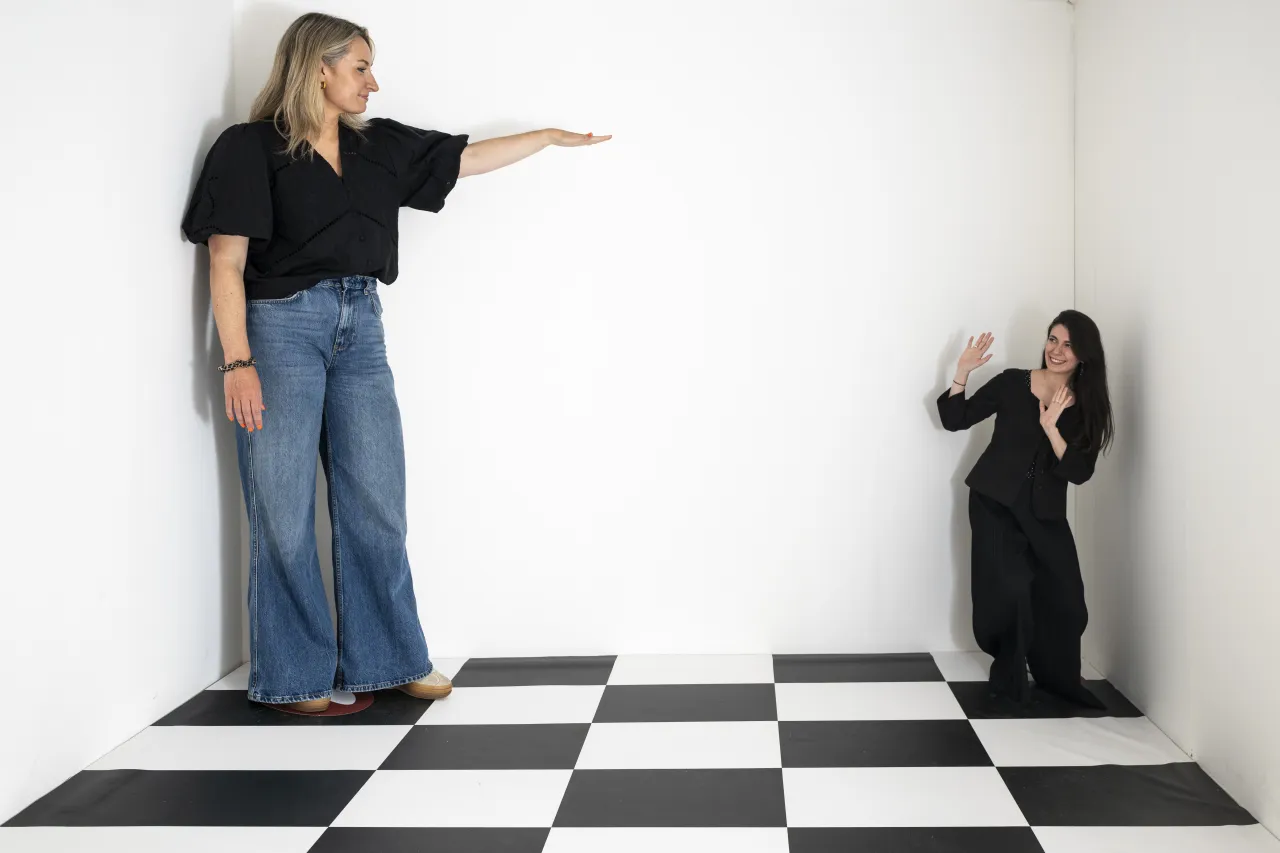
Installation View – M.C.Escher The Exhibition, Somerset House 2026. Photo: Stephen Chung
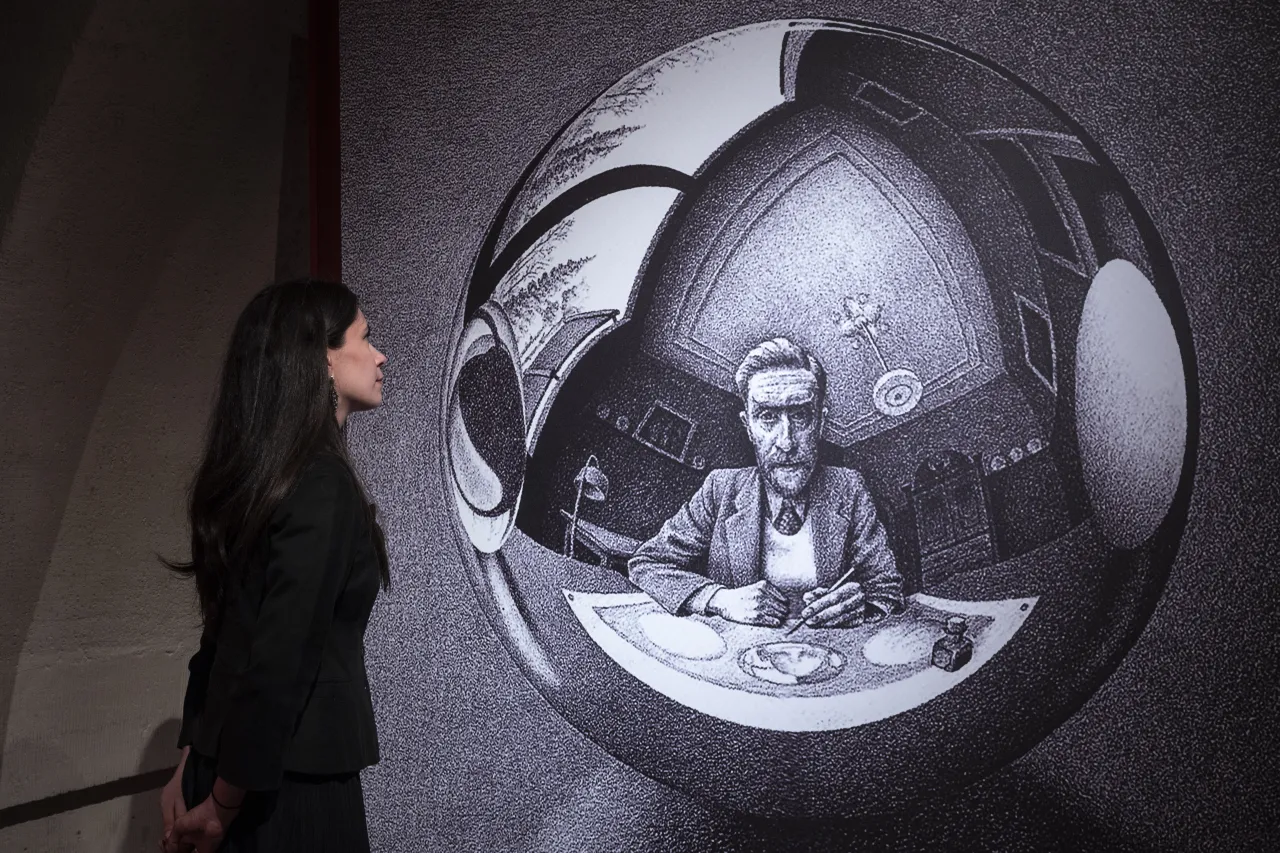
Installation View – M.C.Escher The Exhibition, Somerset House 2026. Photo: Stephen Chung
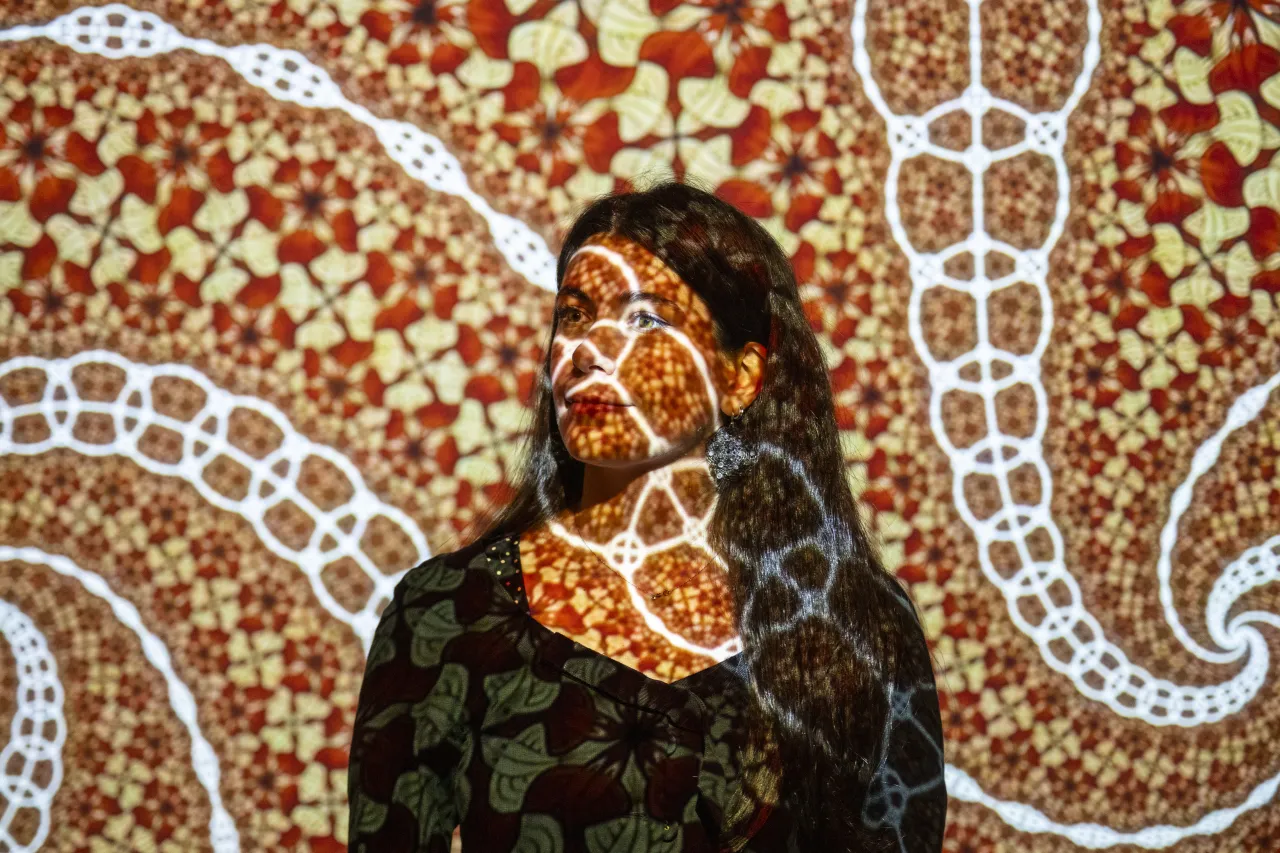
Installation View – M.C.Escher The Exhibition, Somerset House 2026. Photo: Stephen Chung
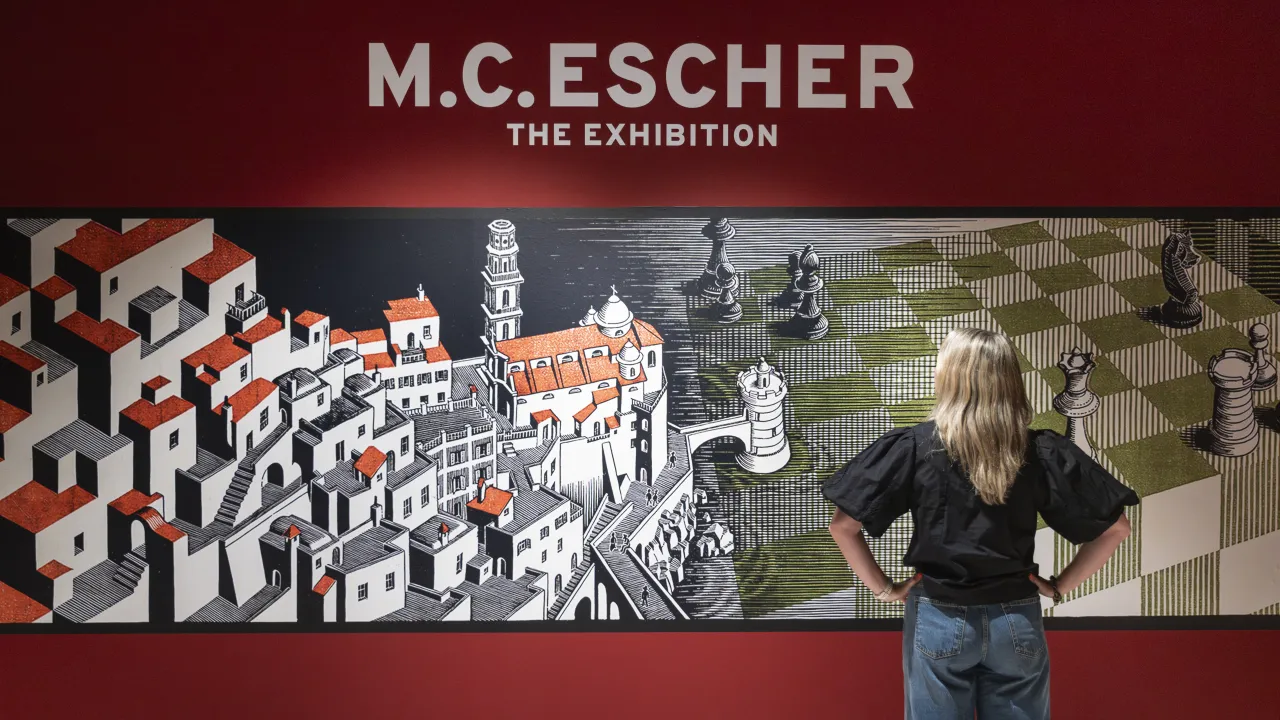
Installation View – M.C.Escher The Exhibition, Somerset House 2026. Photo: Stephen Chung
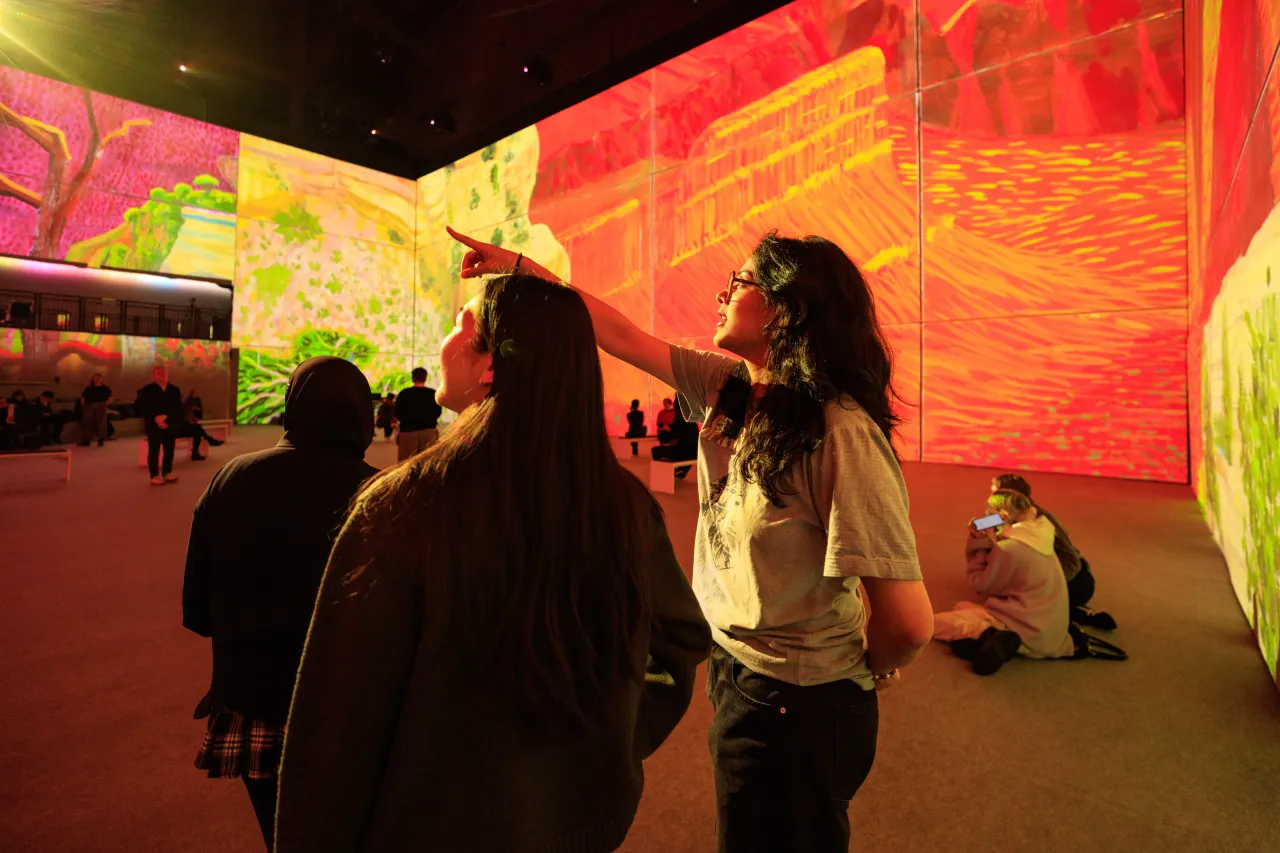
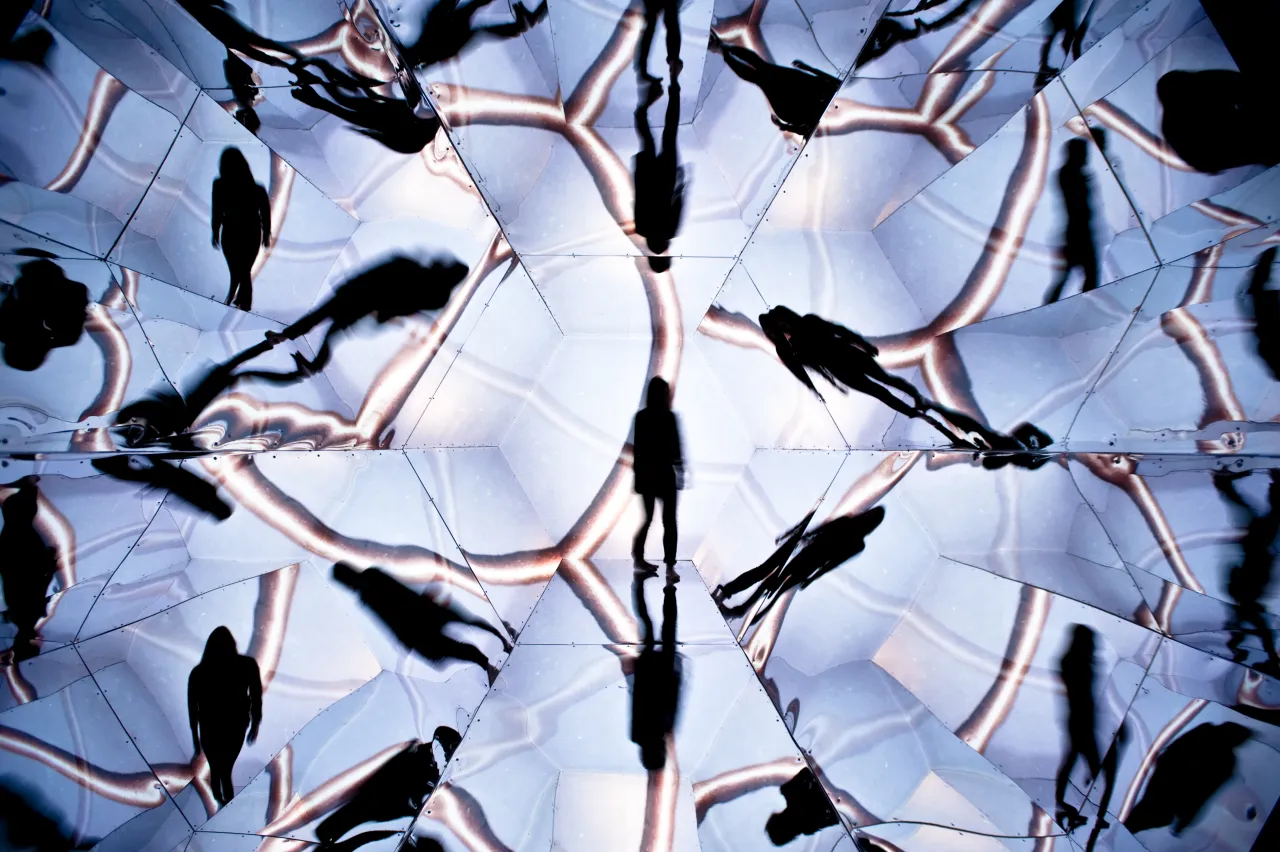
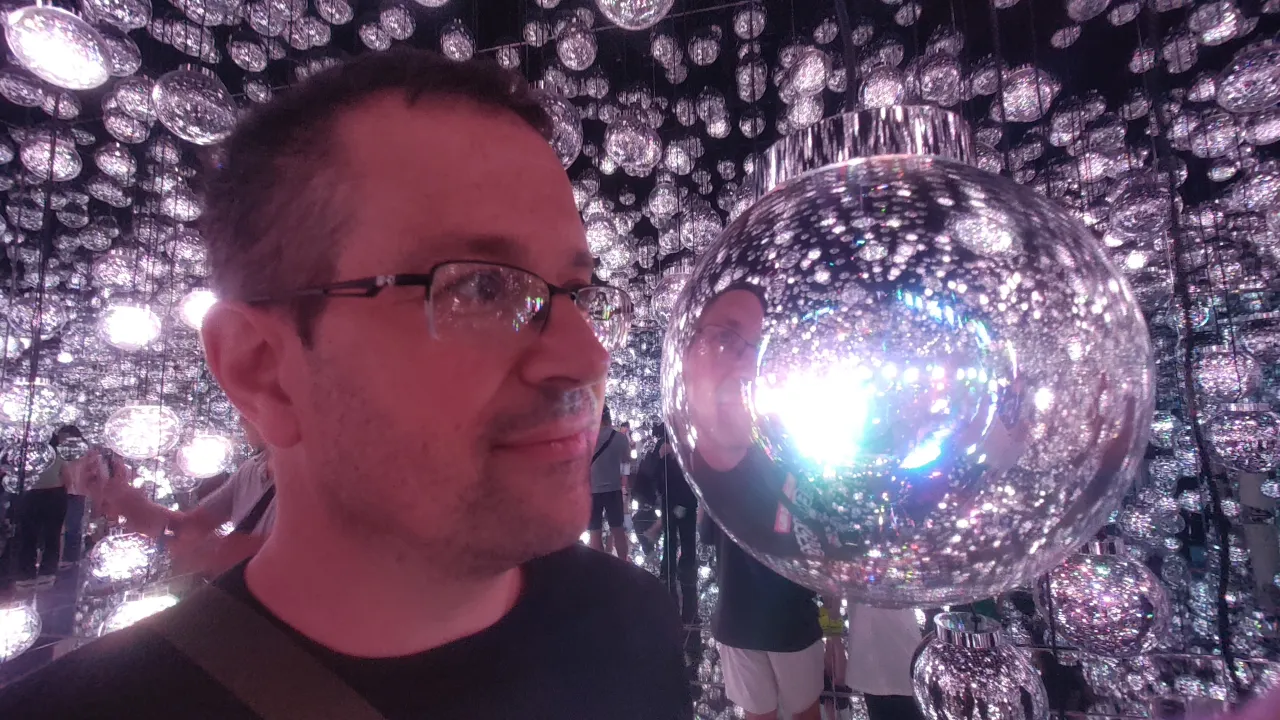
It's not all walls with framed originals, either. Alongside his most famous prints – Hand with Reflecting Sphere, Relativity, Day and Night, Drawing Hands, and many more – the show has illusions you can actually climb inside. For instance, you can stand on a checkerboard floor between two giant reflecting spheres or lose yourself in a mirrored room where his birds multiply into infinity. Or you can take a turn in a forced-perspective chamber that shrinks one person to doll-size while another becomes a giant.
So yes, you'll be able to see Escher's paintings up close. But this is also a brilliant chance to step inside them, too. The hope is you'll leave with a better appreciation of his genius.

Editor's Picks




Trending




Latest Jobs
Communications Officer at Manchester City Council
Full-time·Manchester·£30,023 – £33,119
Manager, Visual Design Art - TFT at Riot Games
Full-time·Los Angeles·$166,600 – $232,800
Design Director at Interbrand
Full-time·New York·$120,000 – $150,000
SEO and GEO Content Strategist at Loom Digital
Full-time·Bristol·£35,000 – £37,000
Junior Motion Designer at Project Slingshot
Full-time·Remote·£30,000 – £35,000
Project Manager at British Heart Foundation
Full-time·London·£46,000 – £48,500