Refik Anadol's new installation answers the question: Does AI have a role in art?
Many artists hate AI, but Refik Anadol believes it has a lot to offer. Yesterday, I visited his new show at the Guggenheim Bilbao in Spain to see what that looks like in practice.
To many creatives, AI is a dirty word right now. Most notably, illustrators worldwide are struggling to get commissioned because businesses can instead generate so-called AI art for free. At the opposite end of the scale, the most successful and famous artists are incensed that AI is learning to copy their work and, in their view, steal their copyright.
But that's only one side of the coin. Some believe AI also has a lot to offer creatives as a new method of creating art and perceiving the world.
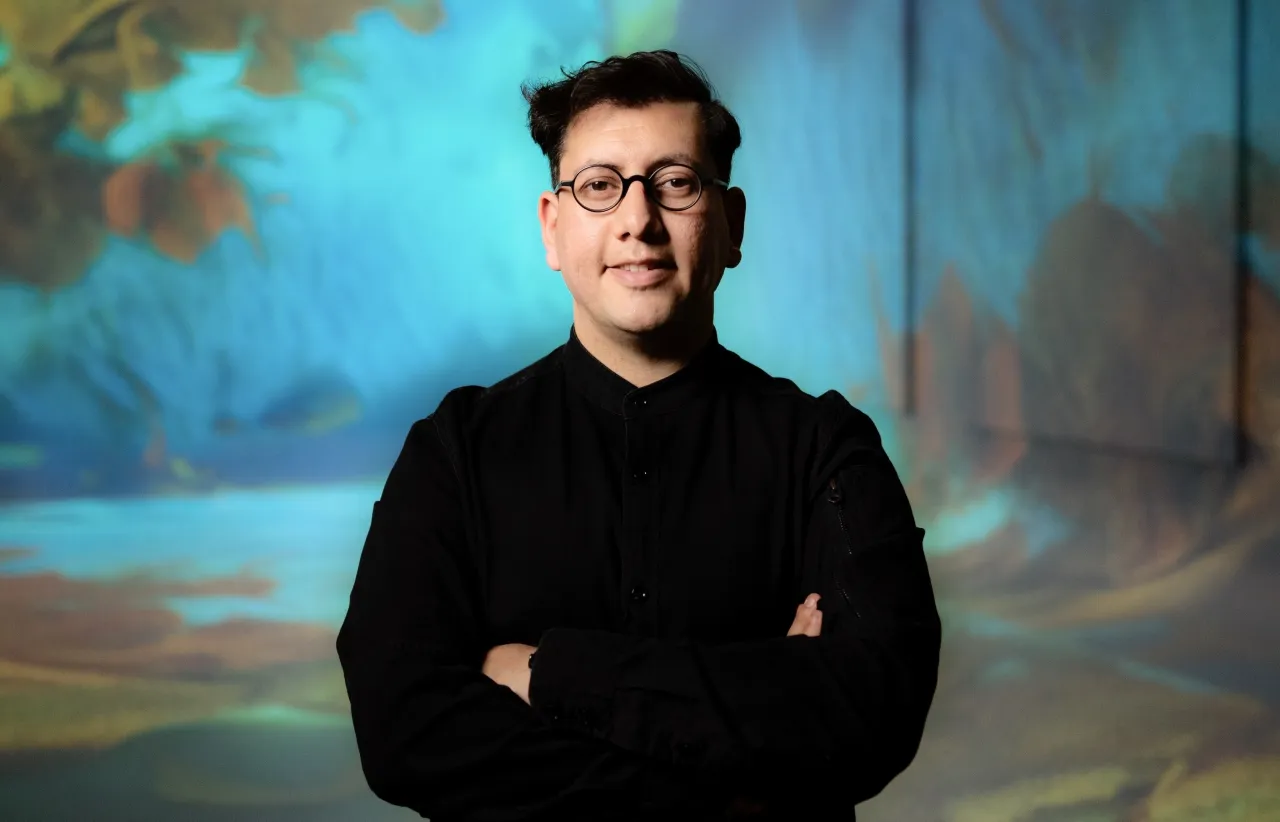
Refik Anadol is one of them. We first covered the Turkish multimedia artist's Inner Portrait project last summer and now, in his latest show, he's showing us just what AI is capable of.
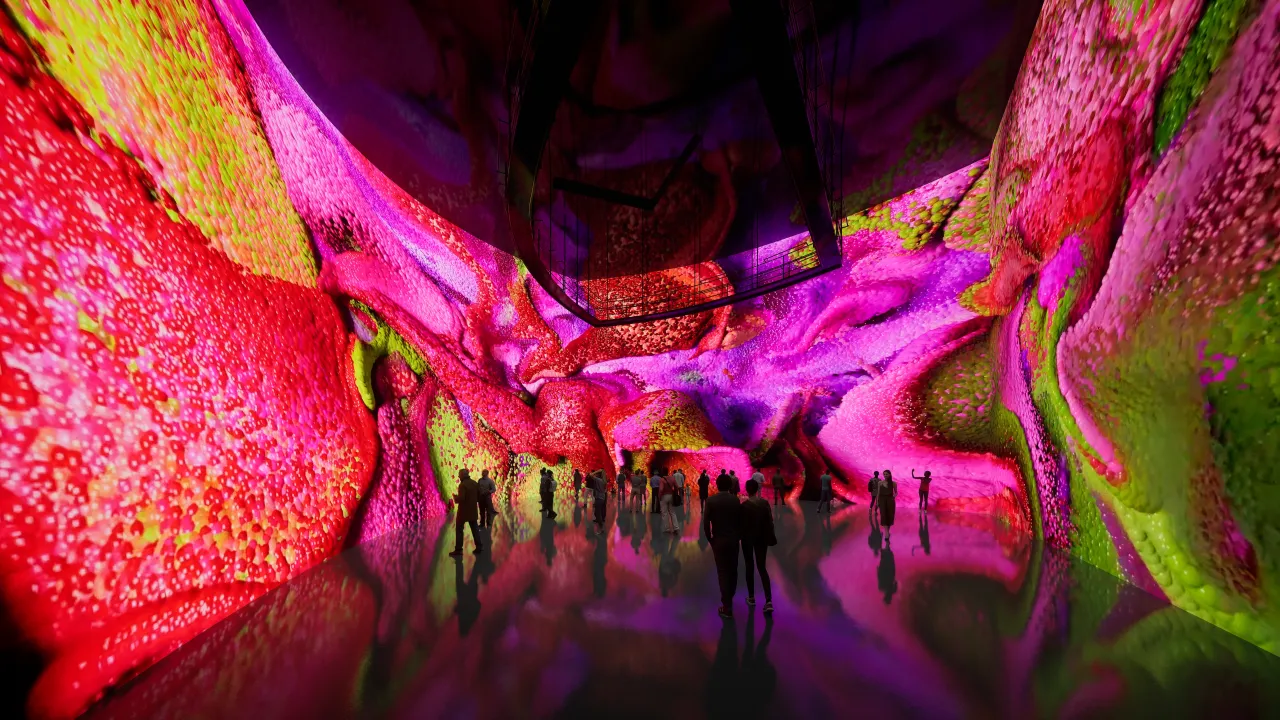
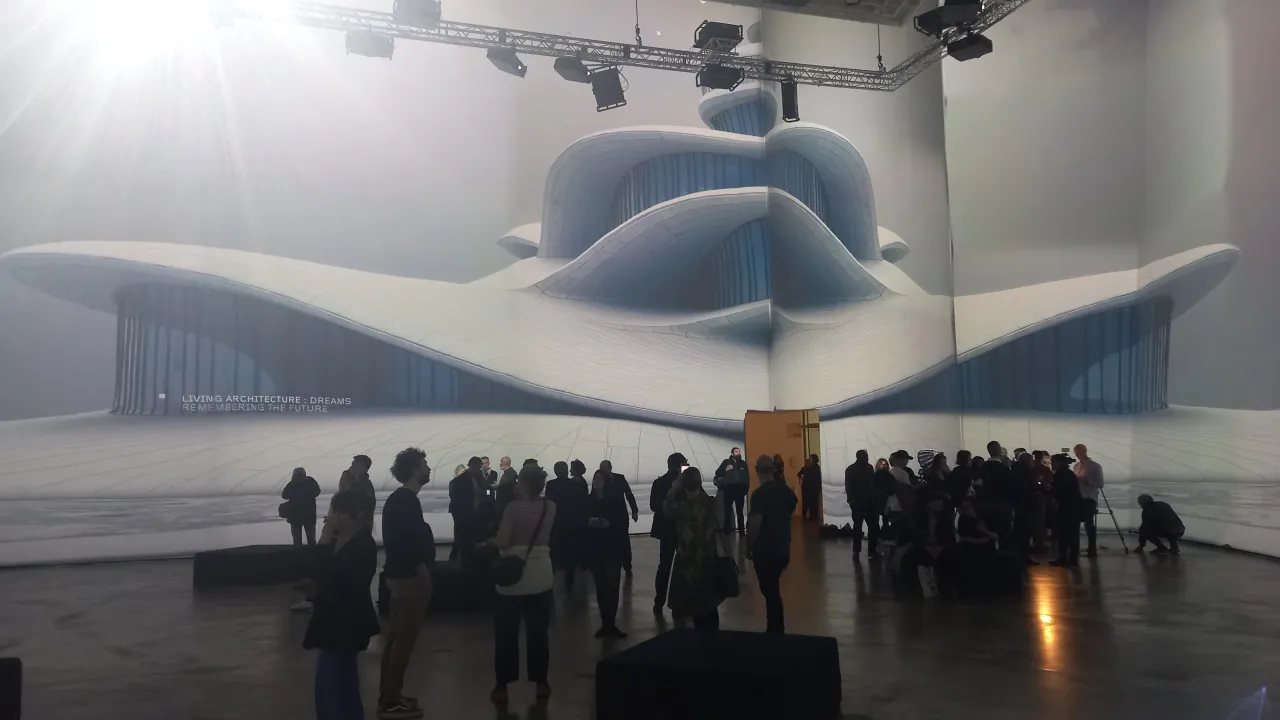
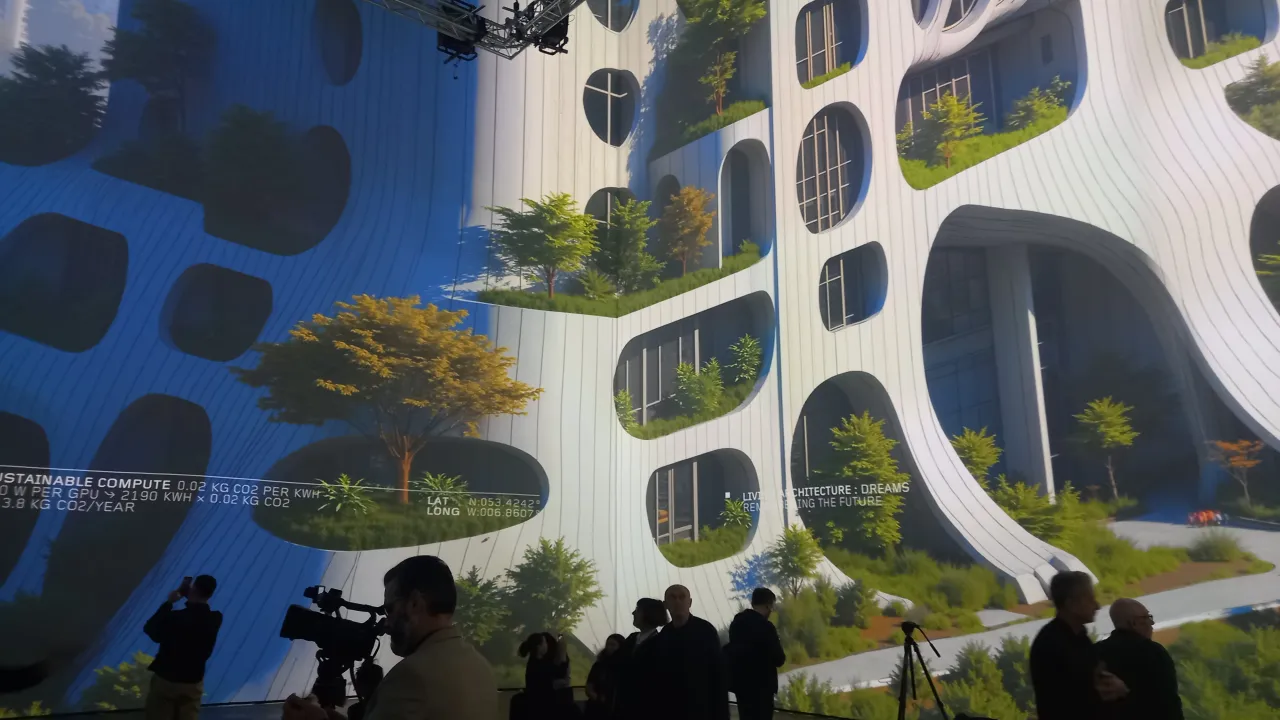
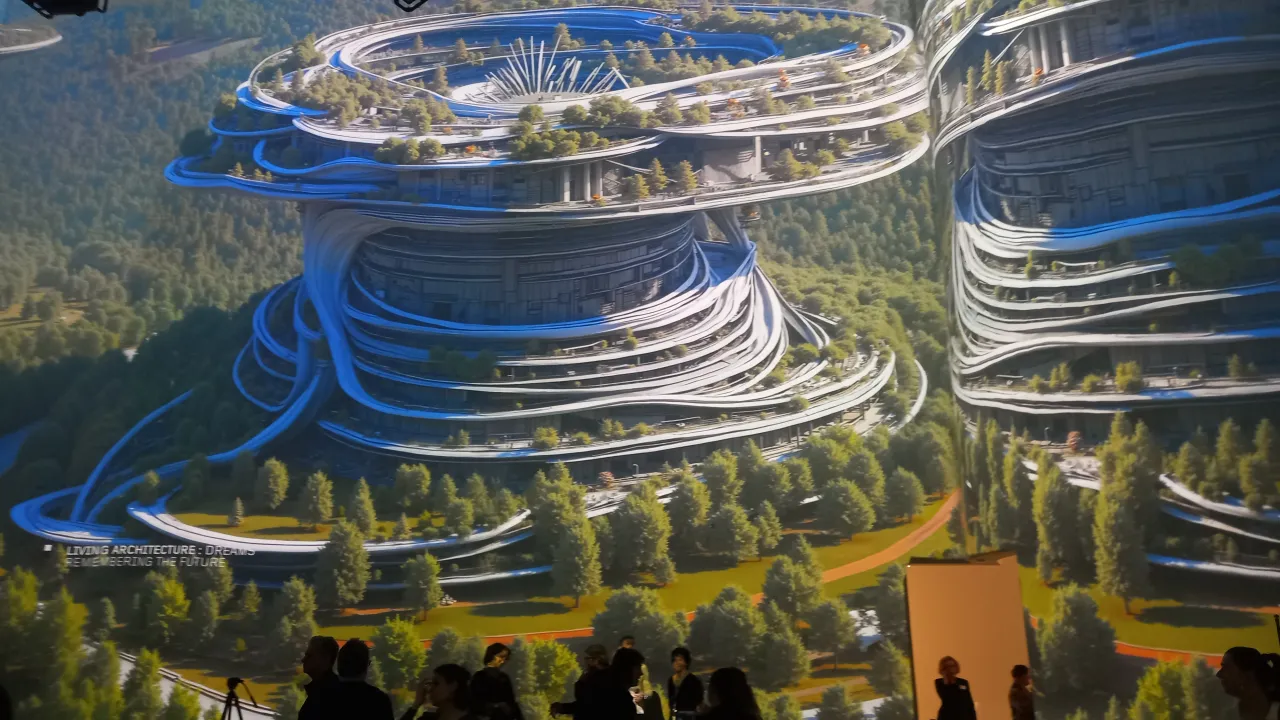
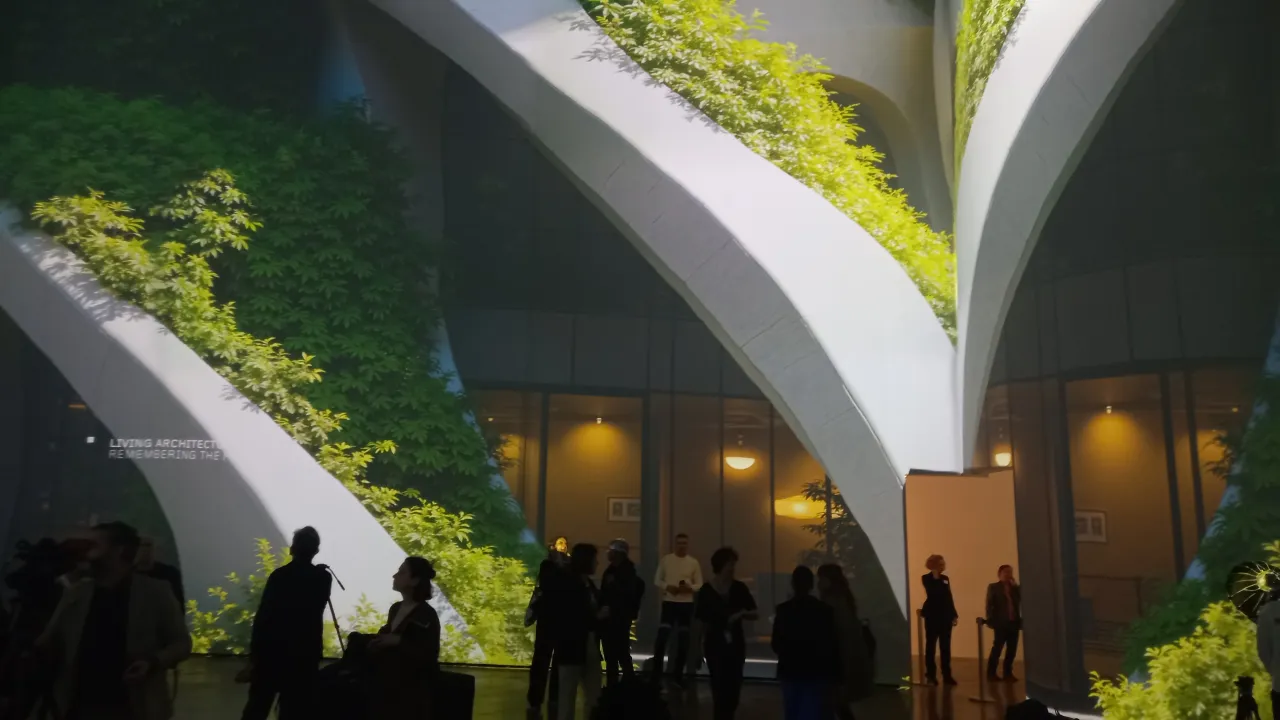
Opening today, Living Architecture: Gehry aims to offer a profound exploration of how artificial intelligence can transform our perception of architectural space. Specifically, it uses AI and digital projection to reimagine the work of iconic architect Frank Gehry in an immersive way.
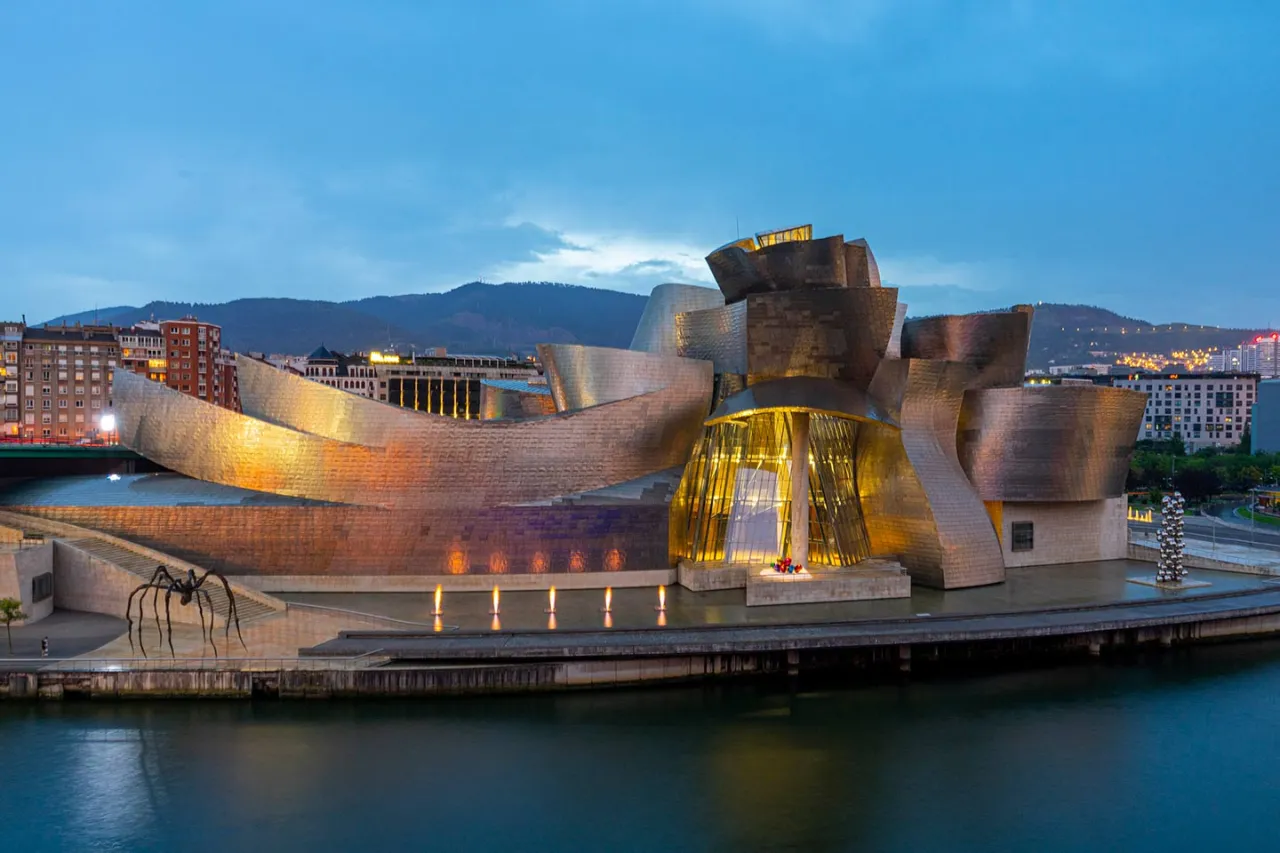
Suitably enough, the show is being hosted at the Guggenheim Museum in Bilbao, Spain, the mesmerising building that was itself designed by Gehry in the 1990s.
Yesterday, I was invited to see the show in person, in a special preview for the press. Here's what I learned.
Evolving narrative
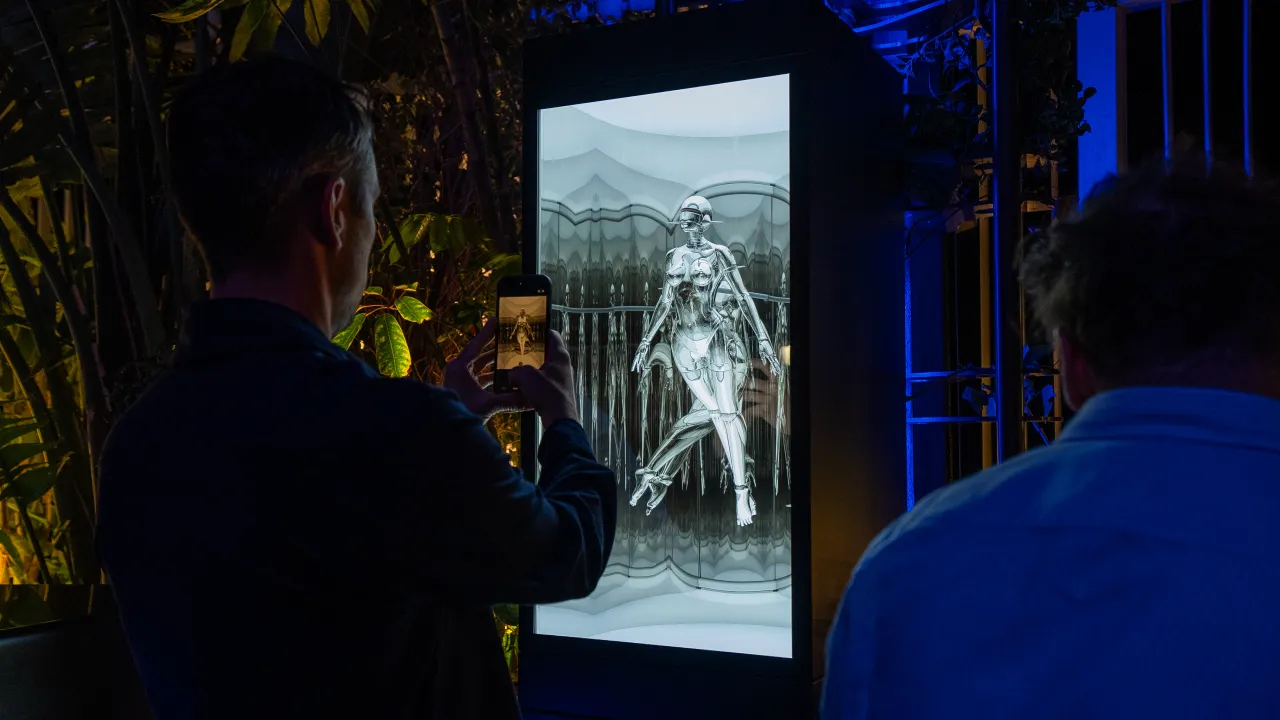
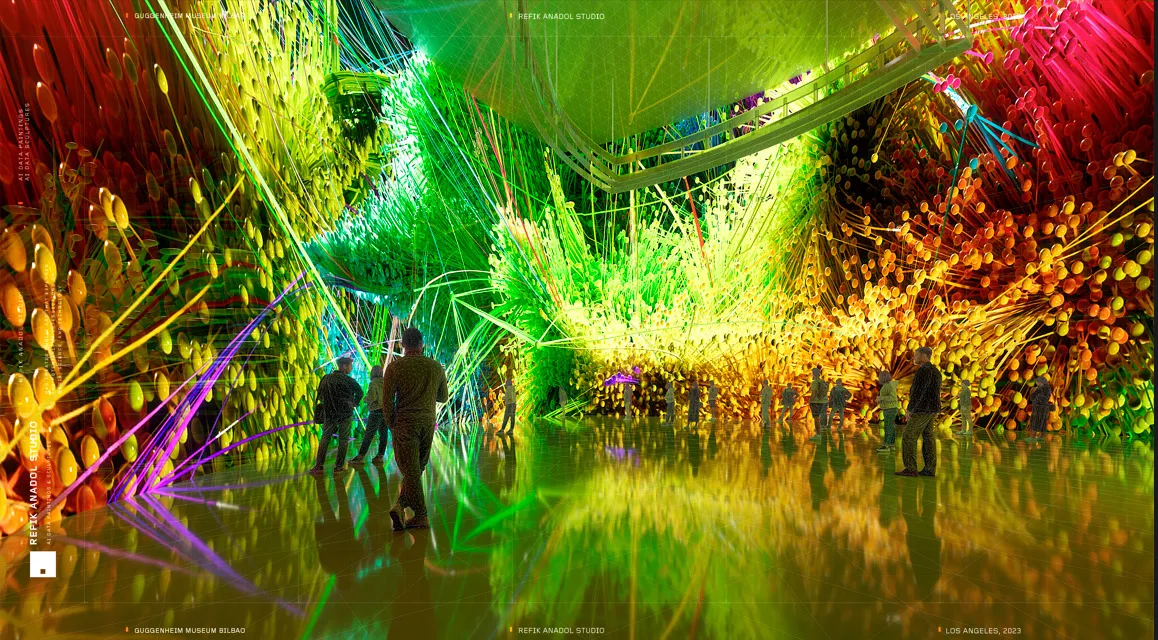
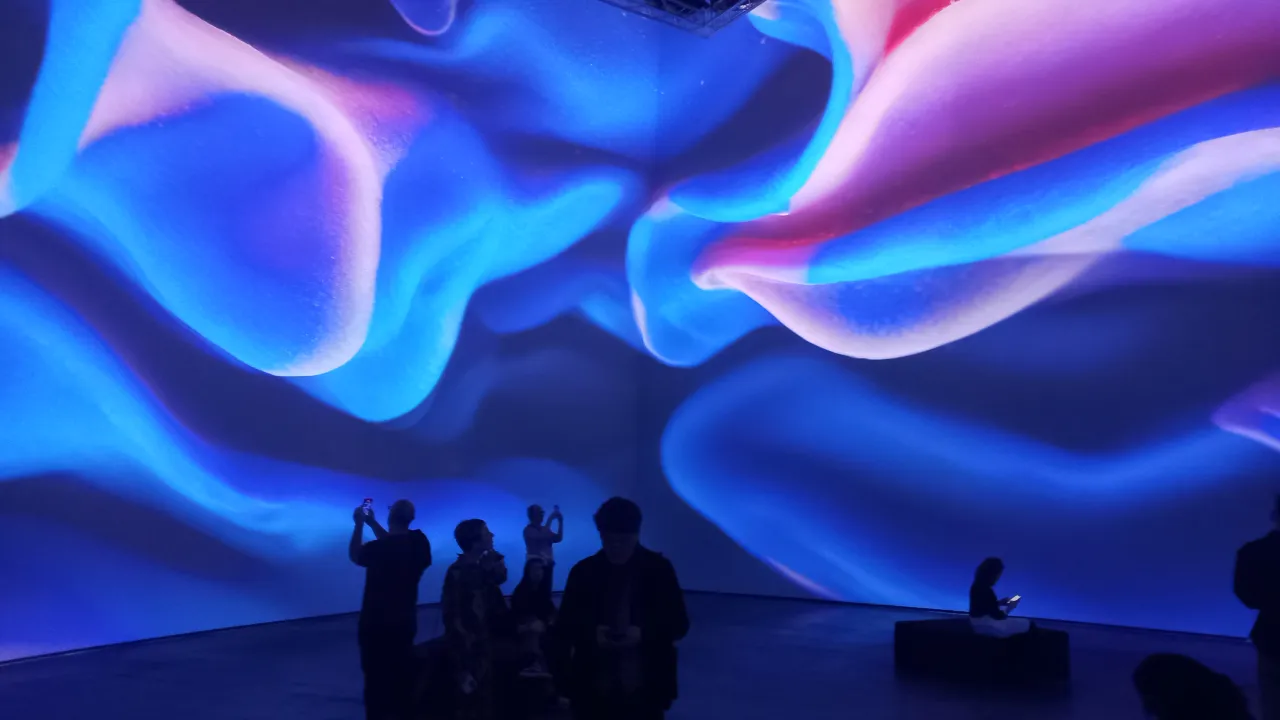
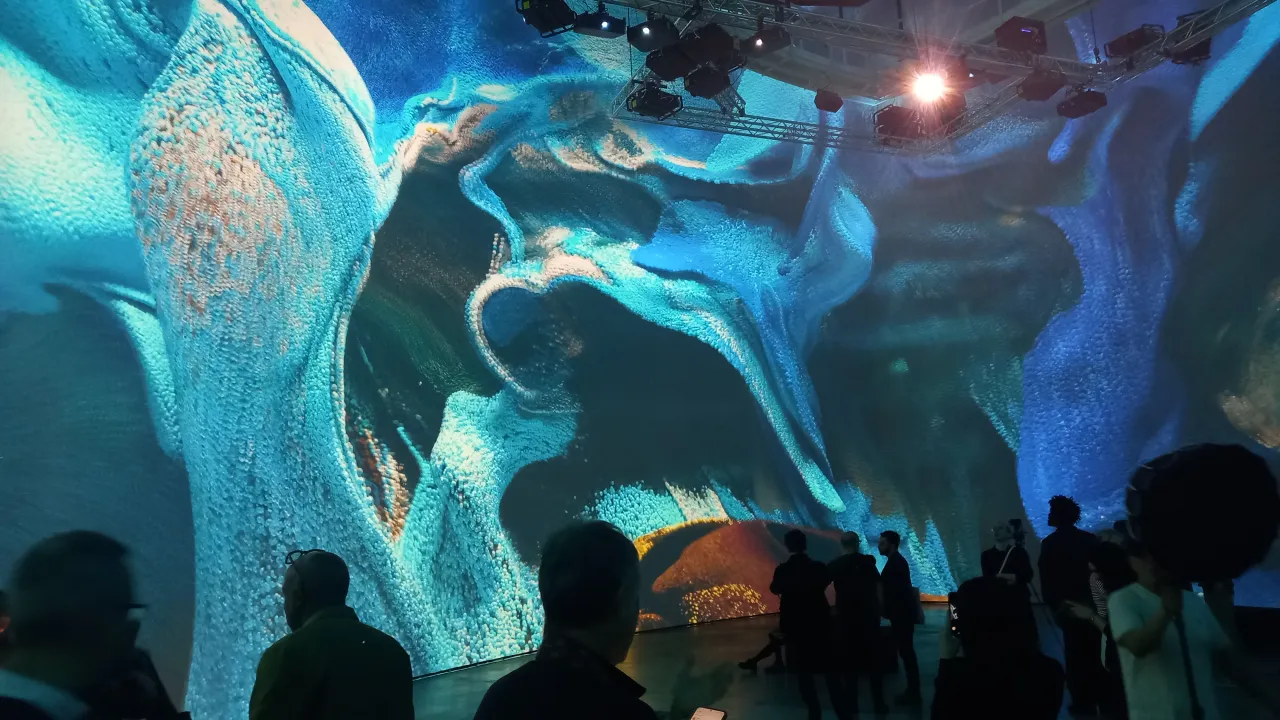
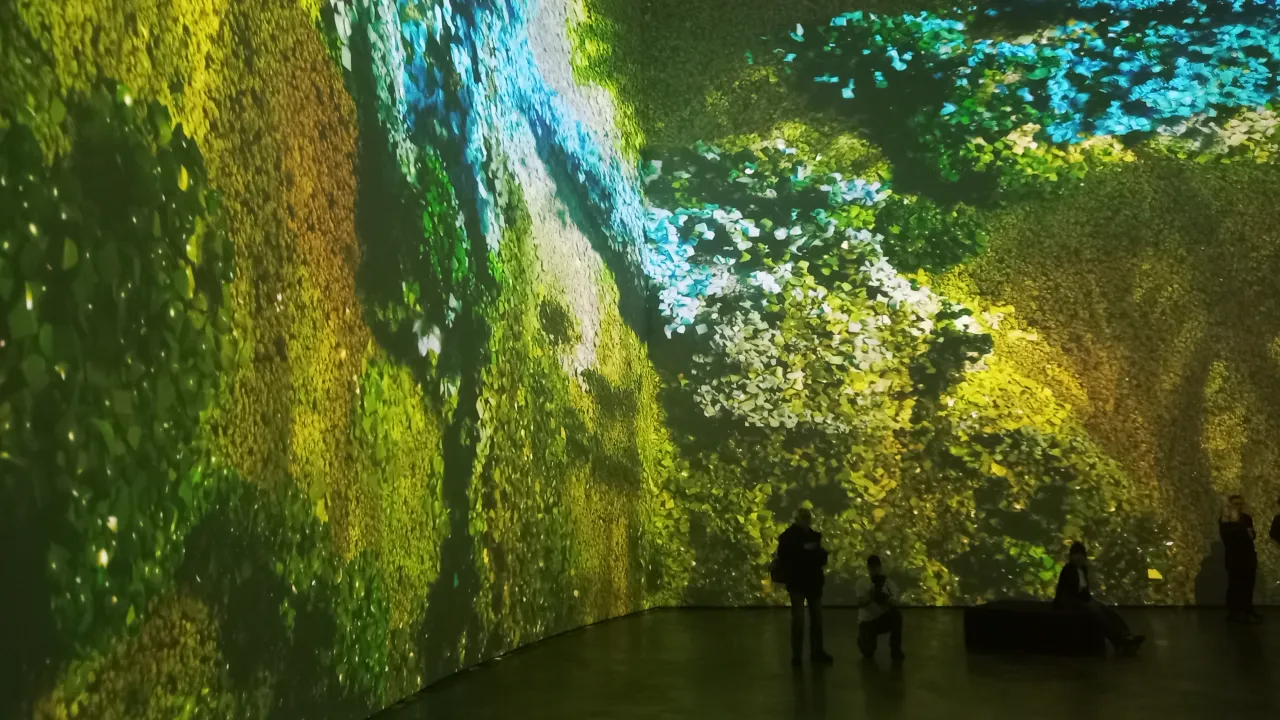
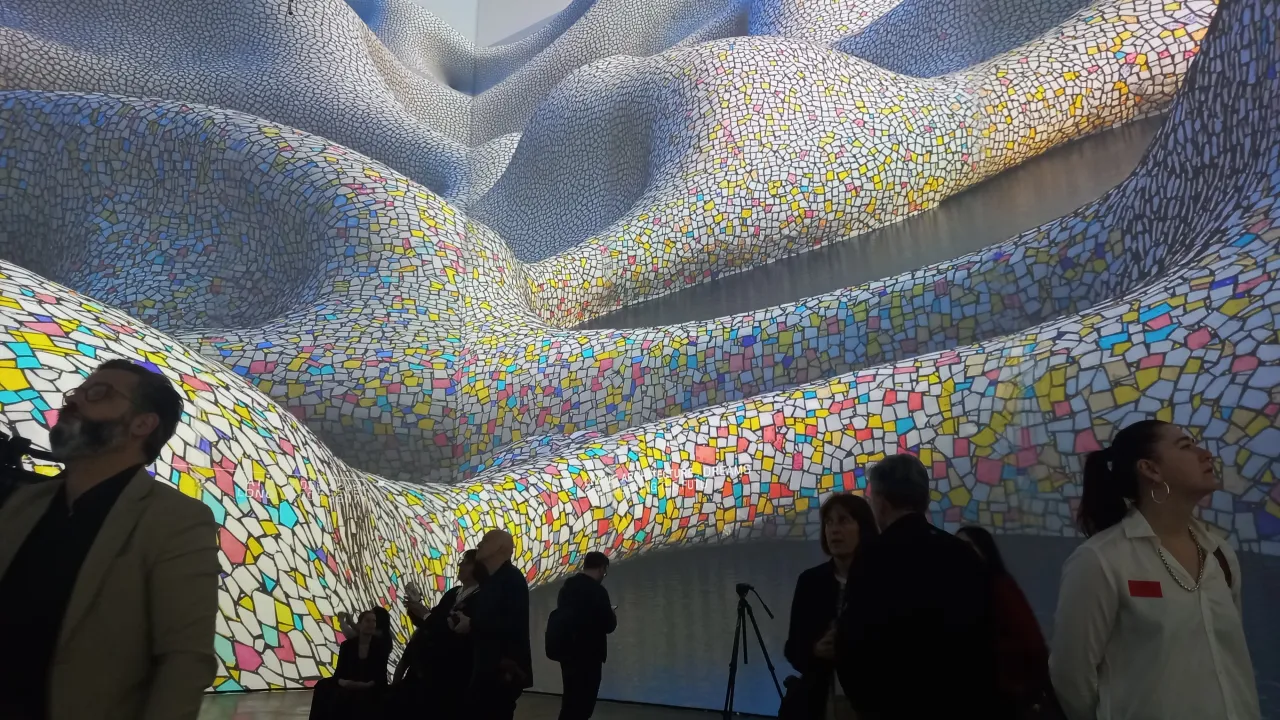
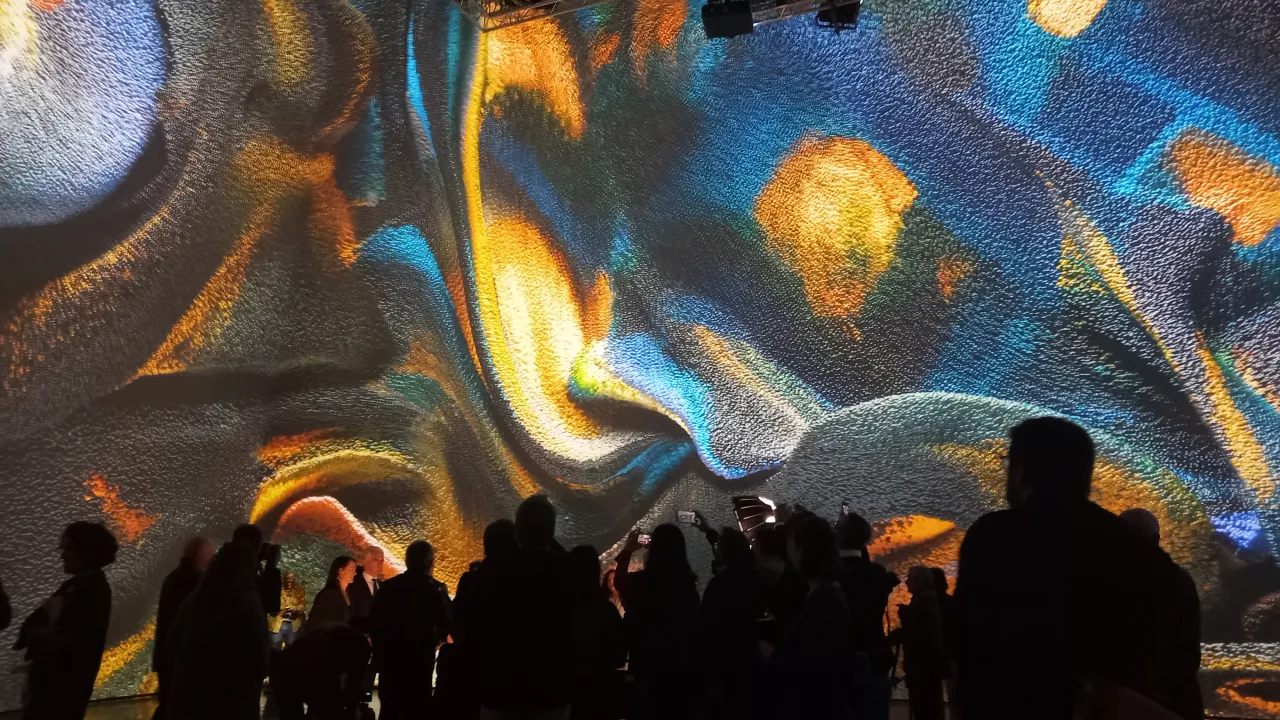
Walking into the cavernous exhibition space, I was greeted by an enormous digital display that surrounded me in 360 degrees. Typically, I've found pixellated artwork gets a little blurry when projected onto such a supersized canvas. But in this case, the astonishing 20K resolution really paid off, and everything looked crystal-clear.
What I saw on arrival looked very much like random, abstract patterns and reminded me a lot of the Teamlab Borderless show I saw in Tokyo last year. After a while, though, things started to evolve.
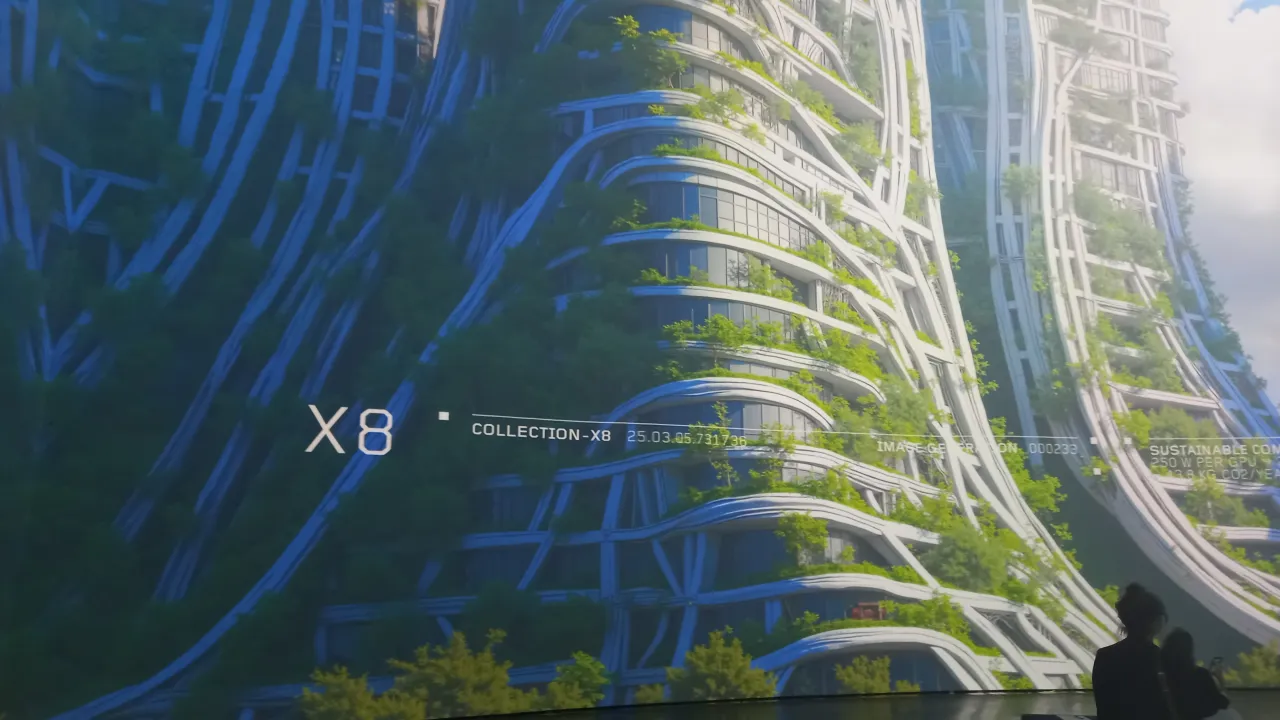
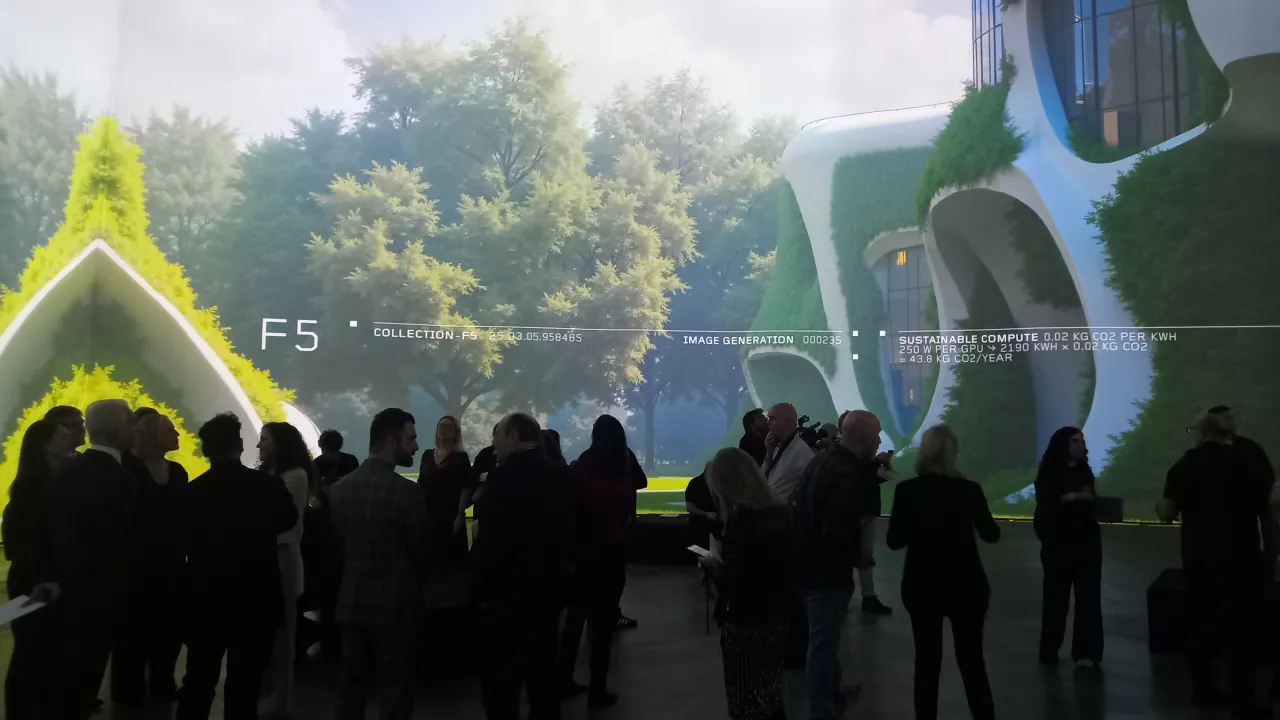
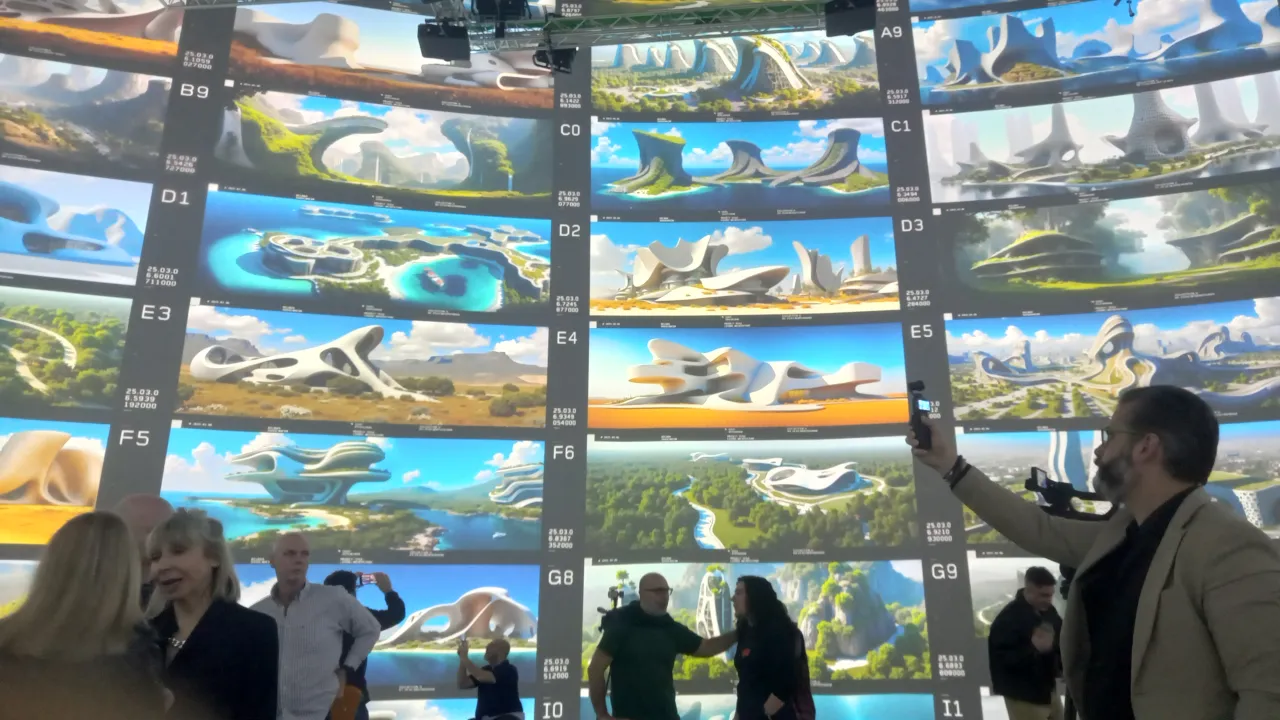
The projections shifted to futuristic new takes on architectural diagrams and models, which then morphed into sci-fi worlds that were both strange and fantastical yet grounded in the fundamental design principles of Frank Gehry. The whole thing lasted about 20 minutes and then began to repeat. (Or did it? More on that in a moment.)
A new era for art?
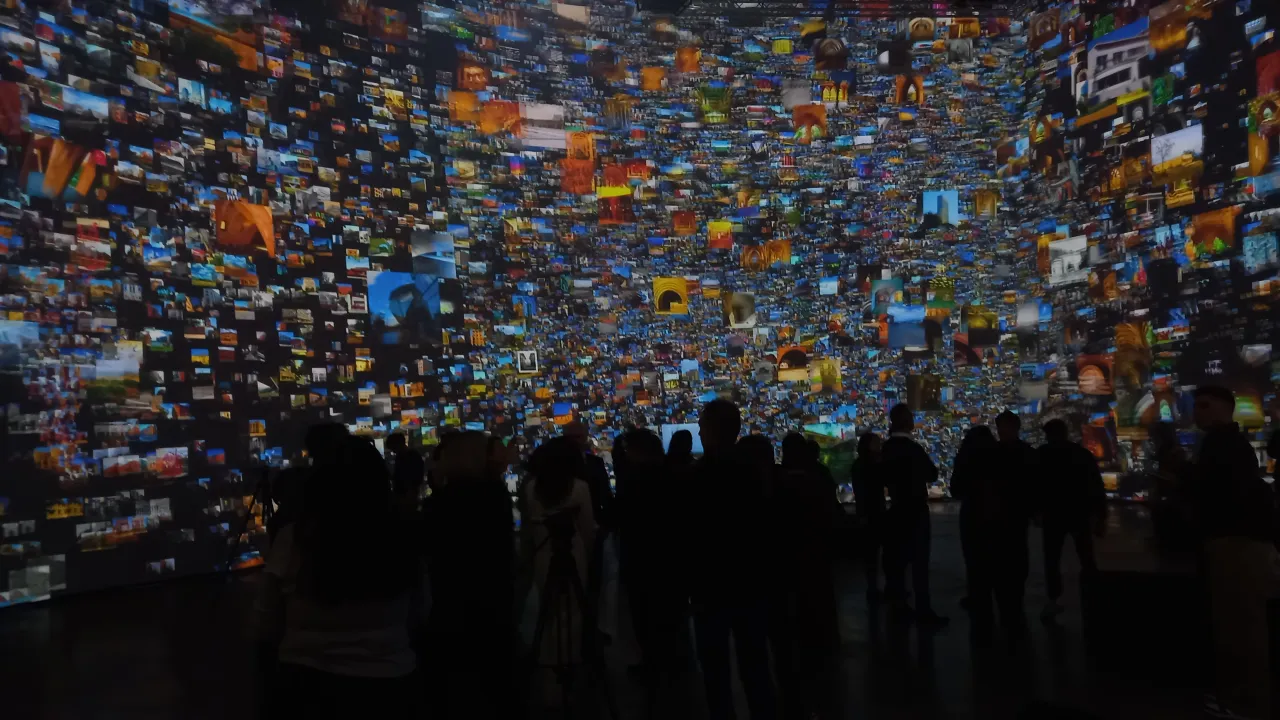
According to Refik, the entire sequence unfolds across six interconnected chapters, each revealing a different aspect of the human-machine creative dialogue.
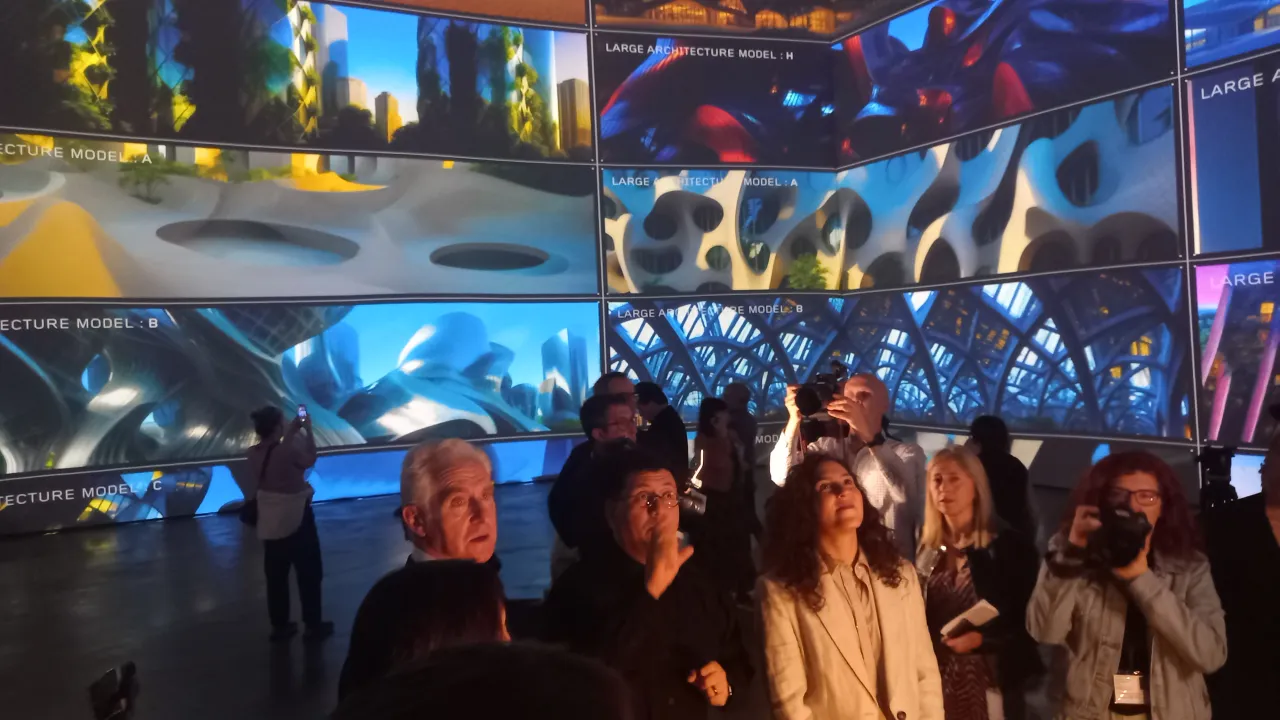
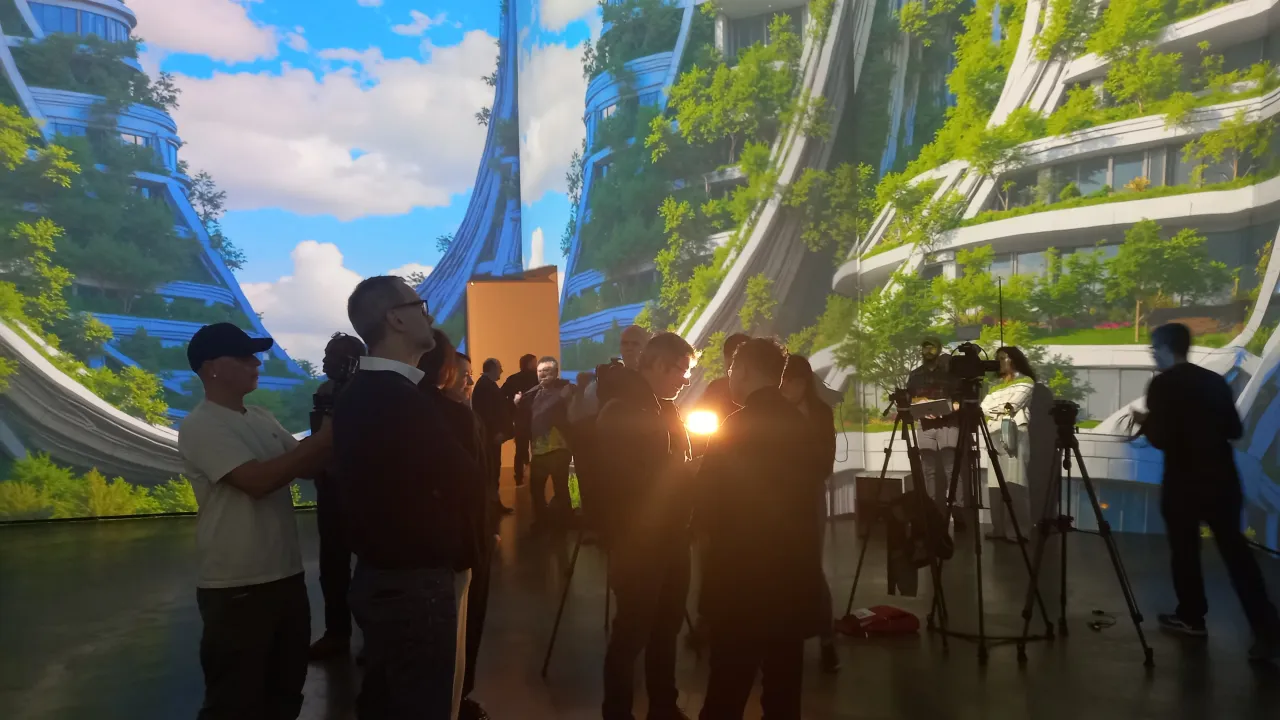
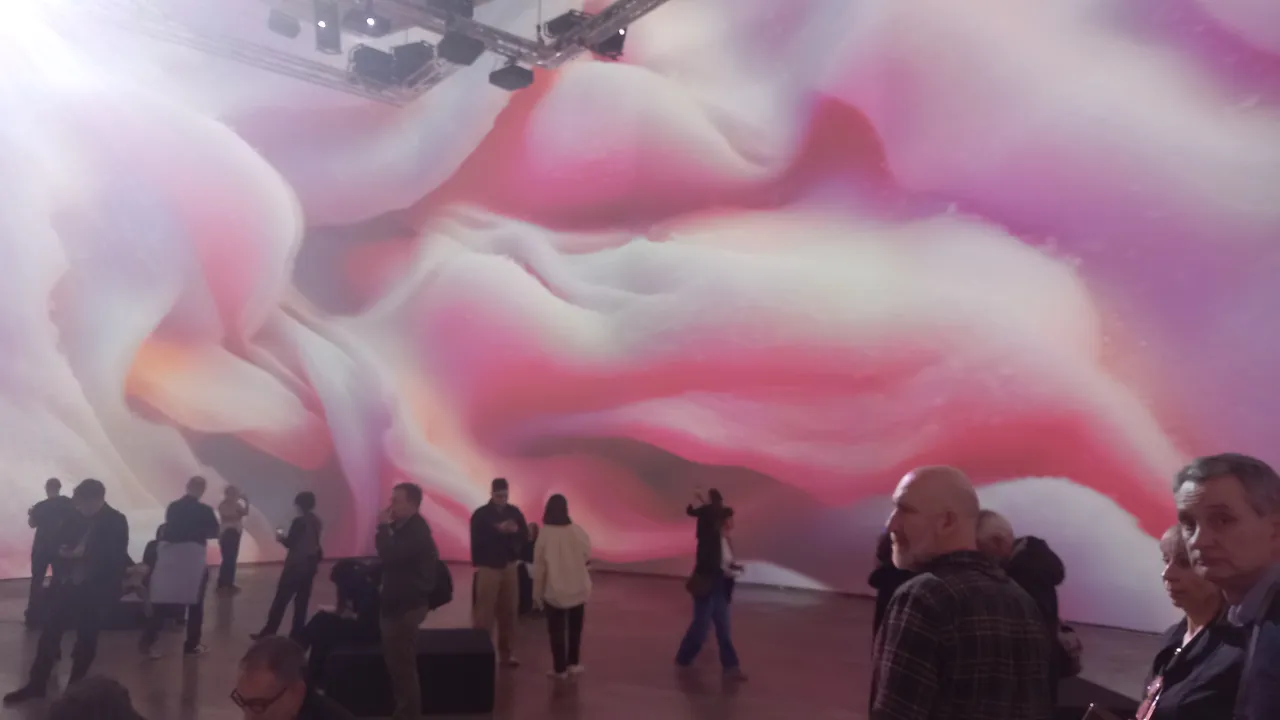
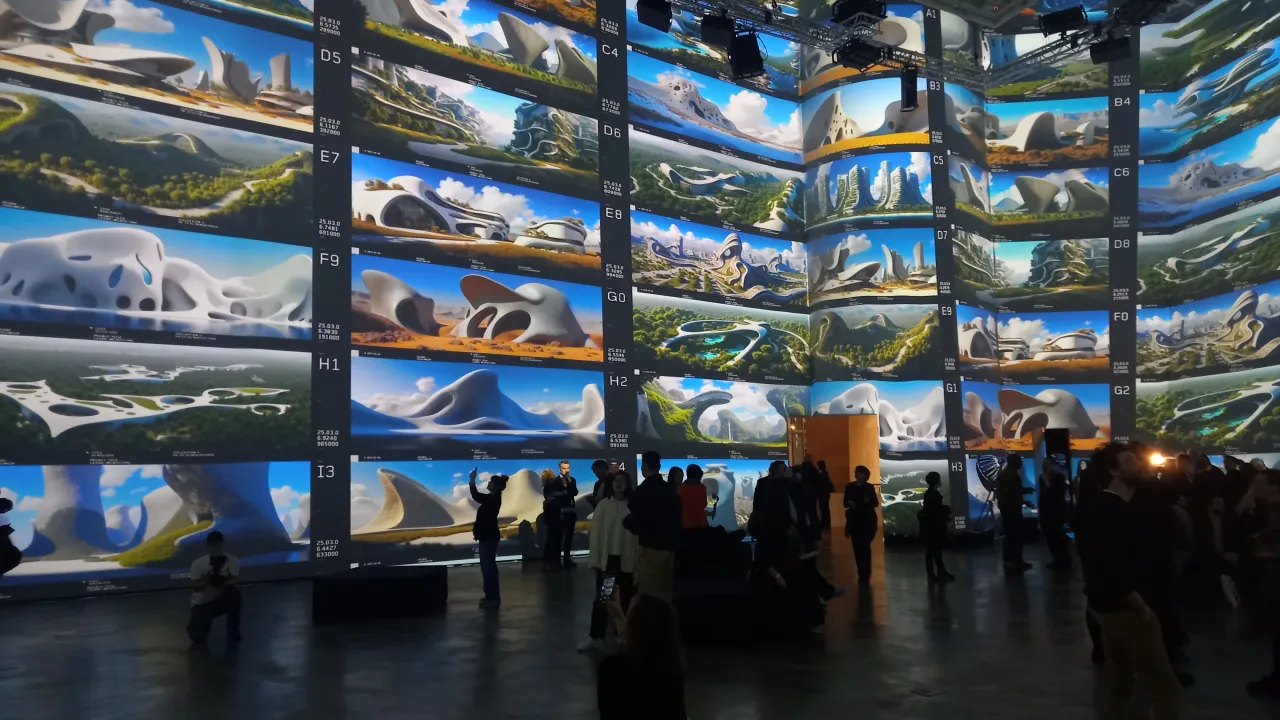
From the initial 'Data Universe', where archival materials are compiled, to the final 'Dreams' chapter, where architectural forms are continuously generated and transformed, viewers are invited to witness a brand new mode of artistic generation.
Because not only are these visuals partly algorithmic (Refik described them as "50 per cent human-made, 50 per cent machine-made"), but they're also artificially generated on the fly… which means you'll never see the exact same scene twice.
This, Refik believes, isn't just a neat trick; it's an entirely different way of creating art. "I feel like we are in this new era," he told us. "We're not just talking about a painting, a sculpture, a performance, or a video artwork; we're imagining a new form of reality. I'm calling it generative reality."
It's worth noting that Refik hasn't just thrown a load of prompts into an existing AI tool like MidJourney. He and his team have actually developed a whole new technology of their own, which they're calling The Large Architecture Model. Trained on 35 million architectural images, the artist believes it's capable of generating not just derivatives but genuinely novel interpretations of spatial design.
Refik also explained some complicated stuff about how the AI uses cameras in the gallery to see what's being projected and then adapts the sequence accordingly… or something. It all got a bit complicated, and to be honest, none of the gathered international journalists could quite grasp it, whichever language it was explained in. It all sounded pretty cool, though.
Sounds and smells
Visuals are only one aspect of this unique art experience. Another is Kerim Karaoglu's accompanying soundscape, which was created using recordings from within the museum itself, in and around the building, and across the town of Bilbao.
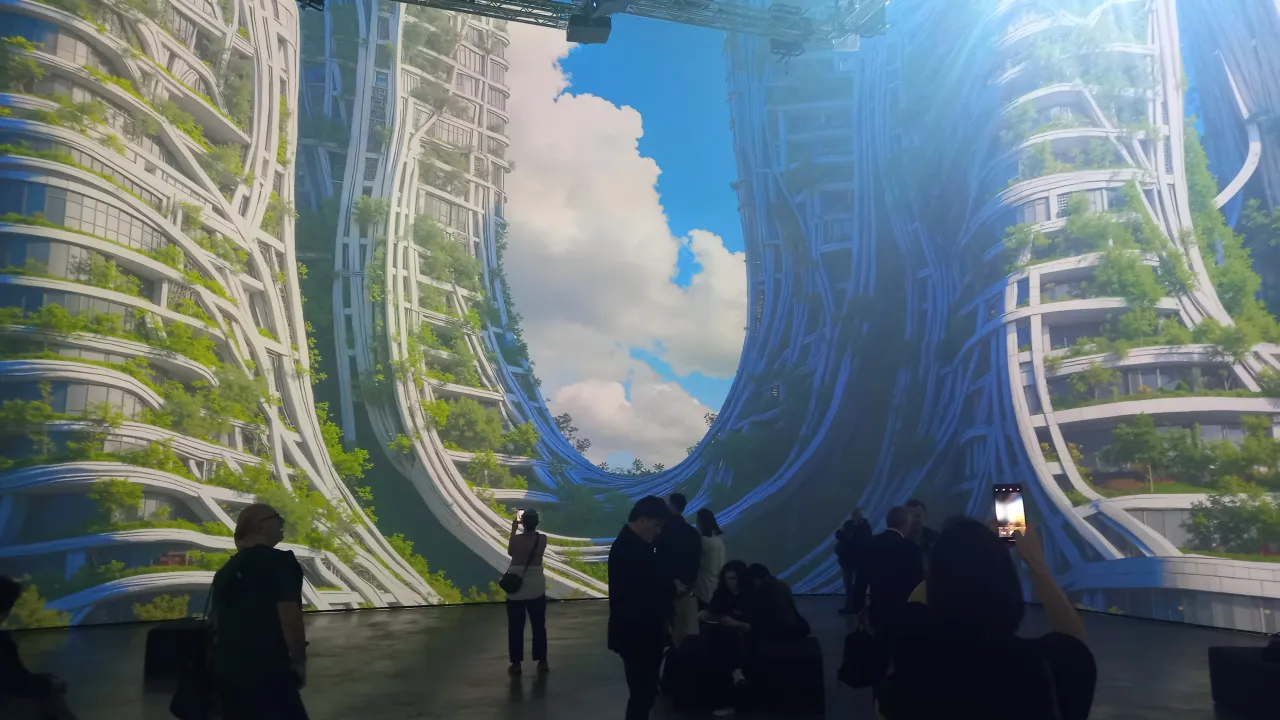
Smell, too, is being used to add an extra layer of sensory complexity, although, unfortunately, that hadn't been finalised at this point, so I didn't get a chance to sniff it myself.
I could share more about the technical complexity of this installation, but you get the idea. The main point is that Refik isn't using AI as a shortcut or a gimmick but putting in the work to develop it as a sophisticated medium for exploring new artistic and architectural ideas.
In this light, it's a good example of how AI can be more than just a quick-fix replacement for human creativity. With a bit of inspiration, a lot of time, and hard work, it can become a collaborative partner that can expand our conceptual horizons.
Asking the right questions
In the simplest terms, Living Architecture: Gehry is visually enticing and lots of fun to explore. But it also transcends mere spectacle and prompts us to ask critical questions about the nature of creativity, memory and technological evolution.
By using Gehry's iconic architectural language as source material, Refik offers a way for people who don't necessarily understand the latest tech to create a dialogue between the past and present of art and architecture.
Consequently, visitors to the show may find themselves confronting fundamental—and timely—questions. What constitutes originality? How do we define the boundaries of creative authorship? Can machines truly 'dream', and if so, what might those dreams look like?
Of course, you may not want to have these conversations and would prefer AI to just go away and leave you alone. The art establishment, however, as represented by the Guggenheim, is moving in the opposite direction.
This exhibition is not just a one-off but the inaugural entry in the museum's new 'In Situ' series, which signals a broader commitment to pushing the boundaries of contemporary artistic practice. By championing work that sits at the intersection of technology, science, and visual art, the museum is creating a launch platform for new and innovative forms of creative expression.
Key takeaways
So what, exactly, did I learn from this experience? I'd say that for creatives, Living Architecture: Gehry offers four key takeaways:
- Embrace technological collaboration as a mode of creative expansion
- Consider data not just as a source of information but as a malleable, creative material
- Explore how interdisciplinary approaches can generate unprecedented forms of expression
- Remain open to new modes of perception and creativity
In short, Living Architecture: Gehry is more than an exhibition; it's an invitation to step beyond traditional creative boundaries, explore the potential of human-machine collaboration, and reimagine what's possible when technology meets imagination. Whether you wish to RSVP is entirely up to you.
Editor's Picks




Trending




Latest Jobs
Senior Creative Artworker at Forward Associates
Full-time·London·£30,000 – £40,000
Senior Designer at David&Goliath
Full-time·Los Angeles·$100,000 – $140,000
Senior Director, Strategy at Interbrand
Full-time·New York·$210,000 – $260,000
Communications Strategy Director at David&Goliath
Full-time·Los Angeles·$120,000 – $180,000
Designer (Digital, Brand & Localisation) at Journey
Contract·London·£45,000 – £62,500
Web Projects Executive at Manchester Metropolitan University
Full-time·Manchester·£31,236 – £34,610