Sculptures made out of folded paper inspired by the 3D characters created in video games
British artist John Clark combines pattern making, plotting, and injection moulding to create his unique paper sculptures, each finished with a variety of paints, pigments, and waxes.
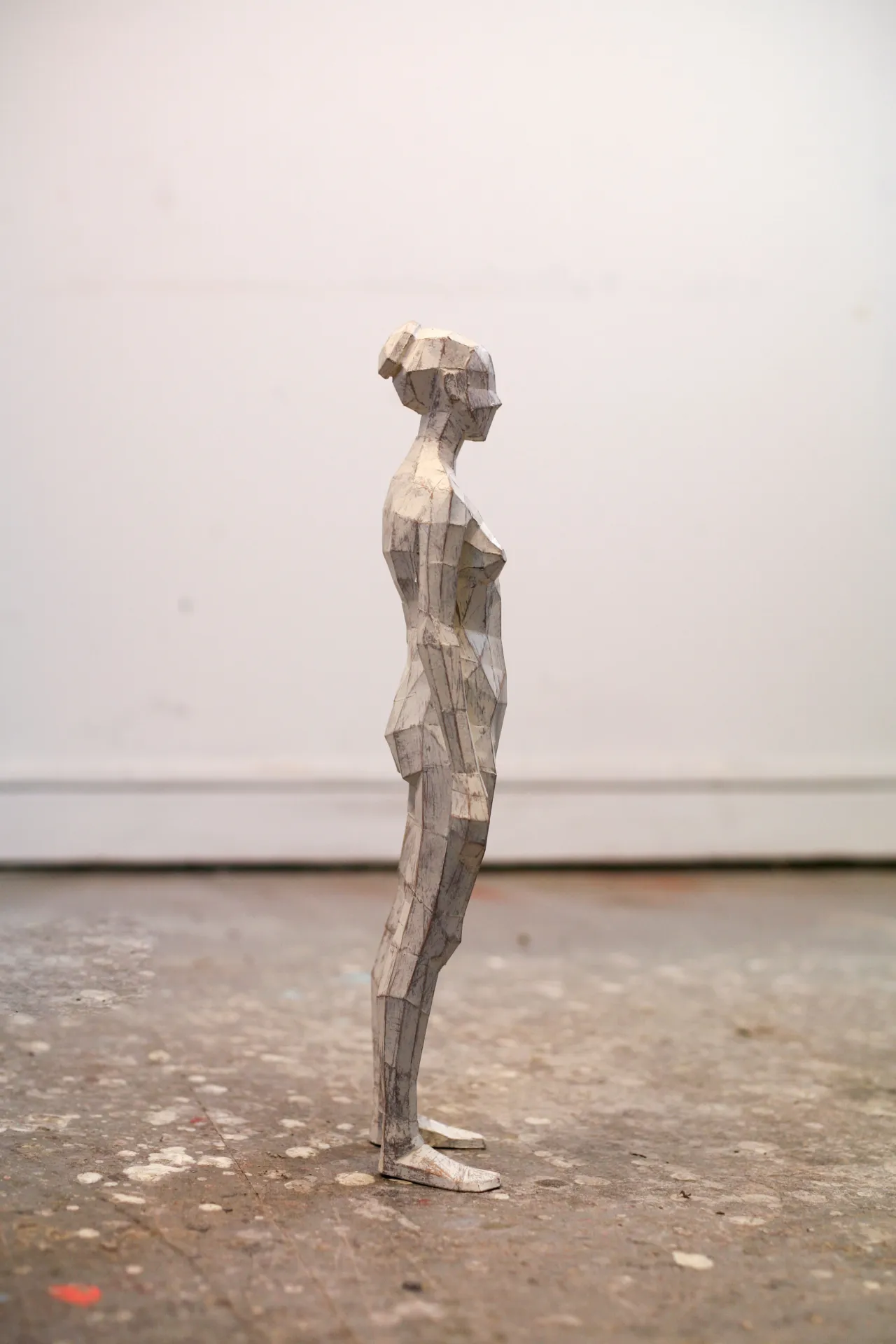
The forms began in late 2016 when John created a cardboard model of a man he had painted many times. You could say the inspiration came from his 15 years in the games industry, working as an art director for Sony where he worked on big budget titles like Killzone and Little Big Planet.
Before that, he'd studied at Oxford University's Ruskin School of Fine Art and Drawing, later moving to Scotland to co-found the Glasgow Sculpture Studios and to lecture at Grey's School of Art in Aberdeen.
"I wondered what would change by taking him off the canvas and standing him in the real world," says John. "It never occurred to me to model him with clay or carve him, and I certainly wasn’t going to start casting. I think of myself as a painter and thought of this experiment as one that addressed the thoughts I had about painting."
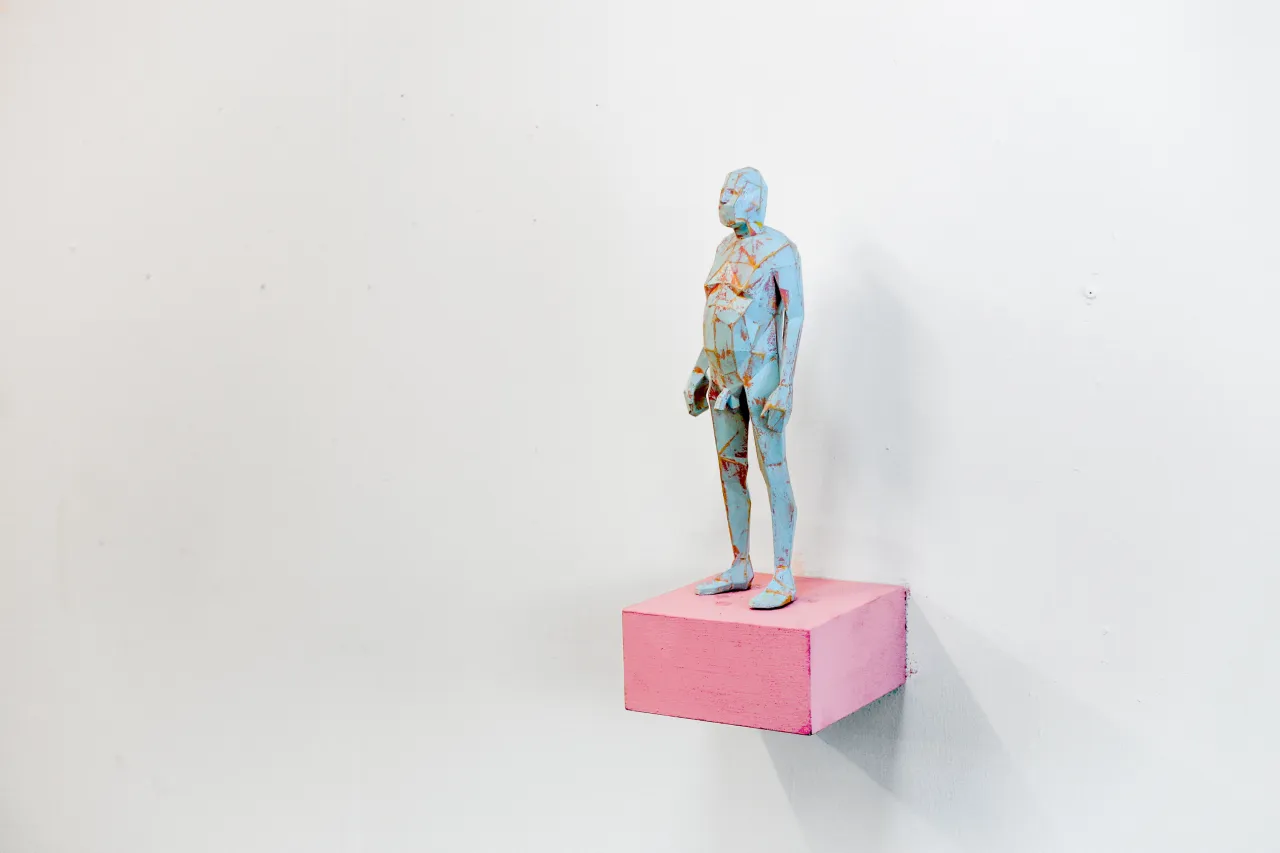
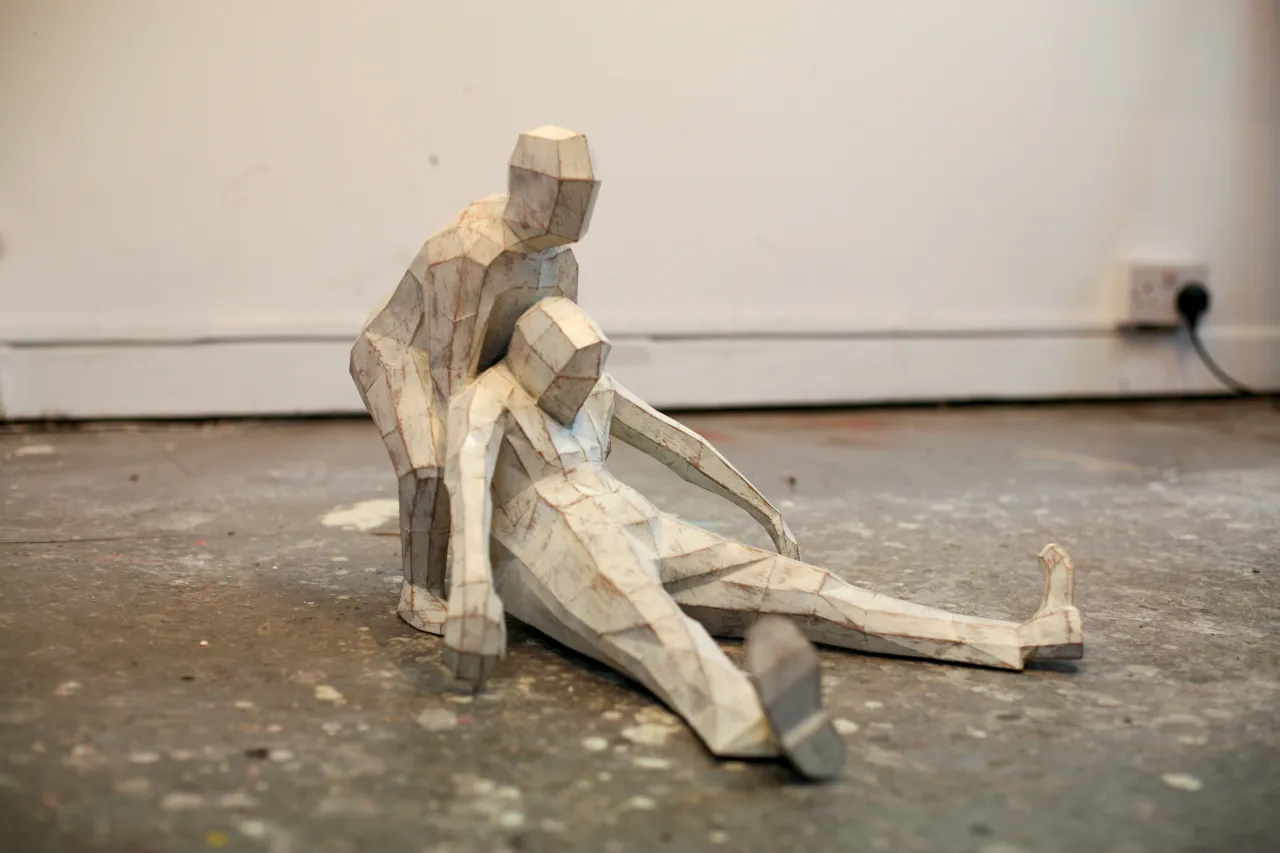
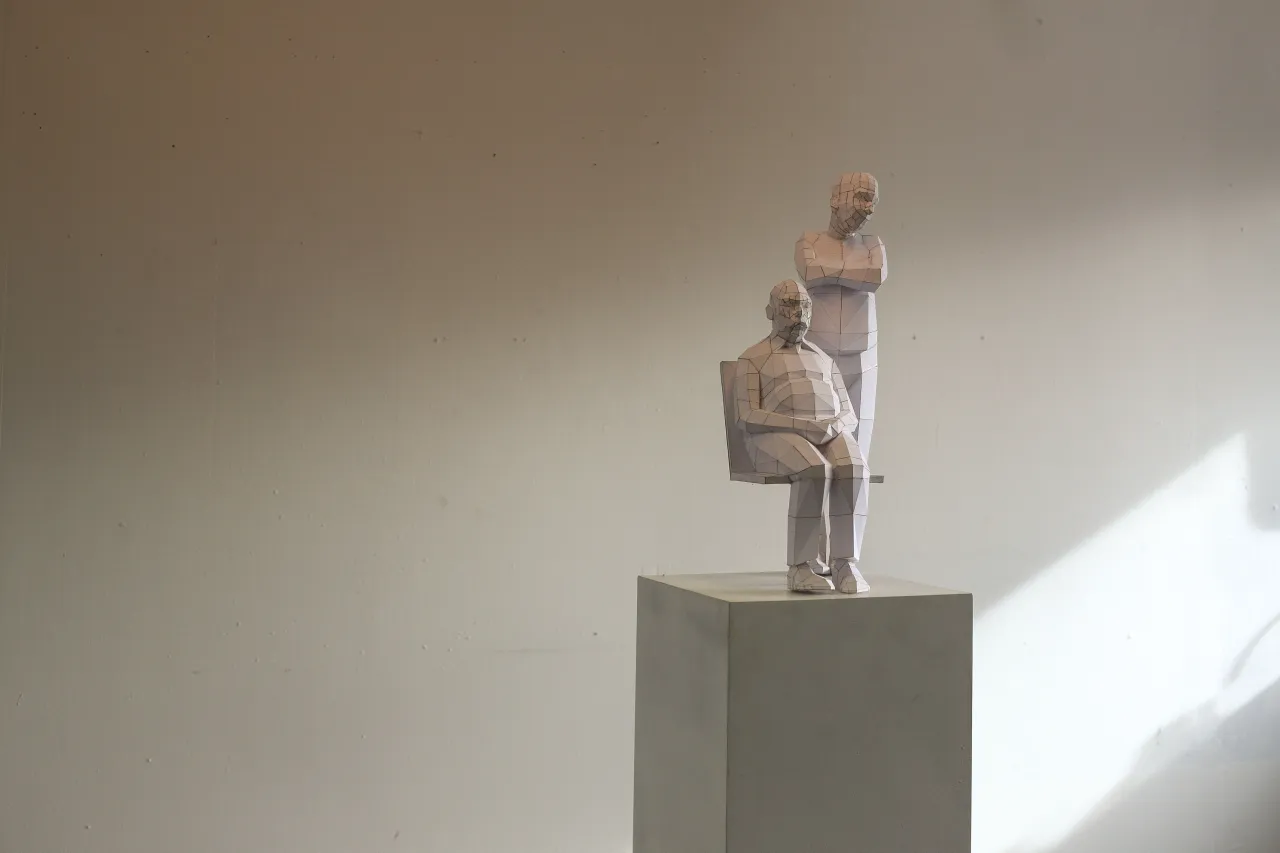
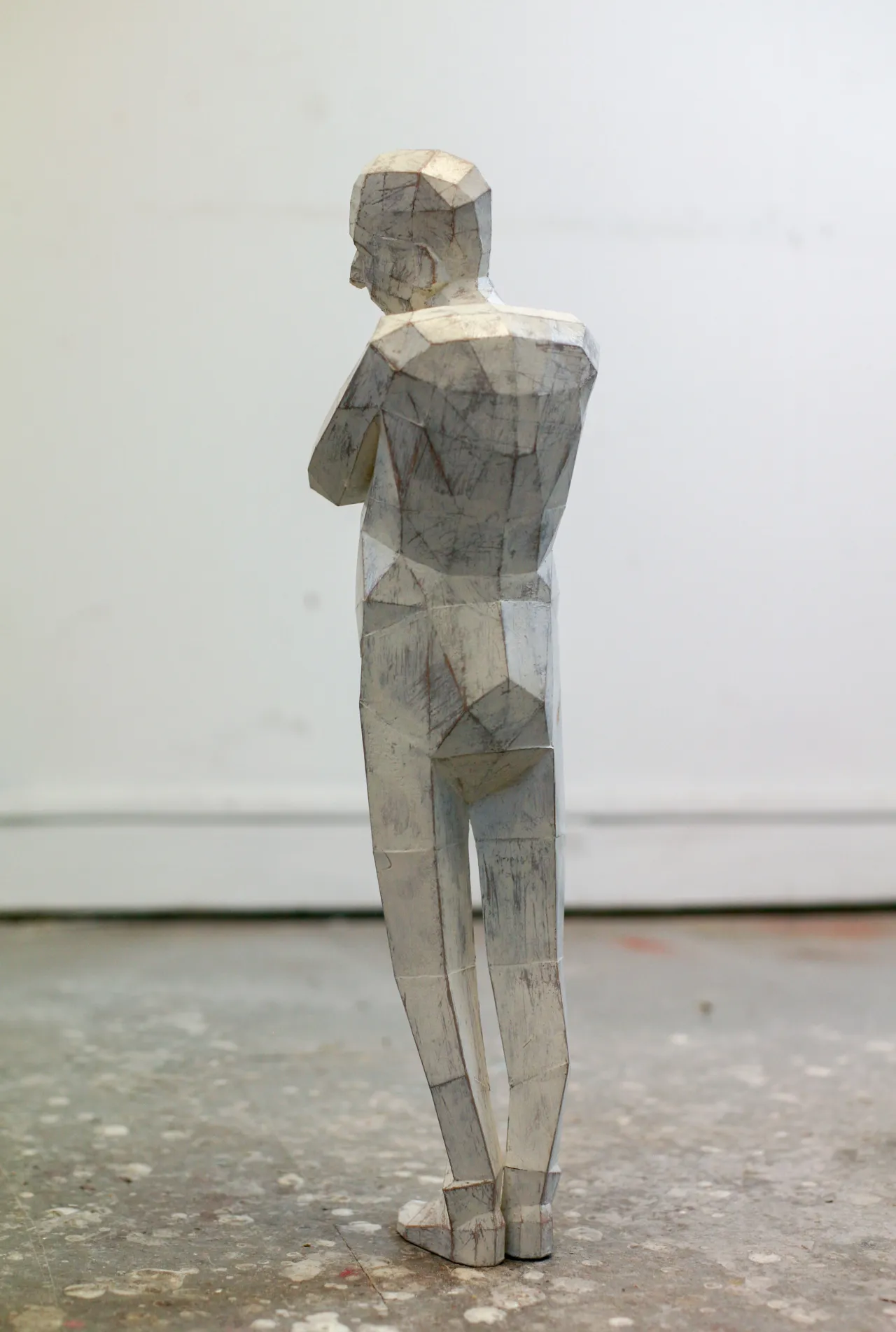
"It had nothing to do with any thoughts about sculpture because I didn’t have any," he adds. "Perhaps, for this reason, he took it for granted that he would be folded from paper or card and that he was more a surface than a volume, more a shaped canvas than anything else. He was always, and importantly, a bit flat."
John continues: "So, I set about cutting and scoring and glueing card until I had him standing on the table. I was surprised by the result. He was occupying real space and, as far as my early question was concerned, what would change? It seemed to me that a lot had. At the very least the little guy opened up some possibilities which, in the years since then, I have begun to explore."
The forms begin life on the computer – much like you'd expect from 3D modelling software for video game design. "For all the low tech processing that follows their design, that link remains obvious and, in combination with the way they’re built, important," adds John. "They combine simple but time-consuming manual techniques with high tech design processes that result in what I’ve come to think of as a type of modern primitive."
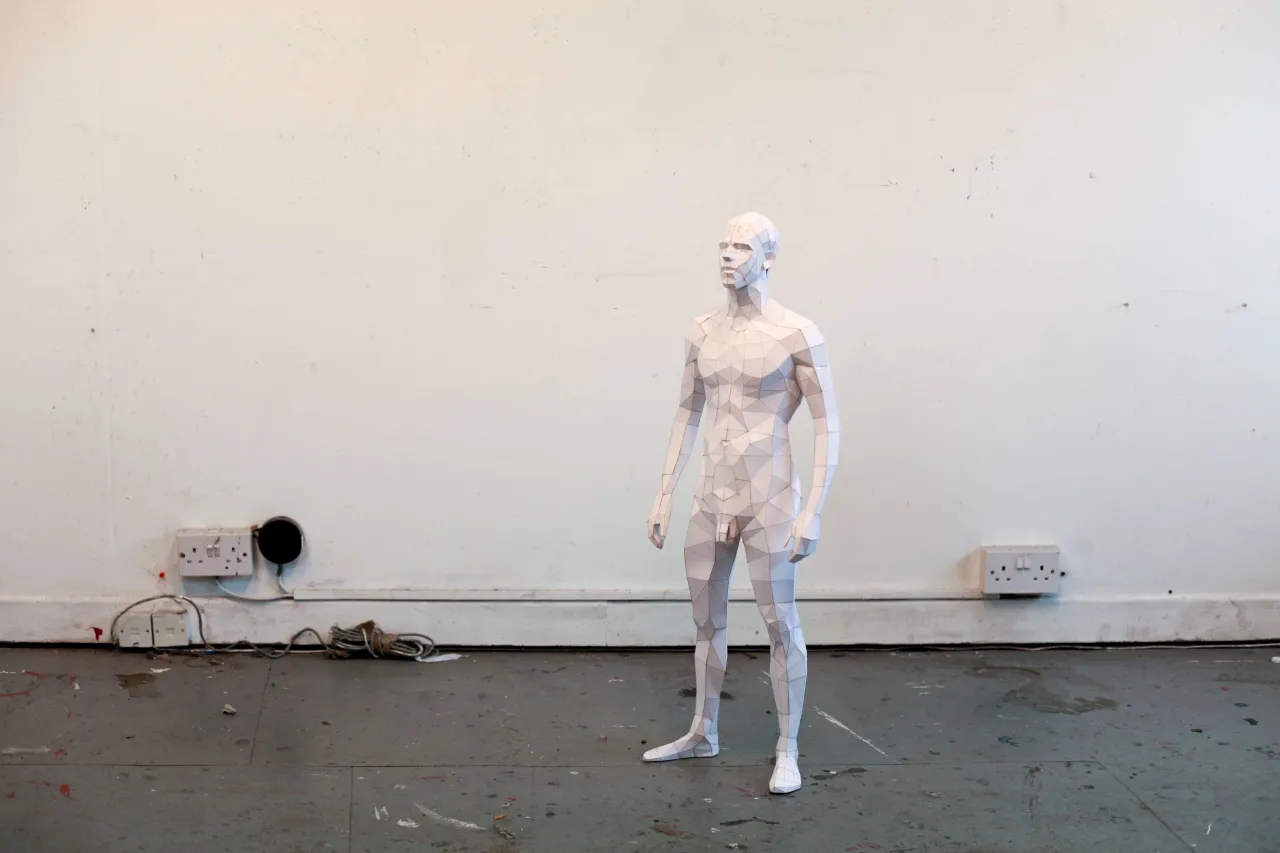
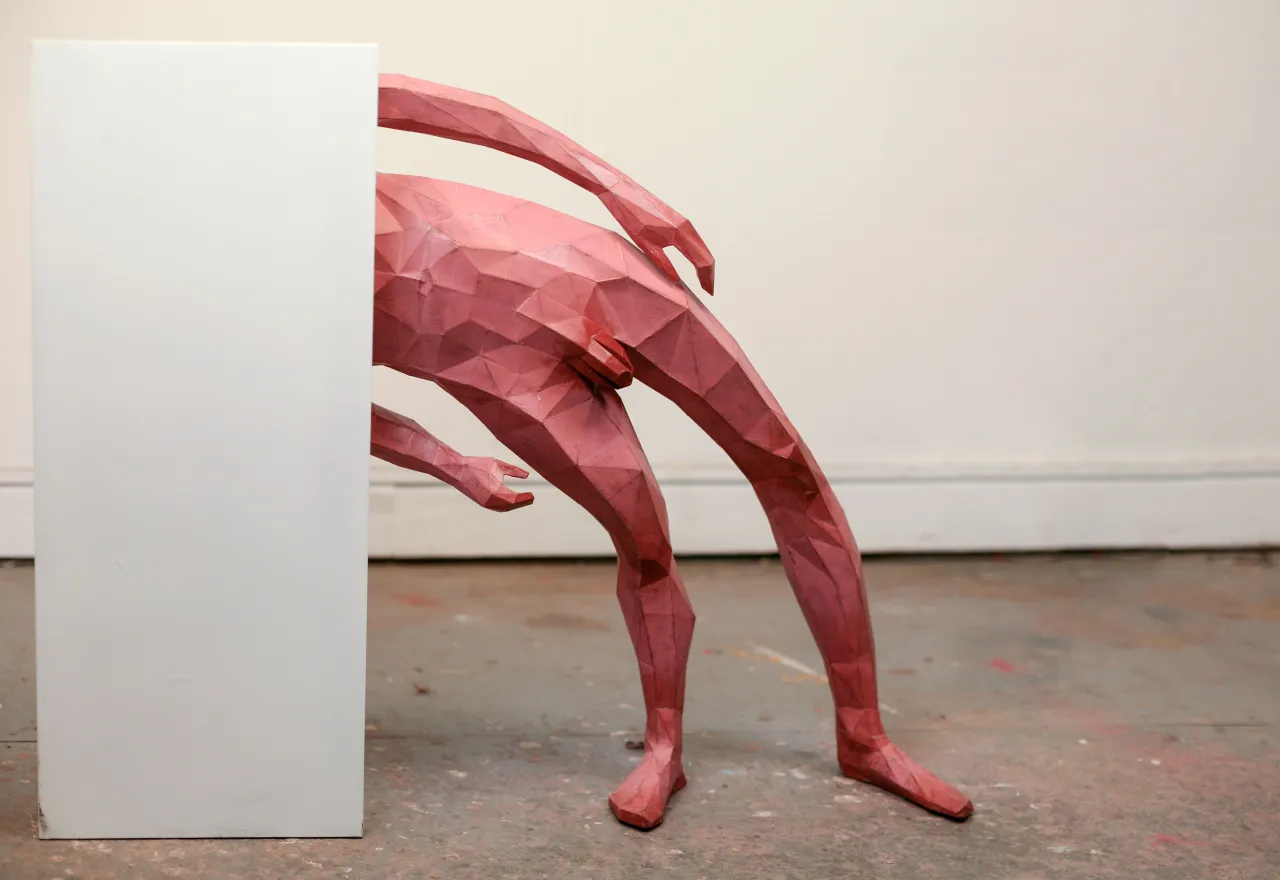
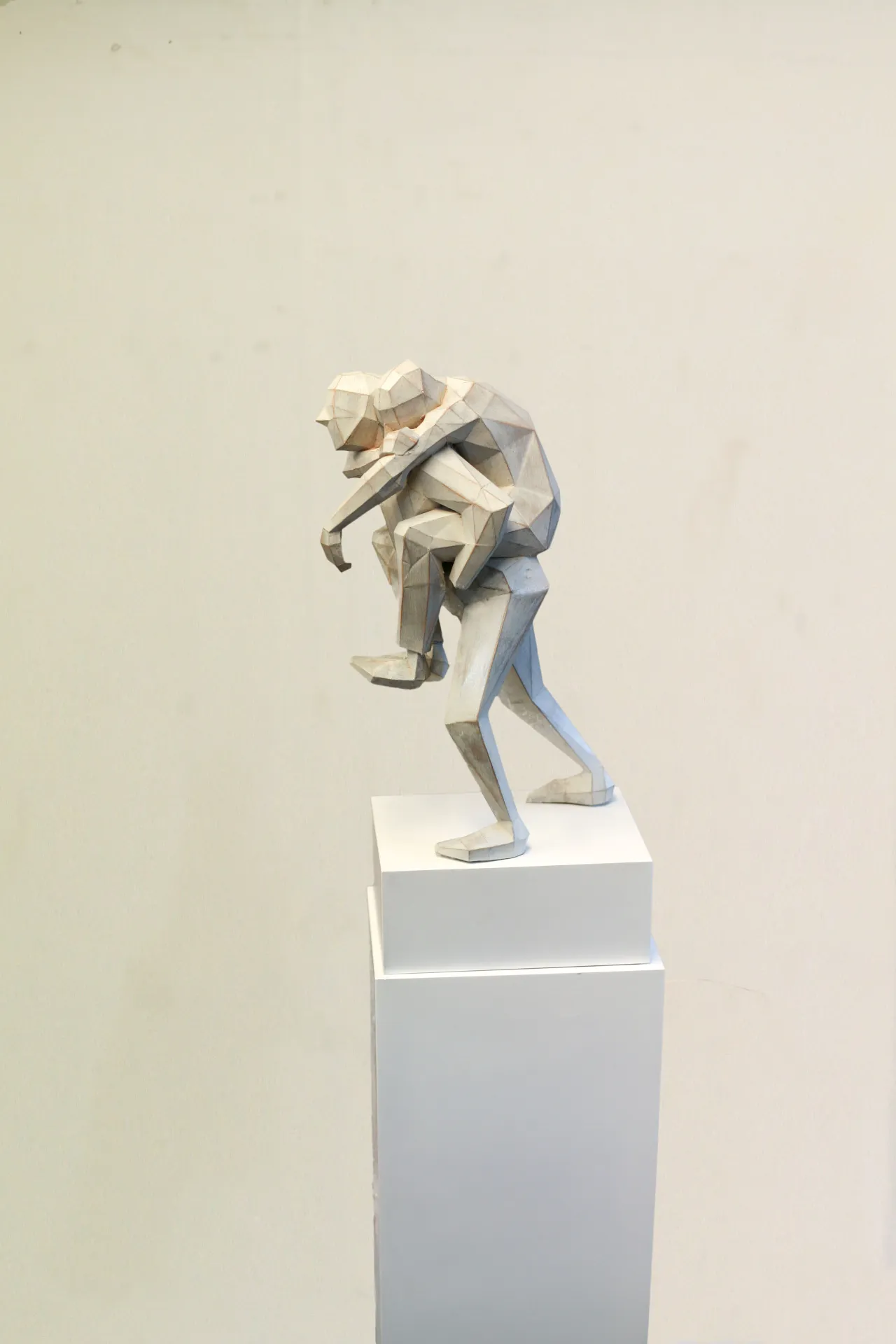
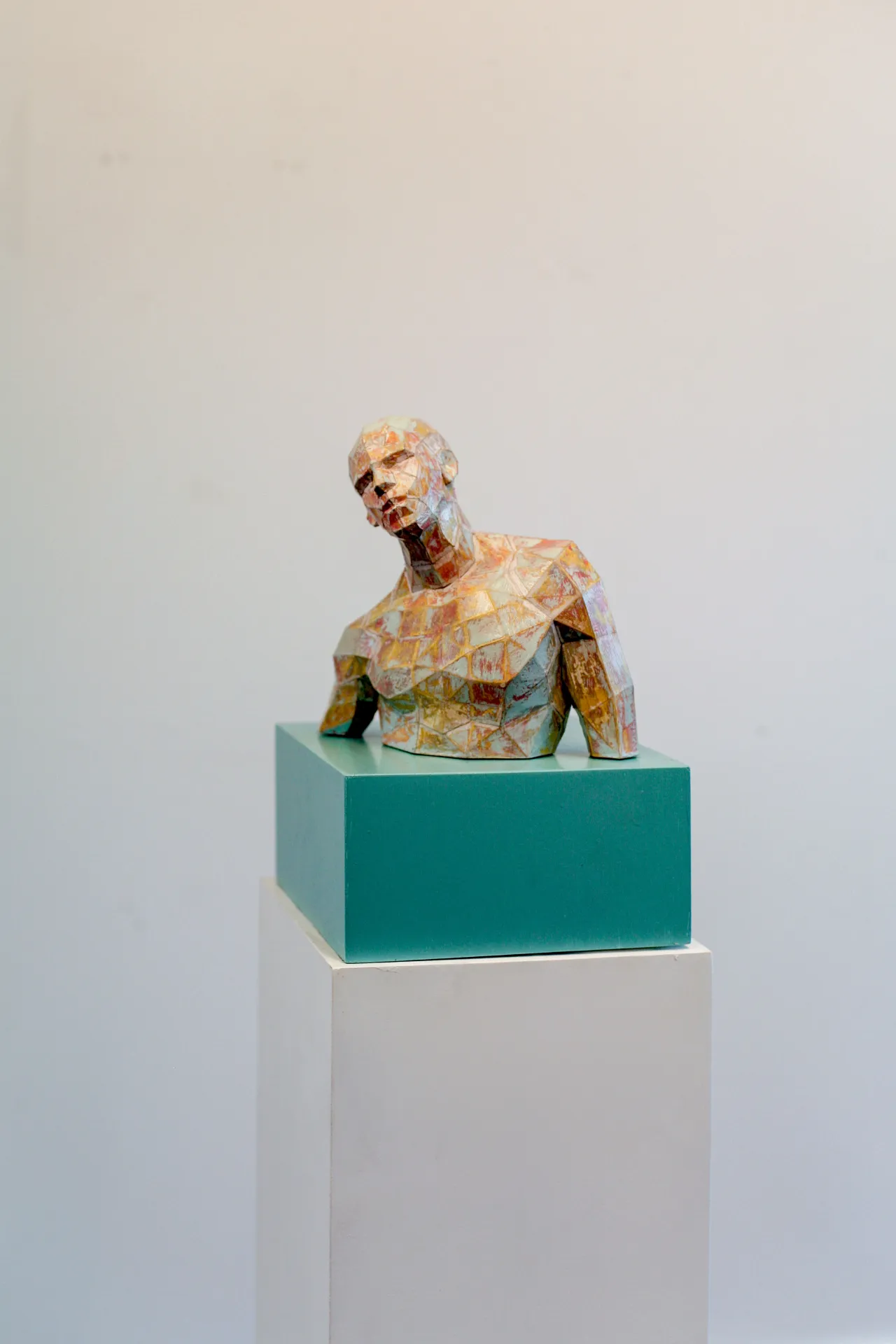
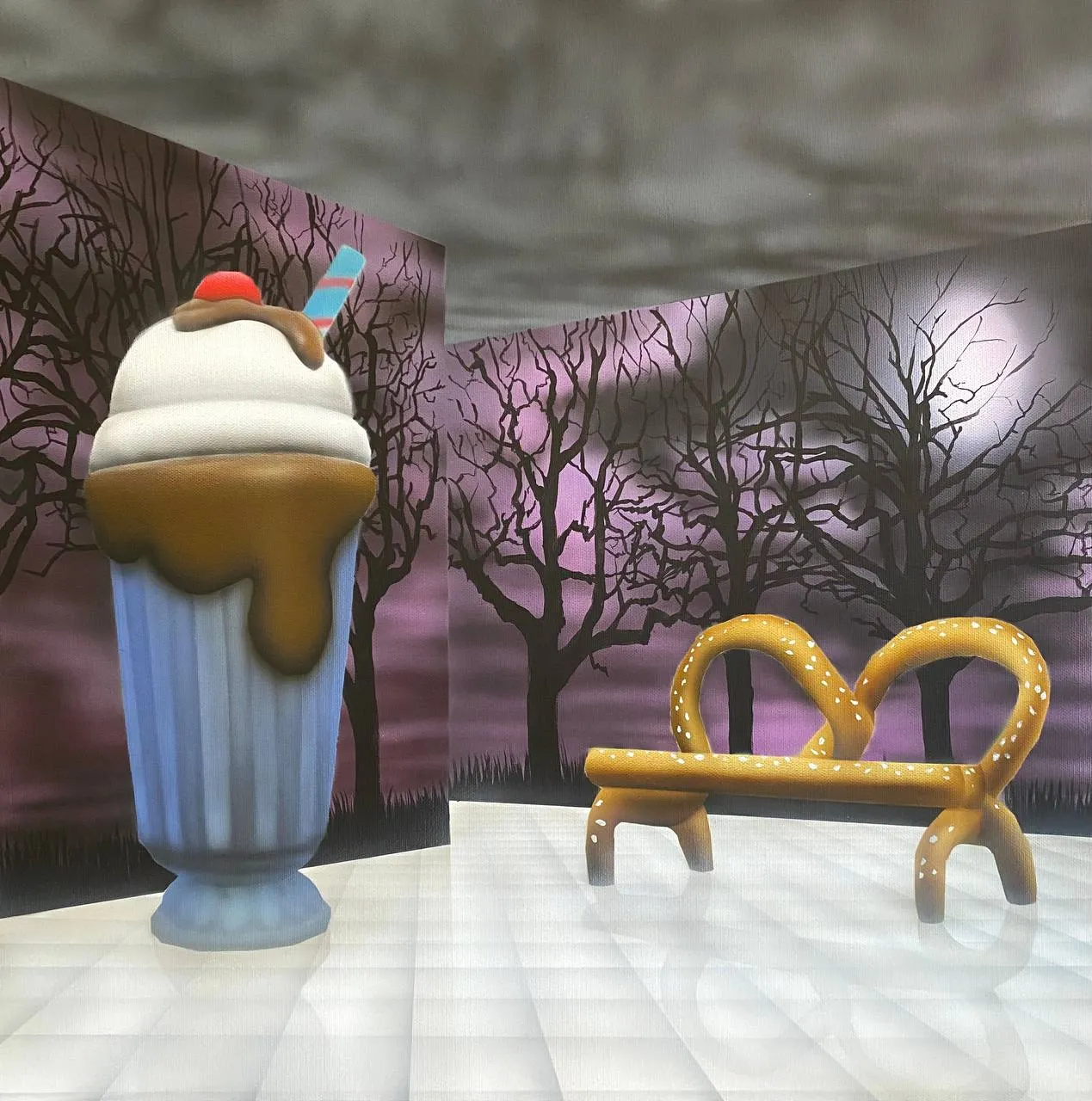
Aside from sculptures, John also creates narrative paintings, dripping with themes based on modern life. In his series Office, for example, we see people struggling to survive in the corporate world. Here, you can see the influence of the gaming industry yet again.
"The work proceeds with some urgency as if it were a hunt," he says. "Meanings percolate gently through the mixing; attaching and detaching themselves as the arrangements shift. I exert little control but take notice and what I notice I paint or build. I suspect that at the heart of the process is a question of identity, allied to a suspicion that the real world is as much a product of desire as it is an object."

Editor's Picks




Trending



Latest Jobs
Director, Brand at KQED
Full-time·San Francisco·$125,547 – $165,000
Senior Manager, UX Writing at The New York Times
Full-time·New York·$145,000 – $160,000
Lead Digital Designer at Together
Full-time·£55,000 – £75,000
Producer, Marcom at Code and Theory
Full-time·New York·$75,000 – $90,000
Designers / Copywriters / Art Directors / Creatives at Hatched
Full-time·London·£25,000 – £55,000
Lead Product Designer, Growth at Monzo
Full-time·London·£90,000 – £120,000