Abstract painter Jenny Beard on how to make art that isn't hollow
The Leeds-based artist's new show, Listen Love, is about obstruction, resistance, and saying the quiet part out loud.
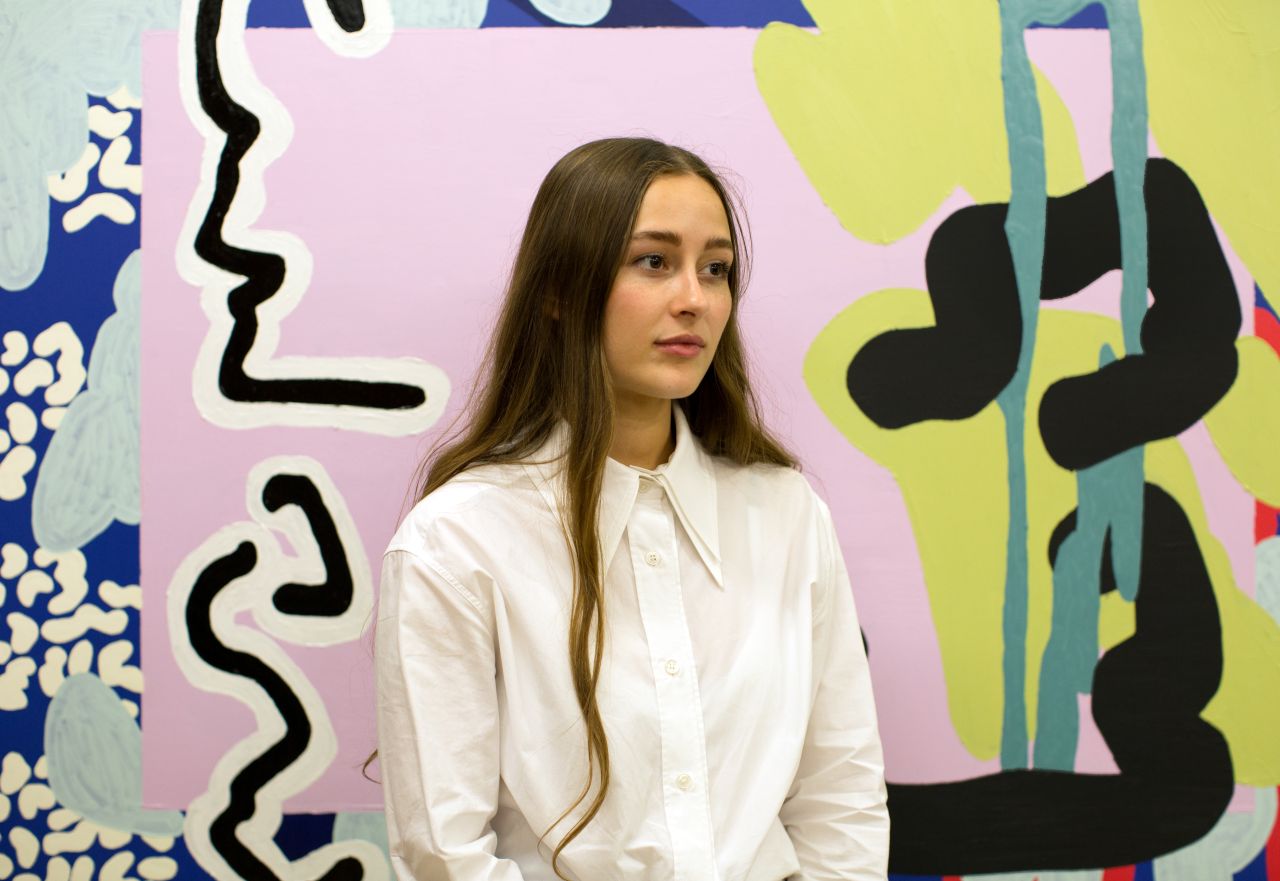
Jenny Beard
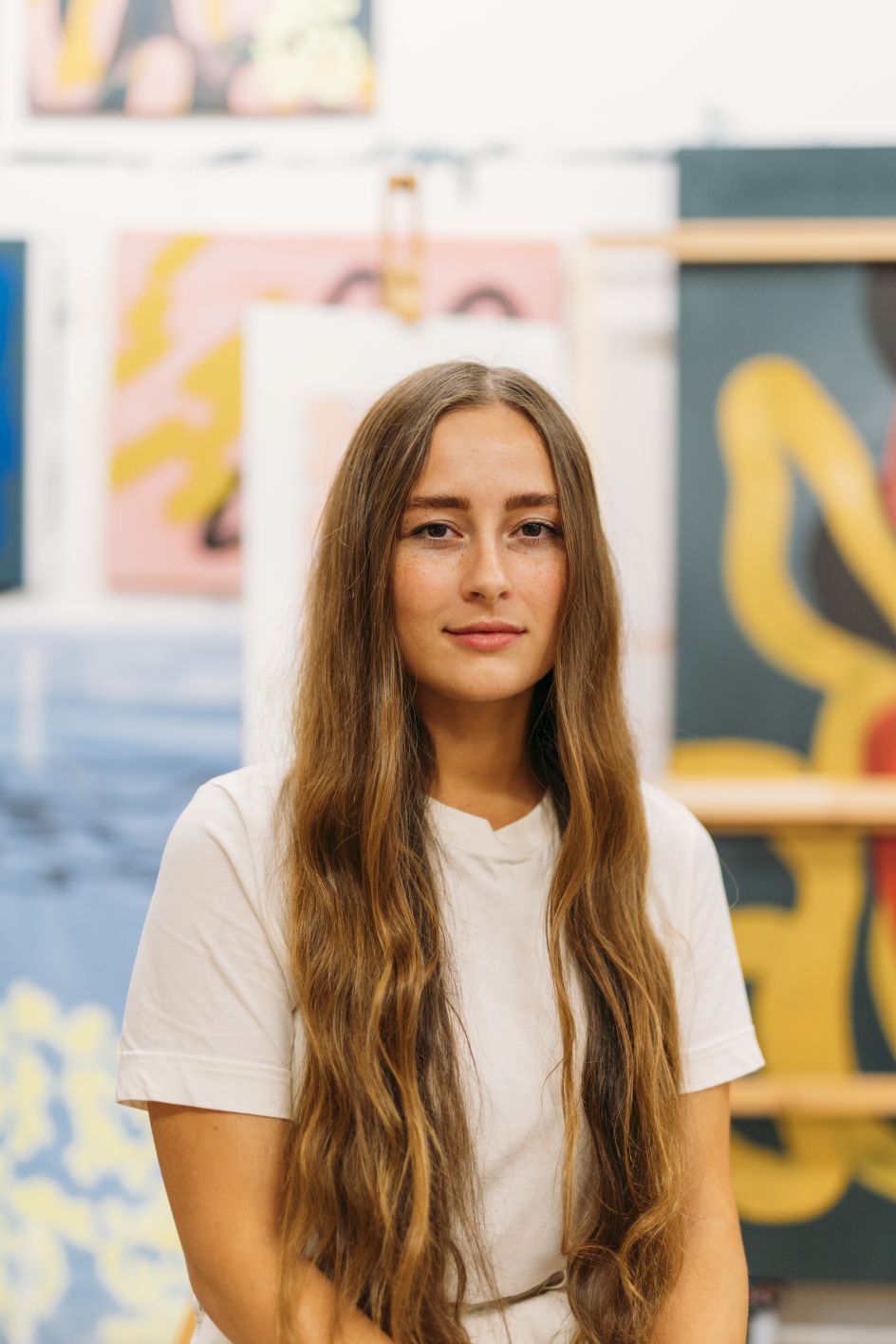
If you've ever sat down to do creative work and found your hand just... going—producing something competent, fluent, but a bit hollow—Jenny Beard has a solution. Make things deliberately, wilfully, almost perversely difficult.
Jenny is an abstract painter whose new exhibition, Listen Love, opened recently in Leeds. The show runs until 8 April and features five new paintings, including a large-scale oil on canvas, a work painted on carpet, a woodblock piece, and a canvas-and-paper-pulp cube that looks like it's been through something. (It probably has.)
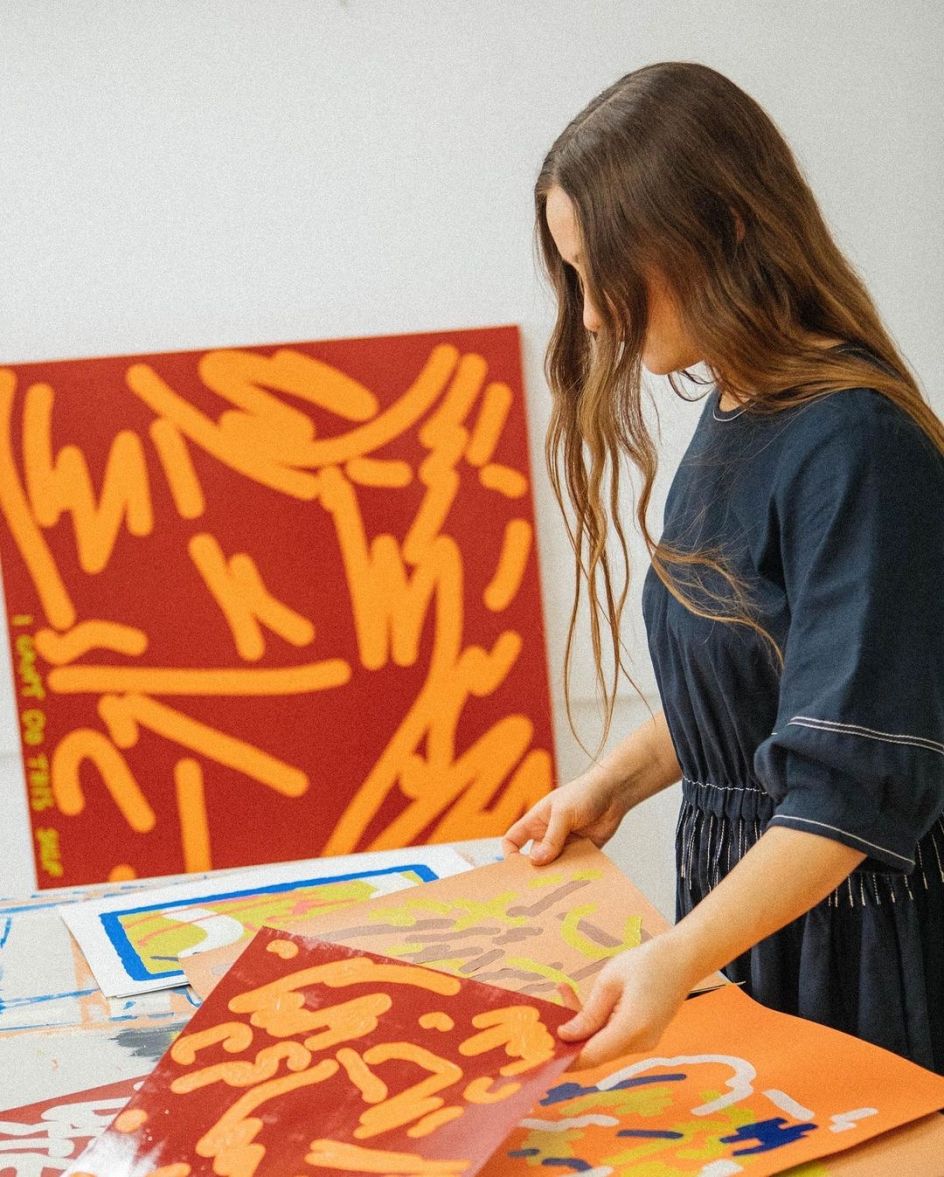
Jenny works with oil paints, acrylics, textural mediums and foam, usually presented on stretched canvas. But even if you're not a painter yourself, there's still a lot for any creative to learn here. Namely, that Jenny doesn't just allow difficulty into her process; she engineers it. Deliberately. Gleefully, almost.
Automatic drawing
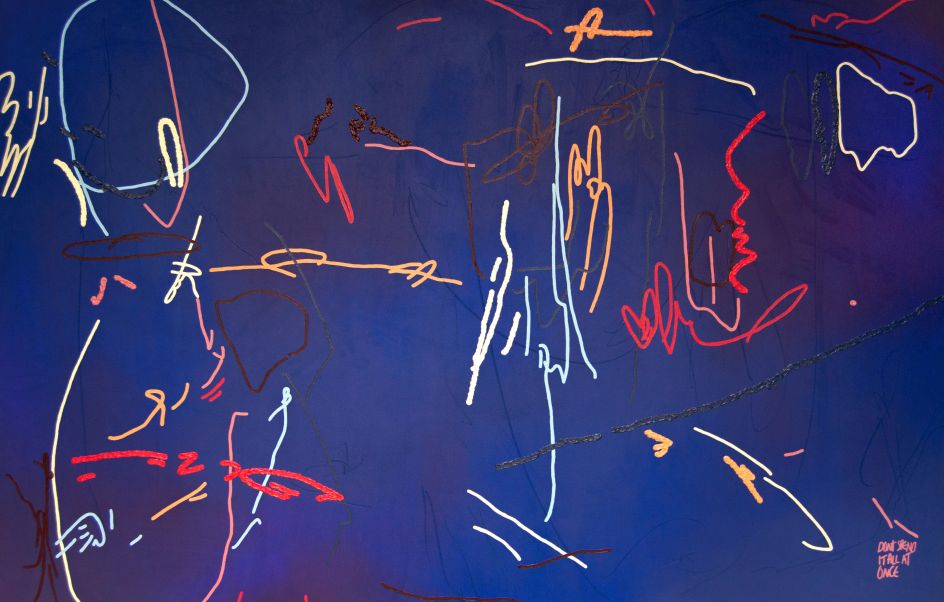
Automatic drawing is at the heart of how Jenny composes; it is used at every stage of her process, with close attention paid to a piece's overall weight and balance. For Jenny, it's also personally significant: the automatic drawing nods to dissociation, reflecting her lifelong experiences with it.
Fluke
Slip
Snag
Some paintings end up with floating elements; others sit top-heavy, awkward, full of interruptions. She draws and adjusts until the composition feels right, but never expected. Crucially, though, the introduction of unwieldy materials and repetitive actions is designed to disrupt the ease of this method—preventing the process from becoming purely automatic and instead introducing what she describes as "moments of resistance and negotiation".
Objects with weight
The new show marks a major shift in Jenny's practice. Her earlier paintings were hard-edged and abstract, precise in a way that edges toward the digital. That was entirely appropriate, given that reverse entropy (the process of digitising a painterly gesture and then repainting it by hand, back through the filter of a screen) sits at the conceptual core of her work.
There's something deliberately unnerving about her monolines; they're too clean to be handmade, too warm to be digital. That's the point. This new body of work, however, moves somewhere more physical, more bodily. The pieces have weight, literal and compositional.
Fumble
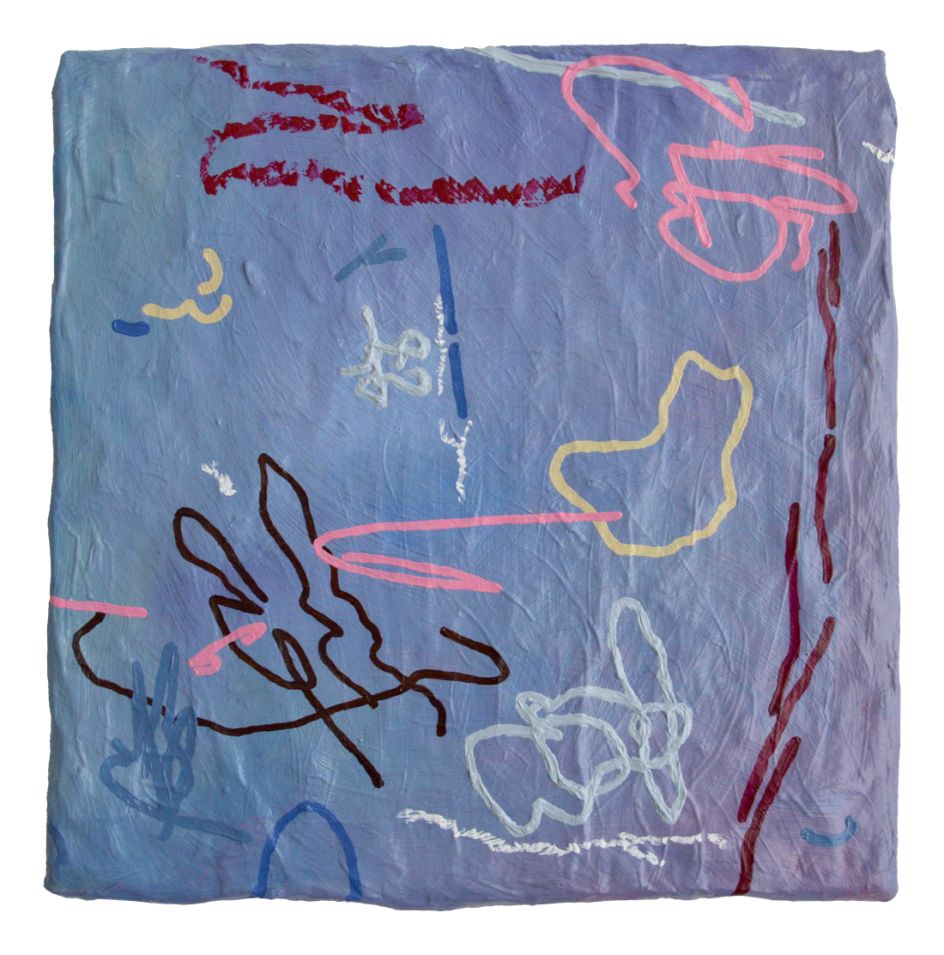
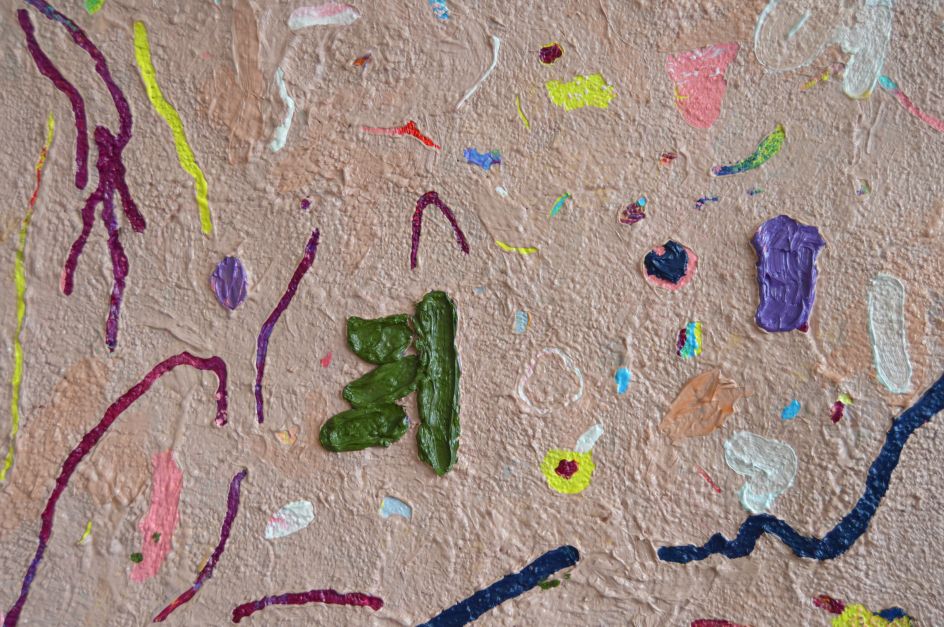
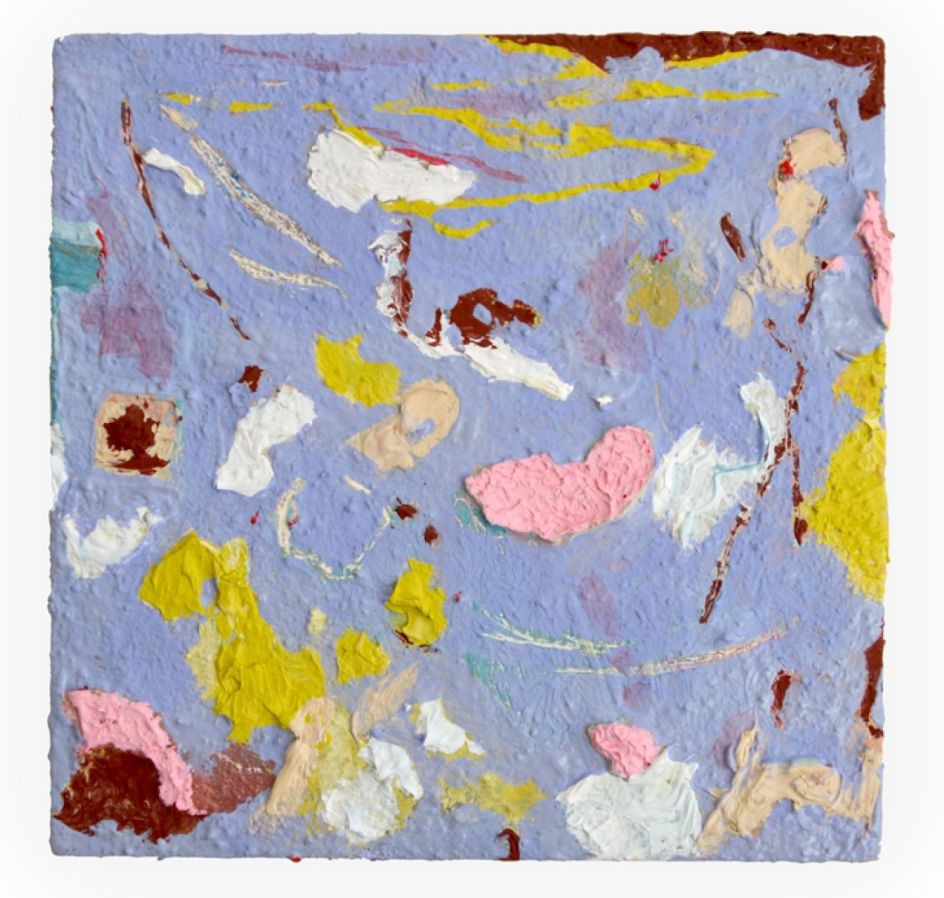
Slip, painted on carpet (71 x 71 x 7cm, so emphatically not flat), brings density to what might otherwise be a "light" piece. Fumble, a wooden block, was built up through layers of covering, removing, and revealing. Fluke (canvas and paper pulp together) has an irregular edge that makes it look like it grew rather than was made.
The scale shift is intentional, too. Rather than the expansive canvases that dominate a room and define the space, these works invite you close. You have to bring yourself to them. Stand in front of them and consider your own size. That's a curatorial choice with a point: Jenny is interested in how we encounter paintings with our bodies, not just our eyes.
Saying the quiet part
There's text here, but it's often small and often buried beneath the surface. You might not notice it immediately, which is also deliberate. In Whack, the words are a textural element rather than a compositional one: the rhythm of repetition changes the meaning. In Snag, text works as a composition. It's not illustrative or explanatory. It's more like muttering.
The content of these texts (ramblings, protests, overheard conversation fragments, self-deprecating observations) draws on Jenny's experience as a northern working-class woman in the arts. It's a topic the art world is reasonably good at discussing in the abstract and considerably less good at addressing in practice. Jenny isn't making work about this so much as making work from it, which is a different thing entirely. The self-expression isn't the message; it's the method.
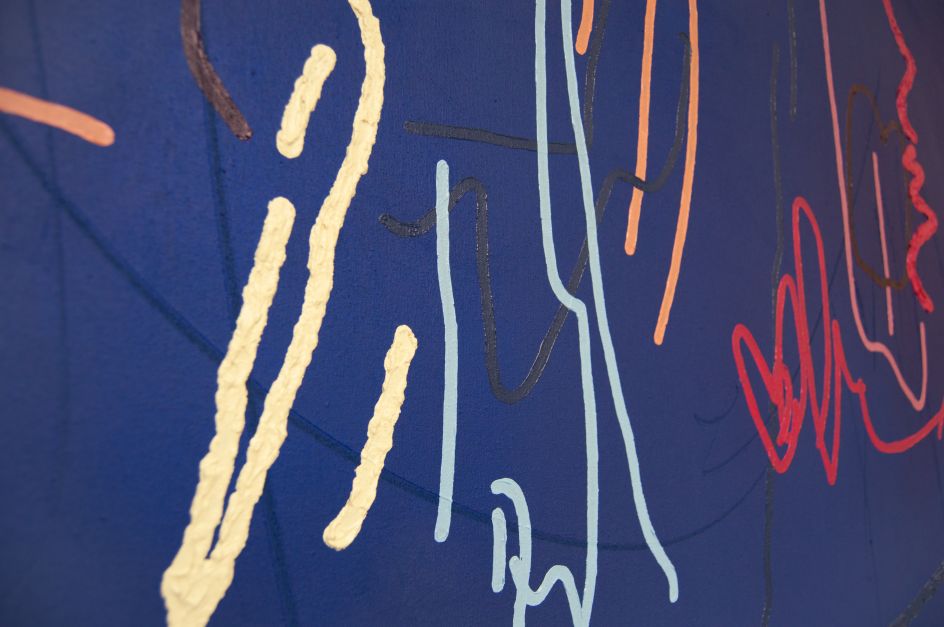
Snag
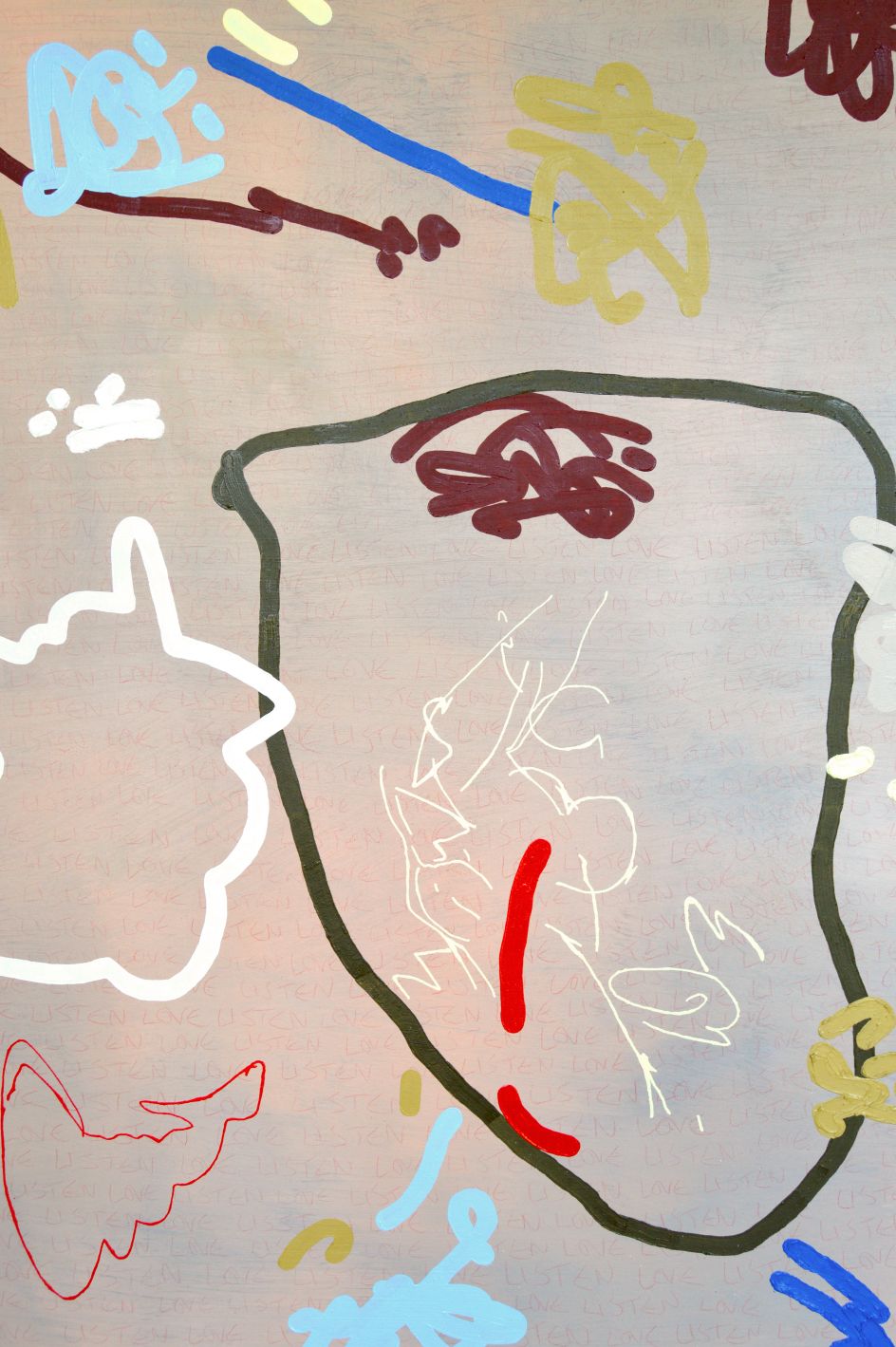
Whack
Jenny describes the act of including text in the painting as "prescriptive". It's grounding: not cathartic, not confessional, but pragmatic. Anyone working in a space that doesn't quite fit them—by class, by geography, by background, by any of the dozen ways the creative industries still manage to make people feel like guests in their own field—might find something to sit with here.
Frontier Gallery and why it matters
Listen, Love is showing at Frontier Gallery, which is worth knowing about if you're ever in Leeds. It's on the top floor of The Brunswick, a pub with real ale and an unpretentious attitude, and it's doing something genuinely useful: putting serious, considered, ambitious work somewhere people actually go. Not a white cube with a door policy. Not a gallery you have to psyche yourself up to enter. Art in a place that's already part of your life.
That context isn't incidental to this exhibition. Jenny's work is interested in accessibility and embodied experience; in how you stand before a painting and what that costs you or asks of you. Showing it somewhere you can also get a beer on a Friday night feels exactly right.
Further Information
Listen Love is running until 8 April. Frontier Gallery, top floor, The Brunswick, 82 North Street, Leeds, LS2 7PN.

Editor's Picks



Trending


Podcasts
Editor's Picks
Further Reading