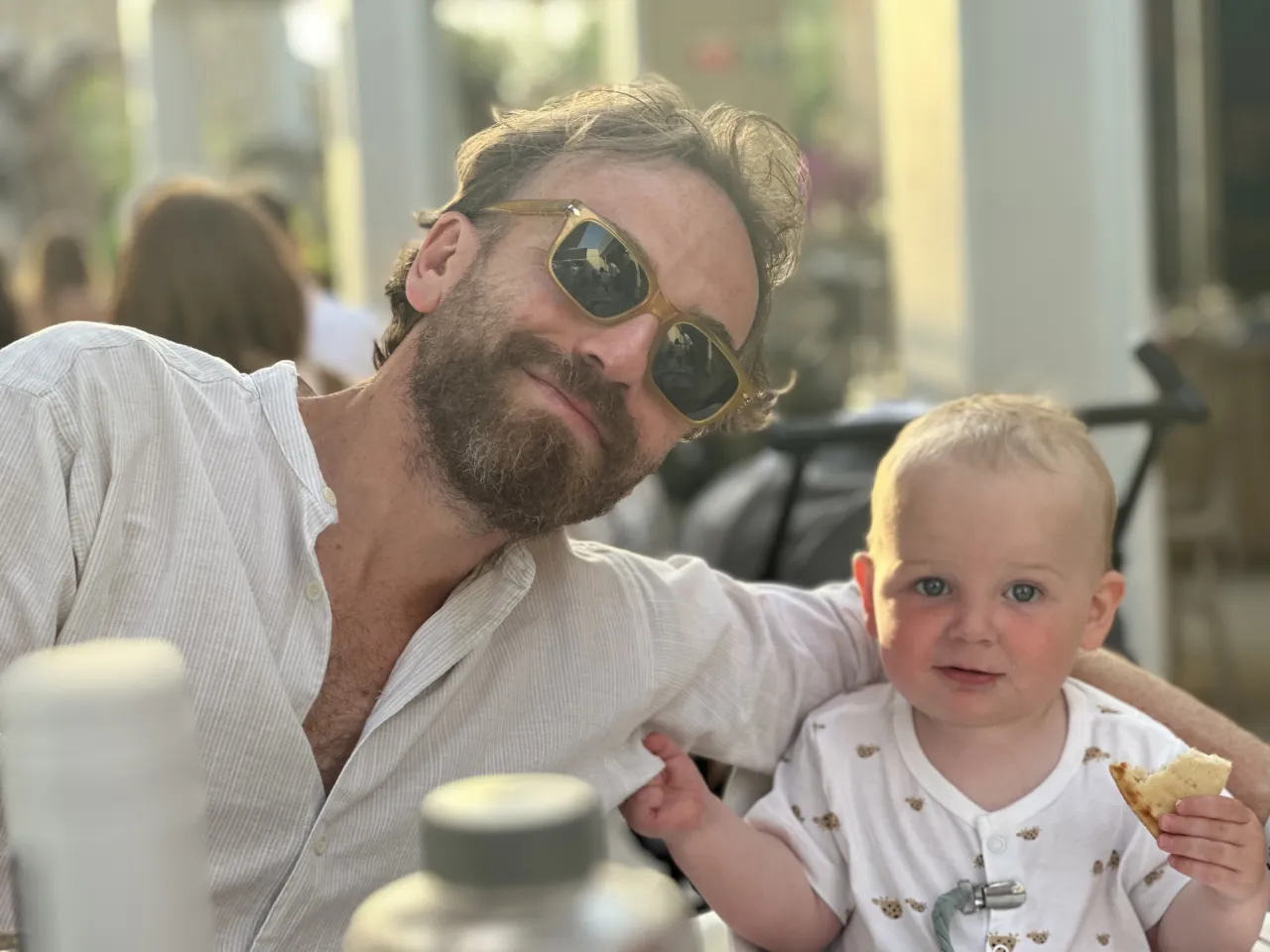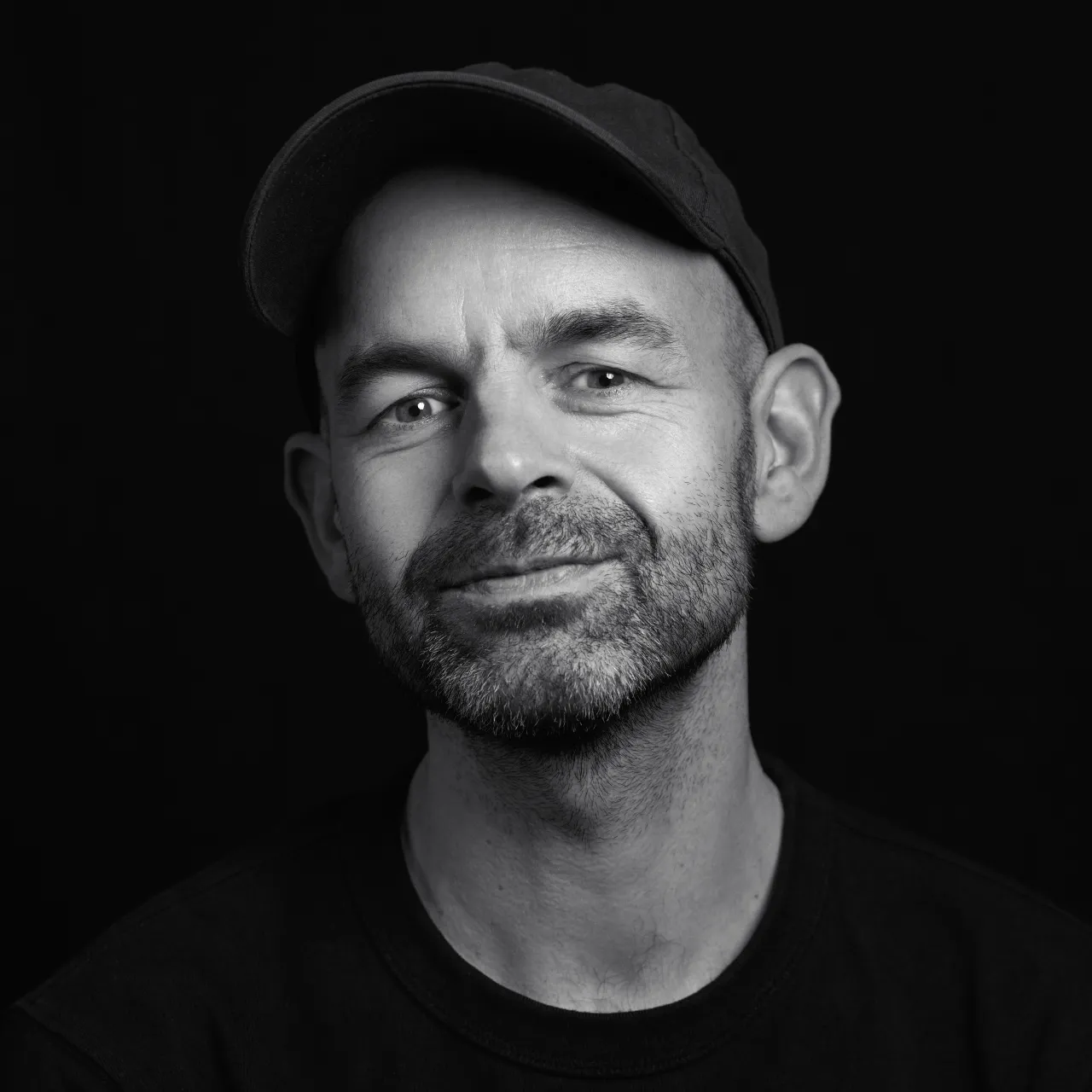
Opening the first main day of the All Flows conference in Milton Keynes last week, lettering artist and collage-maker Rob Draper told a story that not many speakers would have the nerve to tell. It involved a camp bed in his sister's front room, a dog that died, a shed that got broken into, a car seized by police, a marriage ending and, at one of the lowest points, Christmas dinner alone with a bowl of porridge. The talk was called Work, Dreams, Swings & Roundabouts. It delivered on all four counts.
Over the course of around an hour, Rob told the story of his life with admirable honesty; from his early graffiti obsession in 1980s Worcester, through 20-plus years in commercial design, to unexpected redundancy, reinvention via a Starbucks cup, and eventually to dream commissions from Nike, the Golden Globes and NASA.
His overall takeaway? When everything falls apart, starting small is enough. It's a lesson that every creative, whether newbie or veteran, can learn a lot from.
Three ambitions
Rob grew up in Worcester, part of what he called the third-best breakdancing crew in the county. He showed the audience a photograph of himself at Christmas in full Nike gear, surrounded by sketchbooks, and listed three ambitions he'd had as a child: to design a range of BMX bikes, to work for Nike and, somewhere down the line, to make a living as an artist.
He went to art college, then university, then spent two decades in commercial design, eventually becoming art director at a fashion brand. Life was good. And then it wasn't.
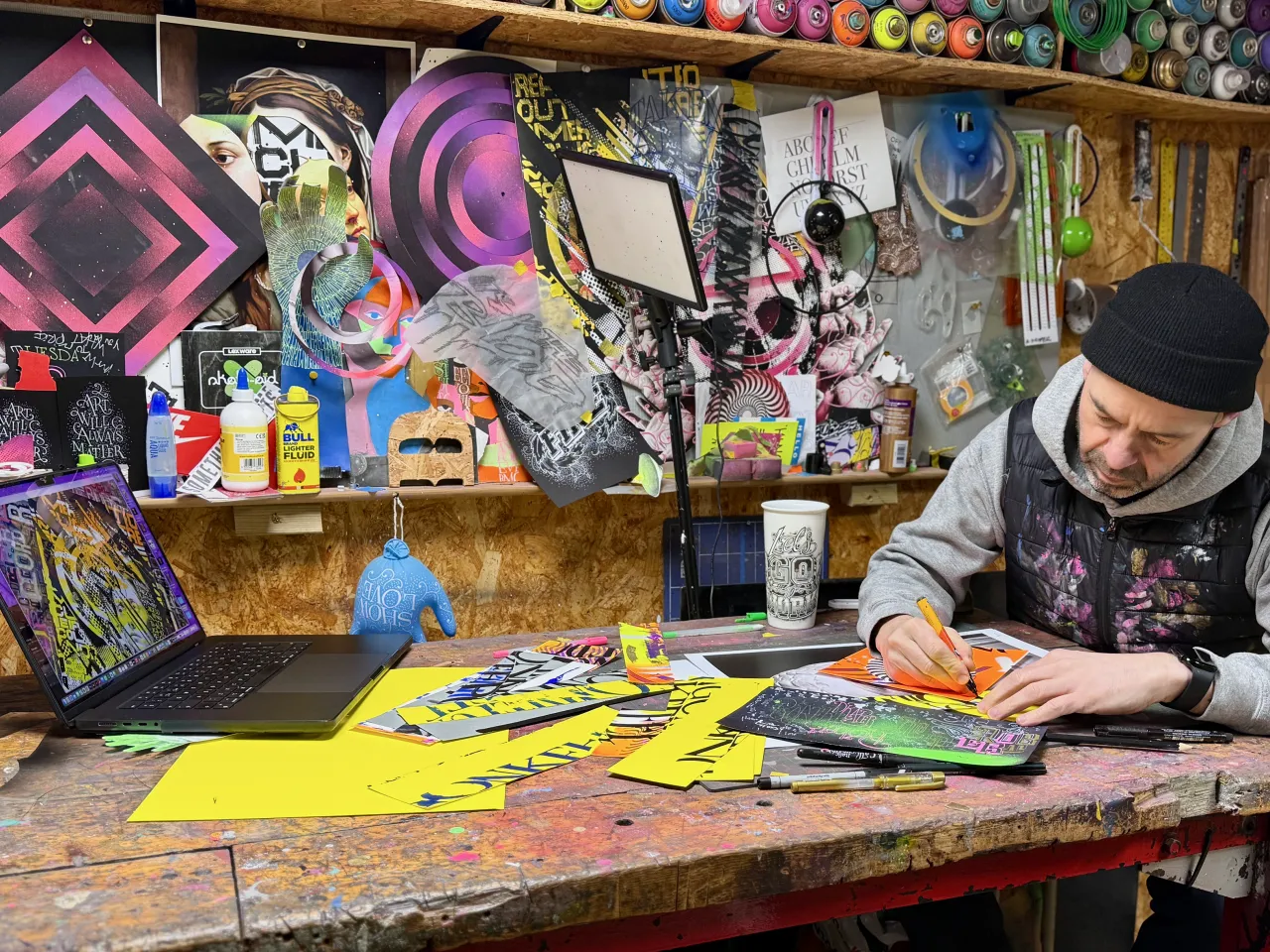
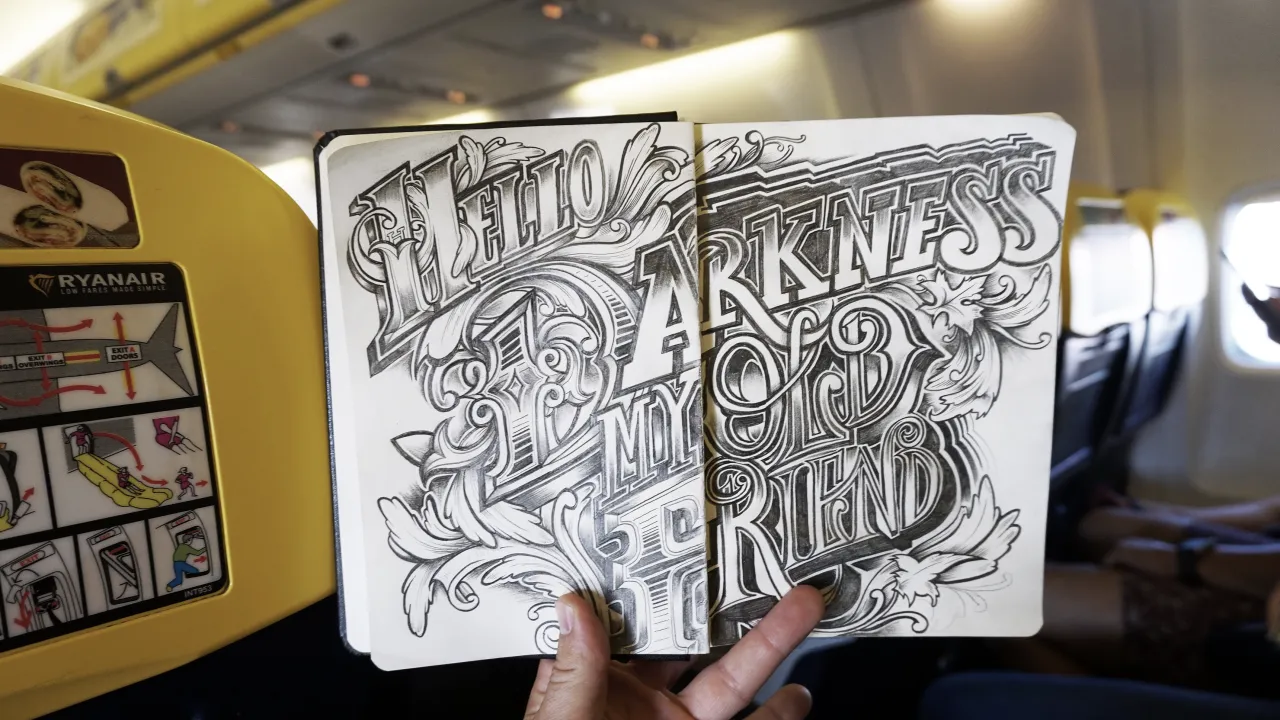
His company was bought out, and the studio was relocating north. Rob had a wife, a son, a dog and a house in the Midlands, and wasn't able to follow. He stayed behind to clear the warehouse, buying himself time to think.
"Every time I stopped, whether it was a cup of tea or lunch or anything like that, I would just draw and draw and draw and think something's going to happen, it's going to be fine," he recalls. But no new opportunities came his way.
What followed was a patchwork of little jobs. A-frame signs for local shops. Vintage lettering on restaurant walls. Some work with Superdry. Teaching graphic design and art. Running creativity sessions with children and adults, and working in a men's prison. But none of it came from self-promotion, and that was no accident. "I really, really, really hate selling to other people," he stresses. "I hate other people trying to sell to me."
Ultimately, though, what turned things around was a piece of advice passed on from Donald Jackson, the official calligrapher to the Queen: "play working is the best investment you can make". What that meant for Rob was: make work with no brief, no client and no restriction—creativity purely for its own sake.
The coffee cup moment
Rob started drawing on Starbucks cups: lettering, detail, illustration, filling them and leaving them wherever he happened to be. One day, without his sketchbook, he photographed one and posted it online. The response was instant and hugely positive.
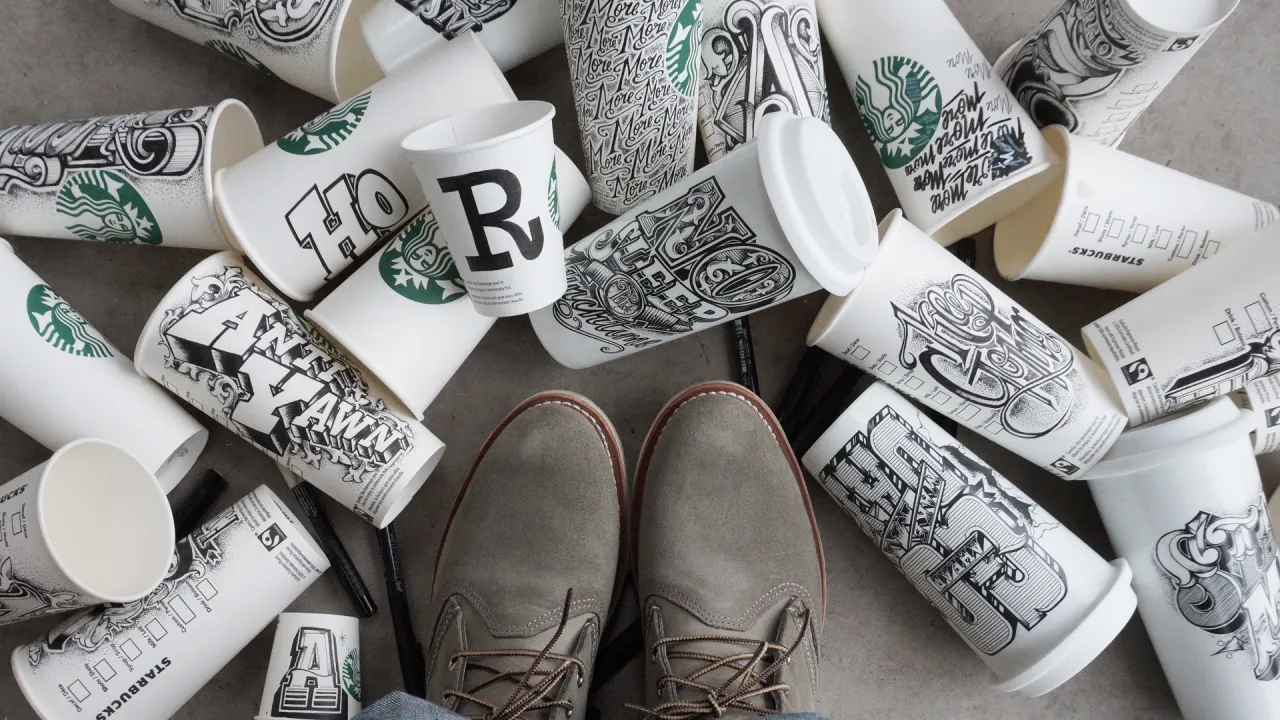
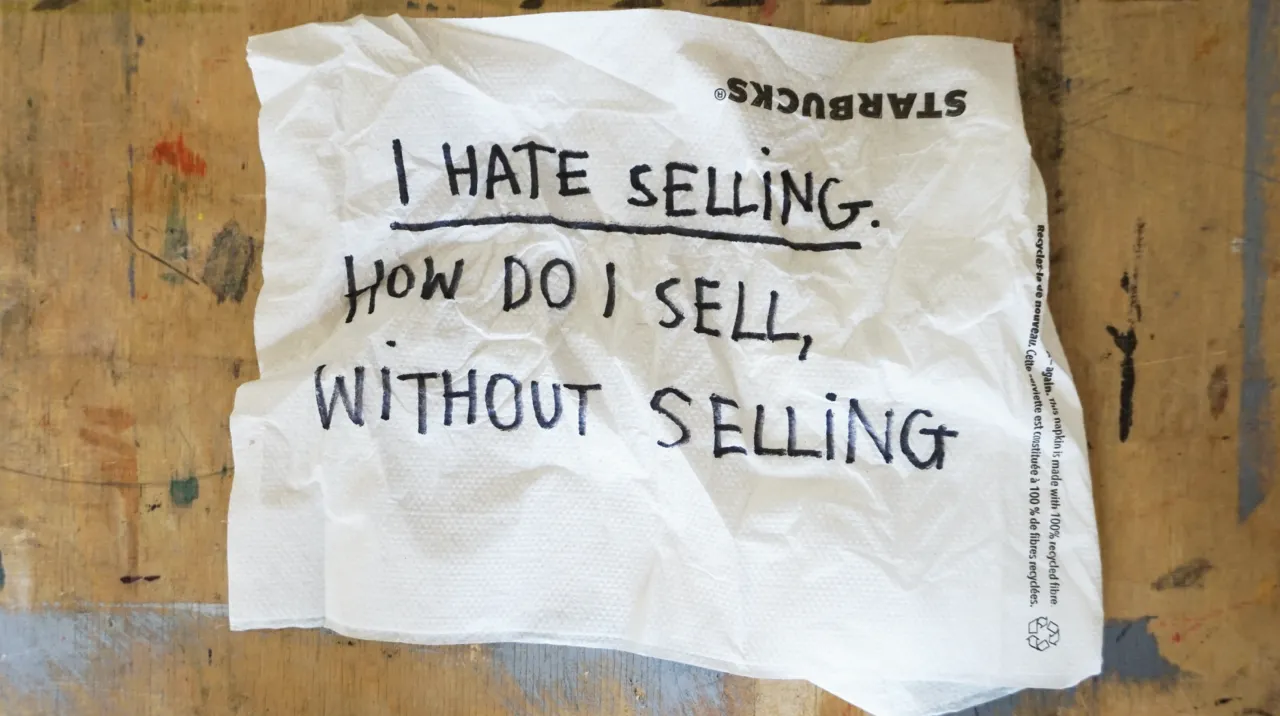
Encouraged, Rob kept going with the cups; guided by a rule he'd absorbed from graffiti two decades earlier: "The more creative the concept, the better. The more creative the letters, the better. The more creative the placement, the better. Do the piece, get the photo, move on."
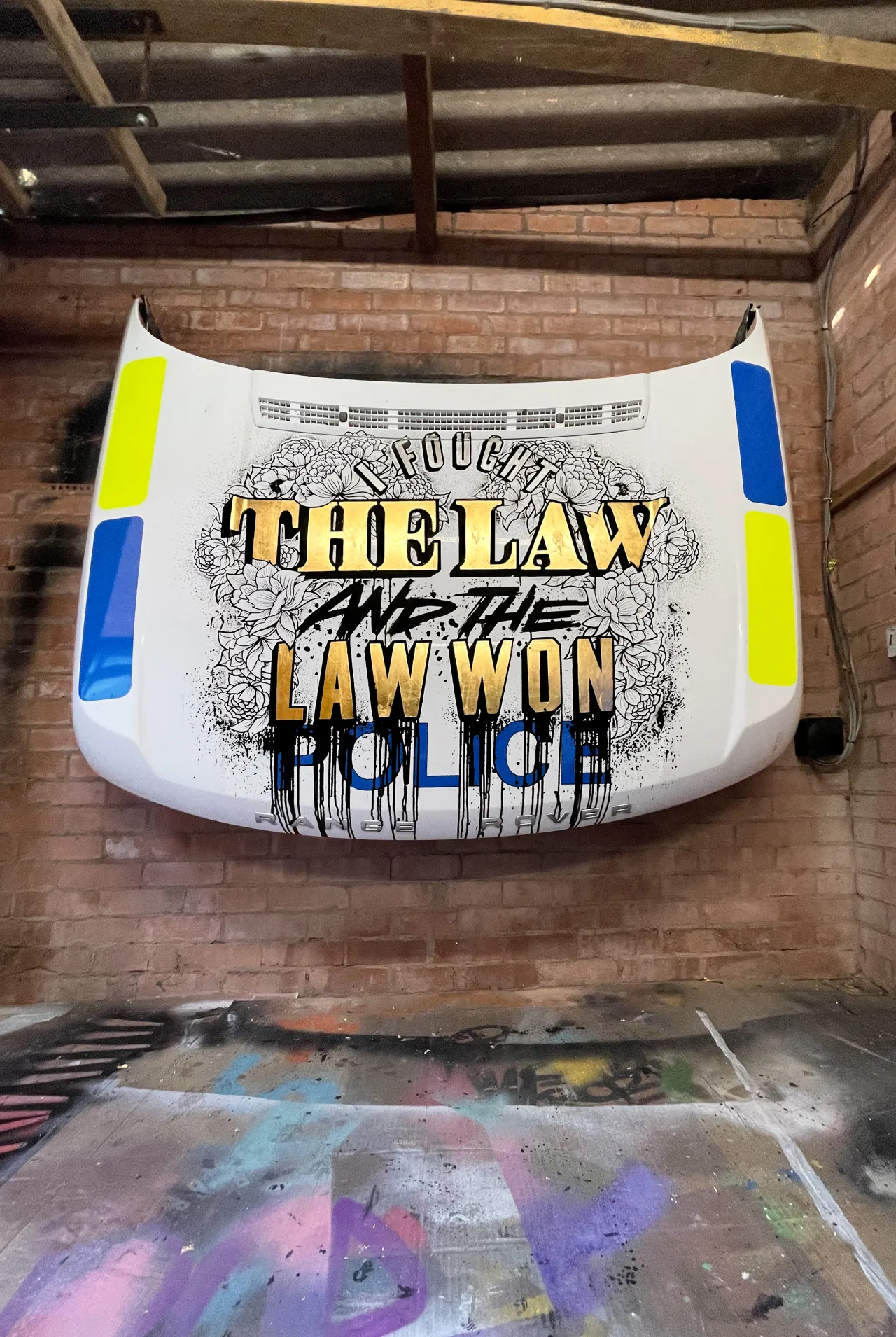
People loved his designs, so he extended the same logic to erasers, coins, cutlery, food, paint tins, and record sleeves. The material barely mattered; the angle was the contrast between the disposable and the meticulous. He named his project Coffee Time, treated it as a paid commission—doing a proper write-up and professional photography—and kept going.
The breakthrough came while he was working inside the prison, cut off from his phone. Once he was outside the jail, he turned it on and found it vibrating madly. His mum had been browsing the Daily Mail's homepage and found an article about her son drawing on coffee cups. The work had found its audience: not by being sold, but simply by being good.
Coverage spread across design publications in multiple languages, from Design Taxi to the International Designers Network, and the work appeared in books, merchandise and a range of ceramic cups bearing his original designs. The exposure opened doors to commercial commissions that his earlier cold-email campaigns had never managed.
The middle section
Next, Rob discusses "the middle section" of his life: a period he'd kept entirely private for years, and one he's still careful not to overplay. "I never wanted any of this to sound like group therapy," he says, "and I wasn't looking for sympathy then, and I'm certainly not now." He only started talking about it publicly because, as he was asked more and more about the work, it became impossible to explain it without mentioning what was going on in the background.
So here it is, matter-of-factly: his shed was broken into and his equipment stolen. His dog died. His marriage ended. He ended up on a camp bed in his sister's undecorated front room, next to his son on another camp bed, with sciatica. His car was seized by the police for missing tax and insurance. But through it all, he somehow managed to keep working.
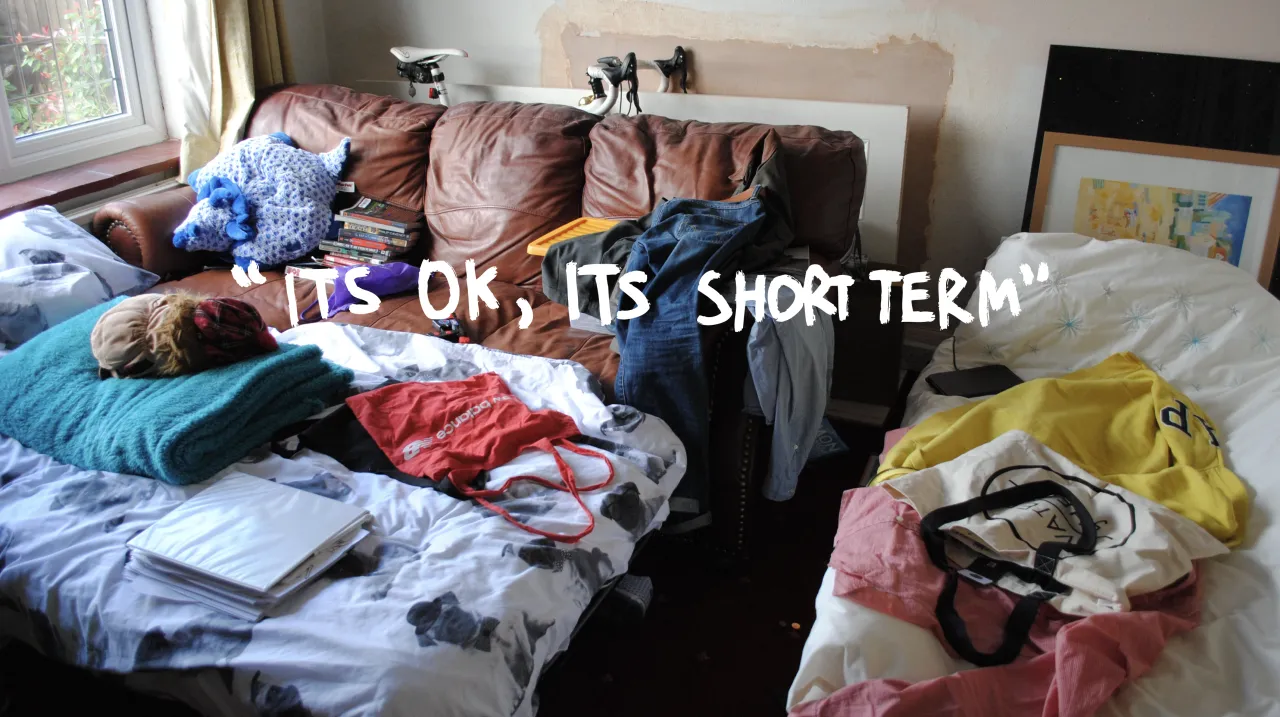
To motivate himself, Rob drew his son's name on his left hand every day, so he'd see it constantly while he worked; his son would see content online and know his Dad was going to get them out of the situation. Yet he couldn't offer his child a house, or much of anything else. "When I wasn't with my son and the coffee shops kicked me out on a Saturday night, I'd sit in an empty library, and I'd carry on: draw and draw and draw," Rob recalls. He built a portable rig from the cheapest tripod on eBay and a gifted selfie stick and took his work on the road.
The commissions that followed were the three childhood dreams, finally made real. A BMX company got in touch about designing a range of bikes. Nike followed. Then the Golden Globes, which he worked on from his mum's house, laptop pushed against the router to get files sent in time, his own work broadcast on the red carpet, Justin Timberlake standing directly in front of it.
Flintstones Photoshop
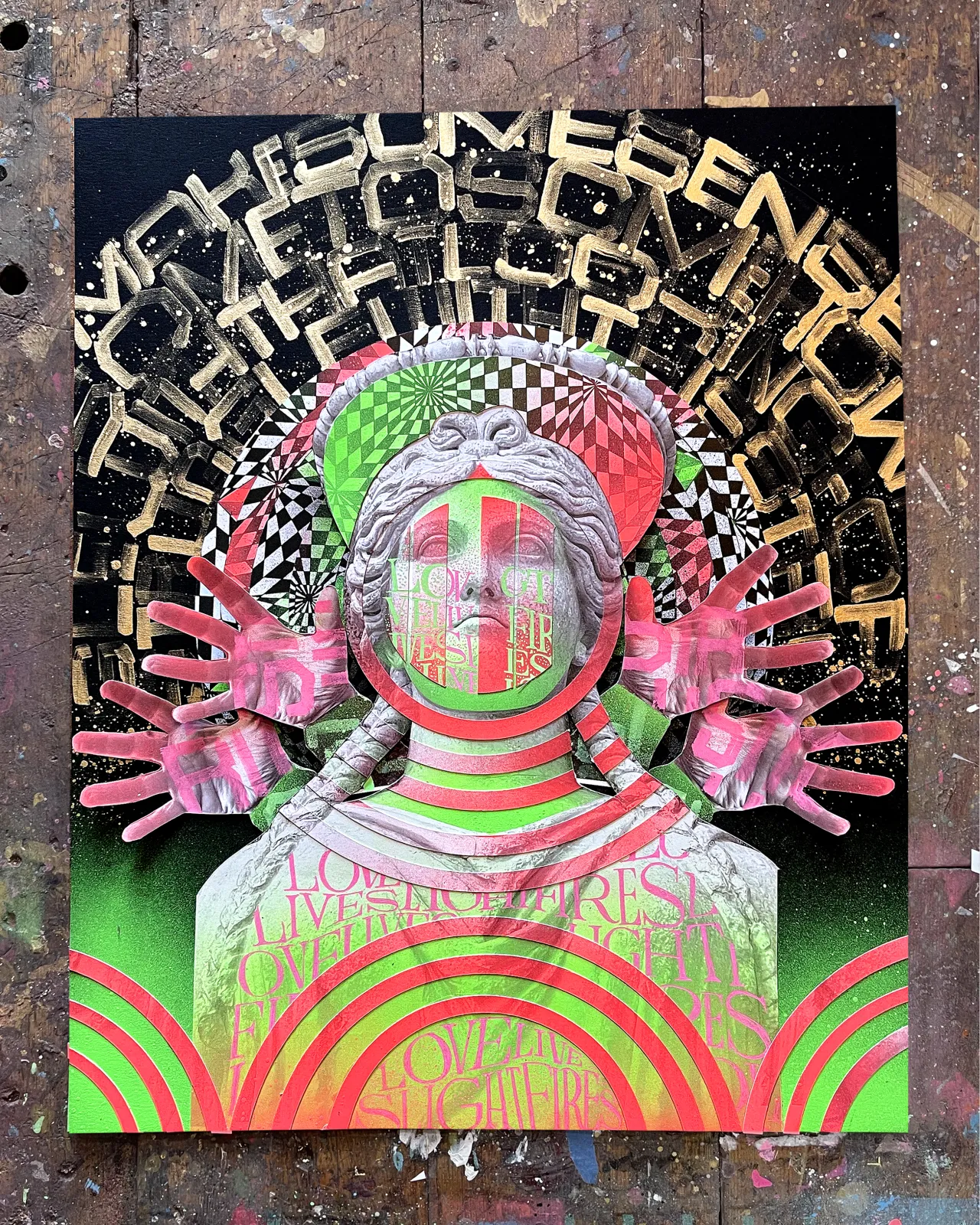
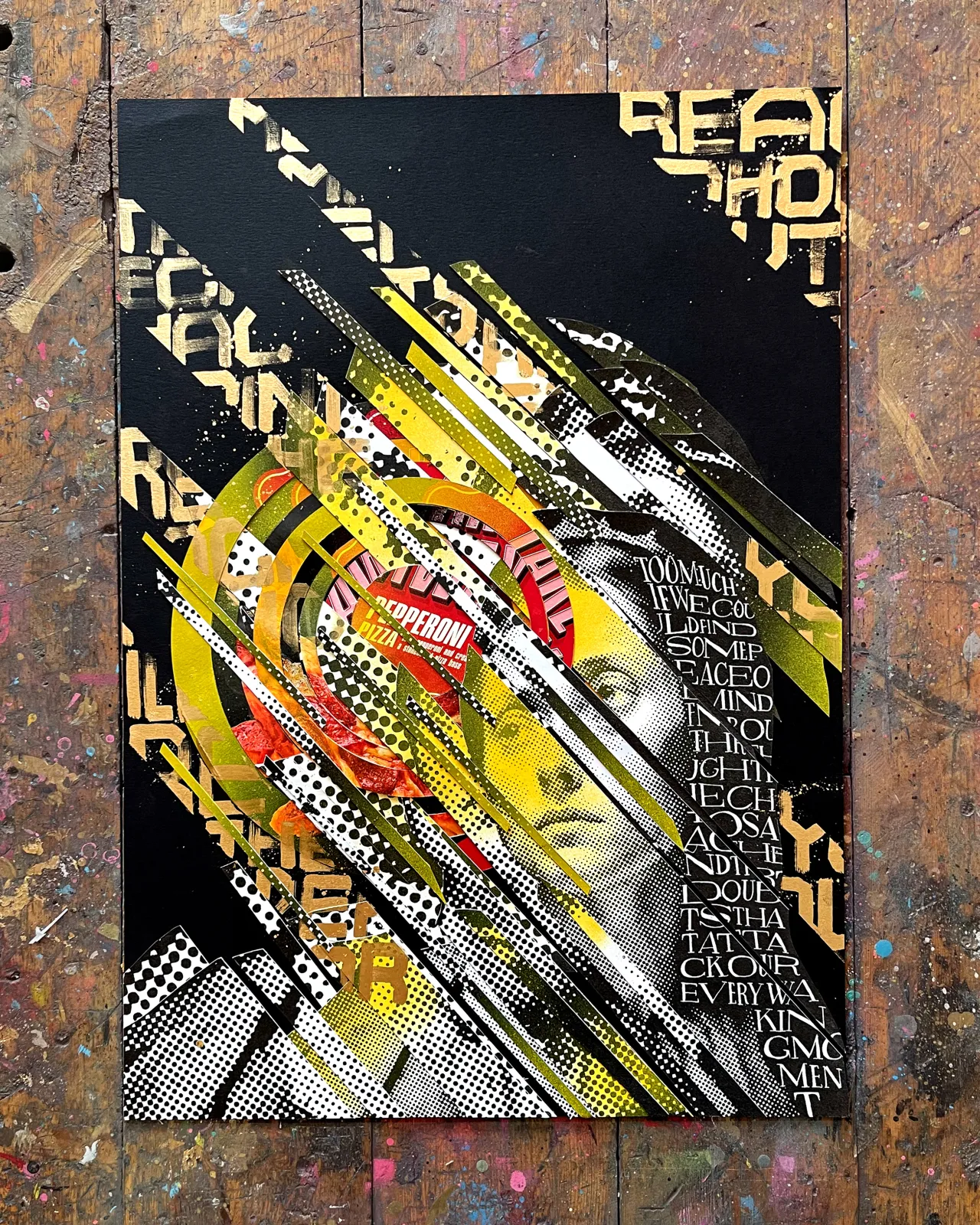
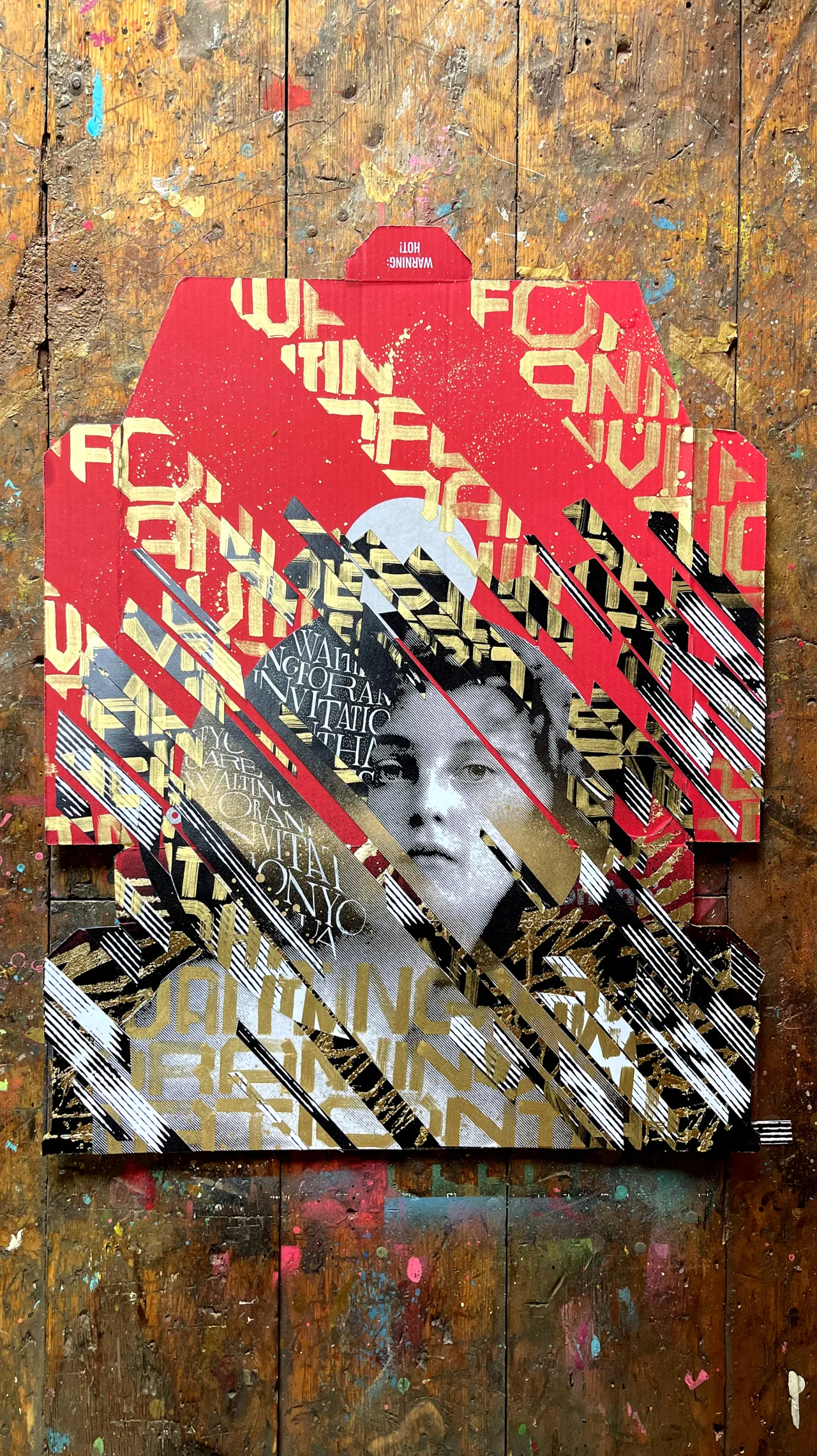
Then COVID arrived, and once again the work disappeared. In response, Rob decided to try something he'd never attempted: collage. He'd never done it before, hadn't looked at how anyone else did it and didn't know if he was doing it right. The appeal, it turned out, was precisely that.
"By embracing imperfection and trying something completely, completely new, I found that this was happening," he recalls. "All these different, weird, and wonderful outcomes with new materials." It turned out to be the most controversial thing he'd ever posted online.
The comments were swift and, in many cases, baffled. People told him, repeatedly and with apparent urgency, that Photoshop would get him quicker, better and easier results. The phrase "Flintstones Photoshop" started appearing, deployed as a compliment by some, a joke by others and a criticism by more still. Rob said he absolutely loves it.
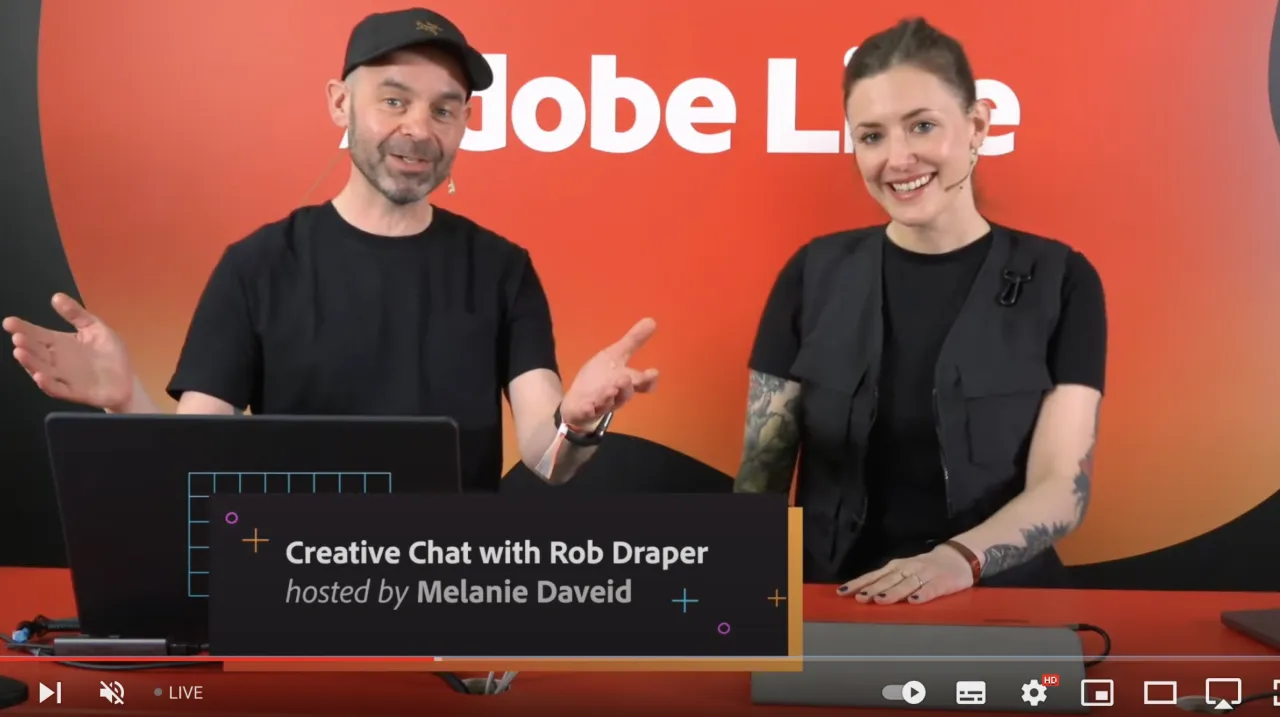
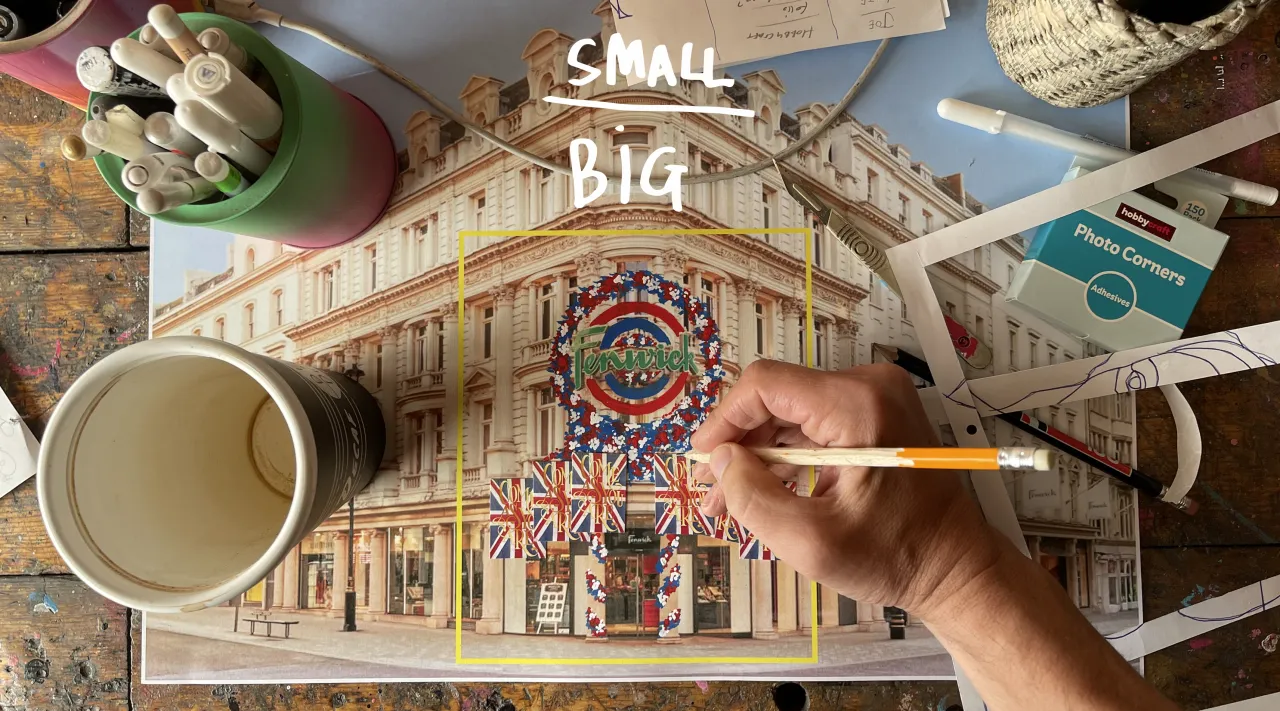
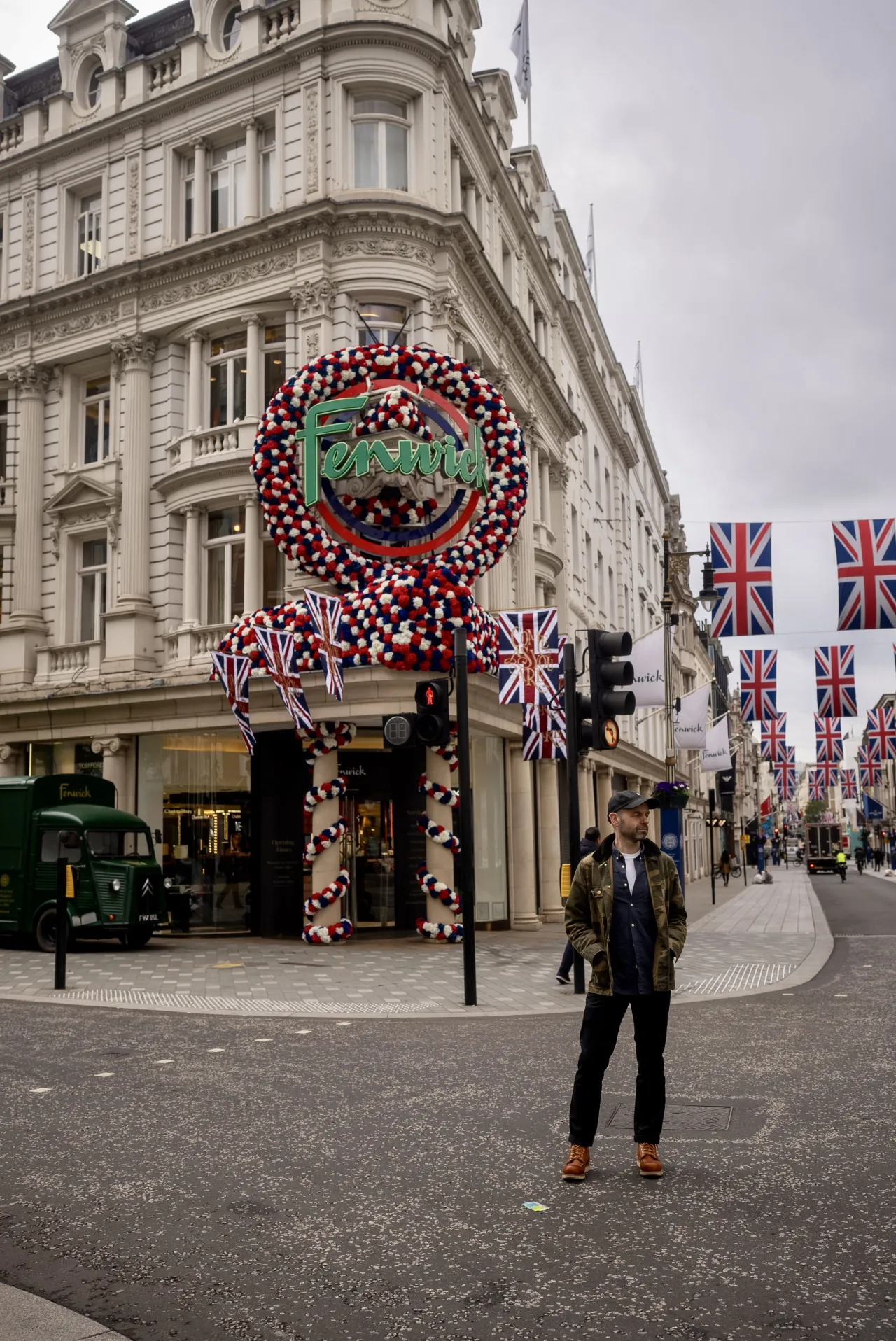
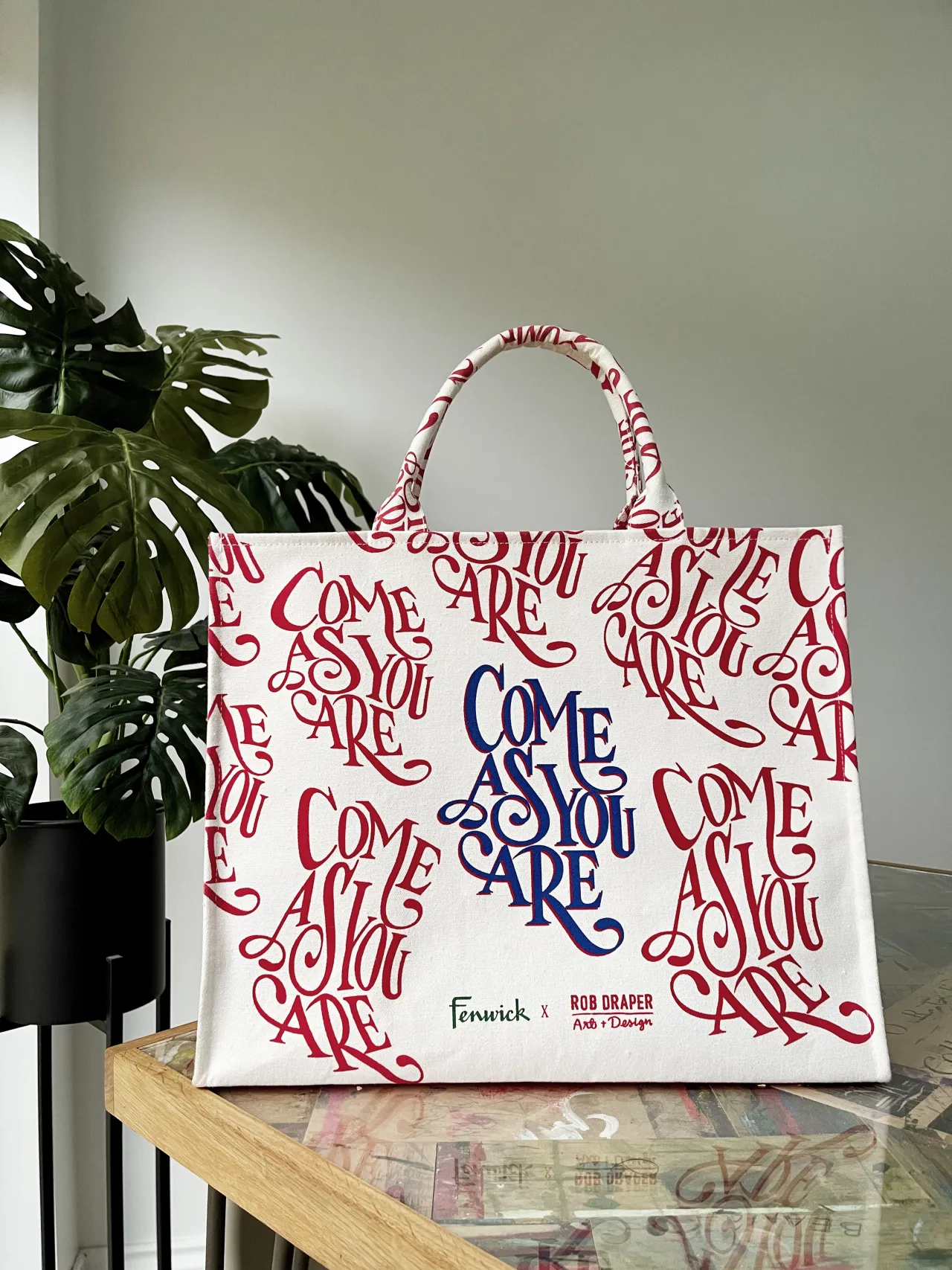
Ironically, Adobe, the makers of Photoshop, appeared to agree with his approach; he found himself being interviewed live by them in Barcelona, broadcast across their global channels, the sheer terror on his face visible in the slides, being asked to explain "the Flintstones Photoshop thing".
The scale of it
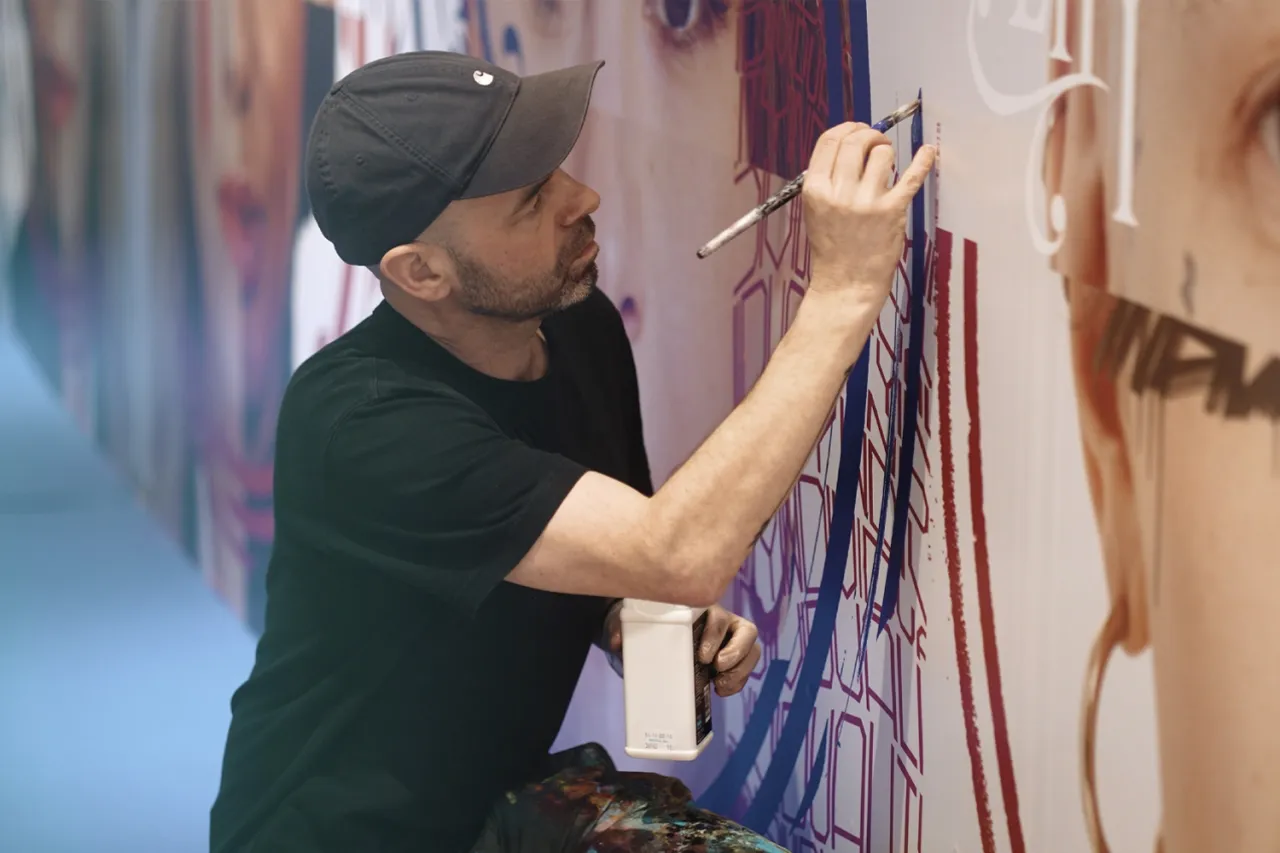
What the collage work unlocked, practically, was a new way of thinking about scale, translating small, imperfect analogue gestures into large, ambitious installations.
As Fenwick's artist in residence in 2023, he describes his own process directly: "These ideas have started on tiny sketches on pieces of paper in a tiny studio and from there, tiny pieces of cardboard. With the incredible team at Fenwick, we've been able to scale this nationally, while still retaining that exact same initial process, that handheld, creative, analogue feel and all the imperfections and inherent charms."
The Bond Street installation involved more than 4,000 hand-painted silk flowers, 360 cans of paint, 13 craftspeople and 580 kilograms of steel. Work is now installed at NASA's Director's Labs in California. And in the same cathedral where he'd been at his son's Christmas carol service when the Golden Globes called, Rob received an honorary university fellowship.
Key takeaways
Rob ends his talk with a list of lessons, offered without sentimentality. The most useful, for the room, is probably the first: find a reason to care.
His reason has changed over the years. Sometimes it was his son, sometimes a childhood dream. Sometimes it was simply the need for a house, and sometimes it was just the "play work" itself. What mattered, though, was that there was always something, even when the circumstances gave every reason to stop and pack it all in.
The rest followed from there. The conclusion: When it's all you've got, starting small is absolutely enough. Being delusional will always help. And as for things not going to plan, he smiles: "I just remember that I was the third-best breakdancer in Worcester."
Editor's Picks
Trending
Latest Jobs
Graphic Designer & Marketing Coordinator at Sign Pro
Full-time·Newcastle·£13 – £16 per hour
Project Manager at British Heart Foundation
Full-time·London·£46,000 – £48,500
Staff Producer, Studio Central at DoorDash
Full-time·San Francisco·$176,800 – $260,000
Associate Creative Director, Art at Huge
Full-time·United States·$102,000 – $135,000
Associate Creative Director, Events at The New York Times
Full-time·New York·$148,000 – $170,000
Senior Brand Designer at DNCO
Full-time·London·£50,000 – £60,000