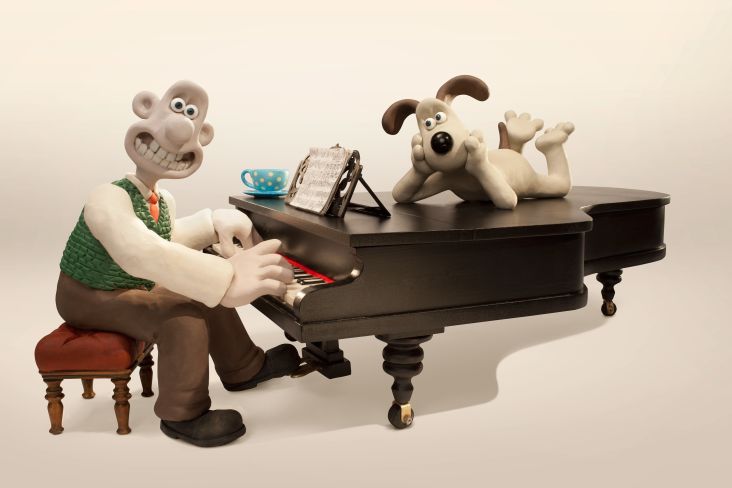
Image licensed via Adobe Stock
The hardest part of getting back into creative work after the holidays isn't the lack of ideas; it's the weight of expectation. You sit down to create something brilliant, and instead, you stare at a blank artboard, feeling like you've forgotten how your own hands work.
That's where prompts come in. Not the grand, intimidating kind that demand masterpieces, but gentle nudges that give you somewhere to start. Think of them as creative warm-ups; little exercises to remind you that making things can be playful, low-stakes and enjoyable.
I've organised these prompts into categories based on what you might need right now. So skip the ones that don't resonate, and adapt anything that feels too prescriptive. These aren't rules; they're invitations.
How to use these prompts
Set a timer for 20-30 minutes. Choose one prompt. That's it. You're not making portfolio work or trying to impress anyone. You're just making something. If it's rubbish, brilliant: you've proved you can still create things, even rubbish things. If it's good, it's also brilliant. Either way, you're moving forward with your creative year.
Work in whatever medium feels easiest. Digital, pencil, pen, collage, whatever. The point is momentum, not perfection. Save your work somewhere you won't obsess over it later, and move on with your day.
1. Warm-up prompts (when your brain feels foggy)
These are deliberately simple. You're not trying to produce anything meaningful; you're just reminding your hands and eyes how to work together.
Draw 20 circles without lifting your pen: This might sound silly, but the repetition is soothing, and you'll notice your line quality improving by circle 15.
Fill a page with overlapping rectangles in different sizes. Let them intersect randomly. Notice the negative space that emerges.
*Create a gradient using only one colour and varying pressure. Whether it's a pencil, a marker, or a digital brush, this reacquaints you with control and subtlety.
Draw your left hand with your right hand (or vice versa). A classic observational exercise that forces you to actually look rather than rely on muscle memory.
Make a mark, rotate the page, make another mark; repeat 10 times. See what accidental compositions emerge when you're not trying to control everything.
2. Constraint-based prompts (when you need boundaries)
Limitless options are paralysing. These prompts give you specific parameters to work within, which actually makes creativity easier.
Design something using only three colours you'd never normally combine. Open your palette, close your eyes, and pick three at random. Work with what you've got.
Illustrate a concept using only geometric shapes; no organic forms allowed. For instance, try depicting "chaos" or "warmth" with nothing but circles, squares and triangles.
Create a composition that fits within a 3cm square. Tiny formats force you to simplify. Plus, it's finished quickly, which feels good.
Design a logo using only straight lines (no curves). Could be for a real or imaginary company. The constraint is the interesting bit.
Illustrate a word using only textures (no outlines or solid fills). Think dots, hatching, grain, noise. How do you convey "rough" or "delicate" through texture alone?
3. Observational prompts (when you need to reconnect with looking)
We spend so much time working from imagination or reference images that we forget how to simply observe what's in front of us.
Draw the view from your window in one continuous line. Don't lift your pen. It'll be wonky and weird, and that's the point.
Sketch three objects on your desk without labelling what they are. Focus on form, shadow and proportion. No words, no context.
Illustrate how light falls in your room at 3pm. Not the room itself; just the shapes and angles of light and shadow.
Draw the contents of your bag/pocket without arranging them first. Tip everything out and draw the chaos exactly as it lands.
Document a single plant or flower at three different times of day. Quick sketches showing how it changes under different lighting conditions. Notice what you didn't see before.
4. Conceptual prompts (when you want to explore ideas)
These are more open-ended and invite interpretation. Good for when you're feeling slightly more confident but still need a starting point.
Visualise what 'waiting' looks like. Not someone waiting; the feeling of waiting. What shapes, colours or patterns represent that?
Create a visual response to a piece of music you love. Put on a song and let your hand move with it. Don't overthink, just respond.
Illustrate a sound (rain, traffic, laughter, silence). How do you make silence visible? What does laughter look like as a composition?
Design a poster for an imaginary exhibition about 'transitions'. No brief, no client, no restrictions. Just your interpretation of the theme.
Visually represent your mood without using faces or figures. Use colour, composition, line weight, and negative space.
5. Playful prompts (when you need to remember it's supposed to be fun)
This is all about giving yourself permission to be silly. These prompts work best when you stop caring about the outcome.
Redesign a household object to be impractical. A kettle with seventeen handles. A chair made of glass. Embrace the absurd.
Draw something familiar in the 'wrong' style. Your pet in the style of a medieval manuscript. Your coffee cup as Brutalist architecture.
Create a pattern from the ugliest colour combination. Challenge yourself to make it work despite itself. Make ugly interesting.
Illustrate a children's book about something mundane (doing taxes, waiting for the bus). This could be charming, weird, whatever. The important thing is to make it.
Design packaging for a product that doesn't exist. Bottled silence. Canned laughter. Packaged time. Let your imagination run.
6. Technical prompts (when you want to practise a skill)
Use these when you want to sharpen specific skills without the pressure of producing finished work.
Create five variations of the same composition using different colour palettes. Discover how dramatically a change in colour can change mood and meaning.
Practice typography: hand-letter the same word in 10 different ways. Serif, sans serif, script, decorative, experimental. Push each one to an extreme.
Draw the same object three times: realistic, simplified, abstracted. Notice what gets lost and what gets emphasised at each stage.
Explore one brush or tool you never use. Spend 20 minutes just seeing what it can do. No agenda, just exploration.
Create the same illustration in both digital and analogue. Notice how the medium changes your approach and the result.
What next?
The point of these prompts isn't to fill a sketchbook or build a portfolio. It's to remind you that making things can be simple, exploratory and low-stakes. If you do one a week throughout January, you'll have eased yourself back into creative practice without forcing anything.
Save the ones that resonate. Ignore the ones that don't. Adapt freely. Make up your own. The structure is just scaffolding; you can dismantle it once you no longer need it.
And if you find yourself genuinely enjoying one and wanting to develop it further? Brilliant. That's exactly what these prompts are designed to do: get you past the paralysis of the blank page and into the flow of actually making things again.

Editor's Picks
Trending


Podcasts
Editor's Picks
Further Reading