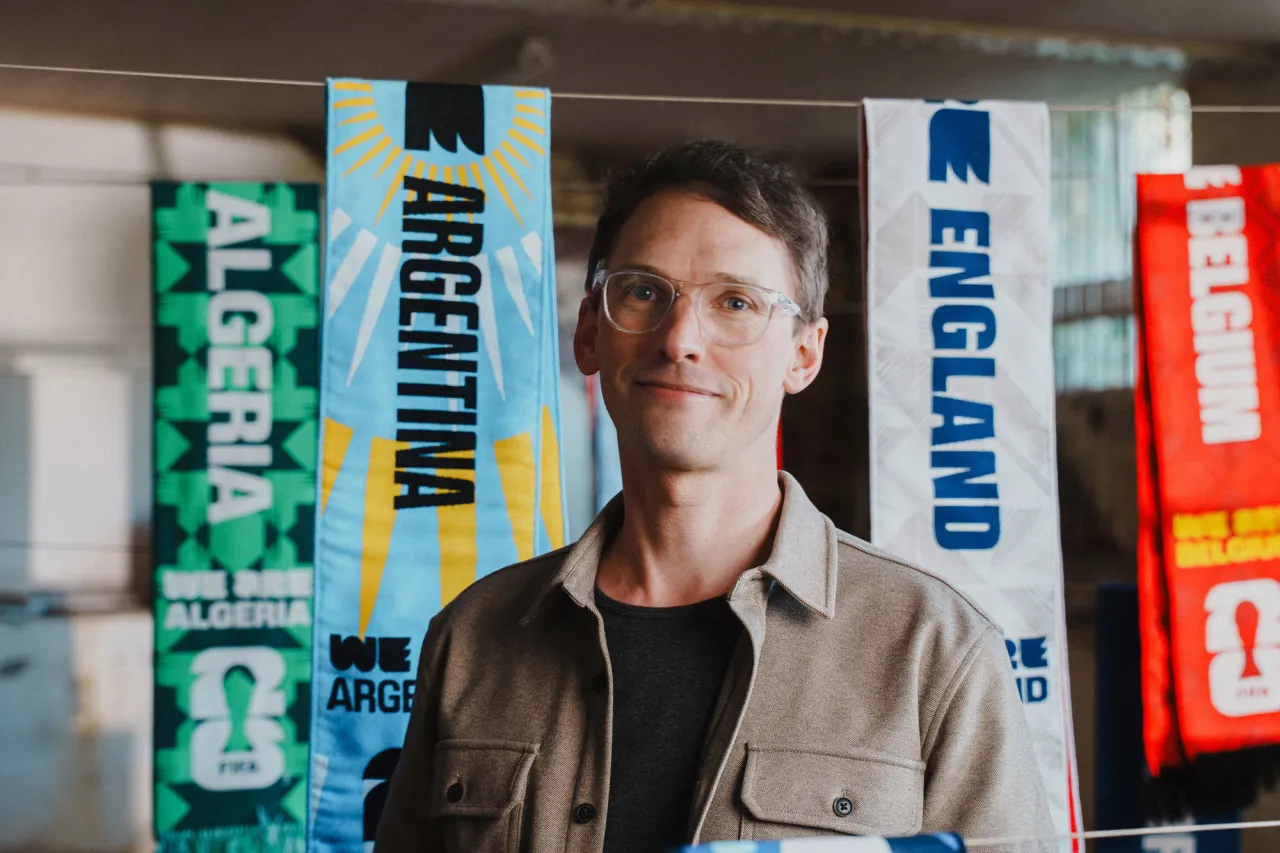
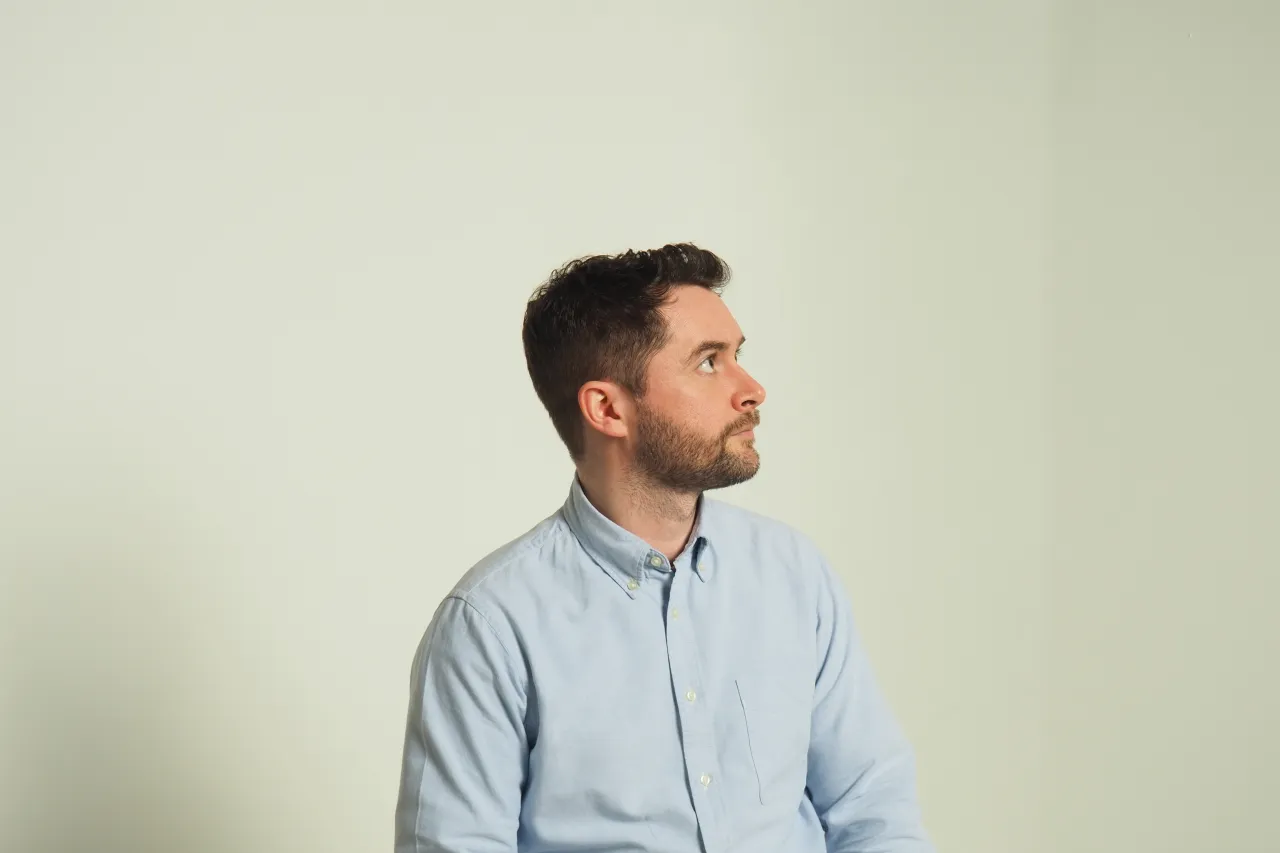
There are big briefs, and then there are briefs that start big and get bigger. Tom Pitts, founder and creative director of Leeds-based creative design studio Hand Drawn Pixels, thought he was signing up to design scarves for a handful of host nations. What he actually signed up for was a creative marathon involving close to 200 individual designs, each one rooted in cultural research, and engineered to work within the demanding constraints of woven textile production.
The client was Global Scarves LLC, a third-generation textile producer with an official licence to produce FIFA World Cup 2026 merchandise. The project grew in stages: first, the host countries and cities; then all 48 qualified nations; and, for Fanatics, a retail range requiring another 48 scarves on top, many of which were then adapted into matchday half-and-half versions. "We didn't initially realise quite how many designs it would become," Tom says. "Once we got into the rhythm of it, though, it became creatively addictive."
For a studio that works across branding, digital, product and campaigns, this was a different kind of challenge: not just depth of craft on a single project, but consistency at scale, across dozens of cultural contexts, with a brief that kept growing.
The results are now appearing in FIFA stores, fan festivals and Fanatics-run stadium shops across North America and Europe. For Tom, a lifelong Sheffield United supporter who grew up steeped in football culture, it also turned out to be something a bit more personal than a product commission.
The weight of the scarf
For starters, a football scarf isn't merchandise in the conventional sense. "A football scarf isn't just merchandise," points out Tom. "People attach memories to them: games, trips, family, identity, belonging. You become very aware that someone might buy one of these scarves at a World Cup and keep it for the next 30 years. That adds responsibility."
This wasn't just a theoretical matter to Tom. "I've grown up around football culture my whole life," he says. "Matchdays, terraces, scarf sellers outside grounds, all of that subconsciously feeds into your understanding of what makes football visuals feel authentic. It never felt like designing products. It felt like contributing to football culture in some small way."
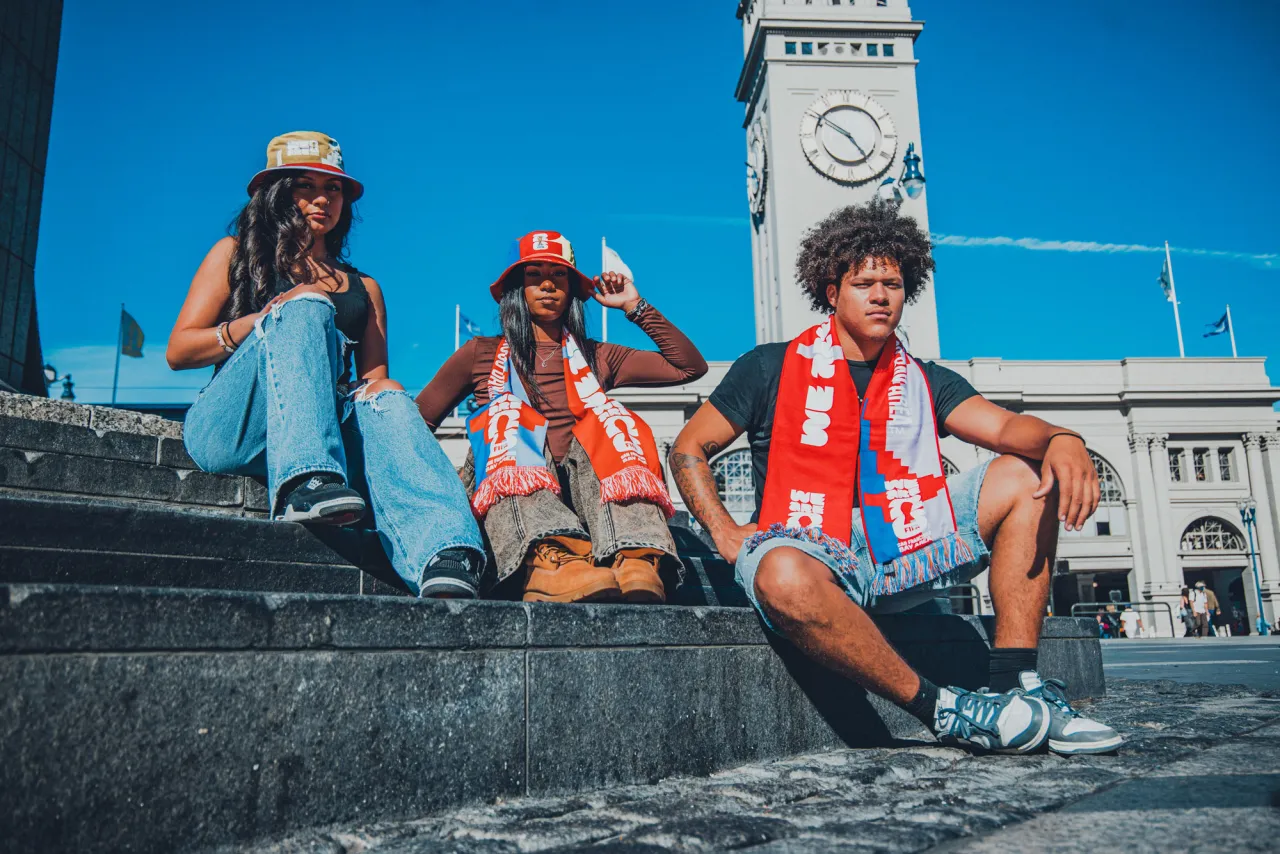
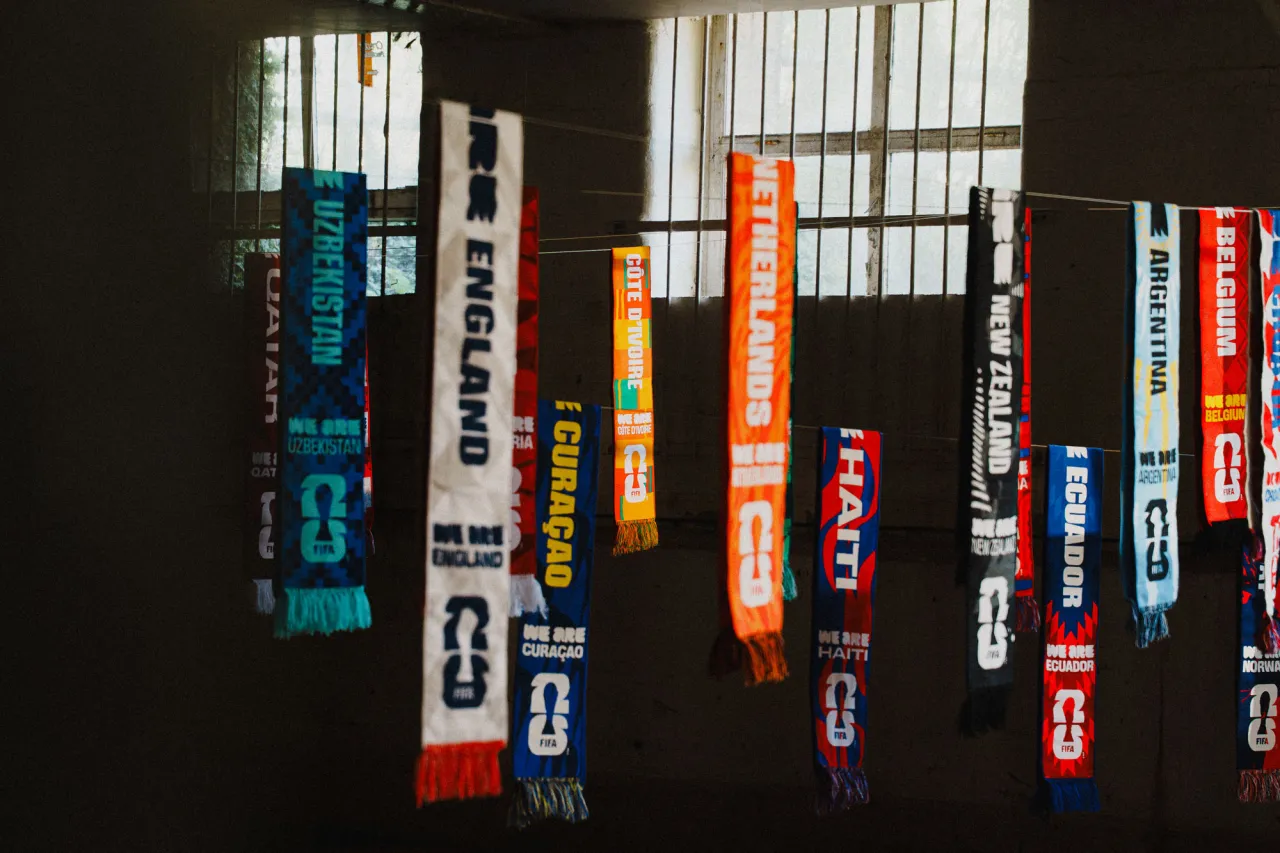
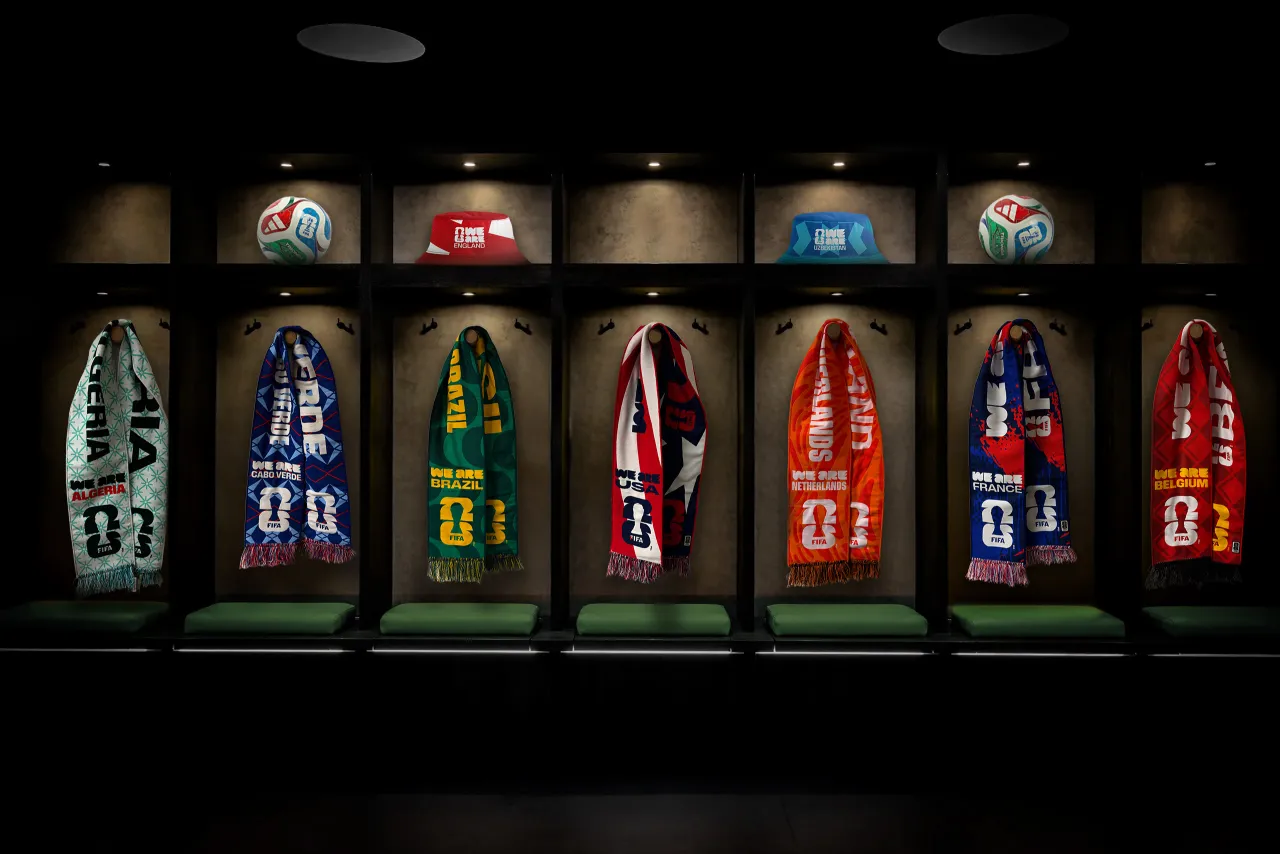
Importantly, the brief called for designs that felt rooted and real, not touristy. "We consciously tried to avoid lazy visual stereotypes wherever possible," Tom stresses. "Football culture is modern, global and constantly evolving, so the scarves needed to feel like contemporary design pieces rather than tourist souvenirs."
Down the rabbit hole
The research process was extensive. For each nation, the team looked beyond football into architecture, street culture, folklore, historic kits, typography styles, local art and national symbolism. "The aim wasn't just to make country-themed scarves," Tom explains. "It was to build visual identities that felt rooted in somewhere real."
Japan's balance of minimalism, heritage and contemporary graphic culture pulled the team deep. Ecuador offered vivid colour and symbolism. Czechia kept unfolding the more they dug: one design ended up referencing a church roof pattern. "The more you understand a place visually and culturally, the less you rely on clichés," says Tom. "We tried to find details that people from those countries might genuinely recognise or appreciate, rather than just designing from an outsider's assumption."
To get ahead of the production and sign-off schedule, the studio also designed for teams most likely to qualify, which introduced a bittersweet wrinkle: some of their favourite work will never be seen publicly. Wales, Ireland and Italy are among the nations for whom designs were sampled and then shelved when qualification didn't go their way. It's one of the more unusual occupational hazards of being a designer: pouring genuine research and craft into a piece, only for a result on a pitch thousands of miles away to render it redundant.
Working in batches across an extended timeline helped manage the challenge of keeping the collection fresh. "Certain ideas would emerge that felt better suited to specific nations, so I'd note them down and come back to them later," Tom says. "With more understanding of the production process each time, I could refine decisions: either pushing ideas further where they worked, or deliberately changing direction where something felt too similar."
Limited by the loom
For designers unfamiliar with woven textile production, the technical constraints come as a surprise. Fine detail disappears. Gradients are essentially off the table. Thin typography and complex illustration don't translate. The palette is restricted by available yarn colours. Every design on screen has to be interrogated for whether it can actually be woven.
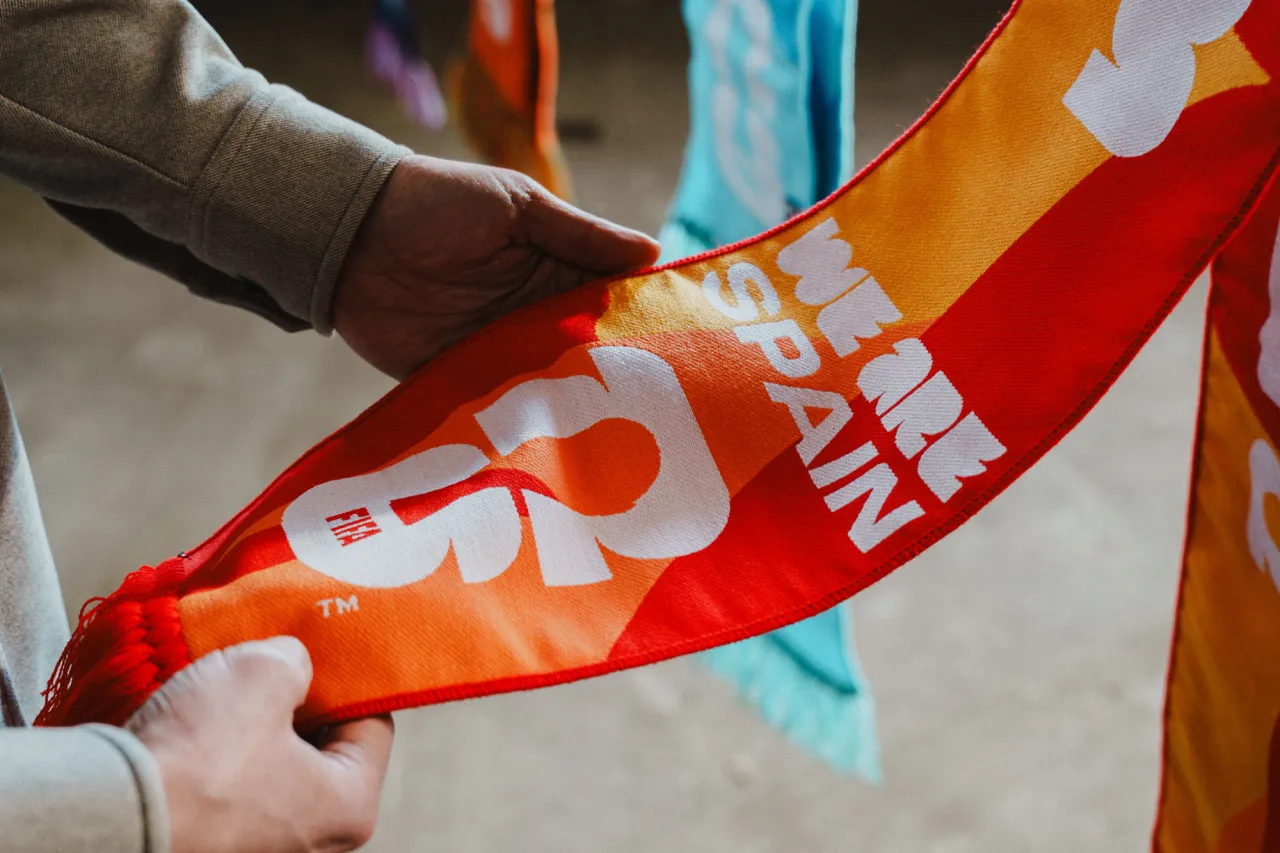
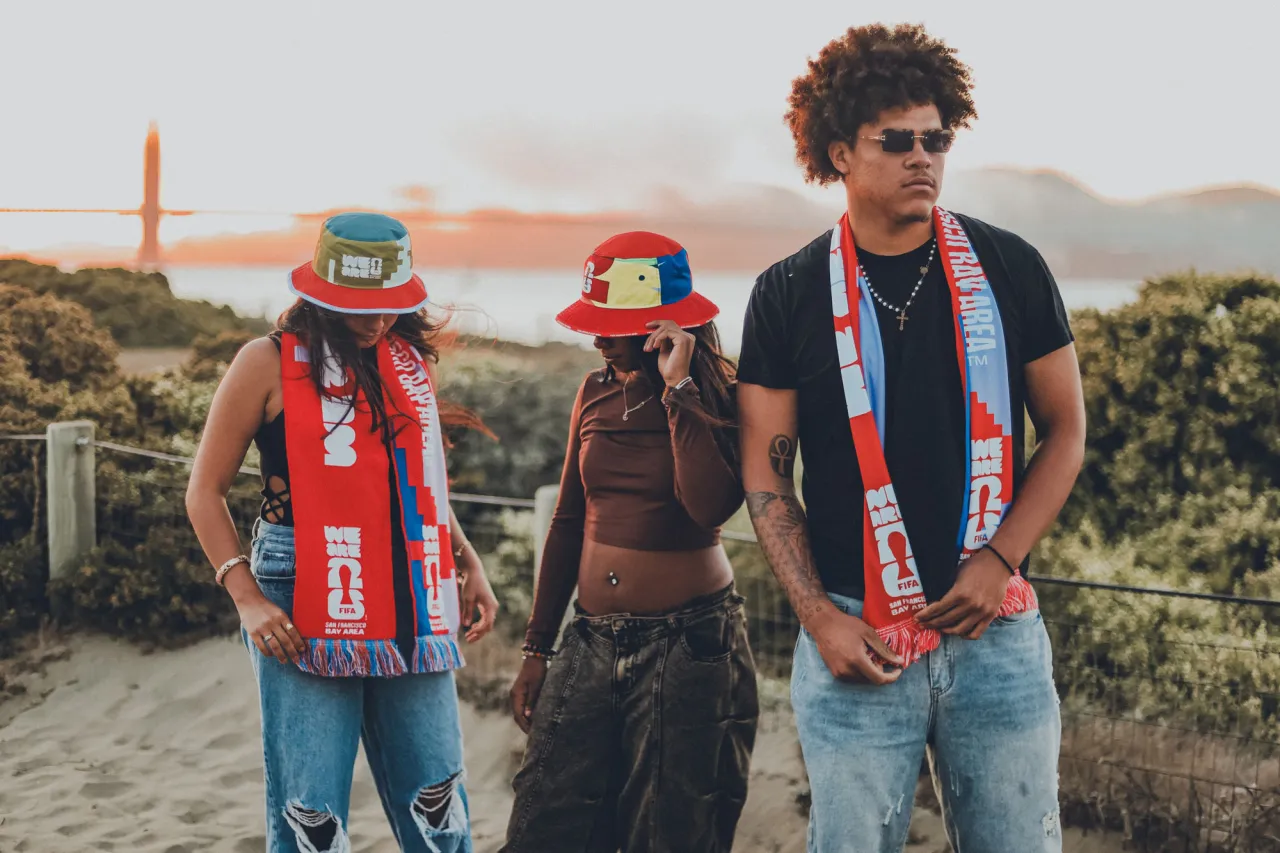
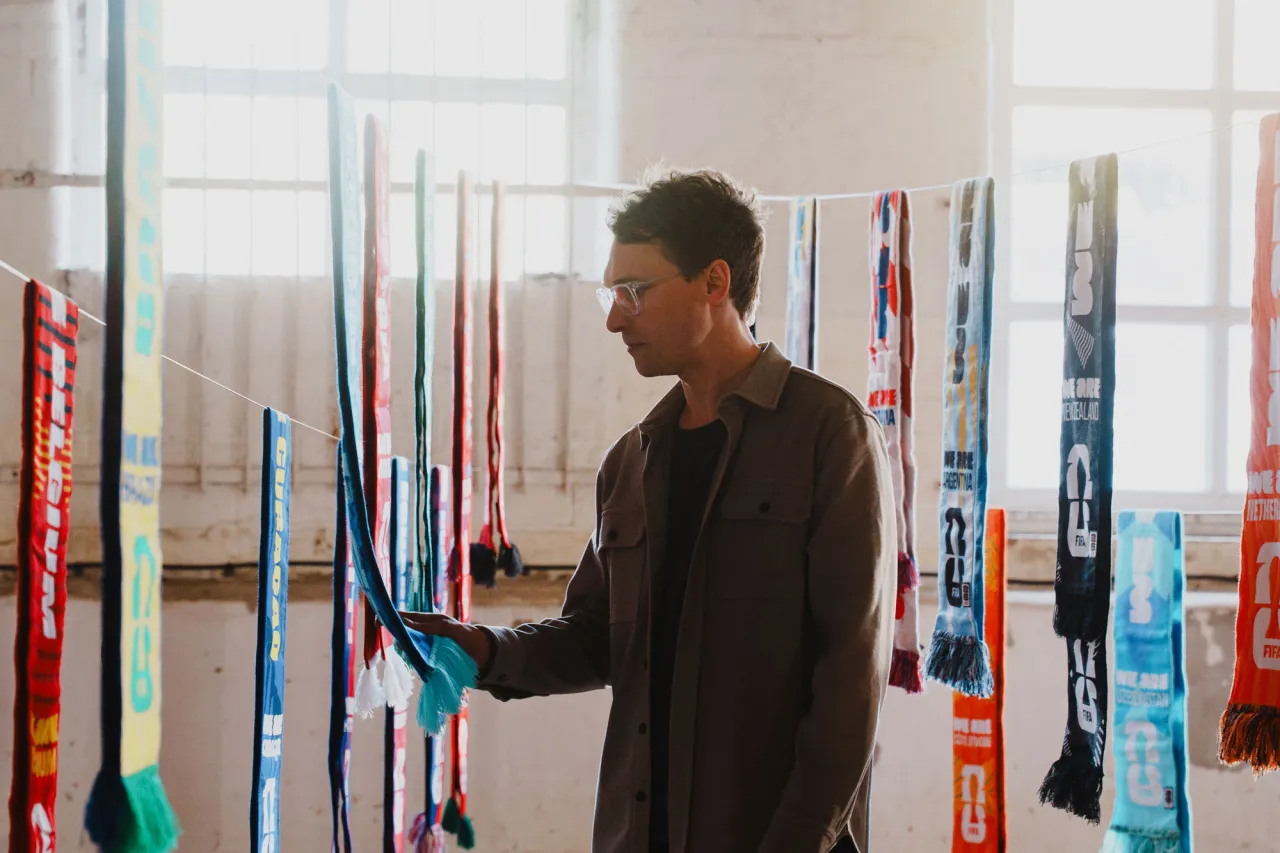
"There are loads of limitations people don't realise," Tom says. "Tiny details, restricted colours, gradients, thin typography and complex illustrations often don't translate into woven production. You have to think: how can this idea work in principle?" The production team in Turkey were a key part of working through those constraints, and Global Scarves' expertise was essential in finding what Tom describes as "the sweet spot between ambitious design and what could physically be woven well".
That collaboration was unusually close. "This project simply wouldn't have happened without that relationship and trust," says Tom. "They gave me a huge amount of creative freedom, but also guided the process from a manufacturing perspective constantly. It became a really collaborative process rather than client and designer."
What comes next
Maintaining visual distinctiveness across nearly 200 designs is the kind of challenge that doesn't get talked about enough. It isn't just about the quality of any single piece; it's about avoiding repeated habits, not letting the collection blur into itself, and keeping enough creative tension in the work so that the 180th scarf feels as considered as the first.
"Projects like this change your confidence as a studio," Tom says. "It proves you can operate creatively at that level and handle something with real scale and cultural weight." As a kid from Yorkshire who grew up obsessed with football and design, he's candid about the surreal quality of seeing that work land in a global context: "You never really imagine something you've worked on ending up on a global stage like that."
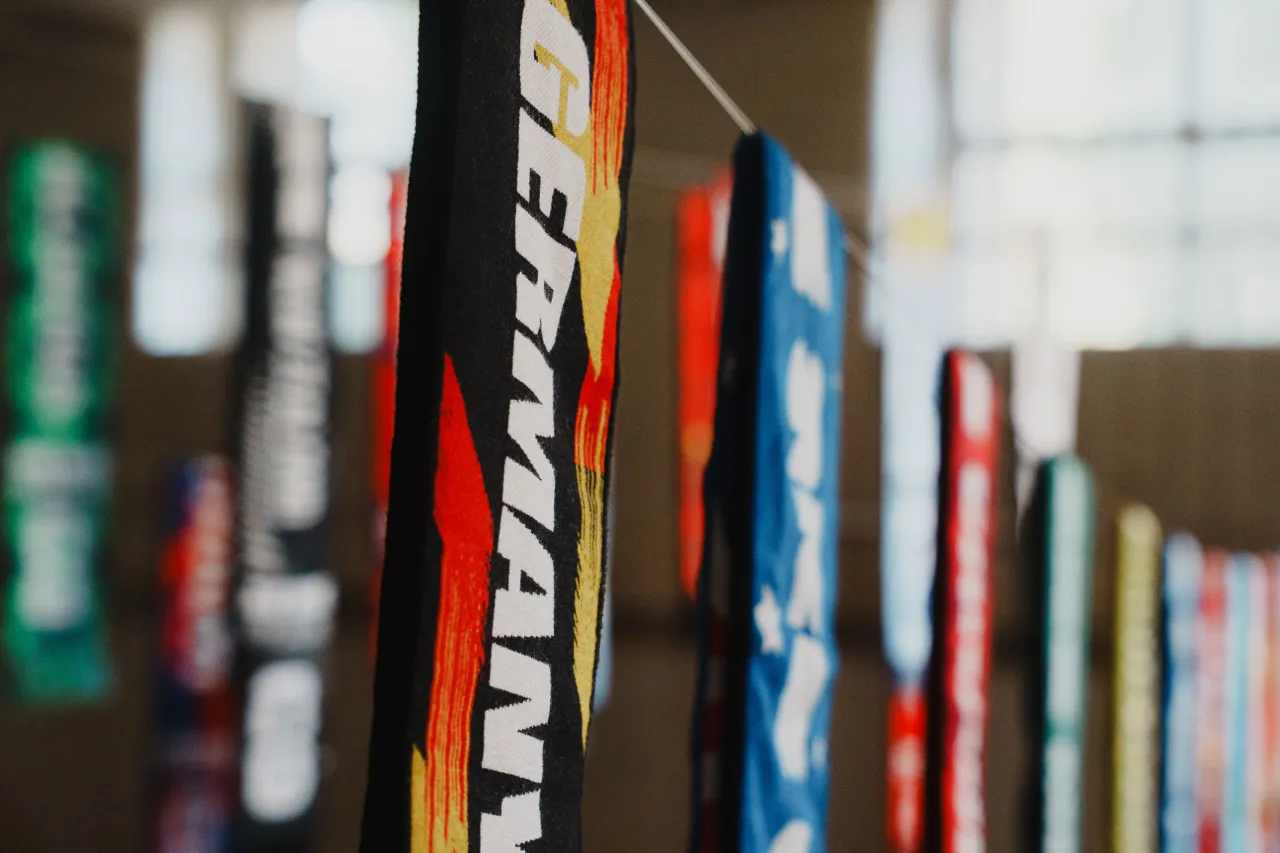
Crucially, the project isn't finished. The knockout rounds are still to come, and Tom and Global Scarves are attempting something that, as far as anyone can tell, has never been done before: official matchday scarves designed, produced and delivered in time for every knockout game as it happens.
To pull it off, Global Scarves has partnered with 81Eighty, the merchandise operation of the Dallas Cowboys, combining manufacturing muscle and logistics infrastructure to make the timeline viable across stadiums in Canada, Mexico and the USA. Tom himself will be in Dallas throughout the knockout stages, overseeing production on the ground. The exact mechanics of how they'll manage it remain, for now, under wraps.
One final question: which scarf would he take home from the whole collection for himself? Tom doesn't hesitate: Germany. "Both scarves I designed strike a nice balance between heritage and retro influences, with a colour palette that just feels like it works perfectly in scarf form," he smiles.
Editor's Picks
Trending


Latest Jobs
Designer at New Genre
Full-time·London·£36k–£48k
Account Manager at BUILDHOLLYWOOD
Full-time·London·£34k–£38k
Junior Project Coordinator at Colorido Studios
Full-time·Twickenham·£28k–£32k
Deputy Head of Stage at Factory International
Full-time·Manchester·£35,015
Senior Digital Designer at Red Antler
Full-time·New York·$95k-$130k
Senior Designer at Jubba
Full-time·London·£50k-£60k
](https://media.creativeboom.com/3352f361-2728-49b4-bb3a-6c39f4d44a01/conversions/511cba212edd491cfe655035ff2f9f6f5a6b98ce-medium.webp)