Post Typography's Baltimore Museum of Art campaign ‘disrupts vernacular advertising and signage’
Baltimore and NYC-based creative agency Post Typography has created The Necessity of Tomorrow(s) lecture series campaign for Baltimore Museum of Art, which it describes as ‘unconventional’ and ‘participatory’.
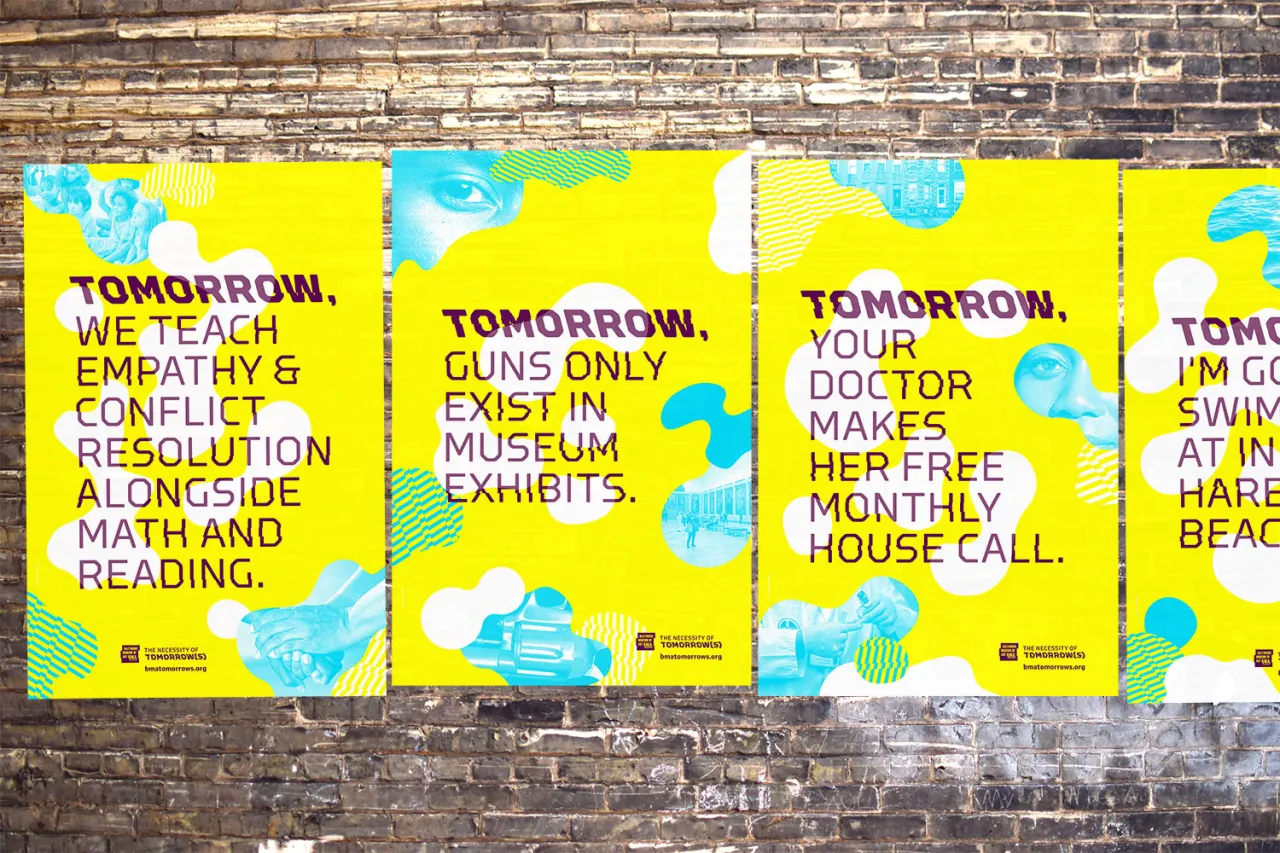
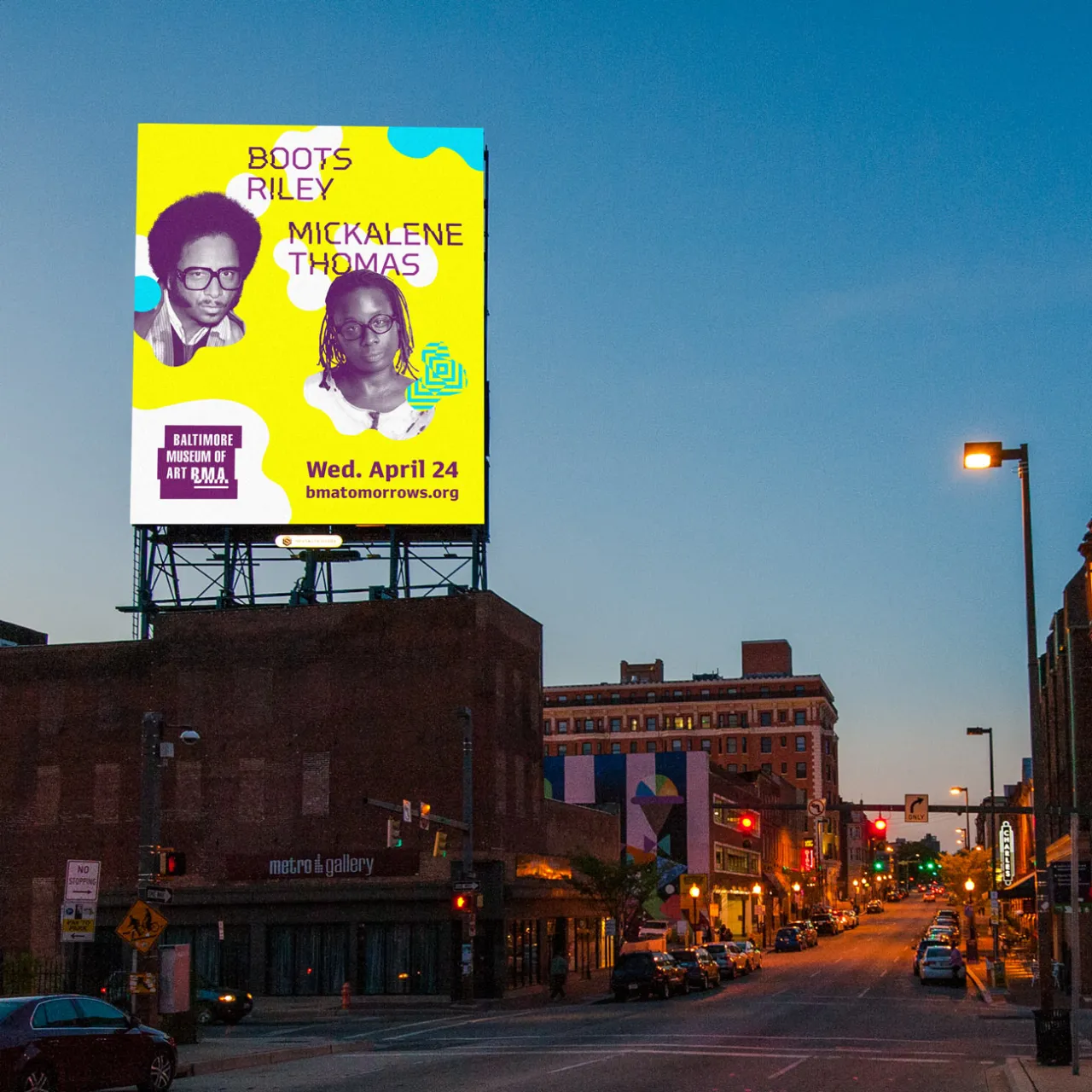
The series of posters, placards, billboards, print materials and more features conversations with prominent black artists and thinkers, including Ta-Nehisi Coates, Boots Riley, and Mark Bradford.
The lecture series on art, race, and social justice takes its name from an essay by black science fiction author Samuel Delany, discussing the importance of speculative futures.
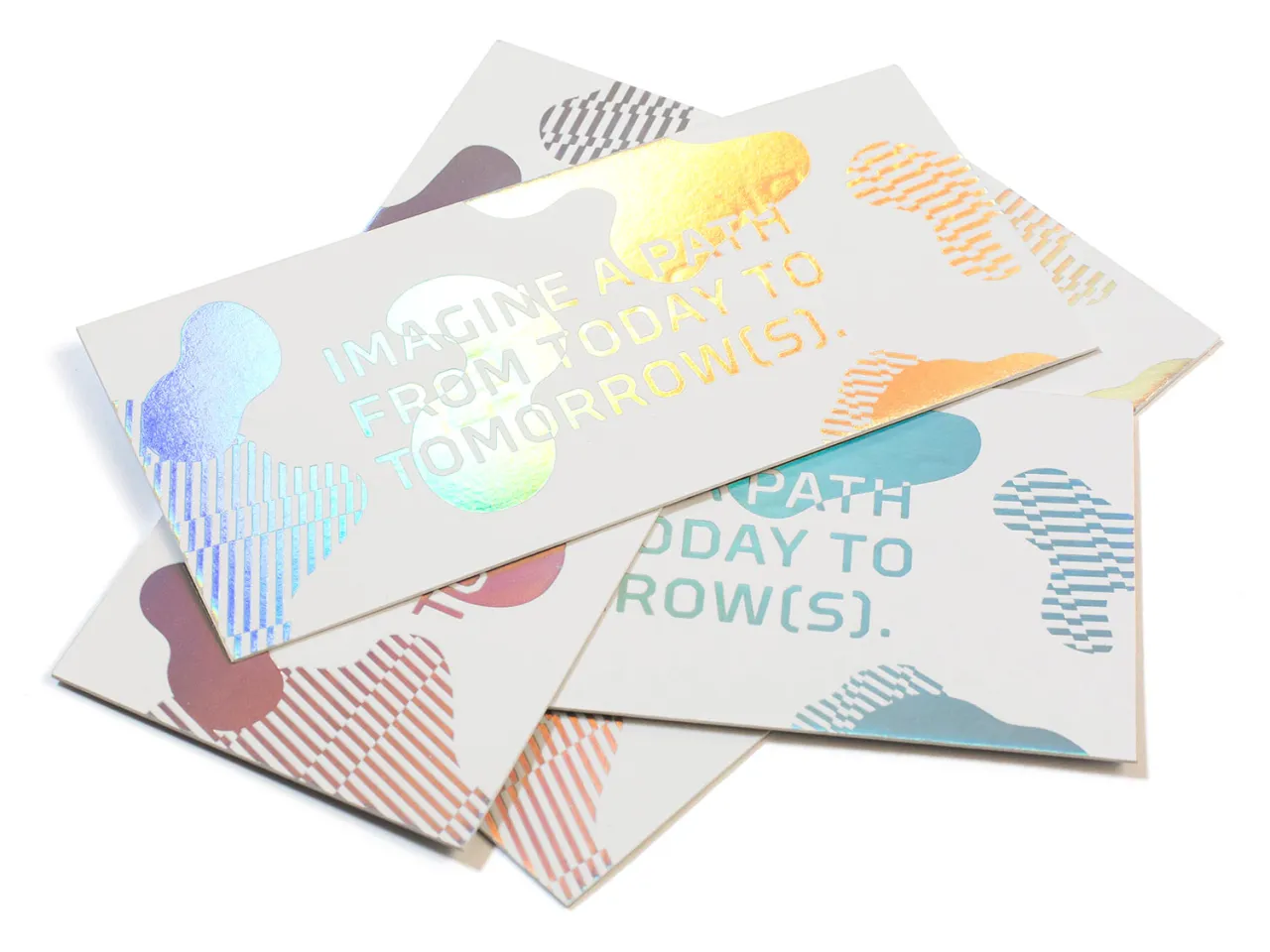
Post Typography says that its visual approach borrows equally from "retrofuturist science fiction and contemporary design iconography, creating a look for the campaign that is decidedly weird and instantly recognisable”. It uses the typeface families Torque and Queue type families from the Baltimore foundry Type Supply.
According to the studio, among the questions raised in discussion with the museum were, “Can design carry a conversation beyond the walls of a lecture hall? Can it create a richer context for the event itself? Can it spark new dialogue and debate?"
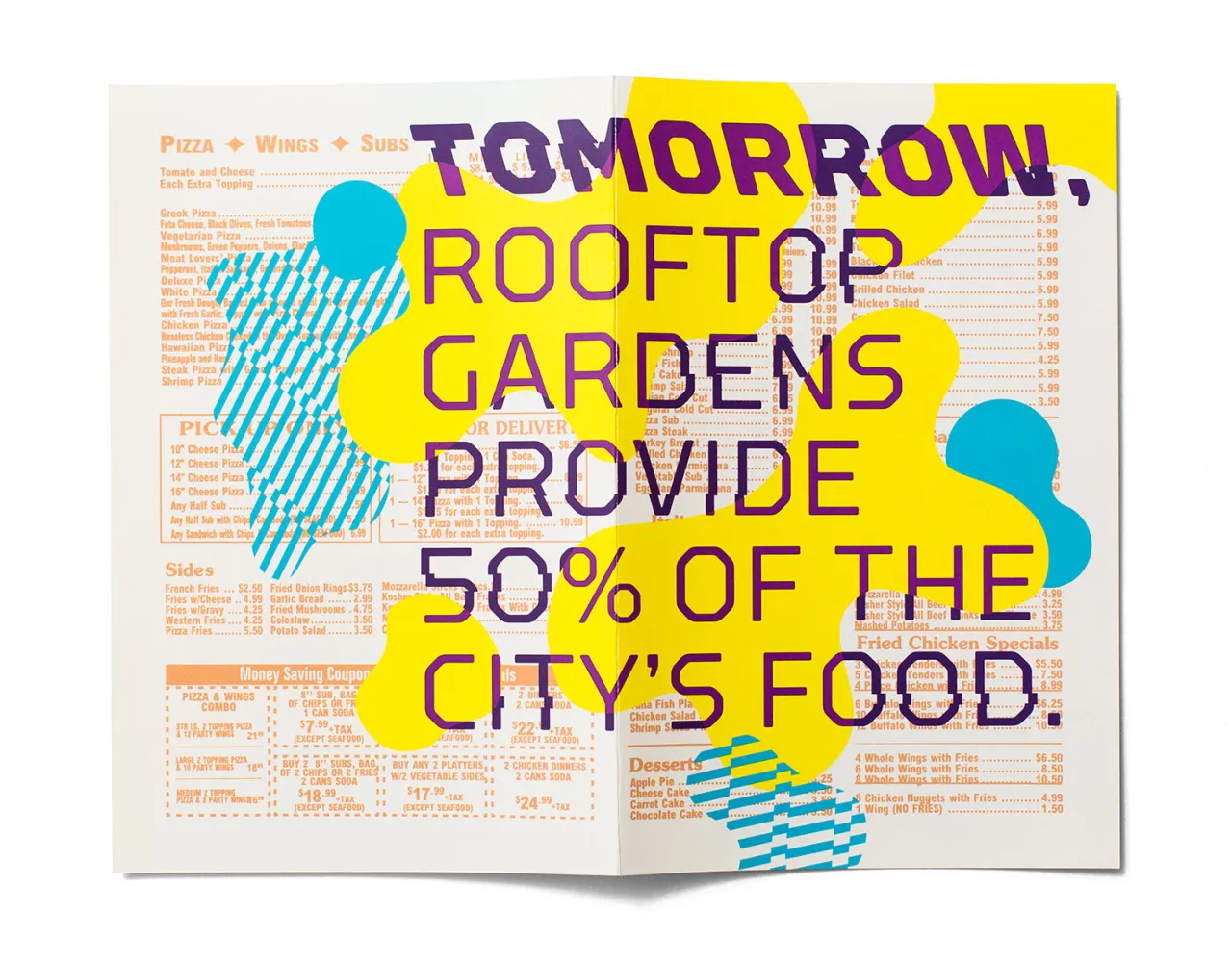
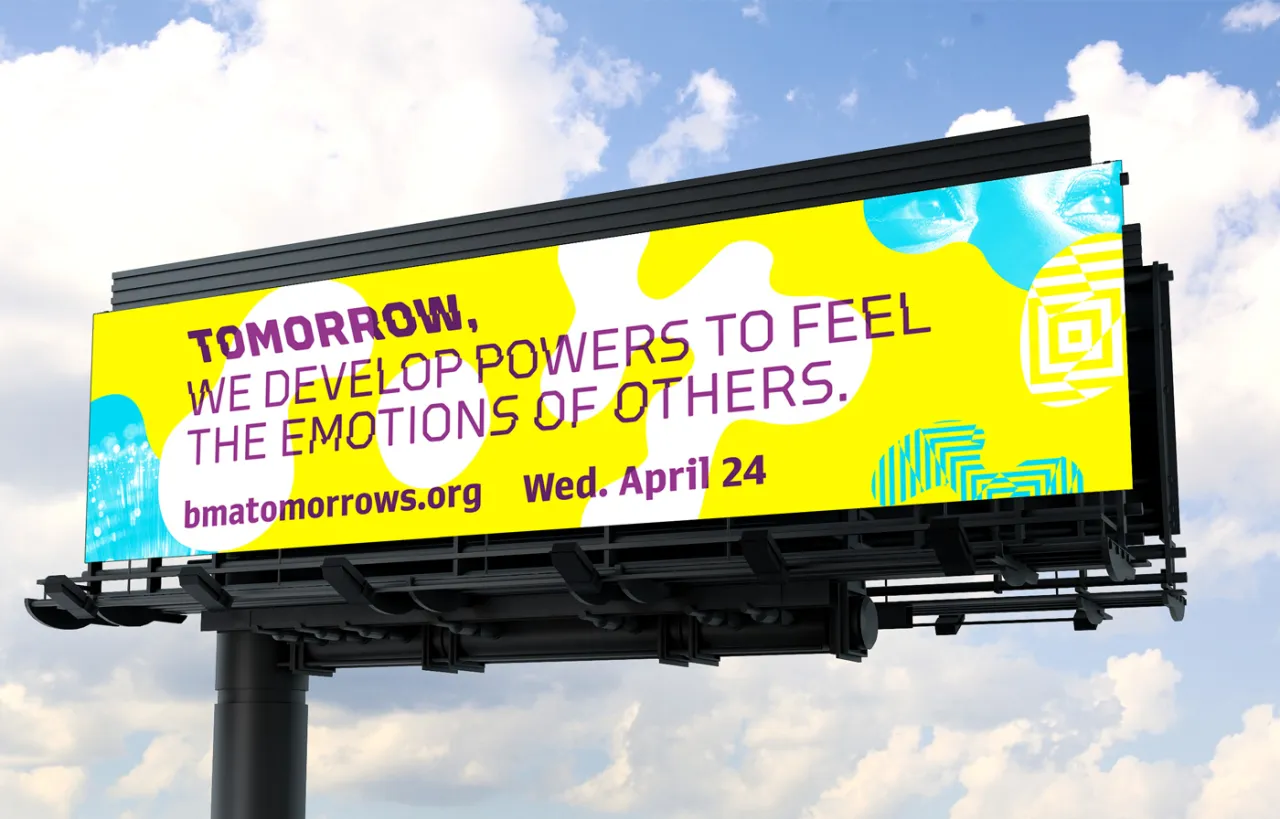
The campaign is centred on language and ideas, using strong typography and bright colours to promote “radical, whimsical, and provocative visions of the future," such as "Tomorrow, prisons are converted into dance halls, art galleries, and rec centres"; "Tomorrow, guns only exist in museum exhibits"; and "Tomorrow, empathy is the most valued quality in a leader.”
Over the past year and a half, these statements among others have been used across billboards, bus shelters, and posters around Baltimore.
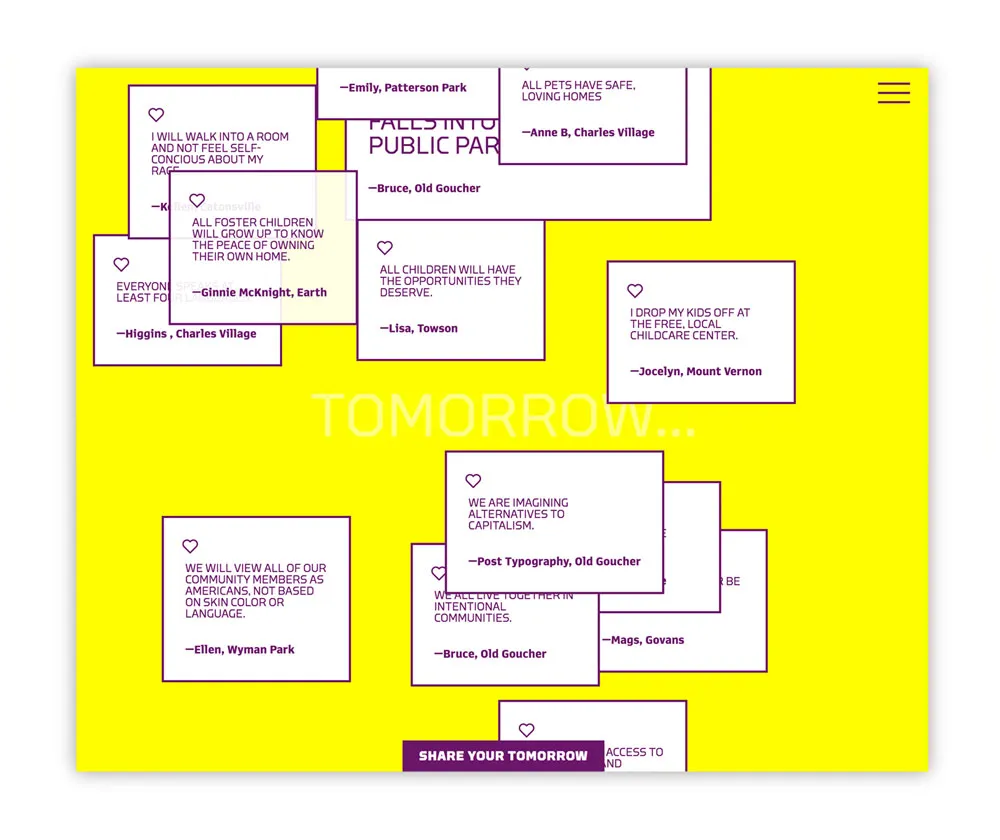
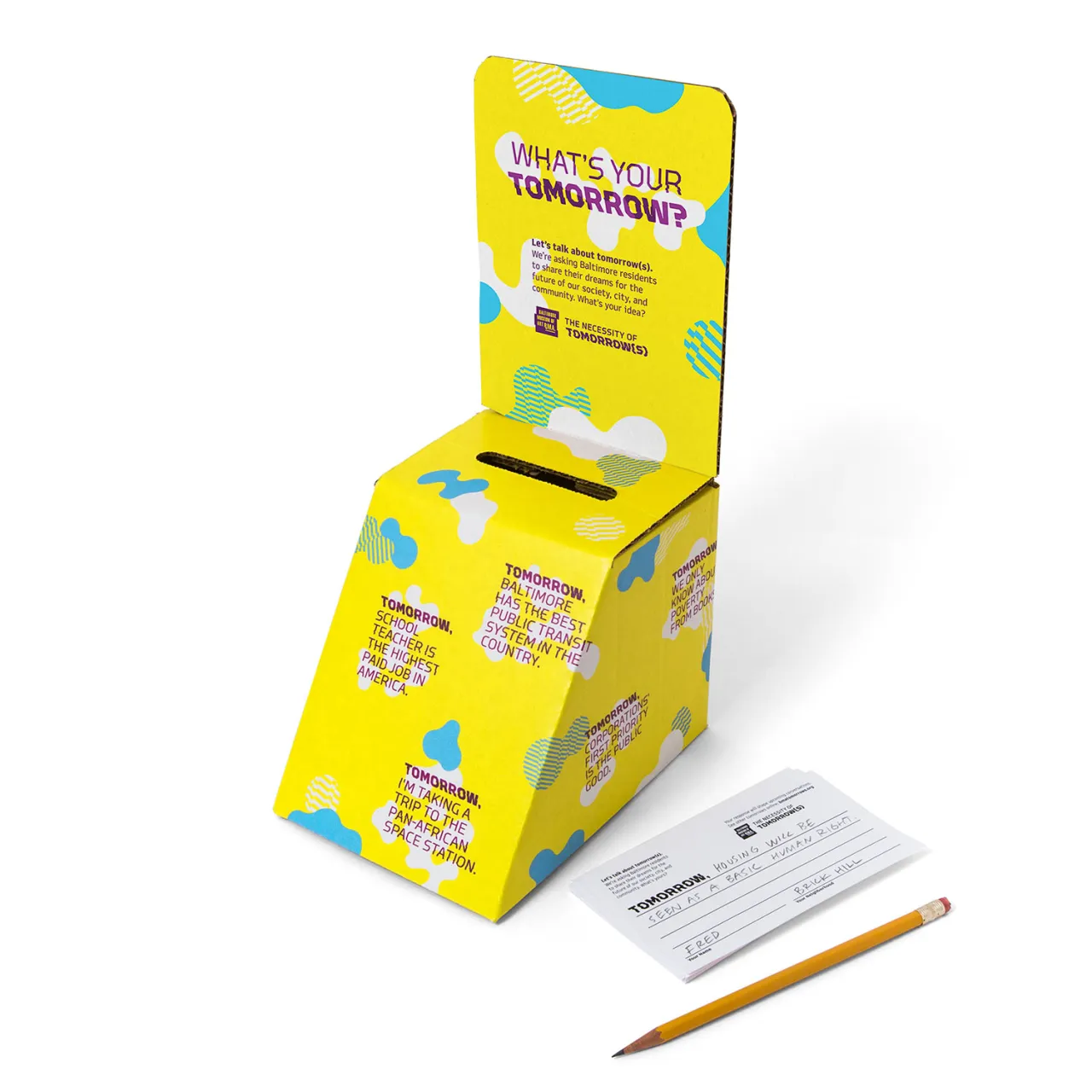
The public has been invited to add to the statements through physical comment boxes and on bmatomorrows.org, where they can submit their own ‘tomorrows’.
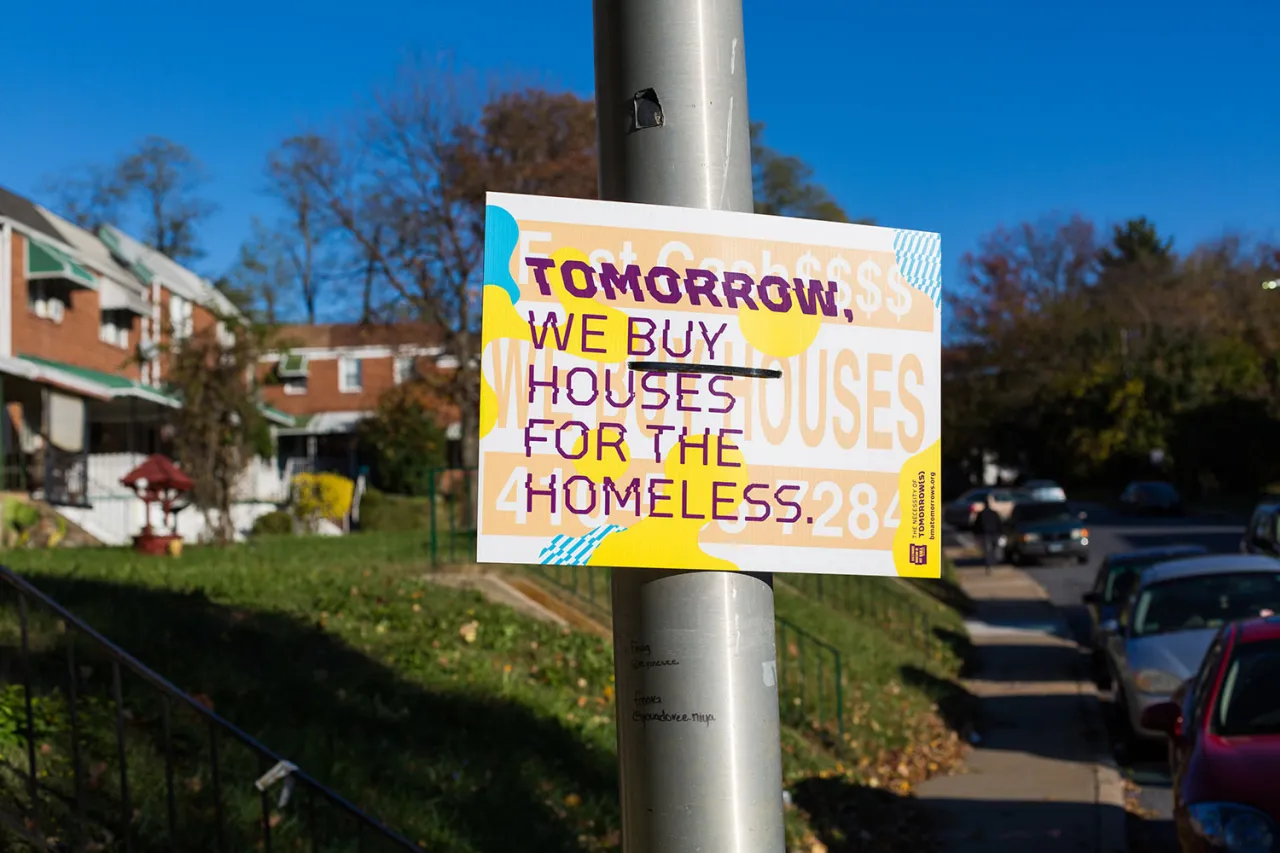
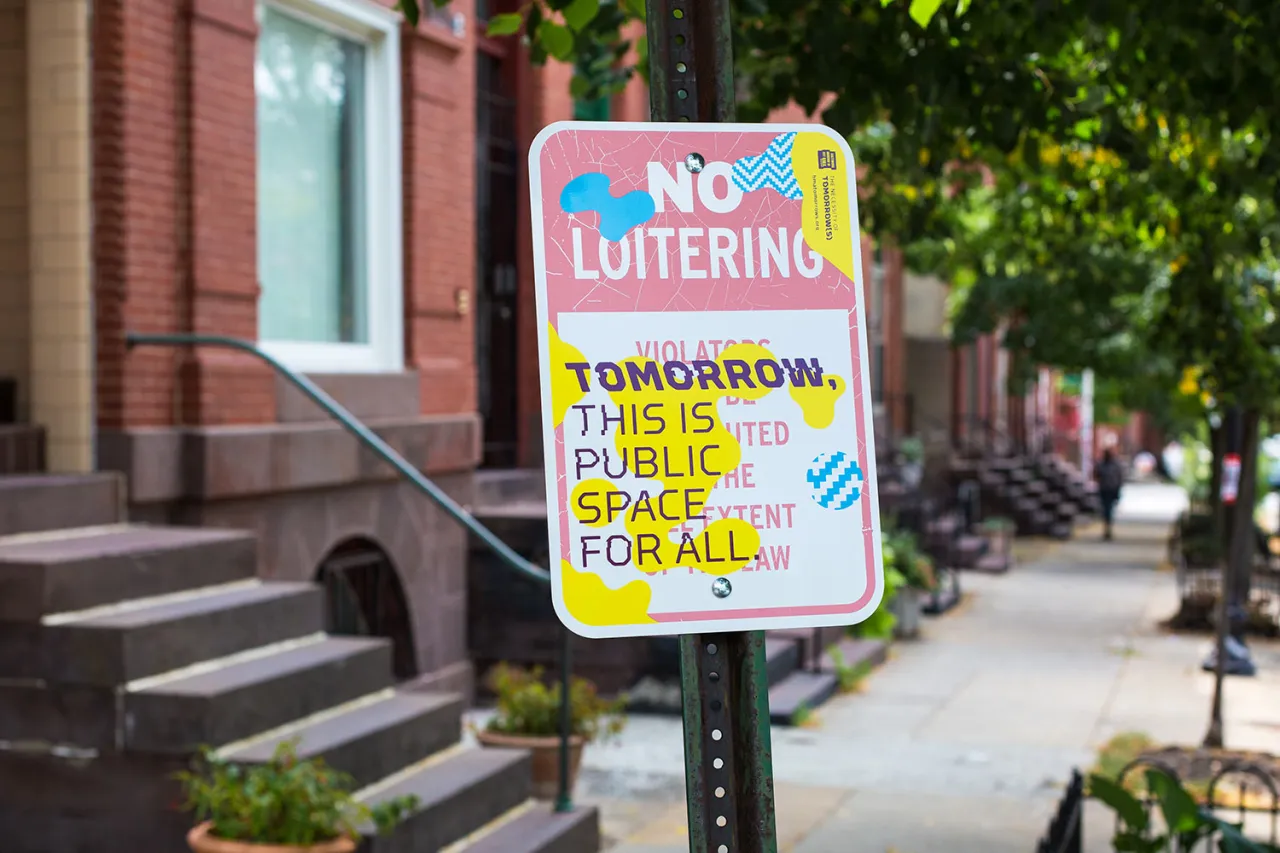
Placing those statements into the public realm in unexpected places, such as No Loitering notices, ‘We Buy Houses’ bandit signs, and takeout menus, the campaign aims to "disrupt vernacular advertising and signage", according to the agency.
"Many of the signs and messages we see each day are selling us unhealthy products and perpetuating unhealthy systems. Interrupting them with unexpected, optimistic messages, asks us to turn a more critical eye on these systems," says Bruce Willen, creative director and co-founder of Post Typography.
Editor's Picks
Trending

Latest Jobs
Brand Designer at Adfin
Full-time·London·£30k–£50k
Design Director at Human After All
Full-time·London·£66k–£88k
Creative Social Content Producer at Bompas & Parr
Contract·London·£32k–£40k
Senior Front End Developer at Crown Creative
Full-time·Belfast·£50k–£60k
Growth Strategist (Ecommerce) at Tribe
Full-time·Exeter / London·£50k + Bonuses
Digital Marketing Executive at Arise
Full-time·Sheffield·From £23,750