How Sip Studio built La Borosa, a non-alcoholic spirit that doesn't ask for your forgiveness
The non-alcoholic spirits category has a perception problem. Too many brands have leaned so hard into "better for you" that they've ended up apologising for what they actually are. La Borosa takes the opposite approach. And the packaging does a lot of the work.
Have you ever had the challenge of designing in a category that's still earning its credibility? As any designer will tell you, non-alcoholic spirits have to work twice as hard to be taken seriously, signalling quality and authenticity while also sidestepping the clean, clinical aesthetic that can make them feel a little flat.
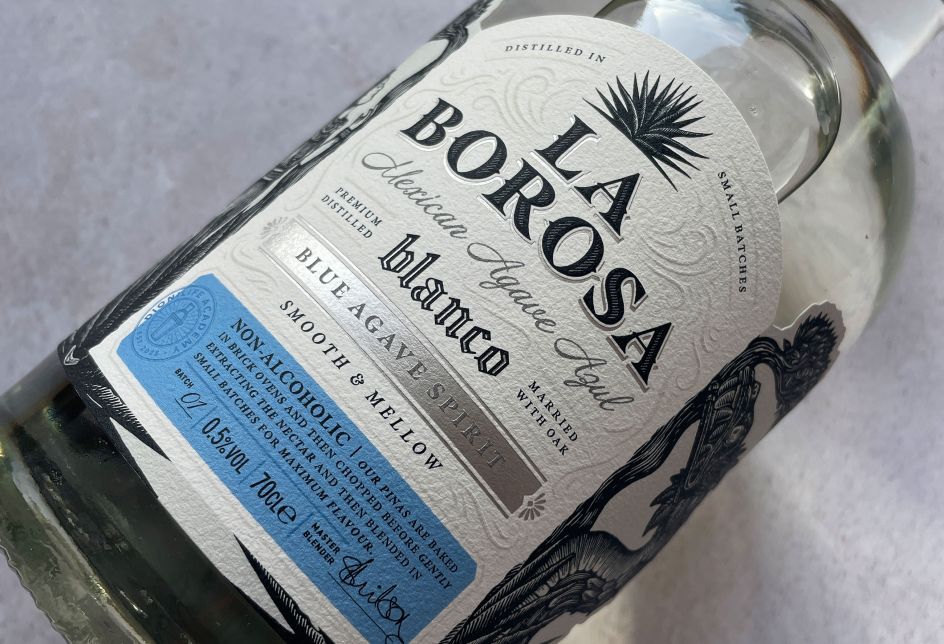
Sip Studio, the drinks packaging specialist founded by Kirsty Holton, was brought in to create the full visual identity for La Borosa – a non-alcoholic agave spirit that wanted to stand confidently on the shelf next to premium tequila. No carve-outs or compromised framing; just a bottle that rightly earns its place.
"The client was clear from the outset that this shouldn't feel like a lesser alternative," says Kirsty. "The liquid had depth and complexity, and the packaging needed to reflect that."
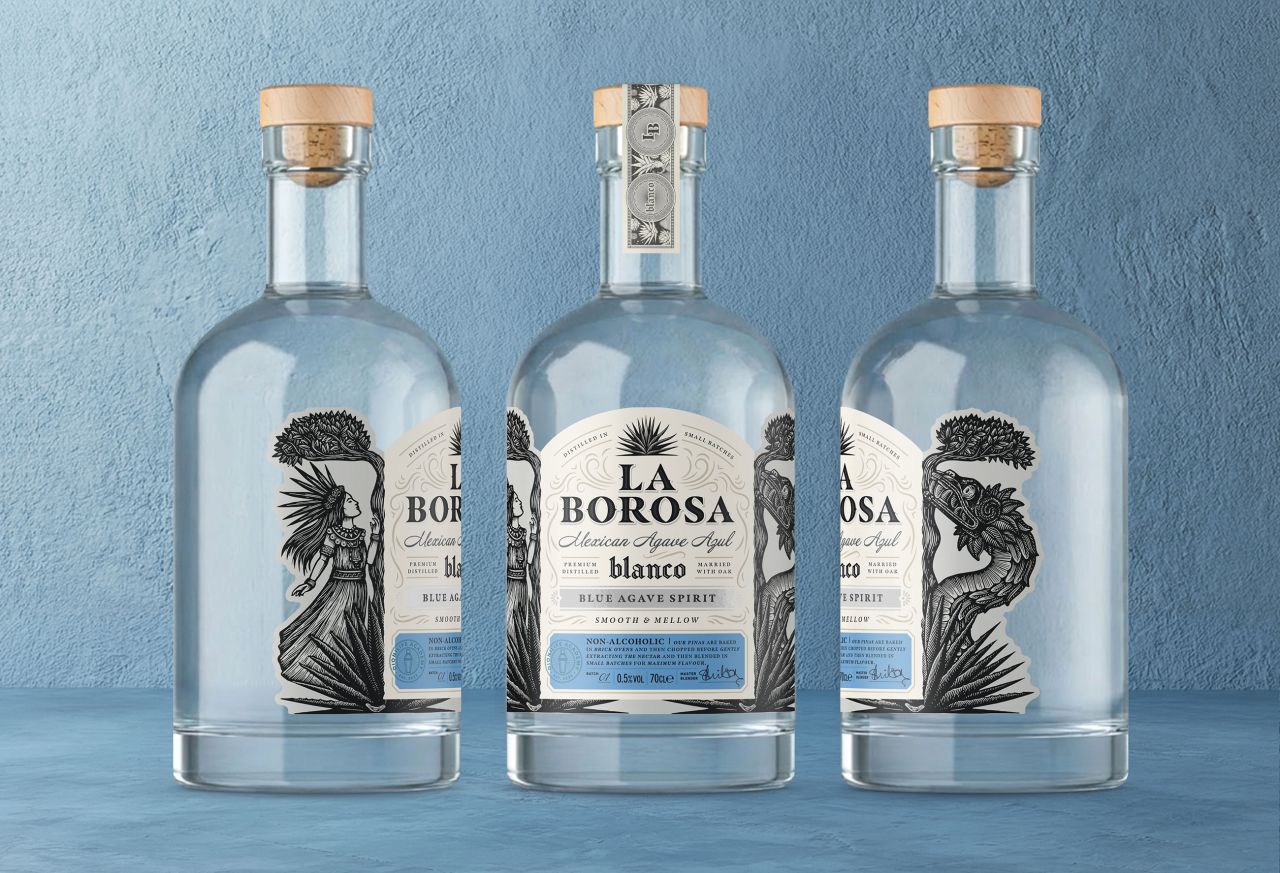
The starting point, then, was the agave itself. The brief placed strong emphasis on provenance and Mexico, and from there it felt natural – inevitable, even – to look further into the culture around the ingredient. What Sip Studio landed on was Mayahuel, the Aztec goddess of agave: a figure that connected directly to the plant and its origins while introducing a layer of mythology that gave the brand something to build from. "It helped ground the design in something meaningful, rather than feeling purely decorative," explains Kirsty.
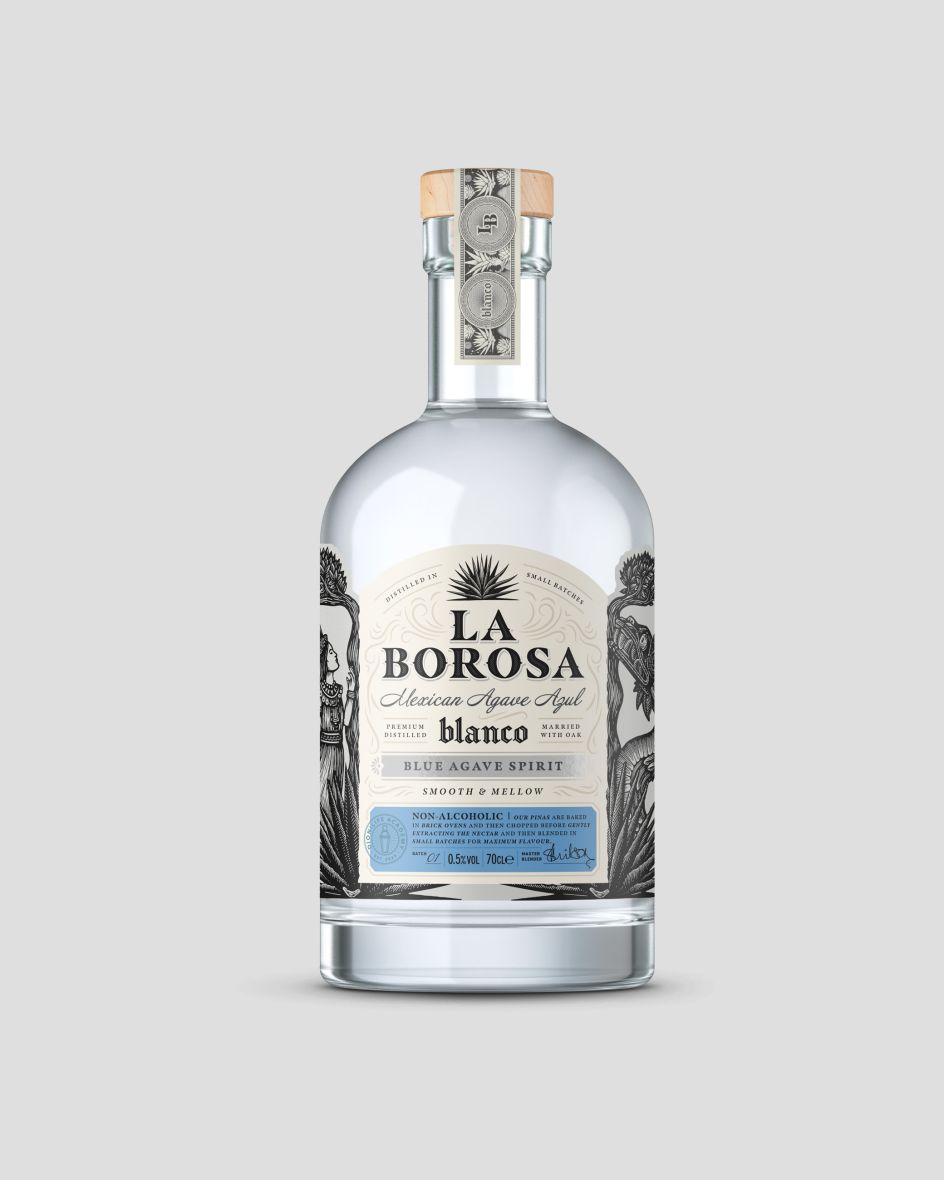
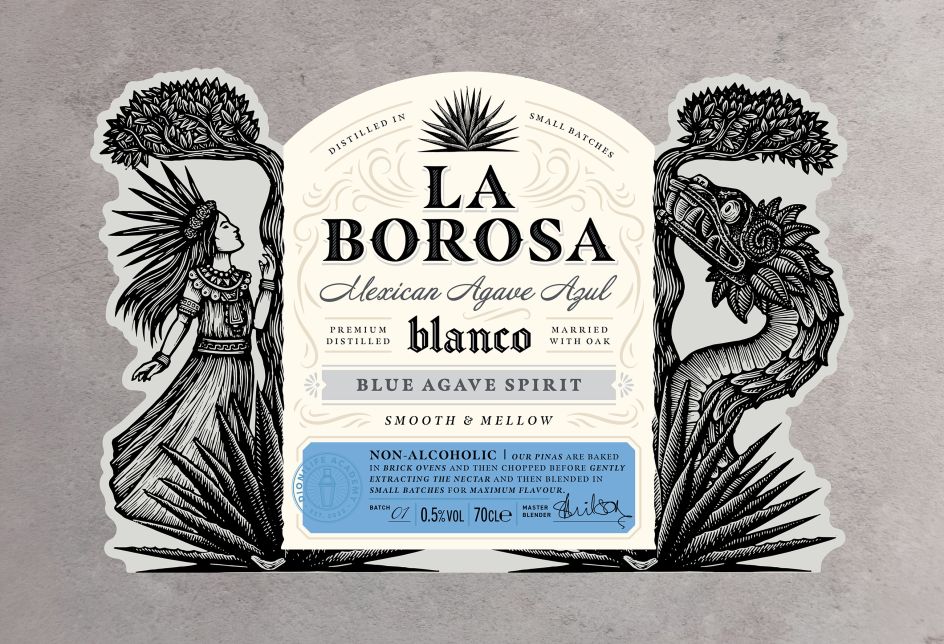
That sense of meaning runs through every decision. The illustrations – developed with Mexican artist Eduardo Robledo in a linocut style – depict Mayahuel alongside Quetzalcoatl, the god of wind, and the double-branched tree of their shared story. Linocut was chosen for its texture and rawness: a technique whose natural imperfections align with the handcrafted nature of agave spirits and avoid anything too polished or too safe. Robledo brought his own character to the work, which gave the label a distinct, authored quality rather than something pulled together to look the part.
The embossed swirling wind detail is the kind of thing you might not notice immediately, and that's partly the point. It adds a layer of tactility when the bottle is held, and it earns its place narratively, tying back to Quetzalcoatl in a way that makes it feel connected to the story rather than decorative. "It's one of those details that helps bring everything together," Kirsty says.
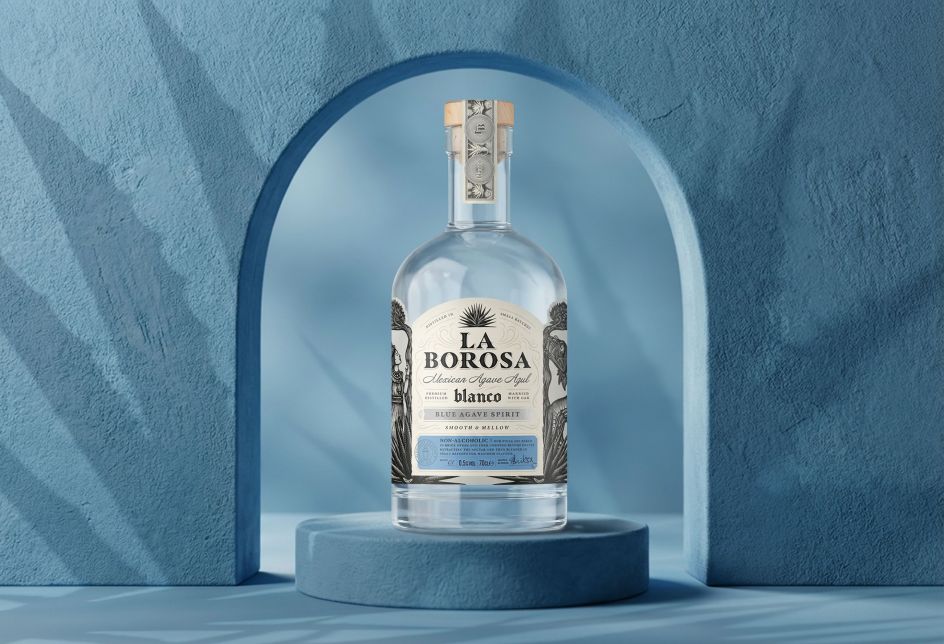
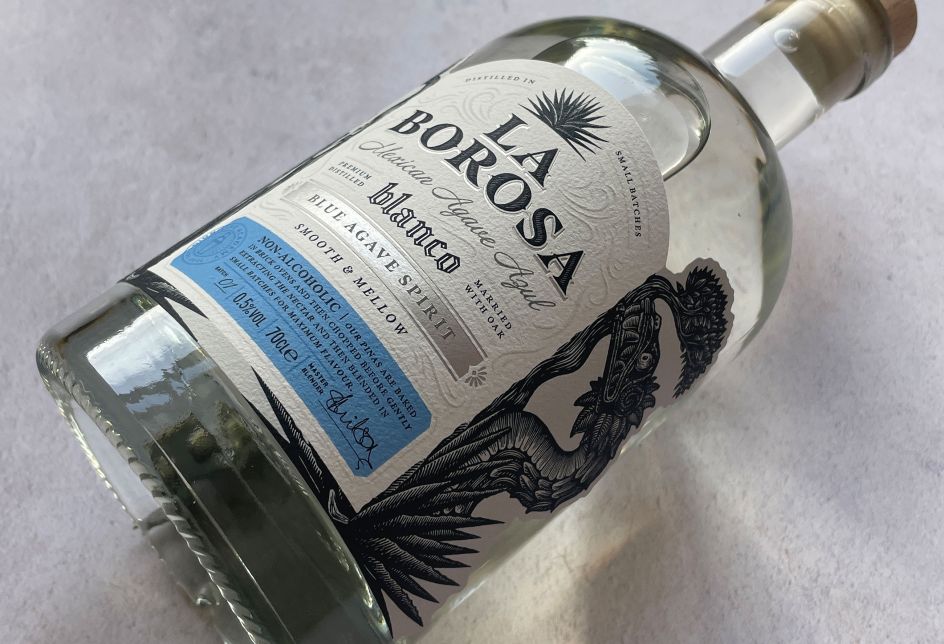
Material choices were treated with the same care and attention. A heavyweight textured paper stock, embossing, and foiling all help push the packaging toward premium tequila benchmarks, avoiding any minimal aesthetic that tips into wellness cues. The bottle itself is a stock shape – chosen specifically because its proportions most closely mirror those of premium tequilas, creating a familiar starting point. And the label and finishing details carry the weight of differentiation from there.
The result is packaging designed to do two different jobs at once. From a distance, it needs to communicate quickly – to be recognised and chosen. Up close, it rewards attention. "Clarity always comes first," says Kirsty. "Once the bottle is picked up, the more detailed elements start to come through."
As the category matures, the balance between those two modes will only matter more. Consumers aren't just looking for something that looks premium; they want the ritual, the story, the sense of occasion.
Packaging that can deliver all of the above, without any alcohol in the glass, is doing something genuinely difficult. With La Borosa, Sip Studio makes it look easy.
Further Information

Editor's Picks


Trending


Podcasts
Editor's Picks
Further Reading