How Joana Machado made a book from the offcuts of another book – and it has a hole through the middle
The Porto-based graphic designer turned a pile of offset print proofs into a unique, unrepeatable object, posing questions about what a book can be.
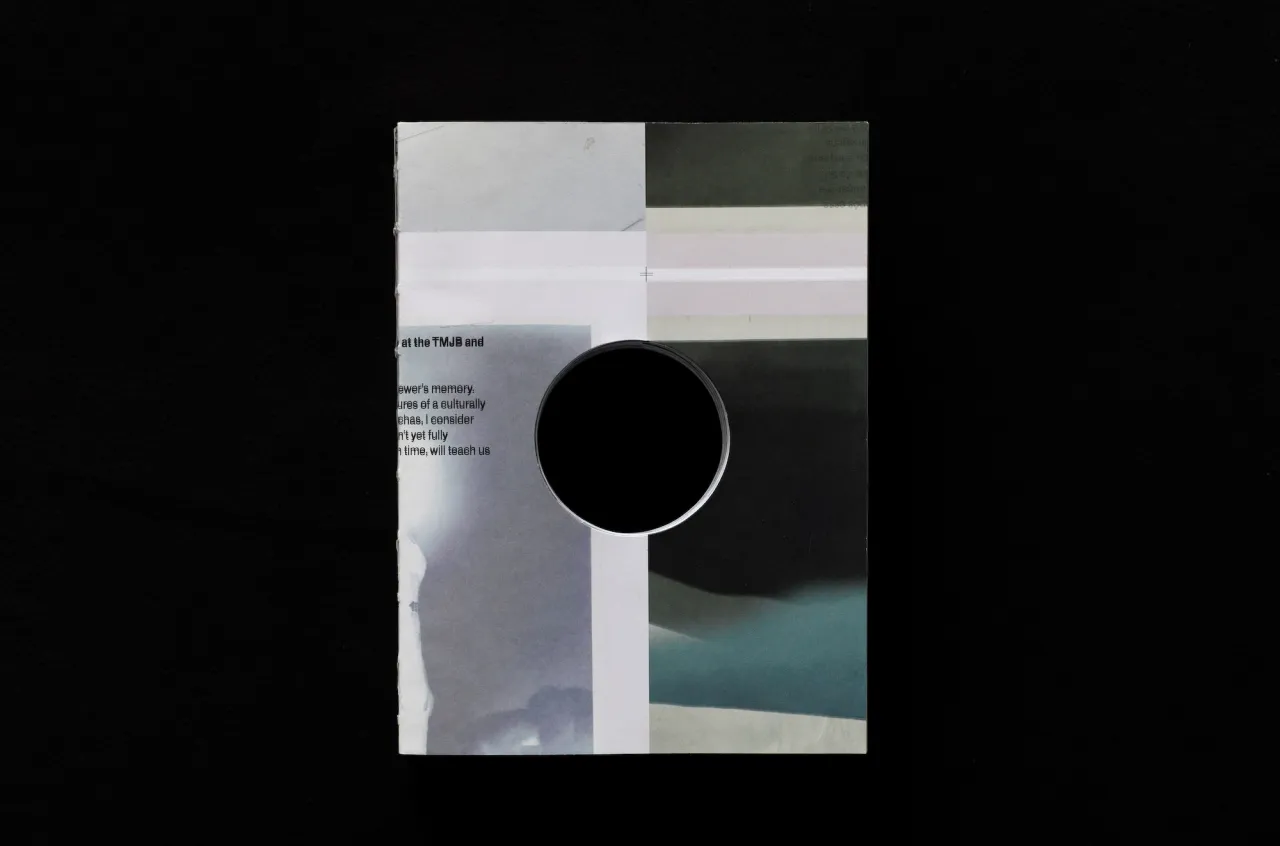
Book cover ©Joana Machado. Photographs of Filipe Braga
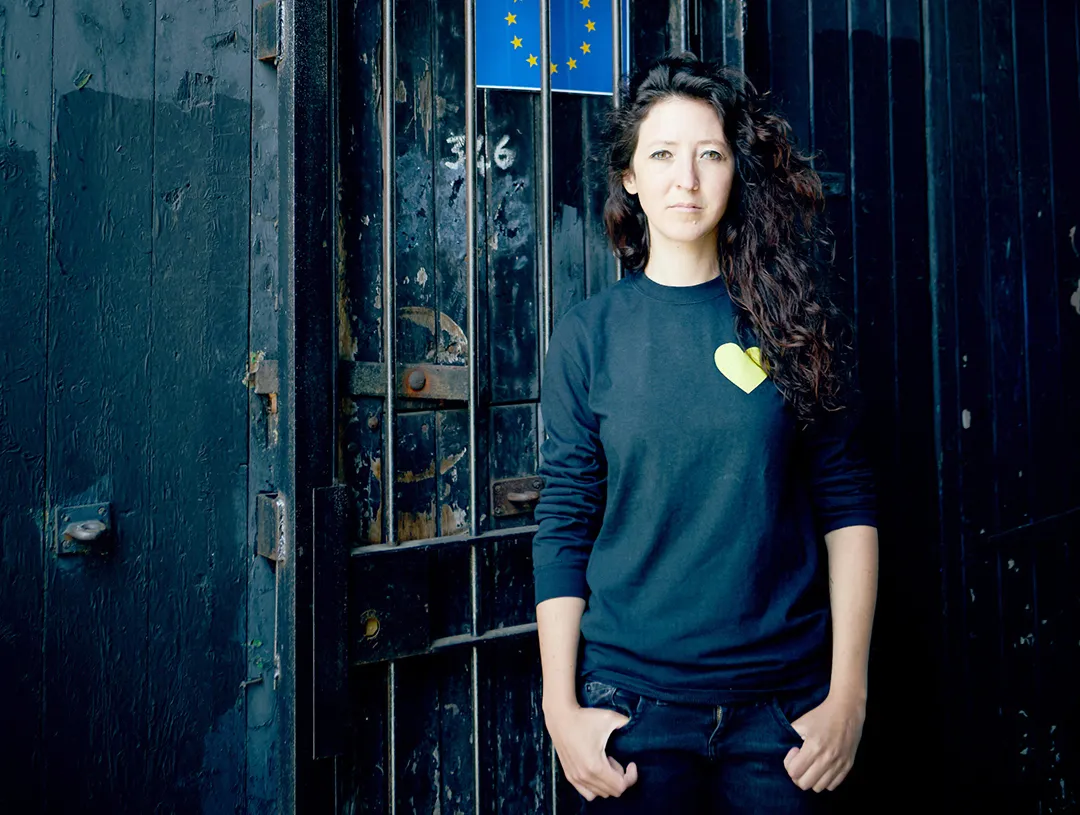
There's a story Joanna Machado loves to tell about Roberto Burle Marx, a landscape architect who became world famous for introducing modernist principles to parks and gardens. One day, one of his assistants approached him in the studio and asked him why he'd designed a garden with those particular curves. He looked up and replied: "Because I like it!" For Joana, a Porto-based graphic designer who has spent 15 years building an immaculate career in art, culture and books, this story threads through her entire philosophy.
"My work lives within a certain dichotomy," she tells Creative Boom. "On the one hand, I seek a space more connected to intuition and the inexplicable. On the other hand, it is characterised by a deep study of each author or artist it engages with." This tension between these dualities is what drives everything she makes. And nowhere is that more visible than in a new object she created at a print shop during the production of someone else's book, almost without planning to.
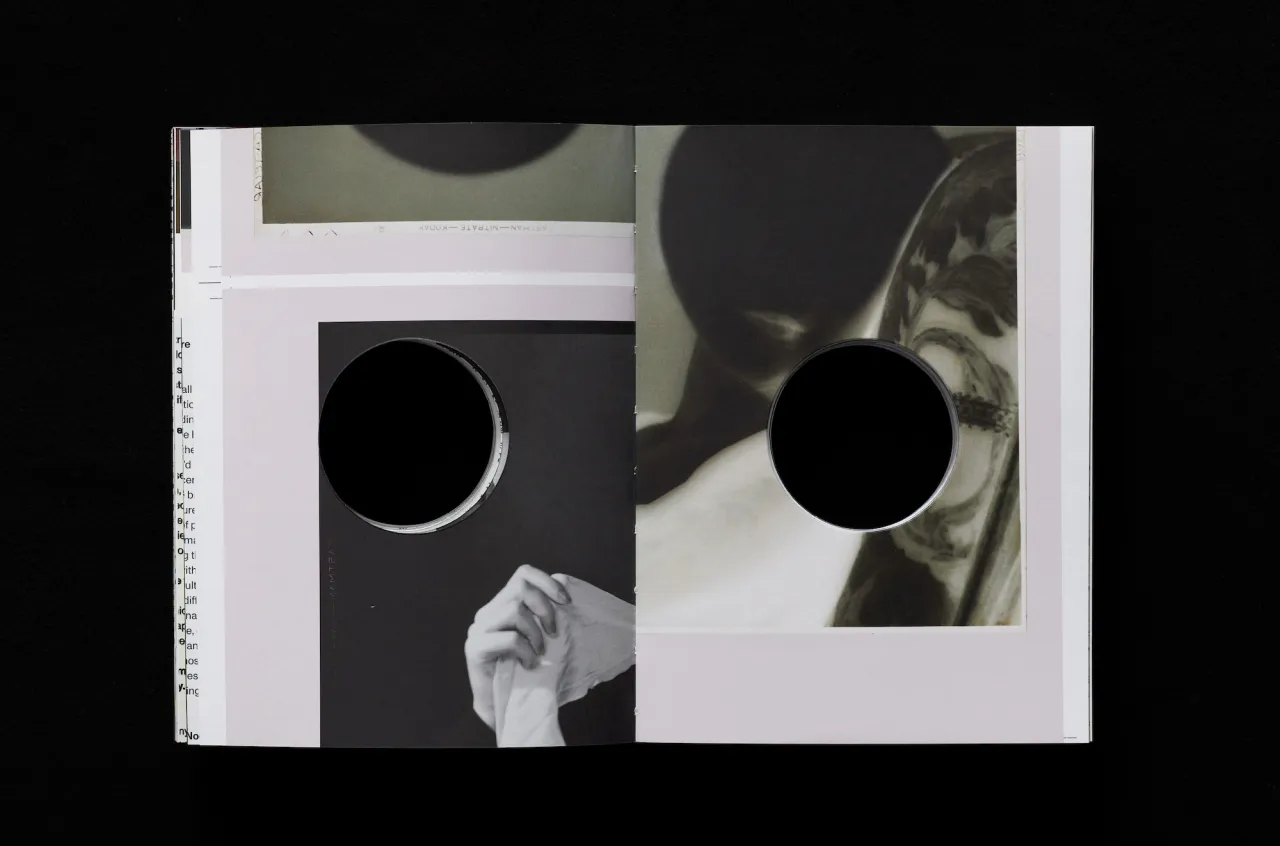
Photos of the book interior ©Joana Machado. Photographs of Filipe Braga
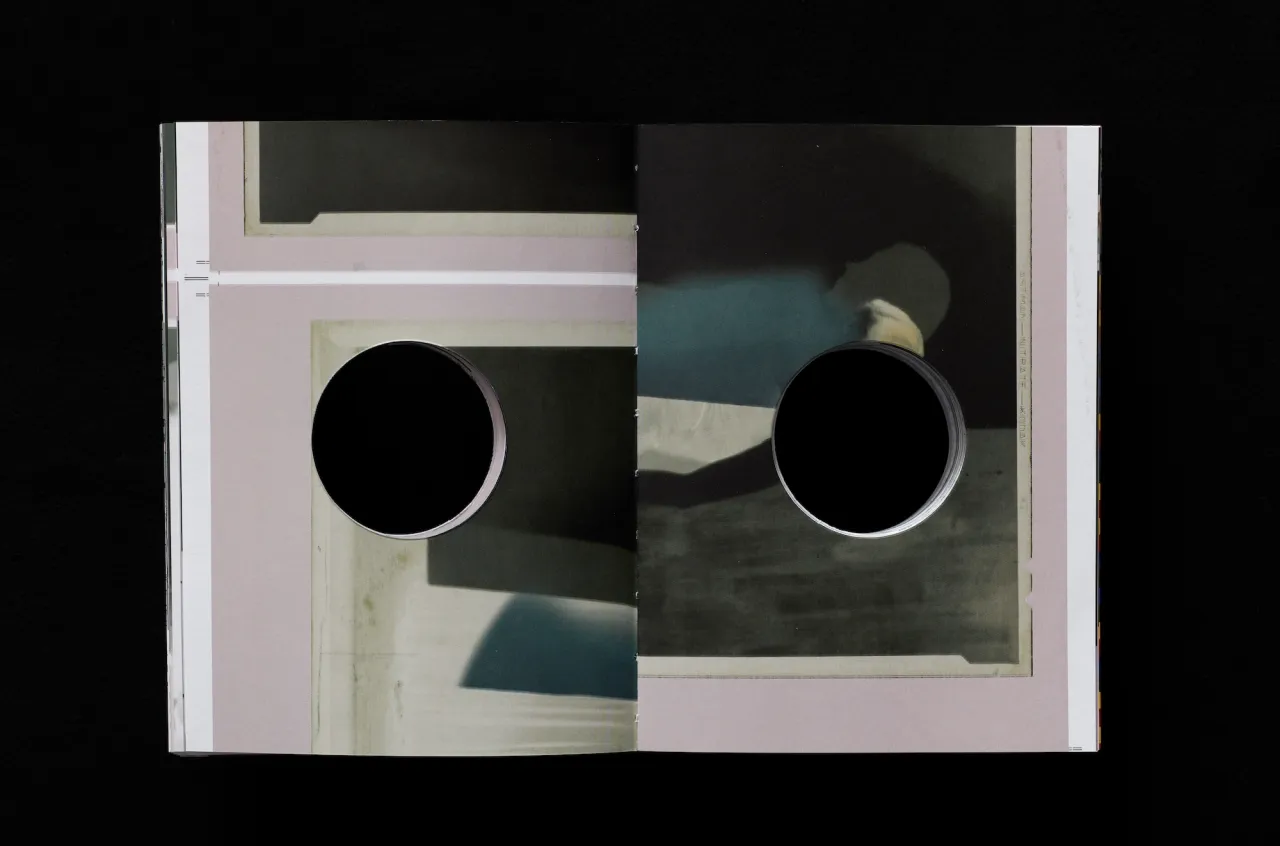
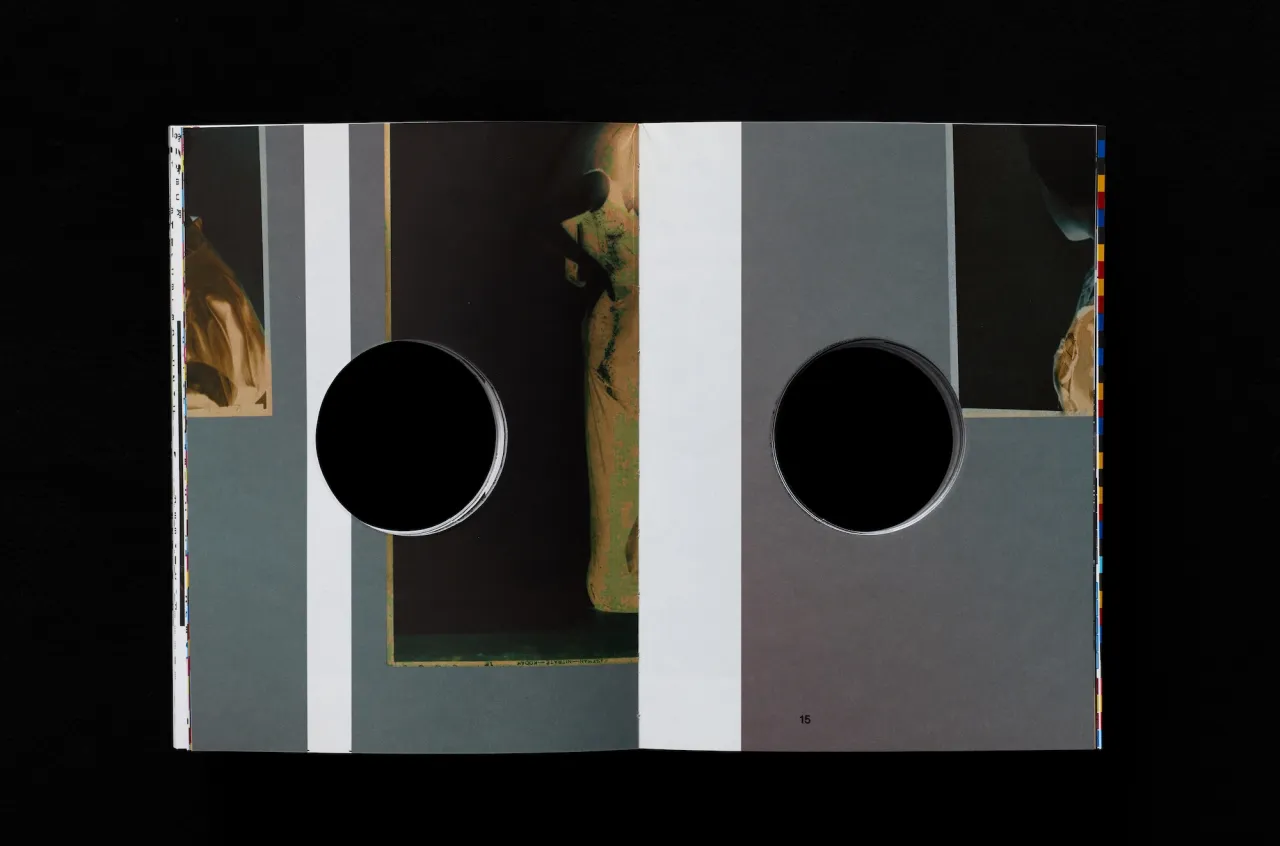
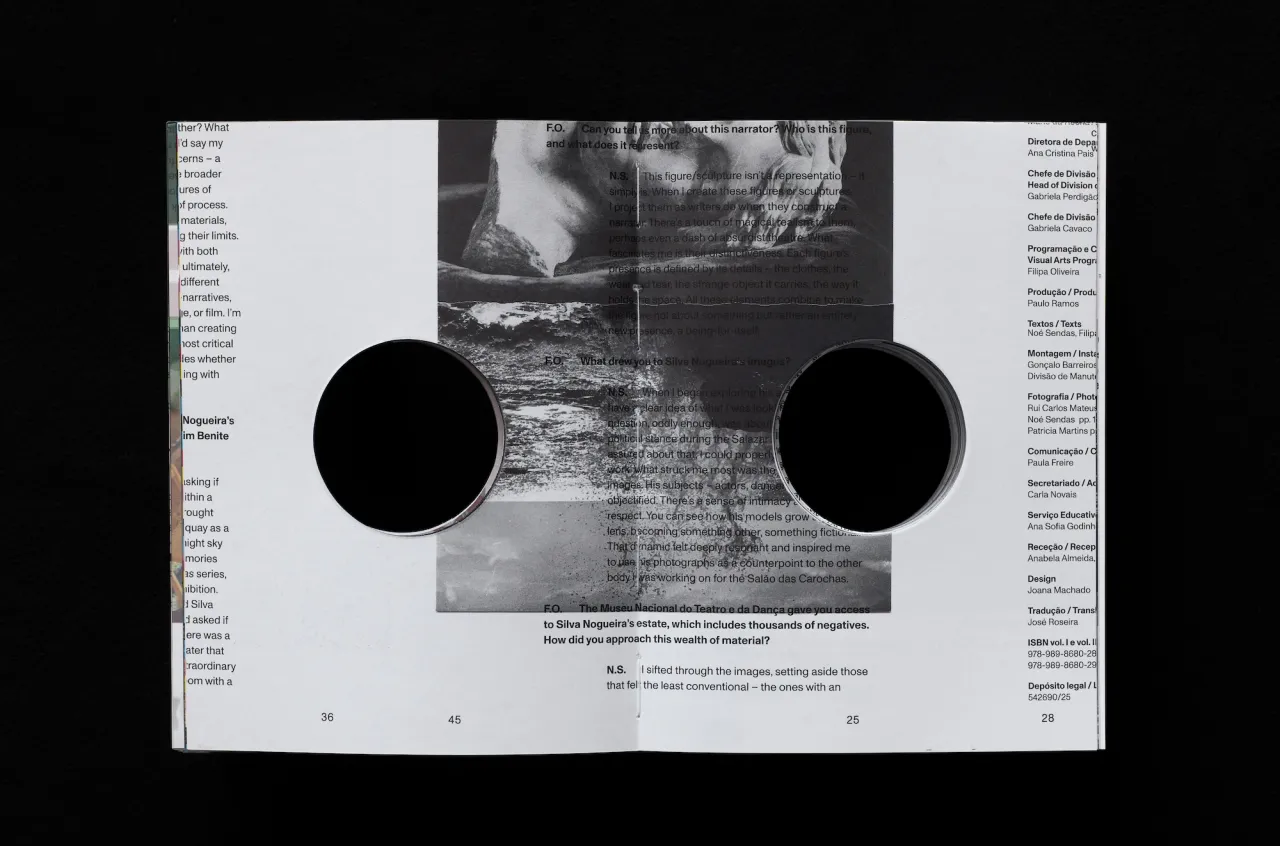
Joana studied Communication Design at the Fine Arts Faculty of the University of Porto before completing a postgraduate in the History of Aesthetics of Electronic Art in Barcelona. Those early years – of shared studios, life drawing classes, and theory classes in anthropology, sociology and aesthetics – gave her an unusually interdisciplinary foundation for what became a practice devoted to one specific form. For the past 15 years, she has worked with some of Portugal's most prestigious cultural institutions – like the Serralves Museum of Contemporary Art, the Porto Book Fair, the MNAC Museum of Contemporary Art in Lisbon and the Julio Pomar Atelier-Museum.
The books she has produced for them are the kind that win awards. In 2022, her catalogue for the Serralves exhibition Agnès Varda: Light and Shadow received the AIGA 50 Books | 50 Covers award in New York. A year later, her book on filmmakers Jean-Marie Straub and Daniele Huillet was nominated for Best Book Design from All Over the World by the German foundation Stiftung Buchkunst.
She describes her process for each project as a "dive". For example, when designing for someone like French filmmaker Agnès Varda, she will go deep into the artist's work and life. Same for Jean-Luc Godard: she will watch the films, read the interviews, sit with the texts until the visual language reveals itself in her mind. "I often say that I design from the inside out," she explains. It is a slow and immersive way of working, which makes what happened at the print shop all the more interesting.
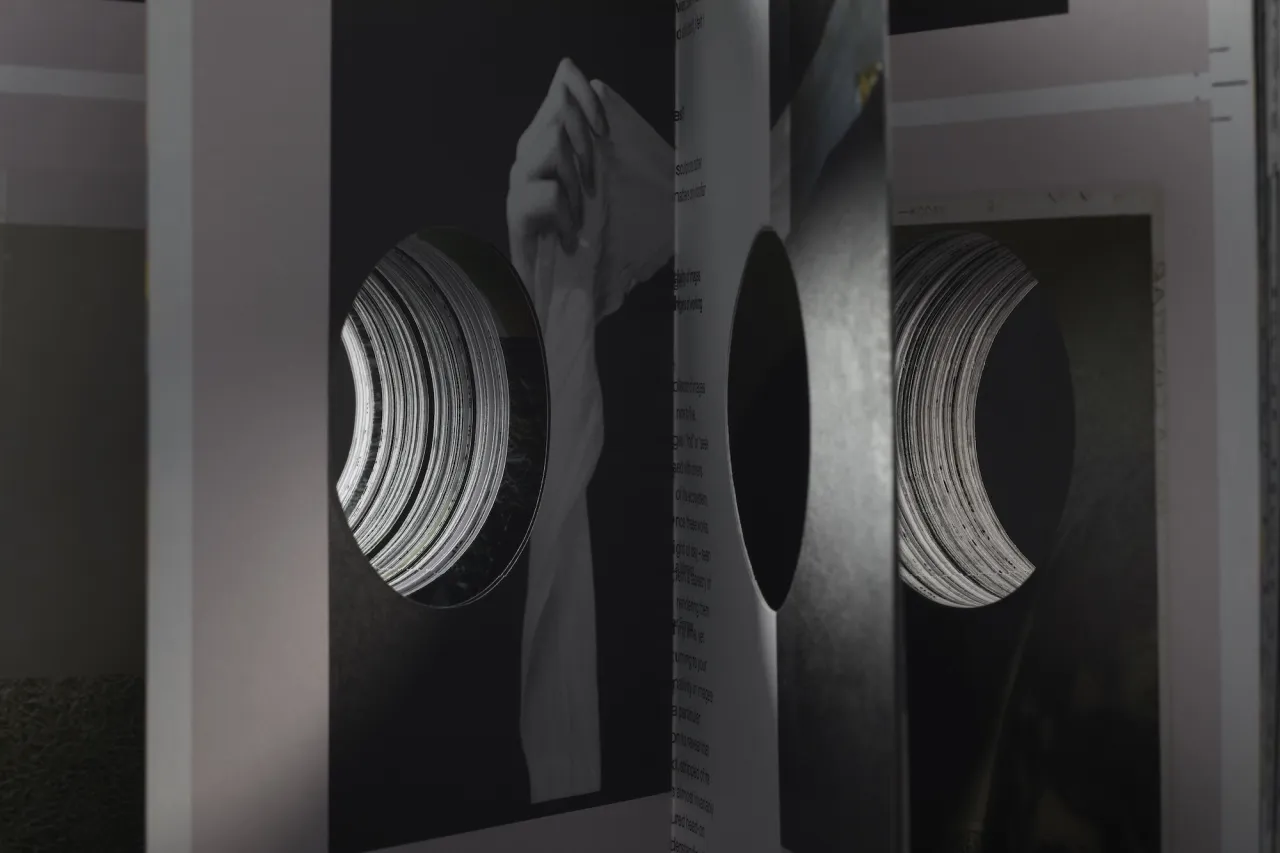
Details of the circle ©Joana Machado. Photographs of Filipe Braga
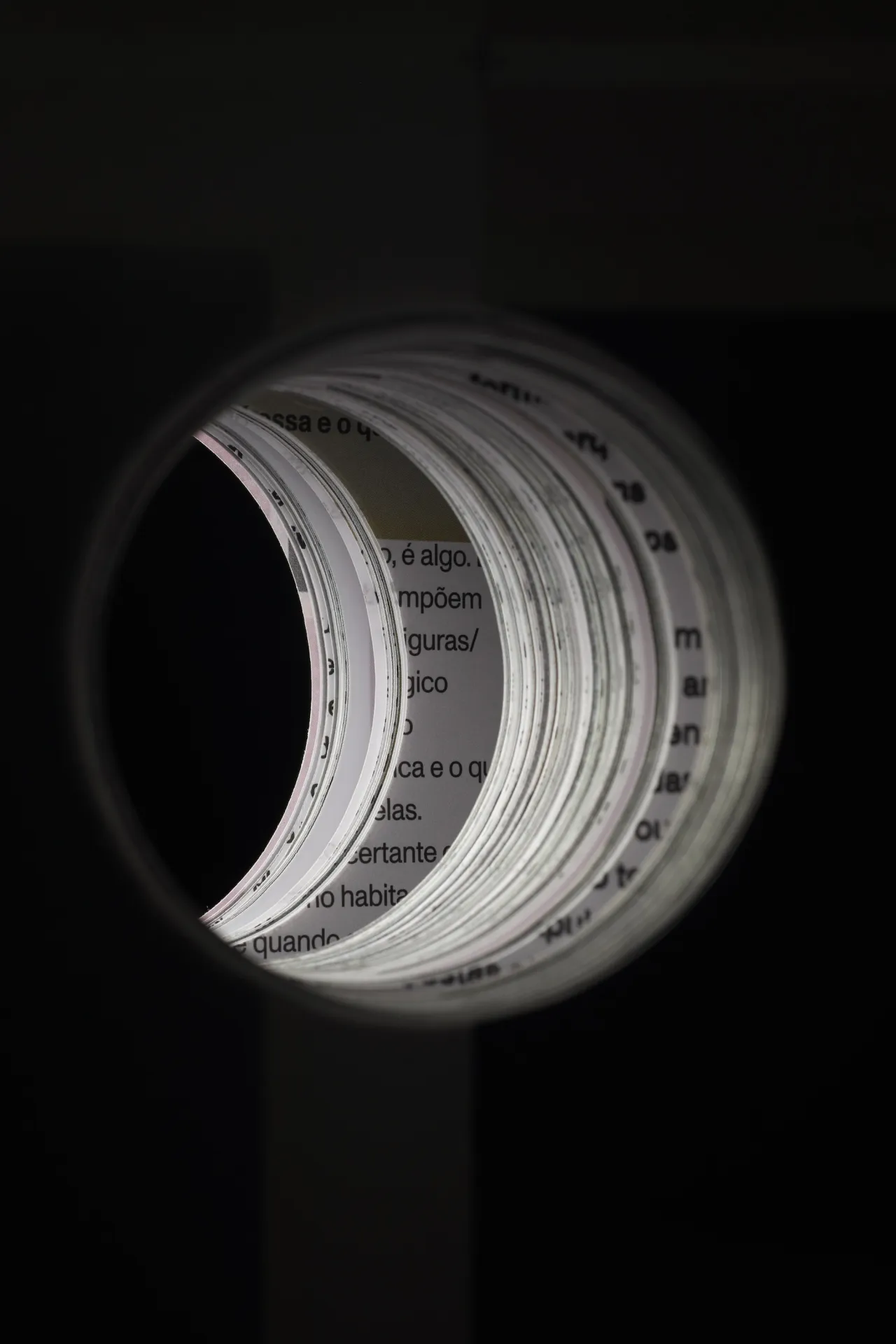
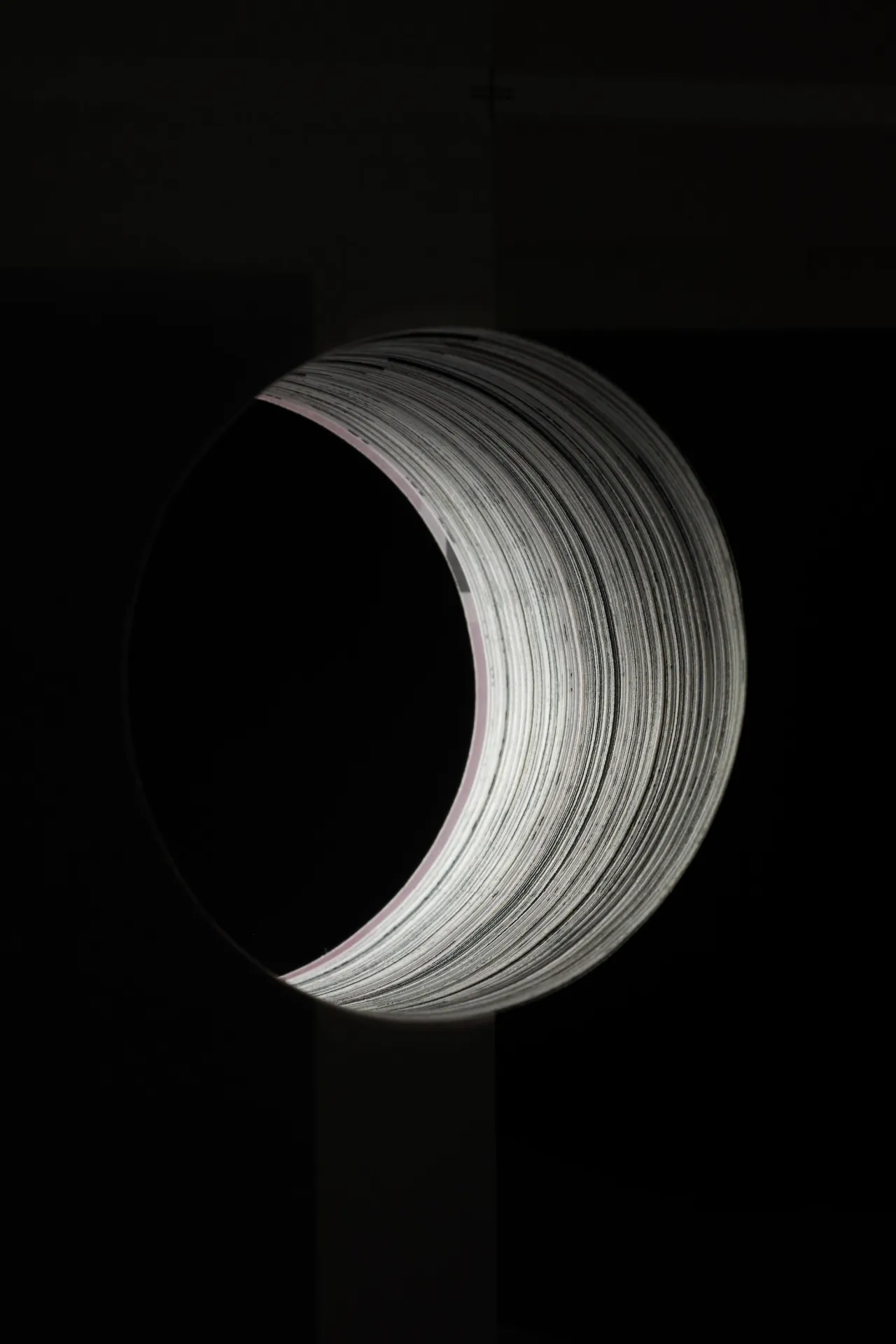
Joana had been overseeing the printing of a catalogue for Noé Sendas, the Brussels-born artist whose work in photography, sculpture, collage and video revolves around questions of identity, authorship and the body. Noé's practice involves deconstructing Hollywood film stills, erasing faces and limbs, and superimposing images until they become something new and unsettling. Being inside the production of a catalogue for work like this, Joana says, was its own kind of immersion.
And then, mid-process, something sparked. "I had the desire to create a new object, in real time, emerging from the printing process of a book," she says. "I wanted to make a piece that was designed solely from matter itself and conceived in a more intuitive way. I wanted to compose only through matter."
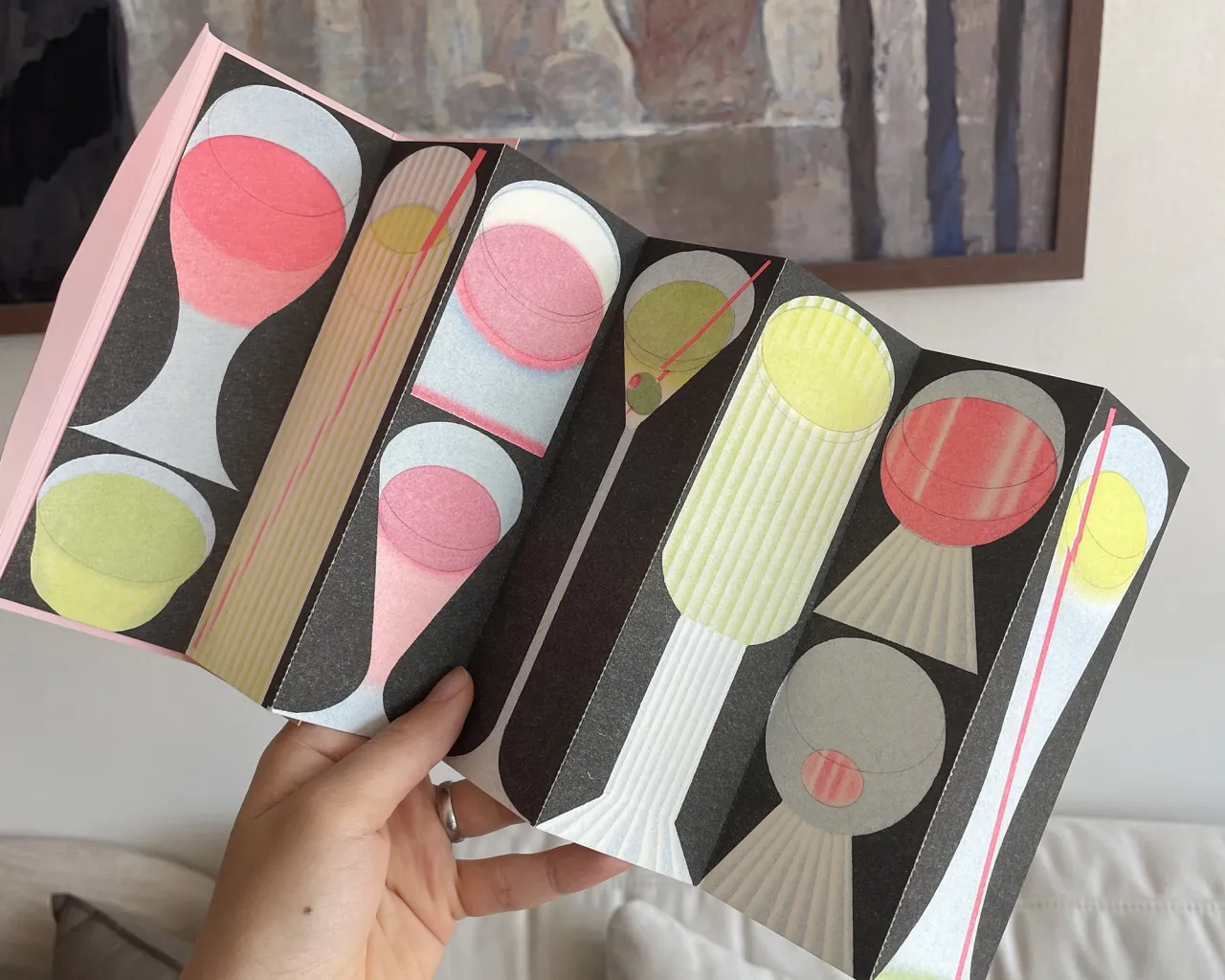
She decided to create the book from the printing process of Noé's catalogue, constructing it through the manipulation of print proofs that are typically used for calibration in the final stages of printing. Joana established a new format distinct from the Sendas catalogue. She selected the sequence of pages to construct a new narrative from fragments of someone else's visual world: CMYK colour bars, registration marks, glimpses of Noé's images, half-formed and bleeding through.
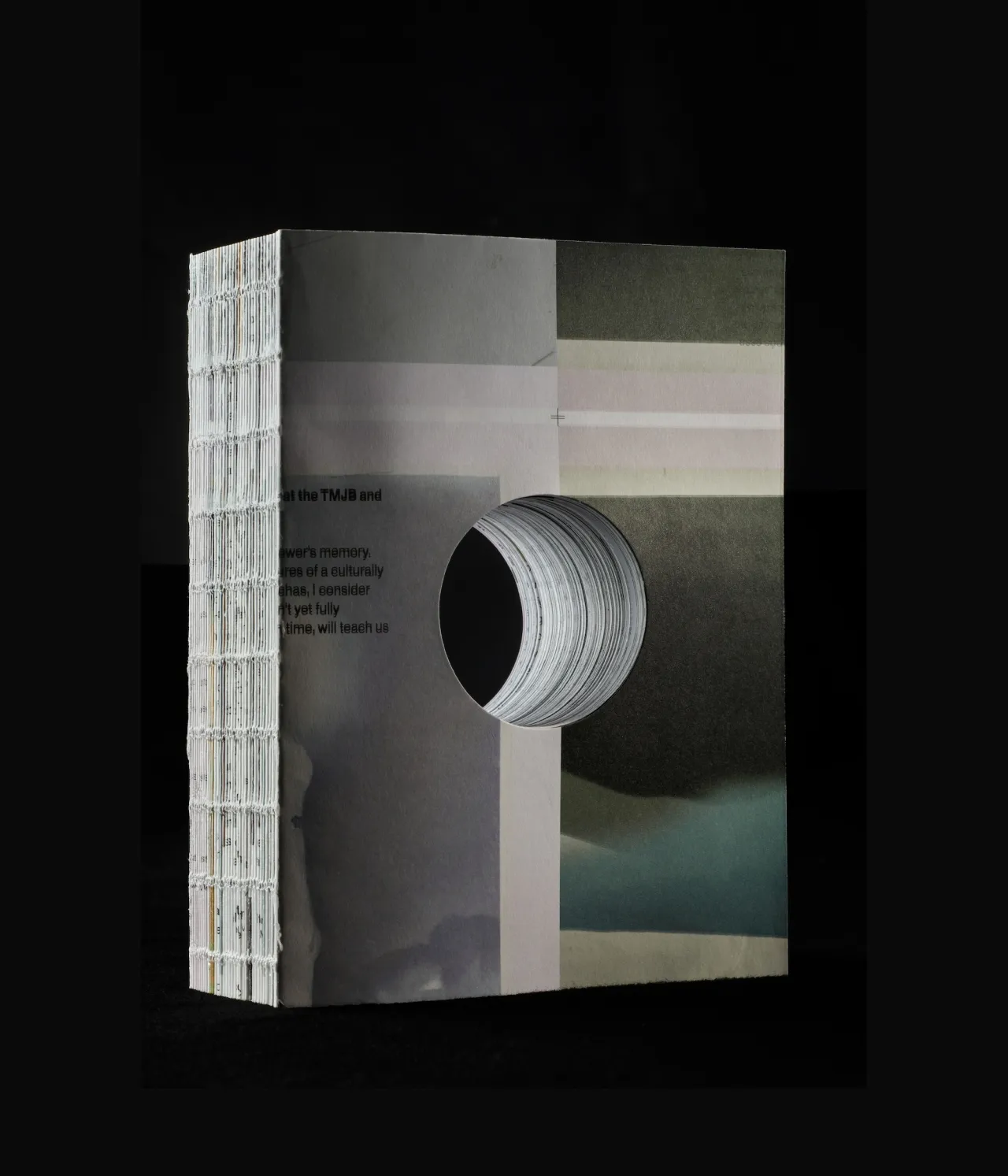
Angled view of the book ©Joana Machado. Photographs of Filipe Braga
The final step was a circular cut, six centimetres in diameter, punched clean through the entire depth of the object. Look at it head-on, and you see a perfect black void sitting at the centre. Look at it from the side, and you see every single page, stacked and pierced, the circle tunnelling through. "I find it interesting that it activates or reawakens the book's material dimension," says Joana. "I also like that it is an enigmatic element that has been eliciting very diverse reactions."
The piece is unique and, by nature, unrepeatable. And what has struck Joana about the audience response is how consistent it is. People pick up the object, begin with it, and then leave it behind. "They start from it but quickly travel elsewhere," she says. "They begin with the piece and go on to create something of their own, or about themselves." For a designer who works by going deep inside someone else's world, this feels like the right outcome – the work opens the door and then steps aside.
Editor's Picks



Trending



Latest Jobs
Marketing Manager at Penguin Random House UK
Full-time·London·£40,000 – £44,000
Junior Creative at Northstar
Full-time·London·£24,000 – £28,000
Content Executive at V&A
Full-time·London·£32,000
Art Director, Opinion at The New York Times
Full-time·New York·$124,980 – $141,000
Director, Brand at KQED
Full-time·San Francisco·$125,547 – $165,000
Senior Designer at David&Goliath
Full-time·Los Angeles·$100,000 – $140,000