Annie Frost Nicholson paints the people she's lost back into the same room
The London-based artist has spent years making grief accessible in the public realm – but her most personal work yet uses colour, old photographs and a little painterly sleight of hand to collapse the distance between the past and present.
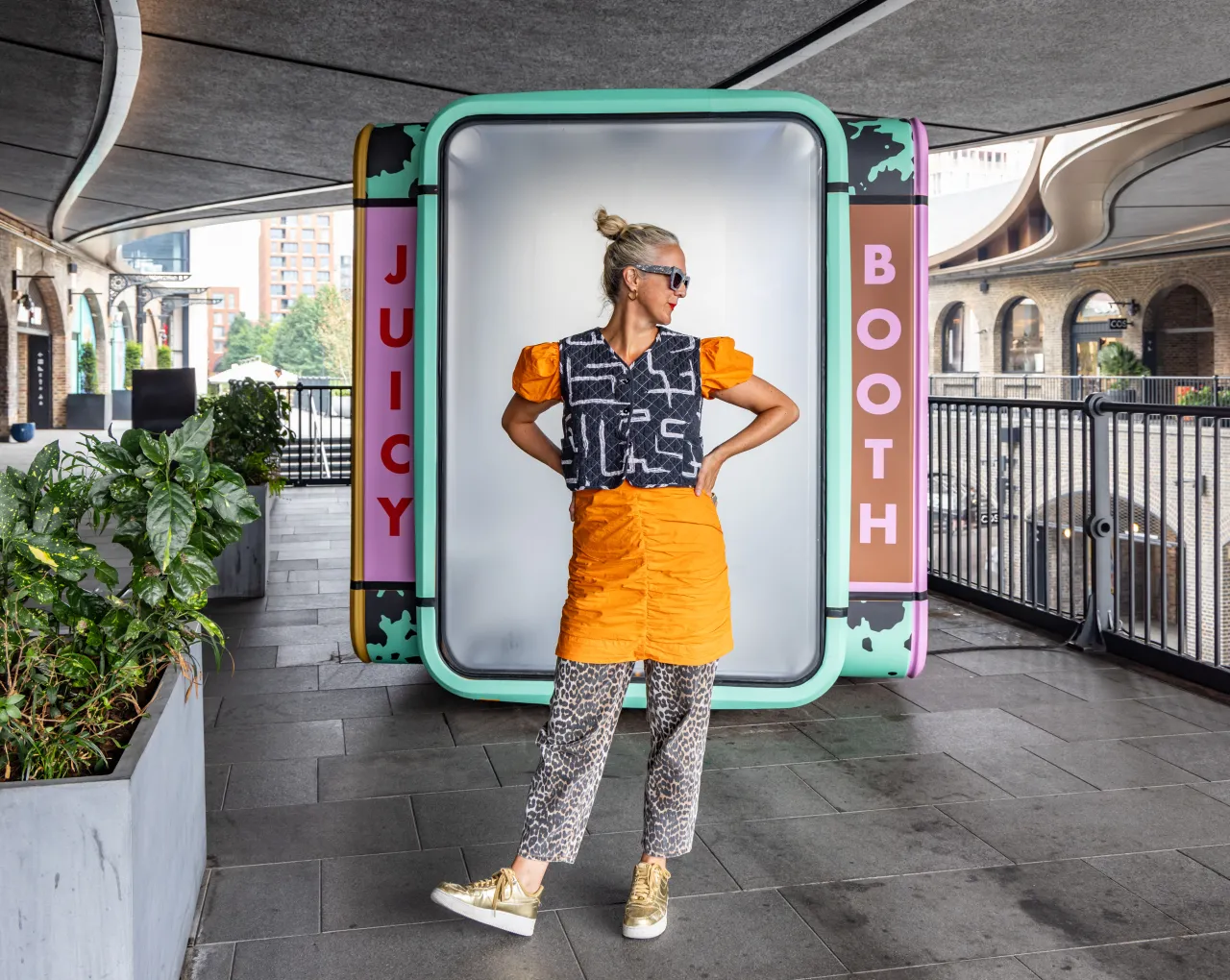
Juicy Booth © Annie Frost Nicholson. Photography: John Sturrock
For Annie Frost Nicholson, a sense of place is a key thread running through her artistic practice. Having grown up in the countryside, her dad moved to southern Portugal – followed by her mum – and Annie later set off for Sydney to live with her sister.
Not long after, she moved back to the UK to study languages, spending time in Paris and eventually settling in London, where she has lived for the past 20-odd years. Along the way, she studied at London College of Communication and Goldsmiths, and worked at the BFI – "one of my best jobs," she says, "because of the creative community I found there." Though she had always been making, it wasn't until the loss of her parents and her sister that she started working more publicly – "which really shaped the journey I've gone on creatively and I suppose the way I see the world."
Annie's first ventures were in paste-ups, a method that involves layering publication pages, to challenge ideas around mental health and grief, "by telling stories which would hopefully make these complex subjects more accessible", she notes. She was offered spaces to paint in the public realm and responded to briefs – from the Southbank Centre's CALM commission on loss, to plastering the floor of City Hall for World Mental Health Day and the Staircase of Dreams for the London Design Festival.
Her practice evolved into bespoke multisensory installations built with a team, including the beloved Fandangoe Discoteca and Juicy Booth. But in more recent years, she's returned to painting, turning to the places where her family members were alive – such as Portugal and Sydney – for inspiration. "It is by far the most enjoyable and satisfying era I've been in, in terms of my practice. Partly because the process is private for a long time, which gives me more time, space and distance to ruminate," she says.
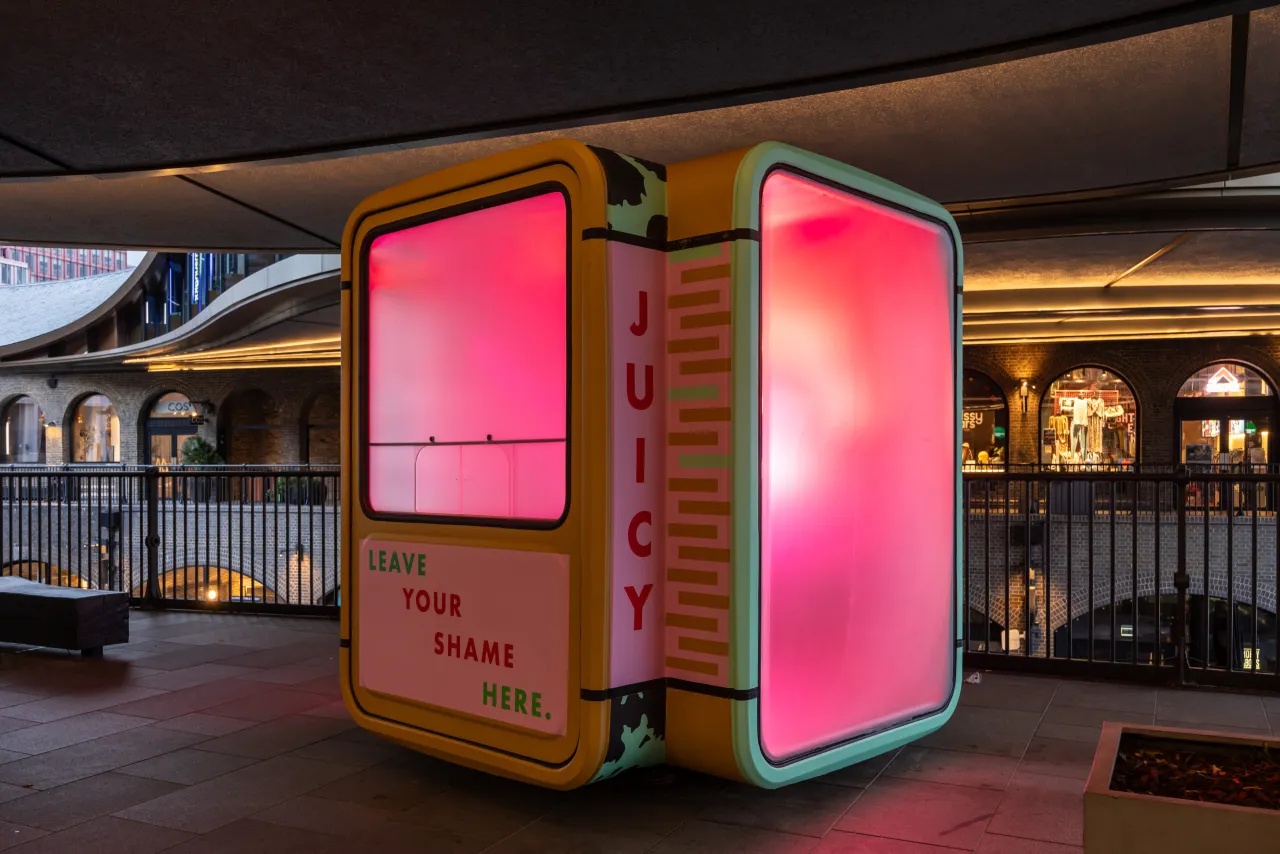
Juicy Booth © Annie Frost Nicholson. Photography: John Sturrock
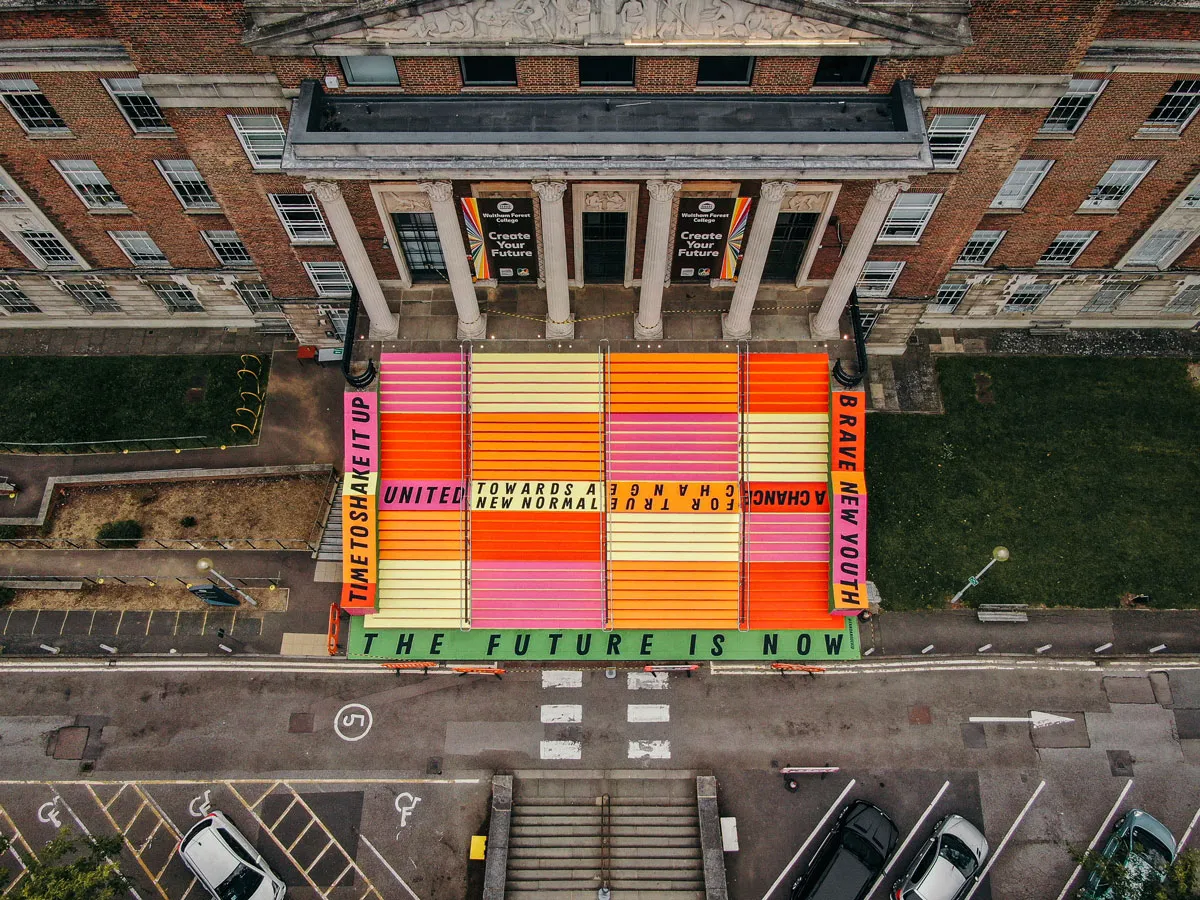
Staircase of Dreams © Annie Frost Nicholson
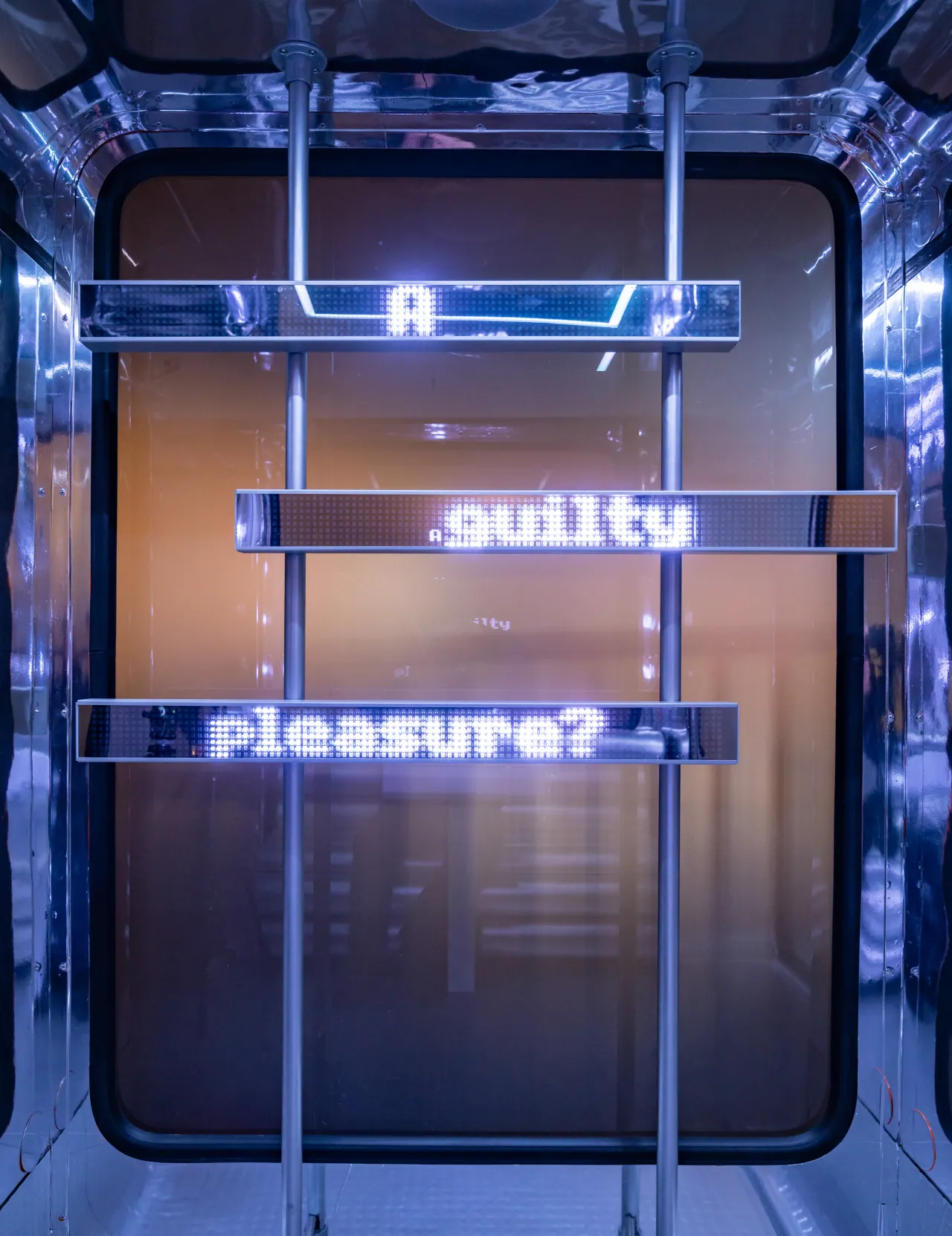
Juicy Booth © Annie Frost Nicholson. Photography: John Sturrock
Annie uses objects, ephemera, old analogue photographs, notes, letters, and text messages to inform how she creates her pieces and the worlds she's building within them. "I love to hear about the minutiae of family stories and dynamics. One of my best friends and I in Sydney talk for hours and hours about our family lives, behaviours, anecdotes, ways of being, and how we see the world. I find it endlessly fascinating, and it always helps me to understand people better, knowing their context." She adds: "I love to hear about how your third cousin once removed behaved at a family party – and try to imagine all of the gestures involved."
Family is an important pillar of her practice, whether that's her blood relatives or her friends. Colour is her primary tool for navigating this territory, using carefully chosen colour palettes to depict the mood, whether joyful or sombre, and to draw the eye in before the deeper, more complex meanings reveal themselves beneath the surface. In her current body of work, she's unearthed old analogue photographs that she's manipulating in terms of the composition and the people depicted in the frame – merging living people with dearly departed ones, painting versions of herself and her sisters at varying ages, and doing what she "wishes she could have done in reality" to bring certain characters together.
She adds, "It is a source of great pain to me that certain people in my life have never met because they have been lost too soon, and in my painting I can recover this and, I hope, provide a sense of togetherness or sanctuary to other people looking at the work for the first time."
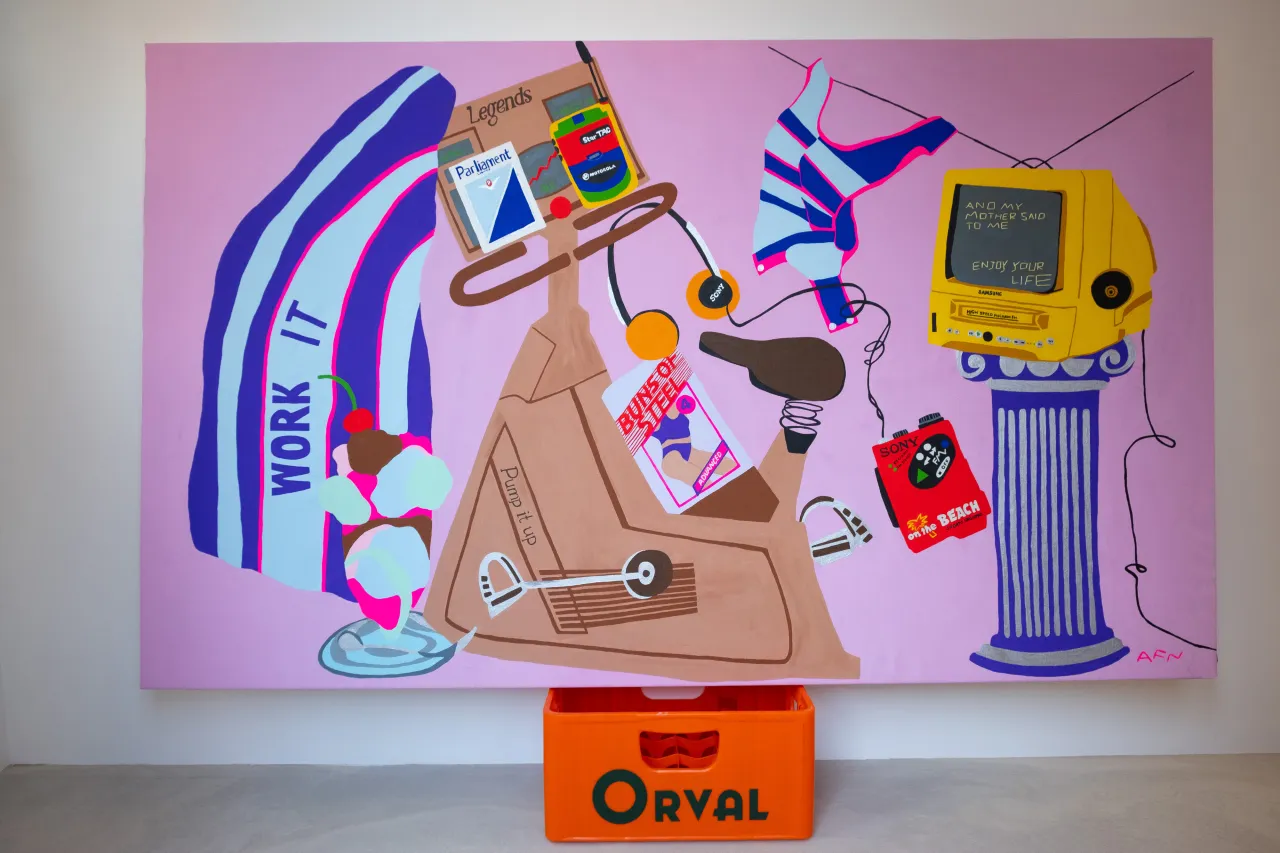
And My Mother Said to Me, Enjoy Your Life © Annie Frost Nicholson
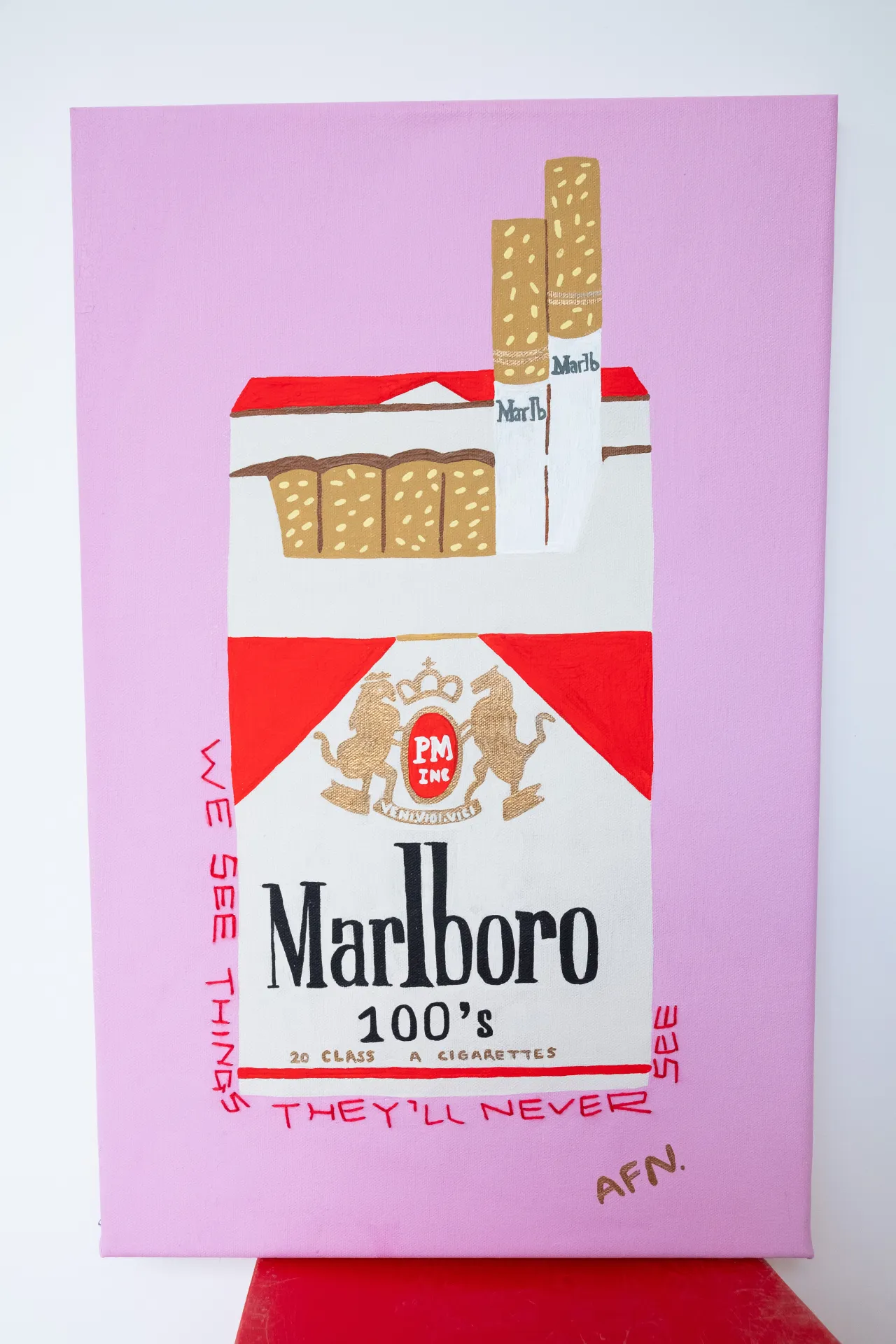
We See Things They’ll Never See © Annie Frost Nicholson
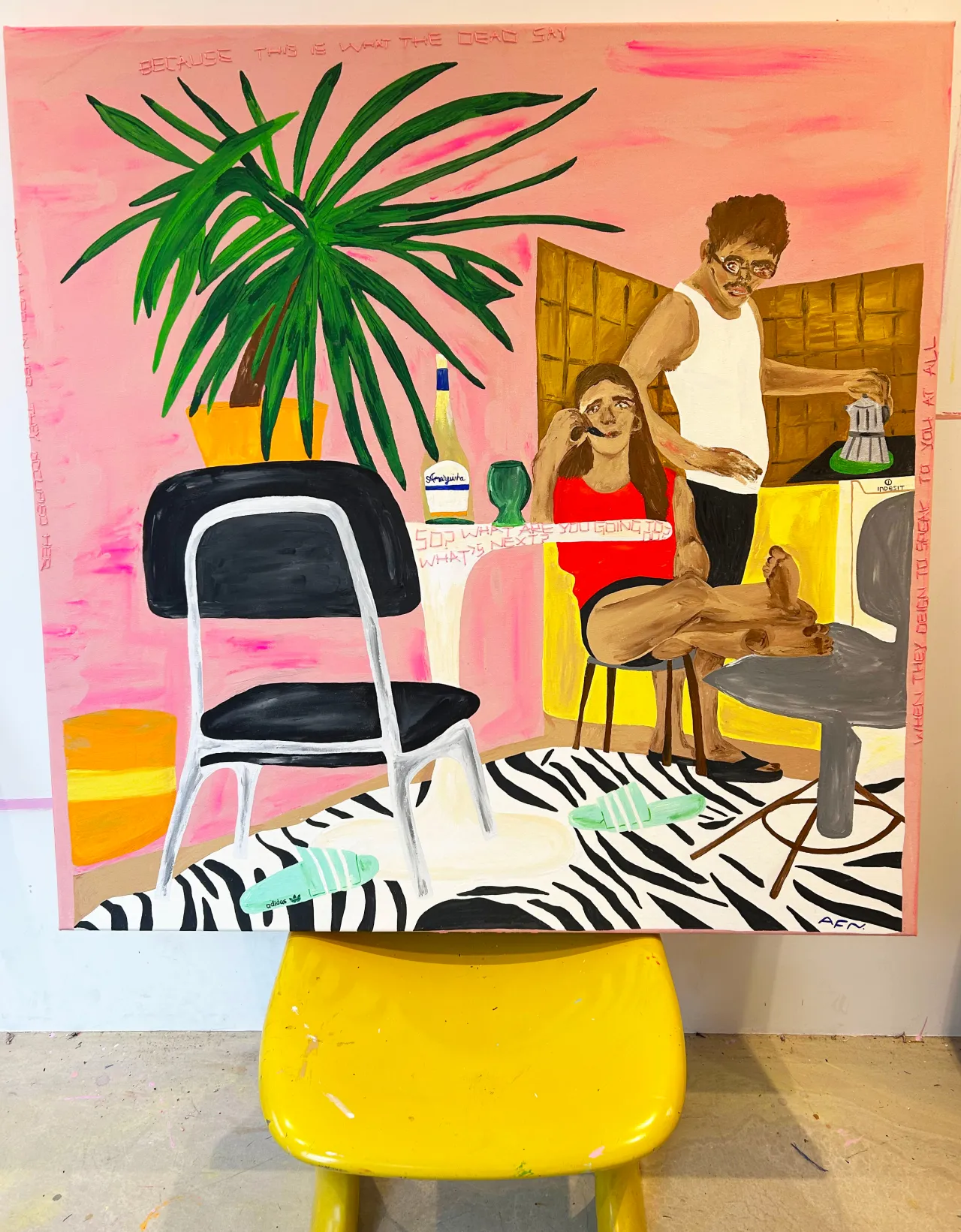
So What Are You Going to Do Now © Annie Frost Nicholson
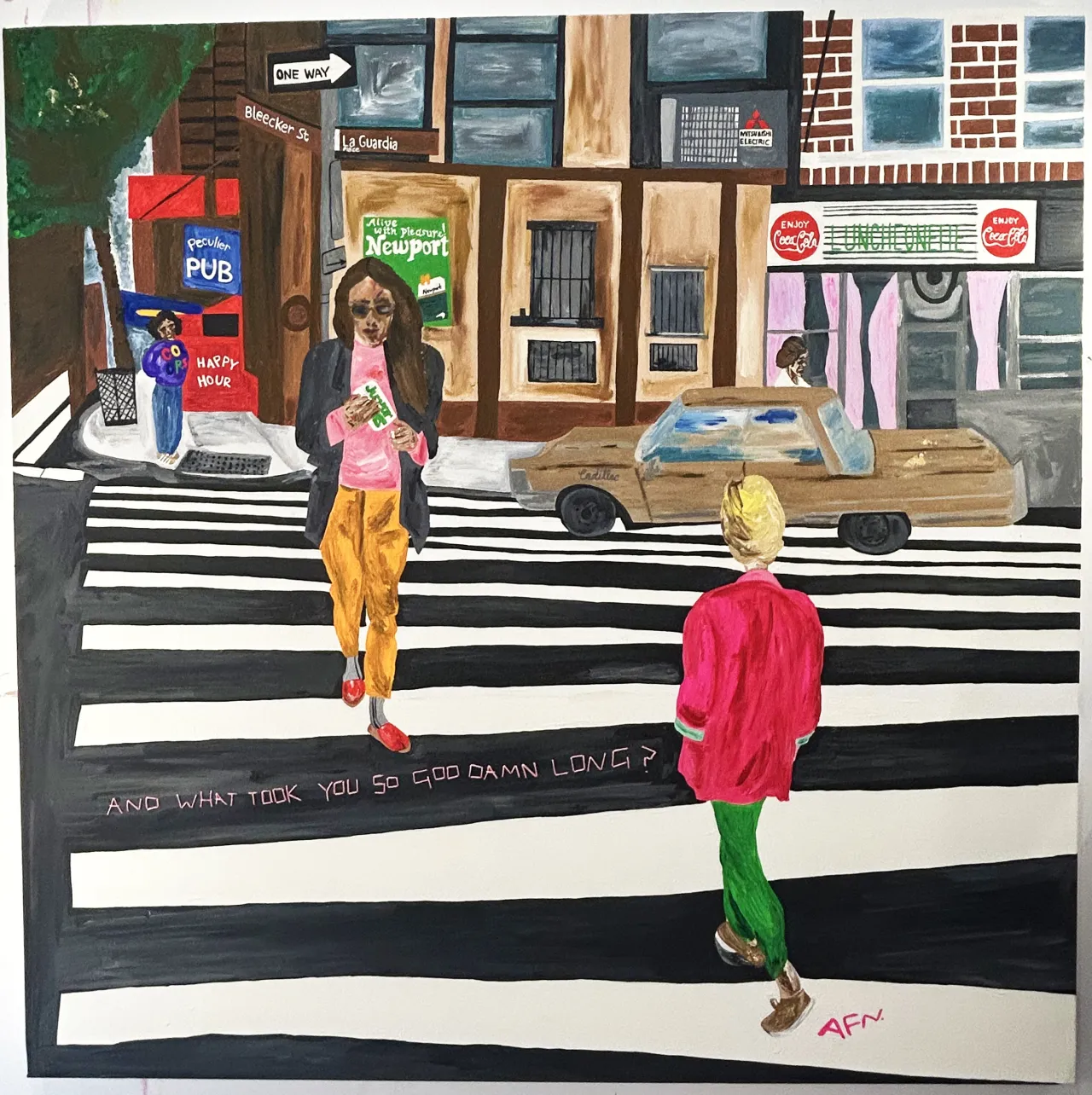
And What Took You So God Damn Long © Annie Frost Nicholson
A recent piece of hers, titled And what took you so god damn long? Annie depicts a cosmopolitan scene, with a monochrome zebra crossing as the backdrop and two colourfully dressed characters crossing it. It's off-kilter, a little wonky, playful and ever-so vibrant – a language that Annie has spent many years developing. Yet the story behind it runs deeper than just some flashy hues and fun compositions splashed on the canvas.
In 2022, Annie and her partner, Lara, returned to New York, where Lara had lived, and Annie lost some family members. There are other coincidences: Lara had lived on the same street her family passed away on; Lara's grandmother was born in the same city; and Annie's sister, Soni, died there too – " both of whom watch us from different corners of the cross street in the photograph," she says.
"I remember us laughing and shouting to each other the summer we first met, saying, 'And what took you so God damn long?' So much had gone before; we had already lived a thousand (often difficult) lives before we got to each other. I'm forever interested in how the past merges with the present, how the otherworldly enters quotidian scenes. It gives me hope in a very dark and complex world that we can keep finding these ghosts and old imprints."
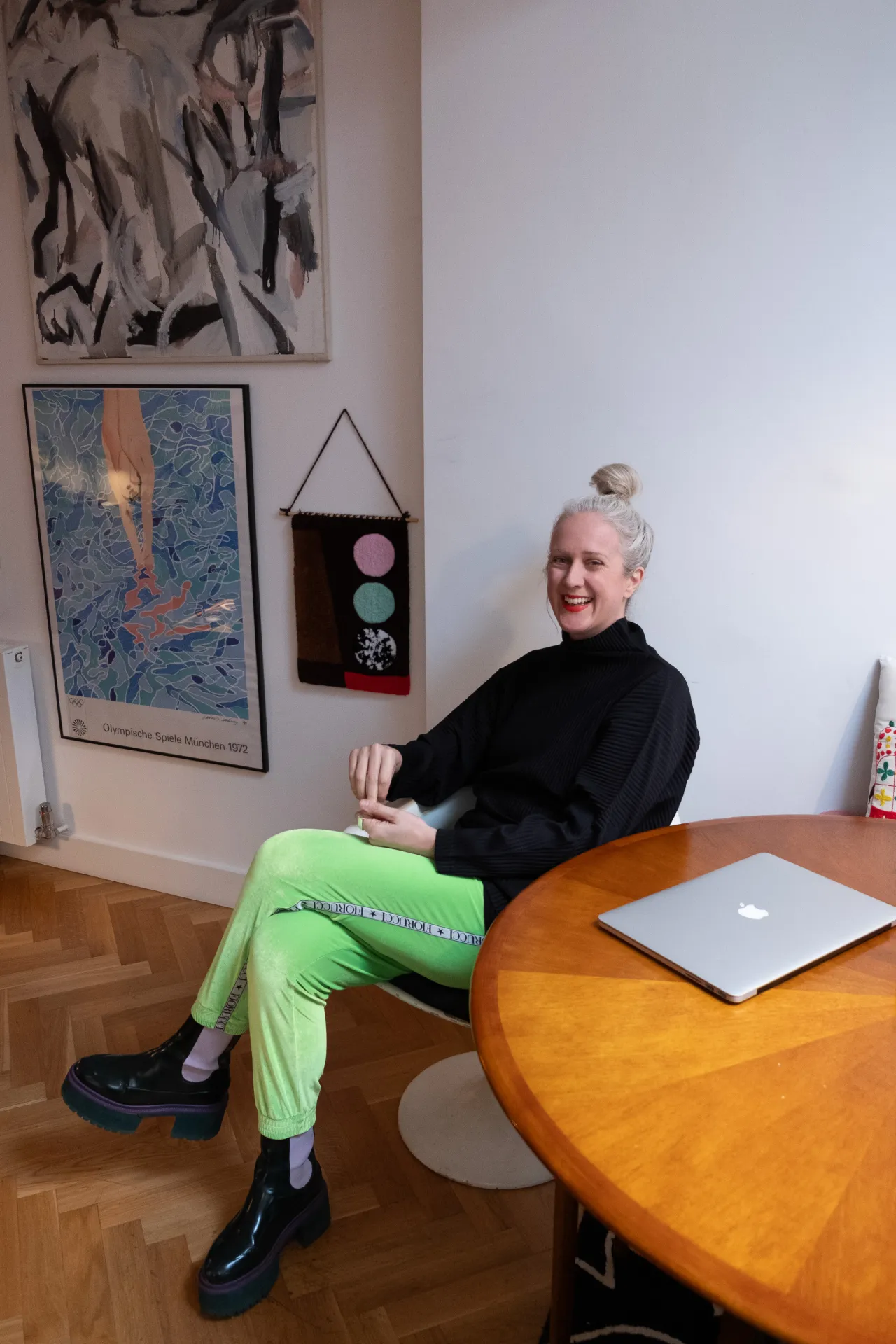
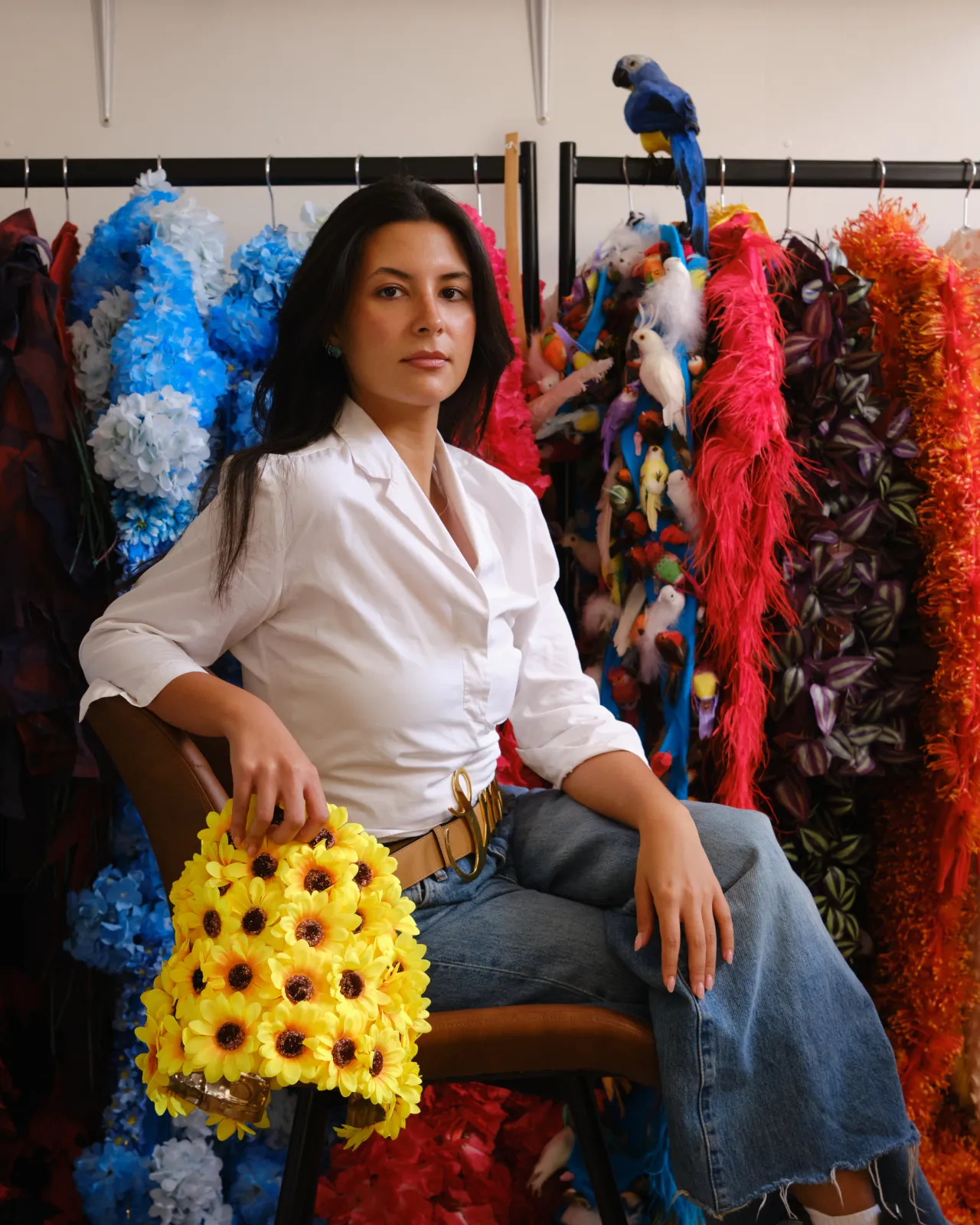
The artist, Annie Frost Nicholson. Photography: Tara Darby
Annie is currently working on turning some of her paintings into 3D spaces, again working with the Fanfangoe Discoteca and Juicy Booth teams. She also has a solo show, No, No, Nothing I can Think Of, at Wilton Way Gallery, running until 5 April. Here, audiences can uncover more of Annie's themes and spot references to old family photos, as in "Say Something Back". "I want to create a space where audiences can also reflect on this universality, how can we carry lived experience with us, how can this shape our present, both socially and actually, quite vitally at the moment, politically?
"What can we learn from the past? How can we avoid sleepwalking into repeated disasters, how can we honour what has been and gone and forge ahead?" She concludes: "In many ways this work is also about reclaiming the past, the injustice of loss, absence, what has been taken from you too soon in life."
Editor's Picks
Trending

Latest Jobs
Multidisciplinary Designer / Photographer at Boomkat
Full-time·Manchester·£42,000 – £48,000
Associate Creative Director, Events at The New York Times
Full-time·New York·$148,000 – $170,000
Director of Communications at Royal Exchange Theatre
Full-time·Manchester·£65,000
Sr. Project Manager at Known
Full-time·Los Angeles·$85 per hour
Associate Creative Director, Earned Marketing at The New York Times
Full-time·New York·$85 – $97 per hour
Senior Social Media Manager at Whitney Museum of American Art
Full-time·New York·$95,000 – $100,000