AI is everywhere in the creative industries right now: in the hype, in the anxiety, in the tools themselves. But between the breathless enthusiasm and the fevered backlash, a more interesting conversation is happening. One about what AI can actually do in the hands of artists and designers who refuse to take its promises at face value.
At the Royal College of Art, that conversation is producing work that is winning international awards, exhibiting at major institutions and challenging how we think about technology's role in creative life. Two RCA creatives—one a recent graduate, one a current student—are approaching AI from very different angles. What they share is a refusal to simply accept the script.
A film built on forgetting
Gregor Petrikovič is a Slovak-British artist and filmmaker who completed an MA in Photography at the RCA, where he was a Burberry Design Scholar. His film, Sincerely, Victor Pike, was recently selected for New Contemporaries and won the Colección SOLO AI Award 2024. It was built on an audio archive he has been collecting since 2016: hundreds of hours of conversations with friends and acquaintances, recorded originally to help him manage chronic memory loss.

For years, the recordings just sat on old phones. "I didn't look at the files for years," he says. "It was only when I gathered all my old phones and moved everything into one folder that I realised: this is completely overwhelming."
AI entered the project not as a creative vision but as a practical solution. Gregor used it to transcribe the audio and found himself staring at what looked like film scripts; documents full of intimate, funny, sometimes profound exchanges between people who had never met each other, but coexisted in his memory.
From there, he turned to AI-generated visuals to bring the material to life, drawn to the glitchy, dreamlike quality of early generative imagery, which mirrored how memory actually works. An undiagnosed, long-term sleep condition had fragmented his recall for 25 years; his brain, he explains, tends to create "placeholders" for things he can't remember; a generative process of its own.
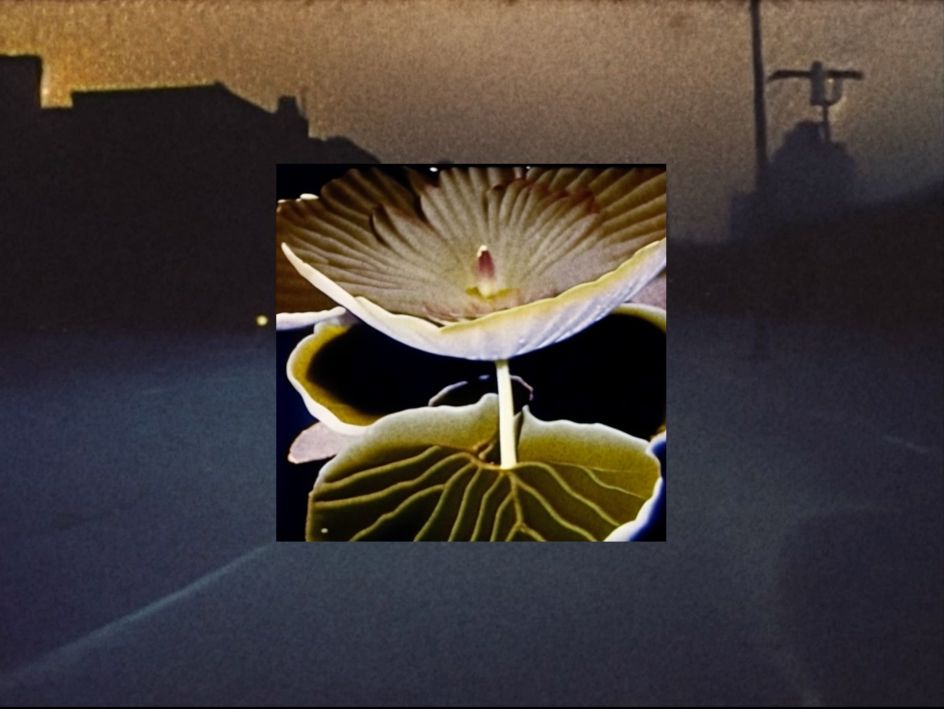


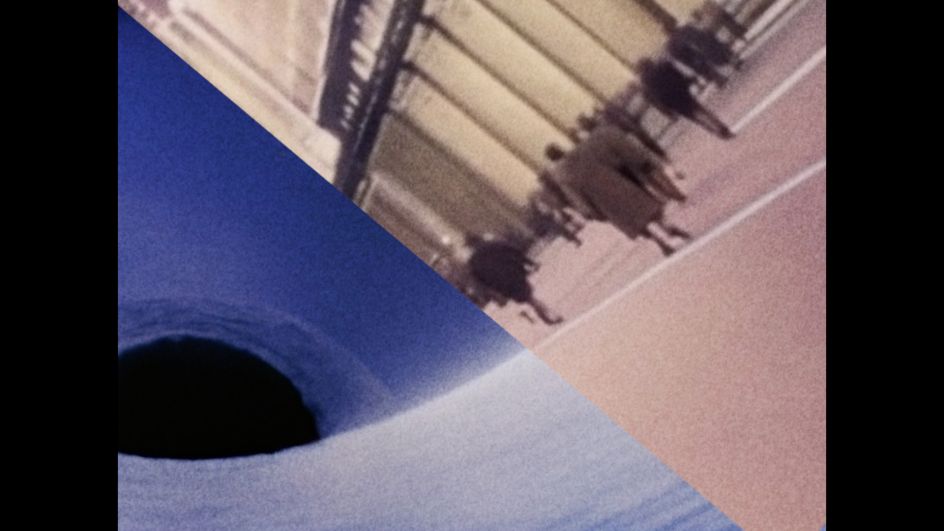
The result is a film that uses AI without celebrating it. Gregor fed his voiceovers into the software, but interestingly, most of the time, the AI simply didn't get it. "It couldn't understand metaphors, poetry, or the nuances of spoken words," he recalls. "That was a huge realisation for me: the project is about the stuff that AI cannot capture."
He describes Sincerely, Victor Pike as a "sentimental counter-practice to big data". Where surveillance technologies flatten us into profiles and sell us things, his recordings do the opposite; they preserve tiny, funny, irreducible human moments. "When you strip everything away, and it's just a voice, you get all these tiny individualities and emotions that come to the surface," he says. "These technologies aren't going away, but I want to be there figuring out how we can use them to actually feel something. Connection isn't the reason these tools were built, but I think as artists, that's exactly what we should be using them for."
Rewriting the narrative
Ramla Anshur has been coming at AI from a different direction entirely. A current part-time student on the MDes Design Futures programme, she also works at Accenture as an experience designer. Her research focuses on a deceptively simple question: what happens when communities that are usually subject to AI get to shape it instead?

Her interest was sparked not by theory but by practice. Working as a conversation designer, she helped train a natural language processing model for a citizen-facing voice bot. The team quickly hit the limits of what their data could capture. "What we couldn't account for was the various accents of the service users, any speech impediments and various accessibility needs," she explains. "By not making the conscious effort to train the model on these differences, the consequences would be dire to already vulnerable people."
That experience, combined with a design retreat that challenged her to rethink what "success" means in technology (questioning the dominance of efficiency, speed and profit as default metrics), pushed her towards a bigger question. "It ignited an interest in researching what alternative tech futures could look like when minoritised communities designed and governed these technologies based on their values, cultures and forms of knowledge," she says.
Ramla recently co-authored a research paper proposing a taxonomy of responses to narratives of AI inevitability: the idea, pushed hard by the tech industry, that AI adoption is a destiny we must simply adapt to. The paper outlines four approaches: Resisting, Refusing, Reclaiming and Reimagining. It is, essentially, a framework for anyone who wants to push back.
She's frank about the pressure creatives face in 2026. "The AI narrative is sold to us as an inevitable future where we must jump on if we don't want to be left behind," she says. But Ramla has been tracking public responses to AI-generated content, and finds the picture far more complicated than the hype suggests. "The majority response is one of rejection, disgust and disappointment. Many artists have begun to label their work as 'Human-made.' The demand for human artists and design is still a necessity."
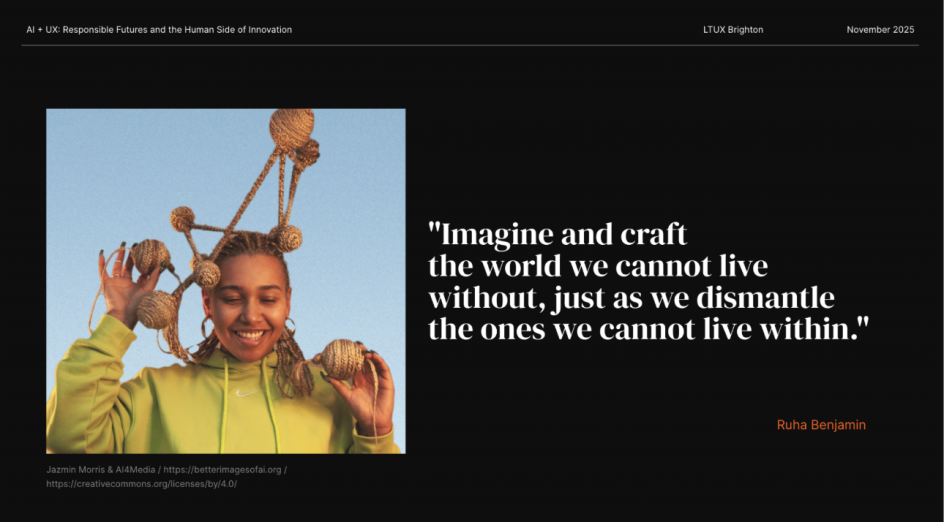

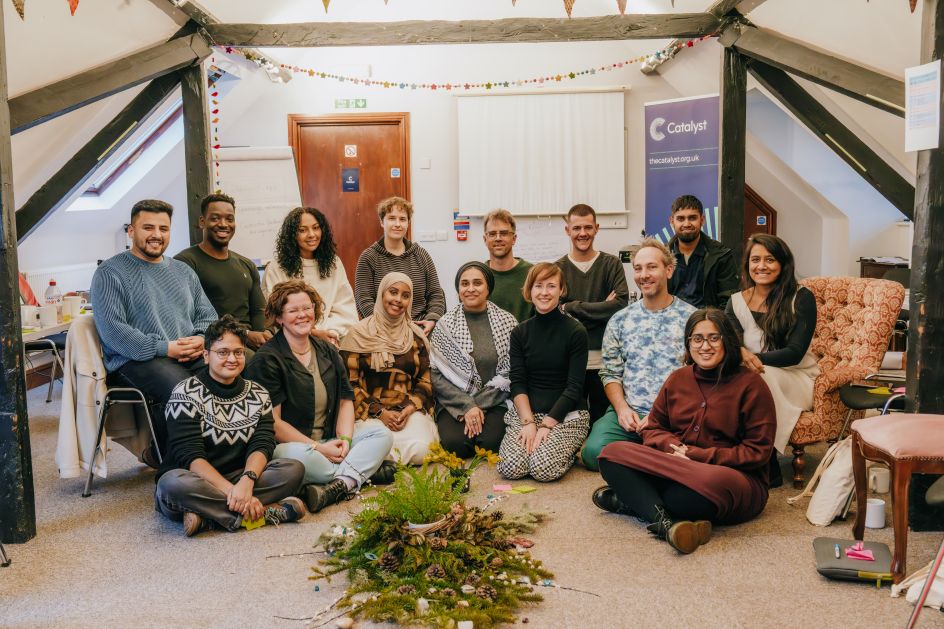
Her advice to designers and creatives feeling powerless? Organise, stay visible, and don't concede the future. "By collective organising, we can begin to imagine and craft the futures we desire: ones that value human creativity, that embody our cultural and ancestral knowledge, that exist within planetary boundaries rather than exploit."
The RCA effect
Both Gregor and Ramla credit the Royal College of Art with giving them the intellectual and creative foundations for this work, even when, in Gregor's case, it didn't look like AI at all at the time.
"The funny thing is, I didn't actually touch AI once while I was at the RCA," he says. "I was completely into the analogue world: journaling, 16mm filmmaking, experimenting with Victorian pre-cinema toy mechanisms." But those early experiments with imperfect, hand-made moving images are what drew him to the glitchy aesthetics of early generative video.
The RCA also taught him how to think in public, he adds. "I had to learn how to show up to crits and talk openly about work that was still a messy work-in-progress. My tutors helped me detach from the idea of a finished product and focus on the ideas instead."
For Ramla, studying part-time over two years has given her the space to go deep. A standout module, Envisioning Futures, saw her team collaborate with the Design Museum's Futures Observatory to imagine more-than-human futures, including a speculative land council that balanced the needs of all inhabitants, human and otherwise. "These learnings to prioritise justice, regeneration and criticality have shaped my work," she says, "to leverage technology where it is needed and useful, as opposed to imposing it."
Two very different practices, one shared conviction. The key takeaway? AI is only as interesting as the questions you bring to it. And at the RCA, the questions come first.
Gregor Petrikovič studied MA Photography. He was a Burberry Design Scholar and is an alumnus of the International Studio & Curatorial Program (ISCP) in New York. His film Sincerely, Victor Pike won the Colección SOLO AI Award 2024, has been selected for New Contemporaries, and has exhibited at IDFA DocLab, Late at Tate Britain, and Sónar+D Barcelona. He is currently an FLAMIN Fellow at Film London. Ramla Anshur is currently a part-time student in the MDes Design Futures programme. She works at Accenture as an Experience Designer and co-authored the 2025 research paper 'Resisting, Refusing, Reclaiming, Reimagining: Charting Challenges to Narratives of AI Inevitability' with We and AI. Ramla was selected for Catalyst's Kindling programme which supports tech justice projects and includes an in-person retreat.
Further Information