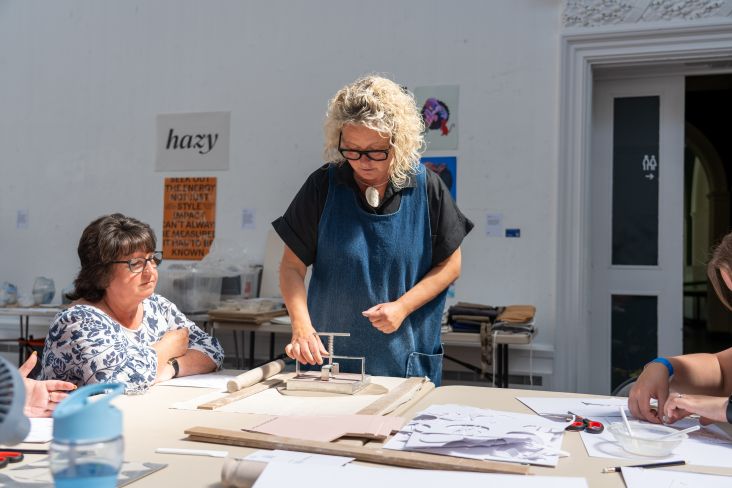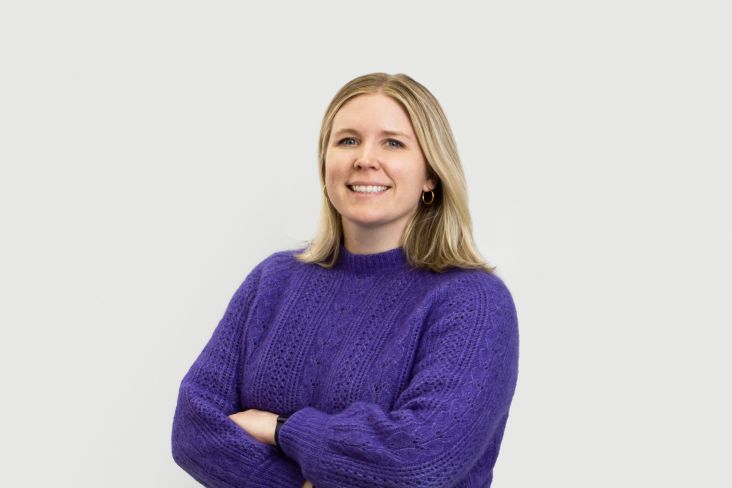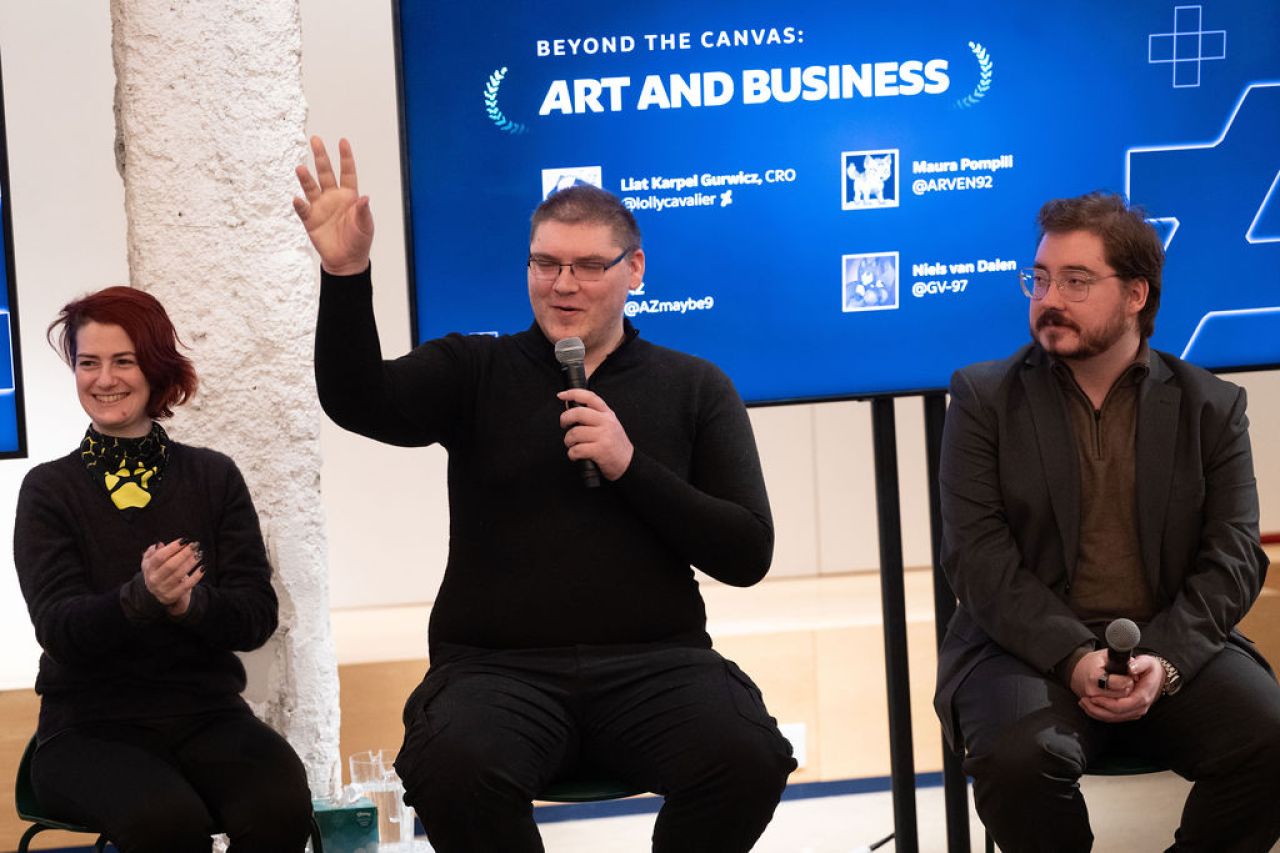
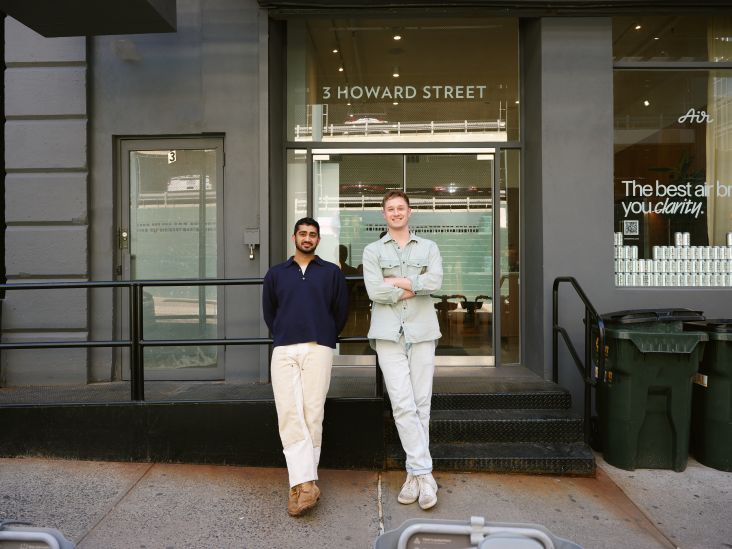
Maura Pompili (left), aka @ARVEN92, is one of the top sellers on DeviantArt
You've put the work in. You've built an audience. You're posting on social regularly. And people genuinely love what you make. So why isn't it paying? So says Maura Pompili, aka @ARVEN92, and she's far from alone in feeling it.
As an artist, turning a following into income often feels like a puzzle with missing pieces. A community on one platform, a shop on another, commissions managed via email, payments chased through DMs. It's all exhausting, and it eats into the time you actually want to spend creating.
DeviantArt has been quietly solving this problem. Founded in 2000 as a gallery and space for digital artists, it's home to a strong community of over 108 million members. More recently, it's evolved tools that not only let you share but also make money from your art.
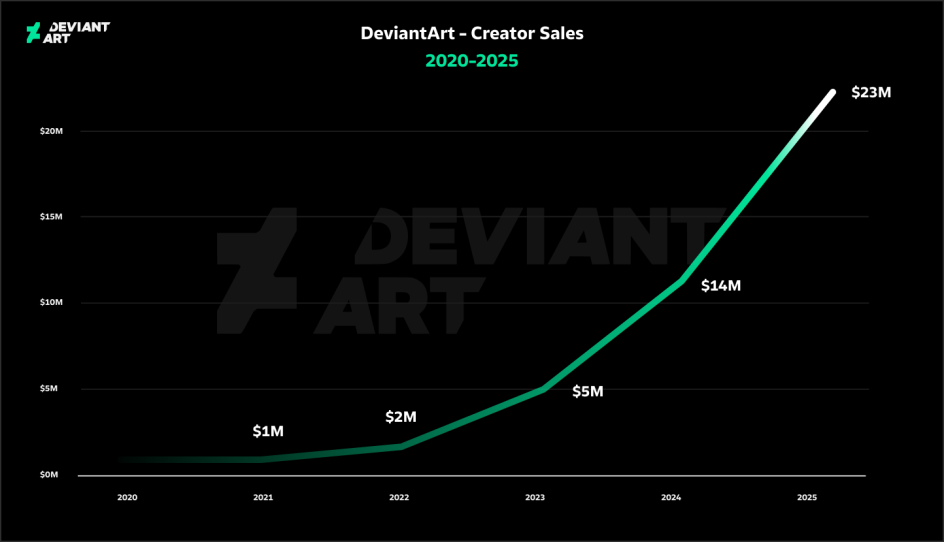
In 2025, artists sold over $23 million worth of work on the platform. That's 11 times more than in 2022, and more than the previous five years combined. So what's actually changed, and what does it mean for you?
A platform that earns when you earn
Before diving into the tools themselves, it's worth understanding what makes DeviantArt's model unusual. The platform carries no third-party advertising. None. That means your work isn't a backdrop for someone else's brand, and the platform isn't making money by selling your audience's attention to the highest bidder.
Instead, DeviantArt operates on a simple principle: it takes a small percentage of artists' earnings. Platform fees start as low as 2.5%, which is super-low for a creative marketplace. And in a way, this small fee is better for artists than a zero fee.
Why? Because, if you think about it, it means your interests are aligned. When you succeed, DeviantArt succeeds. That's a very different relationship to normal social platforms, which profit whether you earn anything or not.
So let's dive into the nitty-gritty of how the site can actually make you money in practice.
The tools that make it work
DeviantArt offers a numbr of distinct ways to monetise your work, each suited to different creative outputs and audience relationships.
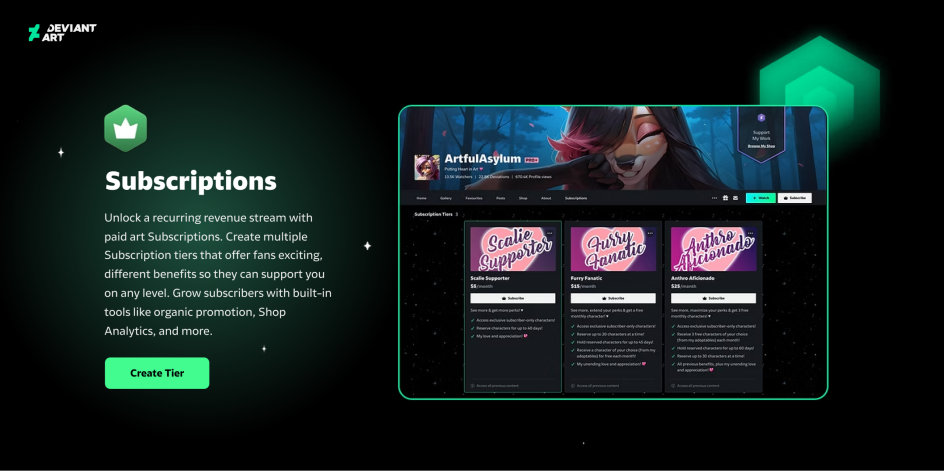
- Subscriptions are the most powerful of these for artists who want a stable, recurring income. You can offer up to 10 custom tiers (think Patreon-style memberships), giving fans different levels of access at different price points.
Behind-the-scenes content, high-resolution downloads, early access, exclusive posts, even private Discord channels: the structure is entirely up to you. DeviantArt's own data shows that the sweet spot is two or three tiers, with most successful sellers pricing at least one tier at £10 or under. Critically, the platform handles billing, delivery and renewal automatically, so you're not doing admin instead of making art.
Exclusives are designed for artists who create one-of-a-kind work. Character designs and adoptables are the most popular use cases, though Exclusives work for any singular digital creation. You set a fixed price or accept offers, and buyers can also gift Exclusives to others. And here's a particularly useful feature: you can allow buyers to resell your Exclusives on, while you continue to earn royalties from those secondary sales.
Premium Downloads let you sell digital files directly. We're talking wallpapers, brush sets, print templates, textures, reference sheets, whatever your audience needs. There's no limit on what counts as a Premium Download; if it's a file someone would pay for, it qualifies.
Premium Galleries work differently again. Rather than selling individual pieces, you're selling curated access to a collection for a single payment. It's a good fit for artists who want to offer themed bodies of work (a character's full concept art history, a series of process timelapses, a portfolio of mature pieces) without drip-feeding content on a subscription schedule.
Originals offer a more structured route for custom work. Buyers fill out a request form upfront, you can offer optional add-ons, and pricing is clear from the start; no back-and-forth over DMs to agree a brief. Payment is secure throughout, and once the piece is complete you deliver it as an Exclusive, which also gives it a visibility boost to attract further buyers.
Getting your work seen
Of course, having products listed means nothing if no one finds them. So DeviantArt's discovery engine does a lot of the heavy lifting here, surfacing your work to logged-in members through the Deviants You Watch feed and algorithmic recommendations. Your subscription tiers are automatically promoted on your profile, your deviation pages, and across search and browse.
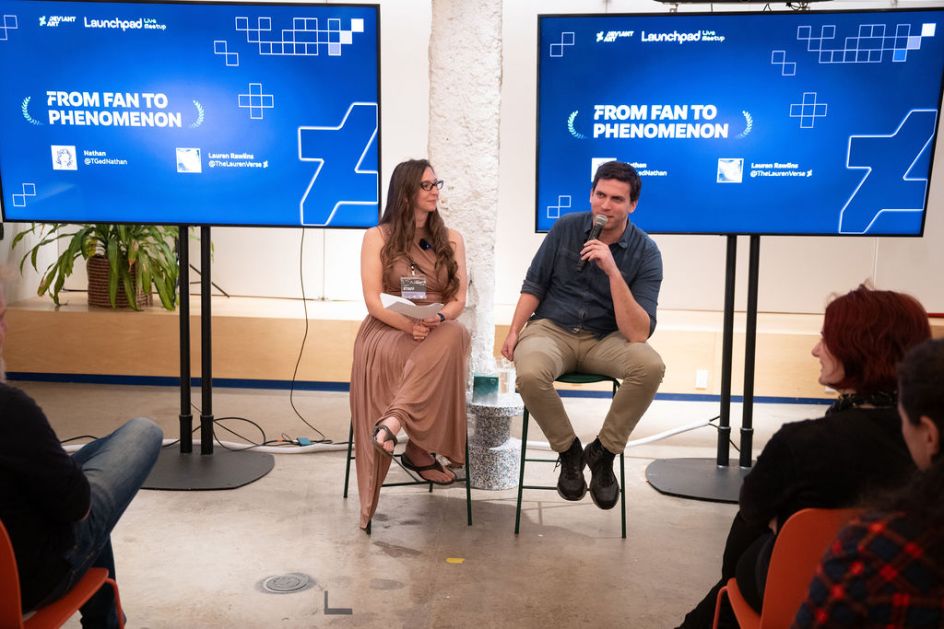
DeviantArt Launchpad Live Meetup
Beyond organic reach, there are two paid promotion tools worth knowing about.
Boost temporarily increases the visibility of a specific piece or tier for 48 hours, placing it in front of users whose behaviour suggests they'd be likely to subscribe or buy. It's targeted enough to feel purposeful rather than scattershot.
Discounts let you create time-limited offers (including a free first month on a subscription tier) targeted at specific audiences. These audiences might be existing watchers, current subscribers or the platform at large. These show up directly on tier thumbnails when they're live, making them visible at exactly the right moment.
The workflow, in practice
One of the more underrated aspects of DeviantArt's ecosystem is Studio, the centralised seller dashboard. Rather than navigating to different parts of the platform to manage different products, Studio brings everything together: your listings, analytics, discount campaigns, and performance data in one place.
Shop Analytics deserves particular mention. You can see which products are selling, which subscription tiers are growing, and who your most engaged supporters are. For artists making decisions about what to create next or how to price their work, this kind of data is usually available only to businesses that pay for specialist software. But on DeviantArt, it's built in.
What artists actually earn
The numbers from real-life artists using DeviantArt to sell are striking. @Precia-T, who cites the platform's unusual breadth of art-loving fans as her reason for choosing it, sold over $15,000 in under a year. @Sakurai-Outfit-Adopt, who specifically values not having to manage file delivery or chase communications, passed $14,000 in a similar timeframe. @phil-cho, drawn by the ability to offer fans multiple ways to show support, cleared $8,000.
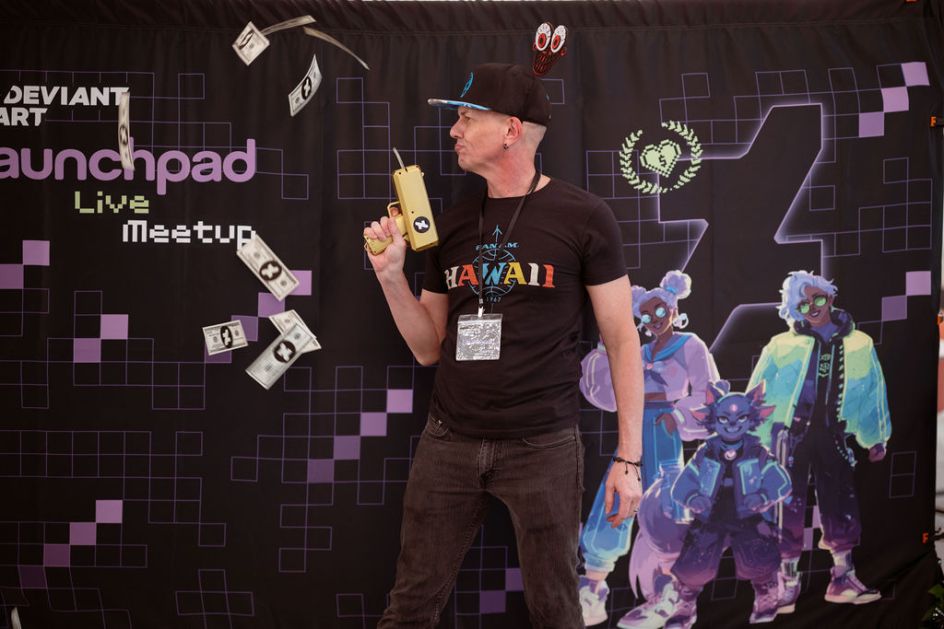
DeviantArt Launchpad Live Meetup
Creative duo @AZmaybe9 describe a similarly rapid trajectory: "Working with DeviantArt allowed us to rise from zero earnings to thousands in just months," they report. And these aren't just a few outliers, cultivated for marketing purposes. Literally tens of thousands of sellers earned income on DeviantArt in 2025, across a community of over 260,000 buyers who actively purchased work on the platform.
The case for consolidation
At the end of the day, the biggest reason to sell through DeviantArt isn't any single feature; it's the consolidation. Your audience, your shop, your subscription tiers, your analytics and your promotional tools all exist in the same place. The same place where 108 million people already come to look at art.
For artists who've spent years stitching together a patchwork of platforms to approximate a creative business, that's not a small thing. It's the whole point.
DeviantArt is free to join. A Core Membership is required to access selling features, with plans available at different price points. Platform fees start at 2.5%. Get started today at Deviantart.com.
Further Information

Editor's Picks


Trending


Podcasts
Editor's Picks
Further Reading