Here is a piece of career advice you won't find in any photography degree prospectus: become the designated driver. Don't drink. Stay sober at every party, every gathering, every 2am return from a moose hunt. Keep your camera loaded. Wait. Watch. Then take the pictures that nobody else can take. Because everyone else is three sheets to the wind and you're the only one in the room with clear eyes and steady hands.
This is, more or less, how Melonie Bennett created Holy Cow!, her debut monograph published by GOST this May. It's required reading for anyone who's ever wondered where their best work might be hiding. The answer, it turns out, might be your own kitchen.
The subject was always there
Melonie grew up on a dairy farm in Maine, USA, the eldest of a family that, by her own account, lived under constant stress. They coped the way many rural American families do: by laughing, eating, fighting, talking, and then pretending everything was fine. It is a coping strategy that produces, as a by-product, extraordinary photographic material.
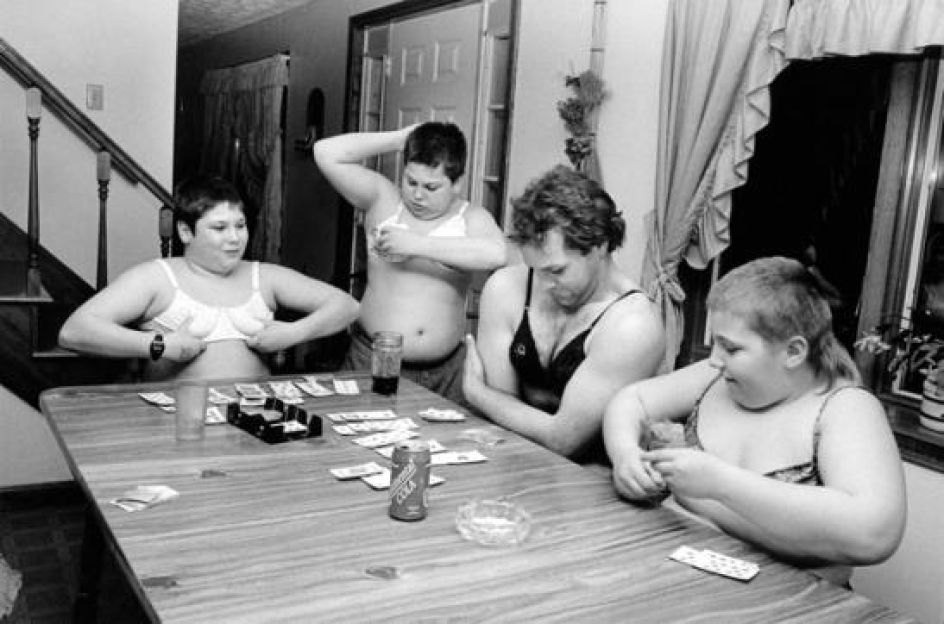
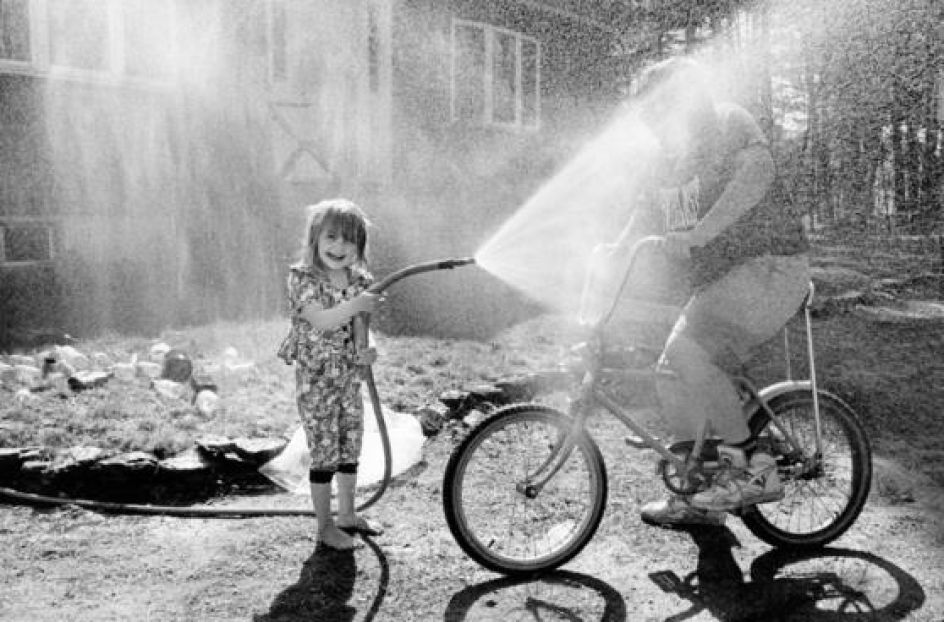
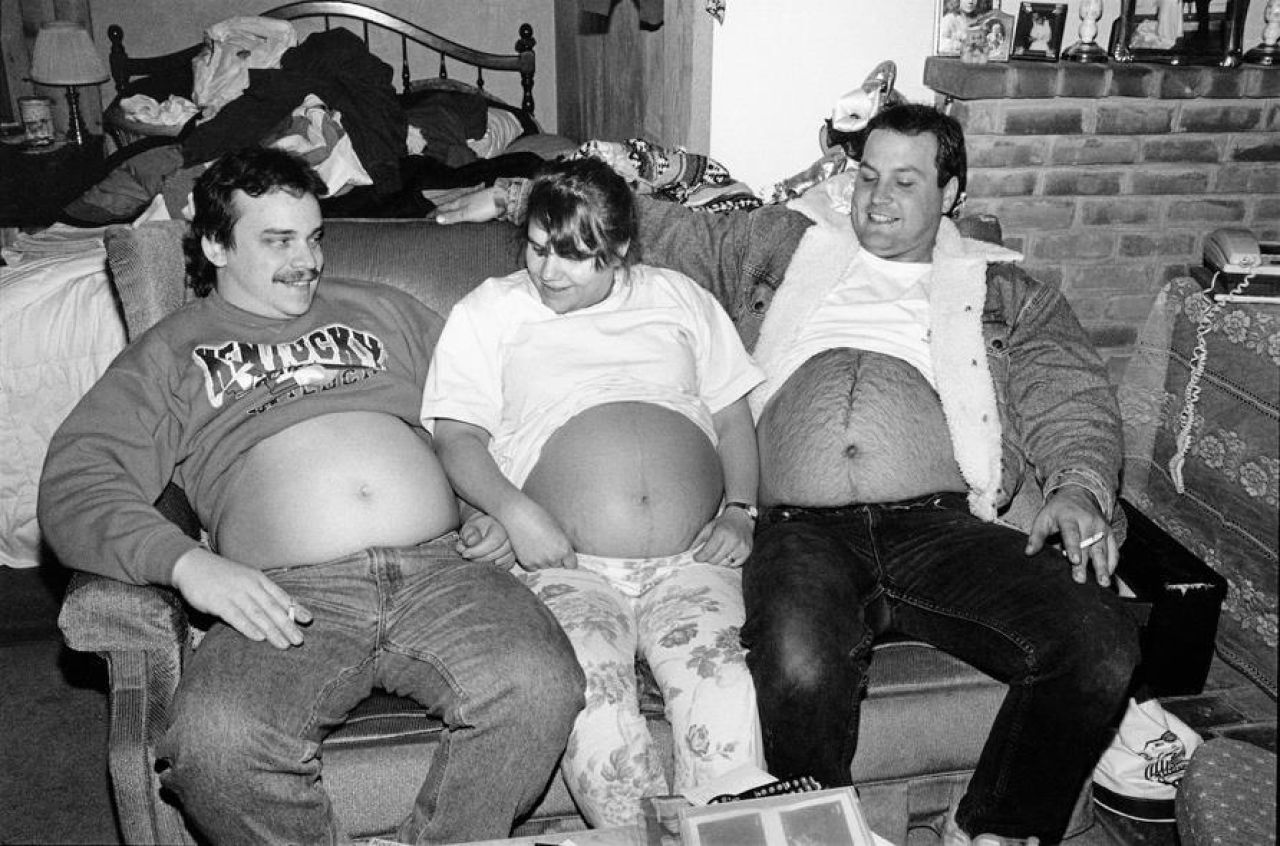
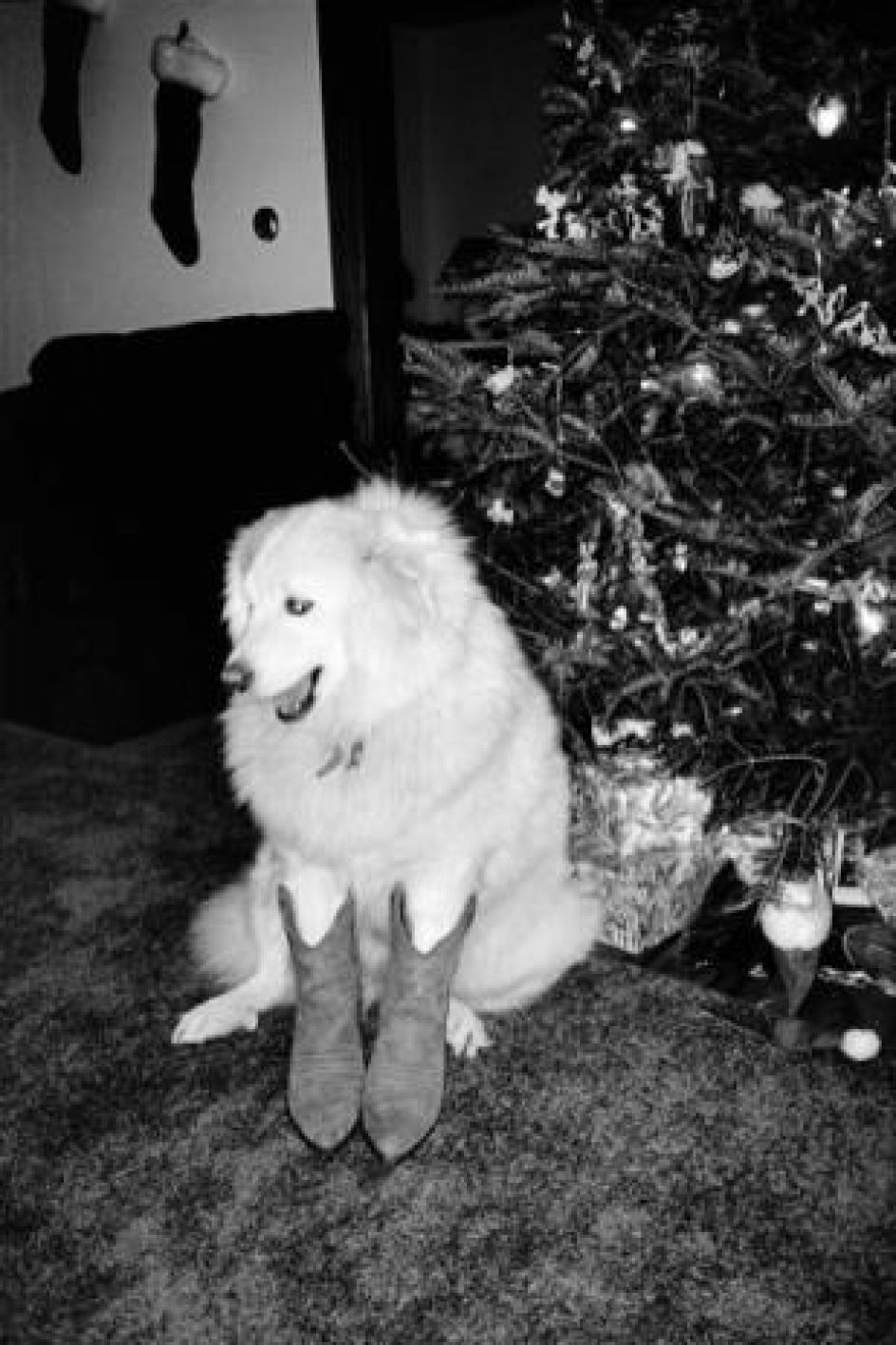
Spanning the years from 1990 to 2011, these images show family rituals and traditions, drunken exploits and quieter moments of reprieve. They show a dog in cowboy boots. Boys playing cards in bras. College kids streaking through farmland. A juxtaposition of pregnant bellies and beer bellies that is both absurd and oddly tender.
These are not the photographs of a detached outsider parachuting in to document an exotic subculture. They are the photographs of someone who knows exactly where to stand and when to press the shutter, because she's been watching these people her entire life.
It all undermines a popular myth in creative culture: that the best work requires distance, travel and novelty. That you need to go somewhere unfamiliar to find something worth making. In contrast, Melonie's subject was always there. It was sitting on the sofa with its belly out, playing cards in a bra, waiting to be seen.
The sober observer
What gave Melonie her access wasn't just proximity; it was her role within the family dynamic. As the eldest child, she was the responsible one, the one who didn't party. In high school, she took a darkroom class while also serving as the designated driver for family and friends. These two things, she has said, were inseparable.
The camera gave her a reason to attend events where she might otherwise have felt peripheral. The sobriety gave her the clarity to see what was actually happening.
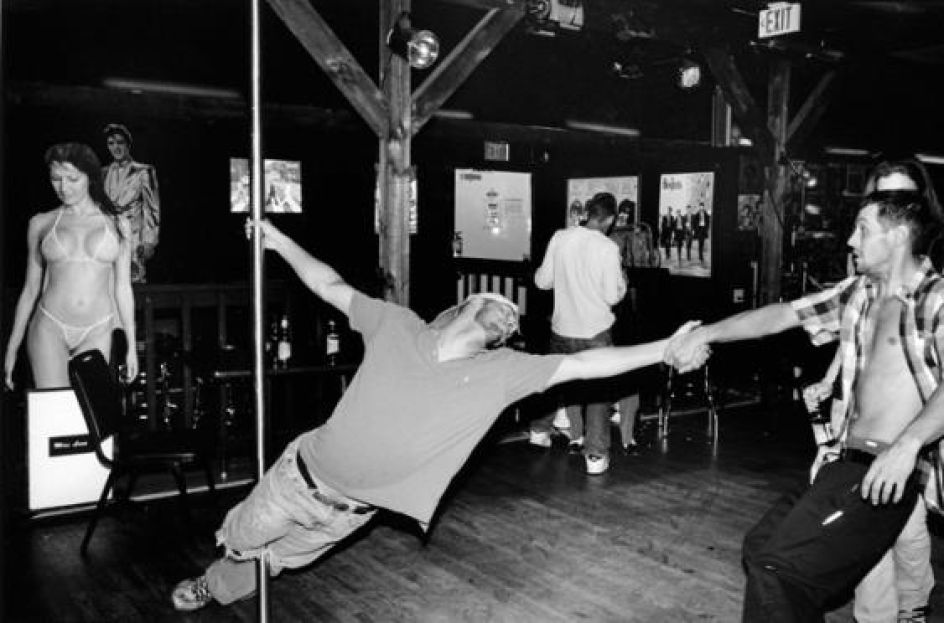
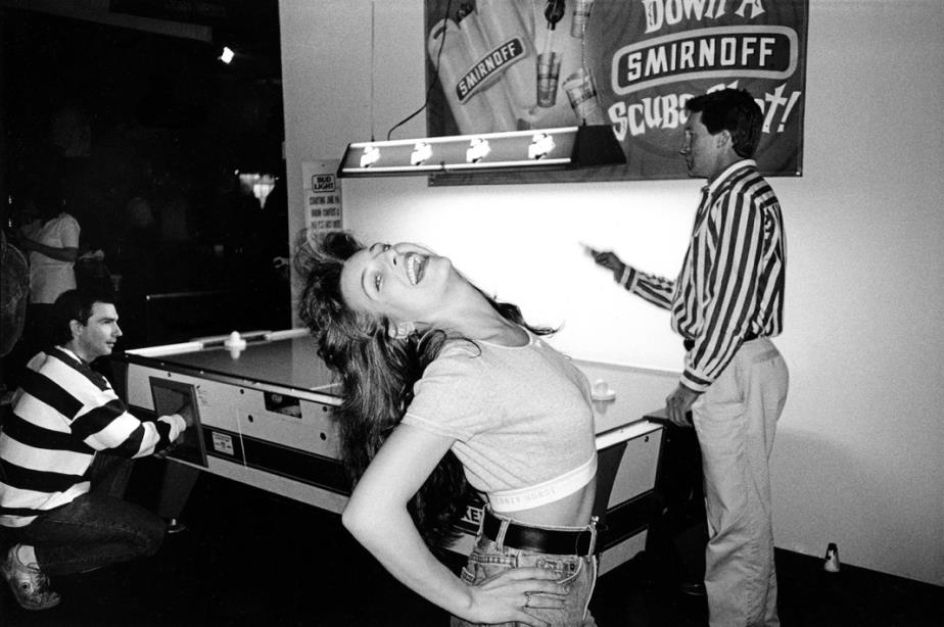
This is a dynamic many of us will recognise, even if we've never articulated it quite this way. The camera creates a kind of licensed invisibility. It gives you permission to look, to be in the room without quite being of it, to observe without the obligation to participate. For Melonie, this was doubly true: she was already, by temperament and by family role, the watcher. The camera simply formalised it.
The question for every creative, then, is: what is your equivalent? What role do you already occupy that gives you unusual access, unusual perspective, and an unusual reason to be in the room? The answer is probably closer to home than you think.
Humour as a creative strategy
One of the things that distinguishes Holy Cow! from more earnest traditions of documentary photography is its commitment to humour. Melonie has always been drawn to the absurd and the unexpected. Irony was, she says, highly prized in her household: a necessary counterweight to what she calls a "daunting heaviness". This shows in the work. These are not photographs that ask you to feel sorry for anyone. They ask you to laugh, and then, quietly, to feel something more complicated underneath the laughter.
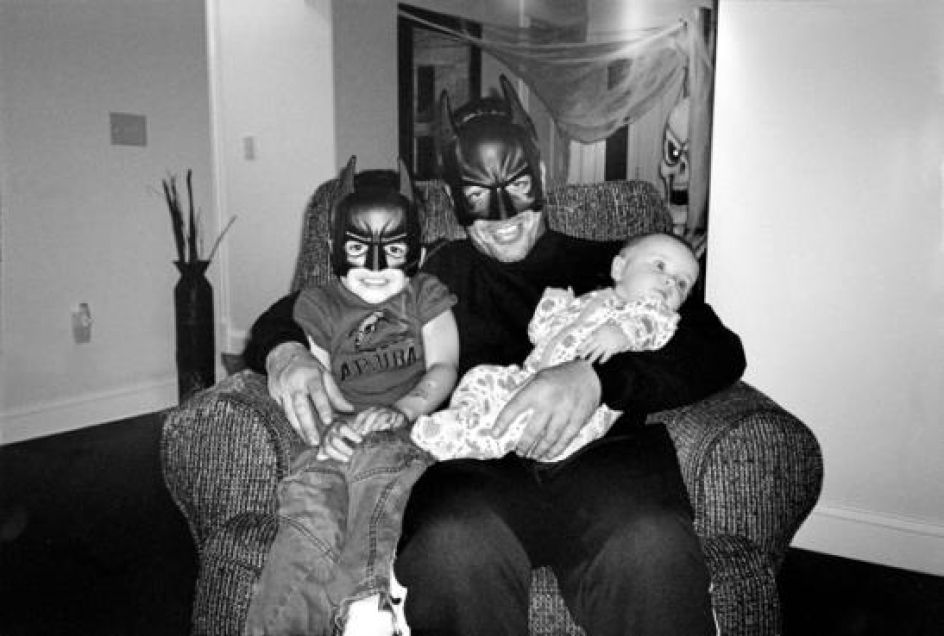
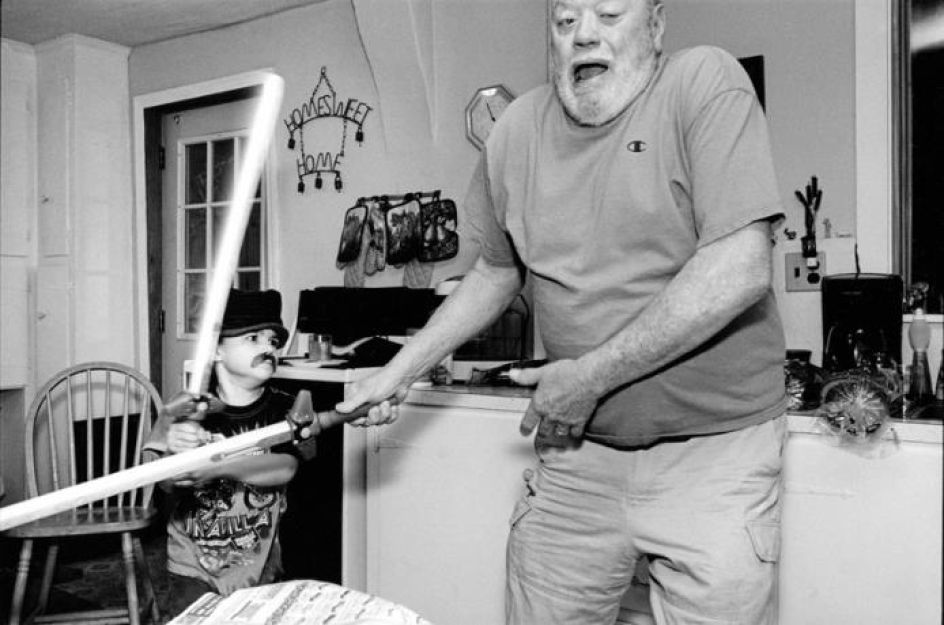
This is harder to pull off than it looks. Humour in serious creative work is chronically undervalued and technically demanding. Get it wrong, and you tip into mockery, sentimentality, or the kind of ironic detachment that keeps the viewer at arm's length. Get it right, and you create work that's moving, precisely because it refuses to be solemn.
The gift of the single roll
There is a lovely detail in the press release about Melonie's brother Merritt, who contributes recollections and stories to the book. As Melonie's picture-taking became a regular feature of family life, he developed a tradition of gifting her a single, unwrapped roll of film on family occasions. Just the one roll. He'd hand it over and laugh, mocking her, the picture-taking, the whole enterprise.
Melonie's reading of this gesture is astute. He spent six dollars. He had to go to a shop. He thought about her. "This proved he loved me, right?" she says.
The book, in a sense, is built from moments like this: acts of love that arrive disguised as mockery, tenderness wrapped in ribbing, family bonds expressed through the language of taking the piss. It is a very specific emotional register, and Melonie captures it with a precision that suggests deep fluency.
Getting the timing right
Holy Cow! is Melonie's first monograph, which seems bizarrely late for a photographer whose work has appeared in more than 60 exhibitions internationally, and whose prints will hang alongside those of Richard Avedon, Dorothea Lange and Sally Mann, among others, in an upcoming major travelling show. But perhaps the timing is right. This kind of work (intimate, accumulated, rooted in a single place and a single set of relationships) takes as long as it takes. You can't rush 20 years.
The book is a hardback, 176 pages, 66 images. It costs £40 in the UK. If you're a creative who's been waiting for permission to make work about the thing you know best, the place you're from, the people you grew up with, consider this your permission slip.
You don't need to go anywhere. You just need to stay sober and keep shooting.
Further Information
Holy Cow! by Melonie Bennett is published by GOST this May (£40/€50/$55). Signed editions are also available.

Editor's Picks



Trending



Podcasts




Editor's Picks
Further Reading