'He was still thinking in pictures until the end': exploring the life and legacy of photographer Erwin Olaf
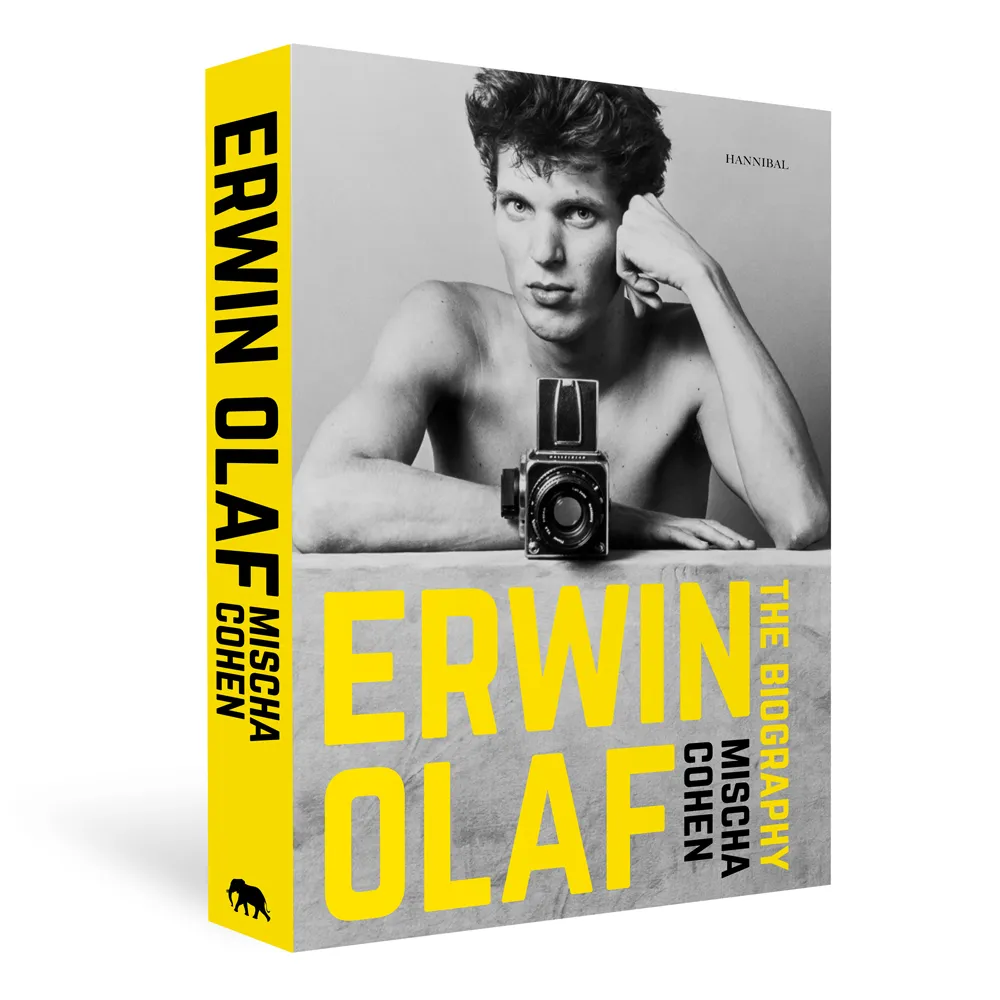
Erwin Olaf: The Biography by Mischa Cohen, published by Hannibal Books, traces the Dutch image-maker's career from Amsterdam's nightlife scene to international acclaim, activism and creating work until his final years.
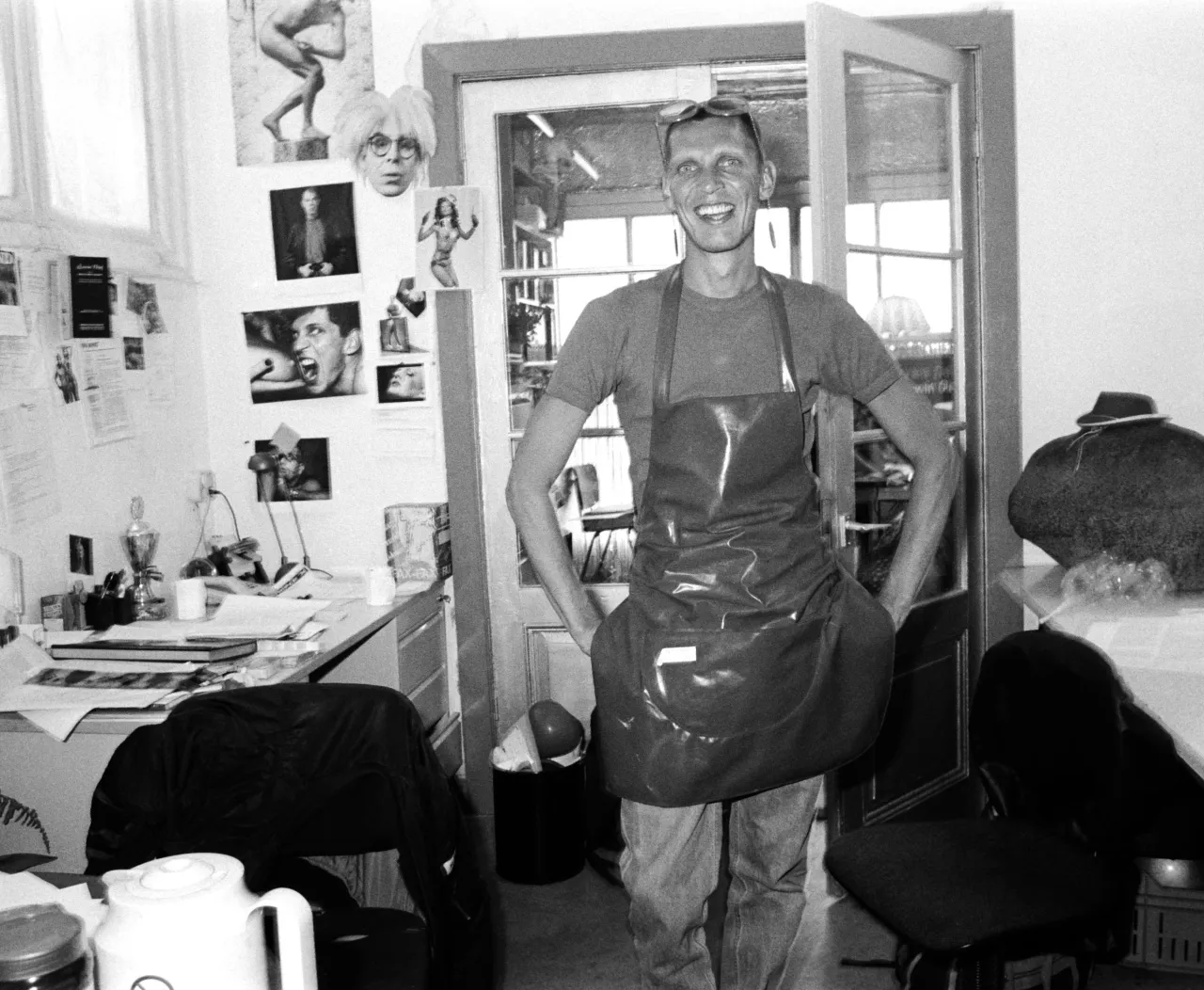
Erwin in the studio on Swammerdamstraat © Piek
Erwin Olaf Springveld – known as Erwin Olaf – was born in the Netherlands in 1959. He came of age in the buzzing, liberating Amsterdam of the late 1970s and early 80s, finding his muses in the city's nightlife scene and developing from a rebellious, provocative avant-gardist into one of the most internationally celebrated image-makers of his generation.
His work spanned fashion, portraiture, activism and fine art, earning him a place in the collections of the Stedelijk Museum and, eventually, a transfer of part of his archive to the Rijksmuseum. He photographed the Dutch royal family, and also photographed a singer regurgitating pearls, one of his most famous early black-and-white images.
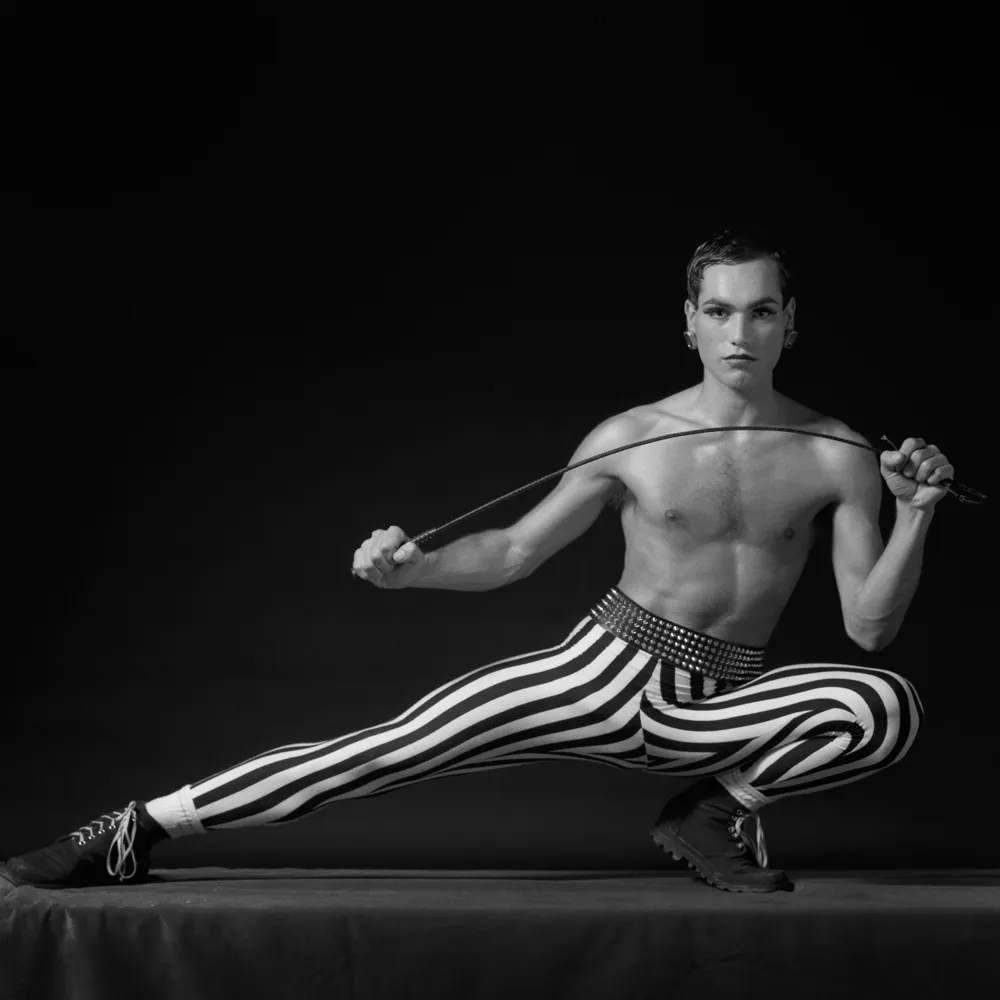
Alandus Weertman, a great love of Erwin Olaf © Erwin Olaf
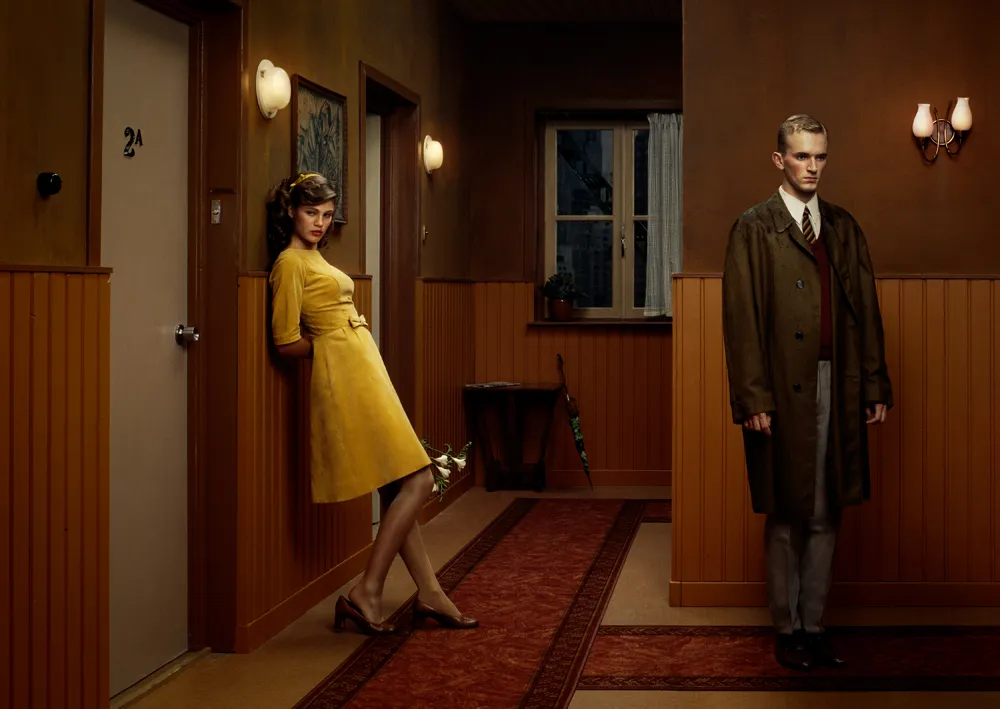
The Hallway, 2005 from the series Hope © Erwin Olaf
He died in 2023, aged 63, of a hereditary degenerative lung disease. And now, journalist and author Mischa Cohen has written the first major biography of his life and work, published by Hannibal Books: a 392-page monumental account built from archive material, interviews with dozens of people close to Olaf, and years spent at his side in the studio and on shoots abroad.
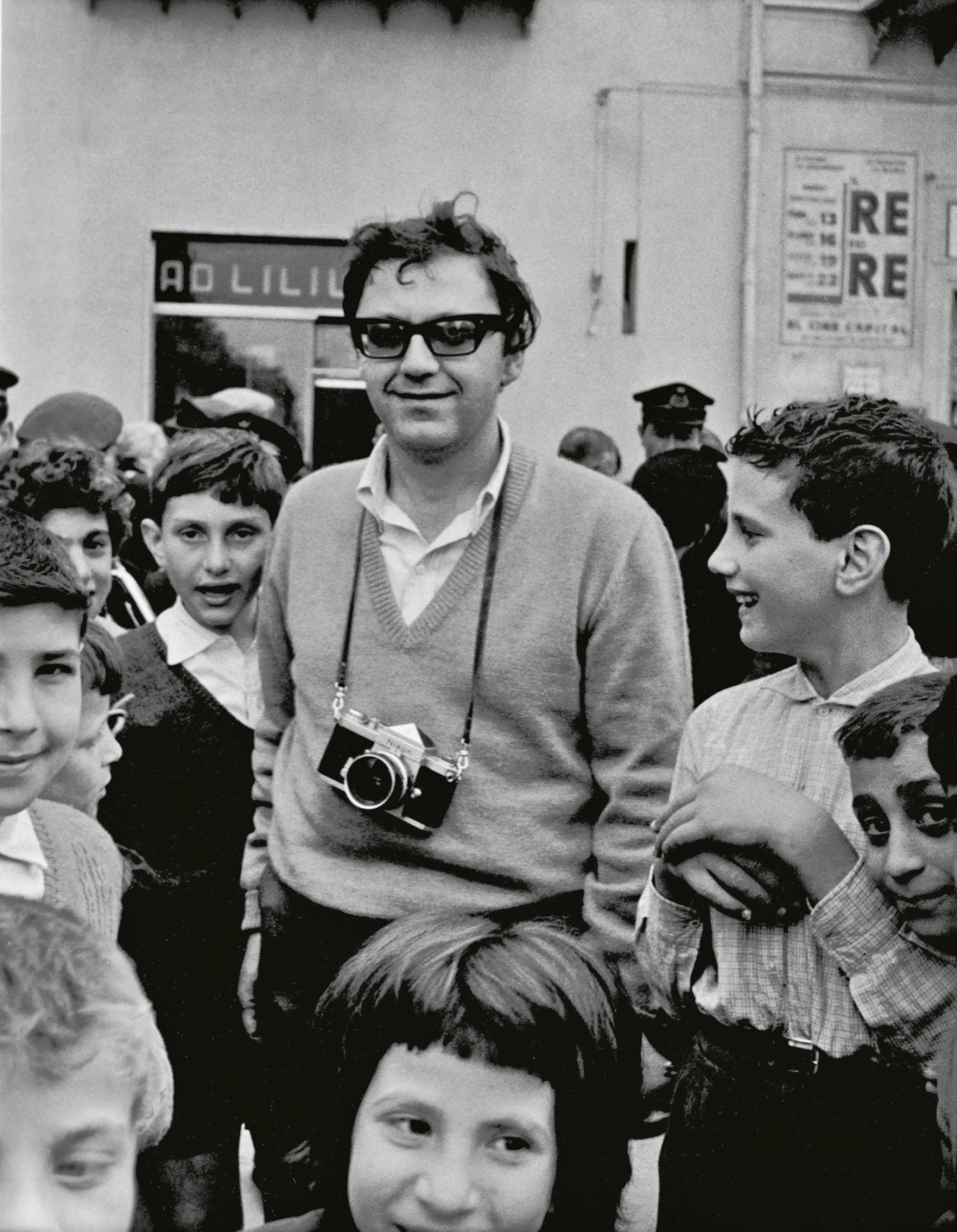
Cohen, a former editor of the Dutch weekly magazine Vrij Nederland, had followed Olaf's career for years before the two agreed to collaborate. "We were about the same age and came of age in the same buzzing city," Cohen explains, "and shared a liberal way of looking at life." Persuading Olaf to participate wasn't entirely straightforward. "He was initially reluctant," Cohen recalls. "'I'm not that vain,' Erwin said. 'And besides, I'm still alive!'" But as Olaf's health declined and he began putting his affairs in order – the Rijksmuseum transfer was the crowning achievement of those preparations – the biography became part of what he wanted to leave behind. He agreed to fully collaborate, handing Cohen his personal diaries in exchange for nothing more than a signed receipt. An unvarnished account, he had promised. He kept his word.
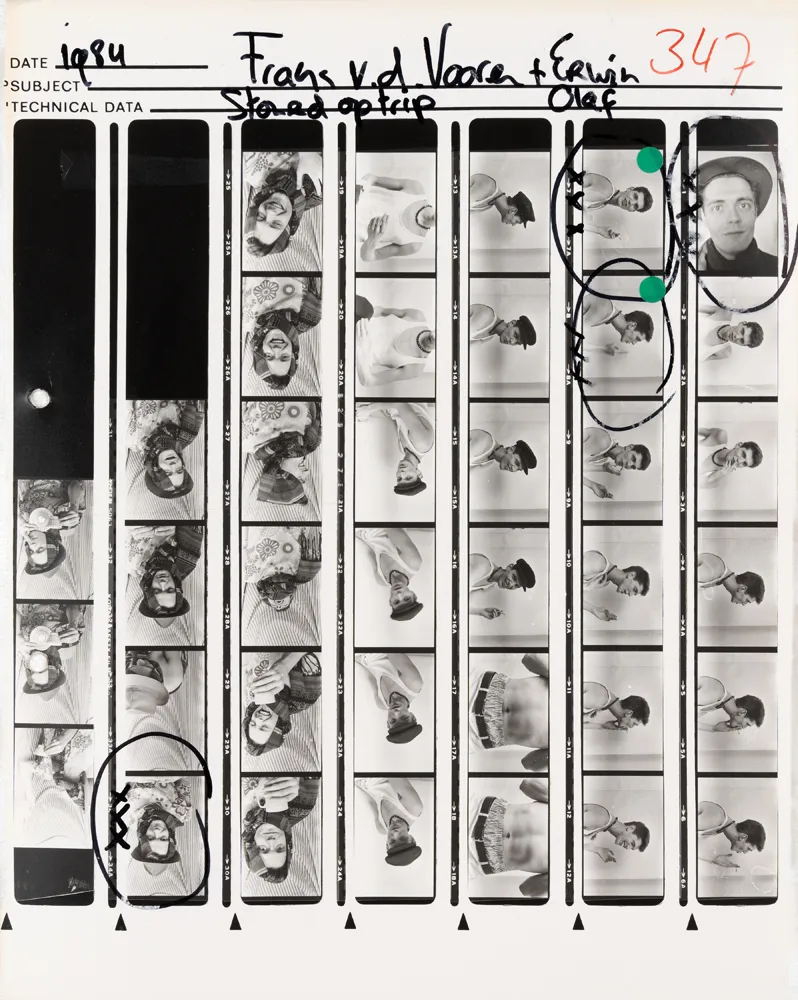
Frans vd Vooren (Frans Franciscus) and Erwin Olaf stoned on a trip © Erwin Olaf
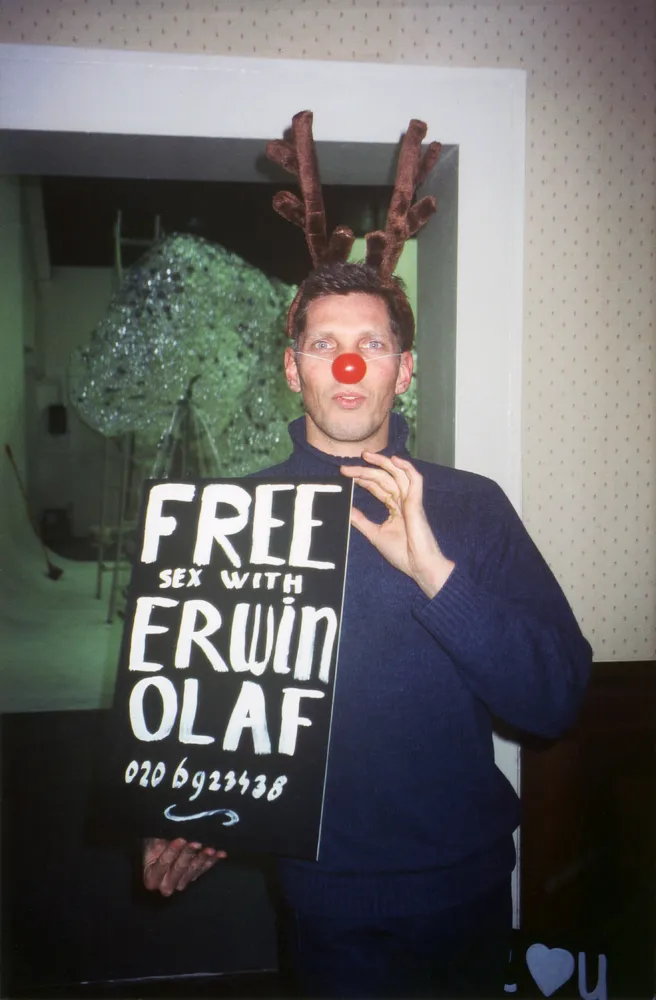
Free sex with Erwin Olaf at Club RoXY © Coll. Studio Erwin Olaf
What followed was years of research, conversations with friends, lovers, family, colleagues, gallerists and curators; time spent travelling with Olaf to exhibitions and shoots; hours observing how his studio operated – professionally managed, but also, Cohen notes, "a very inspiring place to watch Erwin at work and as an employer of aspiring young photographers." The biography combines a timeline of Olaf's life with a thematic approach, placing him firmly in his historical moment: Amsterdam at the turn of the millennium, the period in which he made his name as what Cohen calls "a shock and baroque photographer", working his way to a prominent position in the international art world.
One of the discoveries that stayed with Cohen most was the depth of the outsider feeling that ran through Olaf's life and shaped everything he made. "The feeling of being an outsider, partly due to a difficult childhood in which he struggled with his homosexuality, shaped his view of the world," Cohen says. "Both in his work and in his activism." Alongside the photographer, Cohen was equally determined to portray the activist – the man who spoke out repeatedly whenever he or others in the queer community faced discrimination, harassment or violence, and who threw legendary, boundary-dissolving parties at Amsterdam's Paradiso to celebrate everyone's freedom to be themselves.
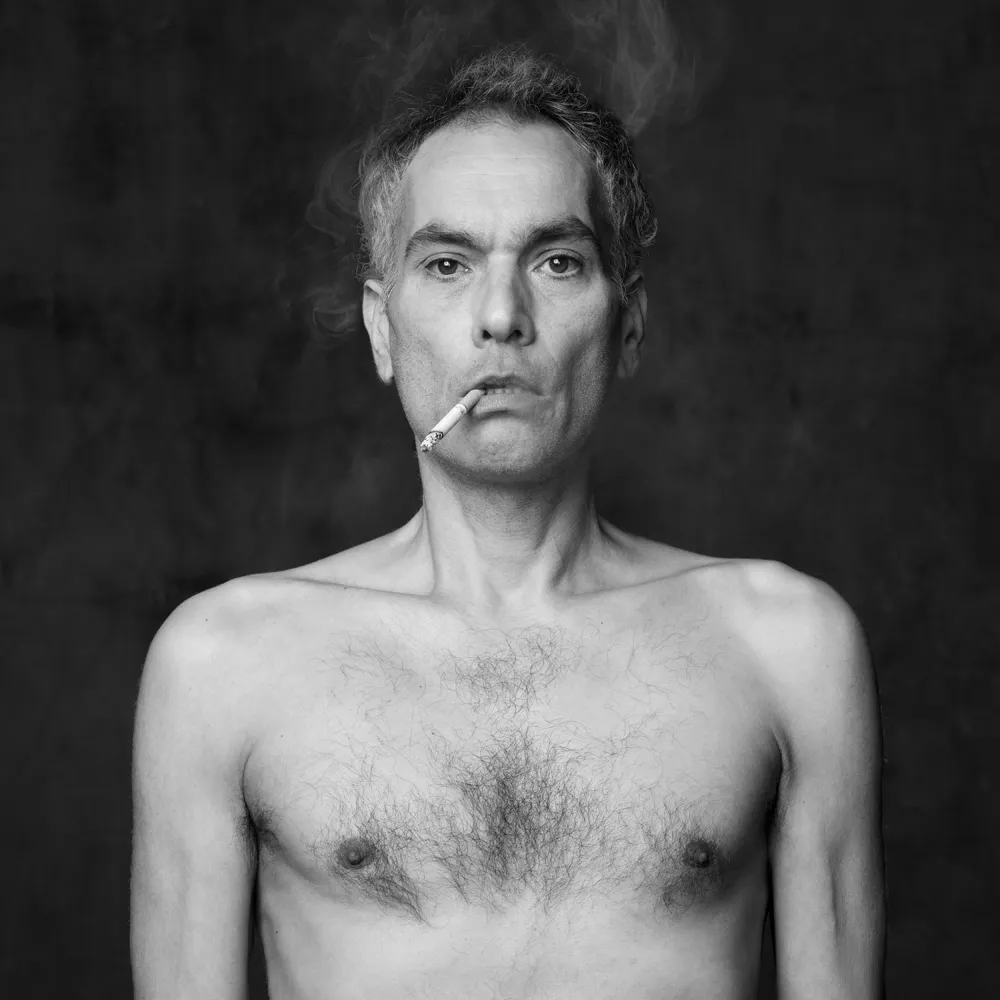
Muses, 2023 © Erwin Olaf
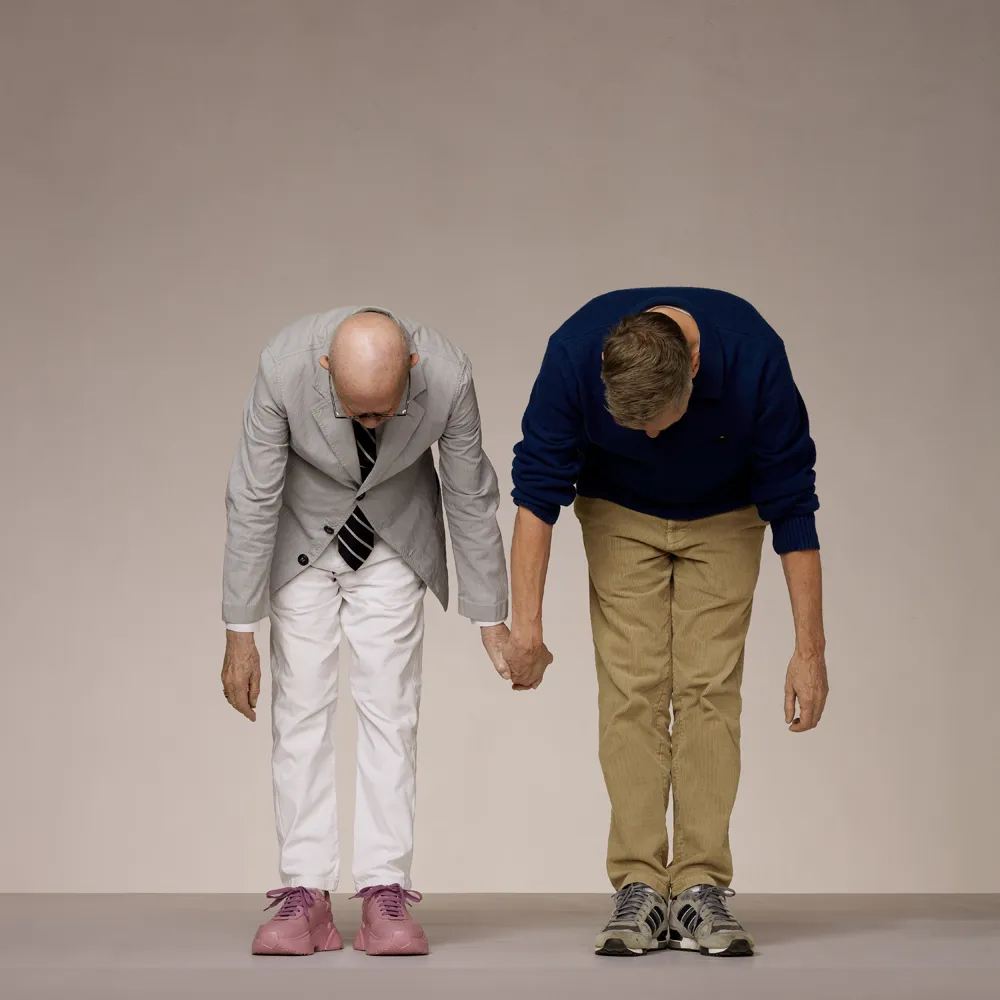
Hans van Manen and Erwin Olaf in Dance in Close-Up © Erwin Olaf
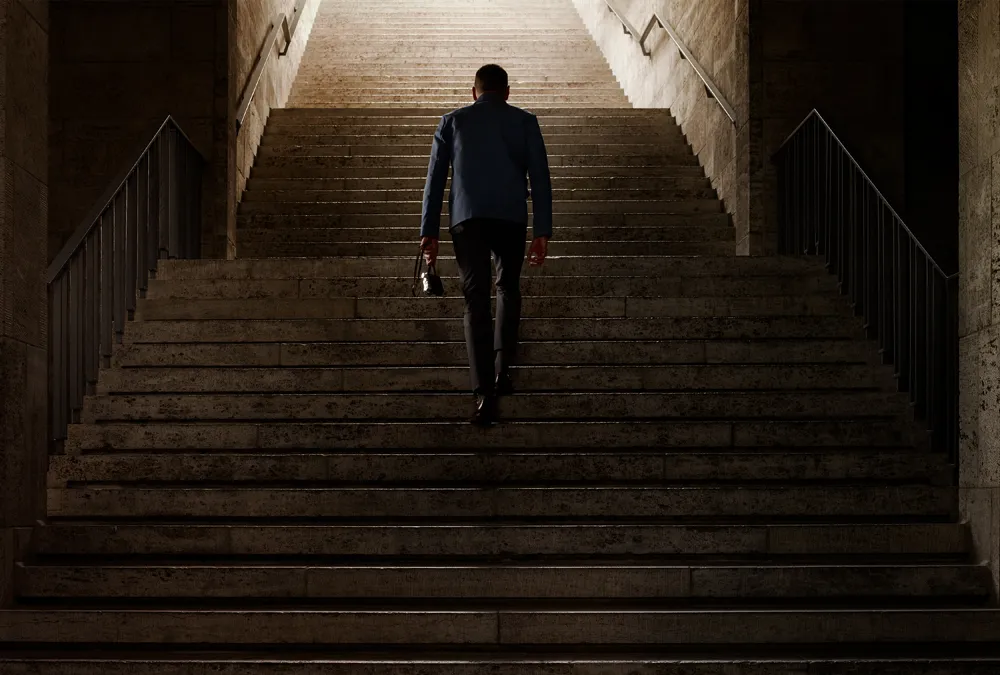
Olympia Stadion Westend, Selbstporträt – 25 April 2012, from the series Berlin © Erwin Olaf
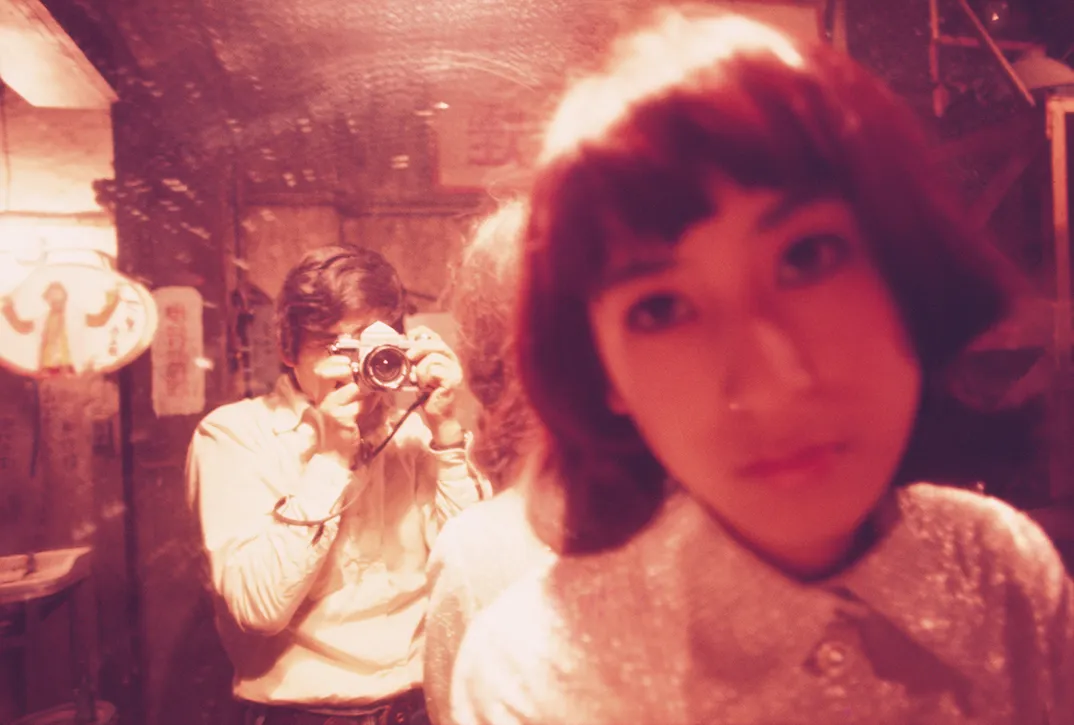
The work that moves Cohen most, and the one that perhaps says the most about who Olaf was, is the Muses series – one of the last he created. Inspired by conversations during the making of the biography, Olaf re-photographed friends and models from his early career, setting their faces now alongside those then. The result is beautiful but devastating. "That series acts as a mirror," Cohen says, "and reflects, more poignantly than words can express, how Erwin and his contemporaries had aged since those early years. The sense of transience evoked by the series is all the more moving given Erwin's own untimely passing."
But the book isn't elegiac, and Cohen is clear about what he wants readers to take from it most. "The joy of creating," he says. "Even when he was already very ill, he made plans and had ideas. As the lung transplant approached – which he would survive by only two weeks – he conceived, with this book in mind, how he could create a striking image of that as well." Right until the end, Erwin Olaf was still thinking in pictures. "The need to speak out. To take action. To defend democracy," says Cohen. "Especially in this time of violence, declining tolerance, the exclusion of minorities, and the loss of achievements in the field of equality in many areas. Sadly, Erwin Olaf is no longer with us to express this in images and words. Let others carry on his legacy."
Erwin Olaf: The Biography by Mischa Cohen is published by Hannibal Books, £35.
Editor's Picks
Trending

Latest Jobs
Mobile Apps Marketing Executive at Future
Full-time·Bath·£26,500 – £29,000
Senior Account Manager at Engage
Full-time·Leeds·£40,000 – £45,000
Design Director at Interbrand
Full-time·New York·$120,000 – $150,000
Senior Consultant, Strategy at Interbrand
Full-time·New York·$100,000 – $125,000
Project Manager at British Heart Foundation
Full-time·London·£46,000 – £48,500
Creative Project Manager at Analogue
Full-time·Leeds·£28,000 – £35,000
](https://media.creativeboom.com/deef6305-a0cf-455a-9f02-0f30fd21fd9d/conversions/47723f2759a5056f614c0646a61781be7ba48cf8-medium.webp)