Milan Design Week: model-making genius Simon Weisse unveils the world's smallest coffee shop
The Berlin craftsman known for his work on The Grand Budapest Hotel has teamed up with De'Longhi at Milan Design Week. And this ambitious installation has been causing quite the stir.
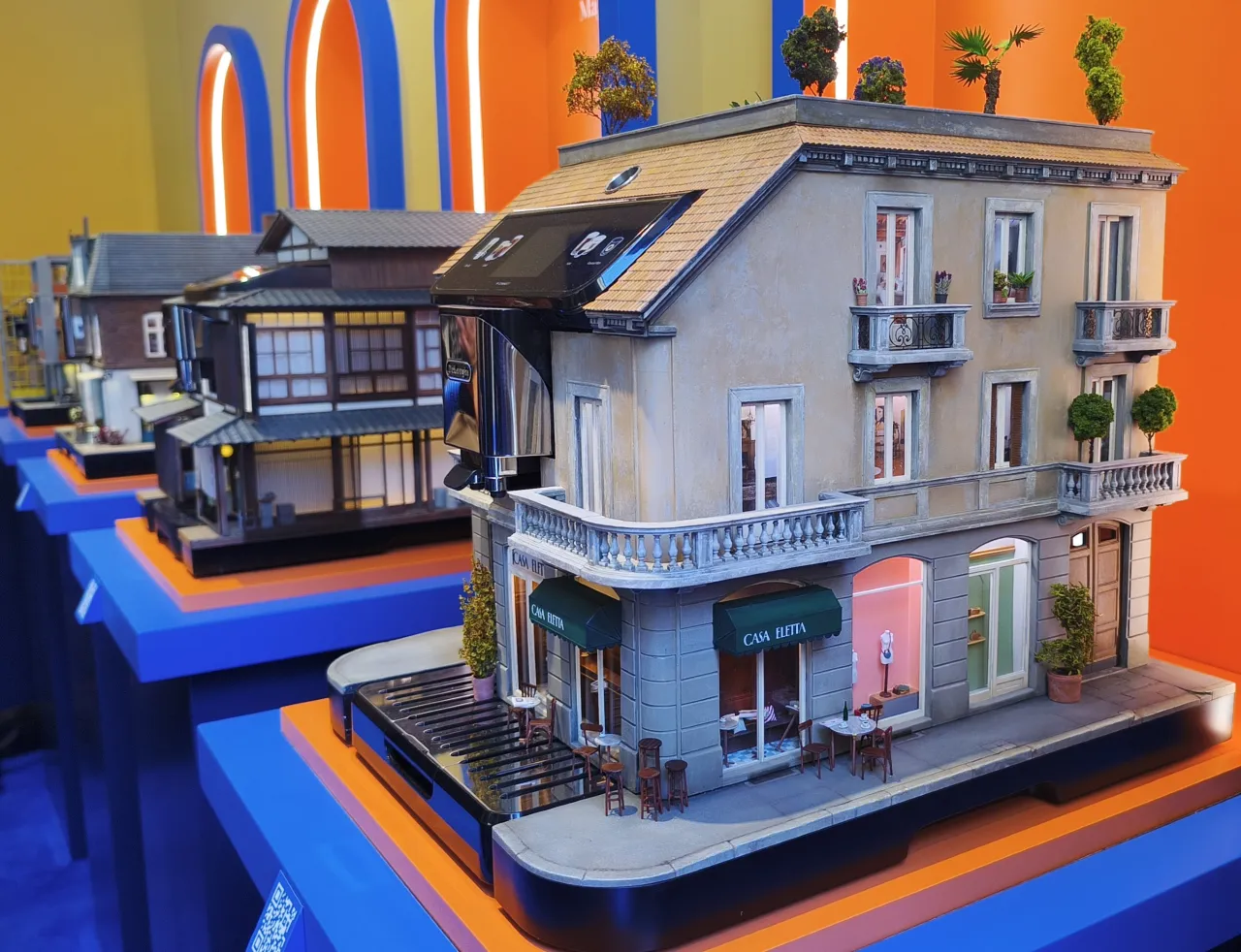
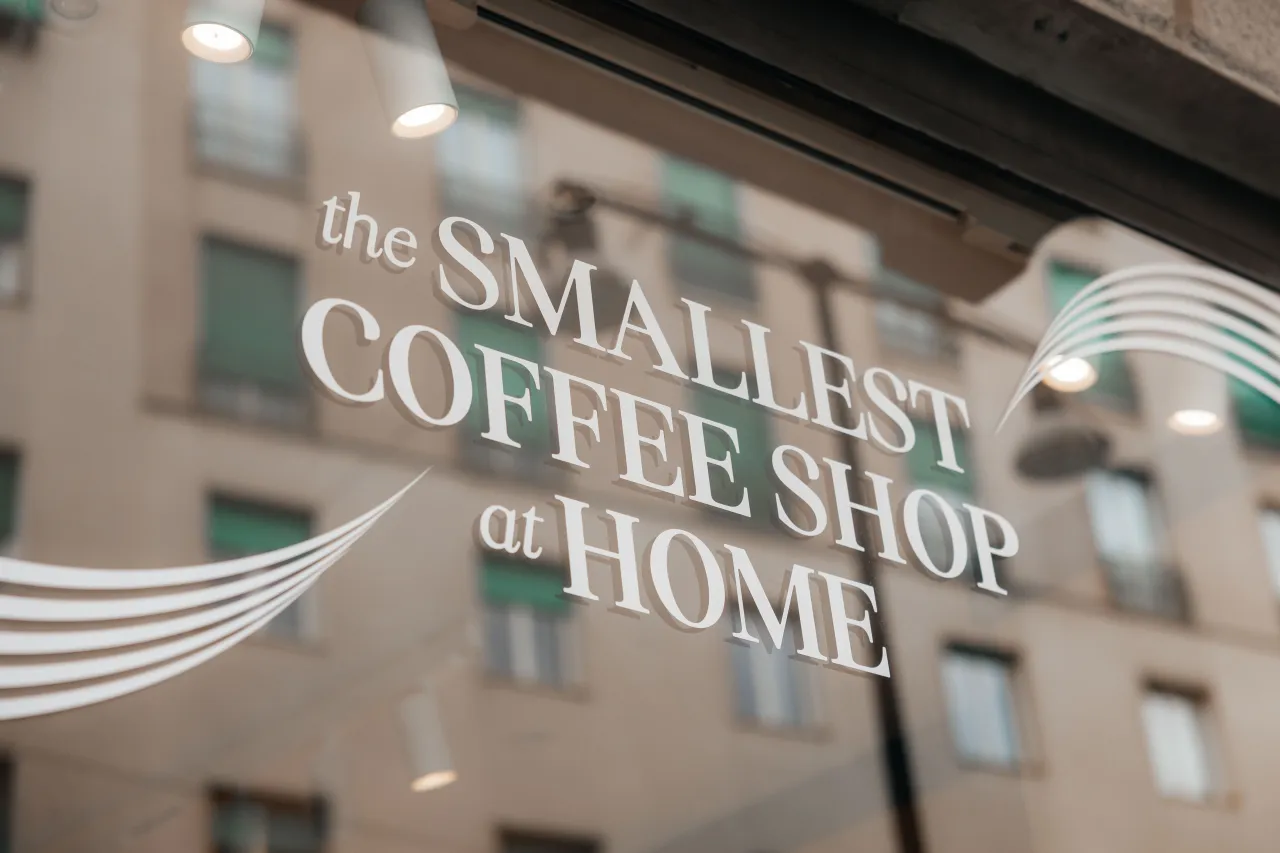
There's a queue forming outside a building on Corso Garibaldi in Milan's Brera district, and nobody inside is particularly surprised. Pressed up against the glass, members of the public are craning to get a closer look at something in the window: a miniature Parisian apartment block, no taller than a wine bottle, that subtly houses a working coffee machine. It's the press day for De'Longhi's "World's Smallest Coffee Shops" installation, and technically, none of this is supposed to be happening yet. The public isn't invited. Nobody has told the public that.
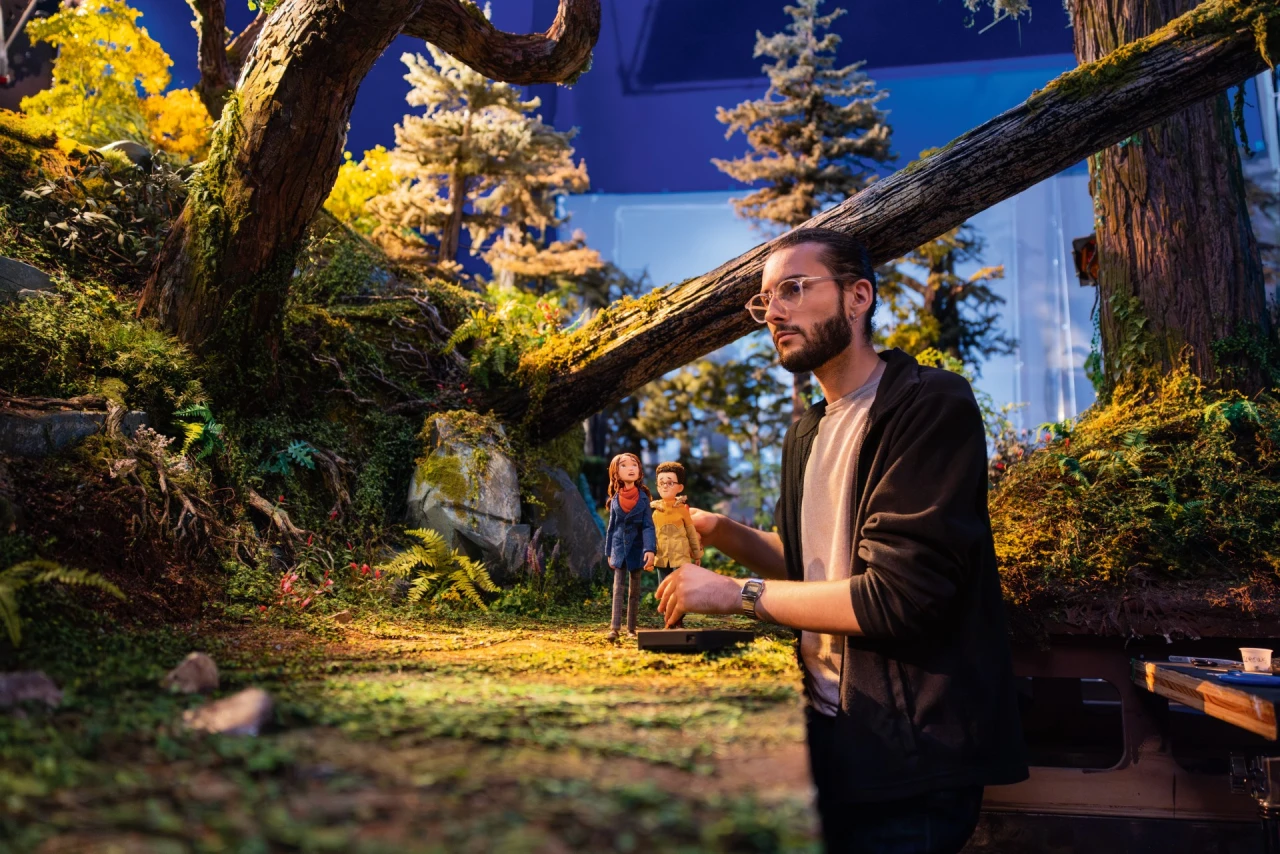
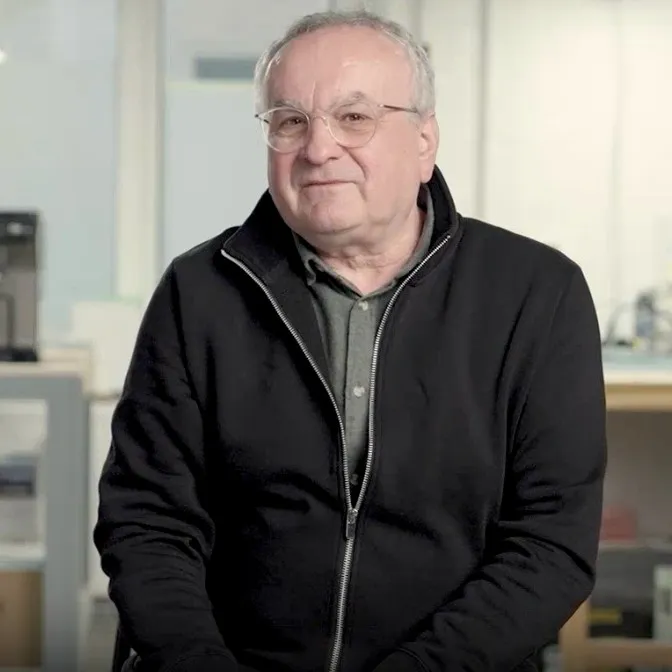
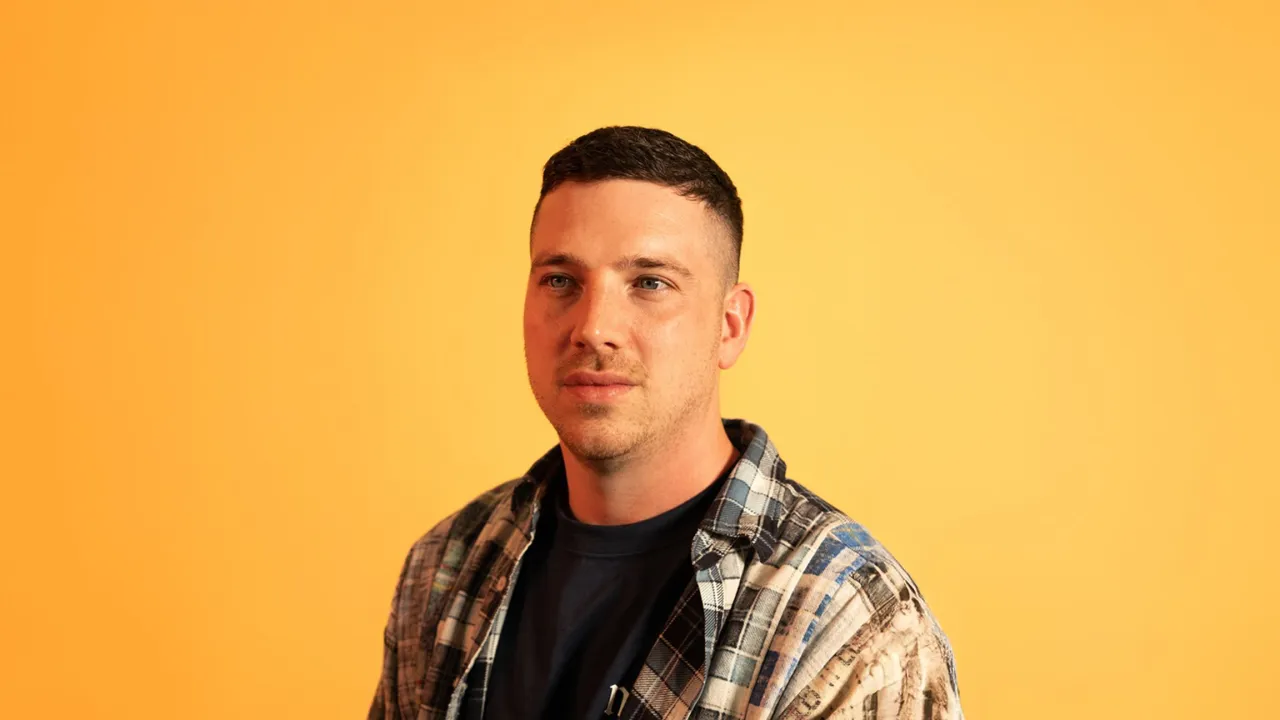
Inside, I find Simon Weisse standing quietly near his work. He's soft-spoken, thoughtful and seemingly unfazed by the fuss around him, which probably goes with the territory of being one of the most celebrated model-makers in the world. This is, after all, the man who built the miniature Grand Budapest Hotel (2024) for Wes Anderson, along with work on Asteroid City (2023) and The Matrix Resurrections (2021). In short, Simon has spent his career making fake things look more real than reality itself. He's also, it turns out, a man who almost turned down this whole project.
Simon Weisse
"When they called me, they said it's for an advertising campaign," he recalls. "But you know, I don't like advertising so much because the time is so restricted for adverts. And I said, "The idea you have, this will take months. So I don't know if we can do it."
However, the agency, Lola Madrid, told him this would be different: a long-term campaign with the ambition and budget to match. Weisse eventually said yes, which is fortunate, because what his Berlin studio has produced is genuinely extraordinary.
What they made
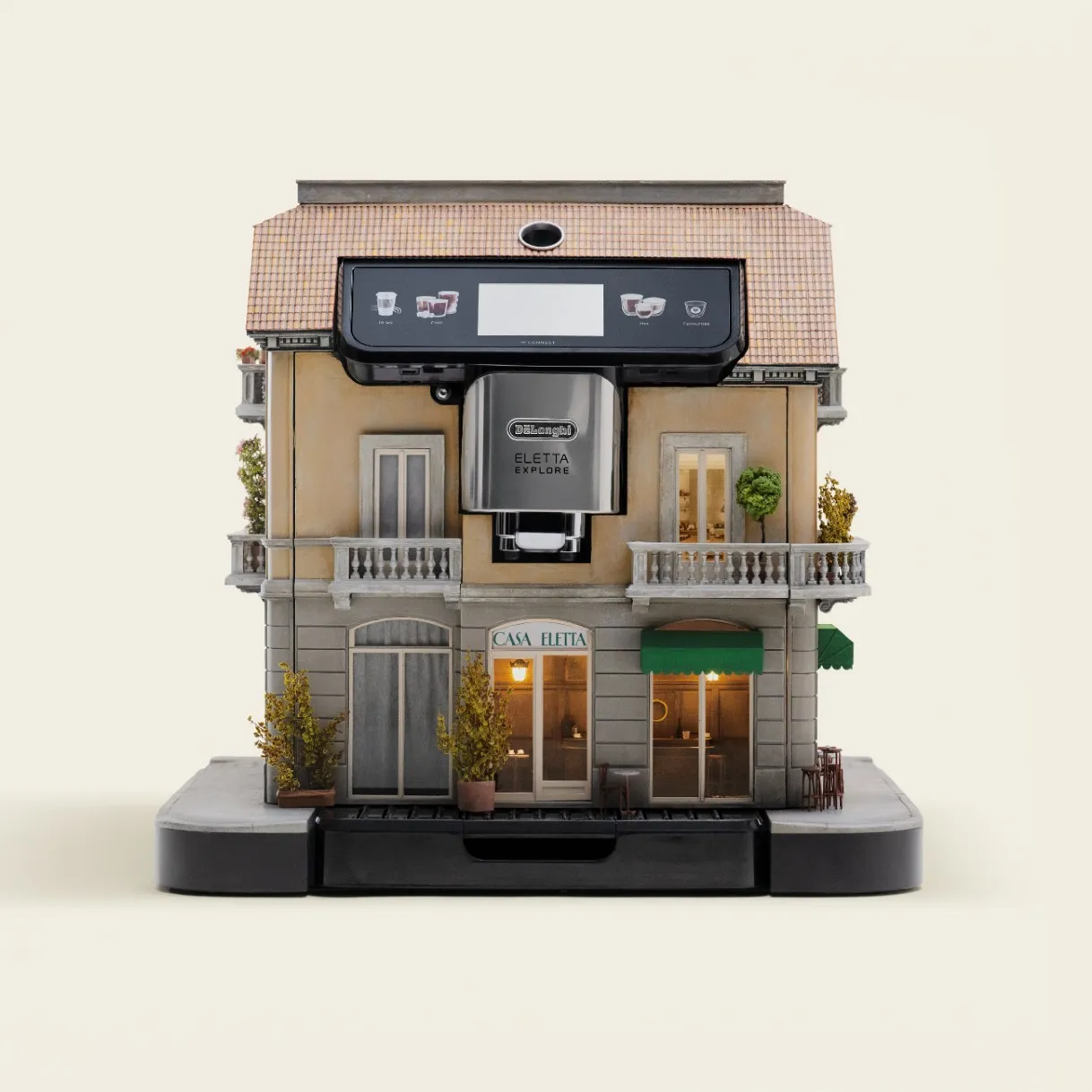
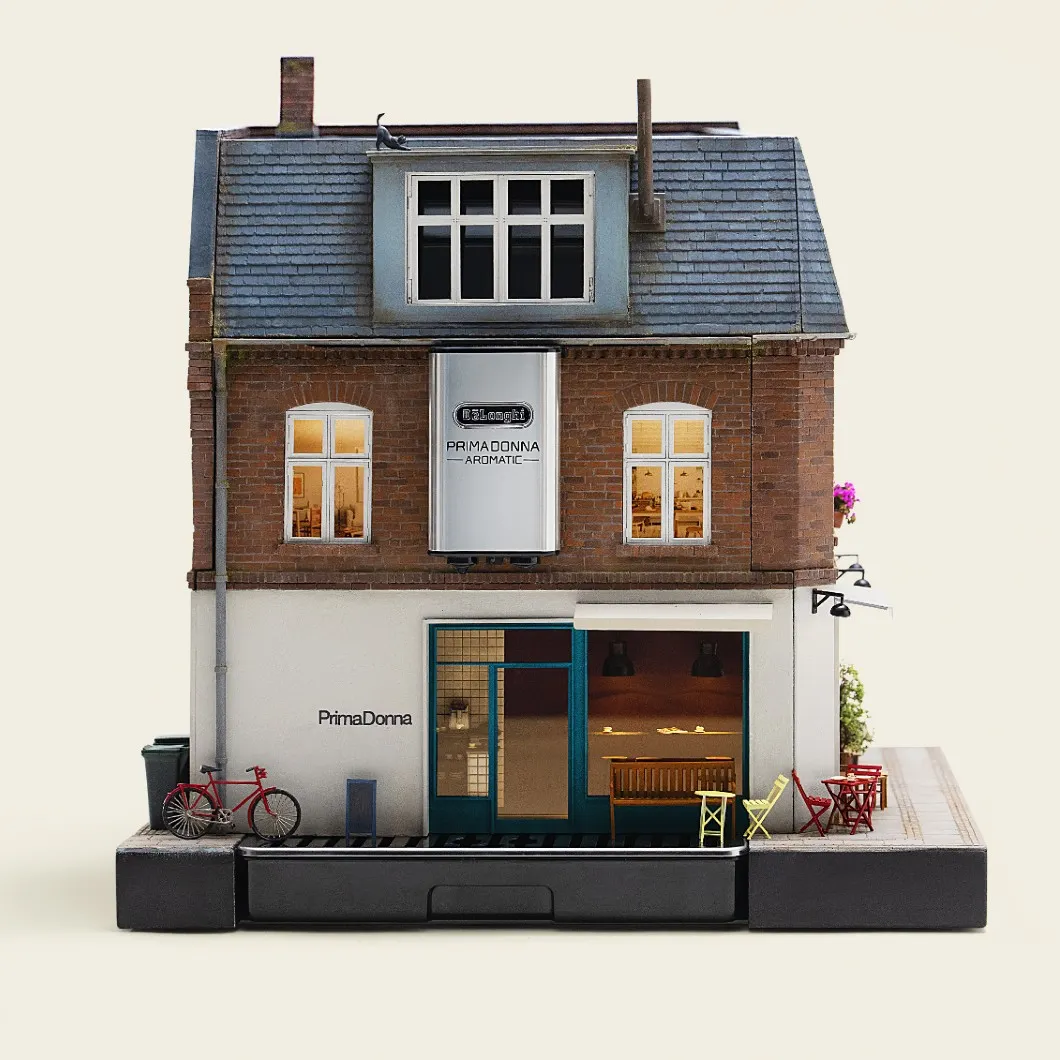
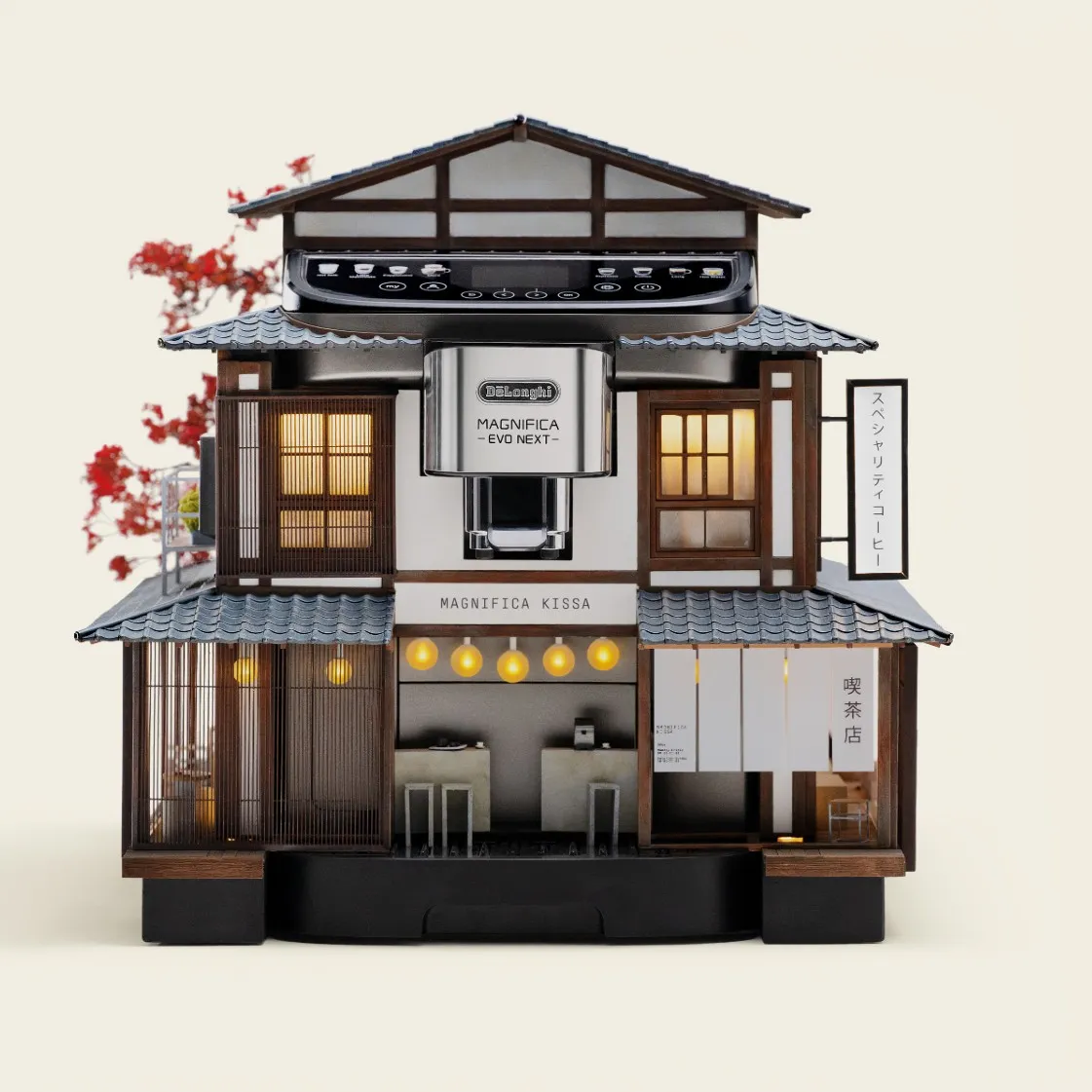
The concept is elegant in its simplicity. Take five of De'Longhi's bean-to-cup machines and dress each one as a miniature architectural facade from a different world coffee capital: Paris, Tokyo, Milan, Copenhagen and Berlin. The idea is to argue that the coffee shop experience you'd travel for is already sitting on your kitchen counter. It's a marketing idea that works as a piece of craft, which is a rare thing.
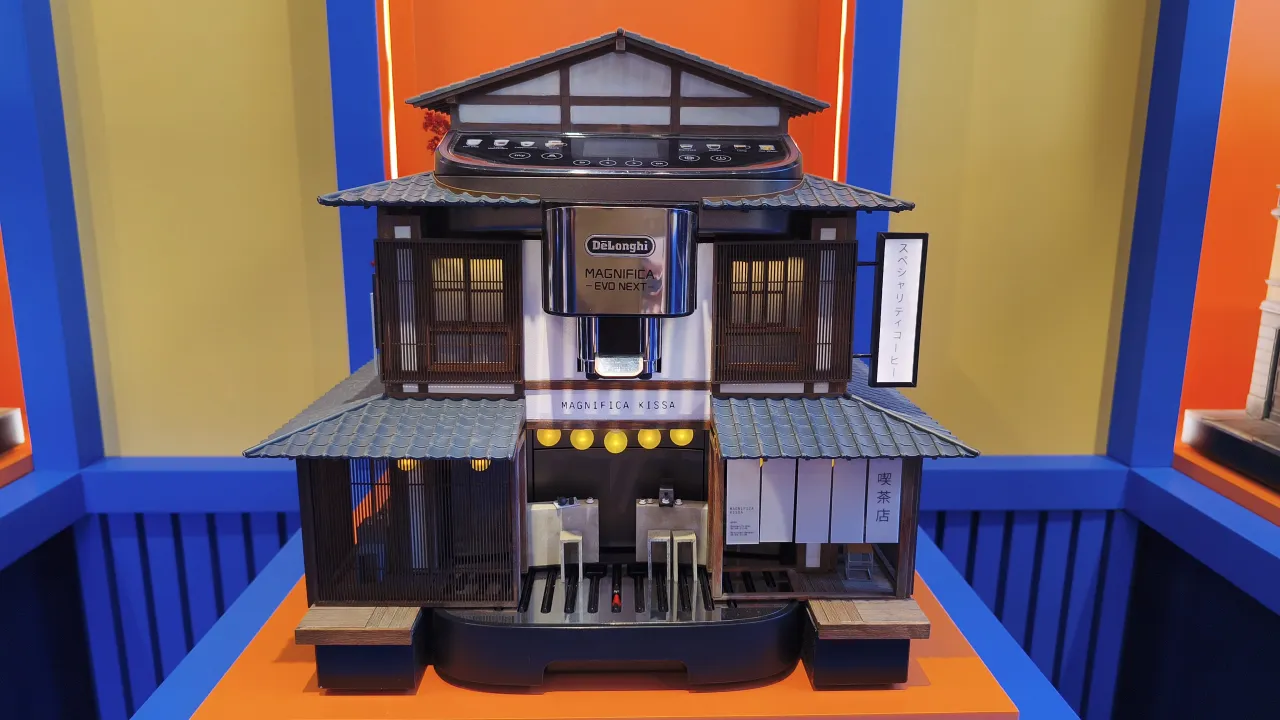
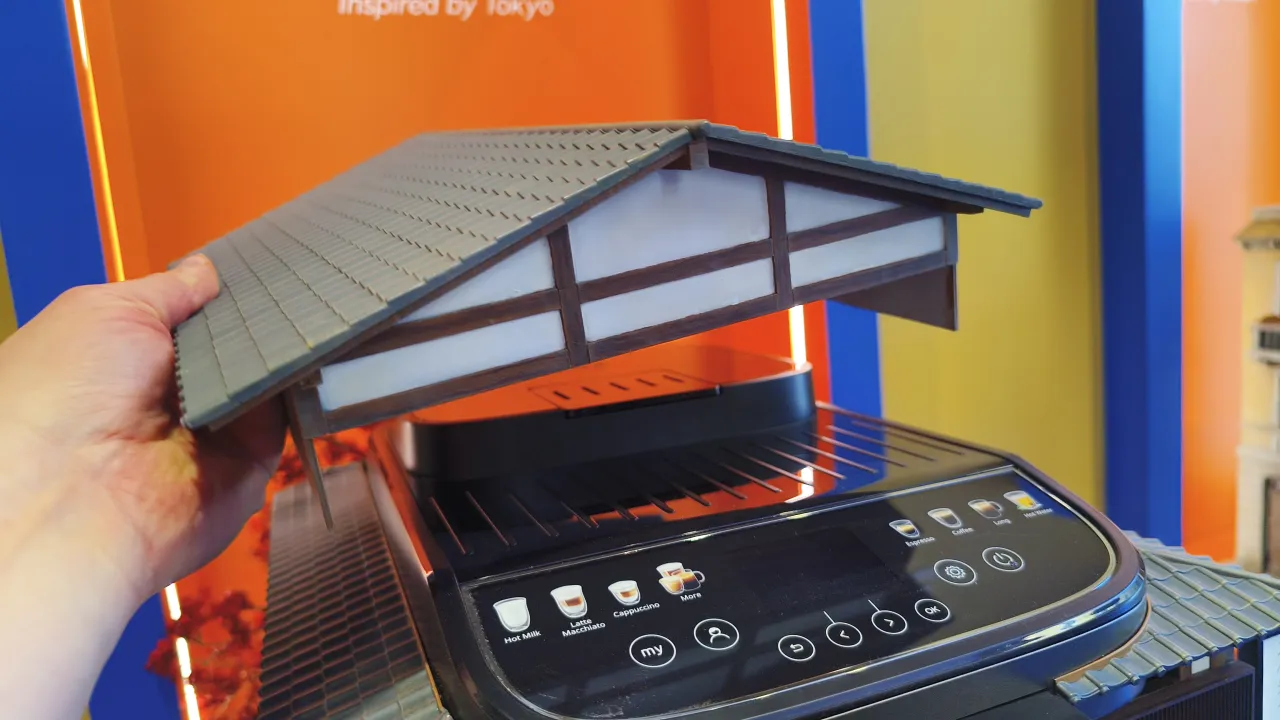
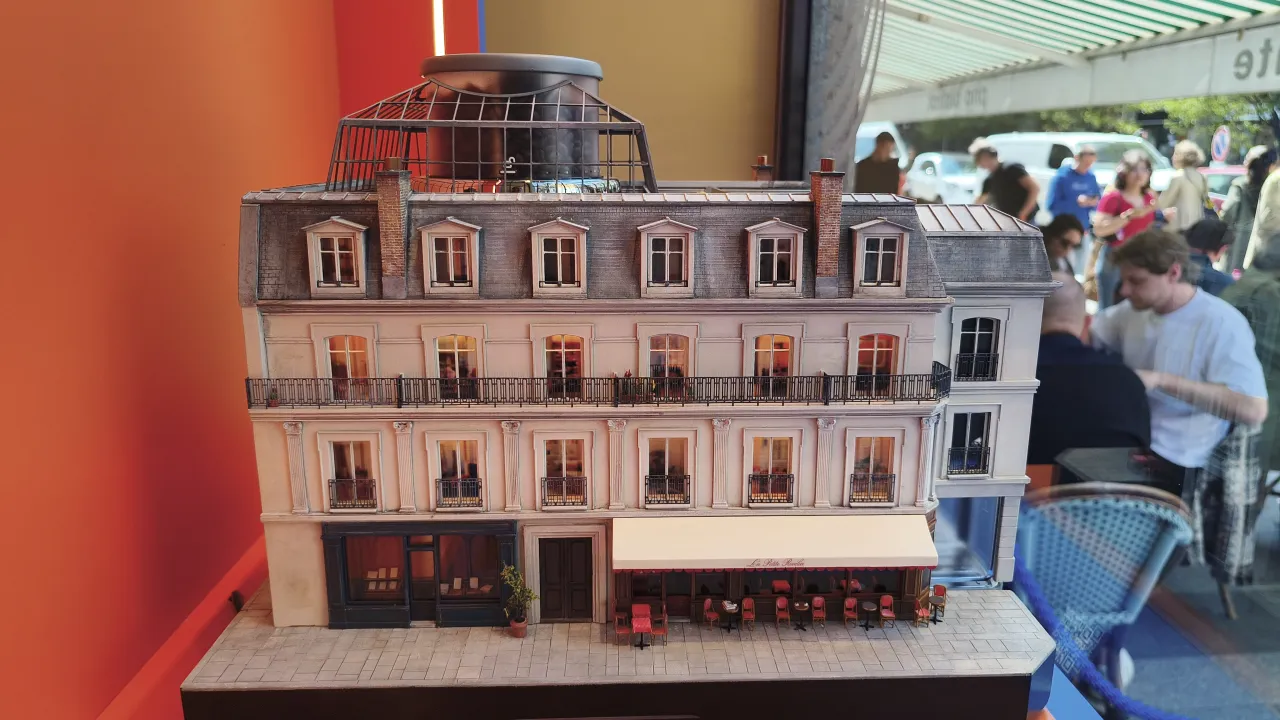
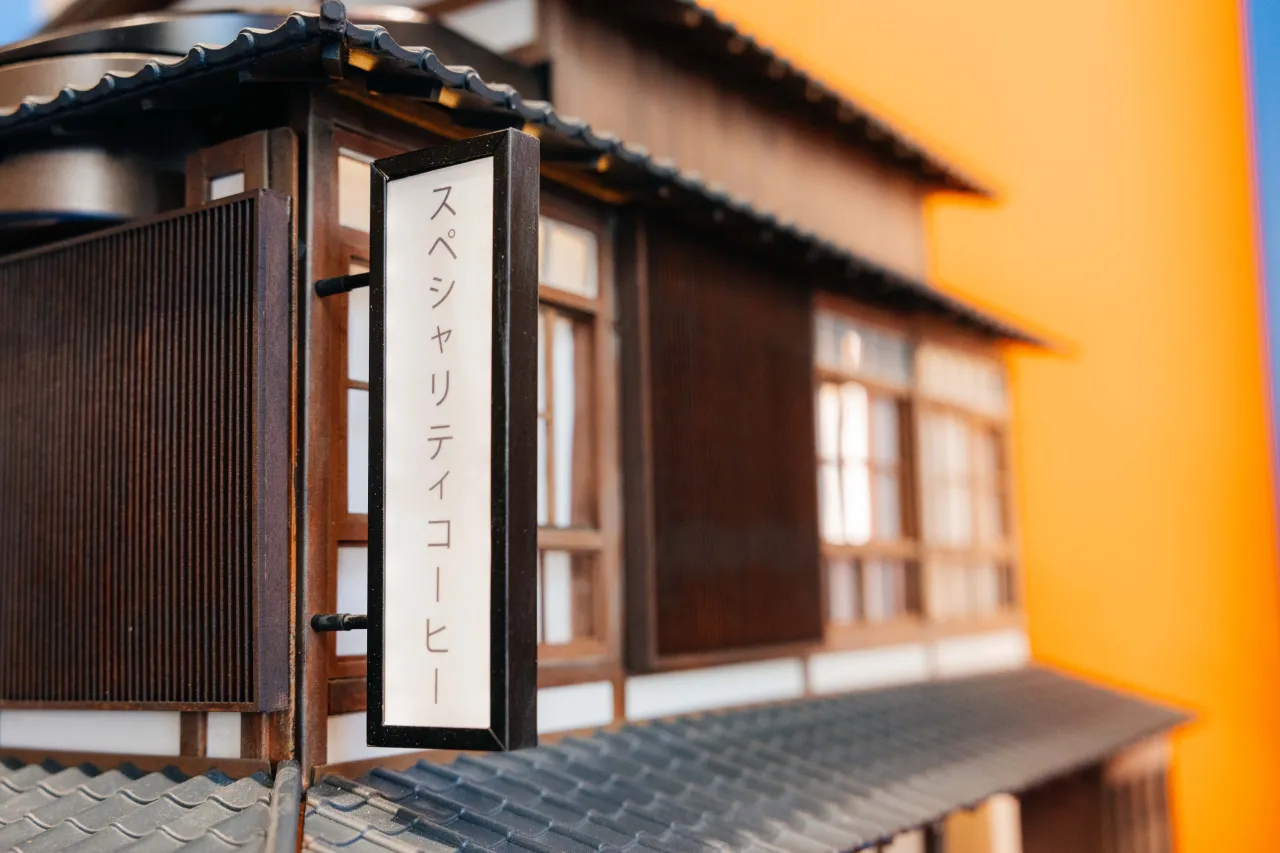
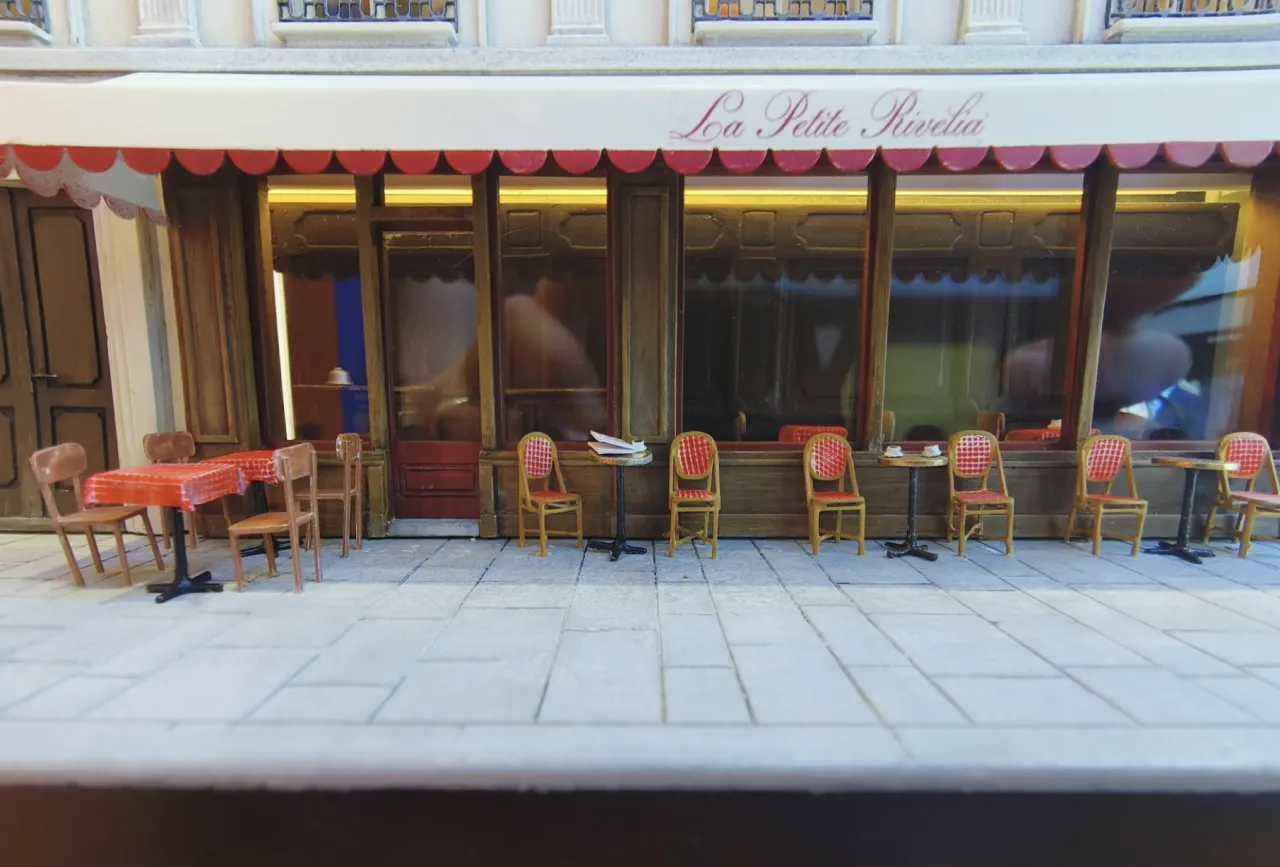
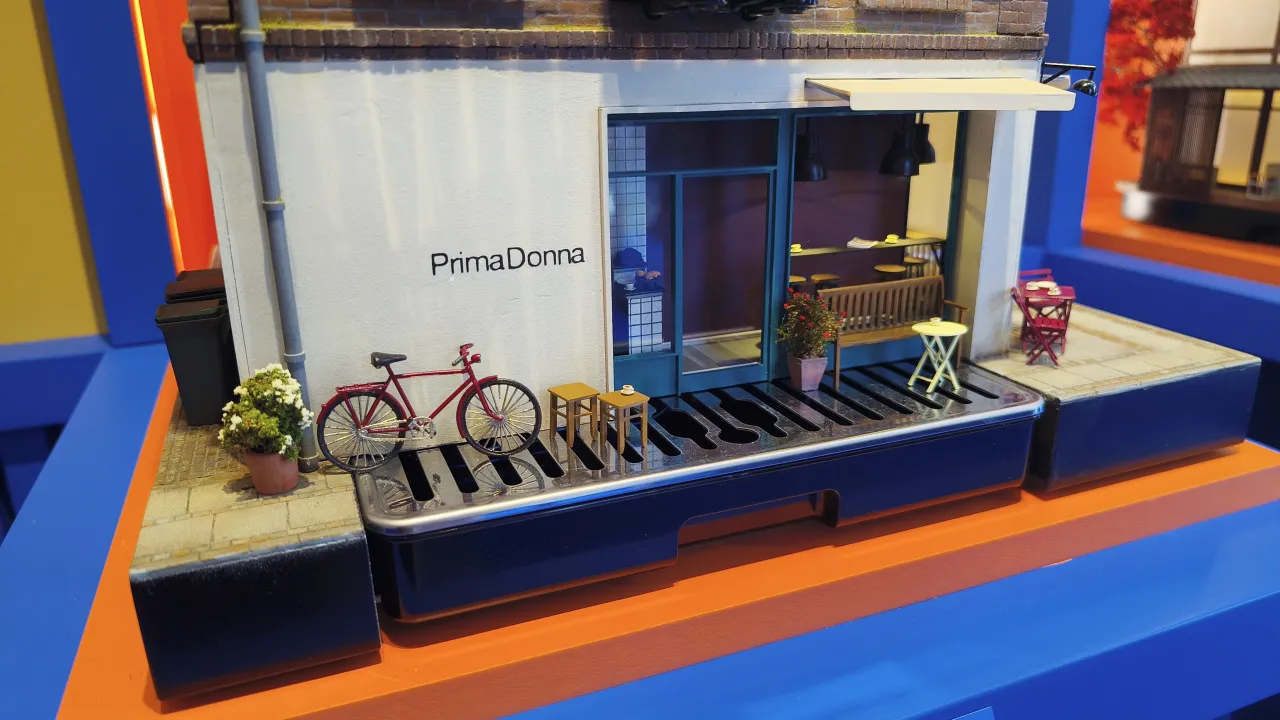
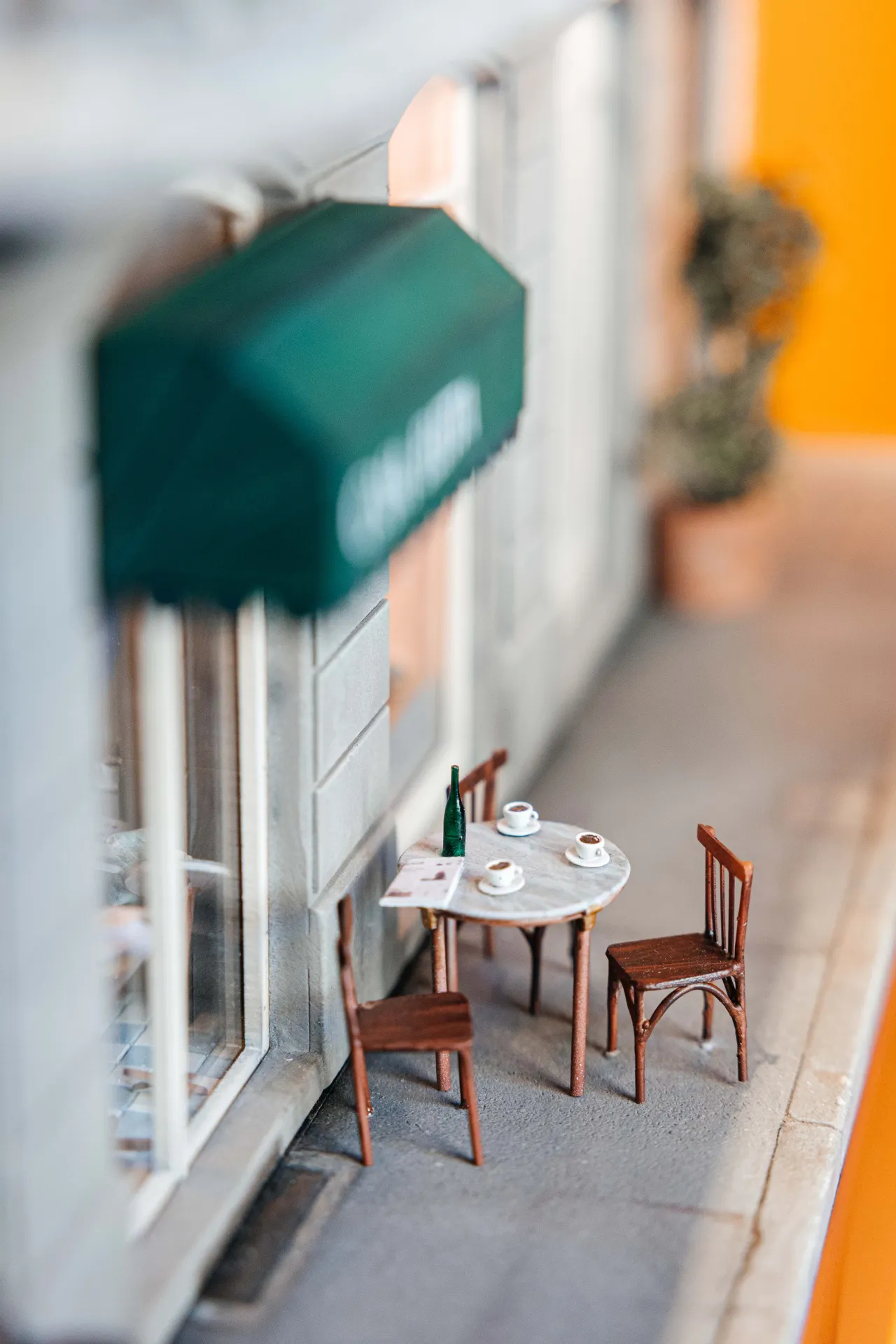
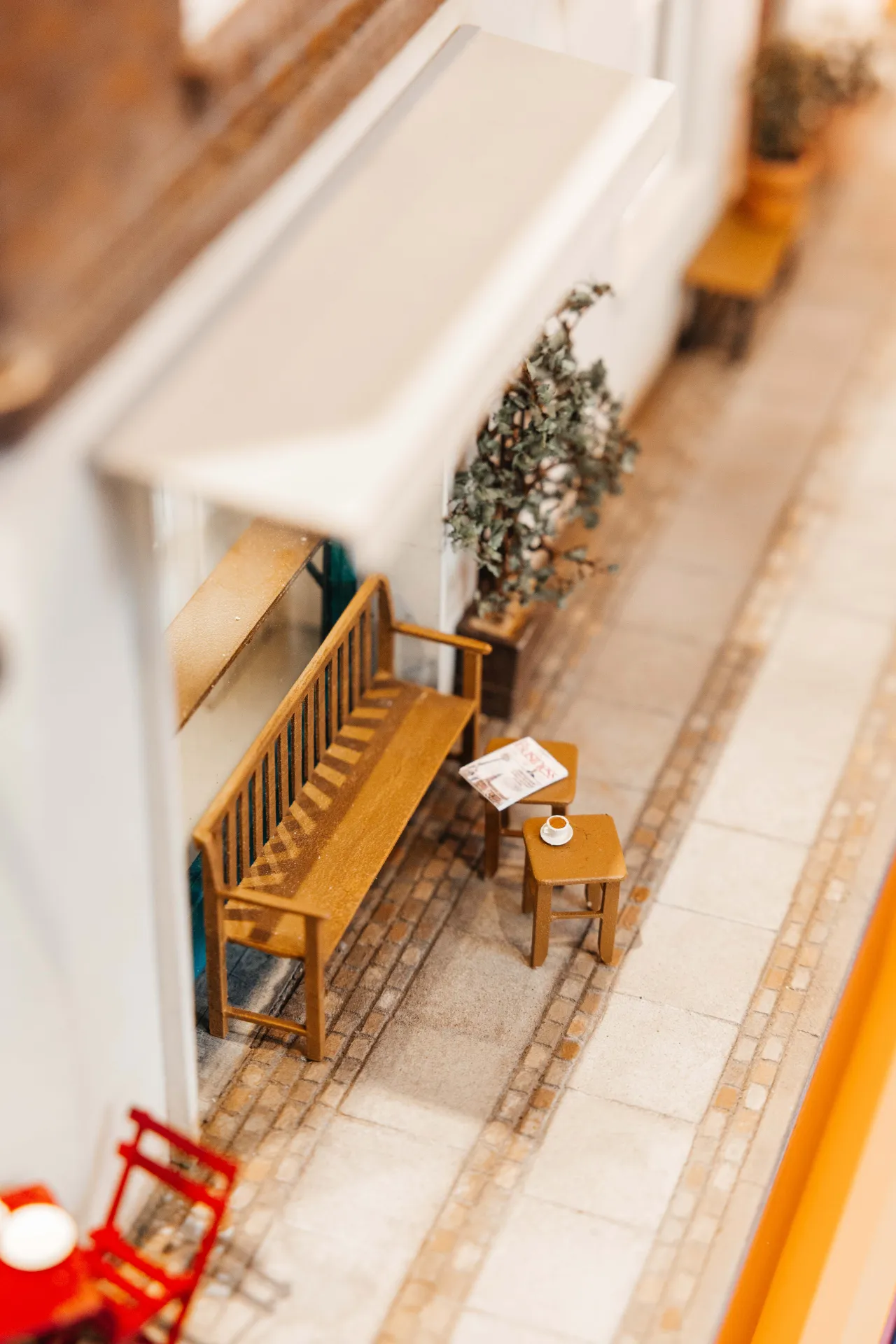
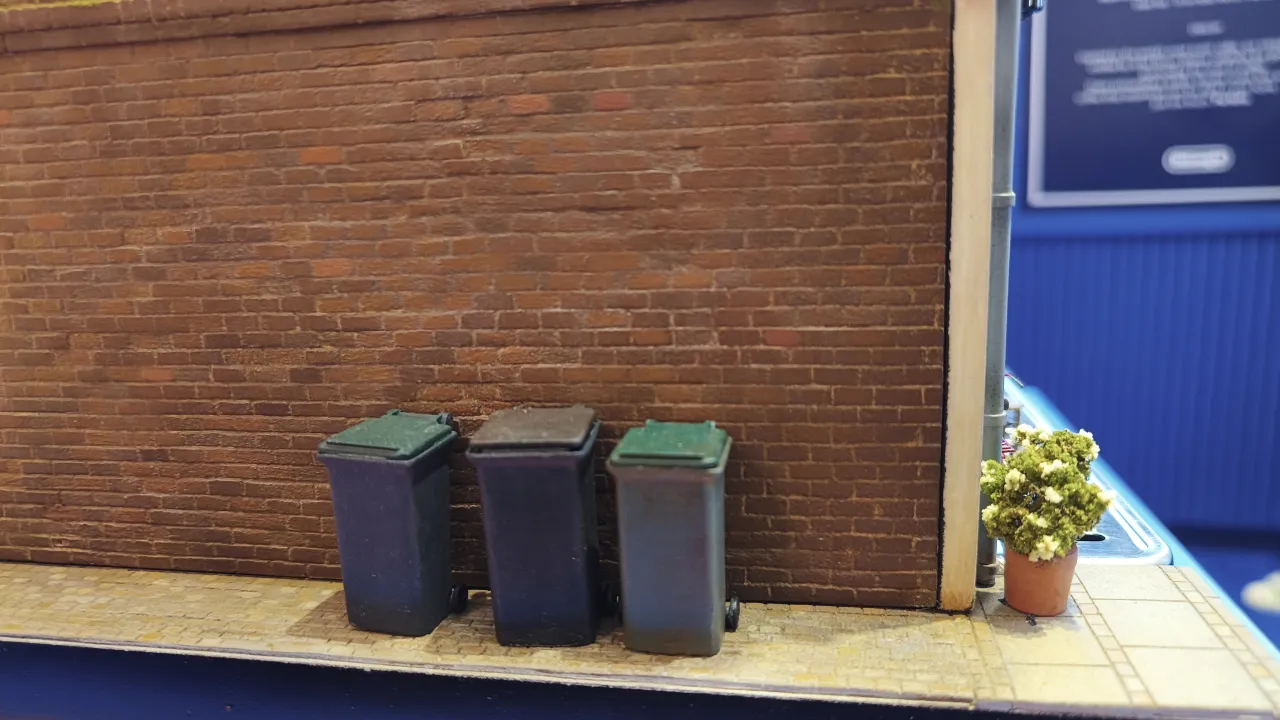
Up close, the detail is almost disorienting. Each brick on the Berlin model was painted by hand. The café furniture in the Paris scene was all individually constructed. There's a miniature coffee machine hidden inside the Tokyo model, a visual joke so small you'd need to be specifically looking for it. "Lucy, our model maker, did all the chairs by hand, for example," Weisse explains. "The table trees, all the vegetation was made by hand. Hans, our painter, painted every brick." The workshop logged over 1,500 hours across the five pieces.
What makes these models technically unusual, Weisse explains, is that his team couldn't use any of the standard tricks of the trade. "On set, when we film, we cheat all the time," he says, with something approaching a grin. "There's a problem, we just superglue it, and it's okay. But here we can't hide anything. It has to be very durable."
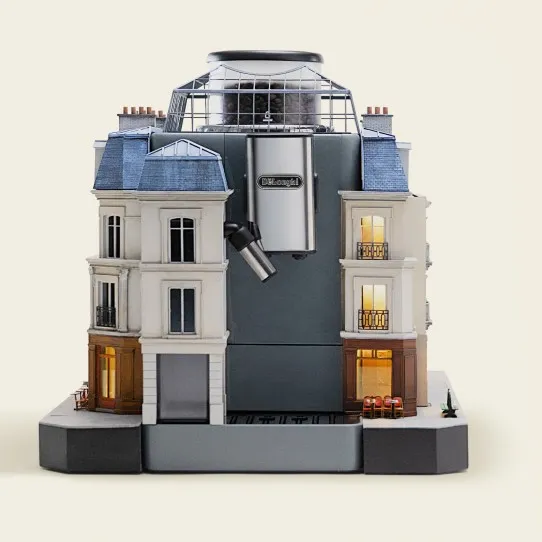
Film miniatures are built to be seen through a lens; you can fudge the side nobody will ever look at. Here, the public wanders around all four sides, and the machines have to actually work: fill with water, dispense coffee, produce steam. The Paris model, built around the slim Rivelia machine, required the rooftop section to lift away entirely to reach the water tank.
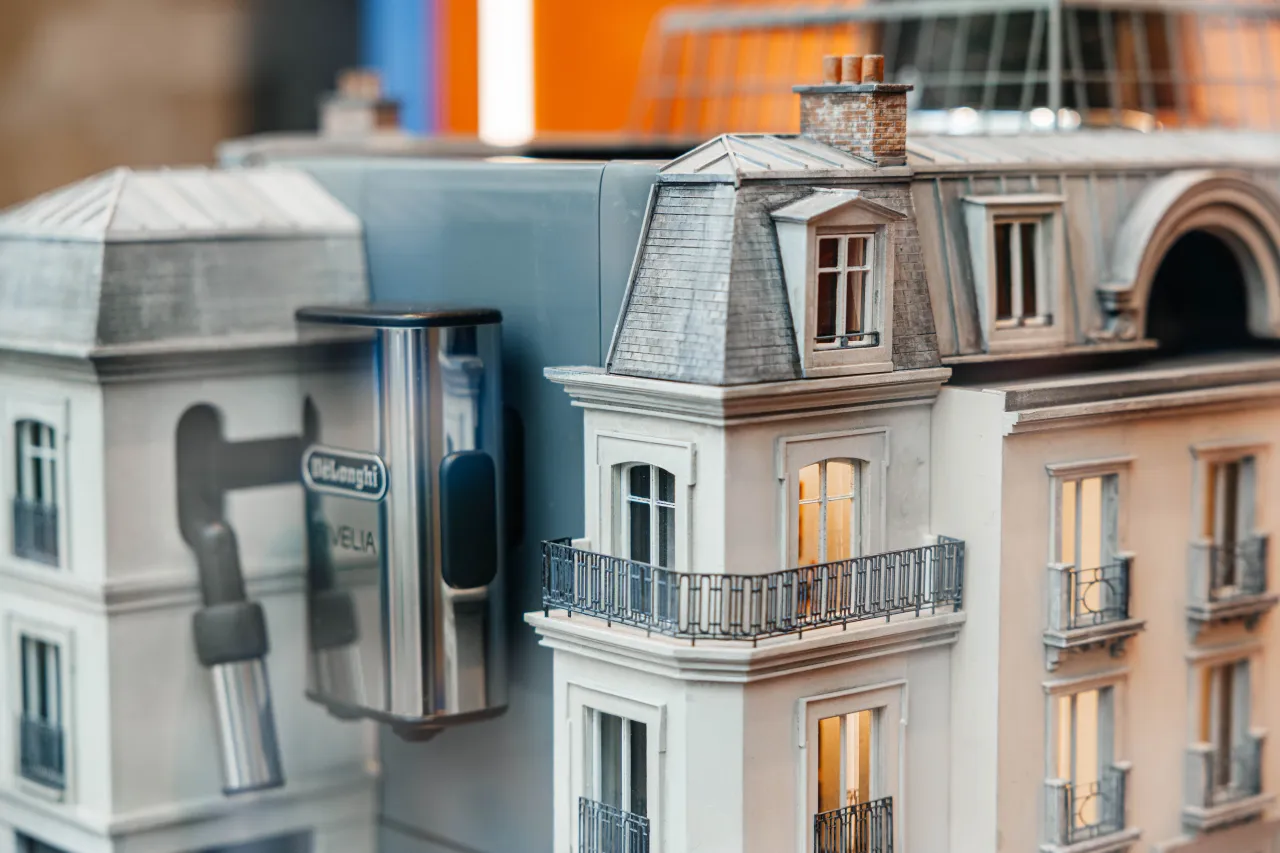
"You have only quite a thin facade of the machines," notes Simon. "You still have to recognise it as a coffee machine, not hide it too much. But you also have to hide it to make it work. That was, I think, a real challenge."
Cliché-free zone
The Paris model is also, by his own admission, the hardest of the five to pull off, precisely because Paris is so loaded with visual cliché. "It looks very like Paris, but it's not a cliché, it's real," he says, and he's right. The facade has the Haussmann proportions and the iron balcony railings, but there's a lived-in quality to it, a slight patina of age, that saves it from being a postcard. A small assist came from Simon's experience in movies. "There was a Wes Anderson film called The French Dispatch, and we did a lot of French houses like this," he explains. "So we had a little idea how to do the tops and everything."
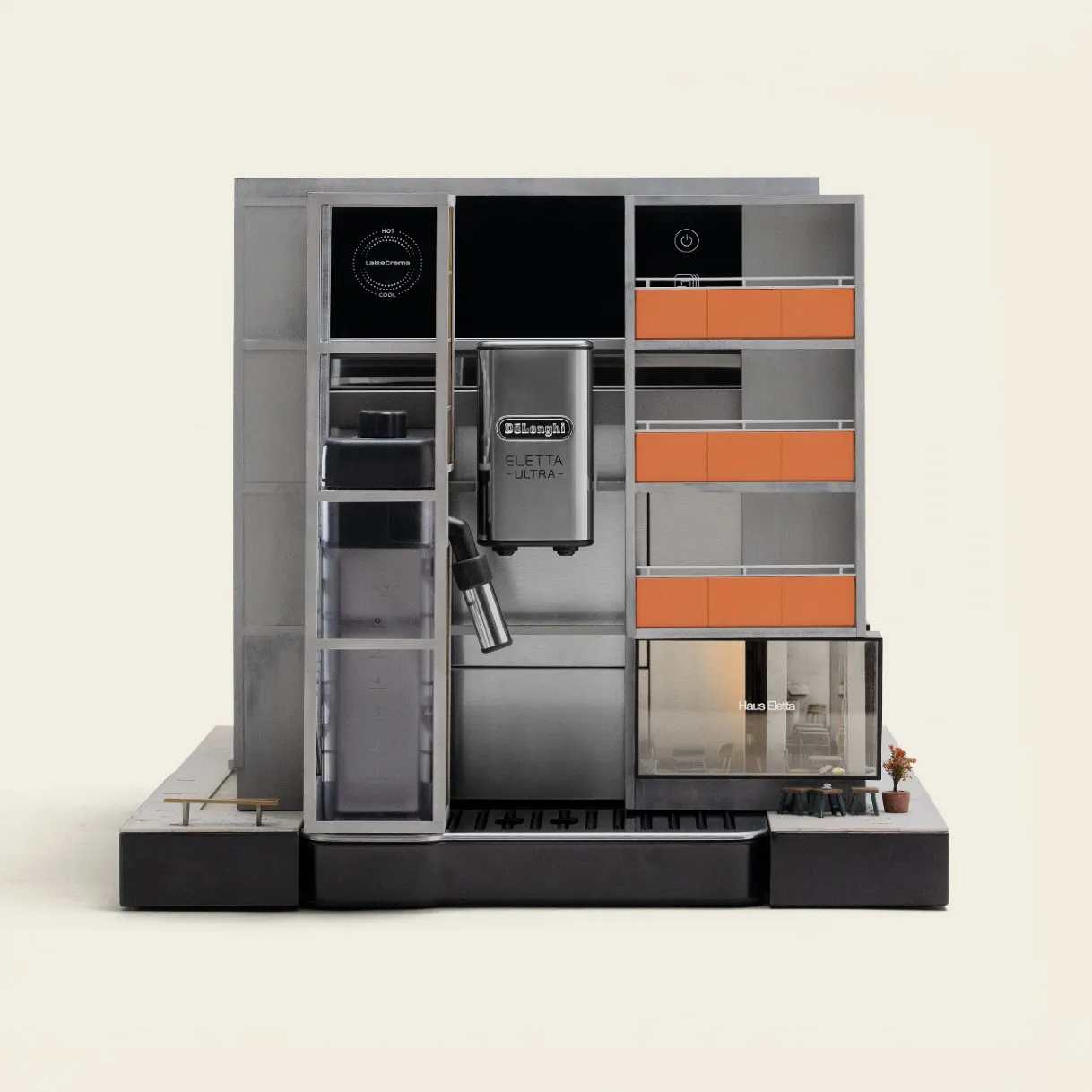
The Berlin model is the one that delights him most, though, and it'll probably surprise people. Rather than reaching for pre-war grandeur, his team went with a 1960s modernist block: raw concrete, orange balcony panels, a little street art on the wall. "Berlin was destroyed during World War II, and there's only 20% left of the city," he explains.
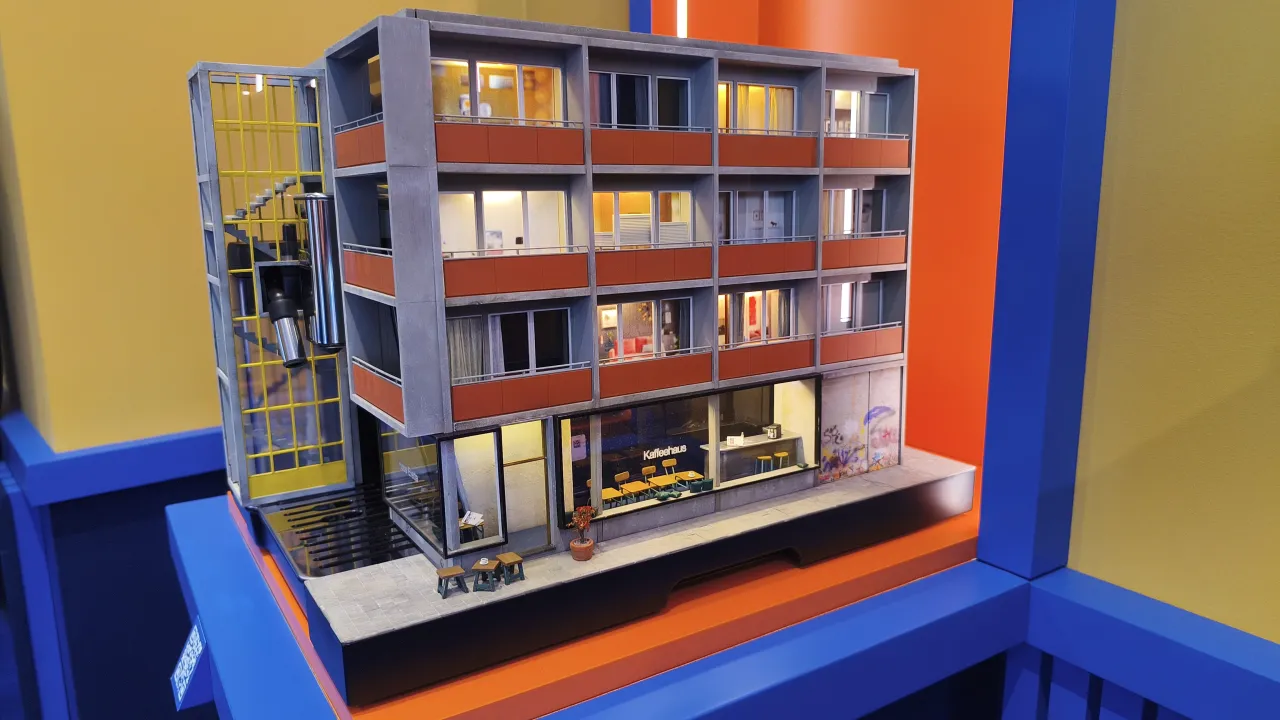
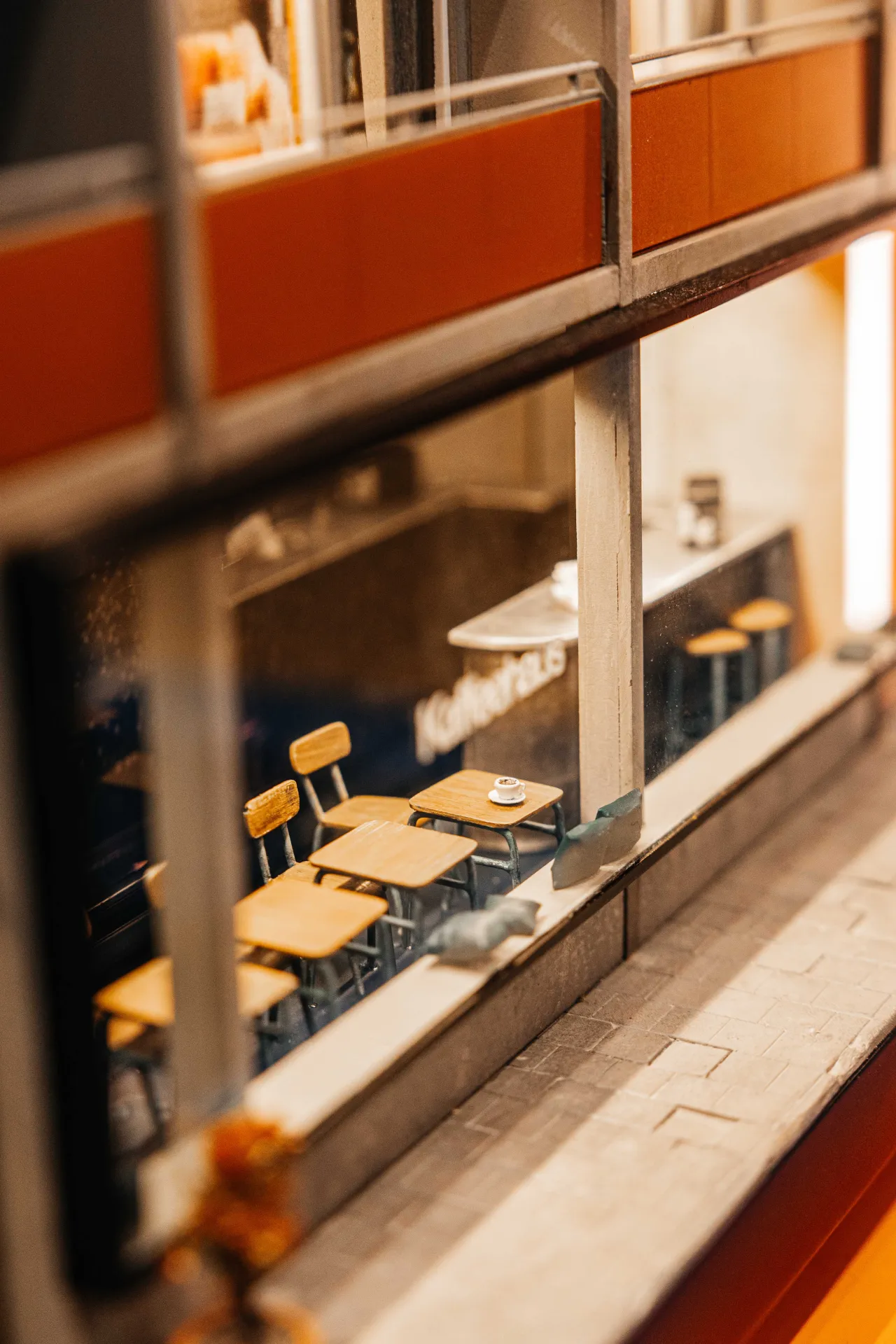
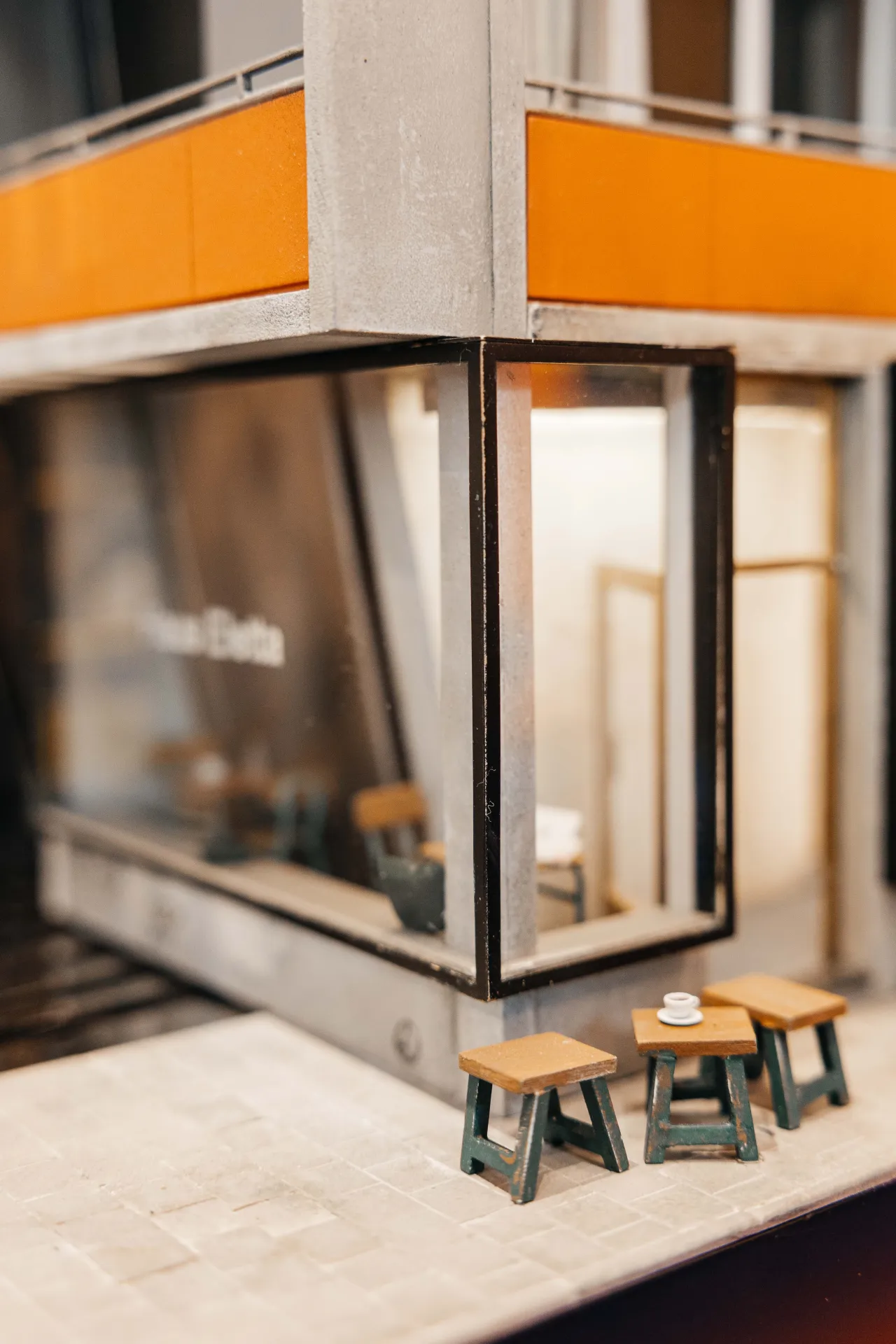
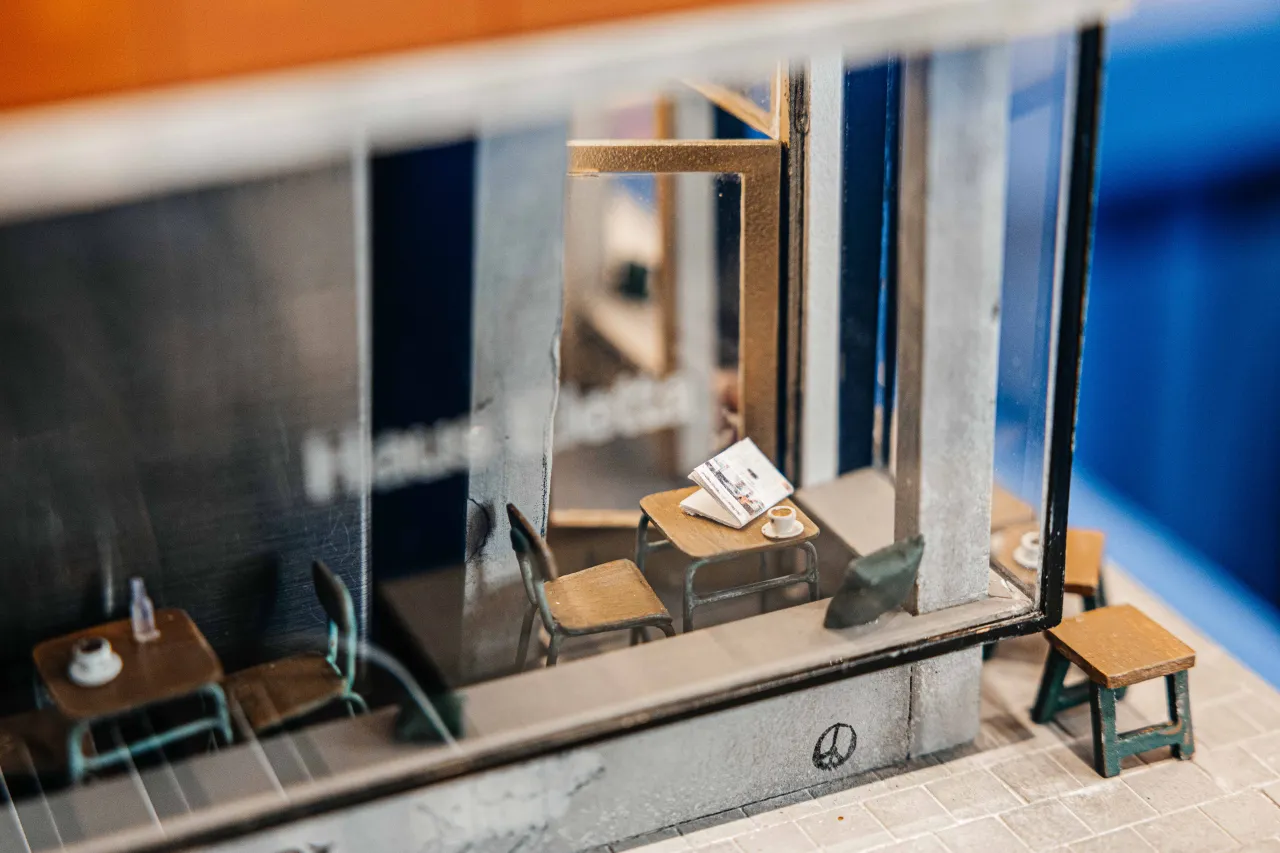
"We had a brainstorming in our crew, and we came up with these buildings from the 60s, from the east and the west. And that's one of my favourites in the end. It's very far from a cliché." Many visitors have told him it's their favourite, too.
There's one obvious question I have to ask: how much coffee did Simon consume over the months of work? He pauses. "I'm drinking tea most of the time!" he responds. "Yorkshire tea! Once a day, I drink a coffee, but it has to be a good one. That's the only coffee I drink."
It feels like a fitting footnote to a project built around exactly that proposition: one cup, done properly, is enough. The "World's Smallest Coffee Shops" is open to the public in Milan's Brera district until Sunday 26 April, at Via Palermo 21.
Editor's Picks
Trending
Latest Jobs
Senior Designer at Definition
Contract·London·£45k–£50k
Agent & Producer at The Jacky Winter Group
Full-time·London·£35k–£40k
Content Editor at ITV
Full-time·Birmingham·£41,284 - £57,412
Lead Digital Designer at Together
Full-time·£55k–£75k
Client Director at Koto
Full-time·Berlin·€70k-€85k
Marketing Copywriter at ustwo
Full-time·London·£40k-£50k