Why TBWA's bet on stop-motion made perfect sense for its Dutch lottery ad
In an age of AI-generated shortcuts, one Dutch lottery campaign chose a style of animation where five seconds takes a day. Madness or genius?
Picture this: your creative director walks in and announces the next campaign will be produced at a rate of five seconds per day. In 2024, when AI can generate entire commercials before lunch, when deadlines compress, and budgets tighten, when "faster and cheaper" has become advertising's unofficial mantra, TBWA\NEBOKO's latest work for Staatsloterij feels almost defiant in its use of stop motion. But it works brilliantly.
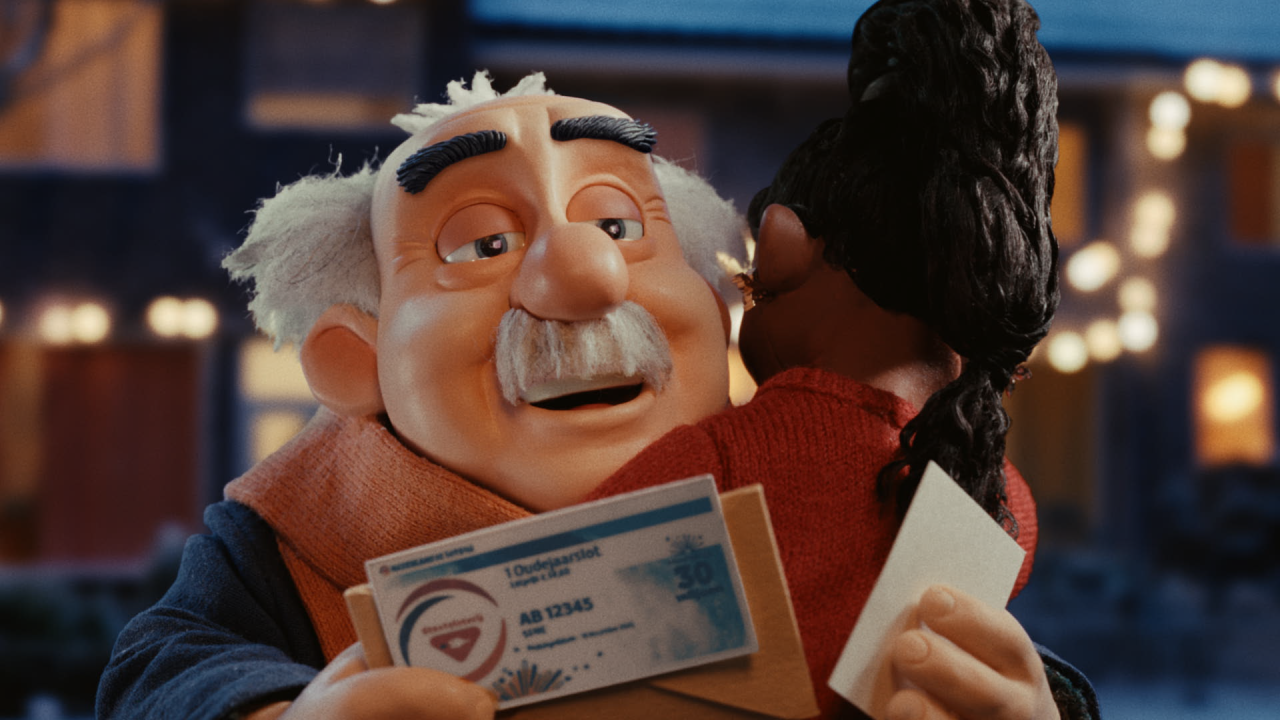
For this New Year's ad for the Dutch State Lottery, every character, prop and miniature Dutch streetscape was built and animated entirely by hand, one millimetre at a time. In 2026, it's the advertising equivalent of making bread from scratch when you could just buy a loaf. And that's precisely the point.
For over a decade, Staatsloterij has carved out territory in the Netherlands' cultural calendar with its end-of-year spots. Previous campaigns have featured a cast of animals (dogs, hedgehogs, cats, even a bird in a cuckoo-clock) delivering heartwarming tales of connection. But this year's ad, titled "Give each other some luck", marks a creative pivot: fully handcrafted human characters in a tangible, imperfect world.
Small acts of kindness
The film follows a grumpy elderly man, literally trailed by a small dark cloud (beautifully, painfully animated frame by frame), who begrudgingly accepts parcels for his entire street. When a lottery ticket arrives for a neighbour, his reluctant delivery becomes a journey through small acts of kindness that gradually shift his outlook. It's simple storytelling, but the medium transforms it.
TBWA\NEBOKO's executive creative director Dennis Baars is candid about the strategy. "We created a nice little story about a grumpy neighbour," he explains. "But we really wanted to tell it in a surprising way. We were convinced that the human craft of stop motion would elevate the storytelling."
Note the word choice here: not "speed it up" or "make it cheaper," but "elevate". In partnering with London's Blinkink, the studio behind John Lewis's legendary The Bear & The Hare ad, TBWA\NEBOKO wasn't just buying expertise. They were buying into a philosophy that handmade work carries emotional weight that CGI often cannot replicate.
Director Joseph Mann describes watching "characters and entire worlds come alive in front of your very eyes" as pure magic. And there's something in that observation worth unpacking.
Importance of authenticity
Stop-motion's appeal isn't nostalgia: it's authenticity. Every imperfection, every subtle texture, every slight wobble in movement signals human presence. In a media landscape increasingly saturated with algorithmic perfection, these "flaws" become features.
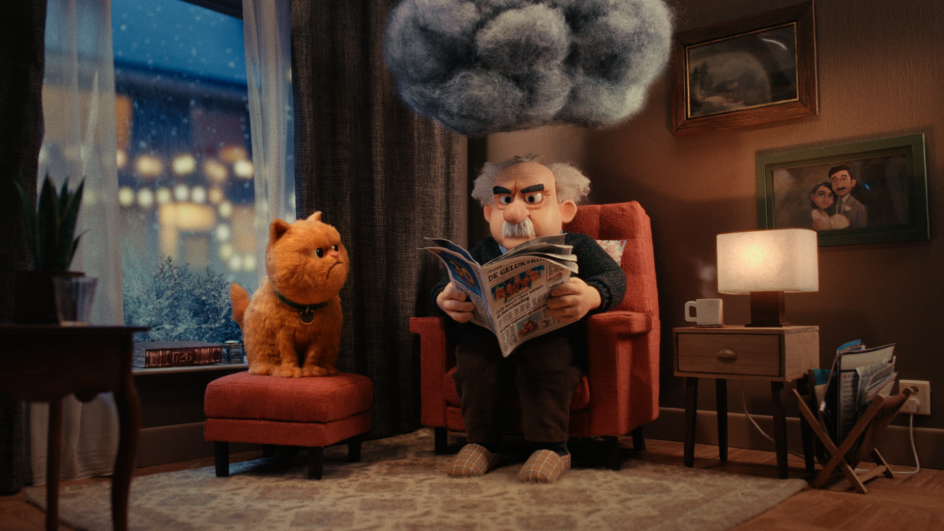
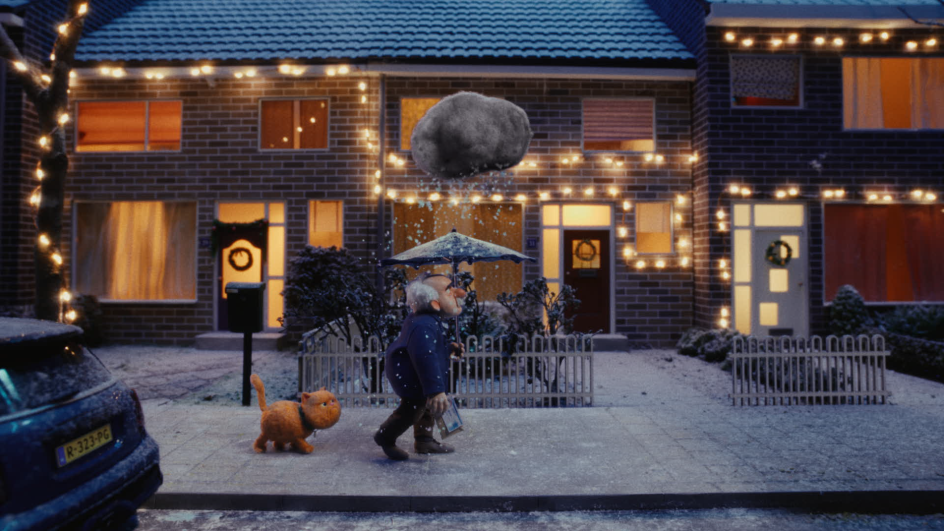
The technical commitment was serious, involving weeks of building miniature environments; puppets meticulously crafted and repositioned hundreds of times for a single scene; a floating cloud that needed animating alongside its despondent owner. As this behind-the-scenes video notes, each shooting day yielded just five seconds of footage.
But here's where that gamble paid off. The campaign's message ("Give each other some luck") finds its perfect expression in the medium itself. Because stop-motion is inherently collaborative. Teams of makers, animators, set builders and puppet fabricators working together, each bringing their craft to create something none could achieve alone. The production process mirrors the story's thesis.
This matters particularly for the Staatsloterij brand. Their New Year's Eve draw is watched by millions of Dutch viewers on 31 December, making it an annual ritual with real meaning in people's lives. The stop-motion approach signals respect for that cultural moment. It says: we invested time, care and human skill because you're worth it. Try getting that message across with stock footage and AI upscaling.
Genuine distinction
There's also commercial savvy here. In the Netherlands' crowded end-of-year advertising landscape, standing out requires genuine distinction. While competitors chase trending styles and quick-turn production, TBWA\NEBOKO went the opposite direction, embracing limitation as liberation.
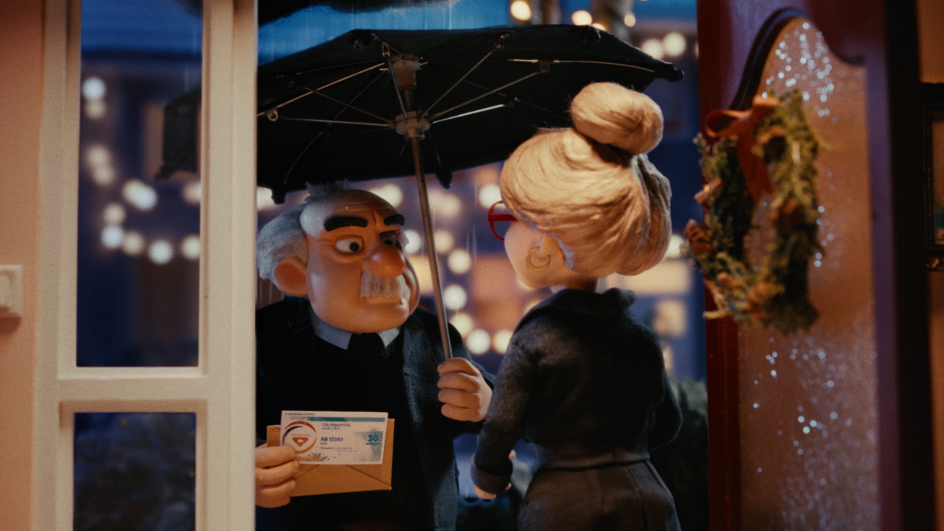
The result feels intimate, crafted, memorable. It's advertising that acknowledges its audience's intelligence rather than assaulting their attention.
Animation director Sam Gainsborough's involvement underscores another crucial element: performance matters, even at a miniature scale. Character nuance, subtle emotional shifts, the physics of a drifting cloud; these details required as much dramatic consideration as any live-action casting.
Perhaps most telling is what this project suggests about creative confidence. Choosing stop-motion in 2024 requires belief in craft, patience with process, and faith that audiences will respond to work that clearly took effort. It's a counterargument to the efficiency-above-all mentality that's hollowing out so much creative work.

Editor's Picks

Trending


Podcasts
Editor's Picks
Further Reading