Dan Forster on the Aladdin's cave that made him a lettering legend
The award-winning lettering artist and type designer reveals all about the father who shaped him, the studio that changed everything, and why hand skills still matter in 2026.
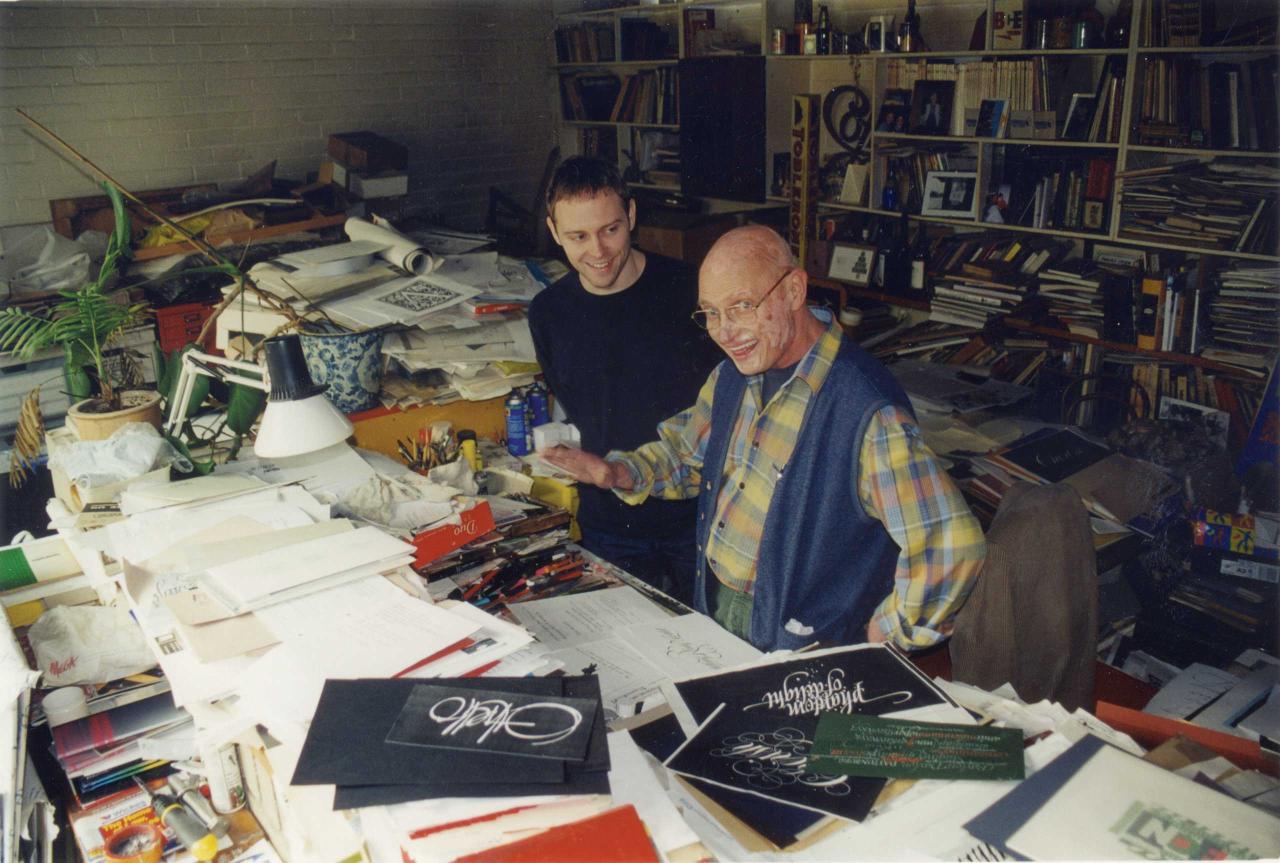
Tony and Dan Forster in Tony’s studio, 2003.
There's a particular type of kid who spends their school years drawing band logos on their maths books. Dan Forster was that kid. Metallica logos filled his exercise books, and he once spent several painstaking weeks hand-painting a Red Hot Chilli Peppers logo onto the back of his jacket, only to leave it on a bus and lose it forever. "Gutted," he recalls, understandably.
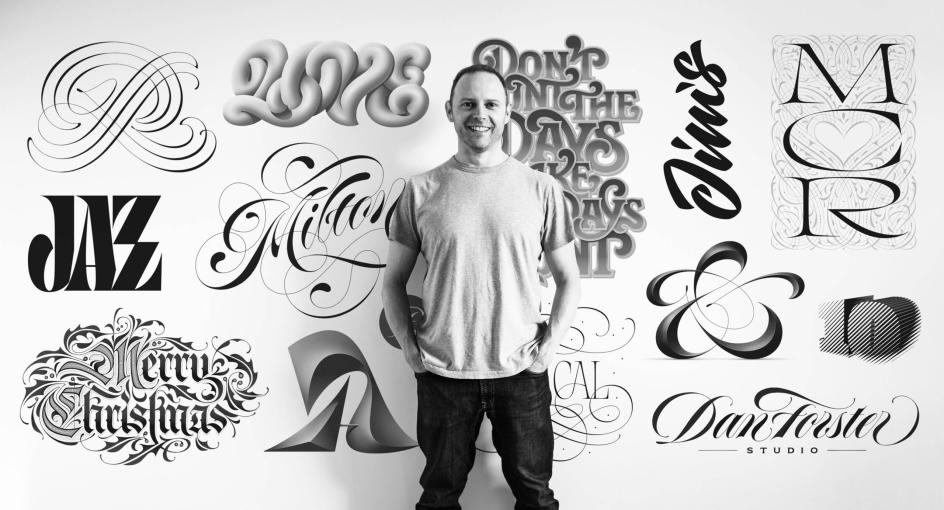
Today, he's one of the UK's most respected lettering artists and type designers, with a client list that includes Apple, Lucozade and Twinings. And the teenage graffiti and the Apple commission are not, it turns out, entirely unrelated. Both are expressions of the same obsession: the beauty of letterforms and the human urge to make them by hand.
Yet Dan's path to that vocation was far from straightforward. It involved a decade-long detour through graphic design, the death of his father, and one of the most magnificently untidy studios in the history of the craft.
Absorbing the process
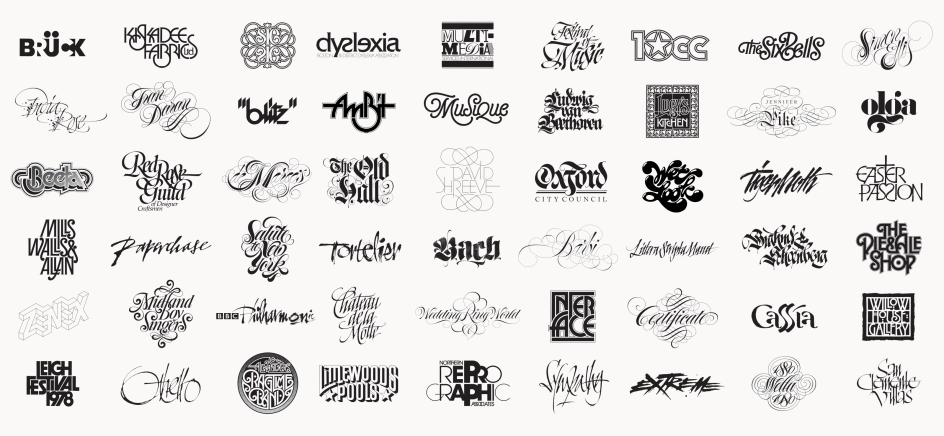
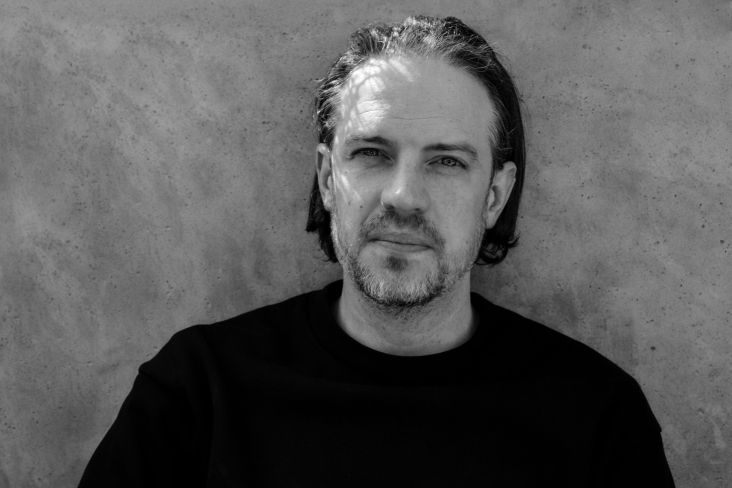
Dan grew up in the orbit of his father, Tony Forster, a calligrapher and lettering artist of extraordinary skill whose work is today archived on this Instagram account. "A day without laughter is a day wasted," Tony was fond of saying, and his drawing sessions came complete with sound effects for full comic effect.
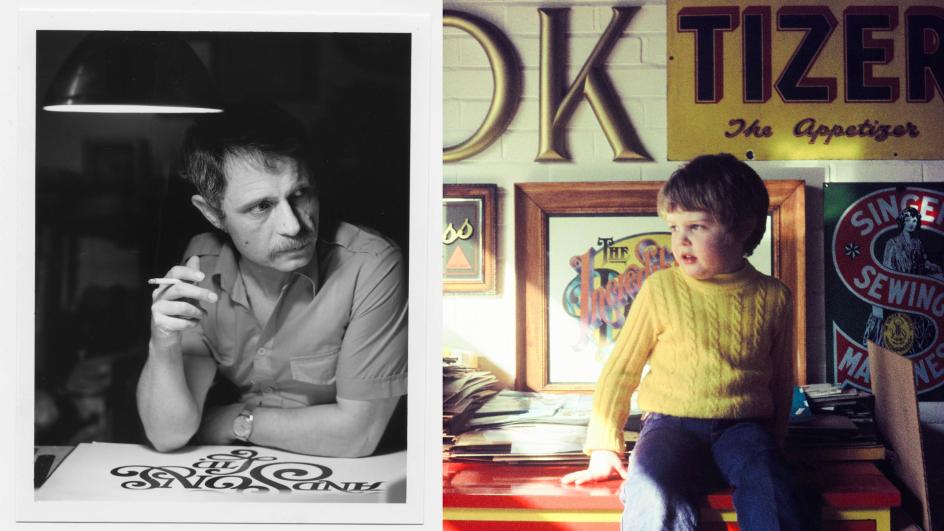
Left: Tony Forster. Right: Dan Forster. Both images cira 1978.
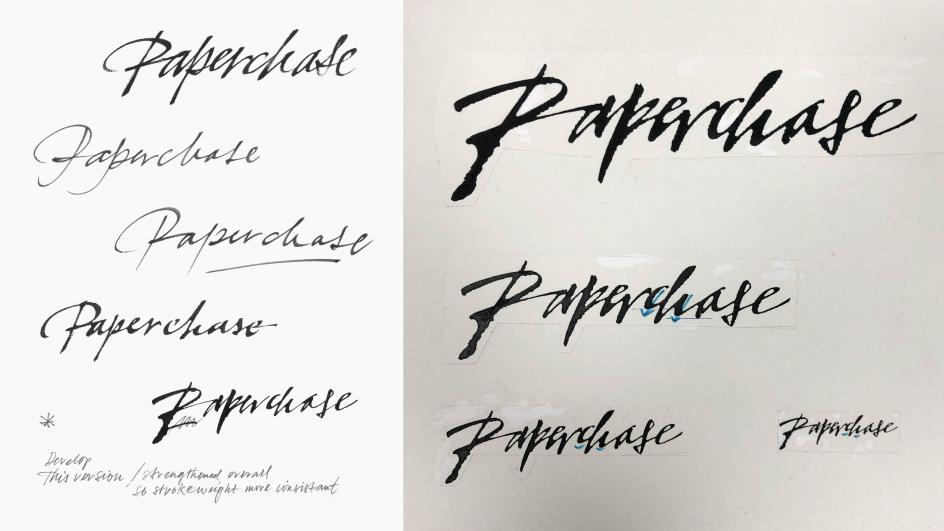
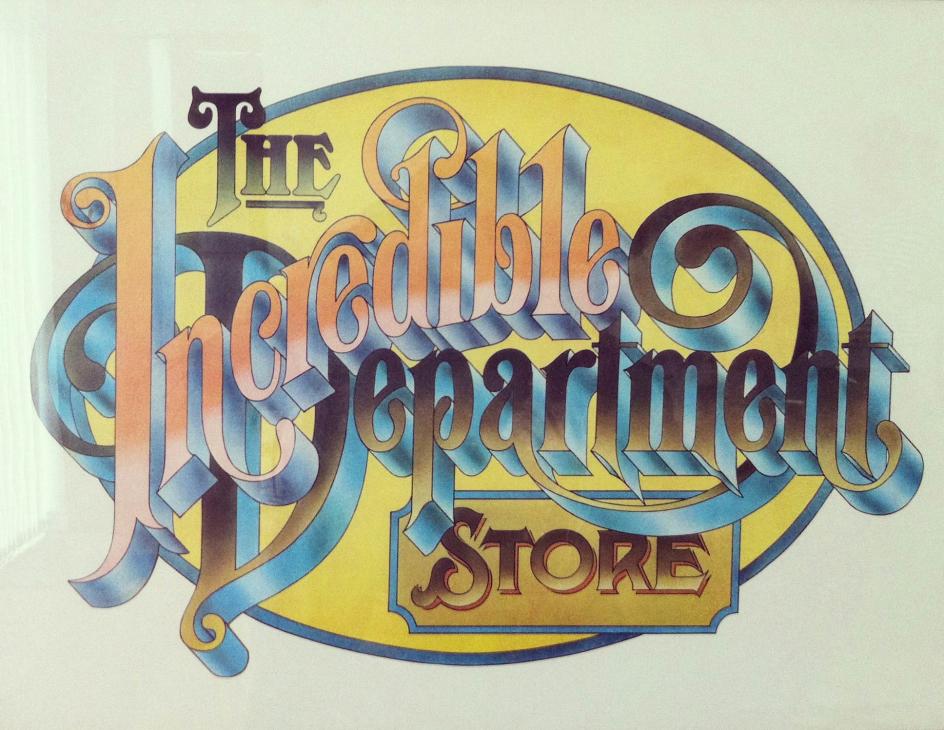
Initial drafts and development work for the Paperchase logo, Tony Forster, 1989.
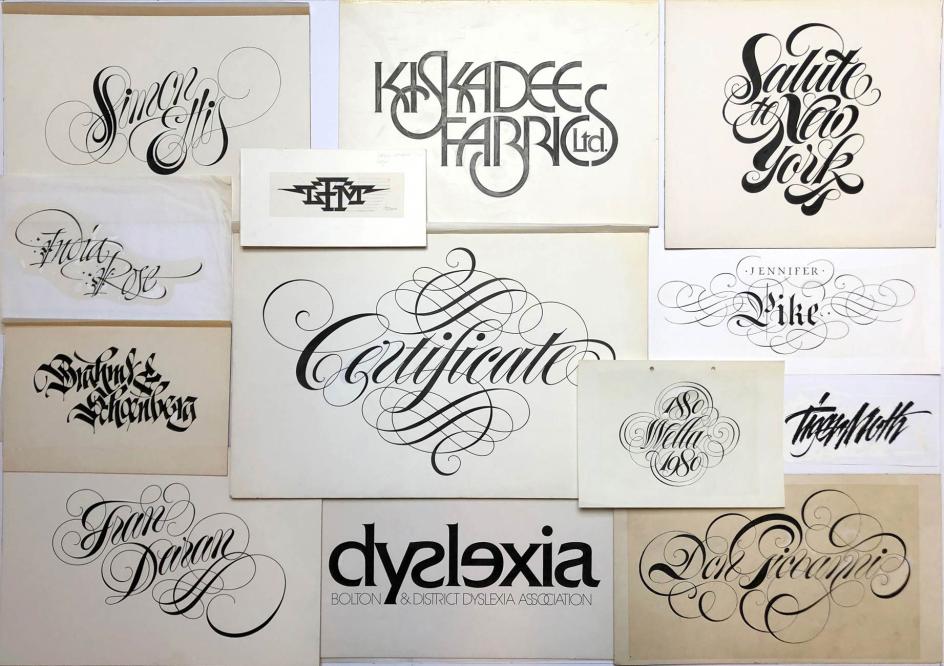
Various hand-rendered artwork by Tony Forster.
As a small boy, Dan would pester him for pictures, usually of diggers. As a teen, he began to notice his dad's day job involved drawing letters for clients, including the Paperchase logo. He watched, asked questions, absorbed the process. "I didn't really know it at the time, but I was observing a design process in action," he reflects today.
When Tony suggested calligraphy lessons at 16, though, Dan found it hopelessly frustrating. "I got so frustrated that I couldn't draw the letters as perfectly as I wanted, so I just gave up quickly," he admits. Lettering seemed, at the time, like "some kind of dark art". He went off to study graphic design instead.
The exercise that changed everything
Before he left for college in 1995, though, his father set him a project. "I want you to hand-draw a lowercase Helvetica 'a' repeatedly, until it's perfect," he told him.
Dan's response was not enthusiastic, but he set to the task all the same. Several days of tracing and redrawing followed, letter by patient letter, each imperfect attempt discarded. By the end, he'd drawn around 50 versions. The results, he acknowledges, did improve.
Then his father sat him down for the lesson. "You'll never learn anything about the shape, proportions or beauty of letterforms by just pressing a key on a keyboard." It's a sentence that has stayed with Dan for 30 years, and it carries fresh weight for him in the current era.
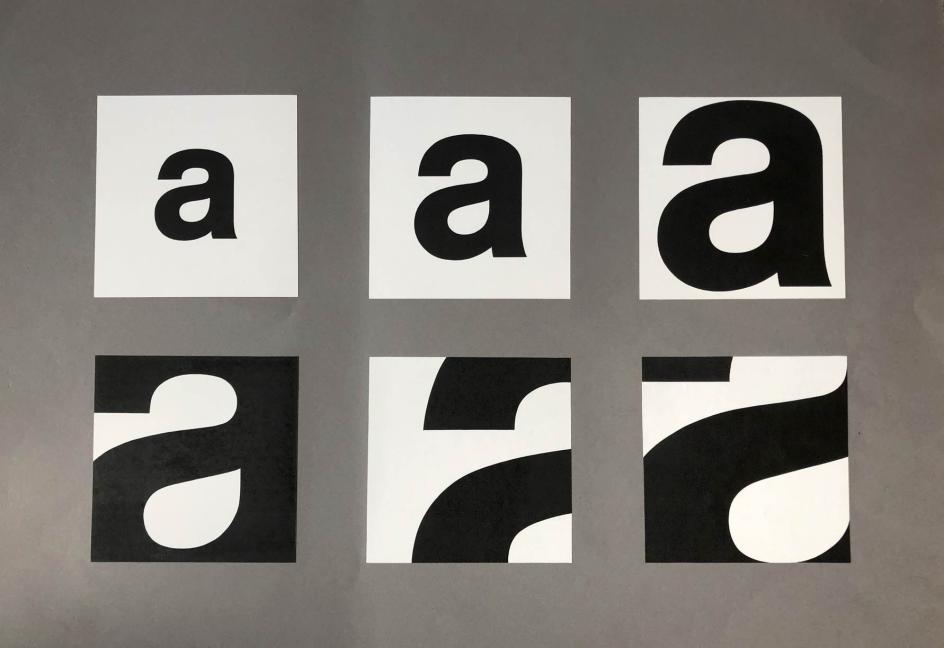

Dan’s Helvetica ‘a’ drawings. Fine-liner pen and white gouache, 1995.
"It's funny thinking about this story now, especially in this age of AI," he reflects. "I think the same general principle will always be true: we need to do everything we can to ensure we properly learn, understand and retain the original methods and techniques, while we also navigate how best, and to what degree, we adopt new technologies."
What his dad left behind
Graphic design kept Dan busy for a decade, but enthusiasm eventually waned. Then, in 2008, his dad died, and everything shifted in a way he had not anticipated.
As the only other creative in the family, it fell to Dan to sort out Tony's studio. What he found inside was staggering: books, prints, hand-painted signs, endless paper samples, and all kinds of rare typographic ephemera, plus a lifetime's worth of entirely handmade work filling every shelf, drawer, and surface. On his desk, Tony had somehow reduced his available workspace to a single clear patch roughly A2-sized. The full tidying operation took eight years.

Dan’s custom logo work. Clockwise from top left: Seabrook wordmark commissioned by Brandon Consultants. Kahlúa and Lucozade wordmark commissioned by Pearlfisher, London. Twinings wordmark for Twinings Australasia commissioned by Brand Society, Melbourne.
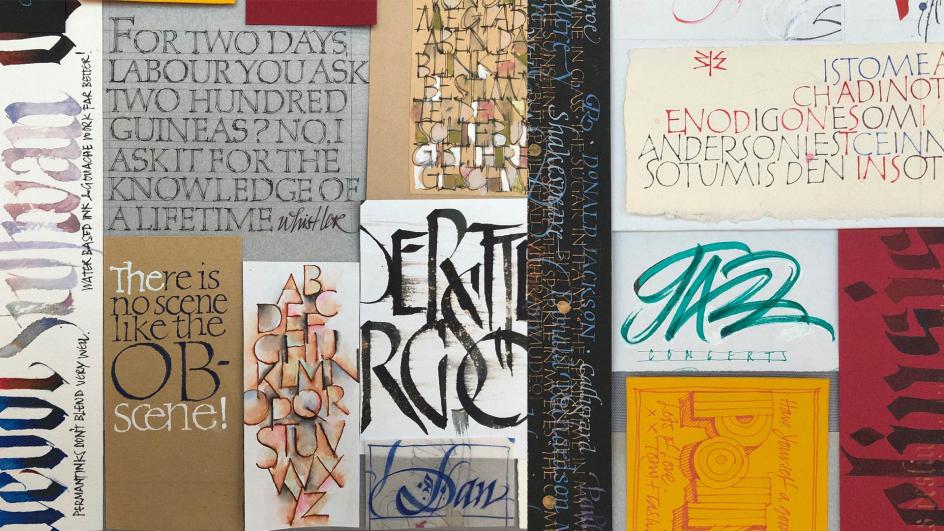
Rough calligraphic and lettering ‘doodles’ by Tony Forster.
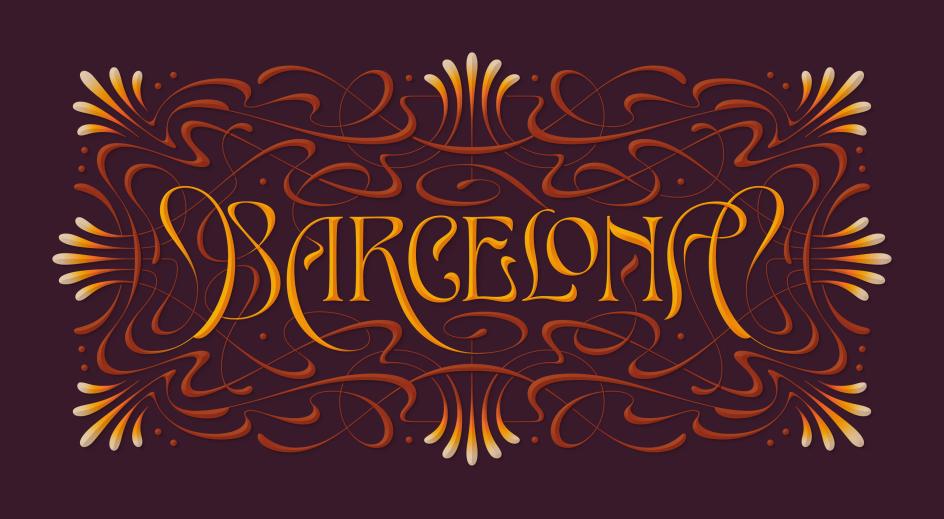
Barcelona lettering. Capturing the soul and spirit of the city with letterforms.
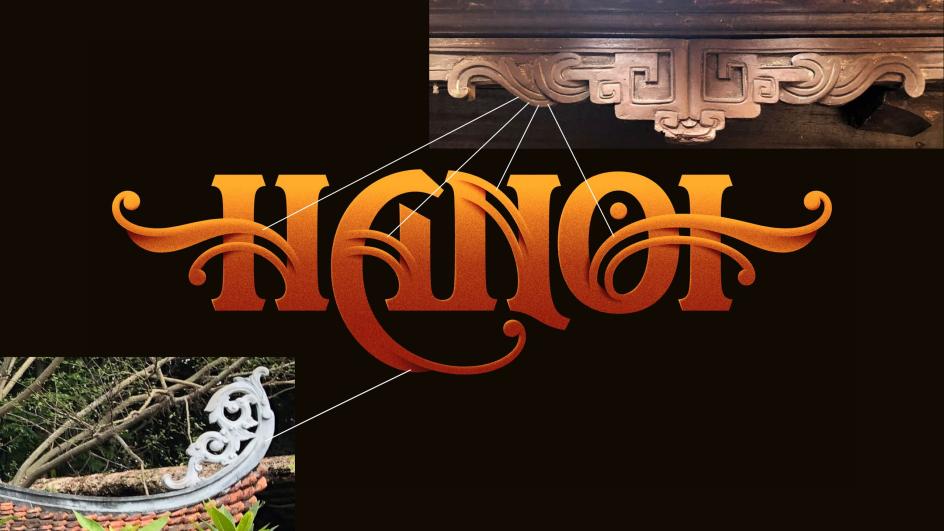
Hanoi lettering. Inspired by interior and architectural details from around the city of Hanoi.
But it was the quality of work inside the studio that truly overwhelmed Dan. "I was so blown away by what I discovered in there that it inspired me to pick up a pen and start drawing letters," Dan says. "And honestly, once I started, I couldn't stop."
He is thoughtful about what this means now. "I often wonder, if he hadn't died, would I ever have become a lettering artist?" he ponders. "Of course, I'd much rather have my dad back, but at the same time, I'm so thankful for how things have worked out. Tidying his studio was a difficult, emotional rollercoaster of a task. But looking back, it feels almost like a gift he left behind for me."
Building the practice
Reinventing yourself as a specialist in your late 30s is no small thing. Dan had to rebuild his portfolio from scratch, quietly haunted by a particularly pointed question: "Am I just going to get compared to my Dad?" He dealt with this doubt through stubbornness, persistence and a strategic willingness to get in front of people.
Dan stripped his website of all design work, committing fully to lettering even as income temporarily dipped. Agency visits and talks, initially uncomfortable, became central to his practice. "You can't beat getting in front of people as a means of self-promotion and a way to win new work," he observes.
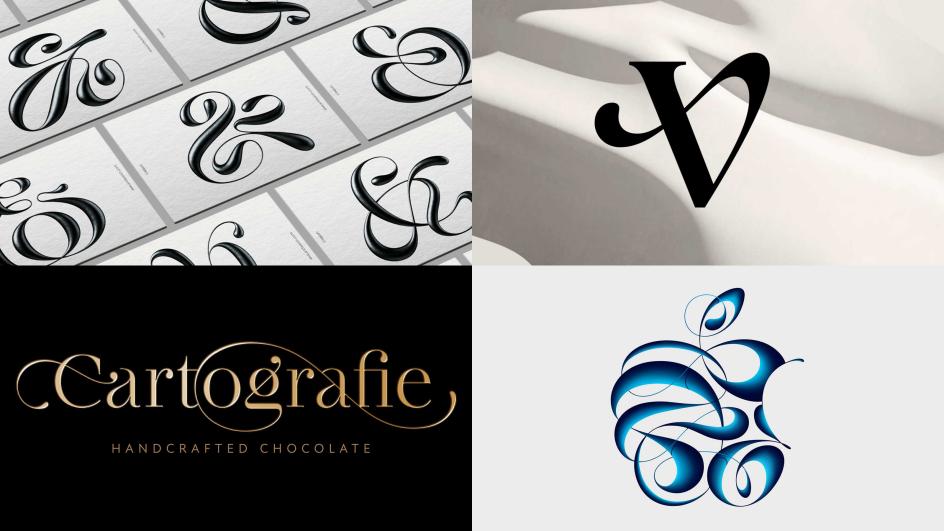
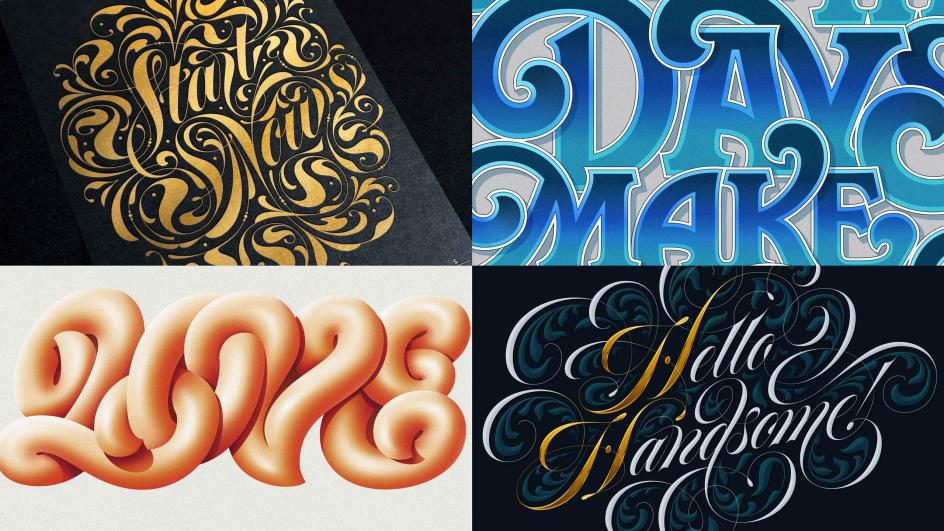
Dan’s custom logo work. Clockwise from top left: &Walsh Ampersands, commissioned by &Walsh. Very monogram, commissioned by Elmwood Global. Cartografie wordmark, commissioned by Studio Minerva. Apple logo illustration, commissioned by Apple Inc.
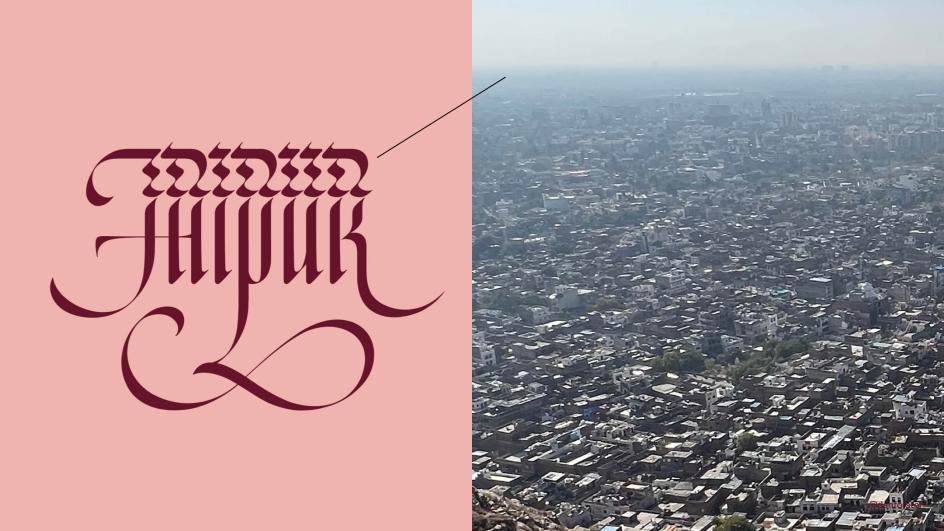
Today, his father's influence shows up in both the visible and invisible. Tony used to say, "Take care of the details, and the rest will fall into place", so often that it's now simply how Dan operates. He's also inherited a roving curiosity: his personal lettering projects draw on travel to Barcelona, Hanoi and Jaipur, translating architecture and atmosphere into letterforms; a practice that purely digital work rarely achieves with the same immediacy.
The legacy question
When asked what his father might say if he could see his work now, Dan pauses, then smiles. "The first thing I imagine is him smiling and saying 'bloody 'ell son!', a typical Tony-ism."
There's a clue to Tony's philosophy, meanwhile, in something else he used to say: "The trouble with black is white." The meaning, as any type designer will grasp, is that the negative space matters as much as the mark itself. It's the kind of observation that sounds simple until you realise it's taken a lifetime to fully absorb.
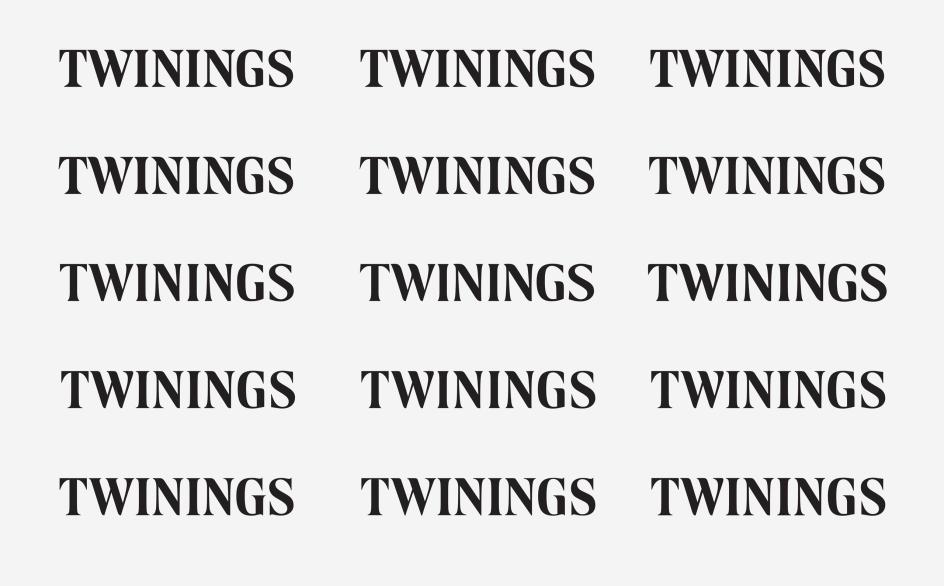
Early exploration work for Twinings wordmark commissioned by Brand Society, Melbourne.
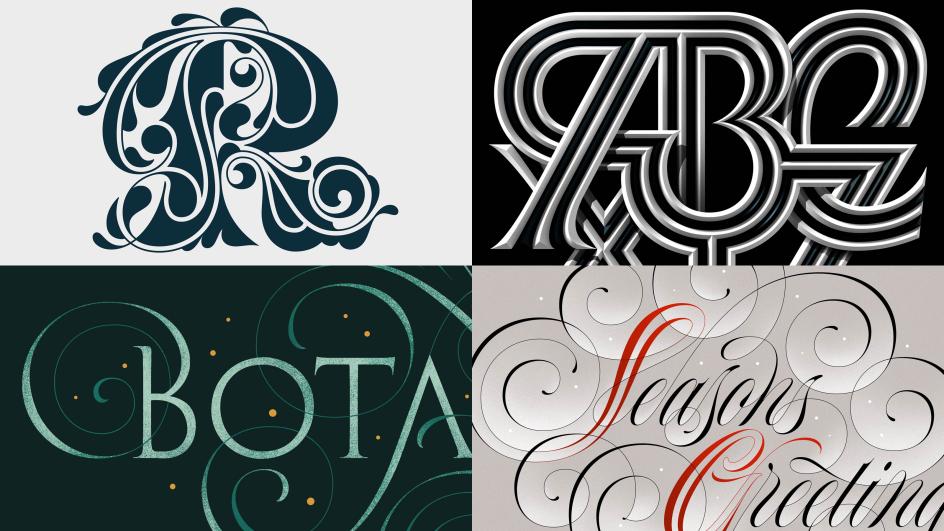
Various ‘illustrative’ lettering work by Dan.
Dan's advice to designers drawn to lettering today is consistent with everything his father believed. "Draw, draw, draw. Get off the computer and learn to draw. Letters are just shapes." And then, when you are ready, put the work out there without hesitation.
His father never saw any of his lettering work. That is a sadness Dan carries lightly, but does not pretend to be without. "All I can say is, thank you, Dad," he says.
Further Information

Editor's Picks



Trending

Podcasts



Editor's Picks
Further Reading