Is social media over for creatives? Or have we just woken up to what it is?
Members of the creative community share their views on the platforms that once promised connection but increasingly deliver only exhaustion.
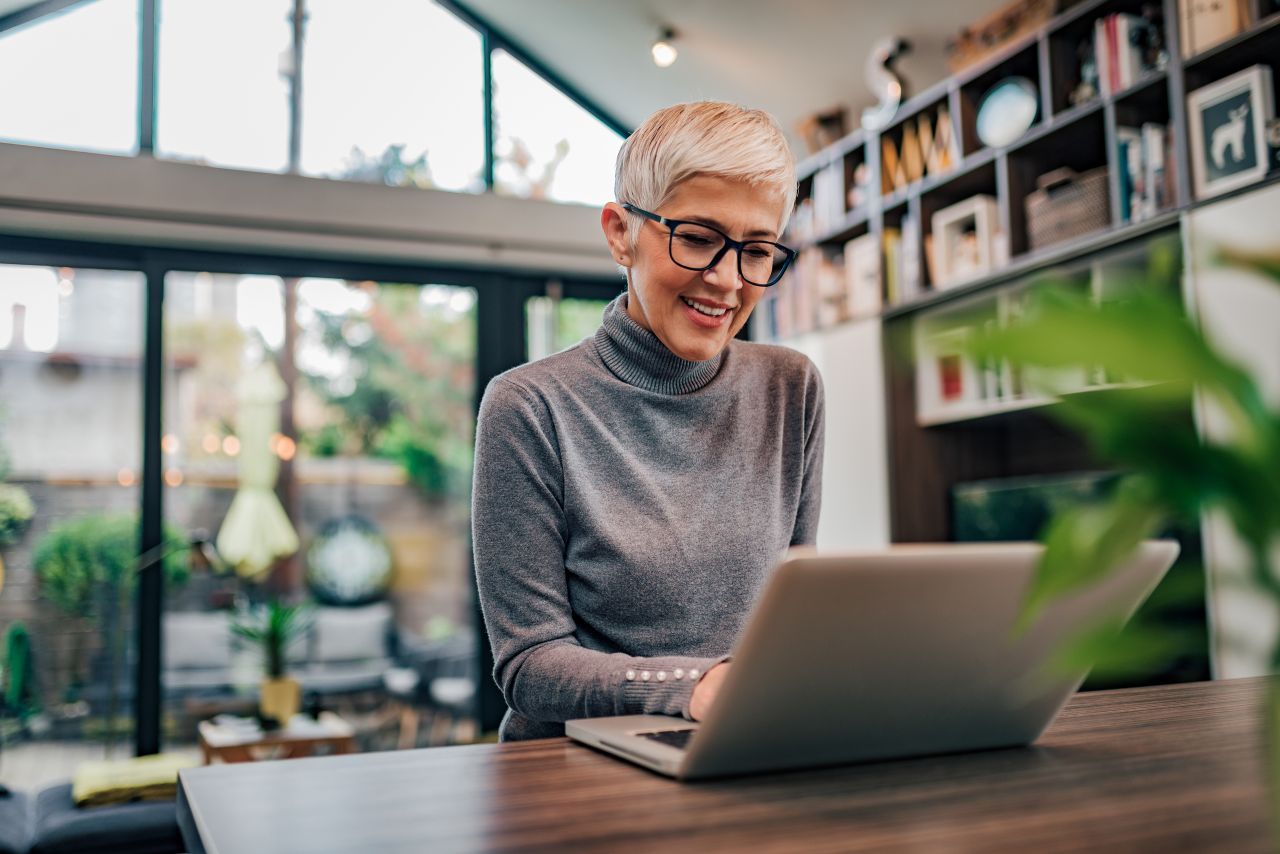
Image licensed via Adobe Stock
There was a time when social media felt like a gift to creative professionals. A free portfolio. A global studio door, flung open. A place where your work could find its people without a gatekeeper in sight.
That time, by most accounts, is over. In this article, we share what members of the Creative Boom community really think about the state of social platforms today.
The conversation is raw, occasionally bitter, and surprisingly unanimous on one point: something fundamental has broken. You can read the full discussions on LinkedIn and our own private network, The Studio. (Not joined The Studio yet? Do it today; it's free!)
The numbers don't lie
Fontwerk founder Ivo Gabrowitsch frames the problem. "A 'successful' post today might reach 10% of followers," he begins. "In my view, that means the concept of social media is simply dead." It's hard to argue with the logic. If you're only experiencing a tenth of the thing you signed up for, what exactly are you participating in?
Type designer Jean François Porchez agrees, and sees Instagram as the worst offender for the design community. "Designers who publish every day are like dinosaurs who see their universe collapsing, without being able to do anything," he says. "They continue hoping for something that won't happen. User-created content just covers the gaps between ads!"
What comes through most from these discussions is a sense of fatigue, not just with the platforms, but with the broader expectation that creatives must also be content creators, audience builders and algorithm whisperers. As UX consultant Becky Colley puts it: "It's not so much social media as the expectation that we're all constantly online and available. I spend my days replying to Slack messages, Teams messages, in meetings, and on calls. Since social media stopped feeling fun, the last thing I want to do is spend my evenings and weekends continuing to connect with people through a screen."
Creative director Paul Leon agrees, describing a system that has turned connection into obligation. "Social media has gone from something that connected, entertained and educated to feeling like a forced chore, an indentured servitude policed by the algorithm of profit," he says. "Exhausting. Boring. Managed irrelevance. These are all terms I'd use to describe much of 'social media'. When businesses transition from creating great products to just making money, it shows; whatever the business."
For strategic brand designer Sophie O'Connor, it's a constant to-and-fro of emotional whiplash. "Some days I feel totally inspired to create a post or reel and enjoy the process. Other days, it feels like a chore, as I'm scrabbling around for relevant ideas. There is so much pressure to be a content creator now, as the old ways of using social media don't seem to work anymore. It's exhausting but necessary—to keep you 'top of mind' and reaching new audiences."
Necessary evil
One phrase, "necessary evil", surfaces repeatedly in our discussions. Richard Brandon Taylor, founder of Brandon, captures the cognitive dissonance involved. "I think most people in the creative industries are doing their best to keep their heads above water as their legs are flapping like mad underneath," he explains. "As such, social media struggles to fit into our daily working lives."
He adds a footnote that points to an obvious paradox here. "I'm conscious I'm on LinkedIn responding to this. It's the drug that you sometimes can't escape, when ensuring you have your finger on the pulse of the creative world."
But for what, exactly? As photo retoucher Sandrine Bascouert reflects: "There was that golden age where people put all their faith in their social posts for reach, including myself. But at the end of the day, nothing ever replaced showing up in the right places, and Instagram, LinkedIn or X were never going to replace our own spaces: websites, newsletters, blogs."
Sandrine adds something that's both shocking and relatable. Across years of professional posting, she's gained precisely two clients from social media… and both came via her personal account, not her professional one.
Adapting, not surrendering
In the interests of balance, though, we should point out that not everyone is despairing of social media. Some creatives have found ways to make the platforms work on their own terms, even if those terms are modest.
Take visual storyteller Fiifi Džansi, who returned after a year-long absence from social media with a harder skin and clearer purpose. "I now use it to curate my work, on my own terms," he explains. "I ignore the hostility and the rage, and I never give a hoot about the algorithm. I just put my work out there, in case someone stumbles upon it. And, occasionally, I still meet genuinely good people on the socials."
Yes, social media isn't what it used to be. But some, such as creative marketing strategist Carmela Vienna see opportunity in the shift. "Today, social is less about vanity and more about relevance and alignment," she says. "While IRL [in real life] relationships matter more than ever, social media is a great tool to stay top of mind, on a foundation that's built through community and showing up."
For example, a single storytelling-style reel from Carmela prompted three separate work enquiries, all from people she already had a relationship with. The platform amplified an existing connection; it didn't create one from nothing.
The great unplugging
For others, though, the answer is simply to leave. Graphic designer Meredith Blumenfeld quit years ago and hasn't looked back. "The time I used to spend on social, I now use for other things," she says. "Coffee shops, hanging out with friends, reading, baking, painting. So much of my life—physical, emotional, spiritual—has freed up, by getting rid of the constant pressure to be up-to-date and the constant comparison game."
Indeed, brand designer Zoe Foreman questions whether humans were ever designed to handle this volume of input. "I don't think we were meant to have this much access to the world and a constant flow of information," she posits. "It takes conscious effort to use social media how you want to, actively avoiding doomscrolling, making sure you are actually hunting down friends' posts to engage with them, which makes it less of an enjoyable experience."
Key takeaways
So where does this leave us? While there's no consensus yet amongst creatives that social media is dead, it's increasingly clear that the old contract is. The deal used to be: post your work, build an audience, get discovered. That deal has been rewritten by algorithms optimised for advertising revenue, and the inconvenient truth is that creative professionals are the collateral damage.
What's replacing it looks a lot like what came before social media. Word of mouth, genuine relationships, private communities, newsletters, personal websites, and showing up in person where it counts. What that means on a day-to-day level, of course, will vary from creative to creative.
For example, designer Mark Richardson has simplified his approach entirely, using only LinkedIn, where he follows "inspiring feeds that give me hope of positive change and new ideas that might help us solve the big problems we face as a species". Meanwhile, illustrator Juliana Salcedo, who's spent years on every platform imaginable, has pared back to the bare essentials. "I'm tired of the endless hours I've spent since my late twenties online," she complains. "I want a more personal connection."
Ultimately, these multi-billion-dollar platforms aren't going anywhere. But the creatives who built them into what they were? They're already leaving. Or at the very least, learning to care about them a great deal less.
Further Information
Editor's Picks
Trending

Podcasts
Editor's Picks
Further Reading