There's a certain kind of creative advice that sounds almost too convenient to be true. "Follow your instincts. Break the rules. Embrace what you don't know." These sentiments tend to come from people who are very good at what they do, looking back at their career with the benefit of hindsight and a tidy narrative arc. So it's easy to be cynical and hand-wave them away.
Sometimes, though, this advice actually works, and Eva Cremers' career is a case in point.
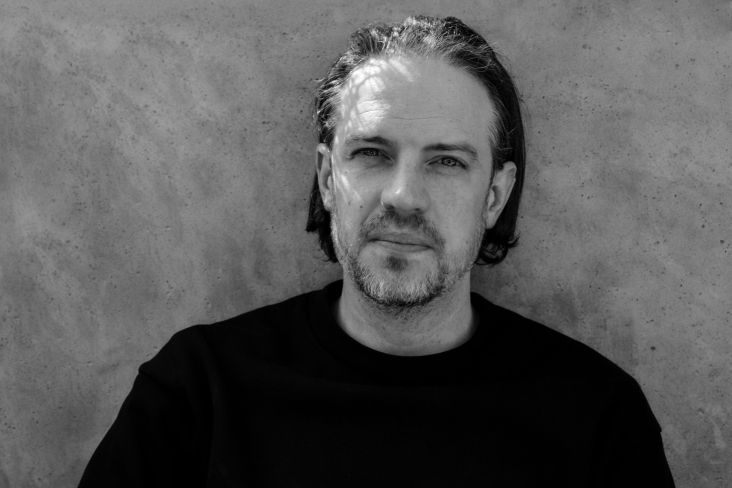
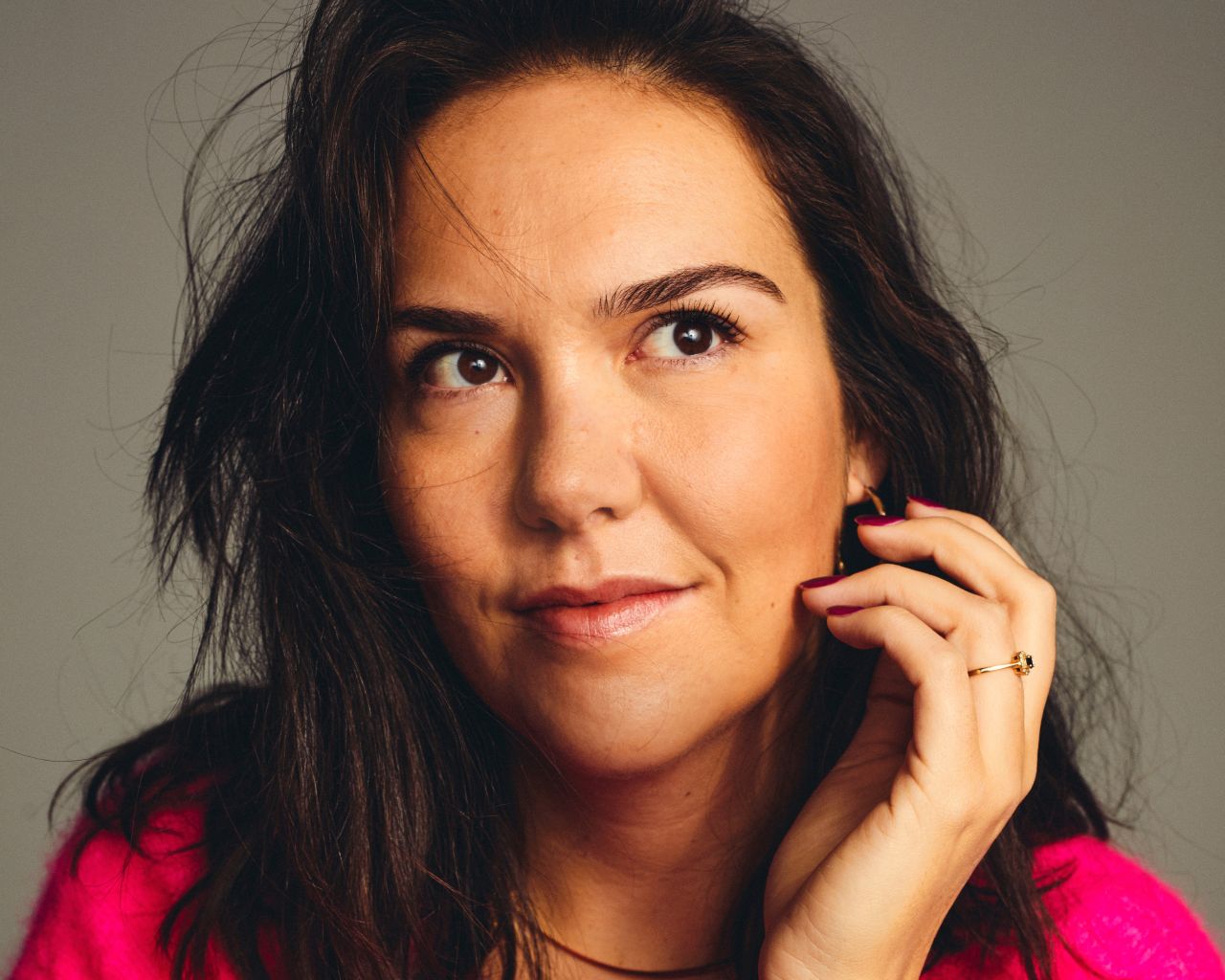
Eva is a Dutch 3D artist and animation director whose bold, character-driven CGI work has landed her campaigns with Meta, Samsung, McDonald's, H&M and YouTube. Her style is immediately recognisable: bright, tactile worlds populated by cheeky figures with enormous eyes, built with a confidence and graphic clarity that, from the outside, look entirely intentional. To begin with, though, it wasn't at all.
In a recent Studio Session (a live talk inside The Studio, our private membership community), Eva walked us through her process and career. What emerged was an honest, true-life account of how a creative identity gets built: largely through accidents, workarounds and a cheerful refusal to do things the proper way.
The accidental 3D artist
Eva didn't set out to work in 3D. She studied international business, realised it wasn't for her, retrained in graphic design, and then received an unexpected email from Man vs Machine, the London- and LA-based studio known for its high-end CGI campaigns for global brands. They offered her an art direction internship. She said yes.
There was one condition, though. "The guy says, can you please learn some basics in 3D, because we work a lot in 3D, and just so you understand a bit of what we're talking about," she recalls. With three months to spare and no particular plan, Eva did what any sensible person would do: she Googled "tutorial beginner" and watched every video she could find.
"Day and night, I just Googled everything," she recalls. "I had no idea what was going on with this very, very tricky, difficult program. If you click one button, your laptop almost explodes."
Here's where it gets interesting. Faced with a tutorial explaining how to build a realistic eye (a process that involved 40 minutes of watching and 3 hours of doing), Eva looked at the result and thought: Why does it need to be realistic?
It could alternatively be, she figured, a cartoon eye; a simplified shape. This shortcut turned out to be a pivotal creative decision. "A lot of my style comes from actually not knowing how to properly do 3D!" she smiles. "It sounds weird, but I think it's very true."
For instance, when asked during the Q&A about topology (the technical discipline governing how 3D models are structured), she was magnificently unrepentant. "I read about topology, and I decided not to go in that direction because it's so nerdy and technical," she explains. "My models look absolute: if you looked into them, they look terrible. But still, who cares? Just make fun things that you enjoy!"
This is a principle she believes can be applied to every creative discipline. "Make your own rules," she advises. "You don't have to paint exactly like Rembrandt painted. You can use 3D however you want, and that's the fun part."
The kids' corner problem
Success, however, brings its own complications. Eva's style (the big eyeballs, the rounded forms, the primary-bright palette) earned her a growing roster of clients, but it also earned her a label she hadn't asked for: children's work. "I felt like I was pushed into this kid's corner," she says. "It was hard to get out of there."
Her response was methodical rather than reactive. Rather than waiting for the right brief to arrive, she started making personal work that demonstrated range. She teamed up with a photographer and added digital elements to their images, creating a perfume model surrounded by illustration and developing characters that felt, as she puts it, "less kids, but with a playful, wacky feel".
The strategy worked: it was precisely this personal work (specifically some textured typographic experiments) that caught the attention of nail colour brand OPI, and later YouTube.
14 personalities and a 20-frame limit
The YouTube project was the centrepiece of Eva's talk, and it's a good illustration of how commercial briefs can push a creative into genuinely new territory. YouTube wanted 14 unique 3D illustrated characters for their version of Spotify Wrapped, a personalised recap system that would slot each user into one of 14 personality types based on their viewing habits. The "sunshiner", for instance, watched uplifting content; the "serenity seeker" favoured yoga, ASMR and meditation. The brief stated that the work should not feel "goofy or cute".
Eva, aware she'd been shortlisted alongside artists with higher-profile portfolios, made a pre-emptive move. Without being asked, she sent YouTube an additional page of work; not a portfolio piece, but a demonstration that her style could go somewhere more mature.
"I wanted to show them I can do other types of characters, and it can lean more into a mature, playful vibe," she explains. She got the job on that basis, without a call or a formal pitch.
The technical constraint that shaped the project was tight: a maximum of 20 frames per second for the looping animations. "But obviously you want the characters to feel alive," she says. She solved the conundrum by working closely with animator Sam Burton, sketching out how each character should move before handing over to him to execute. The results feel considerably smoother than the frame rate should allow.
Eva also used AI for the first time on this project, and her description of how it is worth paying attention to. She didn't use it to generate final images, but to produce rough visual references. These were loose, slightly off approximations of how a sketched idea might translate into 3D, which she could show the client without having to fully build out each concept first.
"The most important thing," she says, "is that I want to use AI to understand what it cannot do. To still understand where my power as a creative is."
The industry is ghosting people
It's not all fun and games, though: Eva is candid about the less glamorous parts of her current reality. A project she pitched for and won has gone silent. Five other projects have ghosted her entirely. The OPI campaign she's so proud of, which generated a flurry of "you must be so busy" messages when it launched, was actually completed the previous July. "It's never the reality that you see online," she observes. "It feels like everyone's busy. But probably not."
Eva offers a useful suggestion for the quieter periods. "It really helps me to look back on my work and think, 'Oh, actually that was quite a cool project; I did that two years ago, four years ago.' That helps me not forget what I've done so far, and to be proud of what I've done."
Which, coming from someone whose characters are currently living in a child's nursery—two H&M shop-window sculptures that the company offered her rather than throwing away—is not bad advice at all.
Further Information

Editor's Picks

Trending


Podcasts
Editor's Picks
Further Reading