Julia Fernandez hand-painted 300 ceramic tiles to make a music video – and the result is spellbinding
The Brooklyn animator spent three months firing, glazing and filming tiles frame by frame to create a stop-motion film for musician Emory.
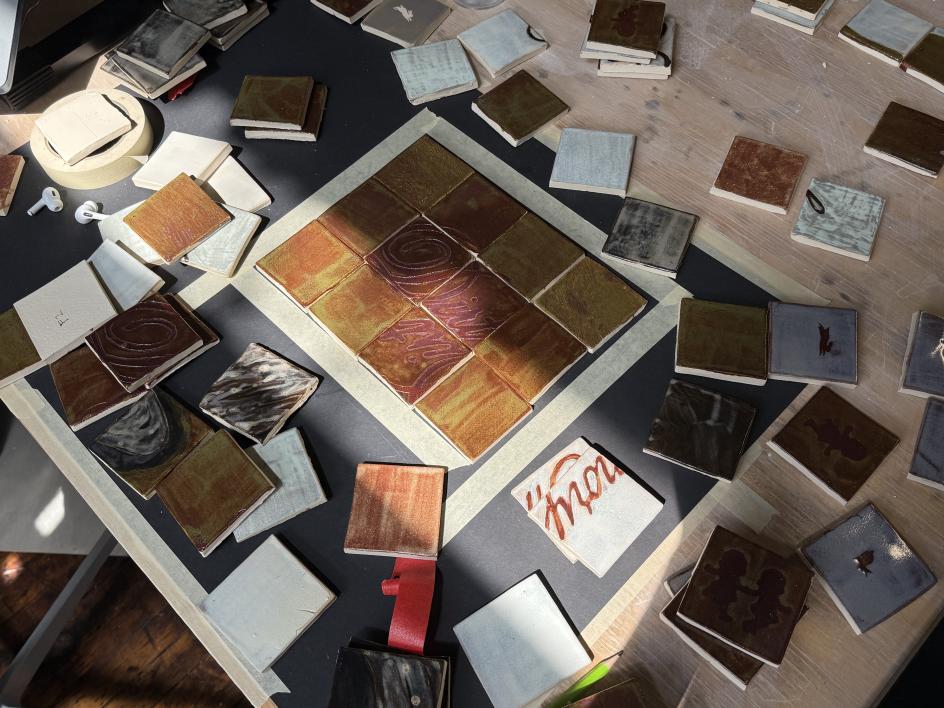
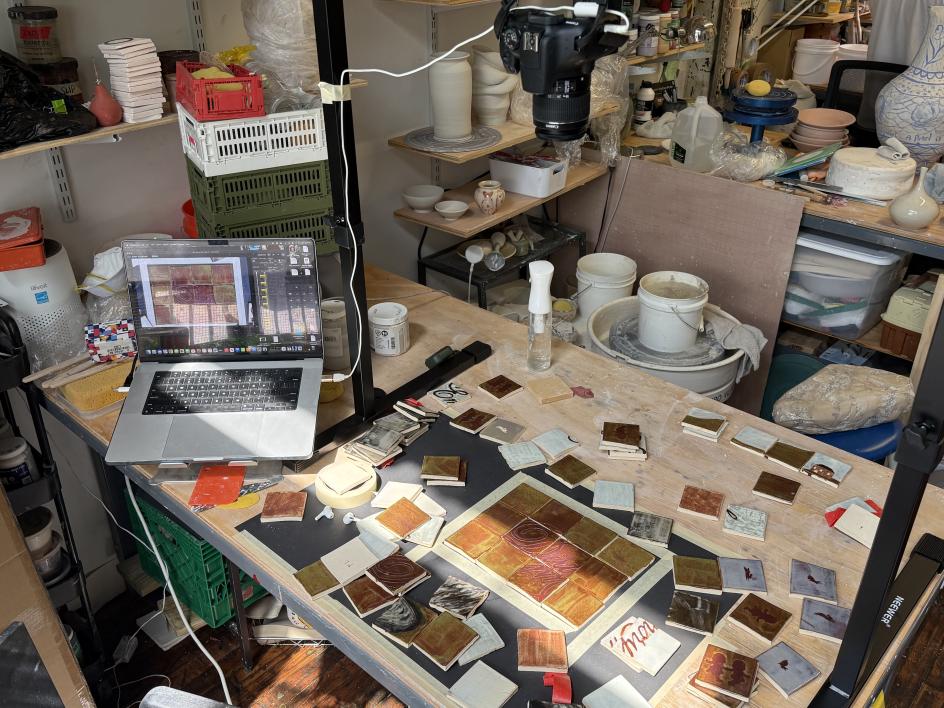
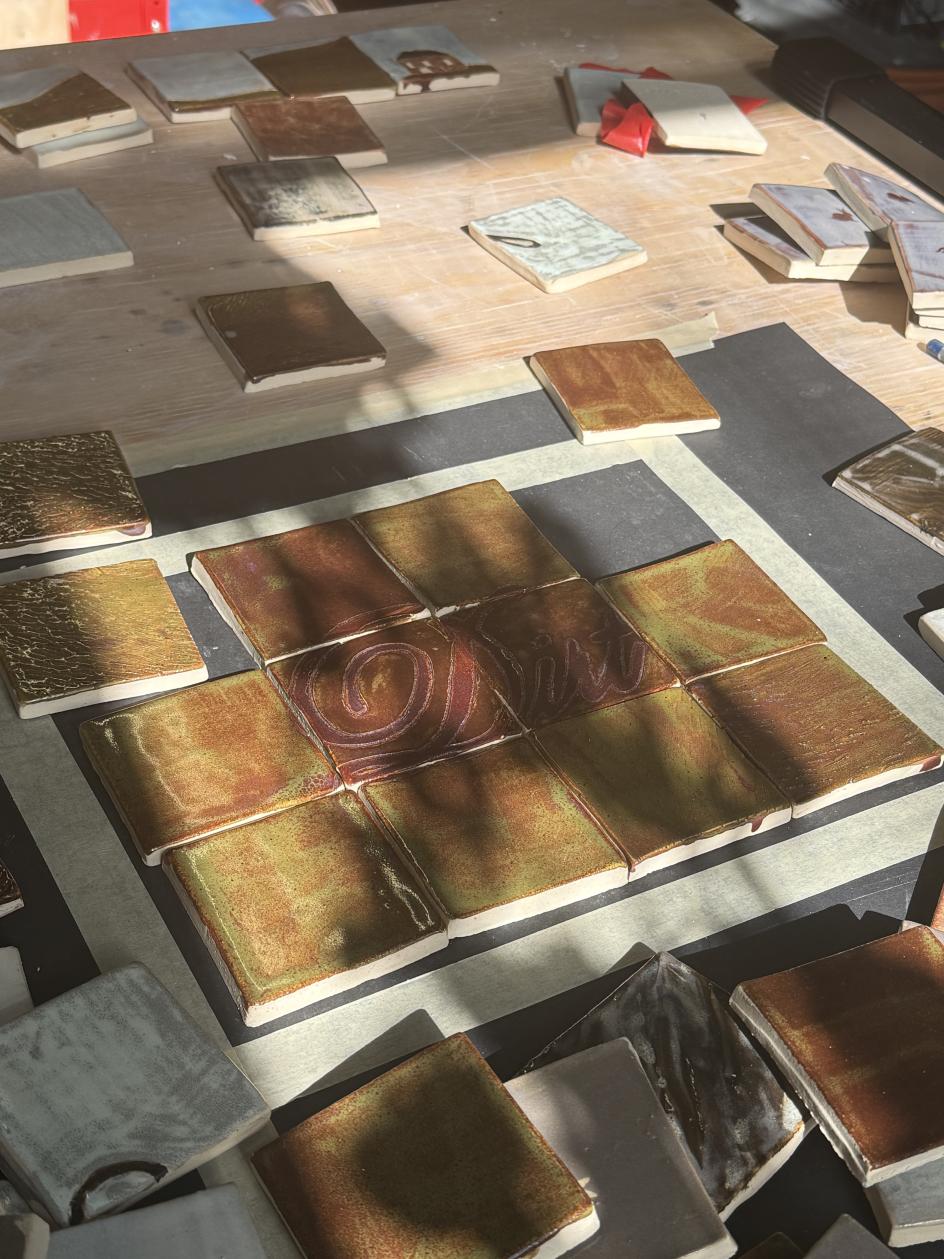
Somewhere in Brooklyn, Julia Fernandez arrives early every morning to catch the light. For three months, this was the ritual: set up the tiles, arrange the grid, film a handful of frames before the sun shifted, then go home, come back the next day and do it all over again. The result of all that daily labour is Dirt – a music video for LA-based musician Emory that is, by any measure, one of the most extraordinary pieces of animated work you'll see this year. And what's even more impressive is that it's made entirely from 300 ceramic tiles, which have been hand-drawn, hand-glazed, hand-fired, hand-arranged, and swapped in and out like a beautiful puzzle.
Julia has always been drawn to the kind of art that shouldn't be able to do what it does. Growing up in New Jersey, she was less interested in cartoons and more fascinated by "the act of making something appear to move and feel alive" – such as claymation, puppetry and, memorably, a fifth-grade ventriloquism phase.
"I remember loving the feeling of moving around the face and expressing myself through this character," she says. At college, studying Interactive Media Arts, she wove animation into every project she touched. But it was a free ceramics workshop that she stumbled upon after graduating that really cracked something open.
"I wasn't interested in wheel throwing or functional pottery," she explains, "but one day while making a cup, I painted animation frames on it and photographed it as a zoetrope. Seeing a material that's supposed to be still and permanent begin to move felt like magic – like I had cracked some code in reality to create movement that should otherwise be impossible."
When Emory reached out about creating a visual for Dirt, the song resonated with Julia immediately. It spoke, she says, of "a deep, familiar sense of longing for a person, place or time, while also holding onto a quiet optimism for what's to come." This maps rather neatly onto the tenderness of Julia's own recurring imagery, including children running hand in hand, a solitary rabbit or a bunch of flowers. These motifs are drawn from folk tile art and have defined her visual vocabulary, becoming the building blocks of the video's world as well.
The process moved, as hers always does, between the digital and the physical. She storyboarded on a computer to sequence ideas, then crossed over entirely into the handmade, where she rolled out slabs of clay, measuring, cutting, carving images into each surface, then firing and glazing them one by one. Here is where ceramics becomes a collaborator as much as a medium. The glazes behave unpredictably in the kiln. "The way the glazes melted and interacted introduced textures and small variations that became part of the animation's atmosphere," she says.
The finished tiles were arranged in grids of 12 and filmed frame by frame, with the frame rate calibrated to mirror the song's steady, meditative rhythm – "almost like a visual drone", she says. A continuous flutter forms the base layer over which scenes occur, like a rabbit cycling across a tile, a hillside breathing or a house flowing. The effect of which is utterly spellbinding.
As her longest animation to date, Dirt has clearly taught her something that she'll carry forward: doing a little each day will eventually get me to the finish line, even when the scale feels daunting." A claymation music video is currently in progress, so too is a commercial piece and a ceramic short film, which, after this, feels like a natural and inevitable next step.