This agency got tired of existing alcohol-free brands… so it launched its own
Sometimes the best way to challenge a category is to put your money where your creative mouth is.
There's something deliciously ballsy about a creative agency launching its own FMCG brand. While most are content to spec-pitch their way into oblivion or politely massage client briefs into something vaguely interesting, London brand agency Greatergood decided to do what many of us secretly dream of: become their own client.
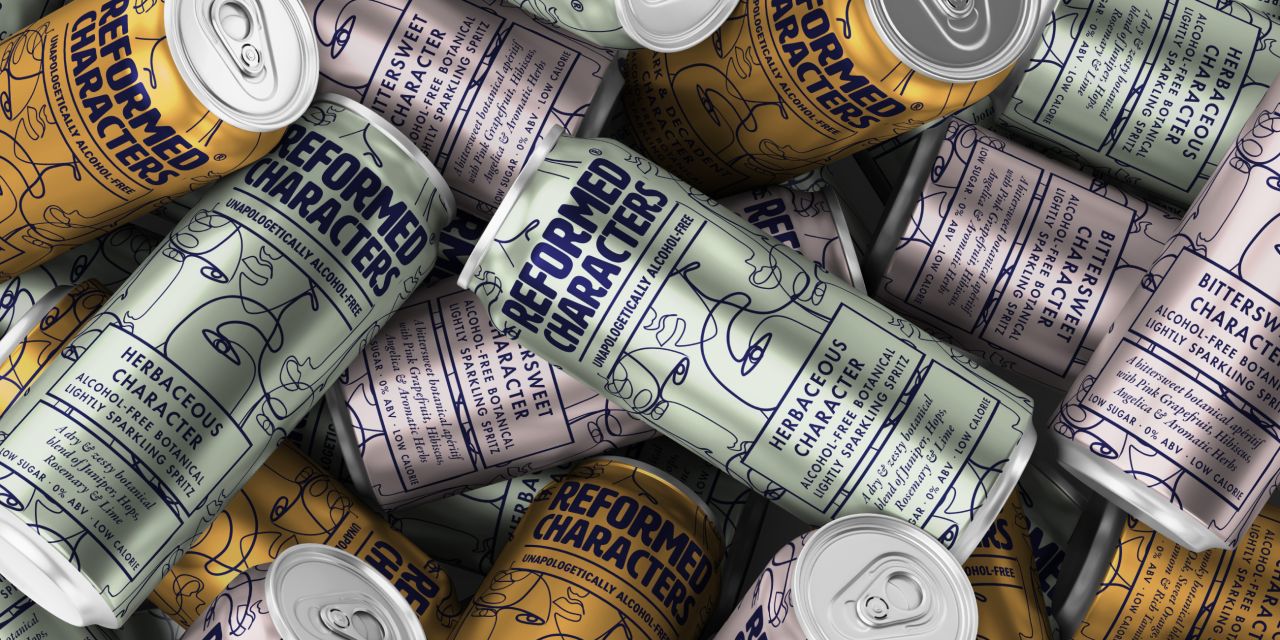
The result is Reformed Characters, an alcohol-free drinks brand that looks nothing like the rivals cluttering up the Low & No category. And it's all an intriguing case study in what happens when agencies have to live with the consequences of their creative decisions.
The insight that launched a thousand cans
The problem with most alcohol-free brands is that they taste of compromise. Not literally (though sometimes literally), but conceptually. They're the designated driver of the drinks world: sensible, earnest, and about as exciting as a Tuesday evening Teams call.
Greatergood's research revealed what most pub goers already know: that the people choosing to take a break from booze are usually the ones you'd want at your party. They're not teetotal by nature; they're "healthy hedonists" having a tactical timeout. The self-directed brief, then, was to create something that didn't feel like punishment.
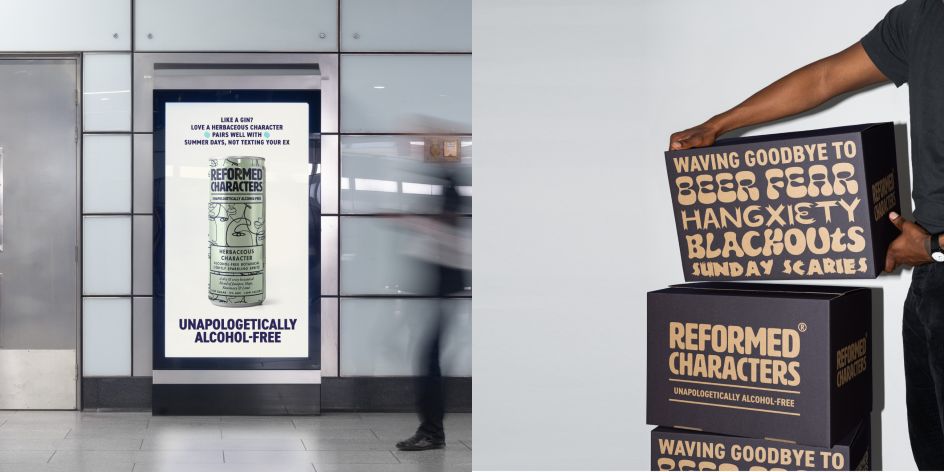
Enter the "Reformed Character"; a double-edged name that plays into cult culture, meme vernacular and that particularly British self-awareness about our drinking habits. It's cheeky without being cringe, self-aware without being preachy. And the accompanying tagline "Unapologetically Alcohol Free" does similar heavy lifting, positioning abstinence as a choice rather than a compromise.
Design that takes risks
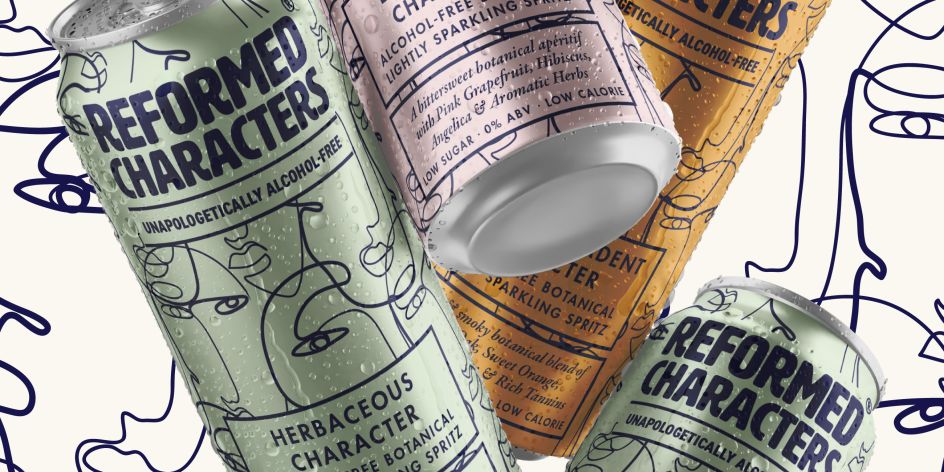
Here's where it gets interesting for visual creatives. While the alcohol-free category has largely settled into a familiar design language (muted colours, botanical illustrations, craft beer-adjacent typography, lots of white space signifying "purity"), Reformed Characters went full throttle in the opposite direction.
These cans feature bold, full-spread metallic patterns in green, pink and gold. They're loud, confident and impossible to ignore. Each variant—The Herbaceous Character, The Dark & Decadent Character, The Bittersweet Character—has its own distinct personality, but through pattern rather than illustration.
The supporting brand world includes illustrations that slyly reference hangovers, blackouts and "Sunday scaries"; the actual reasons people reform their drinking habits, rather than the wellness-washed narratives most brands peddle. It's refreshingly honest work that trusts its audience to get the joke.
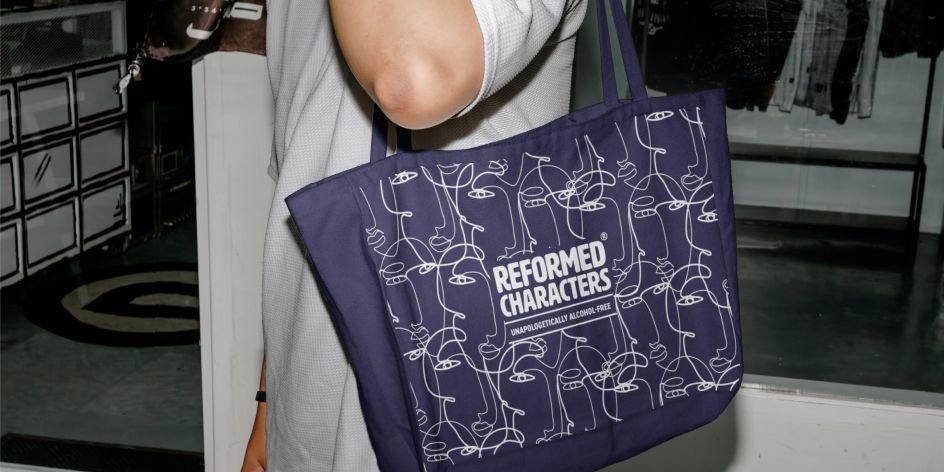
The tote bag shown in the imagery continues this pattern-forward approach, while transit advertising and packaging maintain a consistent visual language that's more art gallery than health food aisle.
The full-service gamble
What makes this project particularly noteworthy is its scope. Greatergood didn't just create a brand identity and hand it off. They developed the actual drink formulations, built the Shopify store, created retail pitch decks, secured manufacturer runs and launched the entire direct-to-consumer operation.
This is agency work taken to its logical extreme, or perhaps to its most authentic conclusion. After all, there's no client to blame if the positioning doesn't land, no procurement team to water down the creative, no internal stakeholders demanding their daughter's opinion is reflected in the final design.
The outcome? Meetings with Selfridges, Sainsbury's, Tesco, and international interest from the USA, Canada and Europe. Not bad for a self-initiated project that could have easily disappeared into the growing pile of "agency side hustles that went nowhere."
What creatives can learn
The Reformed Characters case study demonstrates something important: category conventions exist to be challenged, but only if you're willing to do the hard work of understanding why they exist in the first place. Greatergood studied the Low & No market, identified a gap between consumer insight and brand expression, then dared to fill it with something genuinely different.
It also highlights how great branding requires more than a nice logo and some clever copy. The product has to deliver, the distribution strategy has to work, and the entire brand ecosystem needs to hang together. When you're spending your own money, that discipline comes naturally.
Whether Reformed Characters becomes the next big thing in alcohol-free drinks remains to be seen. But as a creative statement about what's possible when agencies trust their own instincts and invest in their own ideas, I'd say it's already succeeded.
Sometimes being your own client isn't just good business; it's the only way to do the work you actually want to see in the world. One can of herbaceous botanical spritz at a time.
Editor's Picks
Trending

 using <a href="https://www.ohnotype.co/fonts/obviously" target="_blank">Obviously</a> by Oh No Type Co., Art Director, Brand & Creative—Spotify](https://www.creativeboom.com/upload/articles/6e/6ed31eddc26fa563f213fc76d6993dab9231ffe4_732.jpg)
Podcasts
Editor's Picks
Further Reading